Native Ohio Plants To Grow Instead Of Hostas Japanese Beetles Love
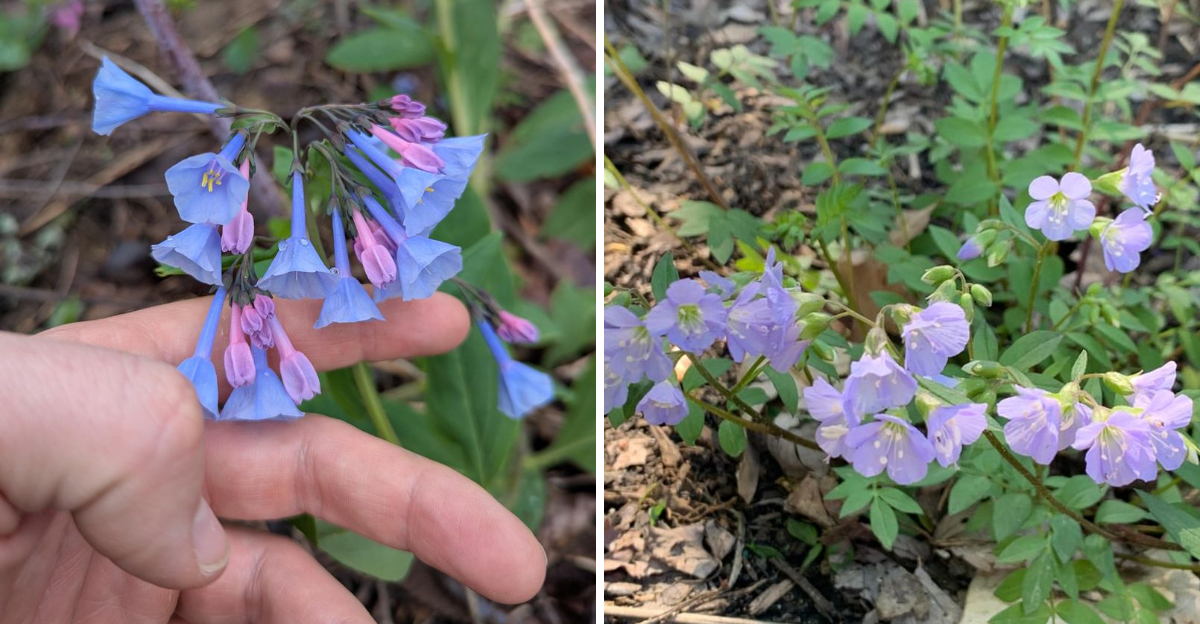
Hostas can make an Ohio shade bed look finished fast, but that tidy green look comes with a familiar summer problem.
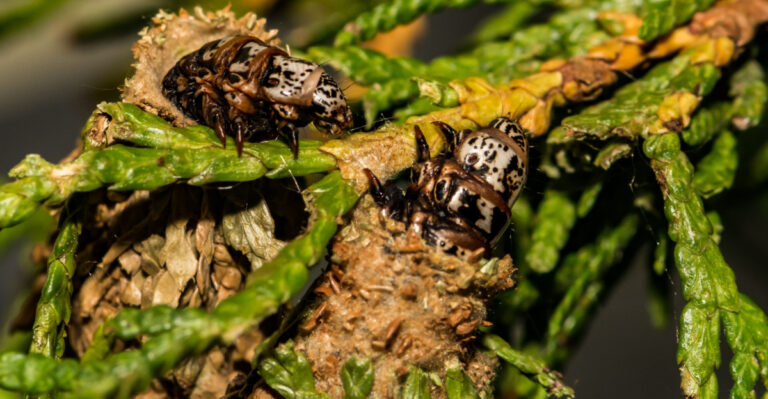
Japanese beetles can chew through the leaves, leaving ragged holes where smooth foliage used to be. The plants also spend much of the season doing one visual job: forming broad green mounds beneath trees and along foundations.
Native shade plants can give you much more.
Ohio woodlands already offer groundcovers, spring flowers, arching perennials, and bold ferns that handle the same low-light spaces while supporting local insects, birds, and seasonal change.
So which plants deserve the space instead?
The strongest choices do not all copy a hosta. Some stay low and dense. Others add height, flowers, berries, or dramatic foliage that keeps a shaded border changing from April through fall.
Swap a few hostas at a time, match each native to the moisture in your yard, and the whole bed can become more useful, more layered, and much harder to confuse with every other shady front walk nearby too.
1. Plant Wild Ginger For Low Green Cover
The darkest part of a shade bed does not need another row of hostas.
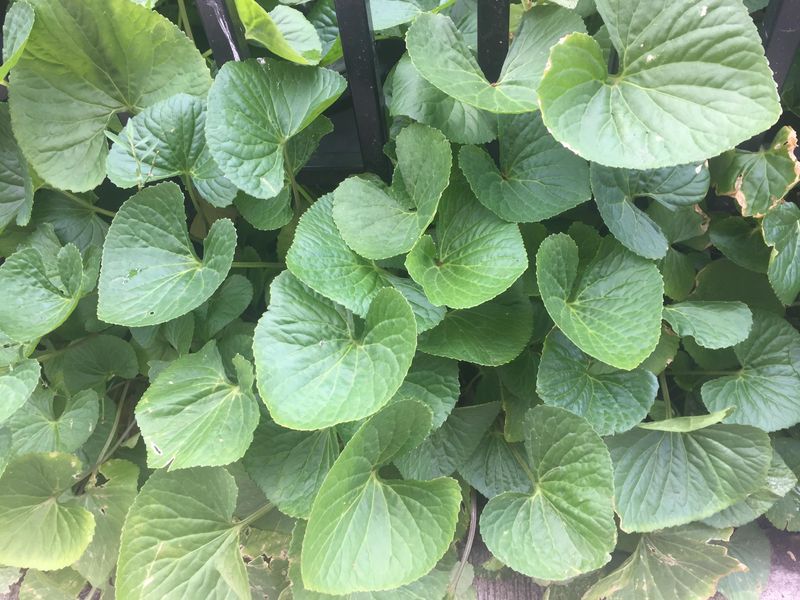
Wild ginger, Asarum canadense, can fill that low green role with broad, heart-shaped leaves that spread slowly into a dense woodland carpet.
It stays only about 6 to 8 inches tall, so it works especially well beneath shrubs, along shaded paths, or under mature trees.
The foliage does most of the visual work.
Deep green leaves stay attractive through the growing season and overlap enough to help shade out small weeds once the patch settles in.
That gives the bed the same tidy groundcover effect gardeners often want from hostas without relying on large individual clumps.
Spring adds a hidden surprise.
Small reddish-brown flowers appear close to the soil beneath the leaves, where ground-level insects can visit them. You may need to lift the foliage to see them, which feels appropriately secretive for a woodland native.
Give wild ginger average to moist soil and partial to full shade.
Water consistently during the first season while rhizomes begin spreading, then ease back once the colony establishes.
Plant several together for quicker coverage.
One plant looks polite. Five start acting like a groundcover.
Wild ginger does not need to shout from the shade. It simply fills the empty spaces, stays low, and makes a hosta bed look much more like an Ohio woodland floor.
2. Use Foamflower For Frothy Spring Blooms
A hosta bed can stay green for weeks before anything truly interesting happens.
Foamflower, Tiarella cordifolia, changes that rhythm early.
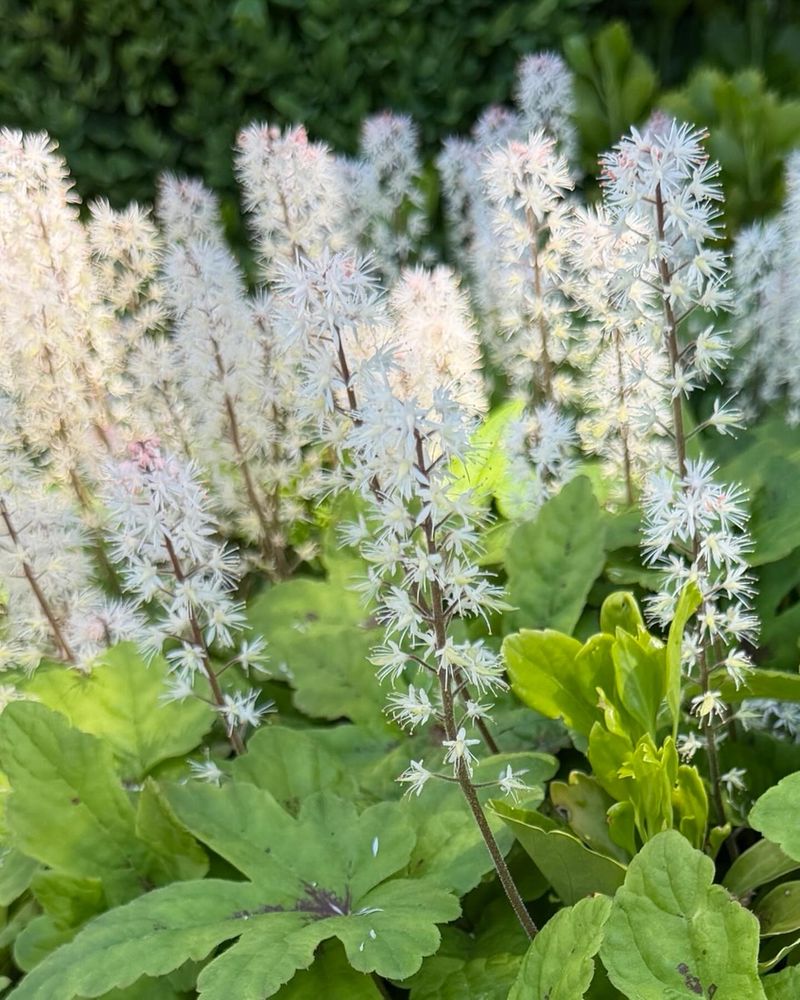
In spring, airy white flower spikes rise above textured, lobed leaves and bring motion to shaded borders while much of the garden is still waking up. The blooms can appear from April into May, giving bees another early-season stop.
The foliage remains useful after flowering.
Leaves form low mounds that spread gently by stolons, gradually knitting together along path edges and beneath taller woodland plants. That makes foamflower especially good near the front of a border where a full-size hosta can feel bulky.
Your Ohio Garden Changes Every Week. Your Plan Should Too.
Gardening in Ohio changes quickly throughout the season. Every Friday you’ll receive a simple weekly plan showing exactly what to plant, prune, fertilize, harvest, and protect so you never miss the right timing.
Give it moist, humus-rich soil.
Partial to full shade suits it well, especially where the ground stays cool and does not dry hard during summer. A layer of shredded leaves around the plants helps mimic the forest-floor conditions this native already understands.
Avoid burying the crown under heavy mulch.
Keep moisture steady during establishment and let the plant spread at its own pace instead of forcing fast growth with fertilizer.
Planting in drifts makes the spring display stronger.
Three or five plants can turn into a soft white ribbon across the bed rather than a few isolated flower spikes.
Foamflower brings something hostas rarely deliver early in the season: a shaded patch that actually looks excited about April.
3. Try Solomon’s Seal For Arching Height
Some shade gardens need height more than another mound.
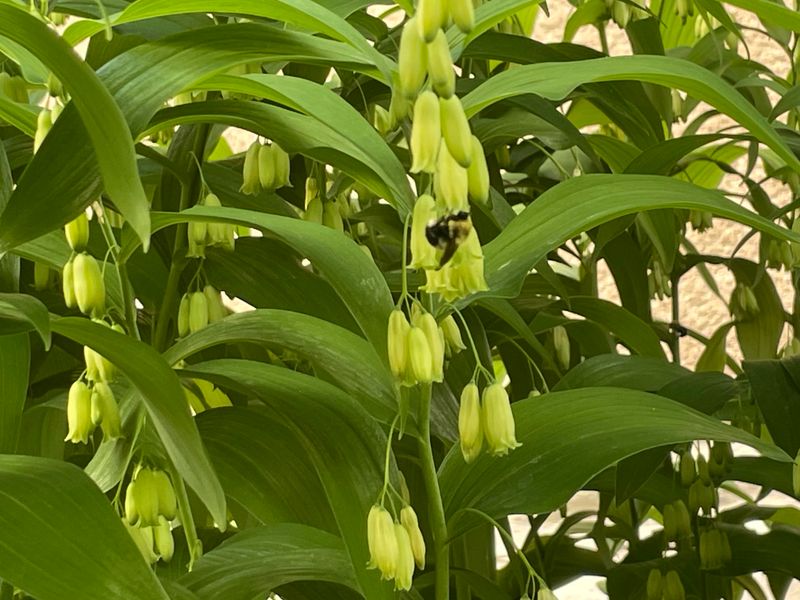
Solomon’s seal, Polygonatum biflorum, sends arching stems upward and outward in a graceful curve that looks completely different from the broad, static shape of hosta foliage.
That form creates instant depth.
Small white bell-shaped flowers hang beneath the stems in spring, followed later by dark berries that can interest woodland birds. By fall, the foliage shifts toward warm yellow before the plant settles down for winter.
Mature clumps usually reach about 2 to 3 feet tall.
That makes Solomon’s seal useful behind wild ginger, foamflower, or other low natives where the arching stems can rise without blocking the entire bed.
Average to moist woodland soil works well.
Established plants can handle short dry stretches better than many delicate shade perennials, though consistent moisture during the first season helps the rhizomes settle.
Give the clump room to spread naturally.
It expands gradually rather than racing across the bed, which makes the plant easy to live with in informal borders.
A layer of fallen leaves or shredded leaf mulch fits the plant better than rich fertilizer.
Solomon’s seal does not need constant attention to look elegant.
It simply leans into the shade, hangs a row of little bells beneath its leaves, and gives the border the kind of movement a lineup of hostas rarely manages.
4. Add Virginia Bluebells For Early Color
Early spring can be the best season in an Ohio shade garden.
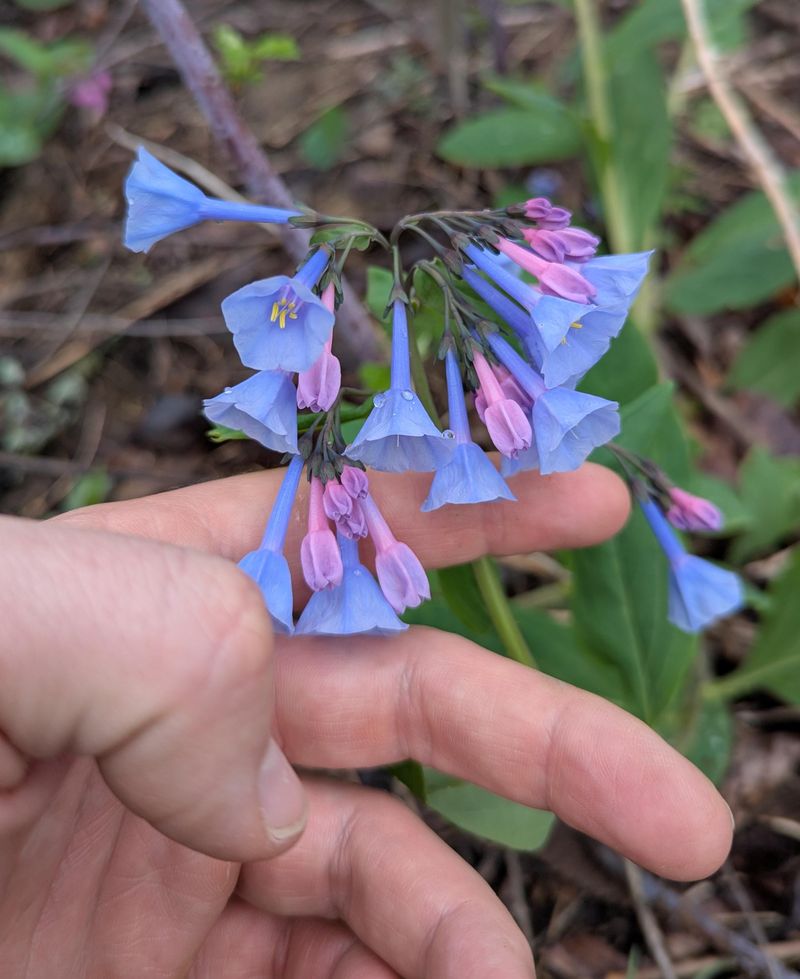
Virginia bluebells, Mertensia virginica, prove it.
Before the tree canopy fully closes, soft blue-green foliage rises from the soil and quickly carries clusters of pink buds that open into clear blue, bell-shaped flowers. A mature drift can turn a quiet woodland edge into one of the most memorable parts of the yard.
Early pollinators notice too.
Bumblebees and other spring-active insects use the flowers during a period when many summer perennials have not even broken ground.
The plant has one important habit to understand.
By early summer, the foliage fades and disappears completely. That is normal dormancy, not a problem.
Use that disappearing act as a design opportunity.
Plant bluebells among later-emerging natives such as ferns, wild geranium, or Solomon’s seal. Those companions fill the space as the bluebell foliage retreats, so the bed keeps its structure without leaving a blank patch.
Moist, rich soil suits bluebells best.
Partial to full shade works well once the trees leaf out, and low woodland spots often provide the steady spring moisture they prefer.
Once established, plants can seed themselves into larger colonies.
Hostas may offer reliable leaves. Virginia bluebells offer an entire spring event, then politely leave the stage before summer gets crowded.
5. Grow Wild Geranium In Dappled Shade
Dappled shade is where wild geranium starts looking especially comfortable.
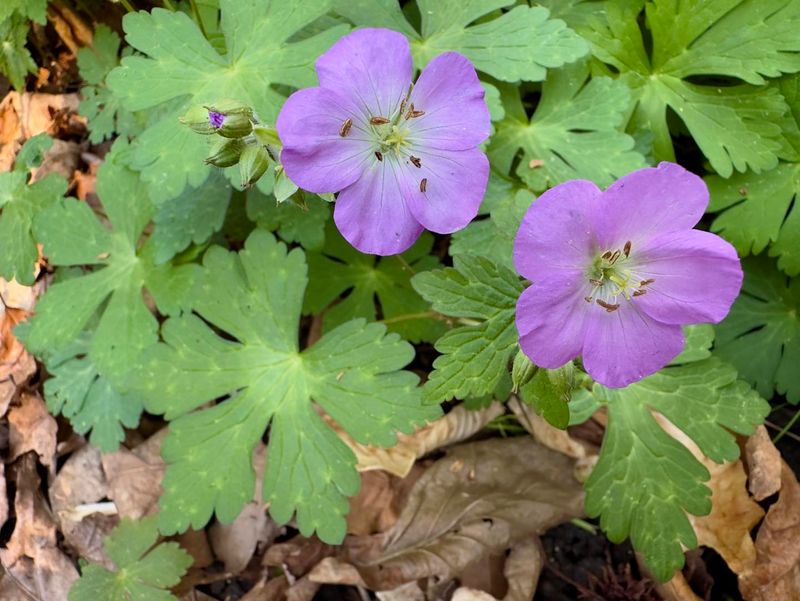
Geranium maculatum produces lavender-pink flowers from mid-spring into early summer, followed by deeply lobed foliage that keeps the plant attractive after bloom.
That gives a hosta replacement two jobs instead of one.
The flowers support native bees and other spring pollinators, while the foliage adds a finer texture than the broad leaves most shade beds rely on.
Plants usually reach around 18 inches tall and wide.
That middle height works well between low groundcovers and taller woodland plants, helping the bed build layers instead of repeating the same mound from one end to the other.
Give wild geranium average to moist, well-drained soil.
It handles partial shade beautifully and can tolerate deeper shade, though flowering tends to be stronger where some filtered light reaches the leaves.
A light layer of shredded leaves helps conserve moisture and fits the plant’s woodland habit.
The clumps spread gradually through rhizomes and modest self-seeding, so a few plants can become a loose colony without taking over overnight.
Division every few years can keep crowded patches vigorous.
Wild geranium feels relaxed rather than formal.
It flowers, fills space, feeds insects, and lets the border look natural without becoming messy. That is a useful upgrade from a plant chosen mainly because it survives under a tree.
6. Fill Damp Shade With Ostrich Fern
A wet shaded corner does not need to look like the garden forgot about it.
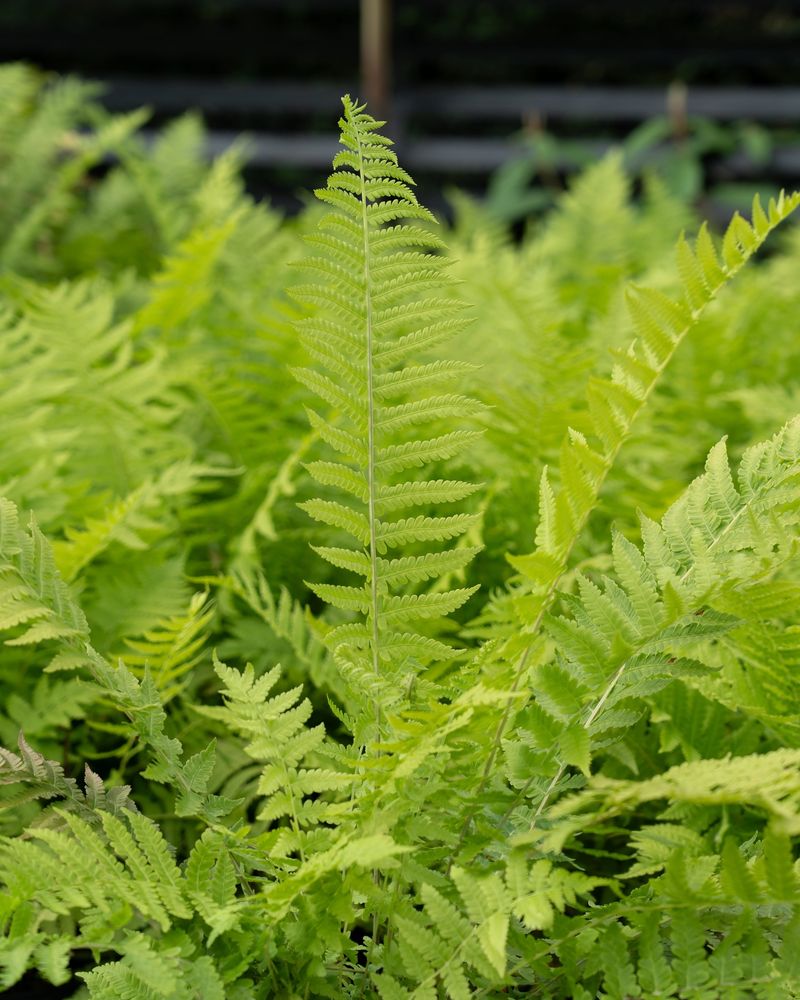
Ostrich fern, Matteuccia struthiopteris, can turn that difficult spot into the boldest part of the border.
Bright green fronds rise in a tall vase shape during spring and can reach 3 to 5 feet under good conditions. The scale gives the planting a lush, almost tropical look while still using a plant native to Ohio.
Moisture is the key.
Ostrich fern thrives in consistently damp ground, including stream edges, low woodland areas, and shaded rain-garden zones. A dry slope beneath thirsty tree roots is a much poorer match.
Give it room to spread.
Underground stolons allow established plants to form colonies, which is useful when the goal is covering a larger wet area. Small gardens may need occasional division to keep the patch where it belongs.
Pair the fern with lower spring plants.
Virginia bluebells, wild geranium, and foamflower can bloom around the base before the fronds reach full height.
The contrast in scale makes the bed feel much more layered.
Fiddleheads emerge early, followed by the full green fountain of summer foliage.
Ostrich fern does not imitate a hosta at all, and that is exactly why it works.
Instead of another rounded clump, you get height, movement, and enough architectural drama to make a soggy corner look intentionally planted.
7. Use Jacob’s Ladder For Delicate Foliage
A shade border benefits from at least one plant that looks delicate without actually being difficult.
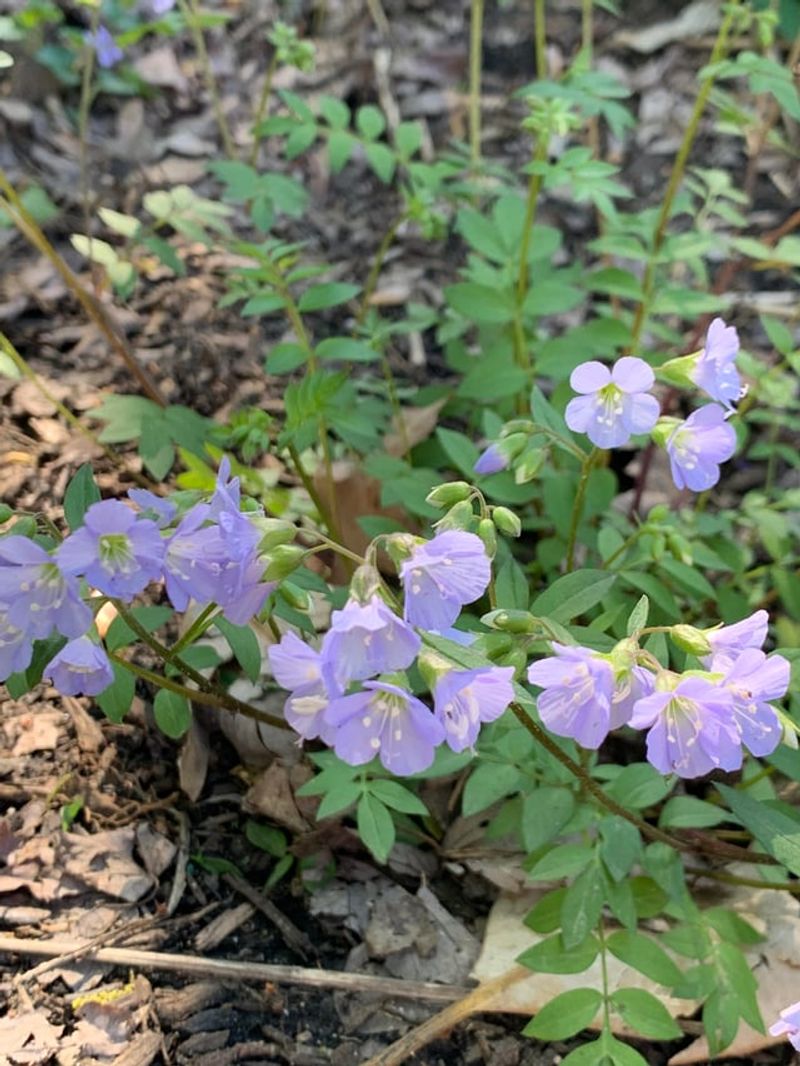
Jacob’s ladder, Polemonium reptans, fills that role with neatly paired leaflets arranged along each stem and clusters of blue-violet flowers above them in spring.
The foliage gives the plant its name.
Those ladder-like leaves create a fine texture that contrasts beautifully with broad wild ginger, large fern fronds, and the wider leaves of Solomon’s seal.
Spring flowers add the second layer.
Native bees and bumblebees can visit the blooms during April and May, giving the plant ecological value before many summer flowers begin.
Use Jacob’s ladder near the front or middle of a shaded border.
Plants generally reach 12 to 18 inches tall, so they are easy to see without overwhelming smaller neighbors.
Moist, humus-rich soil produces the strongest growth.
Partial to full shade works well, especially where summer soil does not become extremely dry. A leaf-mulch layer can help keep the root zone cooler and conserve moisture.
Foliage may decline during very dry summers.
A light trim after bloom can encourage fresh basal growth once conditions improve.
Jacob’s ladder brings refinement without looking overly formal.
Hostas give shade gardens broad leaves. This native gives you blue flowers, finer foliage, pollinator activity, and a completely different rhythm in the same amount of space.
8. Try Christmas Fern To Keep The Shade Bed Green Into Winter
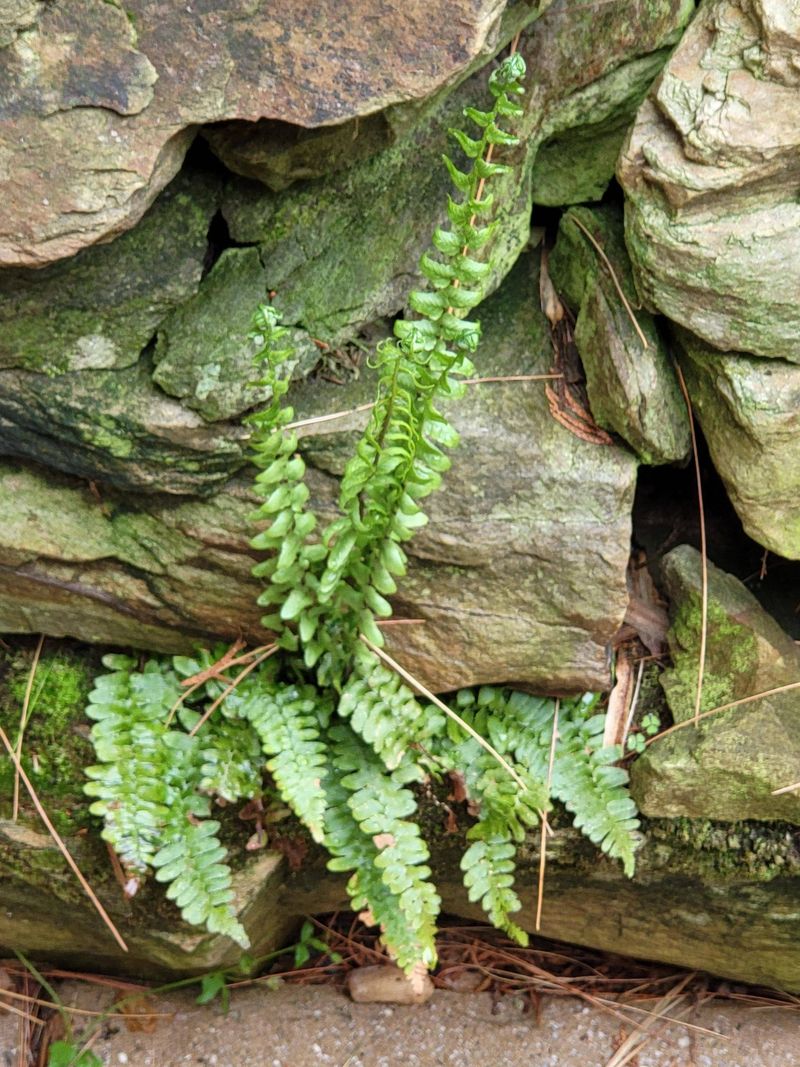
Most hosta beds lose their main attraction as soon as cold weather arrives.
Christmas fern, Polystichum acrostichoides, keeps much more of its structure. Its leathery green fronds can remain attractive well into winter, giving an Ohio shade garden texture after many perennials have already retreated underground.
That makes it especially useful beneath deciduous trees.
During summer, the arching fronds create a tidy mound that fits naturally beside wild ginger, foamflower, or Solomon’s seal. Once leaves fall from the trees, the fern still gives the bed something green to look at.
Give it partial to full shade and soil that holds some moisture without staying waterlogged.
A layer of shredded leaves around the root zone suits its woodland character and helps conserve moisture through dry stretches. Keep the crown clear rather than burying it under a heavy mulch pile.
Christmas fern grows in clumps rather than racing through the bed.
That makes it easier to place around paths, foundations, or tree bases where a more aggressive fern could become frustrating.
The foliage also brings a finer, more vertical texture than hosta leaves.
One hosta gives you another broad mound. Christmas fern gives the same shady corner arching evergreen structure and a distinctly woodland feel.
For an Ohio gardener trying to make a hosta-heavy border less predictable, that is a very useful trade.