Don’t Carve It Yet, Here’s How To Turn Your Pumpkins Into A Fall Garden Standout In New Jersey
You hauled home a pumpkin, and a squirrel already planned its menu. Spare that pumpkin the knife and give it a job.
Hollow it, pack it with soil, and you hold a planter nobody else owns. Tuck purple kale and golden mums into the opening, and your porch changes character.
Thick walls hold moisture around roots, so mums drink steadily for several weeks. Light frost arrives fast, yet mums and kale shrug it off.
Choose Jarrahdale for dusty blue skin or Cinderella for flattened, rust red drama. Garden centers in New Jersey stock mums now, so you can start today.Squirrels tend to avoid cayenne, so you dust the rim to discourage nibbling.
Passersby across New Jersey may slow down, stare, and ask where you bought those planters. Pack the base with well-draining potting mix, and your mums bloom longer.
1. Tuck Pumpkins Into Your Mum And Aster Beds
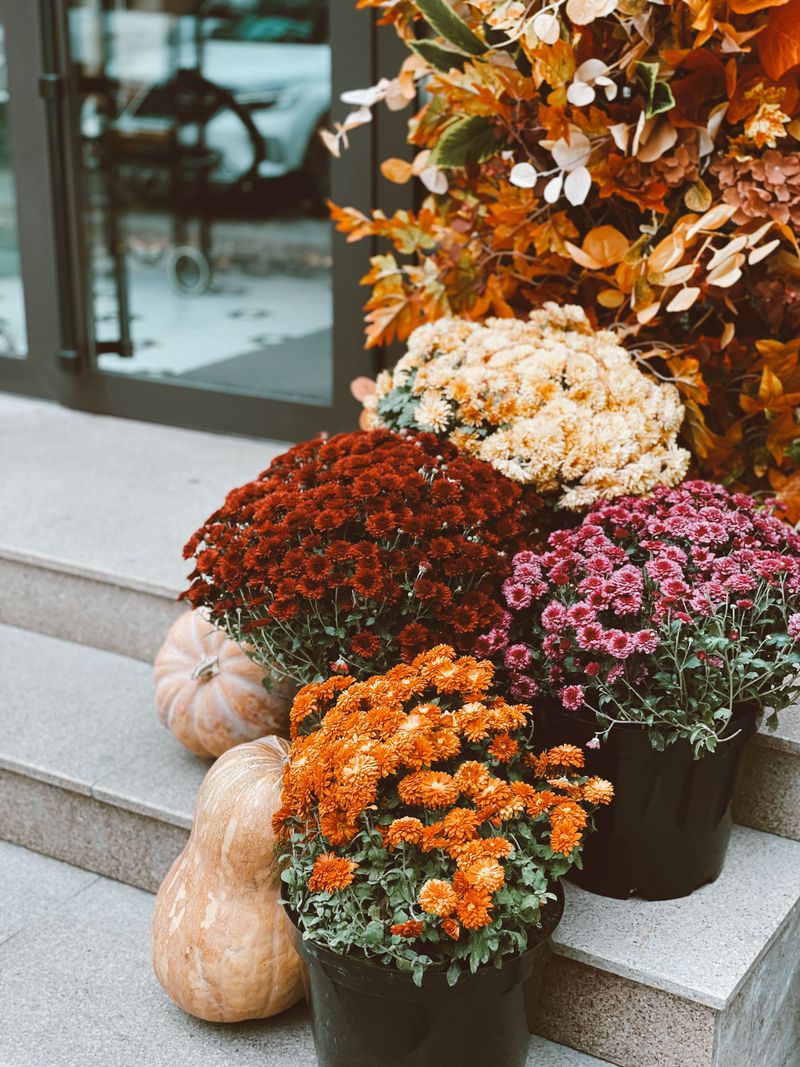
Garden centers across New Jersey burst with potted mums every October, and they look lonely by themselves. A few pumpkins nestled among them turn a plain bed into a postcard scene.
Start by picking a spot with mums, asters, or pansies that already bloom well. Purple asters look stunning beside bright orange pumpkins because the bold contrast makes both colors stand out.
Place pumpkins in odd numbers, like three or five, for a natural look. Groups of even numbers can feel stiff, like soldiers standing in a line.
Vary the sizes too, with one big pumpkin anchoring the group and smaller ones scattered nearby. Tiny gourds can fill gaps between plants that look a little thin.
Set each pumpkin on a flat stone, brick, or piece of slate instead of bare soil. Damp Jersey dirt can soften the bottom fast, especially after a rainy week.
Keep the stems intact and avoid carrying pumpkins by them. A broken stem opens a doorway for mold and shortens the pumpkin’s life.
Water the mums at the base, not over the top of your display. Wet pumpkin skin attracts fungus, and few want fuzzy white spots on their centerpiece.
Uncarved pumpkins can last two to three months outdoors in cool weather. Your bed might stay cheerful well past Thanksgiving, long after the jack-o’-lanterns have slumped.
Many New Jersey farms, like those in Hunterdon County, sell mums and pumpkins side by side. One trip can stock your whole display in a single afternoon.
2. Stack A Pumpkin Tower Beside The Front Steps
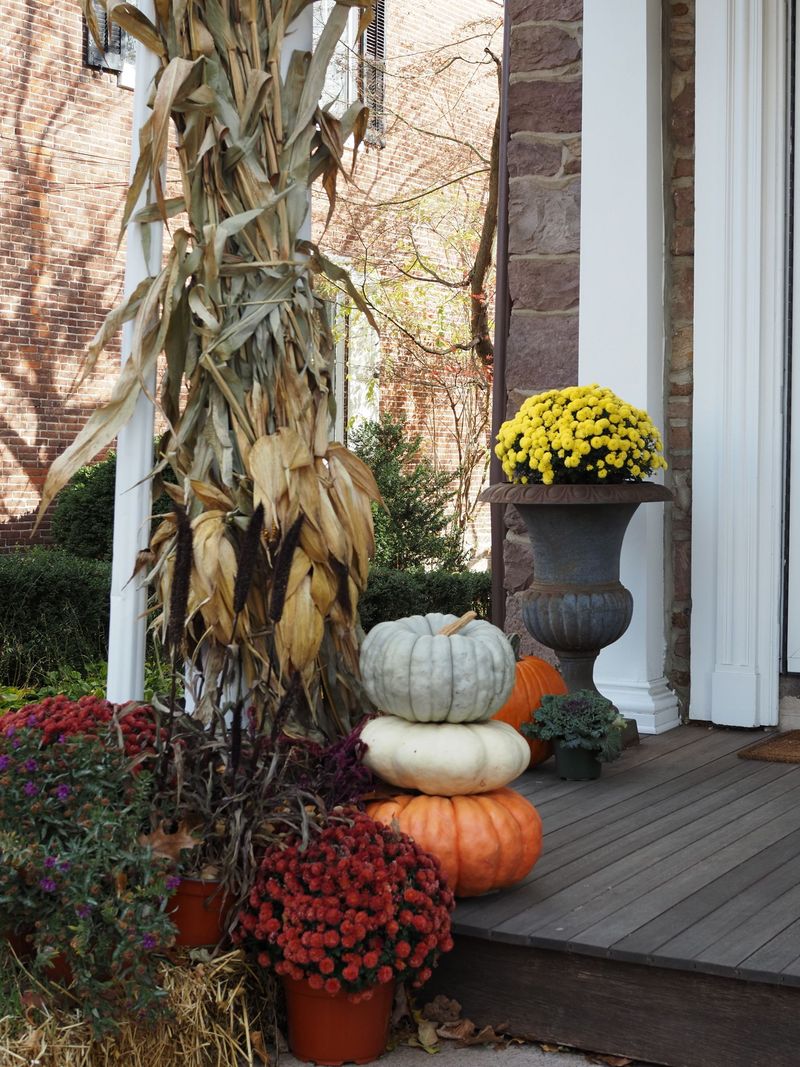
Remember stacking blocks as a kid and laughing when the tower wobbled? A pumpkin tower brings back that same joy, only it stays standing.
Choose three or four pumpkins in shrinking sizes, from a hefty base to a tiny topper. Flat-bottomed varieties, like Cinderella or Jarrahdale, stack much more easily than round ones.
Push a long wooden dowel or garden stake down through the stack to keep it steady. A cordless drill makes starter holes easy, but thin bits work best.
Place your tower beside the front steps, where visitors spot it first. A sturdy flat surface, like a paver or wooden crate, keeps things from leaning.
Your New Jersey Garden Changes Every Week. Your Plan Should Too.
Gardening in New Jersey changes quickly throughout the season. Every Friday you’ll receive a simple weekly plan showing exactly what to plant, prune, fertilize, harvest, and protect so you never miss the right timing.
Coastal towns near the Jersey Shore get gusty October winds that can topple tall stacks. Tuck the tower against a wall or railing if you live near the ocean.
Mix colors for extra pop, with white, orange, and green pumpkins taking turns. Speckled or warty pumpkins add texture that makes people stop and look twice.
Wrap a little dried grapevine or a burlap ribbon around the base. Pine cones and small gourds tucked around the bottom hide the dowel and look charming.
Check your tower every few days for soft spots, especially near the dowel holes. Swap out any mushy pumpkin quickly so the whole stack stays fresh and upright.
Kids love helping with this project, so make it a family weekend activity. Let them pick the topper, and watch them proudly show it off to every guest.
3. Turn A Hollow Pumpkin Into A Living Planter
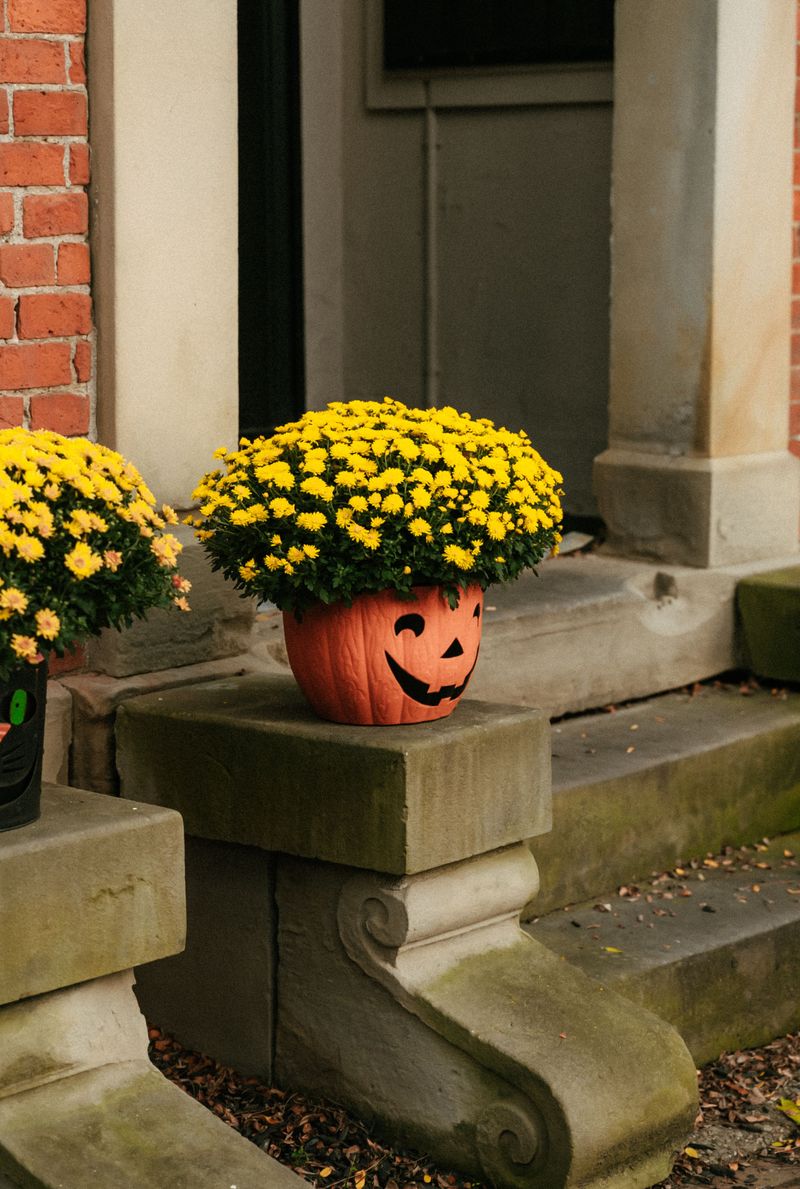
Here’s a project that gives a pumpkin a second job as a flowerpot. Picture a pumpkin overflowing with golden mums and trailing sweet potato vine.
Pick a large, sturdy pumpkin with thick walls and no soft spots. Cut off the top about two inches from the stem, and scoop out the seeds and stringy pulp.
Poke a few drainage holes in the bottom using a screwdriver or a small drill bit. Standing water inside will soften your planter walls much faster than you would like.
Line the inside with a layer of newspaper or a plastic bag with holes. That barrier slows rot and keeps soil from touching the pumpkin flesh directly.
Fill the pumpkin with potting mix, then add small plants like mums, pansies, or ornamental peppers. Sweet potato vine or pansies spilling over the edge adds a soft, wild touch.
Some gardeners even plant the whole pumpkin planter into the ground after the season ends. The pumpkin breaks down slowly and feeds the soil around the roots.
Expect a hollowed pumpkin to last about two to three weeks in New Jersey’s cool October air. Keep it in partial shade to slow things down a bit.
Rubbing a thin coat of petroleum jelly on the cut edges helps hold in moisture. A quick spray of diluted vinegar inside also discourages mold from moving in early.
Place your planter on a porch table, a stump, or right in a garden bed. Guests may assume you hired a florist, and you can just smile and nod.
4. Line Your Garden Path With Pumpkins On Straw Bales
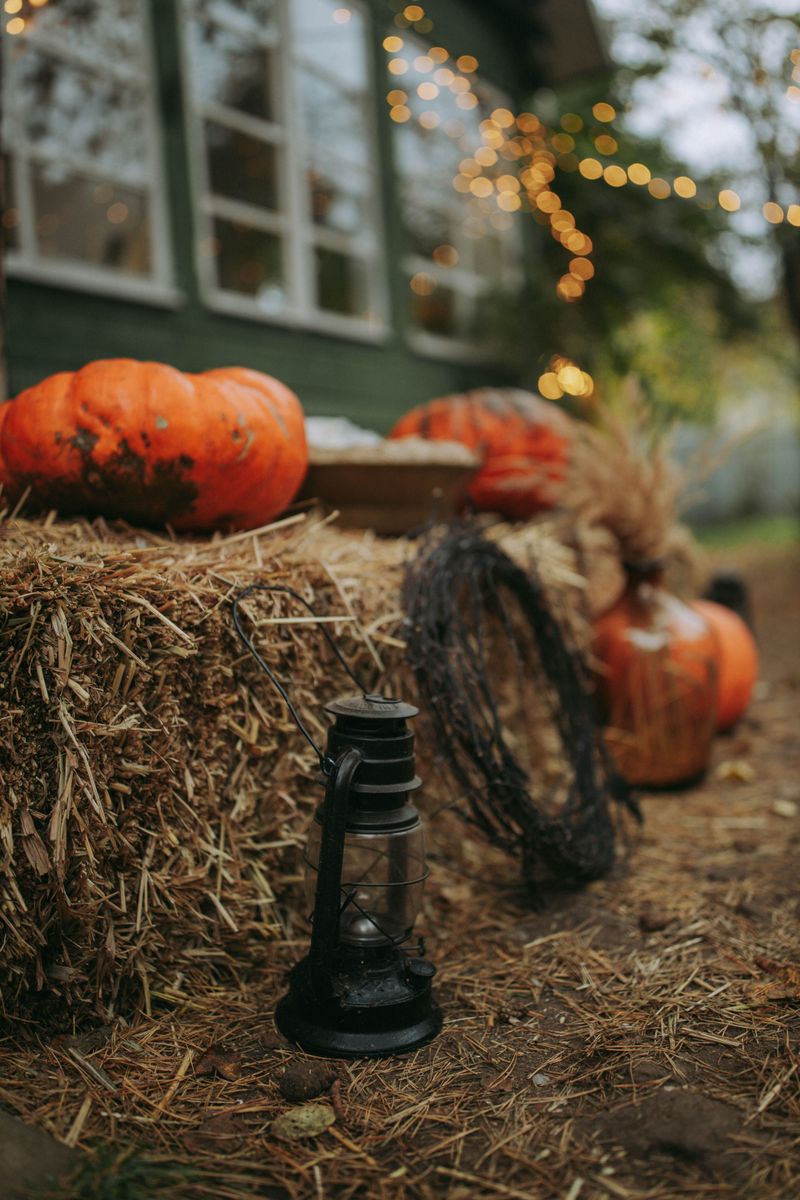
Ever driven past a New Jersey farm stand and felt instantly cozy? Straw bales and pumpkins create that feeling, and you can copy it right at home.
Many local farms sell straw bales during October, so check prices before you buy. Straw is usually cleaner and less weedy than hay, so it works better for gardens.
Set the bales along both sides of a walkway, spacing them a few feet apart. Place one or two pumpkins on top of each bale at different heights.
Short, squat pumpkins sit nicely on top of the bales without rolling off. Taller varieties can lean against the bale’s side for a relaxed, lived-in feel.
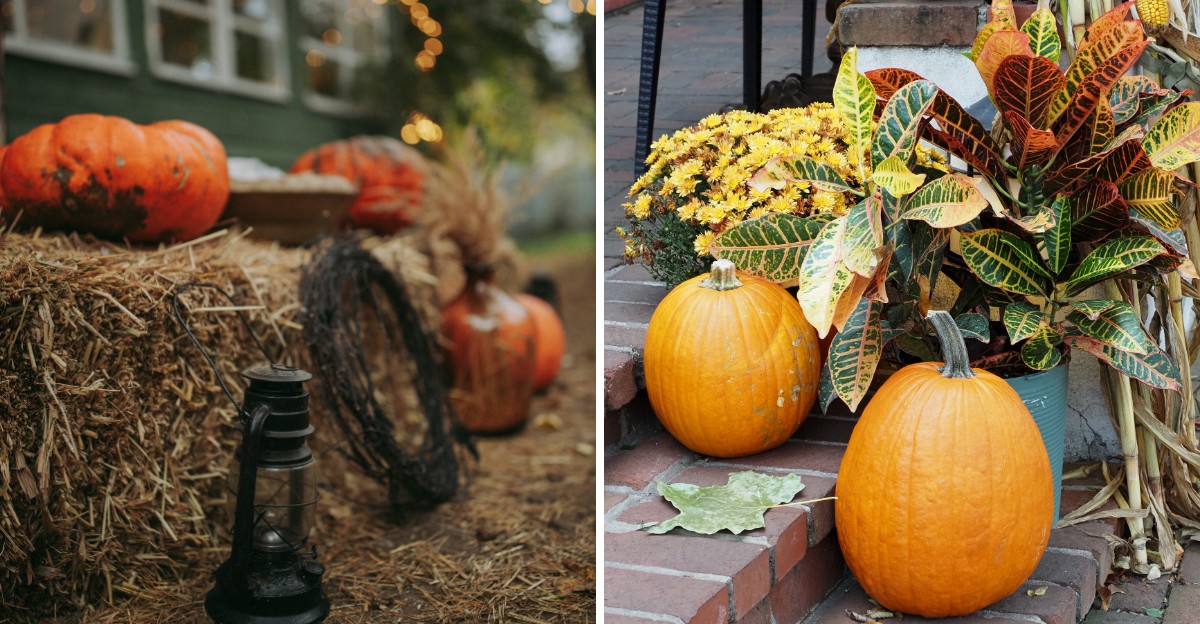
Add a few corn stalks tied to a post at the start of the path. Old wooden crates or a rusty wagon wheel can finish the farmhouse look beautifully.
Bales sitting on wet grass can get moldy, so set them on gravel or pavers when possible. A tarp tucked underneath also works if you want an easy fix.
Raised bales keep pumpkins off the damp ground, which helps them last longer. Good airflow underneath means fewer soft spots and less chance of fungus.
Light the path at night with battery-powered lanterns or solar stake lights. Avoid real candles near dry straw, since it can catch fire quickly.
After the season, break the bales apart and spread the straw as mulch in your garden beds. It protects soil over the New Jersey winter and partly breaks down by spring.
5. Mix In Unusual Varieties For Color And Shape
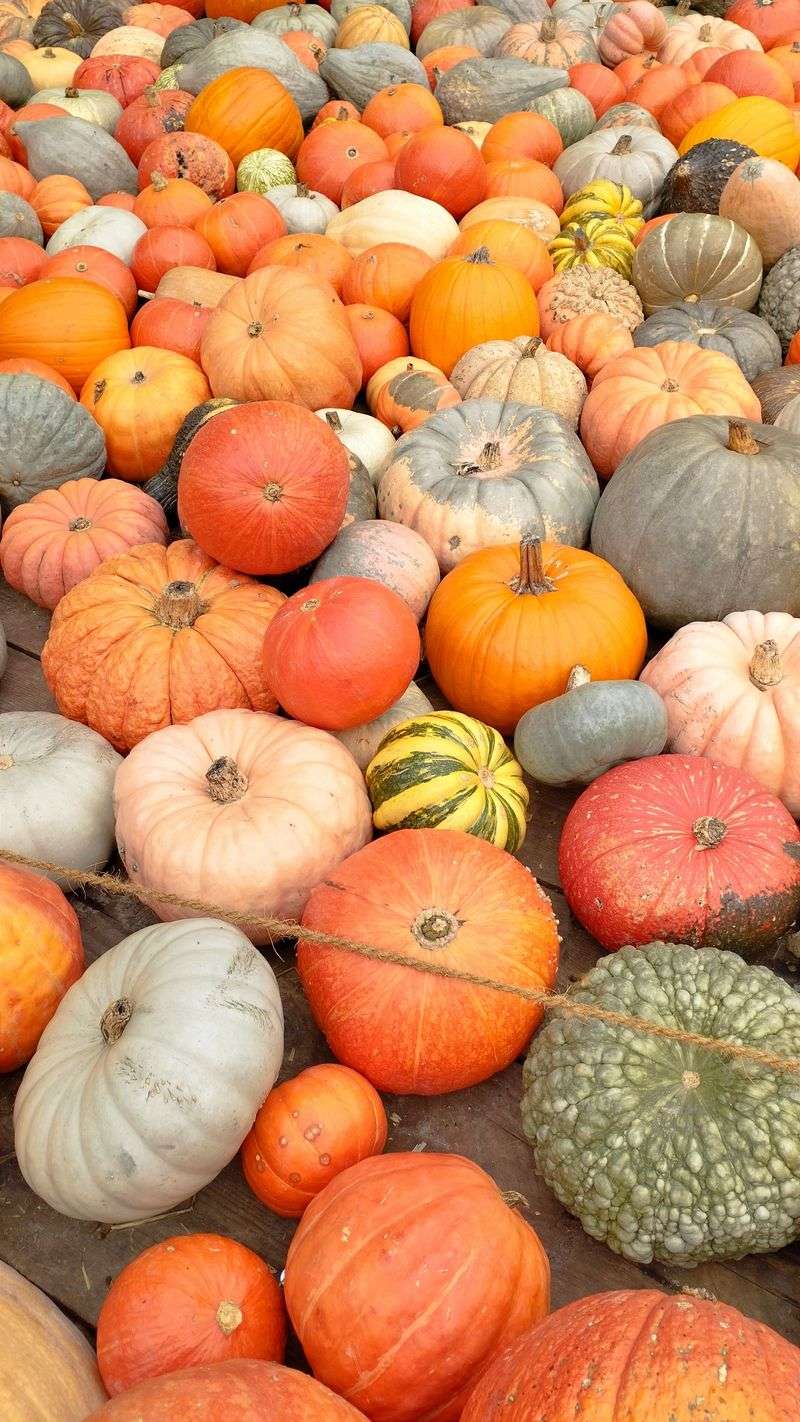
Pumpkins come in far more shades than just classic orange. Blue, white, pink, and even striped ones show up at New Jersey farm markets every fall.
Jarrahdale pumpkins from Australia have a dusty blue-gray skin that looks almost like stone. Long Island Cheese pumpkins are pale tan and shaped like a wheel of cheese.
Porcelain Doll pumpkins have a soft pink skin that looks delicate beside white pumpkins and pale grasses. Rouge Vif d’Etampes, a French variety also called Cinderella, is deep red-orange and fairy-tale ready.
Warty Goosebumps pumpkins are covered in bumpy knobs that kids find hilarious. Small striped gourds add playful patterns when tucked between larger pumpkins.
Mixing these varieties creates a display that feels rich and full of surprises. Try grouping cool tones like blue and white together near evergreen shrubs.
Reds and oranges look gorgeous next to Japanese maples or blueberry shrubs. Their leaves turn fiery in October, so your pumpkins will echo that bold color.
Heirloom seeds have been saved and passed down by gardeners for generations. Some varieties date back more than a hundred years and still thrive.
Ask farmers at your local market about the story behind each pumpkin. Many love sharing tips about which ones last longest on a porch.
Thick-skinned heirlooms like Jarrahdale can stay firm for months in cool weather. Many are also delicious for roasting, so your decor can become dinner later.
Snap a photo of each variety before buying so you remember the names. Next October, you’ll know which beauties earned a return spot.
6. Pair Pumpkins With Ornamental Grasses And Kale
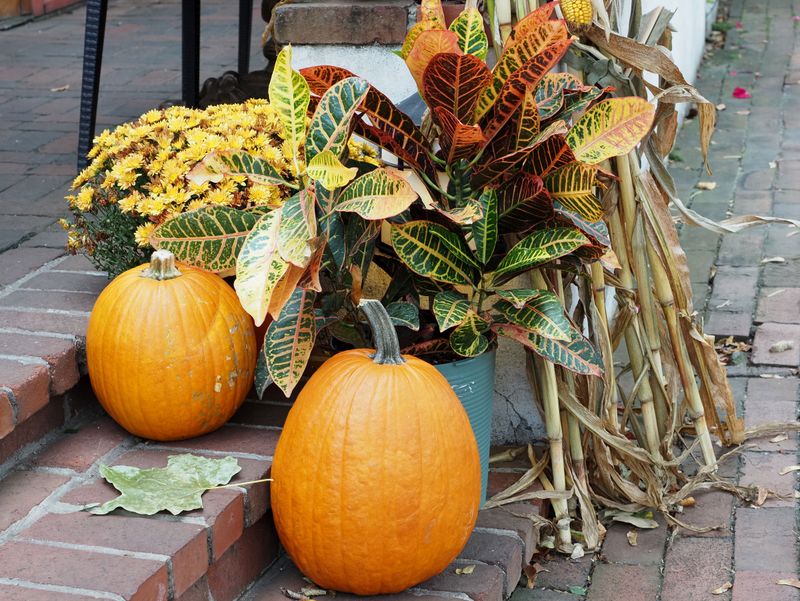
Think like a florist for a moment, and your yard becomes one giant arrangement. Every great bouquet needs texture, and ornamental grasses deliver plenty of it in fall.
Feathery grasses like fountain grass and switchgrass turn golden and bronze by October. Their soft plumes sway in the breeze, while pumpkins sit solid and steady below.
Switchgrass is a native plant in New Jersey, so it handles local weather with ease. Little bluestem is another native that turns a rusty copper color in fall.
Ornamental kale and cabbage add frilly purple, pink, and white rosettes to the mix. These plants love cool weather and often look brighter after a light frost.
Place a cluster of pumpkins at the base of a tall grass clump. Tuck a few kale plants in front so the layers rise from low to high.
Heights matter, so think of the display like a staircase. Short plants go up front, medium pumpkins in the middle, and grasses tower in the back.
Color pairings make a big difference in how the whole scene feels. White pumpkins look elegant beside purple kale, while orange ones glow next to golden grass.
Leave grasses standing through winter instead of cutting them back in fall. Birds snack on the seeds, and the hollow stems shelter helpful insects until spring.
Garden centers sometimes discount grasses and kale in late October, so watch for sales. Cool-season perennials need early fall planting, and grasses settle best when planted in spring.
7. Protect Your Display From Squirrels And Soft Rot
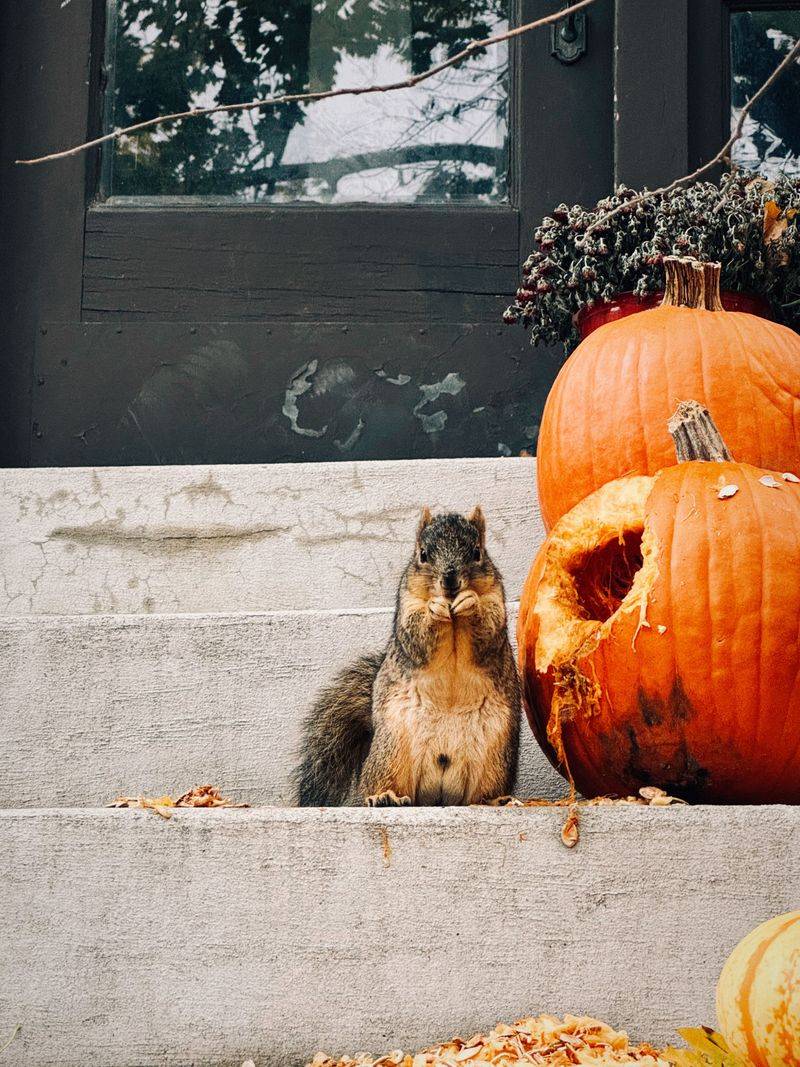
Squirrels in New Jersey treat pumpkin displays like an all-you-can-eat buffet. One morning your pumpkin looks perfect, and by lunch it has a giant bite missing.
Sprinkling cayenne pepper or red pepper flakes on the skin can discourage furry nibblers. Reapply after rain, since water washes the spicy coating away quickly.
Some gardeners spray pumpkins with a mix of water and hot sauce. It smells a bit odd, but it may make some squirrels lose interest.
Soft rot is the other big troublemaker for outdoor pumpkins. It starts as a mushy spot and spreads fast in damp, mild weather.
Wipe each pumpkin with a cloth dipped in a weak bleach solution before displaying it. Use about one tablespoon of bleach in a gallon of water, and wear gloves and eye protection.
Once dry, a light coat of clear acrylic spray adds another layer of protection. Some people use floor wax, though vegetable oil can attract pests, so skip it.
Check your pumpkins every few days by gently pressing near the stem and bottom. Remove any soft ones right away so the problem doesn’t spread to neighbors.
Frost can damage pumpkins too, causing them to soften after thawing. Bring them into a garage or cover them with a sheet on freezing nights.
Keep pumpkins out of puddles and away from downspouts where water collects. Dry pumpkins last far longer than ones sitting in soggy spots.
A little care each week can keep your display looking sharp for weeks. Consistent checks also keep squirrel damage and soft spots low.
8. Compost Or Plant Seeds When The Season Ends
Every pumpkin story has a final chapter, and it can be a happy one. Tossing pumpkins sends them to landfills, where they emit methane, a greenhouse gas.
Composting is a much smarter way to say goodbye. Smash the pumpkin into smaller chunks so it breaks down faster in your bin or pile.
Remove any candles, wax, paint, or glitter before composting. Those extras don’t break down and can harm the soil and earthworms.
Several New Jersey towns host pumpkin smash events or collection days in early November. Check your township website to see if your community offers one.
Don’t have a compost bin? Bury pumpkin chunks deep in a garden bed, and they’ll enrich the soil by spring.
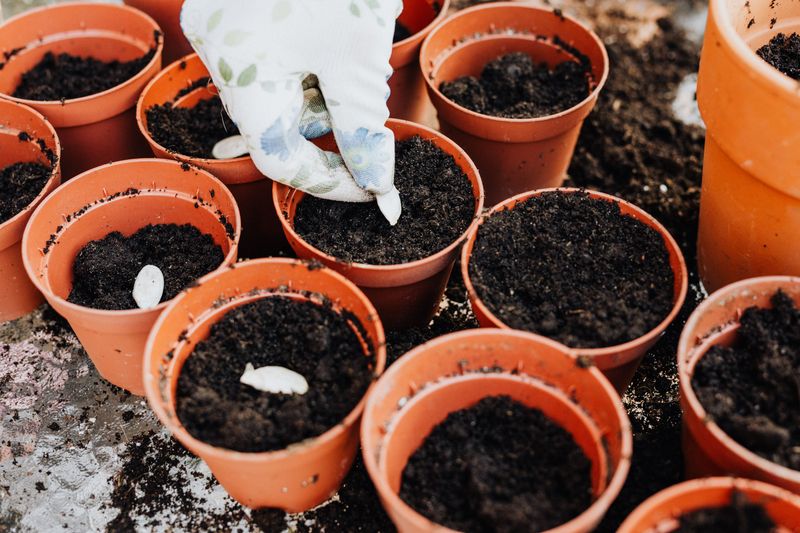
Saving seeds is another rewarding way to end the season. Rinse them, let them dry on a paper towel, and store them in an envelope.
Seeds from heirloom pumpkins can grow plants like their parents, barring cross-pollination. Hybrid seeds can produce surprise pumpkins, which can be fun if you like mysteries.
In New Jersey, plant pumpkin seeds outdoors from late May through mid June. Give them a sunny spot with lots of space, since the vines sprawl wildly.
Leftover pumpkins can draw rodents, deer, and bears in northern New Jersey. Compost them in a bin instead of leaving chunks out.
By next October, you might be picking pumpkins grown from this year’s display. That’s a garden loop worth celebrating with a slice of pie.