Don’t Let Spider Mites Ruin Your Arizona Marigolds This Week
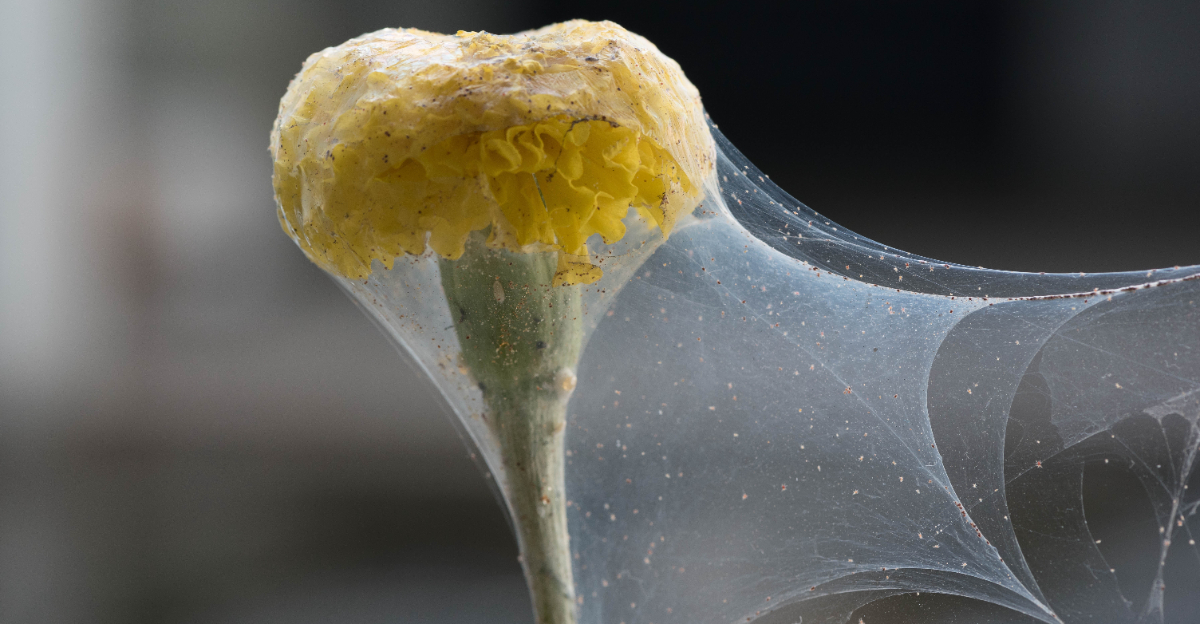
Your marigolds look fine one afternoon and ragged the next, and Arizona’s scorching stretch is exactly why. Tiny pests thrive in this kind of heat, multiplying fast while your plants sit stressed and thirsty under the sun.
Most gardeners spot the damage long after the real problem has settled in. By the time leaves turn speckled and dull, these invaders have already claimed the upper hand.
Fighting back doesn’t require special training or expensive gear. A sharp eye, a few household tricks, and a bit of consistency can turn the tide before your beds take a real hit.
Hot Dry Conditions Are Fueling An Outbreak Right Now
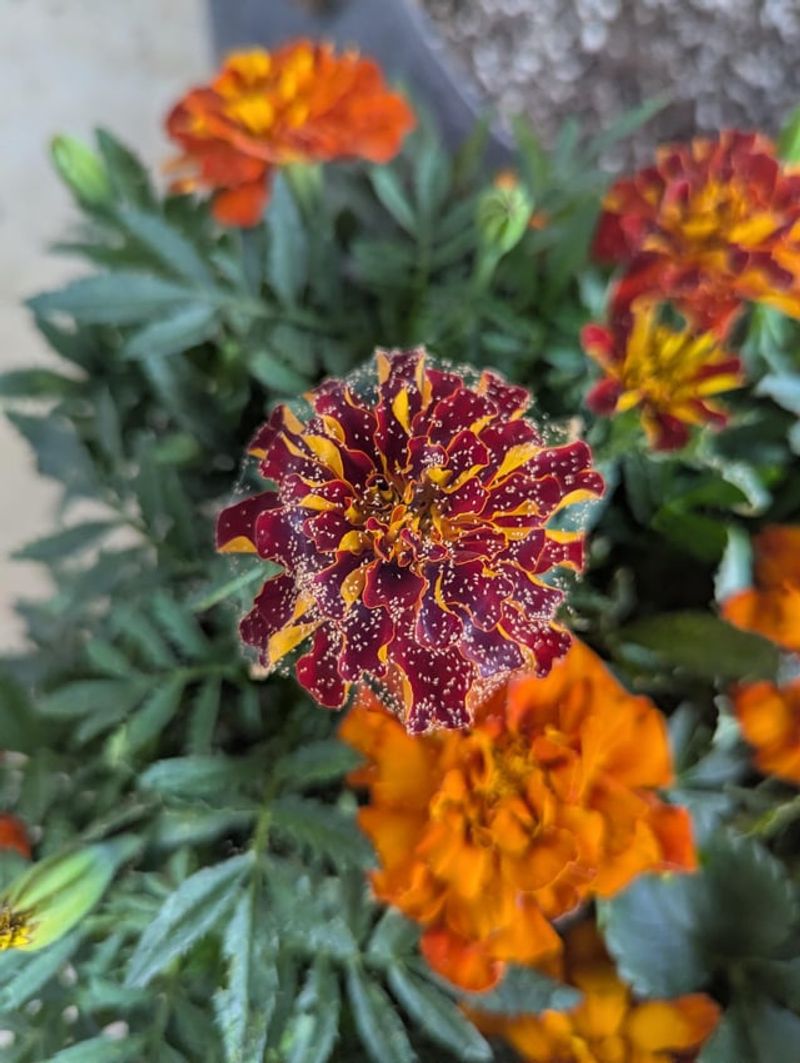
Your Arizona garden is basically a buffet right now. Spider mites thrive when temperatures climb above 90 degrees and humidity drops near zero.
Arizona’s summer conditions are almost perfectly designed for mite explosions. A single female can lay hundreds of eggs over just a few weeks.
When soil dries out fast and air stays parched, plants lose moisture quickly. That stress weakens their natural defenses against spider mites.
Marigolds are tougher than most flowers, but even they have limits. Once mite populations spike, damage spreads across a plant in under a week.
Hot afternoons also speed up the pest’s life cycle dramatically. What normally takes two weeks in cooler climates can happen in just five days here.
Knowing the weather is working against you is actually useful information. You can adjust your routine to check plants more often during heat waves.
Outdoor temperatures above 100 degrees push mites to the underside of leaves. That’s their favorite hiding spot during the hottest part of the day.
Shade cloth can help reduce leaf surface temperatures. Cooler leaves are slightly less attractive to mites looking for a new home.
This week’s forecast is exactly the kind that sends spider mite populations through the roof. Acting now, before you see visible damage, puts you way ahead of the problem.
Spotting Fine Webbing And Speckled Leaves Early

Tiny yellow dots on your marigold leaves are your first clue something is wrong. Those speckles appear where mites have been feeding on plant cells.
Hold a leaf up to sunlight and look closely at the surface. You might see faint, dusty webbing stretched between stems and leaf edges.
The webbing is actually what gives spider mites their name. It looks like the thinnest silk thread you have ever seen stretched across a plant.
Leaves that look dull, pale, or slightly bronzed are another sign to watch for. Healthy marigold leaves should be rich green and glossy looking.
Check the undersides of leaves too, since that’s where most mites hide. Flip a few leaves over and look with a magnifying glass if you have one.
You might spot tiny moving dots that are barely visible to the naked eye. Those moving specks are the actual mites crawling around and feeding.
Early detection makes a huge difference in how hard you have to work later. A small infestation caught in week one is much easier to handle than one caught in week three.
Your Arizona Garden Changes Every Week. Your Plan Should Too.
Gardening in Arizona changes quickly throughout the season. Every Friday you’ll receive a simple weekly plan showing exactly what to plant, prune, fertilize, harvest, and protect so you never miss the right timing.
Take a white piece of paper and tap a suspicious leaf over it. If tiny dots fall and start moving on the paper, you have confirmed mites.
Catching spider mites on your marigolds early is the single most powerful thing you can do. Everything else gets easier from that point forward.
Knocking Mites Off With A Strong Water Spray
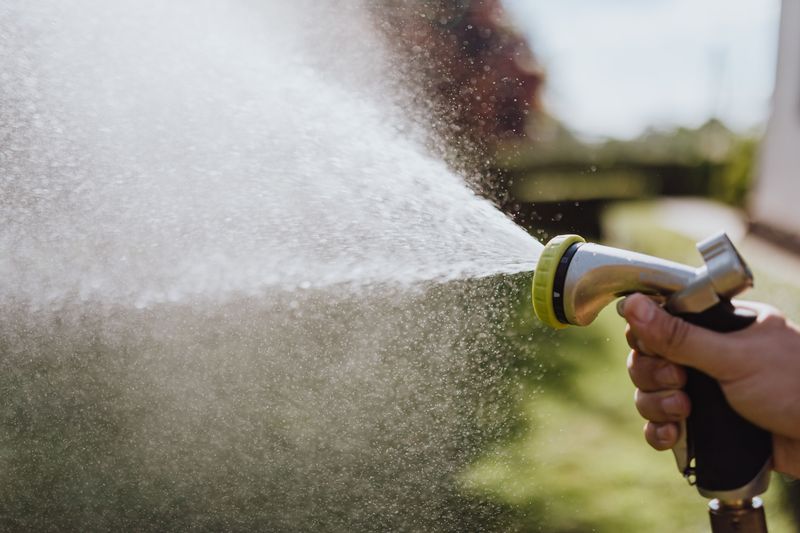
Sometimes the simplest fix is the most effective one. A strong blast of water from your garden hose can knock huge numbers of mites right off the plant.
Focus the spray on the undersides of leaves where mites cluster most heavily. That’s where the majority of the population lives and feeds during the day.
Use a nozzle setting that gives you a firm, steady stream without shredding the leaves. Marigolds are sturdy, but you don’t want to bruise the stems unnecessarily.
Do this in the morning so leaves have time to dry before evening. Wet foliage sitting overnight can invite fungal problems you definitely don’t want to add to the mix.
Repeat the water treatment every two to three days for best results. Mites that survive the first spray will be knocked back again before they can rebuild numbers.
This method works especially well for light to moderate infestations. If mites are already covering entire plants, you may need to pair water spraying with another treatment.
Move your spray nozzle in a sweeping motion to cover the whole plant. Missing even one heavily infested branch can allow the population to bounce back fast.
Water pressure also physically damages the soft bodies of mites. Many of them don’t survive being blasted off the plant and hitting dry ground below.
It costs nothing and requires no special products. That makes the water spray method a go-to first line of defense for any Arizona gardener dealing with spider mites on marigolds.
Neem Oil And Insecticidal Soap For Bigger Infestations
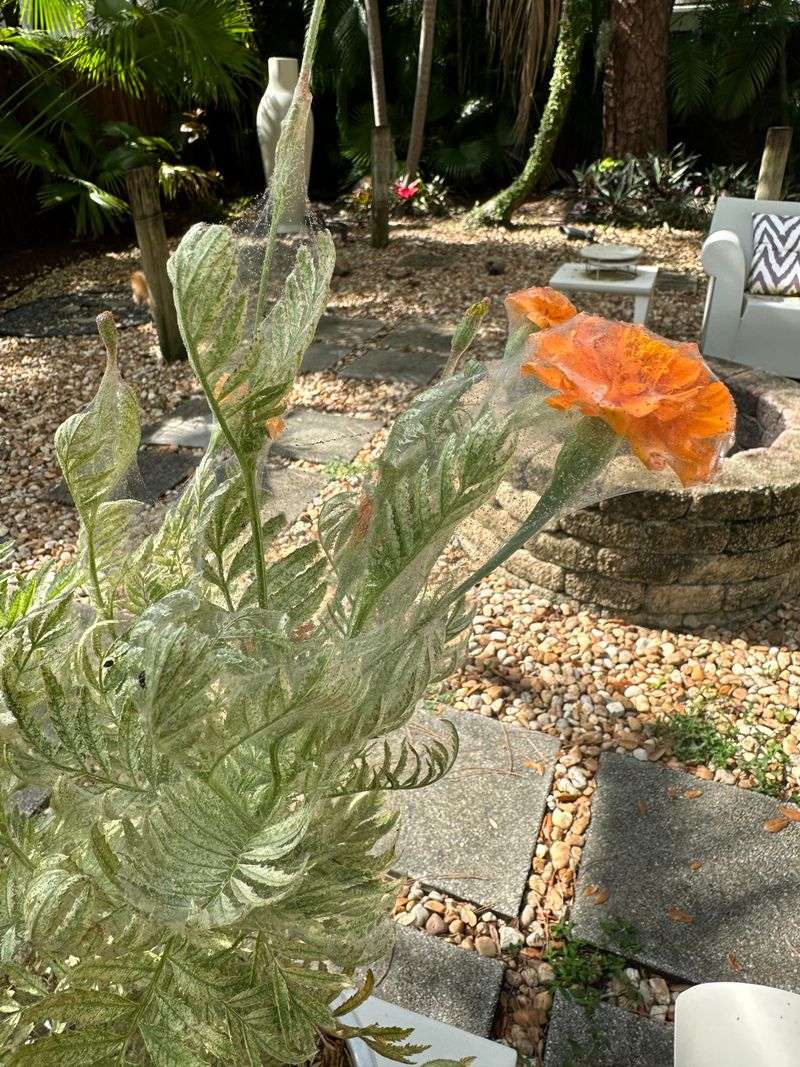
When water alone isn’t cutting it, neem oil steps up as a reliable organic option. It disrupts the mite’s ability to feed and reproduce without harsh chemical side effects.
Mix neem oil with a few drops of dish soap and water in a spray bottle. The soap helps the oil stick to leaf surfaces instead of beading off.
Insecticidal soap is another solid choice that works by breaking down the mite’s outer coating. Once that protective layer is gone, the pest cannot survive long.
Both products are widely available at garden centers and online. Look for formulas labeled safe for edible or ornamental gardens so you know you’re using something responsible.
Always spray during the cooler parts of the day, like early morning or late evening. Spraying in full midday heat can cause leaf burn on your marigolds.
Coat both the top and underside of every leaf you can reach. Missing the undersides is the most common mistake Arizona gardeners make when applying any spray treatment.
Neem oil also has a residual effect that keeps working for several days. That’s a big advantage over plain water, which has no lasting impact after it dries.
Plan to apply treatments every five to seven days for at least two full cycles. Mite eggs are resistant to most sprays, so you need repeat applications to catch newly hatched ones.
Staying consistent with neem oil or insecticidal soap gives your marigolds a real fighting chance. Don’t quit after one application and assume the problem is solved.
Encouraging Predatory Insects That Keep Numbers Down
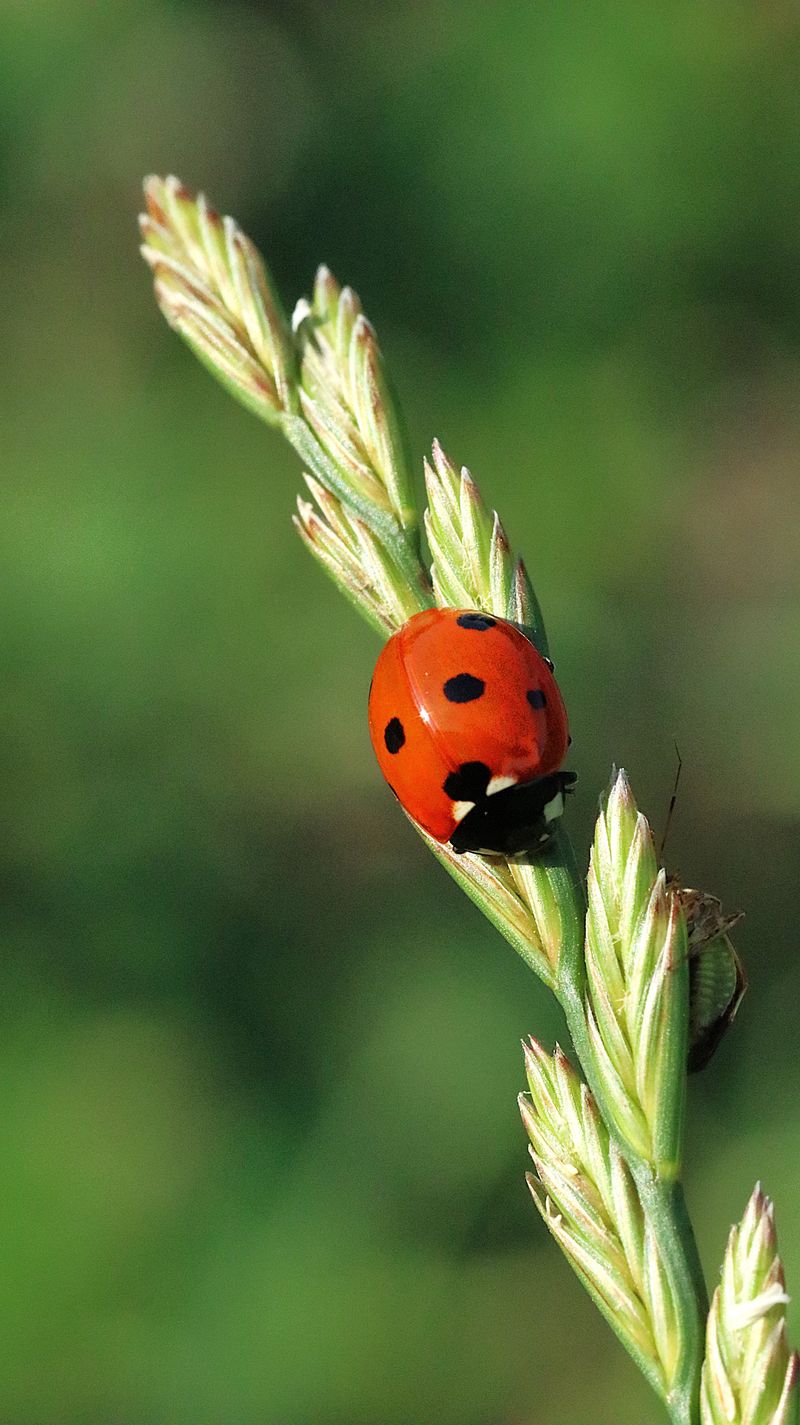
Nature already has a solution built in, and it’s called beneficial insects. Predatory bugs like ladybugs and lacewings eat spider mites at an impressive rate.
A single lacewing larva can consume hundreds of mites before reaching adulthood. That kind of natural control takes real pressure off your plants without any sprays involved.
Planting companion flowers near your marigolds helps attract these helpful bugs. Dill, fennel, and yarrow are known to draw predatory insects into the garden.
You can also purchase ladybugs or predatory mites from garden suppliers online. Release them in the evening so they settle into your Arizona garden instead of flying away immediately.
Predatory mites like Phytoseiulus persimilis are specialists that target spider mites specifically. They’re harmless to plants and move quickly through infested areas.
Avoiding broad-spectrum pesticides is critical if you want beneficial insects to stick around. Many chemical sprays wipe out the helpful bugs right along with the harmful ones.
Creating a garden environment that feels welcoming to predators takes a little planning. Water sources, diverse plantings, and reduced chemical use all make a difference over time.
Once you establish a population of beneficial insects, they provide ongoing protection. That’s a long-term payoff that chemical treatments simply cannot replicate on their own.
Think of predatory insects as tiny garden helpers keeping watch over your marigolds. Building that natural team is one of the smartest moves a gardener can make against spider mites.
Keeping Marigolds Stressed Less So Mites Move On
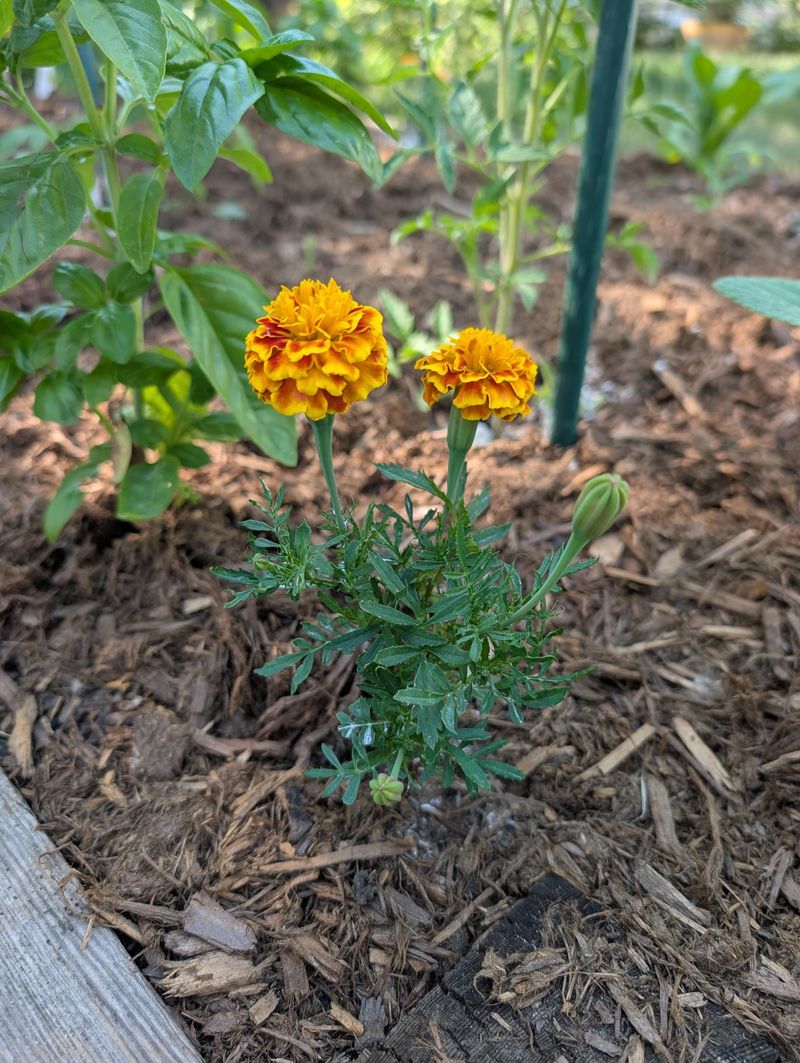
Stressed plants are mite magnets, plain and simple. When marigolds are thirsty, overcrowded, or starved of nutrients, they broadcast weakness that pests pick up on fast.
Consistent watering is one of the easiest ways to reduce plant stress during summer. Marigolds prefer deep, infrequent watering rather than shallow daily sprinkles that barely reach roots.
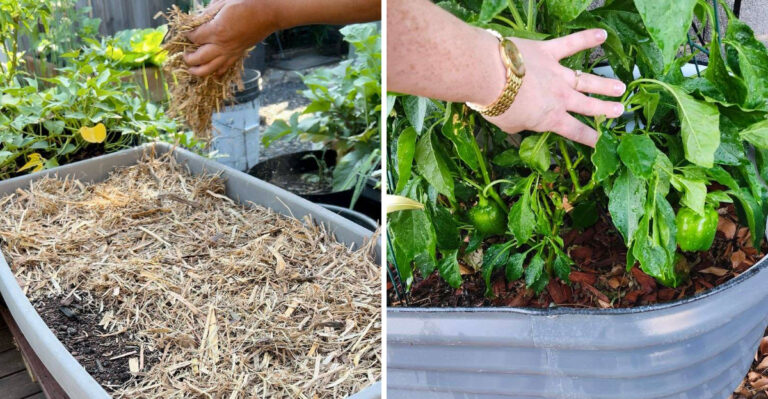
Adding a layer of mulch around the base of each plant helps the soil hold moisture longer. Two to three inches of mulch can make a noticeable difference in how often you need to water.
Avoid over-fertilizing with high-nitrogen products, since that creates lush, soft growth mites love. A balanced, slow-release fertilizer gives steady nutrition without making plants overly tender.
Pruning off damaged leaves keeps the plant focused on healthy growth. Removing weak tissue also eliminates hiding spots where mites like to set up camp.
Good air circulation between plants reduces the warm, stagnant pockets mites prefer. If your marigolds are planted too close together, consider thinning them out a bit.
Healthy root systems also help plants bounce back faster when mite damage does occur. Loosening compacted soil around the base of each plant encourages stronger root development.
Check your plants at least twice a week during the hottest stretch of summer. Early eyes on the problem mean faster action and less overall damage to your marigolds.
A low-stress marigold is simply harder for spider mites to take hold of. Give your plants what they need, and they’ll be far more capable of holding their own.