Pulling Weeds By Hand Instead Of Spraying Is Bringing Arizona’s Rock-Hard Soil Back To Life
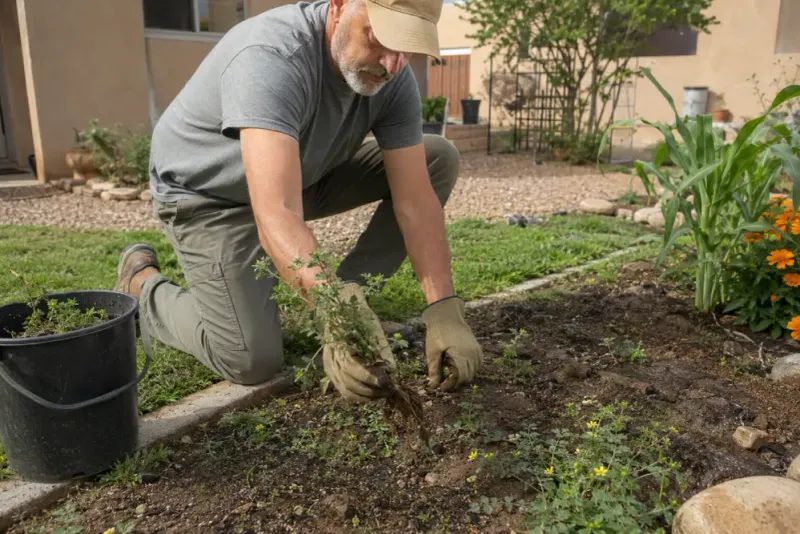
Hand-pulling weeds is a genuinely useful tool for Arizona homeowners, especially when you catch annual weeds before they drop their seeds. But a claim making the rounds suggests that ditching herbicides and pulling by hand can actually restore caliche-bound desert soil and revive its microbes.
That idea sounds appealing, but the evidence does not back it up. Weed control, soil microbe health, and caliche are three separate problems, and each one needs its own fix.
What hand-pulling can—and cannot—do
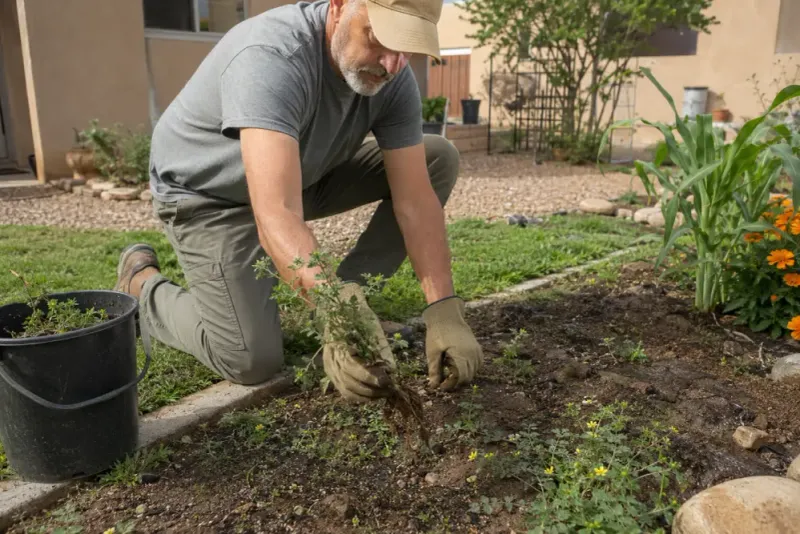
Hand-pulling is a real and practical weed-control method for Arizona yards, but a popular claim stretches it far beyond what it can actually deliver. The idea that pulling weeds instead of spraying is “bringing rock-hard soil back to life” sounds hopeful, yet the available guidance does not show that removing weeds reverses caliche or restores soil microbes.
Treating those as separate problems is not a technicality; it changes what you actually do in your yard.
Caliche is a layer of soil cemented together by calcium carbonate. University of Arizona Cooperative Extension guidance on caliche describes it as a formation that can restrict root growth and slow water movement through the soil profile.
It forms over long periods in arid climates and is not dissolved or broken up by changing how you remove weeds.
Hand-pulling does reduce weed pressure when done at the right time, and it avoids adding any chemical to the soil. Those are real benefits worth keeping.
The mistake is assuming that those benefits extend to fixing cemented soil or rebuilding underground microbial communities. Weed control is one job; addressing caliche and drainage is another job entirely.
Pull annual weeds before they set seed
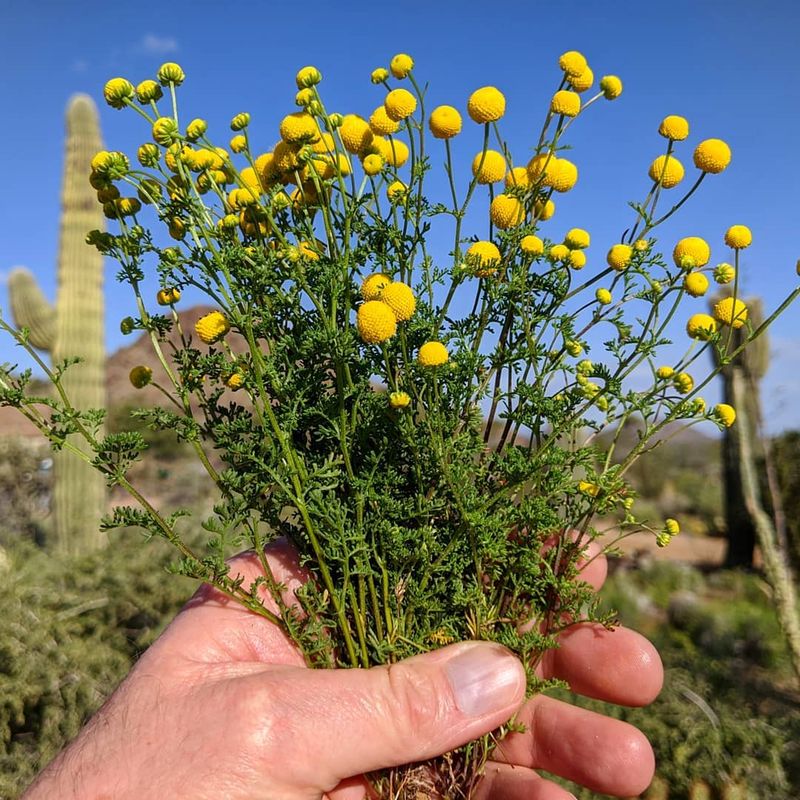
Timing is the single biggest factor in whether hand-pulling actually reduces your weed problem. Annual weeds complete their entire life cycle in one season, and each plant can produce hundreds or even thousands of seeds before it dries out.
Pull them while they are young and green, before any seed heads form, and you cut off that seed supply for future years.
University of Arizona weed management guidance confirms that removing annuals before seed production can reduce future weed populations, though dormant seeds already in the soil can continue germinating in later seasons. Expect improvement over time rather than an immediate weed-free yard.
Perennial weeds are a different challenge. Pulling seedlings early, before roots have grown deep, gives you the best chance of full removal.
Wait too long, and you may leave behind root fragments or a crown that can resprout. Some perennial species are persistent enough that hand-pulling alone will not finish the job.
Focus your early-season effort on the small, soft-stemmed plants you can remove cleanly, and revisit the site regularly so nothing has a chance to flower and drop seed.
Less disturbance does not prove microbial recovery
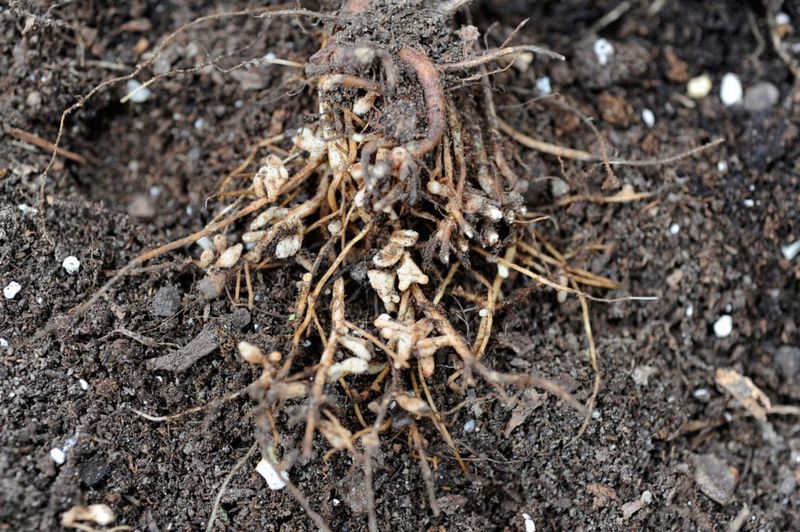
Hand-pulling disturbs the soil less than hoeing or rototilling, and that is a genuine advantage in established plantings. Calling it low-disturbance weeding is accurate.
Your Arizona Garden Changes Every Week. Your Plan Should Too.
Gardening in Arizona changes quickly throughout the season. Every Friday you’ll receive a simple weekly plan showing exactly what to plant, prune, fertilize, harvest, and protect so you never miss the right timing.
Calling it a way to restore soil microbes is a different claim entirely, and the distinction matters.
Living plant roots release compounds into the surrounding soil that feed and shape the microbial community in that zone, a relationship described in research on the rhizosphere. When you pull a weed, you also pull out its roots, removing that influence.
Whether microbial communities shift, stay the same, or recover depends largely on what grows in that spot afterward and on local soil and moisture conditions, not on the act of pulling itself.
The picture with herbicides is also more complicated than blanket warnings suggest. One field study of herbicide treatments in sugar-beet agriculture found only minor, short-lived differences in microbial community structure and no meaningful difference in measured soil functions among treatments.
A separate study of glyphosate-treated corn and soybean found no overall difference in root-associated microbial community composition after accounting for other variables. Neither study tested Arizona home yards or caliche soils, so their findings cannot be applied directly here.
The honest takeaway is that herbicide effects on soil microbes vary by product, soil type, and conditions, and the research does not justify a blanket claim in either direction.
Keep the ground covered after weeding
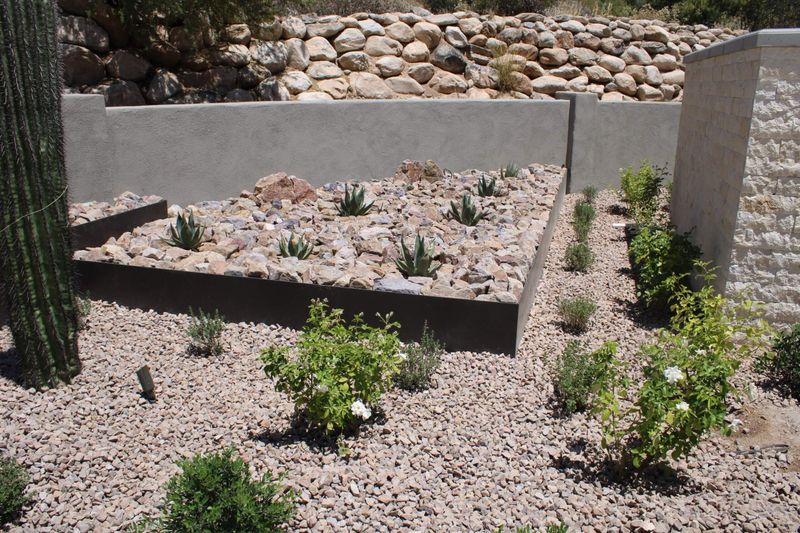
Clearing a patch of weeds and walking away is only half the job. Bare ground in an Arizona yard is an open invitation for the next round of weeds, and in the low desert, that next round can arrive within days after a monsoon rain or a mild stretch in late winter.
Keeping the soil covered is the follow-up step that makes weeding worthwhile. Arizona weed management guidance recommends occupying available space with suitable plants or applying organic mulch to reduce the conditions that favor annual weed germination.
Mulch shades the soil surface, moderates temperature swings, and makes it harder for weed seeds to make contact with bare ground and establish.
Native and desert-adapted plants serve double duty here. They fill the space that weeds would otherwise claim, and once established, they need far less water and attention than turf or non-adapted species.
You do not need to promise that mulch or native plantings will produce a weed-free yard forever. What they do is slow recolonization and give your desired plants a competitive edge.
Plan for a follow-up pass at the next weed flush rather than expecting one round of pulling to hold indefinitely.
Address caliche and drainage separately
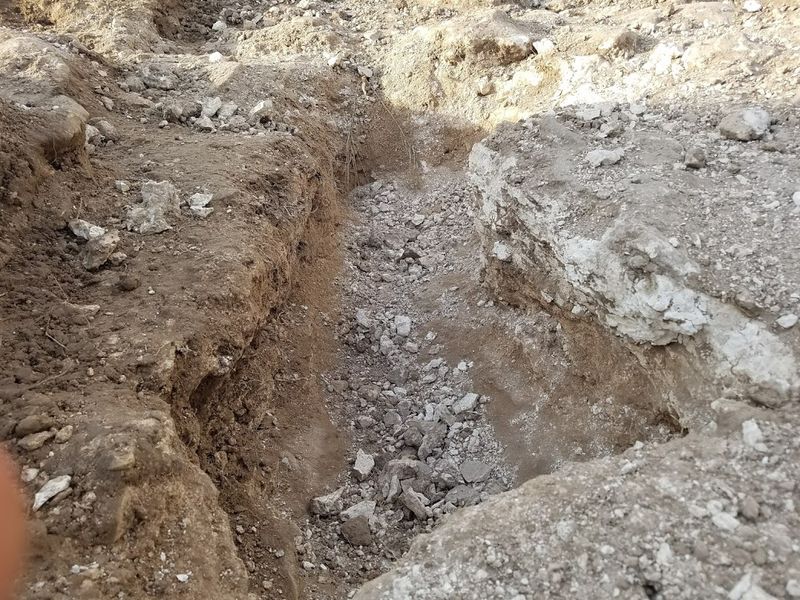
Caliche shows up in Arizona yards in more than one form. Sometimes it is loose, chalky lumps mixed into the upper soil.
Other times it is a dense, nearly rock-solid layer that sits just below the surface and stops roots and water in their tracks. Knowing which type you are dealing with changes what you do about it.
Before planting anything in a spot that seems to drain poorly or where plants repeatedly struggle, check whether caliche is the cause. Pour water into the planting hole and watch how quickly it soaks in.
If water pools and sits for an hour or more, a caliche layer is likely restricting drainage. University of Arizona guidance on managing caliche recommends physically removing the layer where practical or boring through it to create a drainage path before you plant.
Sulfur amendments come up frequently as a caliche fix, but they are not a universal solution. The same guidance specifies that sulfur is not appropriate for cacti, succulents, or other desert-adapted species, which make up a large share of what low-desert Arizona homeowners plant.
Applying it to the wrong plants can cause more harm than the caliche itself. Match your approach to your specific site conditions and the plants you intend to grow rather than reaching for a one-size remedy.
Identify the weed before you pull it
Not every weed in an Arizona yard is safe to grab bare-handed. Some common species can irritate skin, affect eyes, or even put you in contact with stinging insects hiding in the plant.
Spending thirty seconds identifying what you are about to pull is a reasonable precaution that can save you real discomfort.
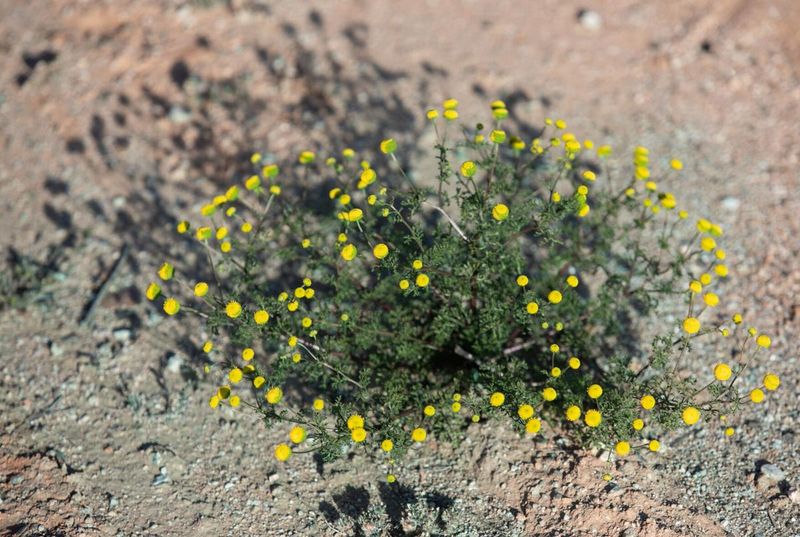
Stinknet is a good example. This spreading annual has become increasingly common in southern Arizona yards and roadsides.
Arizona Cooperative Extension guidance on stinknet recommends pulling it when the soil is moist or loose so the roots come out cleanly, and wearing gloves and long sleeves because some people develop skin sensitivity after contact with the plant. Removing it before the small yellow flower heads mature and release seed is the priority.
Spurge is another weed that rewards a cautious approach. Its milky sap can cause dermatitis in people with sensitive skin and may irritate eyes if you touch your face after handling it.
Arizona guidance on spurge also notes that the plant can harbor stinging ants, which adds another reason to look before you grab. If you encounter a weed you cannot identify confidently, photograph it and check with a local extension resource before handling it.
Pulling everything bare-handed and at speed is how minor yard work turns into an unpleasant afternoon.
Treat weed control and soil repair as two jobs
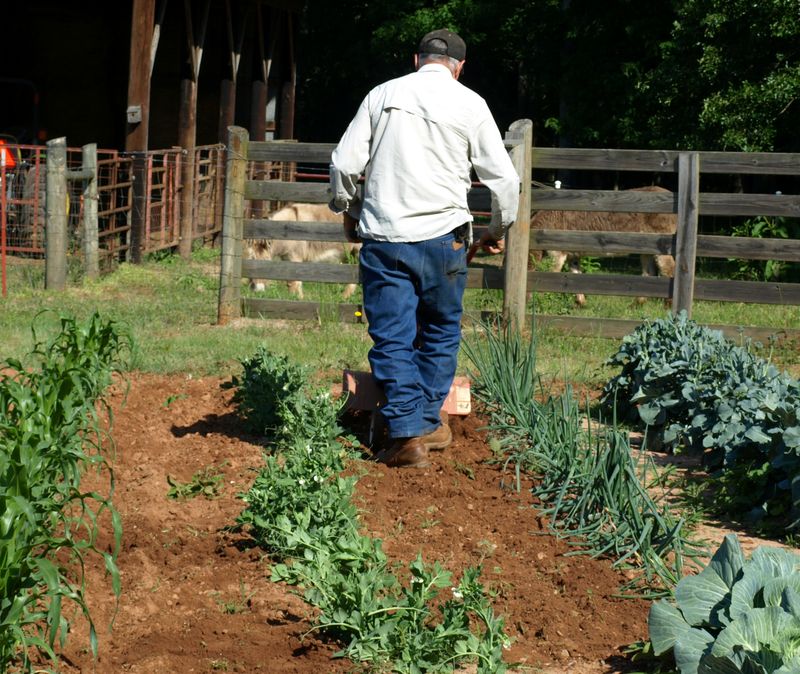
Pulling weeds at the right time, using the right protective gear, and covering bare ground afterward can make a real difference in how manageable your yard feels from season to season. Those steps work.
What they cannot do is fix cemented caliche, correct drainage, or guarantee a rebound in soil microbial communities.
Caliche and drainage problems need their own assessment and their own interventions, as the University of Arizona guidance makes clear. Soil microbe communities are shaped by what is actively growing in the soil and by local conditions; removing weeds changes what roots are present, and what replaces them matters more than the act of pulling itself.
Keep the two jobs separate in your planning. Pull weeds early and safely, mulch or plant to cover bare ground, and then assess any spots where drainage is slow or plants repeatedly fail.
A yard that handles both tasks deliberately will be more productive than one chasing a single fix. The most durable Arizona yards are built on honest assessments of what each intervention can actually accomplish.