The Telltale Signs Japanese Beetles Have Found Your Virginia Garden And What To Do Right Away
Your roses looked breathtaking yesterday. Today, they look like something chewed through them without a second thought.
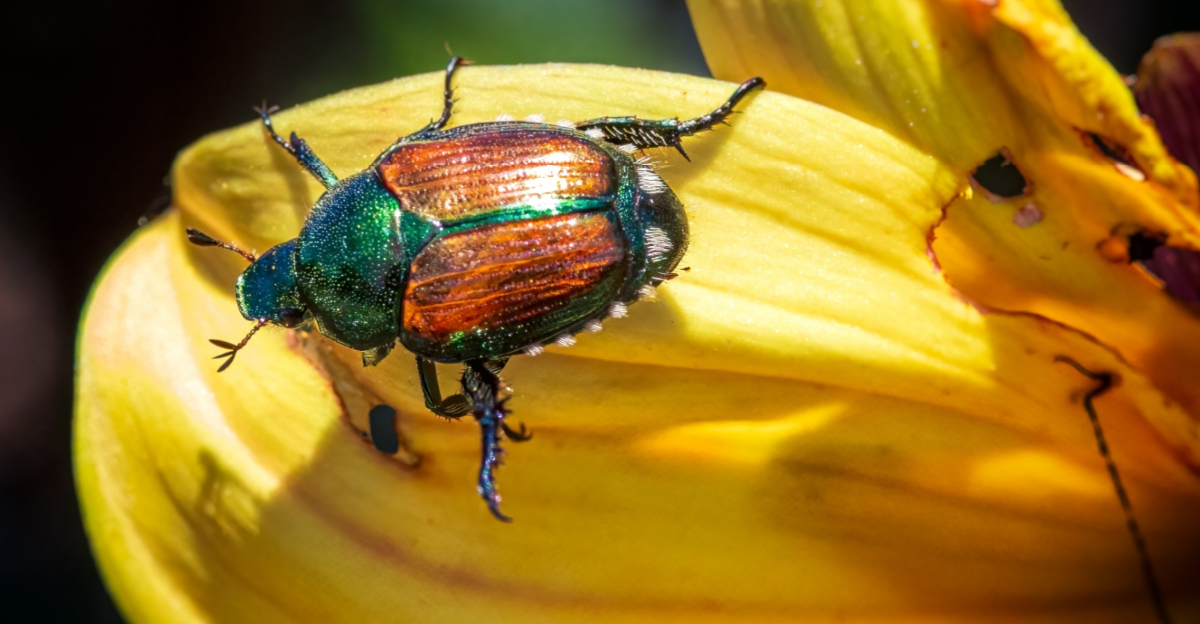
Small, shiny, and copper-green, the culprit has an appetite that makes no apologies and a taste for every thriving plant in your Virginia garden. These invaders do not snack.
They feast. They work through roses, grape leaves, fruit trees, and vegetable patches with a speed that feels almost calculated.
One day your garden is the envy of the neighborhood. The next, it resembles a collection of lace curtains flapping in the breeze. How does a healthy, thriving garden fall apart so fast?
The answer lives in how quickly these tiny visitors multiply and spread, moving from plant to plant without pausing once.
Virginia summers give them the perfect conditions to do exactly that. Catch the warning signs before the damage compounds, and you still hold the upper hand.
Miss them, and you hand your entire garden over without a fight. Know what you are up against before it dismantles everything you grew.
1. Skeletonized Leaves With Only Veins Remaining
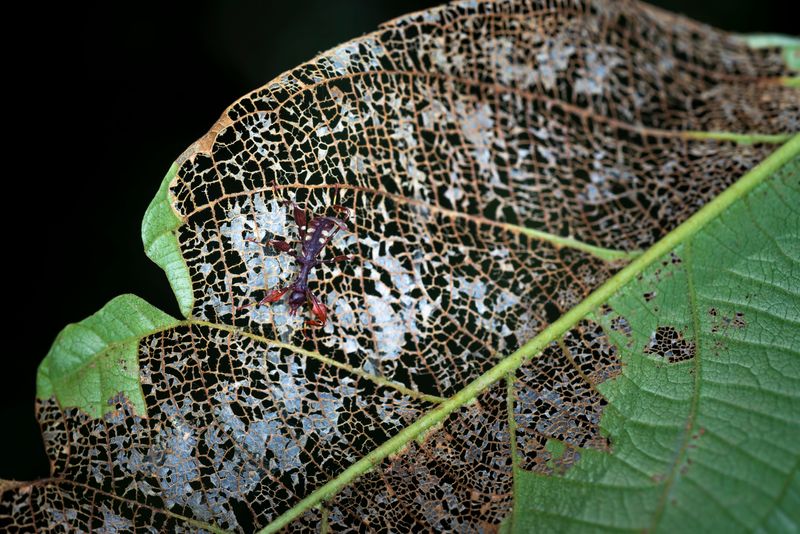
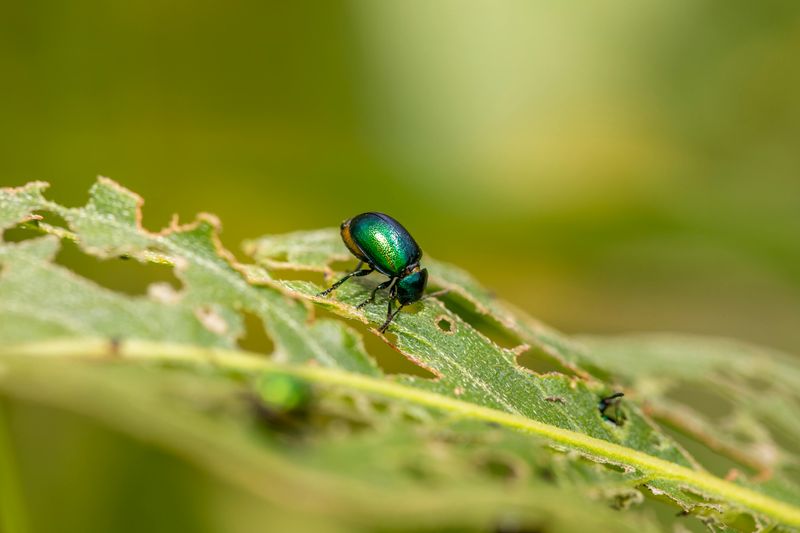
Your leaves look like tiny green fish skeletons. That eerie, lace-like appearance is one of the clearest signs Japanese beetles have moved into your garden.
These insects eat the soft tissue between leaf veins, leaving behind a ghostly web of green lines. The damage is surprisingly uniform and almost artistic-looking, which makes it easy to spot.
Skeletonized foliage weakens a plant fast. Without enough leaf surface, the plant cannot absorb sunlight properly, which slows photosynthesis and drains its energy.
Leaves that look this way will not recover, so removing them promptly helps redirect the plant’s strength to healthy growth. Check your rose bushes, linden trees, and grapevines first.
Those are the beetle’s favorite targets in most mid-Atlantic gardens. If you see skeletonized leaves clustered near the top of a plant, that is a strong clue the feeding started recently and the culprits may still be nearby.
Acting quickly when you spot this pattern matters. The sooner you identify and respond to the damage, the better chance your plants have of bouncing back before the season ends.
2. Chewed Or Missing Flowers And Fruit
Something ate your roses overnight. When Japanese beetles target flowers and developing fruit, the damage looks ragged and raw.
Petals get chewed to shreds, blooms disappear entirely, and small fruits develop irregular holes or simply drop before ripening.
Roses, raspberries, peaches, and apple trees are especially vulnerable to this kind of feeding. The frustrating part is how fast it happens.
A healthy rosebud that looked full and promising can be reduced to brown tatters within a few days.
Beetles tend to feed in groups, so when one finds a flower worth eating, others follow quickly and the damage multiplies.
Fruit loss is particularly discouraging for home gardeners who have been tending their trees all spring.
Partially eaten fruit often attracts secondary pests and fungal problems, which compounds the original damage.
Picking off affected blooms and fruit promptly reduces the scent signals that draw even more beetles to the area.
Your Virginia Garden Changes Every Week. Your Plan Should Too.
Gardening in Virginia changes quickly throughout the season. Every Friday you’ll receive a simple weekly plan showing exactly what to plant, prune, fertilize, harvest, and protect so you never miss the right timing.
Keeping a close eye on your flowering plants from late June onward gives you the best shot at catching this early. Early detection saves both your blooms and your harvest before the feeding frenzy fully kicks in.
3. Clusters Of Metallic Green-And-Copper Beetles On Plants
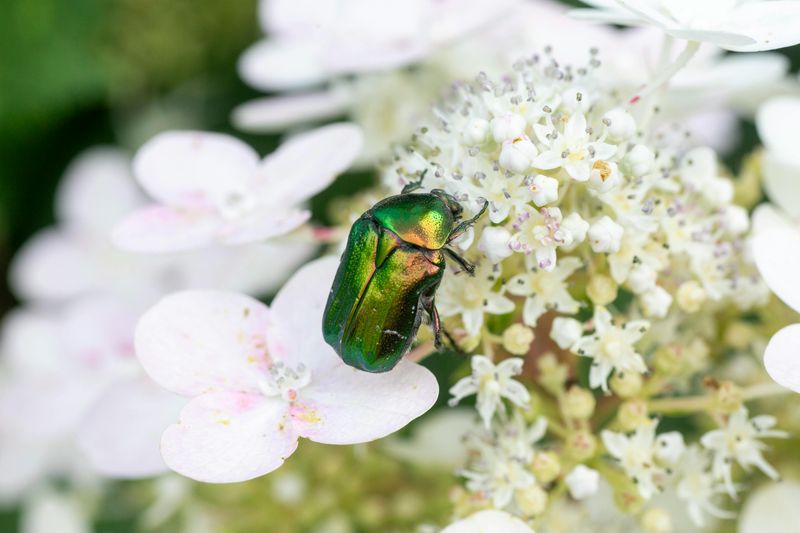
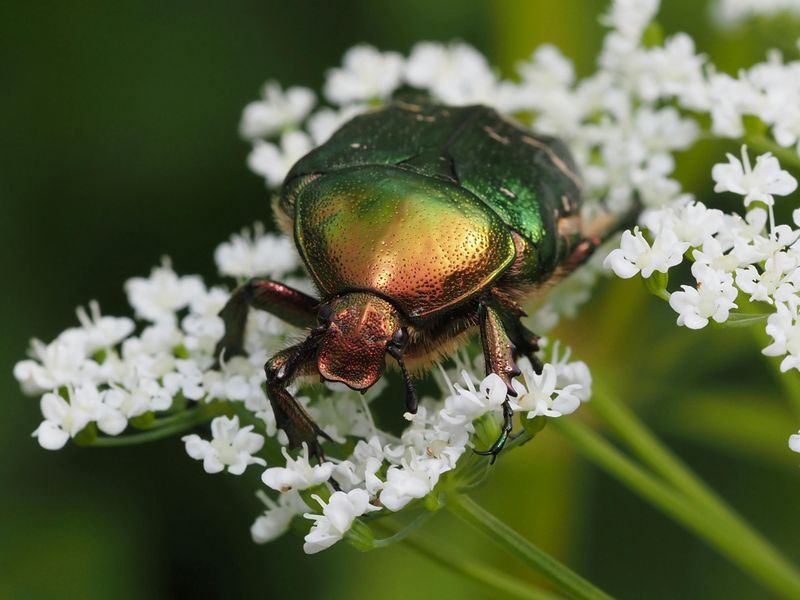
Shiny little beetles in a pile are never a good sign. Spotting clusters of metallic green-and-copper insects on your plants is one of the most unmistakable signs Japanese beetles have arrived.
These beetles have a distinct look: a bright green head and thorax, copper-colored wing covers, and tiny white tufts along their sides.
Once you know what they look like, you will never mistake them for anything else. They tend to gather on the sunniest, most exposed parts of a plant.
Warm, sunny days bring them out in the largest numbers, usually between 9 a.m. and 3 p.m.
A single plant can host dozens at once, all feeding and releasing aggregation pheromones that signal other beetles to join the party. The clustering behavior is both a vulnerability and a warning.
Because they group together, you can sometimes remove a large number at once with the right approach.
But it also means that one infested plant can quickly become a beacon that draws beetles from neighboring yards.
Checking your most susceptible plants daily during peak season lets you monitor population levels and take action before the numbers spiral out of control.
4. Beetles Dropping To The Ground When Plants Are Disturbed
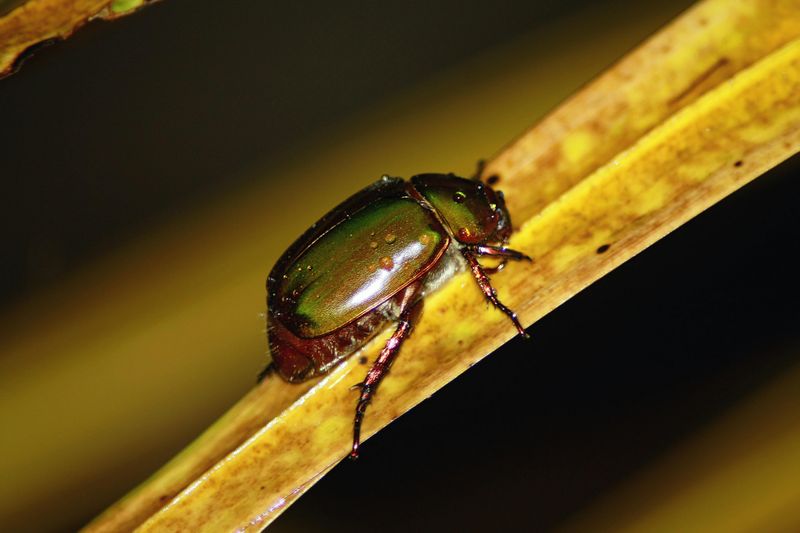
Shake a branch and watch what rains down. One quirky behavior that makes Japanese beetles easier to manage is their instinct to drop straight to the ground when they sense danger.
This is a startle reflex. The insect folds its legs and drops before it has a chance to fly away.
When a plant is suddenly disturbed, the beetles fold their legs and tumble off, landing in the soil below before flying away. Savvy gardeners use this habit against them.
Holding a container of soapy water under an infested branch and giving it a firm shake sends beetles plunging directly into the trap.
The soap breaks the water’s surface tension, preventing the insects from escaping before they sink. Timing matters for this technique.
Early morning is ideal because beetles are sluggish when temperatures are cool. They drop more reliably and are less likely to fly off before hitting the water.
Doing this daily during the peak feeding window can dramatically reduce the local population on your property.
This low-tech method requires no chemicals, costs almost nothing, and gives gardeners a satisfying sense of control during an otherwise frustrating season. Sometimes the oldest tricks really are the most effective ones.
5. Brown, Spongy Patches Of Lawn That Pull Up Easily
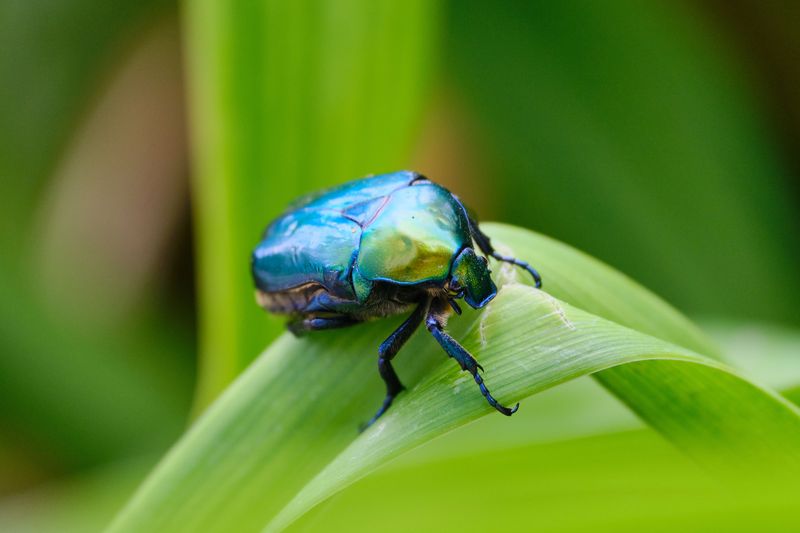
Your lawn is peeling up like a cheap carpet. Brown, spongy patches that lift away from the soil with almost no resistance are a classic sign of grub activity beneath the surface.
Japanese beetle larvae feed on grass roots from below, severing the connection between the turf and the soil. Once enough roots are gone, the grass simply has nothing left to hold onto.
These patches often appear in late summer and early fall, when the grubs are largest and most hungry. You might notice birds, skunks, or raccoons digging aggressively in your yard.
Those animals are not randomly tearing up your lawn; they smell the grubs underneath and are actively hunting them. A simple test can confirm your suspicion.
Grab a corner of the brown patch and tug gently. If it rolls back like a section of sod, grubs are almost certainly the cause.
Healthy grass with intact roots will resist being pulled up, but grub-damaged turf comes away with ease.
Catching this symptom early gives you a window to apply targeted grub control before the damage spreads across a larger portion of your lawn next season.
6. White C-Shaped Grubs In The Soil
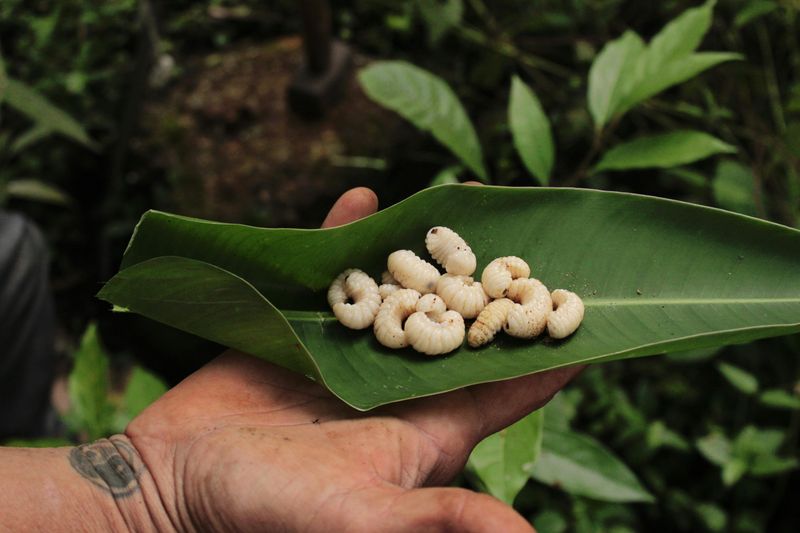
Flip over a patch of soil and prepare for a surprise. White, C-shaped grubs curled in the dirt are the larval stage of Japanese beetles.
Finding them confirms the problem goes deeper than what you can see above ground. These soft, creamy-white larvae have a tan-colored head and three pairs of small legs near the front of their body.
They can range from the size of a pencil eraser to about an inch long depending on their age. Grubs spend most of their lives underground, feeding on the roots of grass and ornamental plants.
A healthy lawn can tolerate a few grubs without showing visible damage. Once you find more than eight to ten per square foot, that threshold is high enough to affect most established lawns.
Counting them in a sample area helps you decide whether treatment is necessary. The grubs overwinter deep in the soil and move back up toward the surface in spring as temperatures rise.
By early summer, they pupate and emerge as the adult beetles that will soon be spotted on your plants.
Understanding this underground life cycle is key to breaking it and protecting both your lawn and garden from repeat infestations year after year.
7. Beetles Suddenly Appear In Late June Or July
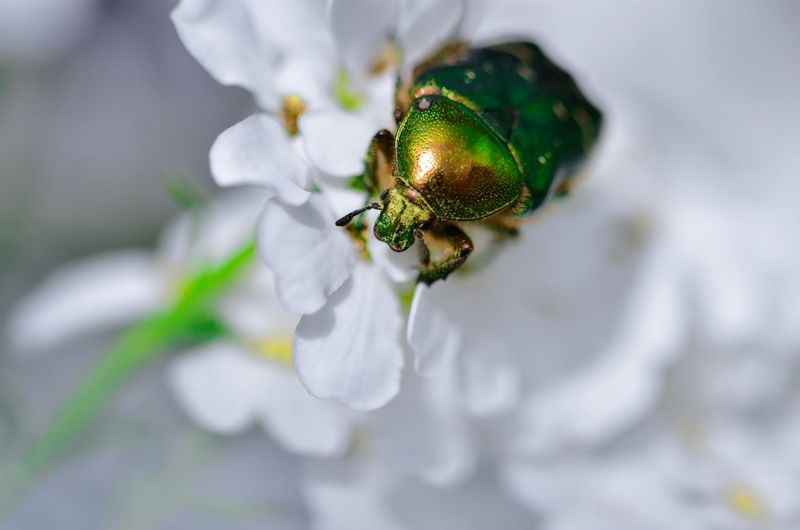
Mark your calendar: late June is when the invasion begins. Japanese beetles follow a remarkably predictable schedule.
Adults begin emerging from the soil in late June across most of Virginia, and their numbers typically peak through July before tapering off by mid-August.
Knowing this window in advance lets you prepare your defenses before the first beetle ever lands on a leaf.
The emergence timing is tied to soil temperature. Warm spring soils speed up the pupal development underground, while a cool, wet spring can delay adult activity by a week or two.
Either way, late June is your signal to start monitoring susceptible plants closely. During the peak six to eight week feeding period, adult beetles are mating, feeding, and laying eggs in nearby turf.
A single female can lay between 40 and 60 eggs over her lifetime, which means the population feeding in your garden today is also planning next year’s infestation.
Managing adults during this window directly reduces the next generation of grubs. Setting a reminder each year to begin monitoring in the third week of June puts you one step ahead.
That small habit means you are responding to early signs rather than scrambling to catch up after the damage has already started.
8. Hand-Pick Beetles Into Soapy Water Around 7 P.M.
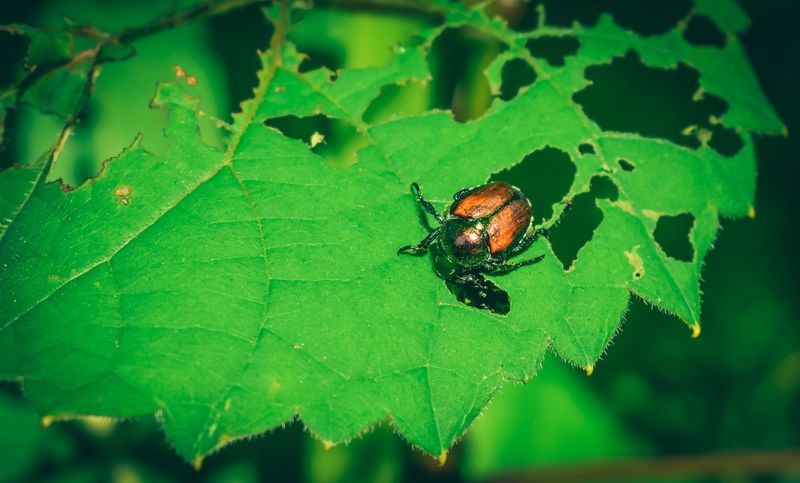
Seven in the evening is prime beetle-catching time. Hand-picking Japanese beetles into a container of soapy water is one of the most effective and chemical-free removal methods available to home gardeners.
The trick is timing: beetles become sluggish as evening temperatures cool, making them slower to fly and easier to knock into a waiting bucket.
A few drops of dish soap in the water is all you need to make the trap effective. Hold the container directly under the infested branch or flower.
A gentle tap or shake sends the beetles tumbling in before they can react. Work your way around the plant systematically, checking leaf undersides where beetles sometimes hide.
Doing this consistently every evening during the peak season can noticeably reduce the number of beetles on your plants within a week.
It takes patience, but many gardeners find the ritual oddly satisfying. You are taking direct, immediate action rather than waiting for a spray to work.
This approach is especially smart for edible gardens where you want to avoid any chemical residue on food crops.
Simple, safe, and surprisingly powerful, evening hand-picking deserves a spot in every gardener’s summer routine.
9. Apply Pyrethroid-Based Insecticides During Peak Season
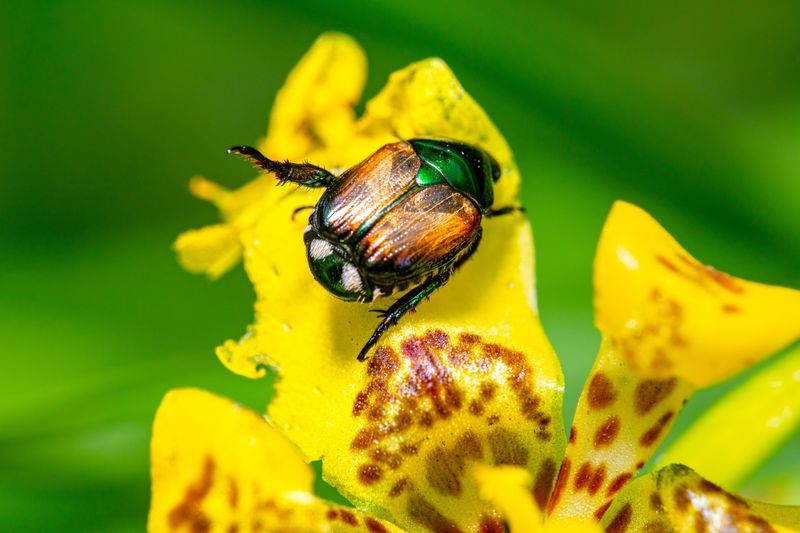
Sometimes a targeted spray is the most practical answer. Pyrethroid-based insecticides are among the most widely recommended chemical controls for adult Japanese beetles.
Products containing active ingredients like bifenthrin, cyfluthrin, or lambda-cyhalothrin are readily available at most garden centers. They reliably reduce feeding adult populations when applied correctly.
Always read the label carefully before mixing or spraying any pesticide product. Timing and repetition are critical for these sprays to work well.
A single application rarely provides season-long control because new beetles keep emerging and migrating from neighboring properties throughout July.
Reapply only according to the label if beetle pressure continues during peak feeding to maintain an effective barrier on your most valued plants.
Apply sprays in the early morning or evening to reduce the risk of harming beneficial pollinators like bees and butterflies.
Avoid spraying open flowers directly, and never apply when rain is expected within a few hours. Spray coverage should be thorough, reaching both the tops and undersides of leaves for best results.
Combining chemical controls with physical methods like hand-picking creates a more complete strategy. It reduces the total amount of product you need to use throughout the season.
10. Apply Preventative Grub Control In Late June Through Early July
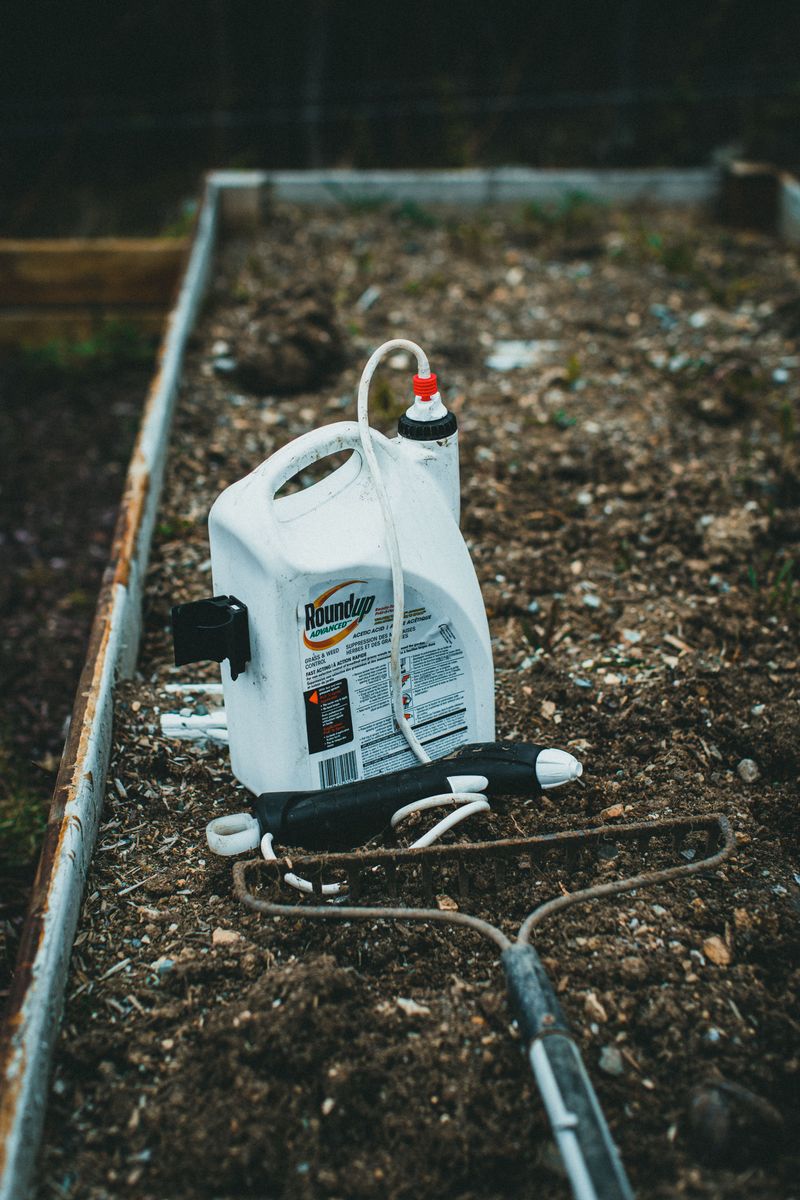
The best time to fight next year’s beetles is right now. Applying a preventative grub control product in late June through early July targets eggs and newly hatched larvae before they establish.
Products containing chlorantraniliprole or imidacloprid are widely available in both granular and liquid forms. Granular formulas are especially convenient for covering large lawn areas evenly.
Watering the product into the soil immediately after application is essential. Grub control treatments need moisture to move down through the root zone where young larvae are feeding.
Skipping the watering step significantly reduces how well the product performs. Preventative treatments are far more effective than curative ones applied after grubs are already large and established.
By late August or September, grubs have grown enough that most soil insecticides struggle to provide adequate control.
Getting the application down in early summer, when eggs are just hatching, gives the active ingredient the best possible chance to intercept the larvae early.
A healthy, well-watered lawn is naturally more resilient to moderate grub pressure. Pairing chemical prevention with good lawn care practices strengthens your overall strategy.
11. Use Row Covers During The 6 To 8 Week Feeding Period
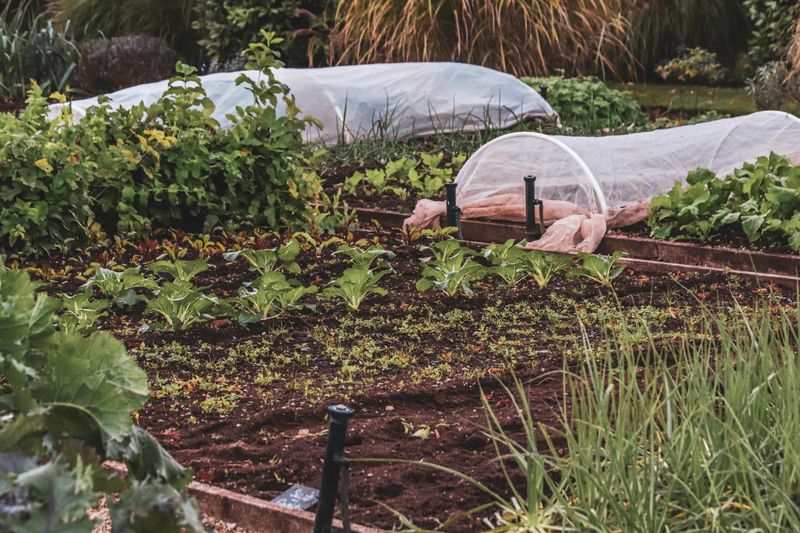
A simple sheet of fabric can save your entire vegetable garden. Floating row covers are lightweight, breathable fabric barriers that physically block Japanese beetles from reaching your plants.
Draping them loosely over garden beds and securing the edges with stakes, soil, or rocks creates an effective shield that requires no chemicals at all. They let in sunlight, air, and rain while keeping insects out.
Row covers work best on vegetable crops like beans, peppers, and sweet corn that do not require insect pollination.
For plants that need pollinators to produce fruit, remove covers briefly during morning hours when bee activity is highest. Replace them before mid-afternoon when beetle feeding picks up.
The covers need to stay in place for the full six to eight week adult feeding period, which typically runs from late June through mid-August in most parts of Virginia.
Checking the edges regularly ensures no gaps have opened up that would allow beetles to sneak underneath.
Row covers are reusable for several seasons if stored properly after each use, making them a cost-effective long-term investment.
Those who prefer to avoid pesticides entirely will find this method offers genuine, reliable protection without any chemical trade-offs.
12. Avoid Pheromone Traps As They Attract More Beetles Than They Catch
That yellow trap in your yard might be making things worse. Pheromone traps designed to lure Japanese beetles are widely sold at garden centers.
The idea sounds appealing: hang a trap, catch the beetles, solve the problem. Unfortunately, research consistently shows these traps attract far more beetles than they actually capture.
The powerful floral and sex-based lures draw insects from a wide area, essentially turning your yard into a beetle magnet.
Studies from university extension programs have found that gardens near active pheromone traps often suffer more plant damage than gardens with no traps at all.
Beetles fly toward the scent, overshoot or miss the trap entirely, and land on your plants instead. The trap becomes a recruitment tool rather than a solution.
Moving them well away from your garden beds reduces how much of the attracted population ends up on your plants. Aim for at least 30 feet as a minimum, though further is better.
Some experts suggest placing them at the edge of the property or in an open area away from any desirable vegetation.
Skipping the pheromone trap entirely and focusing on proven methods like hand-picking and targeted sprays protects your garden far more effectively. No scented lure comes close to matching that.