Drought-Tolerant Michigan Perennials That Don’t Need Watering To Bloom All Summer
There’s a stretch every Michigan summer when the rain just stops showing up. The forecast keeps teasing it, the ground gets hard, and gardens that depend on regular moisture start looking rough by August.
Some gardeners water through it, hauling hoses around and running up water bills. Others have figured out a better approach: build the garden around plants that genuinely don’t need the extra help.
Drought-tolerant perennials often get a reputation for being boring or sparse, but Michigan’s native and adapted plant palette tells a very different story.
Several of them bloom for weeks straight without a drop of supplemental water, hold their color deep into fall, and come back stronger each year.
A garden that looks great in a drought year is a garden you actually enjoy instead of stress over.
1. Butterfly Weed
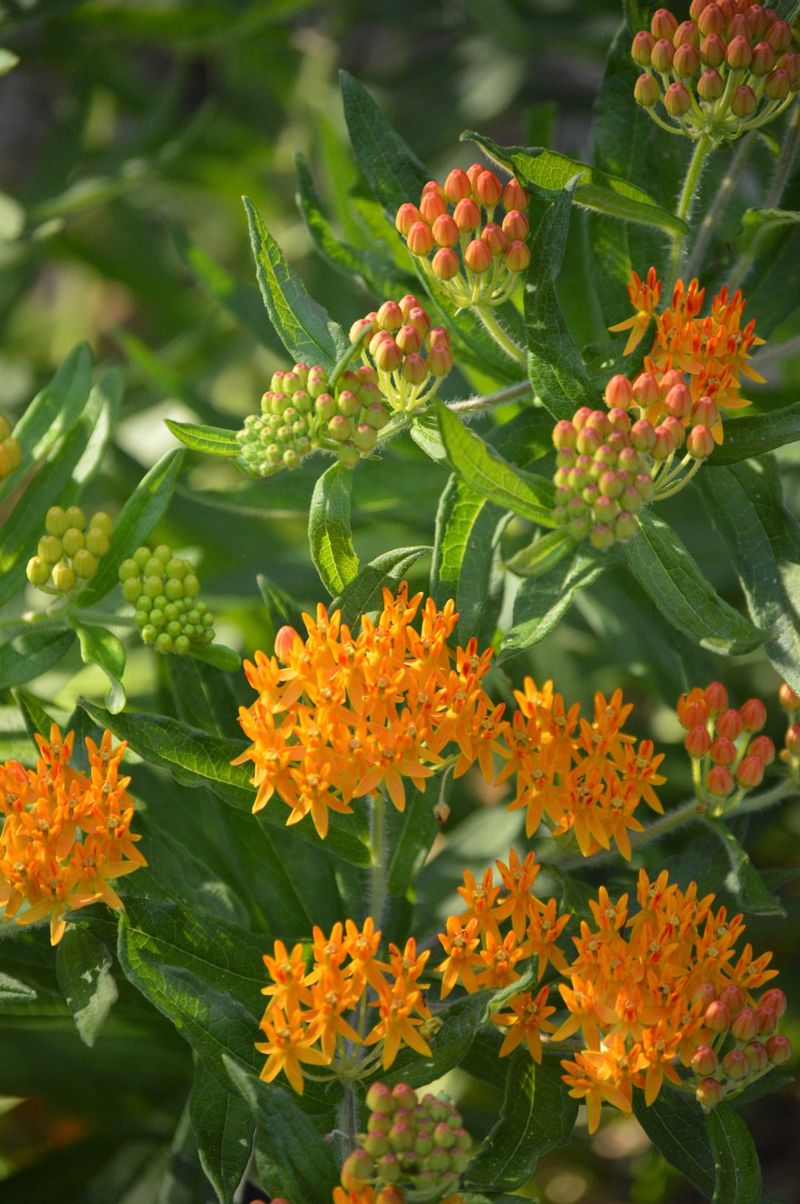
Few plants stop people in their tracks quite like butterfly weed in full bloom. Those electric orange flower clusters practically glow under the Michigan summer sun, and the best part is that this plant genuinely prefers dry, sandy soil.
Overwatering is actually one of the few things that can cause it trouble, so less attention from you means more reward from it.
Butterfly weed belongs to the milkweed family, which makes it a critical food source for monarch butterfly caterpillars. Planting it is one of the easiest ways any gardener can help support monarch populations, which have been declining for years.
You get a gorgeous plant and you become part of something bigger at the same time.
It blooms from June through August and grows about one to two feet tall. Once established, the deep taproot pulls moisture from far below the surface, so even during a stretch of hot, dry weeks it stays vibrant and full.
Plant it in full sun and well-drained soil, and then step back and enjoy. Butterflies, bees, and hummingbirds will flock to it all season long, turning your garden into a lively, colorful scene that practically runs itself.
2. Lanceleaf Coreopsis
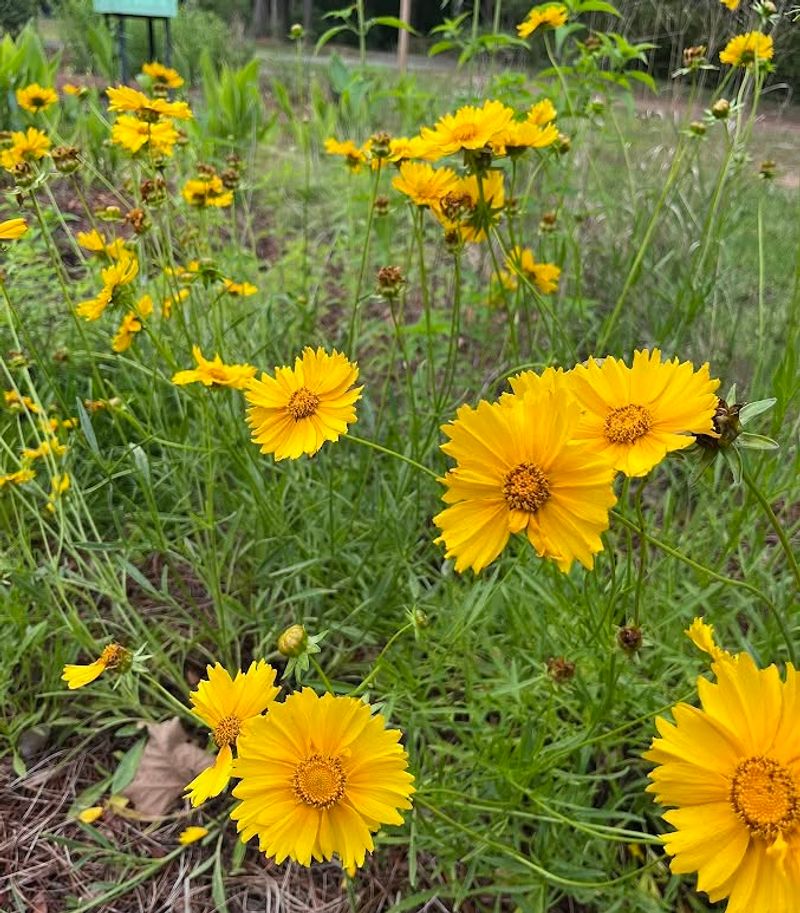
Bright yellow and cheerful from the moment summer kicks off, lanceleaf coreopsis is the kind of plant that makes your garden look like you put in way more work than you actually did.
It starts blooming in late spring and keeps those sunny, daisy-like flowers coming well into midsummer.
In many gardens, a light trim after the first big flush of blooms will encourage a second round of flowers before the season wraps up.
This native perennial is incredibly adaptable. It handles poor, sandy soils without complaint and thrives in spots where other plants would struggle.
Full sun is its preference, and once established after its first season, it rarely needs any supplemental watering even during our hottest dry spells. That kind of independence is hard to find in a garden plant.
Growing one to two feet tall, lanceleaf coreopsis fits beautifully along borders, in rock gardens, or mixed into a naturalized planting area. It spreads gradually over time, slowly filling in gaps and creating a dense, weed-suppressing mat of foliage.
Your Michigan Garden Changes Every Week. Your Plan Should Too.
Gardening in Michigan changes quickly throughout the season. Every Friday you’ll receive a simple weekly plan showing exactly what to plant, prune, fertilize, harvest, and protect so you never miss the right timing.
Pollinators absolutely love it, so expect plenty of bees and small butterflies visiting throughout the season. For gardeners who want bold, reliable color without the maintenance routine, this plant delivers every single summer without fail.
3. Purple Coneflower
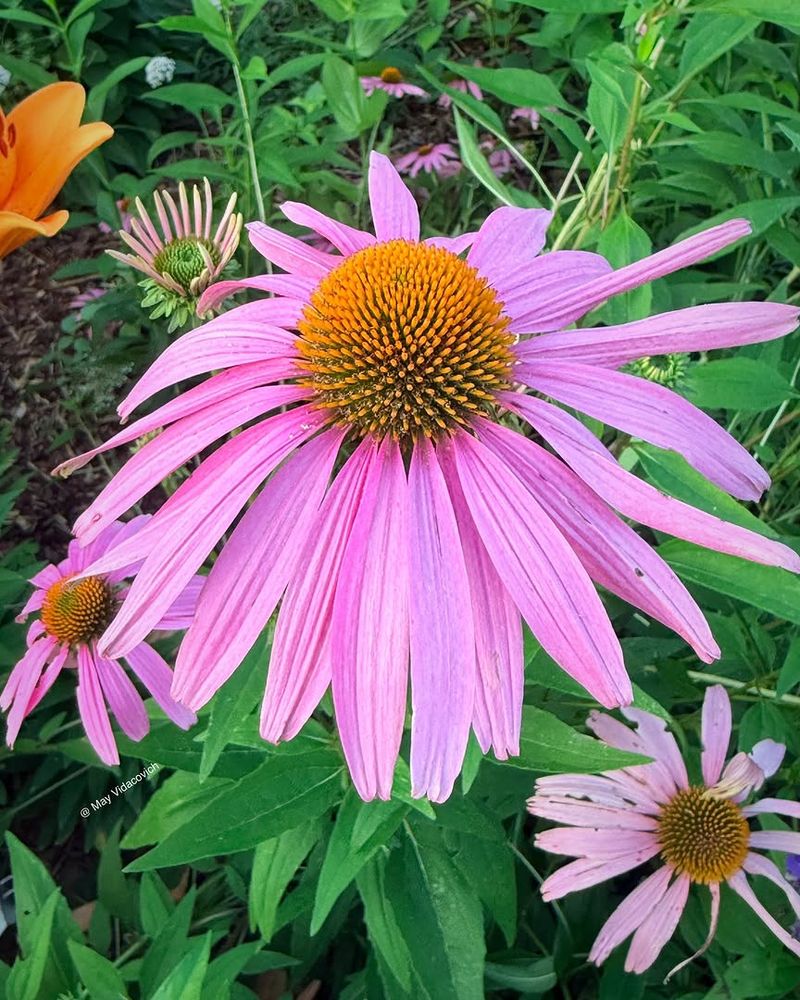
Purple coneflower might just be the most recognized native perennial in the entire Midwest, and Michigan gardeners have been growing it for good reason for generations.
Those bold pink-purple petals surrounding a spiky orange-brown center cone are unmistakable, and they keep blooming from July all the way into September.
Few plants offer that kind of staying power through the heat of summer.
What makes echinacea especially impressive is how completely unbothered it is by dry conditions. Once it roots in during its first year, it draws on deep soil moisture and handles weeks without rain like a champ.
Average to poor soil actually suits it better than rich, amended garden beds, which tend to make the plants flop over. Sandy or loamy soils are genuinely ideal. Beyond the blooms, purple coneflower keeps giving even after the petals fade.
The seed heads that remain through fall and winter are a favorite food source for goldfinches and other songbirds, so leaving them standing rather than cutting them back is actually the smarter move.
Plants grow two to four feet tall and work beautifully in mixed perennial borders, pollinator gardens, or naturalized areas. For anyone who wants a plant that is showy, wildlife-friendly, and genuinely low-maintenance, echinacea checks every single box.
4. Wild Bergamot
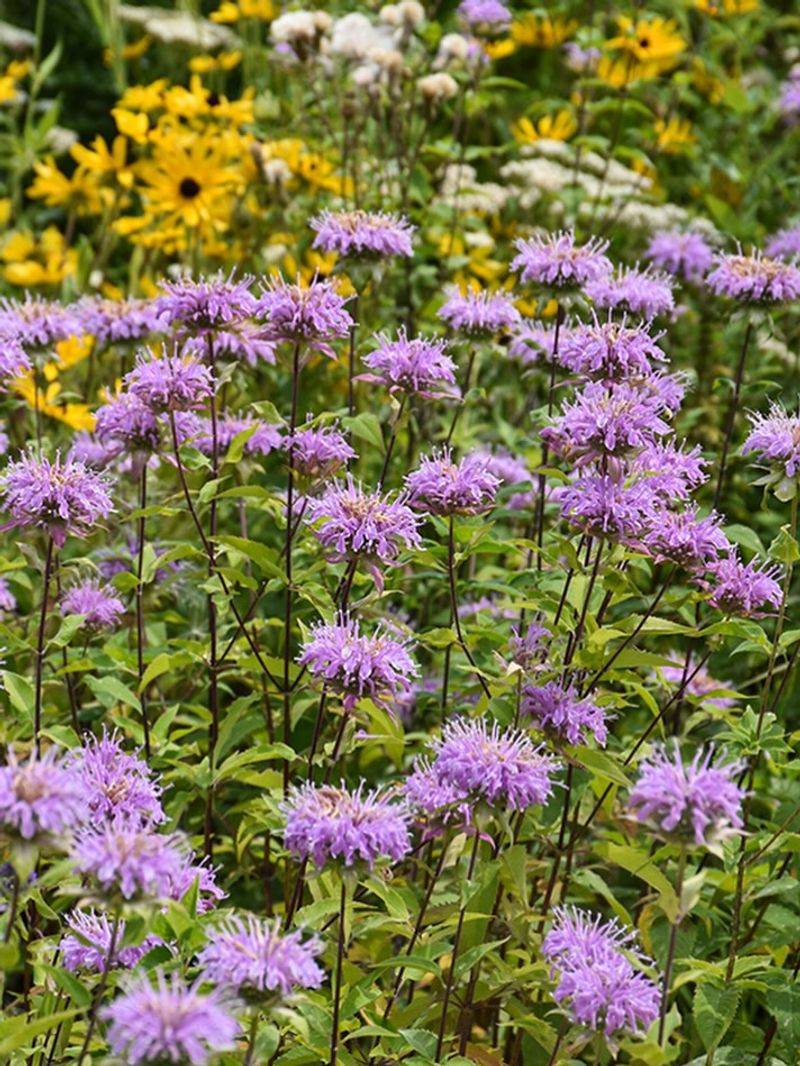
There is something wonderfully wild and untamed about a patch of wild bergamot in full bloom.
The lavender flower heads are soft and shaggy-looking, almost like little fireworks frozen in place, and they attract an astonishing variety of pollinators from bumblebees to hummingbird moths.
Midsummer is when this native truly shines, filling the garden with color and movement all at once.
Unlike its showier cousin bee balm, wild bergamot is far more tolerant of dry conditions and poor soils. It was built for the prairies and open woodlands of the Midwest, which means our variable summer weather suits it perfectly.
Once established, it spreads gradually through underground rhizomes, creating a natural-looking colony that fills in over time without becoming aggressive or invasive.
Crush a leaf between your fingers and you will notice a pleasant, oregano-like fragrance. That scent is not just pleasant for humans.
It is also part of why deer tend to leave this plant alone, making it a smart choice for Michigan gardens where deer pressure is a real concern. Plants grow two to four feet tall and prefer full sun to light shade.
Pair it with purple coneflower or lanceleaf coreopsis for a stunning, pollinator-packed combination that practically takes care of itself from July through late August.
5. Yarrow
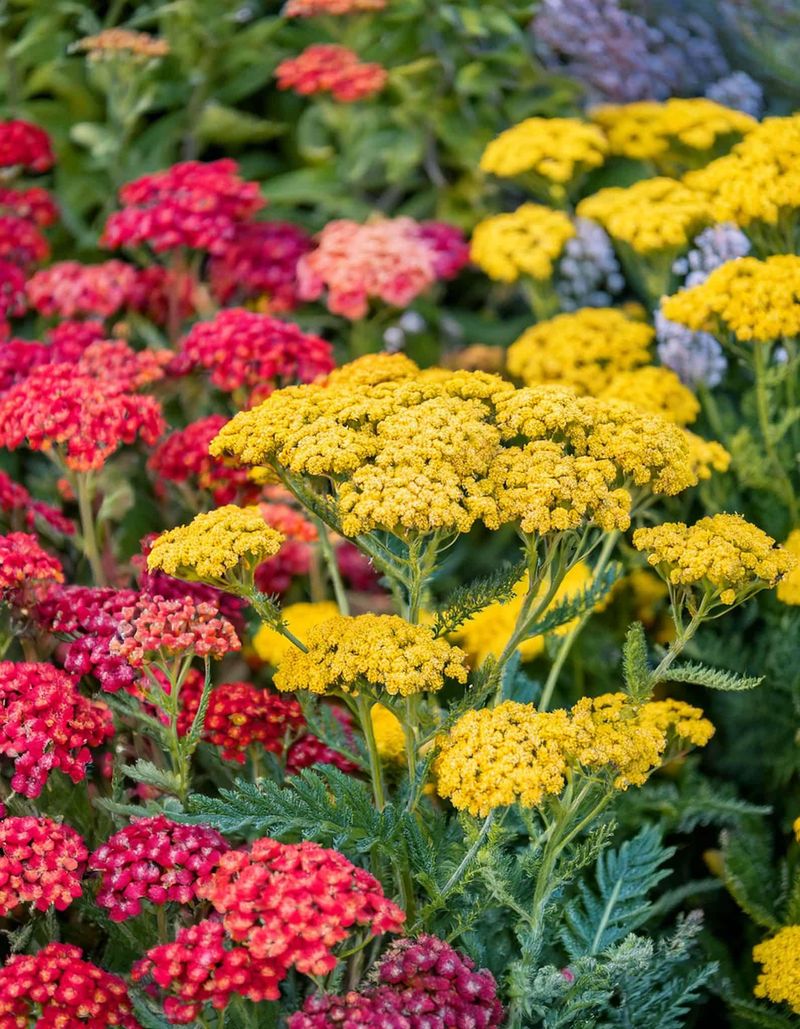
Yarrow has been growing in fields, meadows, and roadsides across Michigan for so long that many people mistake it for a wildflower rather than a garden plant. Technically, it is both.
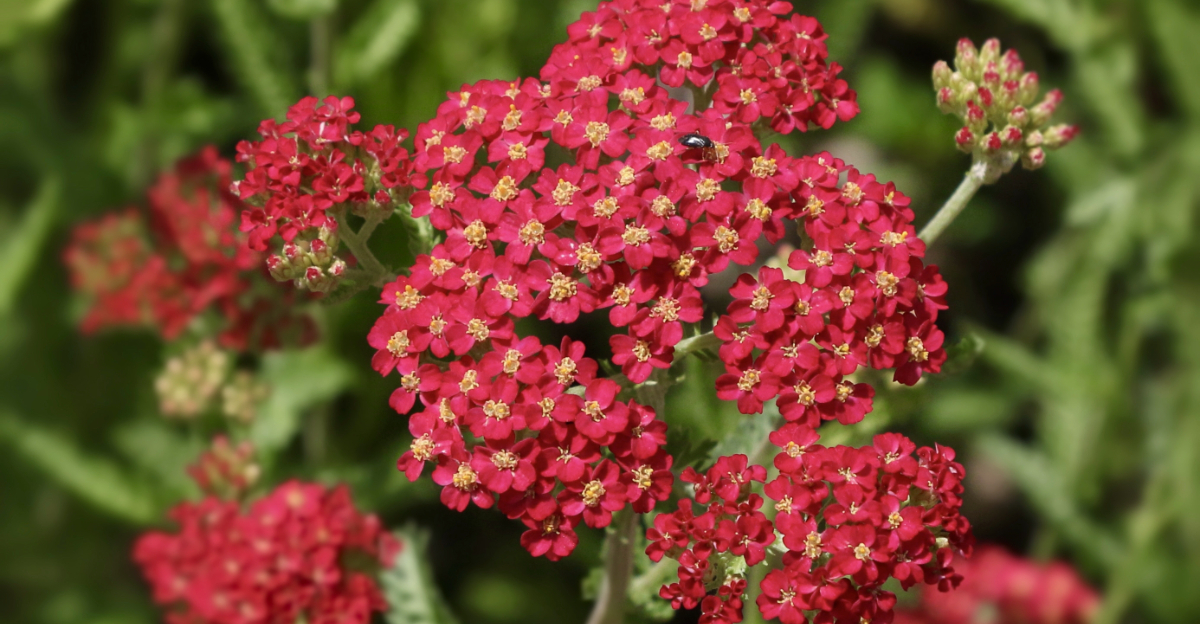
The flat-topped flower clusters, which come in white, yellow, pink, and red depending on the variety, sit above feathery, fern-like foliage that smells faintly herbal when brushed.
It is one of those plants that looks polished and intentional even when it is basically growing on its own.
Hot, dry summers are where yarrow truly thrives. It was practically designed for neglect.
The more sun and the drier the soil, the more compact and floriferous it tends to be. Wet, clay-heavy soils are actually more of a challenge for yarrow than drought, so Michigan’s sandier garden spots are genuinely perfect for it.
Blooms appear from June through September, with deadheading encouraging fresh flushes of color.
Growing one to three feet tall, yarrow works well in borders, cottage gardens, and cut flower arrangements. The flat flower heads are a landing pad for dozens of beneficial insect species, including parasitic wasps that help control garden pests naturally.
That makes yarrow a quiet but powerful ally in any organic garden. For a plant that asks almost nothing and gives back an enormous amount of beauty and ecological value, yarrow is tough to beat.
6. Threadleaf Coreopsis
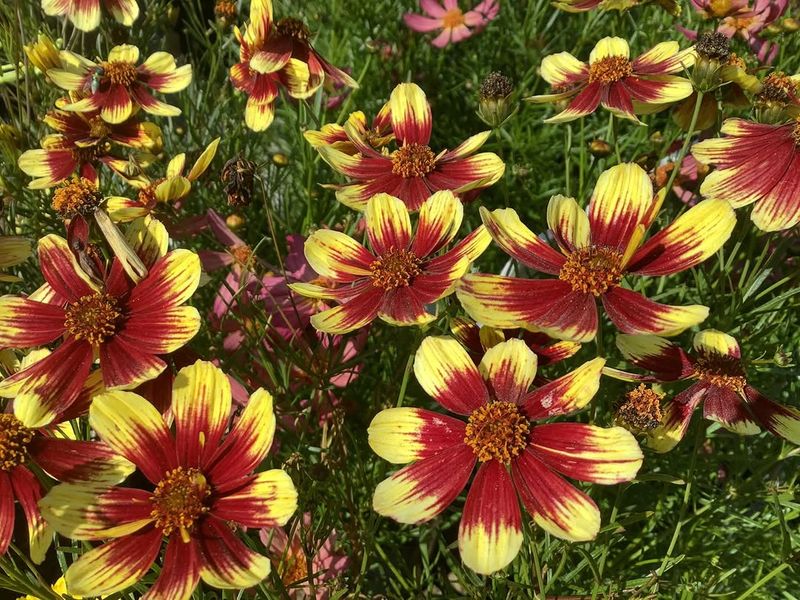
If you want nonstop yellow from June all the way through September, threadleaf coreopsis is the plant for the job. Unlike many perennials that give you a big show and then go quiet, this one keeps producing masses of small, bright yellow flowers for months without pause.
The foliage itself is delicate and thread-like, giving the plant an airy, wispy texture that contrasts beautifully with bolder garden plants nearby.
Threadleaf coreopsis is one of the most reliably drought-tolerant perennials available for Michigan gardens. Once it settles in after its first season, it rarely needs anything beyond occasional rainfall.
It actually performs better in lean, well-drained soil than in rich garden beds, where it can get floppy and overblown. Full sun is non-negotiable for the best bloom production, so choose a spot that gets at least six hours of direct light daily.
The variety ‘Moonbeam,’ which produces soft, creamy yellow flowers, is especially popular in Michigan gardens and was even named Perennial Plant of the Year back in 1992 by the Perennial Plant Association.
Plants stay relatively compact at one to two feet tall, making them ideal for the front of a border or along a sunny pathway.
Pair threadleaf coreopsis with purple coneflower or wild bergamot for a color combination that is bold, easy, and absolutely stunning all summer long.
7. Rough Blazing Star
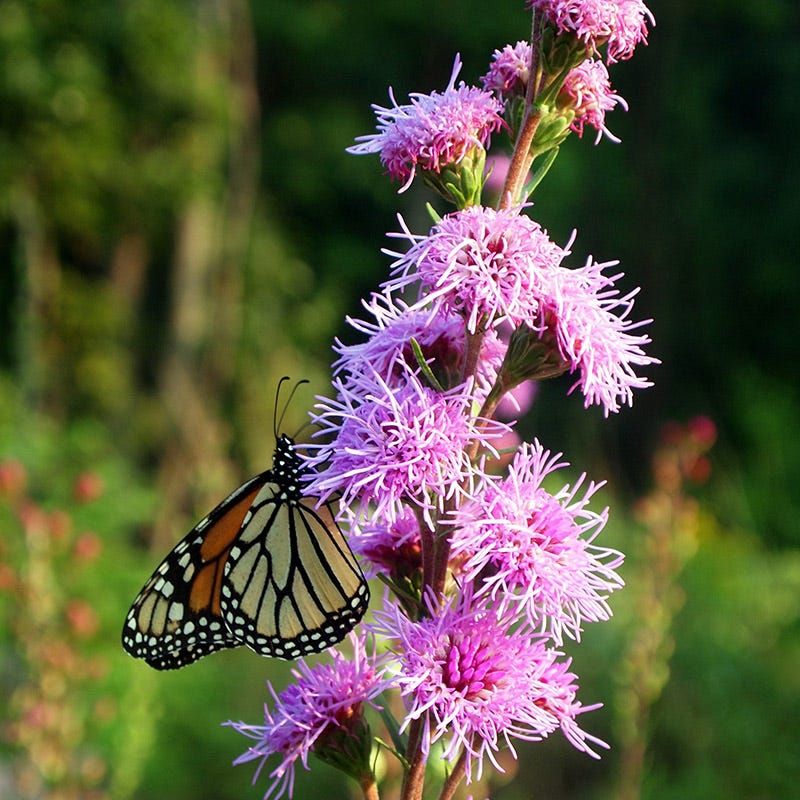
Most flowering spikes open from the bottom up, but rough blazing star does the opposite, starting at the top and working its way down.
That quirky detail makes it endlessly interesting to watch through late summer, and the rosy-purple flower spikes are genuinely striking in any garden setting.
Monarch butterflies and swallowtails are particularly attracted to it, making late August and September in a Michigan garden feel like a butterfly festival.
Rough blazing star is native to Michigan’s dry prairies and open woodlands, which tells you everything you need to know about its water needs. Sandy, well-drained soil and full sun are its happy place.
It grows from a corm-like root that stores energy and moisture, which is exactly why it handles long dry stretches so effortlessly. Planting it in heavy clay or consistently moist soil is the one scenario where it will struggle.
Growing two to four feet tall, it adds wonderful vertical interest to perennial borders and naturalized plantings. The seed heads that follow the blooms attract finches and sparrows through fall and winter, extending the plant’s value well beyond the flowering season.
Rough blazing star is often overlooked in favor of its more common cousin Liatris spicata, but its coarser texture and later bloom time make it a uniquely valuable addition to any Michigan drought-tolerant garden design.
8. Showy Goldenrod
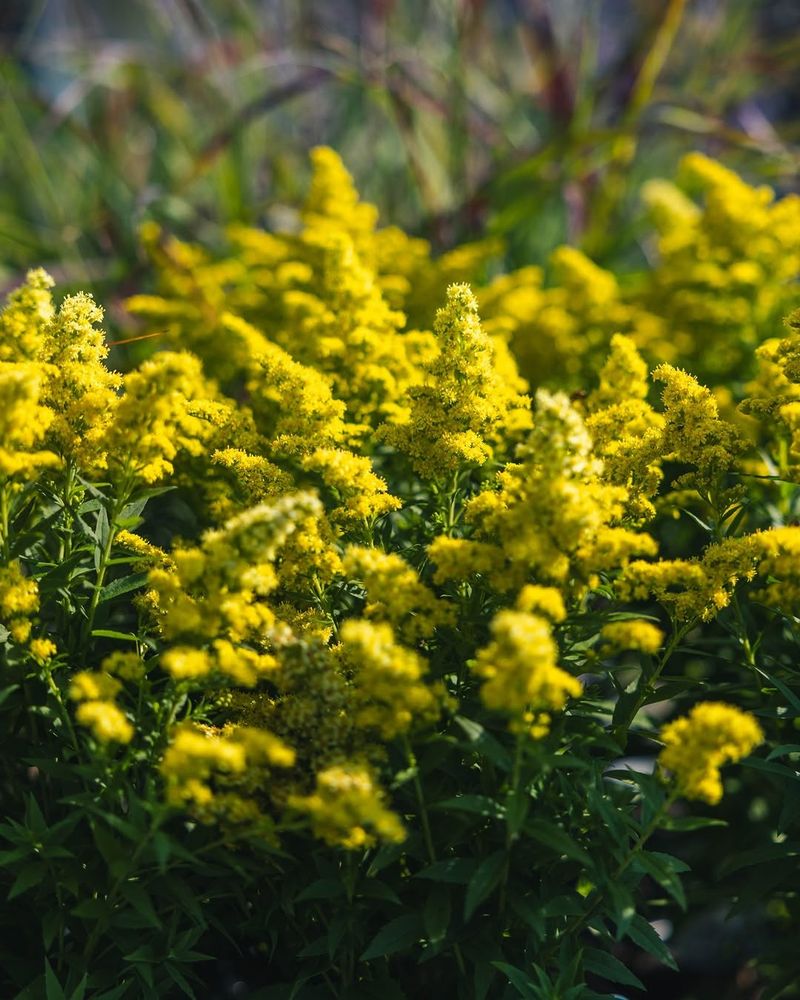
Goldenrod gets an unfair reputation as an allergy trigger, but here is the truth: it is actually insect-pollinated, meaning its heavy pollen never floats through the air. The real culprit is ragweed, which blooms at the same time and is wind-pollinated.
Once gardeners learn this, showy goldenrod almost always earns a permanent spot in the yard, and for good reason. Those upright, arching plumes of deep golden yellow are absolutely spectacular from August through October.
Showy goldenrod is one of the more well-behaved goldenrod species, staying upright and clump-forming rather than spreading aggressively the way some relatives do. It thrives in full sun and dry to average soil, fitting naturally into Michigan’s native plant palette.
Once established, it needs zero supplemental watering and actually looks better in leaner conditions. Rich, moist soil encourages floppy growth that needs staking.
Growing two to three feet tall, it fits easily into the middle of a perennial border or at the edge of a naturalized area. The late-season blooms are a critical nectar source for migrating monarch butterflies and dozens of native bee species preparing for winter.
For Michigan gardeners who want to support local wildlife while enjoying genuine late-summer color, showy goldenrod is one of the most valuable plants you can possibly grow. It earns its space every single year.
9. Aromatic Aster
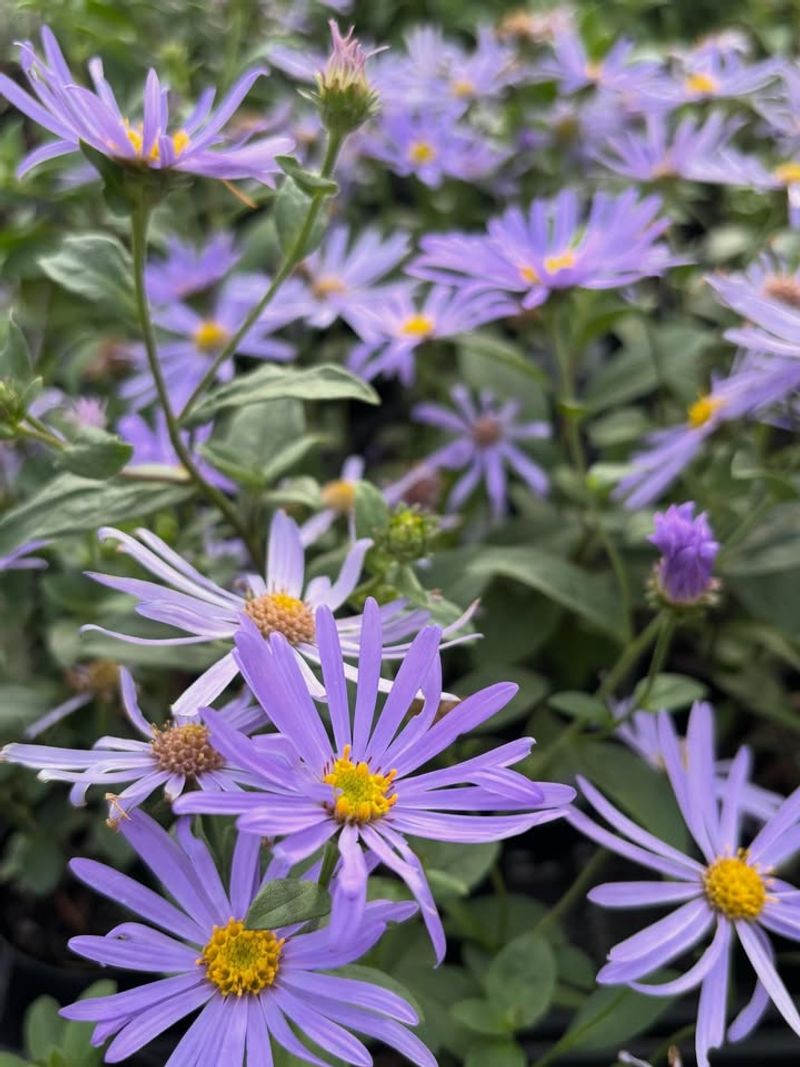
When most of the garden is winding down in September and October, aromatic aster is just hitting its stride.
Clouds of small, lavender-purple flowers with yellow centers cover the mounded plants in a display that feels like a final, triumphant celebration of the growing season.
For Michigan gardeners who love color deep into autumn, this plant is genuinely irreplaceable and surprisingly easy to grow.
The name says it all. Rub the foliage of aromatic aster and a pleasant, slightly spicy fragrance releases immediately.
That scent is believed to deter deer and rabbits, which makes it especially practical in Michigan areas where wildlife browsing is a constant frustration.
Beyond that built-in protection, it is one of the toughest drought-tolerant perennials available, thriving in dry, sandy soils and full sun with almost no input from the gardener.
Plants grow one to three feet tall and spread into a tidy, rounded mound over time. The sheer number of blooms it produces in fall makes it one of the most important late-season nectar sources for migrating and native bees across the Midwest.
Pairing it with showy goldenrod creates a breathtaking gold-and-purple combination that carries the garden beautifully through the final weeks of the season. For anyone who wants a plant that closes out summer on a high note, aromatic aster is the perfect choice.