Eastern Redcedar: A Strong Native North Carolina Tree For Late-Season Wildlife Food And Winter Cover
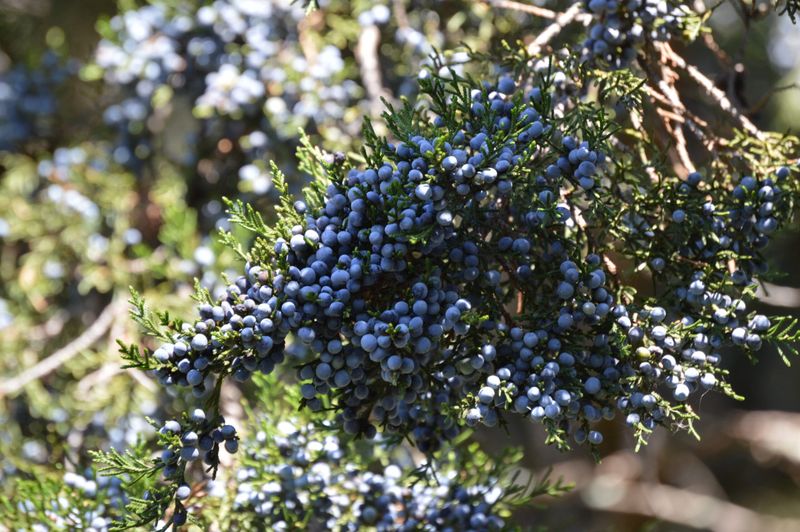
Mid-January in the Piedmont, and your yard has gone quiet. The dogwood berries are long gone, the beautyberry stripped bare, and the birds that were everywhere in October have thinned out noticeably. If that sounds familiar, a fruiting eastern redcedar might be exactly what your yard is missing. This native North Carolina evergreen can carry blue, berry-like cones well into winter, giving birds and other wildlife a food source when other options in your yard have already run out.
Choose Eastern Redcedar For A Strong Late-Season Role
Headlines love absolutes, and this one overshoots. Eastern redcedar, Juniperus virginiana, is not the only native North Carolina tree that feeds wildlife in winter, and no single tree can guarantee it will be the last food standing in your yard after every other berry disappears. What eastern redcedar genuinely is, though, is one of the most dependable late-season food-and-cover trees a North Carolina homeowner can plant, and that is a meaningful distinction worth understanding before you head to the nursery.
This native evergreen grows across the state, from the sandy soils of the Coastal Plain to the rocky slopes of the mountains, and through every corner of the Piedmont in between. NC State Extension’s plant profile documents female trees producing blue, berry-like cones that ripen in fall and can remain on the tree from September through February. That is a long display window by any measure, and it overlaps with the period when many other native fruits have already been eaten or have dropped.
The tree also provides dense, needled evergreen cover year-round, which gives it a broader wildlife value than a plant that offers fruit alone. USDA Forest Service species review data confirms that many birds and mammals consume eastern redcedar cones, particularly during winter months when other food sources thin out. The
USDA silvics profile further establishes it as a broadly adaptable native across eastern North America.Think of eastern redcedar as a strong supporting character in your yard’s wildlife story, not a solo act. It can extend food availability into late winter and offer shelter when temperatures drop, but it works best as part of a yard with multiple native plants doing different jobs at different times of year.
Some Yards Lose Fruit Later In Winter
Walk your yard in late January and count what is still hanging. In many North Carolina yards, the answer is not much. Beautyberry finishes fast once the birds find it. Dogwood fruit gets cleaned up by November.
Pokeweed, possumhaw, and native viburnums can disappear quickly too, depending on how many birds are moving through your neighborhood and how heavy the crop was that year.
This is not a statewide crisis, and it is not the same every winter. Local crop size, weather patterns, bird pressure, and what your neighbors are growing all shape what remains in your specific yard. A yard surrounded by mature native plantings may carry food well into February. A yard with one ornamental shrub and a lot of turf grass may run low on fruit by December.
Your North Carolina Garden Changes Every Week. Your Plan Should Too.
Gardening in North Carolina changes quickly throughout the season. Every Friday you’ll receive a simple weekly plan showing exactly what to plant, prune, fertilize, harvest, and protect so you never miss the right timing.
The point is that some yards genuinely do experience a quieter, leaner stretch in late winter, and that is where a fruiting eastern redcedar can make a real difference.
NC State Extension documents the eastern redcedar fruit display as lasting from September through February, though individual trees vary and not every tree will still carry cones at the end of that window. The NC State plant profile and USDA species review both describe winter consumption of the cones by birds and mammals, suggesting that at least some fruit typically persists into the colder months.
Cedar waxwings make the case well. Cornell Lab’s cedar waxwing account notes that their very name reflects their appetite for cedar berries, and that wintering flocks concentrate around fruiting plants in gardens, parks, and forest edges. A fruiting redcedar in your yard may not attract every bird in the county, but it can give the ones already moving through your neighborhood a reason to stop and stay a while.
Food Is Only Part Of The Wildlife Value
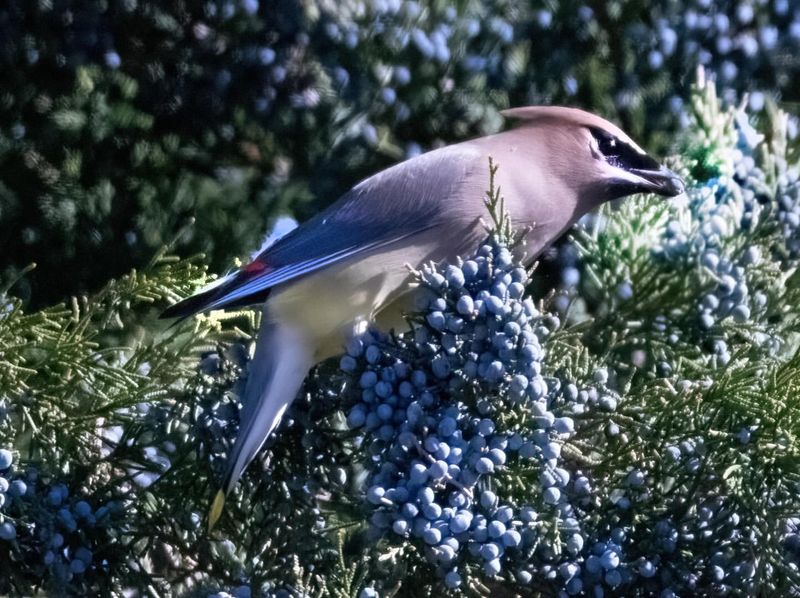
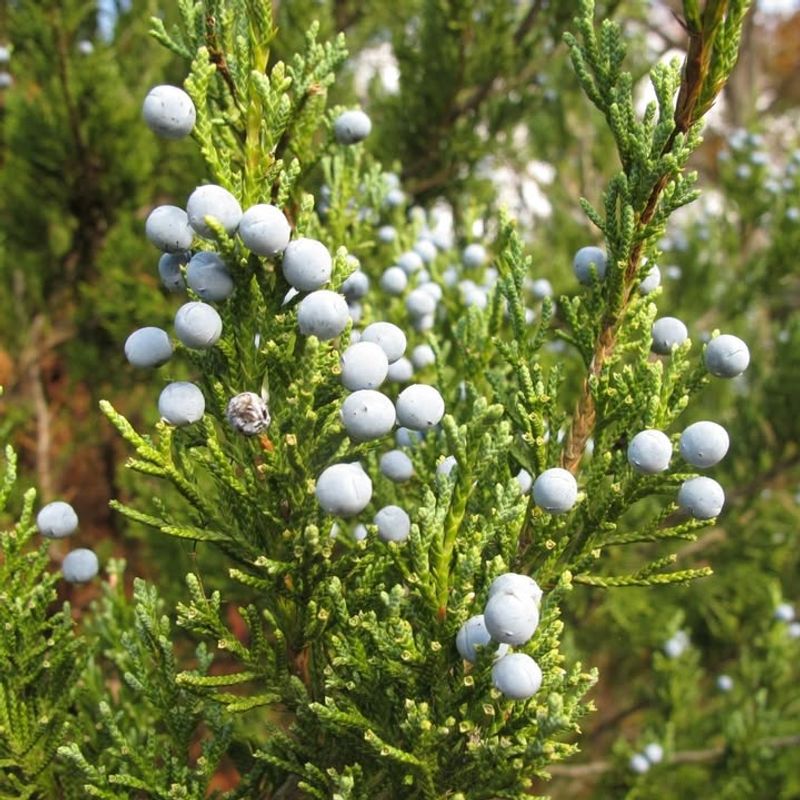
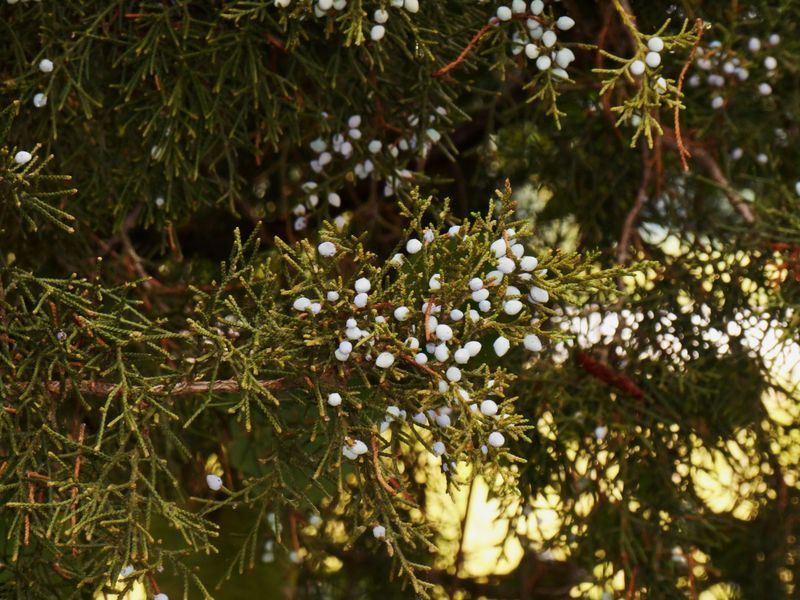
The blue structures on a female eastern redcedar are not true berries in the botanical sense. They are fleshy, berry-like cones, roughly one-quarter inch across, covered with a whitish waxy coating that gives them a dusty blue-gray look in winter light. That detail matters mostly if someone at the nursery starts using technical language, but it is also a handy identification clue: if the small round structures on a juniper have that powdery bloom and sit nestled in scaly foliage, you are looking at the right thing.
Cedar waxwings are the birds most closely associated with these cones, and watching a flock work through a loaded redcedar on a cold morning is genuinely one of the better wildlife moments a North Carolina yard can offer. But the list of species that eat eastern redcedar cones is long. USDA Forest Service research documents consumption by bluebirds, robins, mockingbirds, yellow-rumped warblers, and various mammals as well. The NC State plant profile reinforces that the tree supports a wide range of wildlife, not just one or two species.
Here is where the evergreen structure earns its keep beyond fruit. The dense, year-round foliage gives small birds a place to roost on cold nights and escape from hawks during the day. That kind of cover is harder to find in a yard full of deciduous shrubs that drop their leaves in October. Cornell Lab notes that wintering waxwings concentrate around fruiting plants in open woodlands and garden settings, suggesting the combination of food and protective structure in one tree is part of the appeal.
No single tree supplies every nutrient every species needs all winter long. Eastern redcedar gives you fruit and shelter in one package, and that combination is genuinely useful even when the cones run out before February ends.
Buy A Fruiting Tree, Not Just A Green One
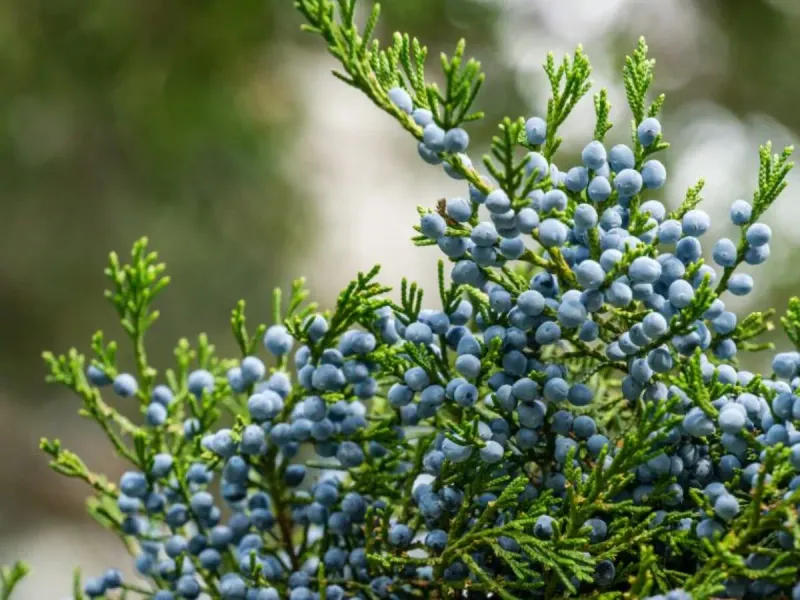
Here is the part that catches a lot of people off guard at the nursery. Eastern redcedar is dioecious, which means individual trees are either male or female, not both. Male trees produce pollen in spring, which is the reason some people in North Carolina notice a yellowish haze around redcedars in late winter. But male trees produce zero cones.
If you plant a male eastern redcedar, you will get a handsome evergreen with good cover value and no winter fruit at all.
NC State Extension’s redcedar profile and their landscaping for wildlife guide both flag the separate sexes of eastern redcedar as something to account for when planning a wildlife planting. The practical advice is simple: ask the nursery staff whether the tree is female or predominantly female before you buy it. If the tree is already carrying cones in the pot, that is your clearest confirmation.
Some nurseries sell eastern redcedar as an unnamed seedling, and sex may not be labeled at all. In that case, you have a few options. Buy from a nursery that propagates named female selections, ask whether the stock was grown from cuttings of a known fruiting tree, or accept that a seedling is a gamble and plant two or three to improve your odds. A single unidentified seedling may turn out to be male, and you may not know for several years until the tree matures enough to show pollen or cones.
The cover value of a male tree is still real, and it is not worthless in a wildlife yard. But if late-season fruit is your primary goal, confirming the sex of your tree before it goes in the ground is the single most important nursery decision you will make with this species.
Give The Tree Sun, Drainage, And Space
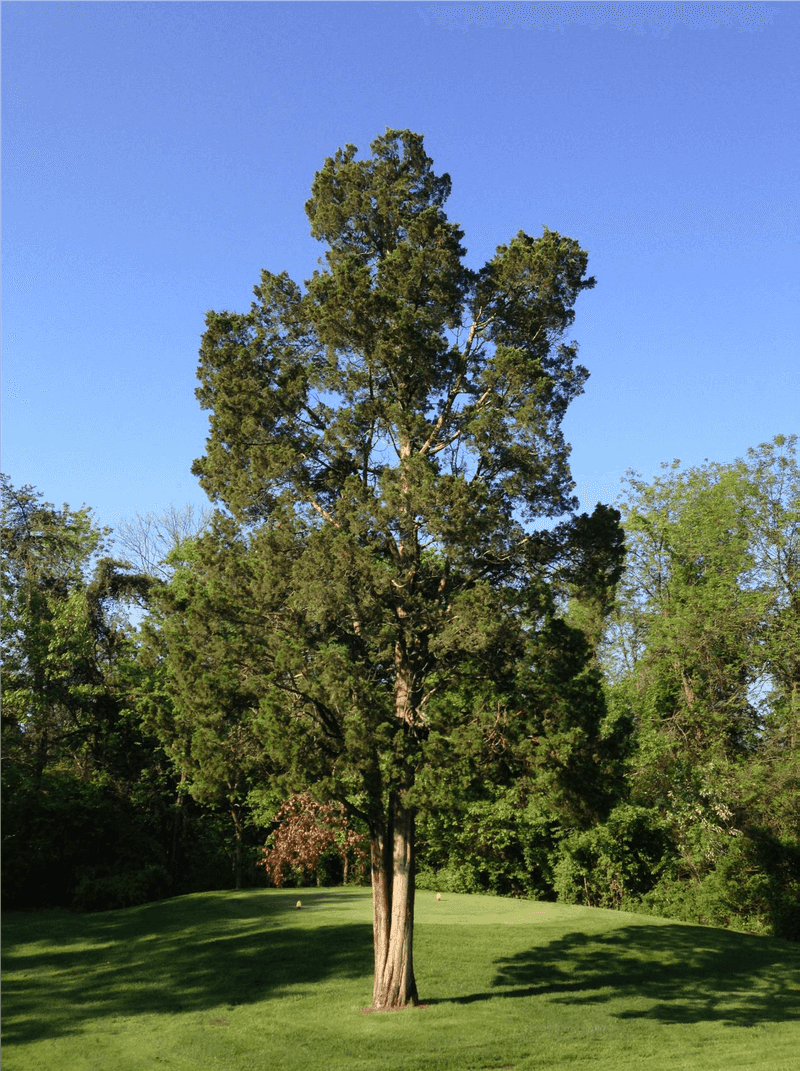
Eastern redcedar is one of the tougher native trees you can put in a North Carolina yard, but tough does not mean it will thrive anywhere you stick it. Getting the placement right from the start saves you from a slow-declining tree that never produces much fruit and eventually becomes a problem to remove.
Plan for a mature tree that commonly reaches 30 to 40 feet tall and 10 to 20 feet wide. NC State Extension recommends spacing eastern redcedars 12 to 24 feet apart, which means this is not a plant for a narrow foundation bed or a tight corner between two structures. Keep it away from utility lines overhead and at least 15 to 20 feet from the roofline of your house. A mature redcedar that has grown into a power line or is pressing against your siding is a genuine headache.
Full sun is strongly preferred. Eastern redcedar planted in shade tends to grow more loosely, produces less fruit, and is more susceptible to problems over time. If you are working with a shadier yard, this may not be your best choice for a featured wildlife tree.
Soil flexibility is one of the tree’s real strengths. It handles the red clay of the Piedmont, the sandy soils of the Coastal Plain and Sandhills, shallow rocky ground in the mountains, and even coastal salt exposure without much complaint. What it cannot handle is continuously wet ground. If your yard has a low spot that holds water after every rain, find a different location.
Poor drainage will kill a redcedar slowly but reliably, and no amount of establishment care will compensate for a site that stays saturated.
Drought tolerance is genuine after the tree is established, typically after its second or third growing season in North Carolina’s climate. Before that point, it needs your attention and regular water to get its roots settled.
Plant It Carefully Through Its First Season
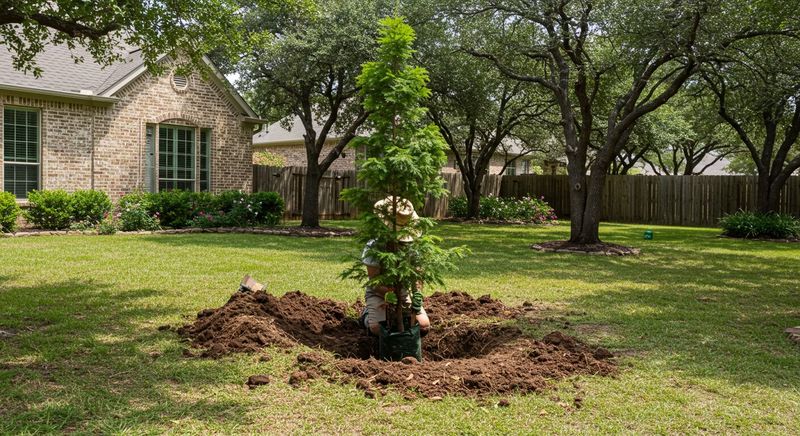
Fall is actually a fine time to plant an eastern redcedar in North Carolina, and many experienced gardeners in the Piedmont and Coastal Plain prefer it. NC State Extension’s landscaping for wildlife guide notes that fall planting gives roots time to establish while cooler air reduces stress on above-ground growth. Late October through December tends to work well across most of the state, though mountain gardeners in zones 6a and 6b may want to wrap up planting before the ground hardens.
Water the tree promptly after planting, and do not let newly planted trees dry out during their first growing season. This is where many homeowners underestimate what eastern redcedar actually needs. The tree is drought-tolerant once established, but that reputation can lead people to underwater it during the critical first year. NC State Extension’s fruit and nut handbook recommends consistent moisture during establishment, and the same principle applies to ornamental and wildlife trees.
Mulch is your best friend during establishment. Apply a 2- to 3-inch layer of organic mulch over the root zone, spreading it out to the drip line if you can. NC State Extension warns that mulch piled against the trunk encourages pest and moisture problems, so keep at least 6 inches of clear space between the mulch and the bark. That gap looks small but matters a lot over time.
Eastern redcedar is not a maintenance-free tree, especially in its first two years. Once it is established and growing on its own, it asks relatively little from you. But that first season is when you earn the tree’s long-term performance, and consistent watering and proper mulching are the two things most worth doing right.
Check Fire And Apple-Disease Risks Before Planting
Eastern redcedar earns high marks for adaptability, but NC State’s Plant Toolbox gives it a high flammability rating, and that is worth taking seriously before you choose a planting location. NC State Extension flags the species as potentially weedy and highly flammable, which means homeowners in tightly built neighborhoods or areas with fire-prone conditions should think carefully about placement. Redcedars planted close to a wooden fence, a deck, or the side of a house carry more risk than the same tree planted 30 or 40 feet out in an open yard. The tree is not off-limits in suburban settings, but location matters more than it does with most native trees.
The potentially weedy nature of eastern redcedar is a separate consideration. The species spreads readily by seed, often appearing in old fields, fence lines, and disturbed areas across North Carolina. In a managed yard, this is unlikely to cause problems if you are monitoring and removing seedlings that sprout in unwanted spots. In a yard that backs up to natural areas or farmland, it is worth knowing that birds can carry seeds well beyond your property line.
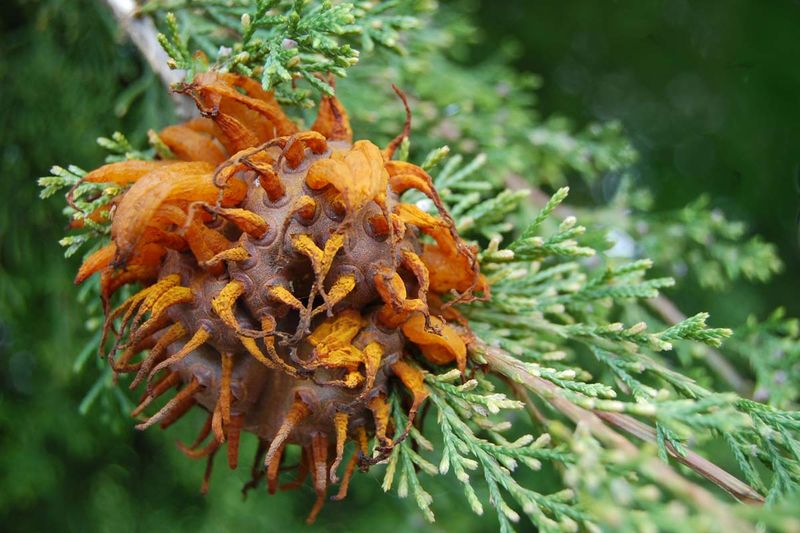
Cedar-apple rust is the other site-specific issue to address before planting. Eastern redcedar can serve as an alternate host for Gymnosporangium juniperi-virginianae, the fungus responsible for this disease. In spring, infected cedars develop orange, gelatinous galls that release spores capable of damaging nearby apple or crabapple foliage and fruit. University of Georgia Extension’s cedar-apple rust guide and UGA forestry disease resources describe the two-host cycle and confirm that the disease requires both a juniper and an apple-family host to complete its life cycle.
If you grow apples, crabapples, or hawthorns in your yard, plant your eastern redcedar as far from those trees as your space allows, or choose a different wildlife tree for that planting spot. This is a compatibility issue for specific yards, not a reason to write off the species entirely.
Build A Wildlife Yard Around More Than One Tree
Eastern redcedar does its job best when it is not doing the job alone. NC State Extension’s landscaping for wildlife guide recommends selecting native plants that flower, fruit, or produce seed at different times so that food is available across more of the year. A yard with staggered native food sources is simply more reliable for wildlife than a yard with one great tree surrounded by turf.
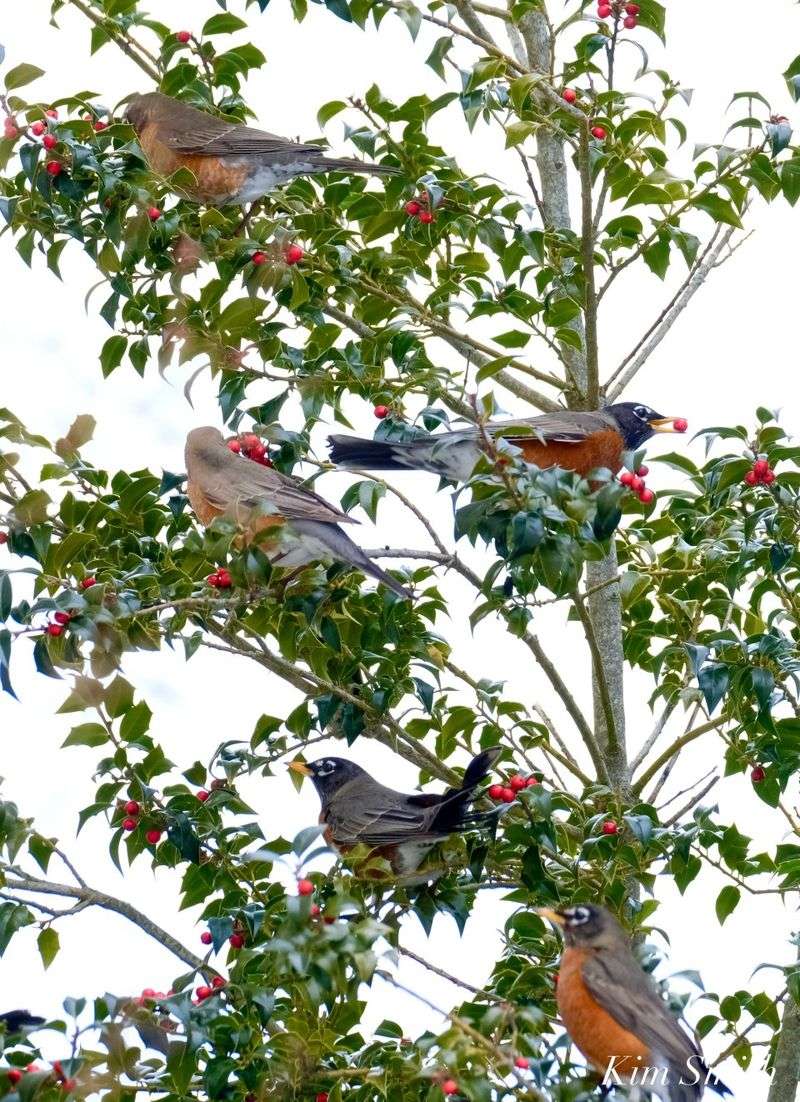
A few plants worth adding alongside your eastern redcedar: American holly, Ilex opaca, is an evergreen tree that can reach 40 to 60 feet at maturity and holds its red fruits well into winter. NC State Extension notes that female American holly trees require a nearby male tree for fruit production, so you need at least one of each sex for berries. One important caution: holly berry ingestion can cause nausea, vomiting, and diarrhea in people and pets. Poison Control confirms that holly berries are toxic to people, and their pet hazard guidance extends the warning to animals in the home.
If you have toddlers, dogs, or other pets that chew on plants, plant American holly where access can be managed.
True winterberry, Ilex verticillata, is a different plant entirely and worth knowing by its proper name. NC State Extension identifies true winterberry as a deciduous shrub or small tree generally 3 to 15 feet tall, not the large evergreen tree that American holly becomes. The two share a common name in some nurseries, which creates real confusion at the point of purchase. Ask for the Latin name when you buy.
Native viburnums, flowering dogwoods, beautyberry, smooth sumac, oaks, and hickories round out a yard that feeds wildlife across changing seasons. Cornell Lab’s plant group guide for birds and this berry succession guide from Illinois Extension both make the case that staggered fruit, seeds, nuts, insects, water, and cover together form a more reliable wildlife strategy than any single plant. Eastern redcedar earns its place in that mix. A yard full of layered natives earns the birds.