12 Easy Houseplants That Don’t Need Much Sunlight In Michigan Homes
Michigan winters do a number on natural light, and the houseplants sitting in north-facing rooms, shaded apartments, and dim office corners know it better than anyone. Most houseplants will make their feelings about low light very clear, very fast.
Drooping, yellowing, and a general look of quiet protest tend to show up within weeks. The good news is that a handful of varieties genuinely handle lower light levels without drama, staying healthy and presentable through even the greyest stretch of a February.
Low light is not the same as no light, and these plants still need some usable indirect light to thrive, but they are far more forgiving of difficult indoor conditions than most.
For Michigan plant owners working with limited natural light, these are the ones worth keeping around.
1. ZZ Plant Handles Very Low Light
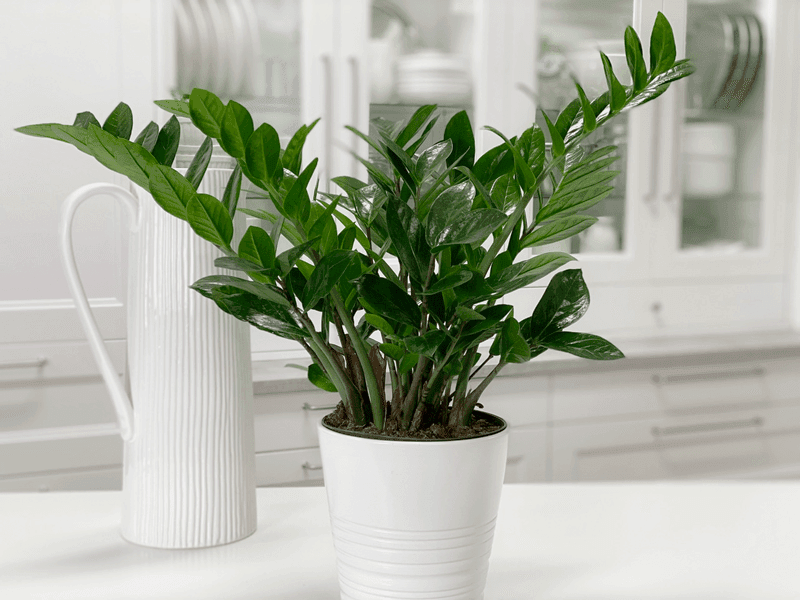
Glossy, waxy leaves that practically shine without any polish make the ZZ plant one of the most visually striking options for low-light Michigan interiors.
Its thick stems store water, which means it handles the dry, heated air that Michigan homes tend to have during long winters without much complaint.
Many plant owners are surprised by how little attention this one actually needs.
The ZZ plant grows from underground rhizomes that hold moisture, so it can go longer between waterings than most houseplants. In a dim room or on a shelf away from direct sun, growth will slow down noticeably, but the plant stays looking healthy and full.
Overwatering is the most common issue, so let the soil dry out completely before adding more water.
A corner bookshelf, a bathroom counter with indirect light, or a spot near a frosted window can all work well for a ZZ plant. It tolerates fluorescent office lighting too, making it a solid choice for a work-from-home desk.
New leaves emerge in a bright chartreuse color before deepening into that signature dark green, which is always a fun moment for patient plant owners.
2. Snake Plant Tolerates Dim Corners
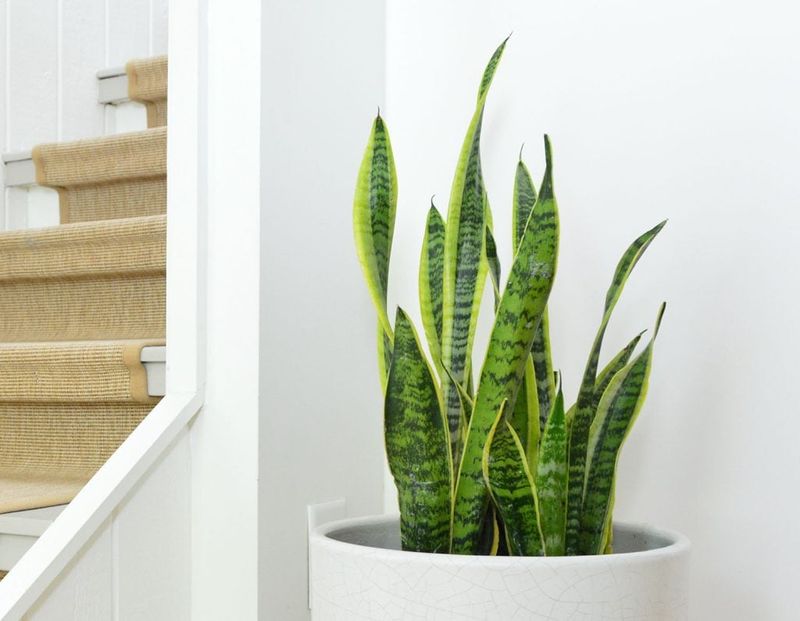
Rooms that barely get any sun during a Michigan January are exactly where the snake plant earns its reputation. With stiff, upright leaves that rise confidently from the soil, it adds structure and a bit of drama to spaces that other plants would struggle in.
It looks intentional even when tucked into the dimmest corner of a living room or bedroom.
Snake plants are among the most forgiving houseplants when it comes to light. They can handle low indirect light reasonably well, though very dark spots may cause growth to stall almost completely.
During winters, placing one near a north-facing window is usually enough to keep it stable and healthy through the season.
One thing to watch in low-light conditions is watering frequency. In dim rooms, soil stays moist much longer, and snake plants are highly susceptible to root rot if watered too often.
Checking the soil before watering, rather than following a set schedule, makes a real difference.
These plants are also a popular choice for Michigan apartments where square footage and natural light are both limited, since they stay upright and tidy without spreading out across a shelf or windowsill.
Your Michigan Garden Changes Every Week. Your Plan Should Too.
Gardening in Michigan changes quickly throughout the season. Every Friday you’ll receive a simple weekly plan showing exactly what to plant, prune, fertilize, harvest, and protect so you never miss the right timing.
3. Golden Pothos Survives Low Light
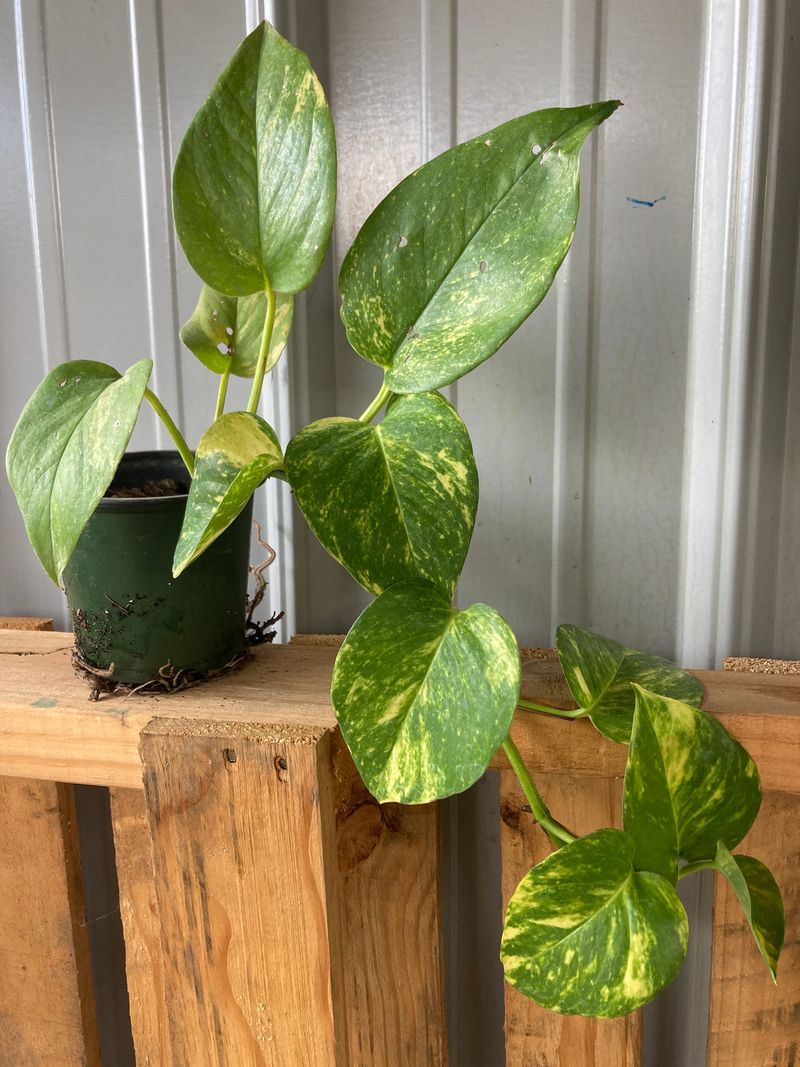
Few houseplants are as forgiving or as widely loved as golden pothos, and Michigan plant owners have been relying on it for decades for good reason.
Its trailing vines drape beautifully from shelves, hang from baskets, or climb a simple moss pole near a dim window.
Even in rooms that receive very little direct sun, pothos keeps producing new leaves at a steady pace.
In lower light conditions, the golden variegation on the leaves may fade somewhat, with the plant producing more solid green foliage. That is completely normal and not a sign of trouble.
The plant is simply adjusting to its environment, which is one of the things that makes pothos so adaptable across different Michigan home setups.
Watering pothos in a low-light room requires some patience. Soil dries out more slowly when light levels are reduced, so checking the top inch or two before watering helps avoid soggy roots.
Yellowing leaves are often a sign of overwatering rather than low light, which is worth keeping in mind. Pothos is also noted as toxic to pets if ingested, so keeping it on a higher shelf in homes with cats or dogs is a smart placement choice.
4. Heartleaf Philodendron Trails In Shade
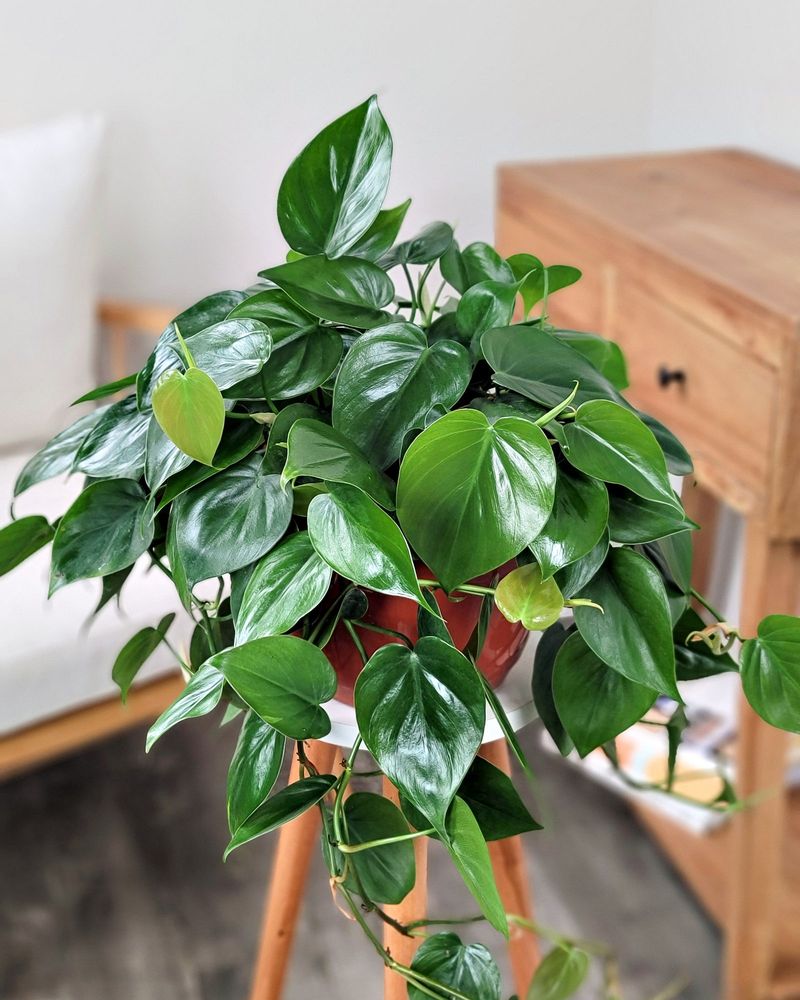
Vines that spill over the edge of a shelf with soft, heart-shaped leaves have a way of making any room feel warmer and more lived-in. The heartleaf philodendron does exactly that, and it handles the shadier spots in Michigan homes better than many trailing plants.
It has a relaxed, easygoing quality that suits both busy households and quiet apartment spaces equally well.
Unlike some philodendron varieties that prefer brighter indirect light, the heartleaf type genuinely tolerates lower light levels without losing much of its charm.
Growth will slow in dim conditions, and new leaves may emerge smaller than usual, but the plant stays lush and green through winters with very little fuss.
A north-facing shelf or a spot a few feet back from an east-facing window tends to work well.
Care is straightforward once you understand its watering rhythm. In low-light rooms, the soil holds moisture longer, so waiting until the top layer feels dry before watering again keeps the roots healthy.
The heartleaf philodendron is also a good candidate for training up a small trellis or letting trail down from a hanging pot. Its rapid adjustment to indoor conditions makes it one of the more satisfying plants to grow in Michigan apartments during the colder months.
5. Peace Lily Handles Shadier Rooms
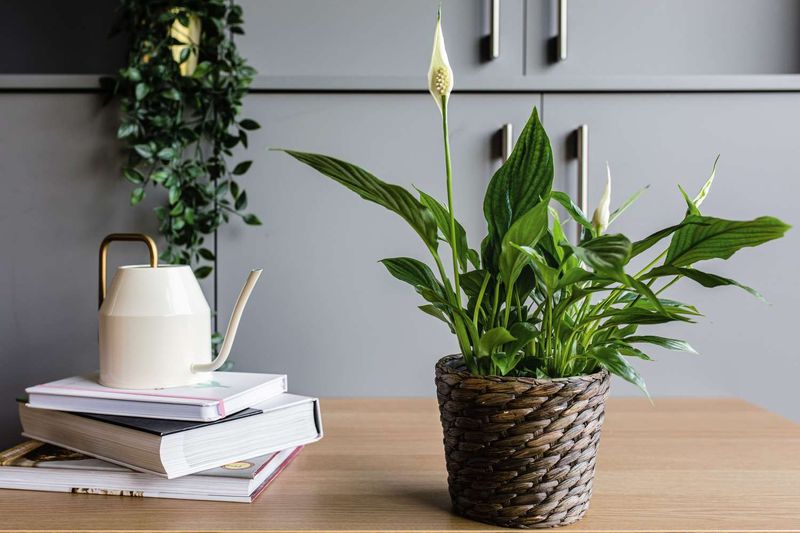
White blooms rising from a cluster of deep green leaves make the peace lily one of the few flowering houseplants that actually prefers lower light conditions.
In Michigan homes where winter rooms feel perpetually overcast, this plant holds its own without demanding a bright sunny spot.
It has a quiet elegance that works in bedrooms, hallways, and shaded living room corners alike.
Peace lilies communicate clearly when they need water, drooping their leaves noticeably before recovering quickly after a drink. That responsiveness makes them popular with newer plant owners who are still learning how to read their plants.
In low-light rooms, watering less frequently than you might expect is usually the right approach, since dim conditions slow down moisture evaporation from the soil.
One important detail for households with pets or young children is that peace lilies are considered toxic if ingested, so placement matters. High shelves or rooms with limited pet access are smart spots.
Blooming is more likely when the plant receives moderate indirect light, so Michigan homes with a bright east-facing window nearby may see flowers more consistently than rooms with very little natural light.
Even without blooms, the foliage alone makes it a worthwhile addition to any indoor plant collection.
6. Chinese Evergreen Brightens Low Light
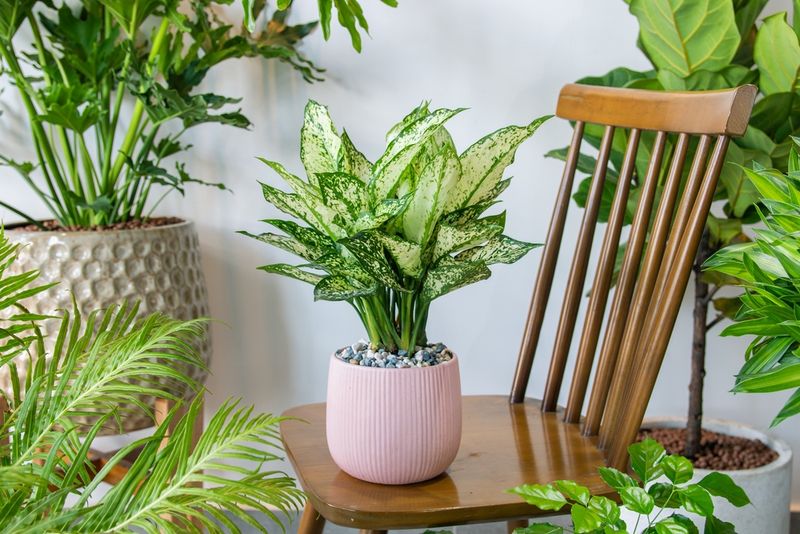
Patterned leaves in shades of green, silver, cream, and even red make the Chinese evergreen one of the most decorative options on this list, and it happens to be one of the most low-light tolerant as well.
In Michigan homes where rooms stay dim for months at a time, this plant brings visual interest without requiring a prime spot near a bright window.
Darker green varieties tend to handle lower light better than the lighter or more colorful ones.
Chinese evergreens grow slowly in low-light conditions, which is actually a benefit in small apartments where space is limited. A compact, slow-growing plant that stays tidy on a shelf or side table without outgrowing its spot is genuinely useful.
The leaves stay glossy and attractive even in rooms that rely mostly on artificial lighting during overcast winters.
Watering should be adjusted based on how quickly the soil dries out, which in a dim room can take considerably longer than expected. Letting the soil dry partially between waterings keeps the roots from sitting in excess moisture.
Chinese evergreens also appreciate some humidity, so misting occasionally or placing the pot on a tray of pebbles and water can help during Michigan winters when indoor heating pulls moisture from the air.
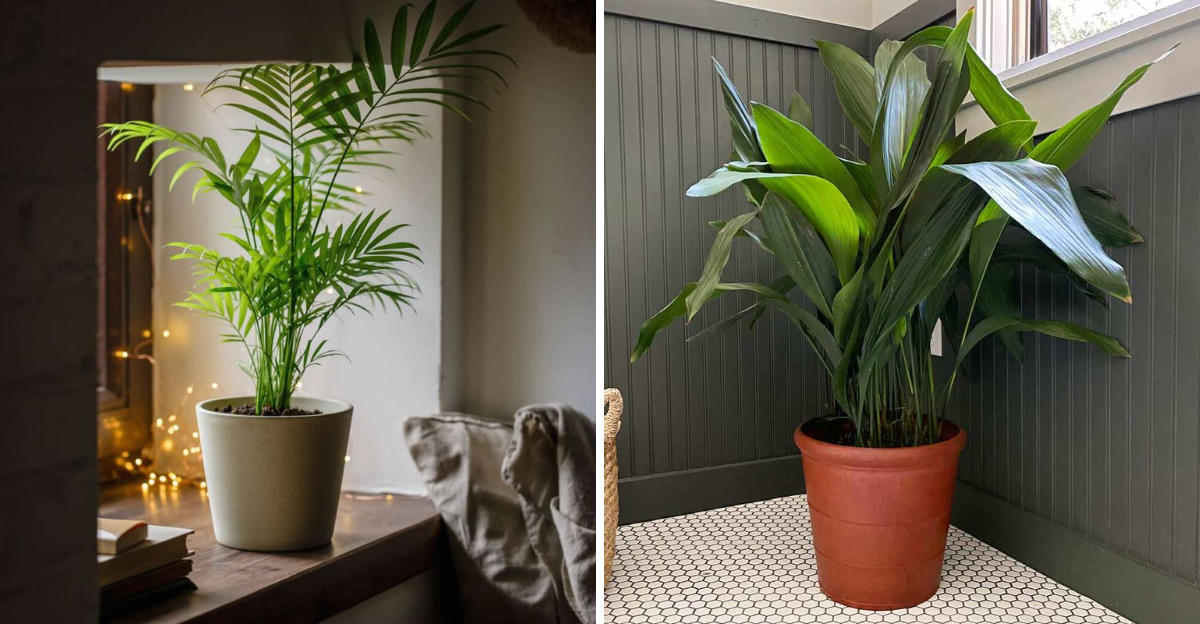
7. Cast Iron Plant Lives Up To Its Name
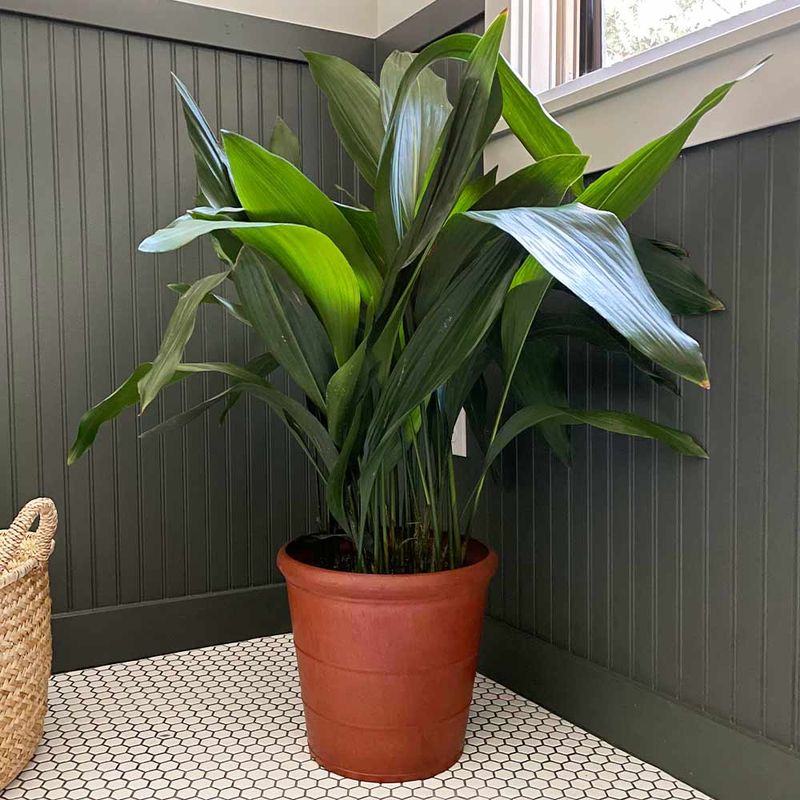
Tough, dark green, and remarkably unbothered by neglect, the cast iron plant has earned every bit of its dramatic name.
It can handle low light, dry air, inconsistent watering, and temperature swings without showing much stress, which makes it an unusual standout among houseplants.
Michigan homes with challenging indoor conditions, whether that means a drafty back room or a dim stairwell landing, are exactly the kind of spaces where this plant settles in comfortably.
The cast iron plant grows very slowly, so patience is part of the experience. New leaves emerge gradually, and the plant rarely puts on a dramatic show.
What it offers instead is reliability, staying green and upright in spots where other plants would struggle to survive. In low-light rooms, it holds its deep green color well and does not tend to drop leaves or show stress the way faster-growing plants might.
Watering infrequently suits this plant well, especially in dim indoor conditions where soil stays moist for extended periods. Overwatering is one of the few ways to genuinely cause problems for a cast iron plant.
Direct sun can actually scorch its leaves, so keeping it away from south-facing windows in Michigan summers is worthwhile. It is a plant that rewards restraint and suits owners who prefer a low-maintenance indoor gardening routine.
8. Parlor Palm Softens Dim Rooms
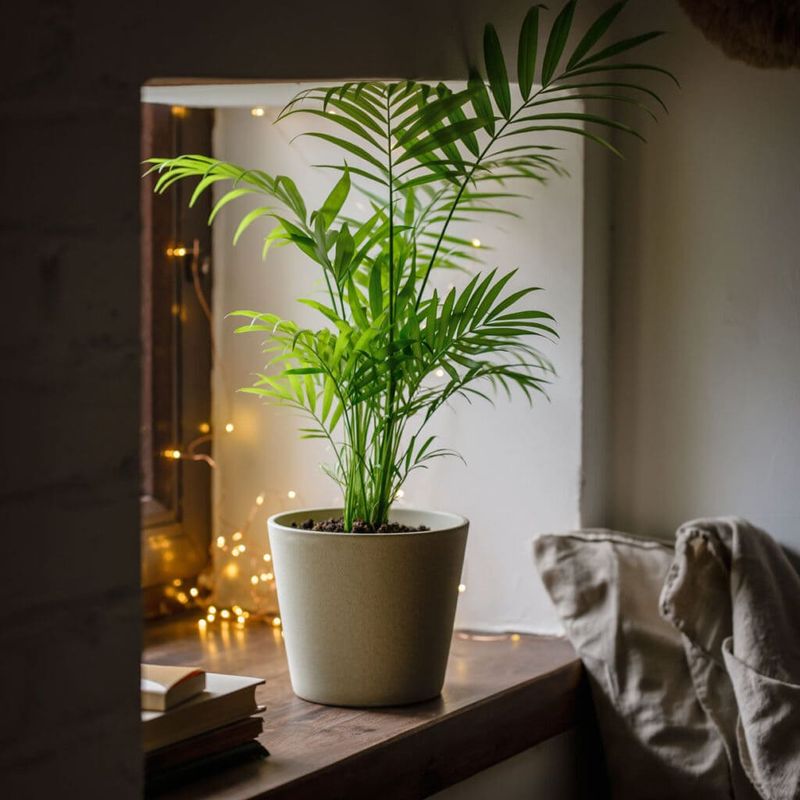
Arching green fronds that fan out gracefully from a central cluster give parlor palms a tropical softness that feels unexpected.
Unlike many palms that demand full sun, this variety genuinely tolerates lower light levels indoors, making it one of the few palms worth trying in a Michigan apartment or shaded living room.
It brings a relaxed, breezy quality to any room without requiring much in return.
Parlor palms grow slowly, which works in their favor for indoor settings. They stay in scale with most rooms over several years without needing frequent repotting or pruning.
In low-light conditions, growth slows even further, but the fronds remain full and healthy looking as long as the plant receives some usable indirect light each day.
A spot near a north or east-facing window in a Michigan home tends to offer enough light to keep it stable.
Humidity is one area where parlor palms appreciate a little extra attention, especially during winters when indoor heating creates very dry air. Brown leaf tips are often a sign of low humidity rather than a light or watering issue.
Misting the fronds or using a small humidifier nearby can help. Watering moderately and allowing the soil to dry slightly between sessions keeps the roots in good shape through the colder months.
9. Dracaena Adds Height Without Harsh Sun
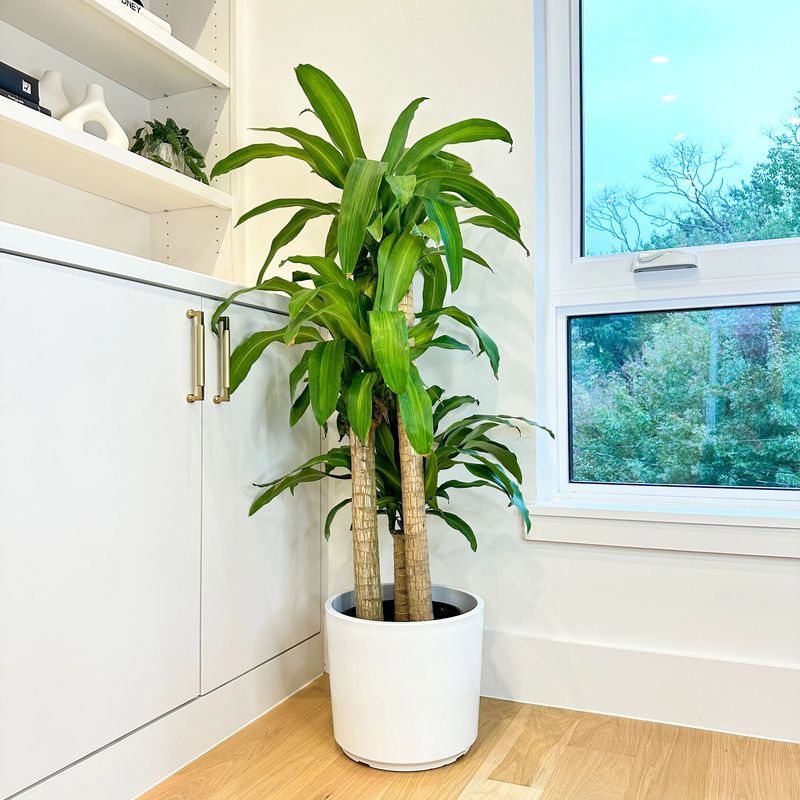
When a room needs height and vertical interest but does not have a bright south-facing window to offer, dracaena steps in as a reliable solution.
With its cane-like stems and strappy leaves that come in green, yellow, or red-edged varieties, it adds structure to living rooms, entryways, and office corners across Michigan homes.
It looks architectural without requiring much effort from the owner.
Dracaena tolerates lower light conditions reasonably well, though very dim rooms may cause the leaf color to dull over time. Placing it near an east or north-facing window typically provides enough indirect light to keep the foliage looking vibrant.
Variegated varieties with lighter leaf colors generally prefer a bit more light than the darker green types, so choosing the right variety for your specific room matters.
One thing Michigan plant owners should know is that dracaena is sensitive to fluoride in tap water, which can cause brown leaf tips.
Using filtered or distilled water, or letting tap water sit out overnight before using it, can reduce that issue.
Watering should be moderate, with the soil allowed to dry out somewhat between sessions. In low-light rooms during Michigan winters, this plant may only need water every two to three weeks depending on pot size and room temperature.
10. Dieffenbachia Tolerates Lower Light
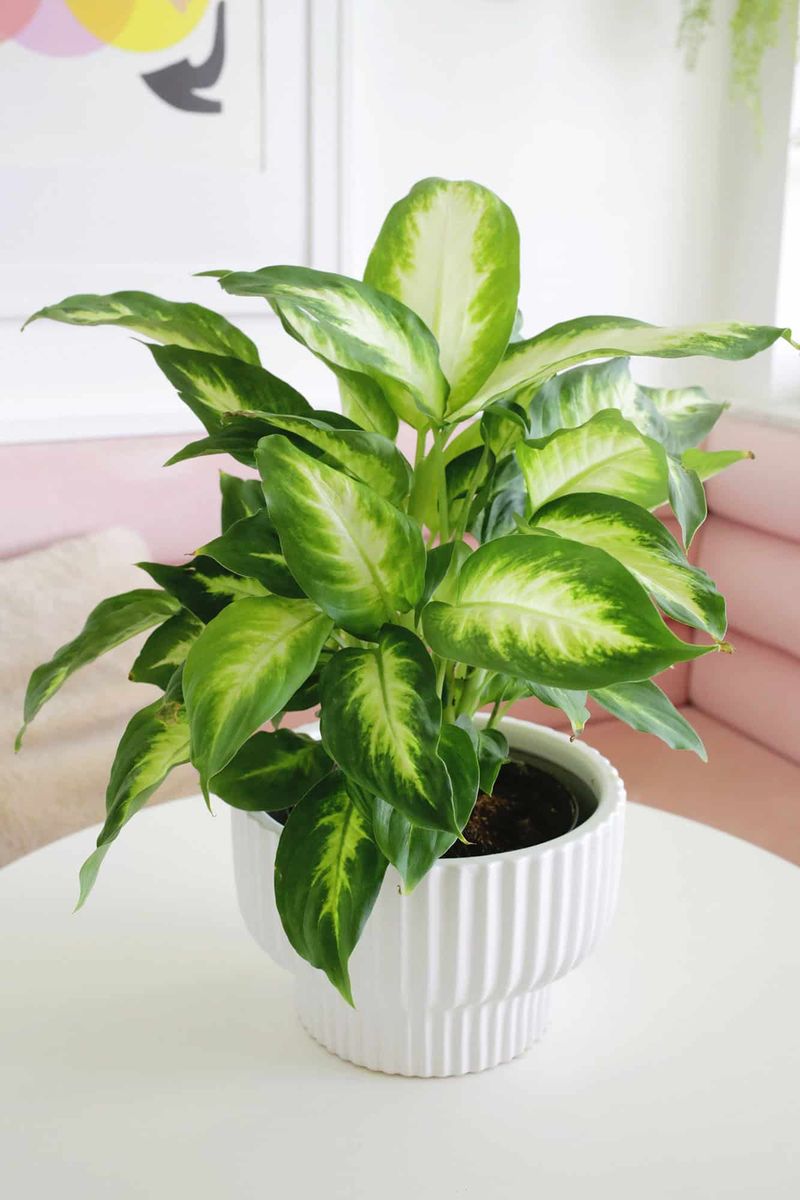
Bold, oversized leaves with striking cream and green patterns make dieffenbachia one of the most visually impressive plants on this list, and it handles lower light better than its dramatic appearance might suggest.
Michigan plant owners who want a statement piece for a dim room often land on this one after trying and failing with plants that need more sun.
It fills space beautifully without requiring a premium window spot.
In low-light conditions, dieffenbachia grows more slowly and may produce smaller leaves, but it stays lush and attractive through Michigan’s darker winter months.
It prefers indirect light and can actually suffer in harsh direct sun, making it a natural fit for rooms that rely mostly on ambient or filtered light.
A few feet away from a bright window or near a shaded east-facing exposure usually suits it well.
Handling dieffenbachia with care is important because its sap can cause skin and mouth irritation, so wearing gloves when pruning and keeping it away from young children and pets is a sensible precaution.
Watering should be reduced in low-light rooms since the soil takes longer to dry.
Yellowing lower leaves are common as the plant matures and are not usually a sign of a serious problem as long as the upper growth looks healthy and strong.
11. Lucky Bamboo Handles Low Indoor Light
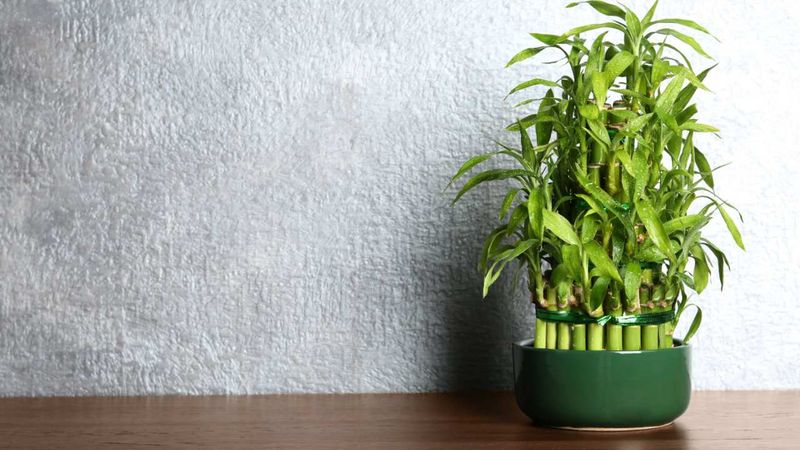
Technically not a bamboo at all but a type of dracaena, lucky bamboo has a long history as an indoor plant that thrives in low-light settings and requires very little soil to grow.
Many Michigan households keep it in vases of water on desks, shelves, or kitchen counters where natural light is minimal.
Its slender green stalks and simple, sculptural look make it a popular choice for offices and small apartments alike.
Lucky bamboo can grow in plain water with pebbles for support, or in a small amount of well-draining potting mix. In either case, it handles dim indoor light better than many other houseplants.
Growth in low-light rooms is slow, but the stalks stay green and upright without much intervention. Changing the water every one to two weeks when growing it hydroponically helps prevent stagnation and keeps the roots healthy.
Fluoride and chlorine in tap water can cause leaf tip browning in lucky bamboo, similar to other dracaena relatives. Using filtered or distilled water makes a noticeable difference over time.
Michigan winters can mean very dry indoor air from heating systems, so keeping the water level consistent in the vase helps compensate.
Indirect light near a north or east-facing window suits it well without causing the yellowing that direct sun exposure can trigger on the stalks.
12. Bird’s Nest Fern Works In Gentle Light
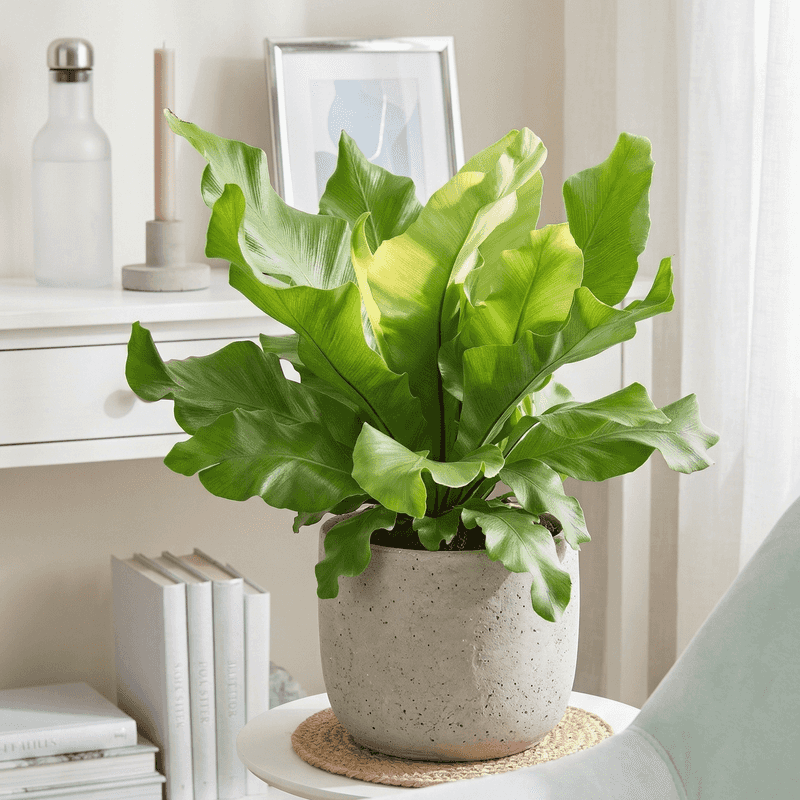
Broad, wavy fronds that unfurl from a central rosette like a slow-motion spiral give the bird’s nest fern a sculptural quality unlike most other houseplants.
It thrives in the kind of gentle, filtered light that many Michigan rooms offer during the shorter days of fall and winter.
Bathrooms with frosted windows, shaded kitchen shelves, and north-facing bedroom corners are all spots where this fern tends to settle in well.
Unlike many ferns that are notoriously fussy about humidity and light, the bird’s nest fern is somewhat more forgiving, though it still appreciates consistent moisture in the air.
Michigan winters with forced-air heating can dry out indoor spaces quickly, and that dry air is one of the more common reasons this fern develops brown, crispy frond edges.
A pebble tray with water beneath the pot or a nearby humidifier helps keep the air around it more comfortable.
Watering should aim to keep the soil consistently moist but not waterlogged. Pouring water directly into the central rosette where new fronds emerge can cause rot, so watering around the base of the plant is the better approach.
In low-light rooms, the fronds may grow more slowly and stay smaller, but the plant maintains its lush, tropical appearance as long as light, humidity, and watering are reasonably balanced throughout the season.