Edible Texas Plants Homeowners Are Growing Along Driveway Fence Lines Instead Of Crape Myrtles
Crape myrtles along a Texas driveway are such a familiar sight that replacing them with something edible feels almost counterintuitive until you start looking at what is actually possible in that space.
A sunny fence line along a driveway is one of the most productive growing zones a Texas homeowner has, full sun exposure, good air circulation, and enough linear space to establish a real edible planting that pulls double duty as a landscape feature.
Edible plants that work in this setting are not afterthoughts tucked into vegetable beds. They are productive, attractive plants that hold their visual appeal through the growing season while also delivering food through months when a crape myrtle delivers nothing beyond shade and blooms.
Texas conditions are well matched to a surprising range of edible options for this kind of prominent, high-traffic planting zone, and homeowners who have made the switch describe it as one of the more satisfying changes they have made to their outdoor space.
1. Blackberries (Rubus Fruticosus Varieties)
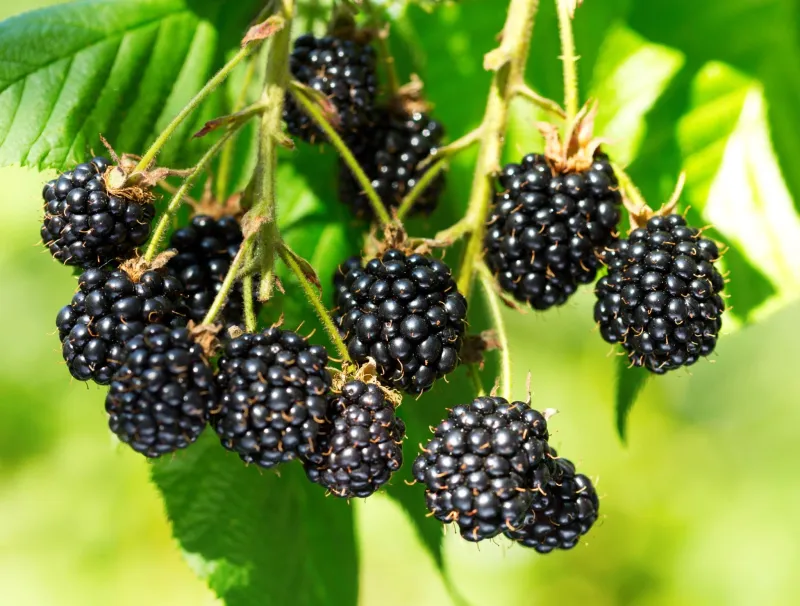
Few plants work as hard as blackberries do. Plant them along your fence line and within a couple of seasons, you will have a thick, thorny wall that keeps out unwanted visitors and rewards you with buckets of juicy berries every summer.
That combination of beauty, function, and food is hard to beat. Texas-friendly cultivars like Brazos, Kiowa, and Ouachita are excellent choices. Thornless or semi-thornless varieties make harvesting much more comfortable, especially if kids help pick.
These plants grow vigorously once established and can reach six to eight feet tall, giving you real privacy along a driveway or property line.
Blackberries prefer full sun and well-drained soil. They do best when you give them a trellis or wire support to train the canes along the fence.
Water them consistently in the first year to help roots settle in. After that, they are surprisingly low-maintenance.
Pruning is the main task that keeps blackberry rows healthy and productive. After harvest, cut back the canes that fruited and let new growth take over.
This keeps the row tidy and encourages a strong crop the following year. Fertilize in early spring with a balanced fertilizer to get things going.
Birds love blackberries too, so consider netting during peak ripening season if you want to save the harvest for yourself. One established row of blackberries can produce enough fruit to freeze, make jam, or bake with all year long.
Long-lived and genuinely productive, blackberries are one of the best fence-line plants a Texas homeowner can choose.
2. Blueberries (Vaccinium Spp.)
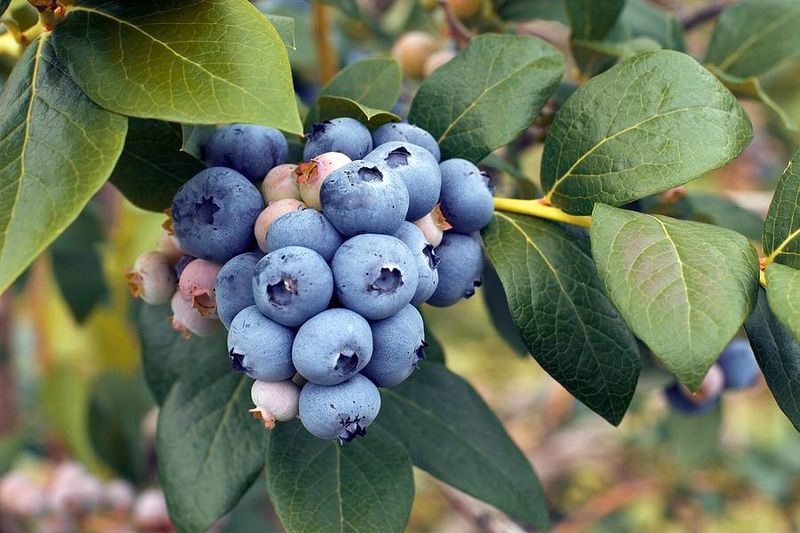
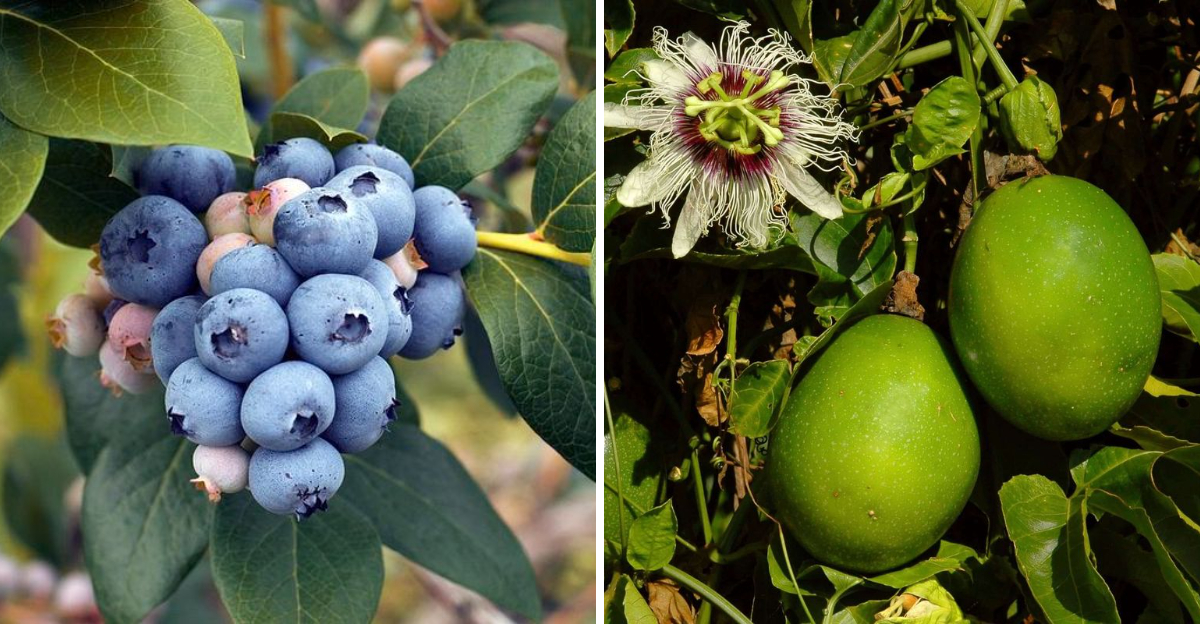
Blueberries might surprise you. Most people think of them as a Pacific Northwest fruit, but with the right soil prep, they thrive in Texas and put on a stunning show all year long.
Spring brings small white bell-shaped blooms. Summer delivers sweet, antioxidant-rich berries.
Fall turns the foliage a gorgeous red-orange that rivals any ornamental shrub you could plant.
The key to growing blueberries in Texas is getting the soil right. They need acidic soil with a pH between 4.5 and 5.5.
Your Texas Garden Changes Every Week. Your Plan Should Too.
Gardening in Texas changes quickly throughout the season. Every Friday you’ll receive a simple weekly plan showing exactly what to plant, prune, fertilize, harvest, and protect so you never miss the right timing.
Most Texas soils are alkaline, so raised beds filled with a mix of peat moss, pine bark, and acidic compost work beautifully along fence lines. This setup also gives you great drainage, which blueberries absolutely need.
Rabbiteye varieties like Tifblue and Brightwell are especially well-suited to Texas conditions. Plant at least two different varieties near each other for cross-pollination, which dramatically increases your berry yield.
Space plants about four to six feet apart to allow good airflow and room to fill out over time.
Water regularly and mulch heavily with pine straw or wood chips to hold moisture and keep soil acidity consistent. Blueberry plants are slow to establish but incredibly long-lived. Some plants produce fruit for 20 to 30 years with minimal care once they settle in.
Did you know blueberries are one of the few fruits native to North America? That heritage makes them surprisingly adaptable.
A well-tended row of blueberry shrubs along your fence is both a food garden and a living landscape feature that earns compliments every single season.
3. Figs (Ficus Carica)
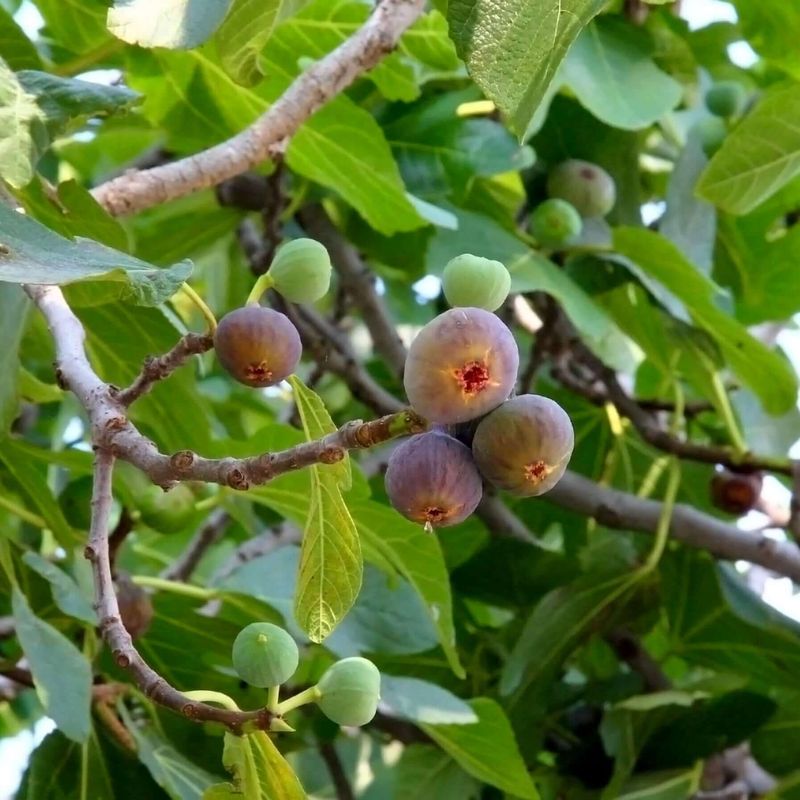
Walk past a mature fig tree on a hot Texas afternoon and you will immediately understand why homeowners are falling in love with them as fence-line plants. The broad, deeply lobed leaves create a lush, tropical feel.
The dense canopy blocks out nosy neighbors. And then, come midsummer, you get figs. Soft, honey-sweet, warm-from-the-sun figs that taste like nothing you can buy at a grocery store.
Figs are incredibly well-suited to the Texas climate. They love heat, tolerate drought once established, and grow quickly into large shrubs or small trees that can reach 10 to 15 feet.
Varieties like Celeste, Brown Turkey, and Texas Everbearing are proven performers across most of the state. They produce fruit on new growth, which means even after a hard winter, they bounce back and fruit reliably.
Planting along a south or west-facing fence gives figs the reflected heat they love. Space them eight to ten feet apart if you want a continuous green wall.
Their root systems are wide-spreading, so keep them a few feet from foundations or water lines as a precaution.
Figs need very little fertilizer. Too much nitrogen actually pushes leafy growth at the expense of fruit.
A light feeding in early spring is usually all they need. Water deeply but infrequently once established, mimicking the dry summers they naturally thrive in.
Harvesting is simple: pick figs when they are soft to the touch and slightly drooping from the stem. Fresh, dried, or preserved in jam, figs from your own fence line are a genuine luxury that crape myrtles simply cannot offer.
4. Pomegranate (Punica Granatum)
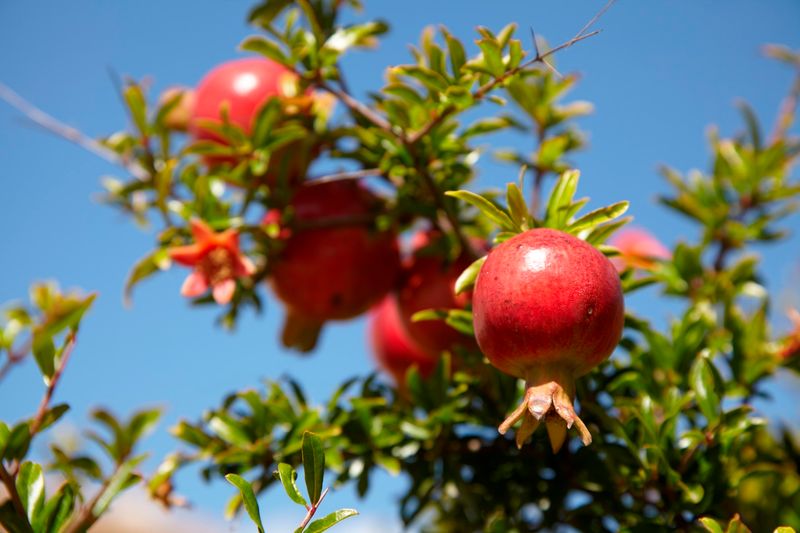
If there is one plant that looks like it belongs in a garden magazine while also stocking your kitchen, it is the pomegranate. The flowers alone are worth planting it.
They are a vivid, fire-engine orange-red that lights up the fence line from late spring through summer. Then come the fruits, round and jewel-like, filled with ruby-red seeds that are packed with flavor and nutrition.
Pomegranates are tailor-made for Texas. They are heat-loving, drought-tolerant, and genuinely thrive in the kind of blazing summers that send other plants into survival mode.
Once established, they need very little water and can handle alkaline soils that challenge many other fruit plants. Varieties like Wonderful, Salavatski, and Al-Sirin-Nar all perform well in Texas conditions.
Plant pomegranates in full sun along your fence line for the best results. They grow as multi-stemmed shrubs reaching six to twelve feet tall and wide, creating a dense, leafy screen that works beautifully for privacy.
Space them six to eight feet apart for a continuous hedge effect. Young plants benefit from regular watering in their first two seasons. After that, they are remarkably self-sufficient.
Fertilize lightly in spring with a balanced fertilizer. Pomegranates fruit best when they experience some winter chill, which most of Texas provides naturally.
Harvesting happens in fall, usually September through November. Tap the fruit gently and listen for a metallic sound, that means the seeds inside are ripe and ready.
Fresh pomegranate seeds are delicious on salads, yogurt, or eaten straight out of the fruit. Few fence-line plants deliver this much visual drama and edible reward at the same time.
5. Passionfruit Vine (Passiflora Incarnata)
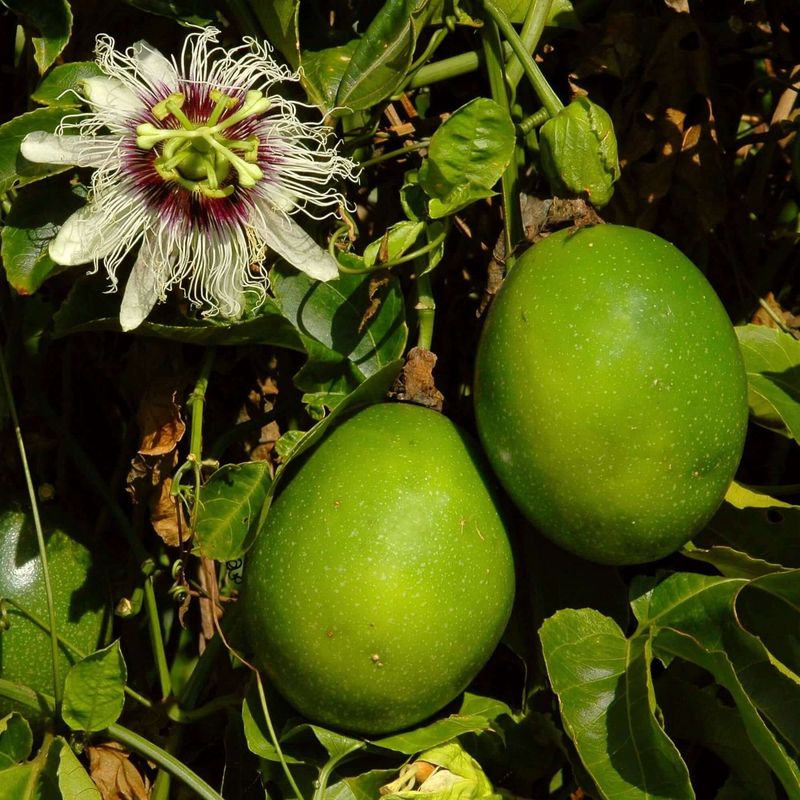
Nothing stops a neighbor mid-stride like a passionflower in full bloom. The flowers of Passiflora incarnata, also called maypop, look like something from another planet.
Intricate purple and white petals surround a fringe of filaments that seem almost too beautiful to be real.
And yet, this wild and wonderful vine is native to Texas, tough as nails, and produces edible fruits on top of all that visual drama. Maypop vines grow fast. Really fast.
In a single season, they can cover eight to fifteen feet of fence with dense, lush foliage. That makes them an excellent choice when you want quick vertical coverage along a driveway fence line.
Train them onto wire fencing, wooden rails, or a simple trellis and watch them fill in beautifully.
The fruits, called maypops, ripen in late summer and fall. They look like small yellow-green eggs and contain a sweet-tart pulp that can be eaten fresh, juiced, or used in jams and desserts.
The flavor is a unique blend of tropical sweetness with a citrusy edge that is genuinely hard to describe until you taste it.
Passiflora incarnata is native to the southeastern United States and is extremely well adapted to Texas summers and winters. It dies back to the ground in winter but returns vigorously from the roots every spring.
No special soil prep is needed. It tolerates poor, sandy, or clay soils and does not need much fertilizer to thrive.
Pollinators absolutely love this plant. Bees, butterflies, and hummingbirds visit the flowers constantly throughout summer, turning your fence line into a buzzing, fluttering wildlife corridor that is as alive as any garden can be.
6. Goji Berry (Lycium Barbarum)
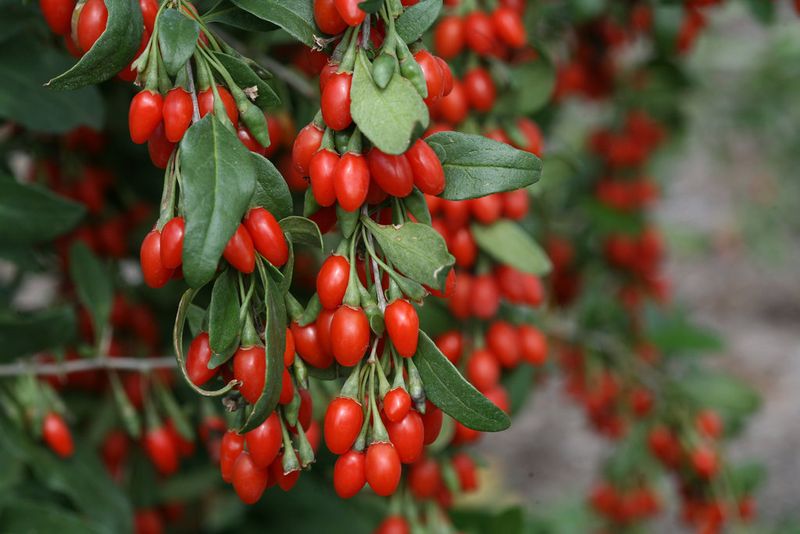
Goji berries have earned a reputation as a superfood, but what most people do not realize is that they are also one of the toughest, most adaptable shrubs you can grow along a Texas fence line.
While trendy health stores charge a small fortune for dried goji berries, you can grow your own right outside your front door with almost no fuss at all.
Lycium barbarum is a sprawling, arching shrub that typically reaches four to eight feet tall. The branches are slightly thorny, which adds a natural security element along fence lines.
Small purple tubular flowers appear in spring and early summer, followed by clusters of bright red-orange berries that ripen through summer and into fall. The berries are mildly sweet with a slight herbal edge, great eaten fresh or dried for later use.
What makes goji berries especially appealing for Texas homeowners is their toughness. They handle heat, drought, and even poor or alkaline soils without complaint.
Once established, they need almost no supplemental watering. They also tolerate full sun, which is exactly what most driveway fence lines offer. Plant goji berries in spring or fall in well-drained soil. Space plants four to six feet apart.
Prune them in late winter to encourage bushy growth and better fruit production. A light application of balanced fertilizer in early spring is all they typically need to produce a generous crop.
Birds are drawn to the bright berries, so harvest regularly once they ripen. A mature goji shrub can produce a pound or more of berries per season, giving you a steady supply of a genuinely nutritious fruit from a plant that practically takes care of itself.
7. Nanking Cherry (Prunus Tomentosa)
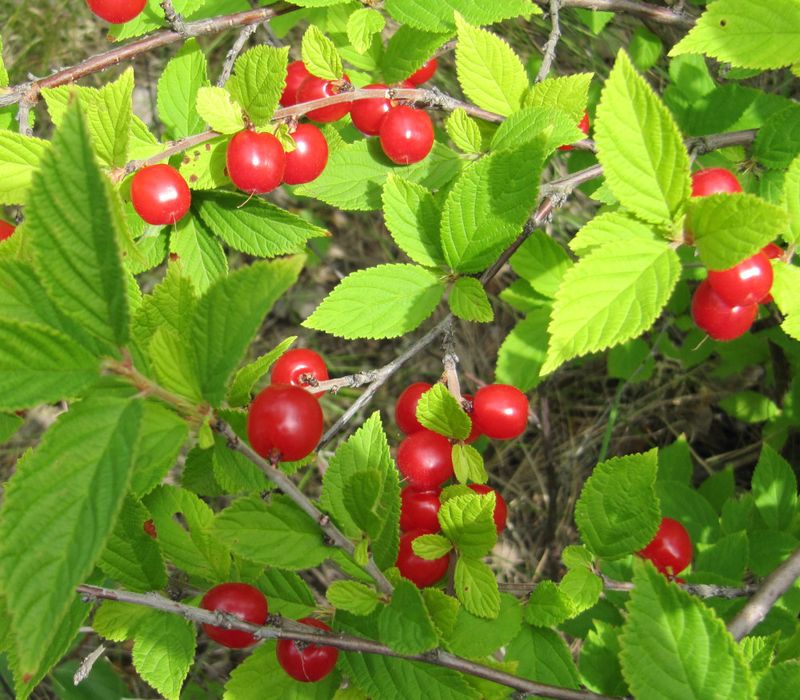
Early summer in Texas can feel relentless, but Nanking cherry does not seem to mind. By the time the heat really sets in, this tough little shrub has already put on its spring flower show and loaded up with bright red tart cherries ready for picking.
It is one of those plants that rewards you early and often, all while looking fantastic along a fence line.
Prunus tomentosa grows as a rounded, densely branched shrub reaching six to ten feet tall. In early spring, the branches are covered in small white to pale pink blossoms before the leaves even fully open.
The floral display is impressive enough to turn heads from the street. After blooming, the cherries develop quickly and ripen in May or June, well ahead of summer’s peak intensity.
The fruits are small, about the size of a large pea, and intensely tart. They are excellent for jams, jellies, pies, and syrups.
Some people eat them fresh right off the branch, though most prefer them cooked with a little sugar to balance the tartness. Either way, a single mature shrub can produce several quarts of cherries in a good season.
Nanking cherry is cold-hardy and heat-tolerant, which makes it a strong performer across most of Texas. It handles clay and sandy soils reasonably well and does not need heavy watering once established. Full sun is preferred for best fruiting.
Plant multiple shrubs close together along the fence line for a dense, impenetrable hedge that offers real privacy. The thick branching structure and leafy coverage make it a natural screen that looks polished and intentional without requiring much maintenance at all.