Ever wonder why your Oregon camellia buds brown and drop before they ever open?
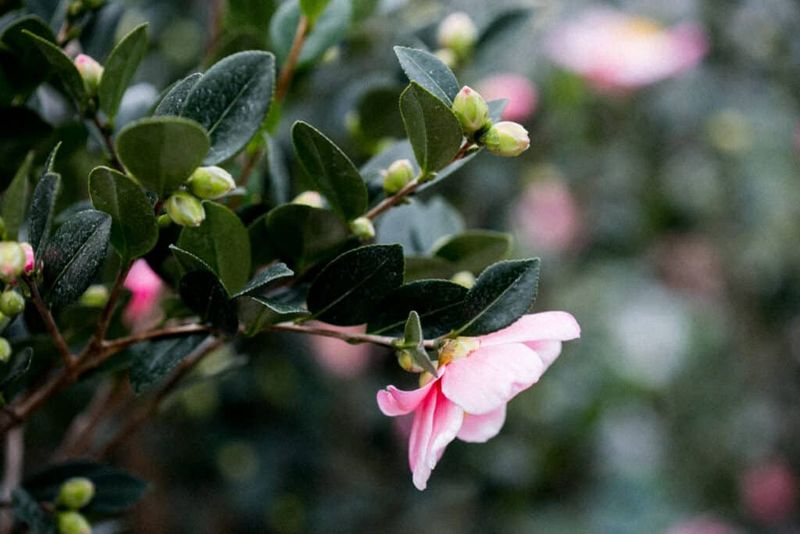
Watching your camellia buds turn brown and fall off before they ever bloom is genuinely discouraging, especially when you have been looking forward to those flowers all winter. The good news is that brown buds do not point to a single guaranteed problem, and many Oregon gardeners face this same frustration every year.
Understanding what actually happened, and when it happened, puts you in a much better position to help your plant next season.
Brown buds do not tell the whole story
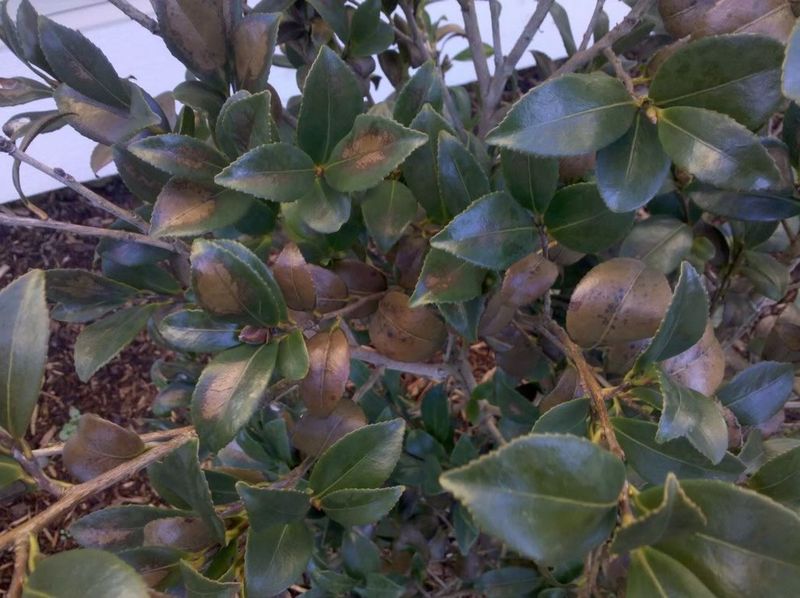
Camellia buds drop before opening for a surprising number of reasons, and the color brown on its own cannot tell you which one applies. Frost, uneven watering, poor drainage, temperature swings, cultivar sensitivity, planting location, and even normal plant behavior can all produce the same discouraging result.
Reaching for a spray bottle or a bag of fertilizer before you know the actual cause is unlikely to help and may make things worse.
A reassuring place to start: some bud thinning is completely normal. Camellias often set more buds than they can realistically open, so a few dropping from an otherwise healthy, vigorous plant does not signal disease or failure.
Camellia care guidance confirms that modest bud drop on a thriving plant is part of normal growth, not a warning sign.
The situation deserves closer attention when the drop is widespread, happens repeatedly across multiple seasons, or affects a plant that already looks off. At that point, the most useful first question is not “what disease is this?” but rather “where exactly did the browning begin, and was the bud still closed when it happened?”
That single observation, whether the affected part was an unopened bud, a flower just beginning to unfold, or a fully open bloom, narrows the field considerably. Extension guidance on camellia diseases and pests points out that the stage of the affected tissue is more diagnostic than color alone.
Closed buds that dry and fall suggest environmental or physiological stress, while problems that develop on open flowers point toward a different set of causes entirely. Starting with that distinction keeps your response proportionate and targeted rather than reactive.
Summer stress can surface as winter bud drop
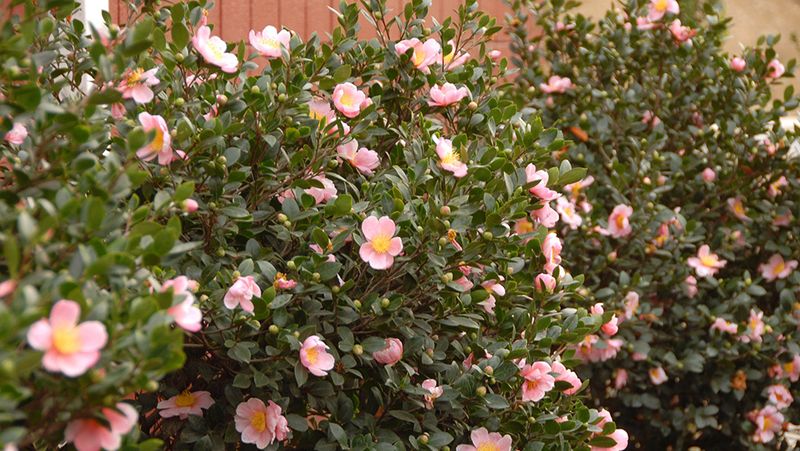
One of the most confusing things about this problem is the timing. You notice brown buds in December or January, but the stress that caused them may have happened back in August or September.
Camellias develop their flower buds during late summer and early fall, which means drought, irregular irrigation, or root-zone dryness during that window can show up months later as winter bud failure.
West of the Cascades, Oregon shifts from warm, dry summers to cool, wet winters, and that seasonal pattern creates a specific trap for camellia growers. Oregon gardening guidance notes that western Oregon soils can have drainage challenges during heavy rains, while summer irrigation may still be necessary for landscape plants because the dry season can be long and pronounced.
A camellia sitting under a roof overhang, competing with tree roots, or planted in compacted soil may not receive the moisture it needs during that critical bud-forming period, even if the garden looks green and the weather feels mild.
Your Oregon Garden Changes Every Week. Your Plan Should Too.
Gardening in Oregon changes quickly throughout the season. Every Friday you’ll receive a simple weekly plan showing exactly what to plant, prune, fertilize, harvest, and protect so you never miss the right timing.
Winter rain does not automatically correct what happened in summer. Soil type, slope, nearby structures, and root competition all affect how much water actually reaches the camellia’s root zone.
The November garden calendar for western Oregon reinforces that soil drainage and moisture management remain active concerns even as the rainy season begins, because compacted or clay-heavy soils can stay waterlogged at the surface while staying dry deeper down.
Irregular watering matters just as much as overall quantity. A plant that received inconsistent moisture through late summer, sometimes too dry, sometimes flooded, experienced real physiological stress during exactly the period when it was investing energy in bud formation.
Guidance on premature bud drop identifies uneven soil moisture as a recognized contributor to bud failure across a range of ornamental plants. Keeping a mental or written note of how your camellia was watered from June through October can help you connect winter symptoms to their actual cause.
The bud-versus-bloom check narrows the diagnosis
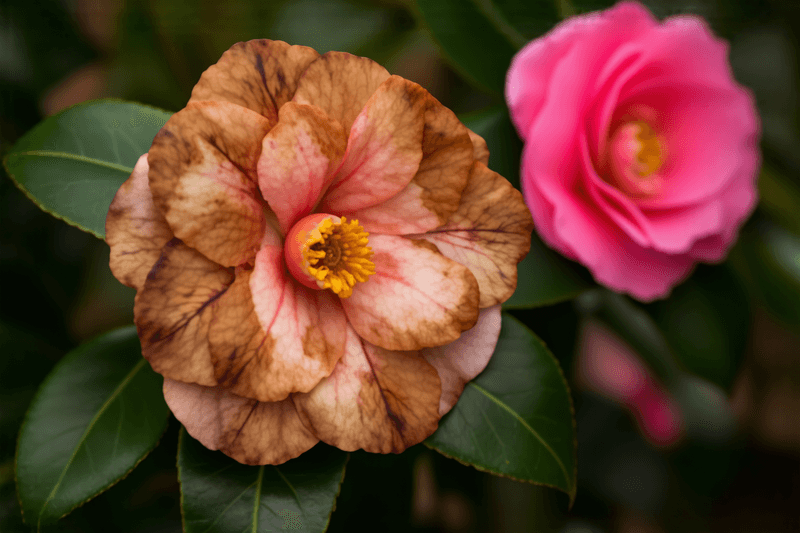
Before settling on any explanation, take a moment to look closely at what you are actually seeing. Pick up one of the fallen pieces and examine it carefully.
Is it a firm, closed bud that never opened? A flower that began to unfold but stopped?
Or a bloom that opened fully and then browned quickly? Each of those scenarios points in a different direction, and sorting them out is more useful than any amount of guessing based on color alone.
Unopened buds that dry and fall are most commonly linked to environmental and physiological stress: drought during bud formation, freezing temperatures, temperature swings, or a cultivar that is particularly sensitive to your specific site. These buds usually feel dry or papery, and the browning tends to be fairly uniform across the whole structure.
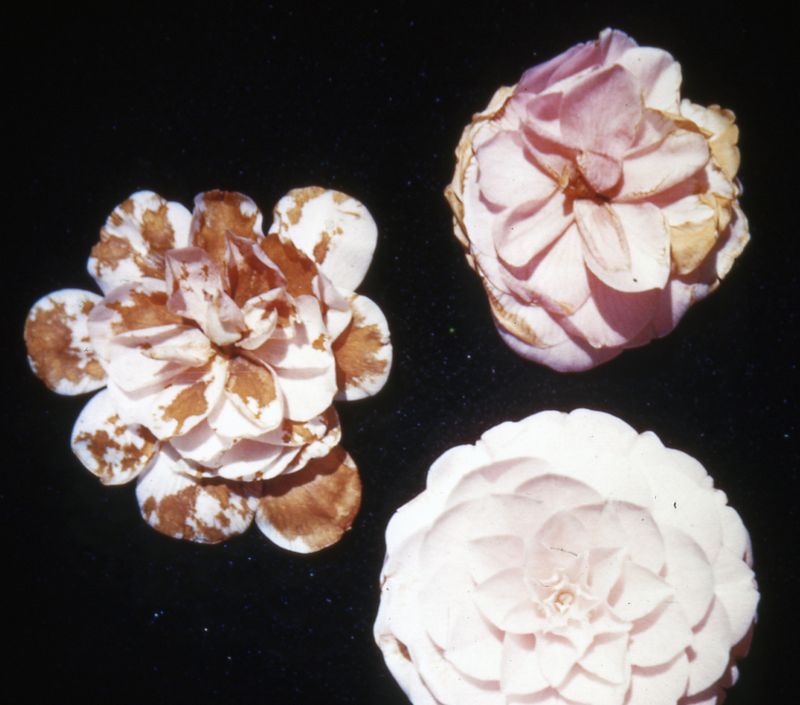
Camellia flower and petal blight tells a different story, and it primarily concerns flowers that have already opened. Pacific Northwest plant disease guidance on camellia petal blight describes the characteristic pattern as irregular brown spots that begin near the center of an opening bloom, with darkening along the petal veins, rapid browning spreading outward, and intact-looking flowers that drop within a day or two.
The speed and pattern of that progression, especially the darkened veins and the central origin of the spots, are more telling than the brown color by itself.
Keeping that distinction clear matters because several other things can produce similarly browned flowers. Camellia petal blight management guidance notes that frost damage, wind, prolonged wetness, Botrytis, chemical injury, rough handling, and simple flower aging can all look similar at a glance.
Extension diagnostic resources similarly caution against assuming blight whenever a camellia bloom browns, because the look-alike causes are genuinely common. Taking a photo, noting how quickly the browning spread, and recording whether the damage started at the center or the edges all give you better information to work from than a quick visual impression.
Moisture balance matters more than a watering calendar
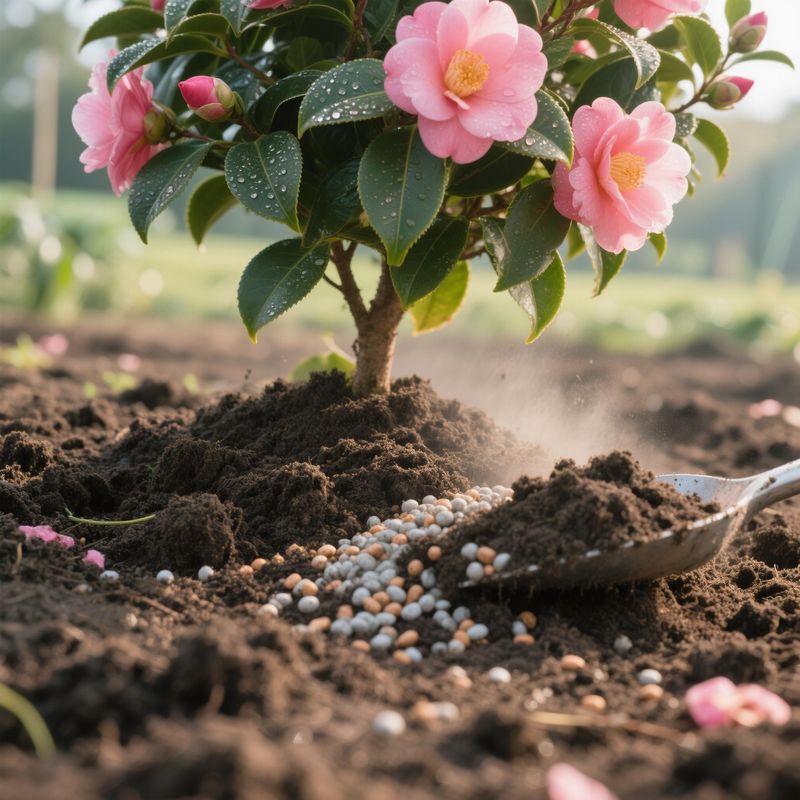
Once you suspect that moisture stress during bud development played a role, the practical response is not simply to water more. Camellias need consistent moisture with good drainage, and both halves of that phrase carry equal weight.
A root zone that stays perpetually wet is just as problematic as one that dries out completely, and the solution to either extreme is not more water but better information about what the soil is actually doing.
The most reliable way to check is to push a finger or a narrow trowel several inches into the soil near the plant’s drip line, not at the trunk. Oregon watering guidance recommends checking soil moisture below the surface rather than watering by calendar or by how the surface looks, because the top inch can dry out quickly while the root zone stays moist, or vice versa.
When the soil at that depth feels dry, water thoroughly until moisture reaches the root zone, then allow it to partially dry before watering again.
Camellias are shallow-rooted plants, which makes them more vulnerable to surface drying than deeper-rooted shrubs. A 2- to 3-inch layer of organic mulch applied over the root zone, keeping well away from the trunk, can help moderate soil temperature and slow moisture loss during dry periods.
Camellia growing guidance supports mulching as a practical step for moisture retention and root protection, and Oregon guidance on mulching woody ornamentals recommends keeping mulch a few inches back from the trunk to avoid creating conditions that favor rot or pest problems at the base.
Mulch cannot fix a drainage problem, though. If water pools around your camellia after rain or irrigation, or if the soil stays soggy for days at a time, the underlying drainage issue needs to be addressed directly.
Oregon camellia guidance ties this back to the maritime climate: western Oregon winters can create prolonged wet conditions that stress shallow-rooted plants in poorly drained spots, making site selection and soil improvement more important than any watering adjustment alone.
Frost, exposure, and cultivar sensitivity change the outcome
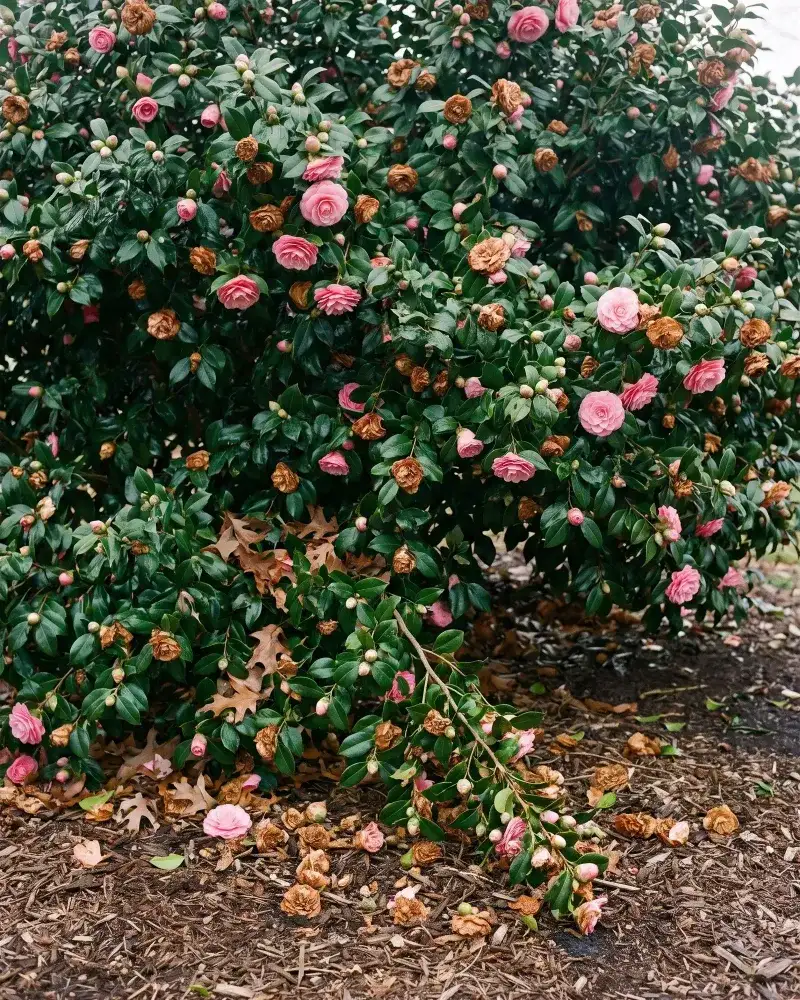
Two camellias growing just a few blocks apart in the same Oregon town can have completely different outcomes during a cold snap. One blooms beautifully while the other drops every bud.
The difference usually comes down to exposure, microclimate, and the particular cultivar each plant represents, rather than any single temperature that affects all camellias equally.
Frost damage to flower buds depends on how cold it got, how long that temperature held, how fast the temperature changed, whether wind was involved, and how well the plant was hydrated going into the cold event. Camellia disease and care guidance recognizes freezing as a direct cause of bud failure, and notes that cultivar selection plays a real role in how well a plant handles cold.
Some camellia varieties bred for cooler climates tolerate frost much better than others, and a plant that performs beautifully in a sheltered Willamette Valley garden may struggle in a more exposed location or at higher elevation.
When a frost is in the forecast, covering vulnerable plants overnight with a breathable cloth, such as burlap or a frost blanket, can help protect developing buds. Frost protection guidance recommends leaving the bottom of the cover open rather than sealing it to the ground, and removing the cover during the day so heat does not build up.
Plastic should not be placed directly against foliage because it transfers cold and can scorch leaves when the sun returns. A cover reduces risk but cannot guarantee every bud will survive a severe or prolonged freeze.
After a cold event, resist the urge to prune branches that look dead or damaged right away. Freeze injury is not always obvious from the outside, and tissue that appears gone may still be alive.
Camellia care advice from the RHS supports waiting until new growth begins to emerge before cutting back, because that growth reveals exactly where living tissue ends. The only exception is a branch that creates a genuine safety hazard and needs to come down regardless of its recovery potential.
Declining foliage changes the level of concern
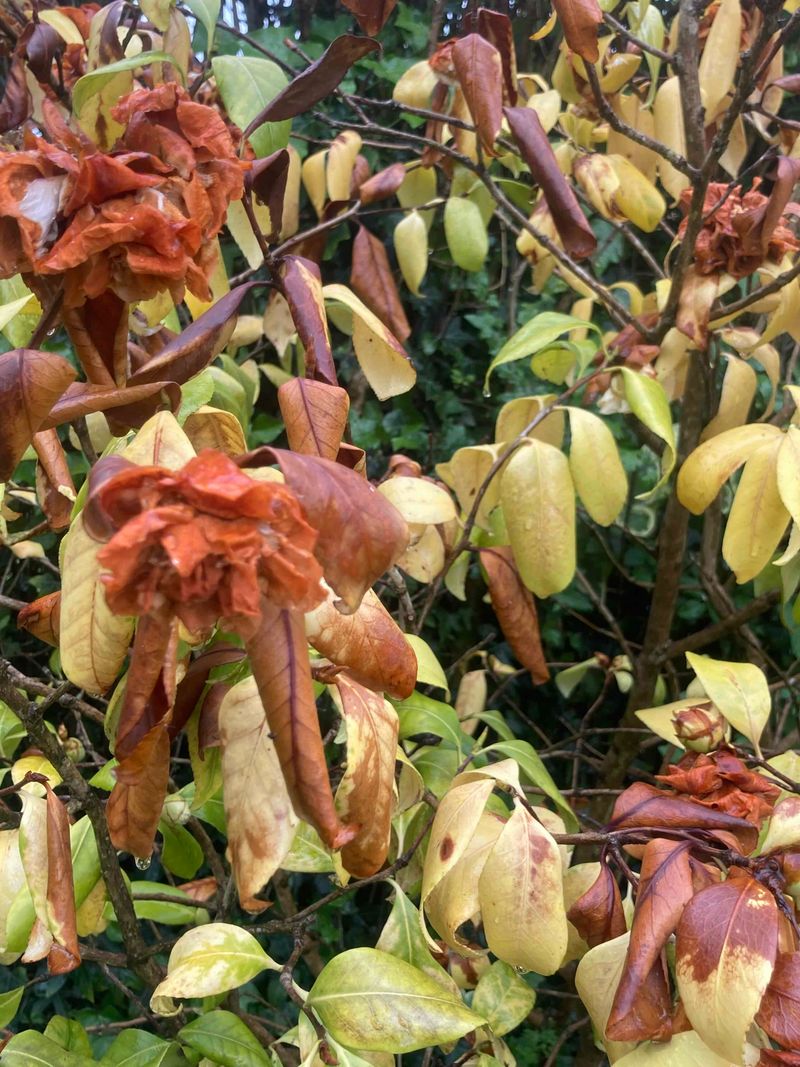
Bud drop by itself, even widespread bud drop, does not mean your camellia has a serious root disease. Environmental stress, frost, and moisture imbalance are far more common explanations and they do not require the same level of intervention.
The picture changes, though, when the buds are just one part of a larger pattern of decline.
Pay attention to the foliage. Leaves that are yellowing, unusually small, limp, or dull when they should be glossy and firm suggest something is affecting the plant’s ability to function at the root level.
Twig dieback, wilting that does not improve after watering, or a general loss of the plant’s vigor are additional signals worth taking seriously. Camellia root rot information identifies that combination of symptoms, bud failure alongside declining foliage, dieback, and wilting, as the appropriate threshold for suspecting a root disease such as Phytophthora.
Bud drop alone does not justify that diagnosis.
If those accompanying signs are present and your plant sits in a poorly drained or persistently wet location, improving drainage and evaluating the planting site becomes the priority. Root disease thrives in saturated soil, and no treatment addresses the problem if the drainage issue remains.
For gardeners who are seeing browning on opened flowers rather than on closed buds, and who suspect flower or petal blight, sanitation is the primary management step. Pacific Northwest guidance on camellia petal blight and camellia petal blight management resources both emphasize removing infected flowers and fallen flower debris promptly, and replacing any mulch beneath the plant that may harbor fungal bodies.
Camellia disease extension guidance reinforces that neither bud drop nor blight symptoms alone justify automatic fungicide application. Any treatment decision should match a confirmed symptom pattern and follow the product label for the specific plant, site, and disease involved.
A calmer Oregon camellia reset starts with observation
When you find brown buds on your camellia this season, start by simply looking before doing anything else. Pick up a fallen bud and note whether it was still closed, partly open, or fully open.
Check the foliage for yellowing, limpness, or unusual smallness. Look at the soil several inches down to see whether it is bone dry, pleasantly moist, or waterlogged.
Those three observations together give you more useful information than any single symptom on its own.
From there, think back to late summer and early fall. Was your camellia watered consistently during August and September, or did it go through dry spells?
Does it sit in a spot where rain actually reaches the root zone, or does a roof overhang, a large tree, or compacted soil limit what gets through? Avoiding late-season fertilizing is also worth noting: RHS camellia guidance advises against feeding after midsummer, and reaching for fertilizer as a rescue measure after buds begin browning is unlikely to help and may create additional stress.
Gardeners east of the Cascades should interpret these symptoms through a different lens. Central Oregon climate gardening guidance and waterwise gardening resources for Central Oregon reflect conditions that are colder, drier, and windier than the west side, where winter desiccation and hard freezes may be more pressing concerns than prolonged winter rain.
Frost and freezing guidance applies statewide but carries different weight depending on your location and elevation. A few dropped buds on a vigorous plant with healthy foliage and good color is often just a camellia being a camellia.
Repeated failure paired with declining overall health is the signal that something more needs your attention.