What It Really Means When A Mourning Dove Nests In Your Oregon Yard
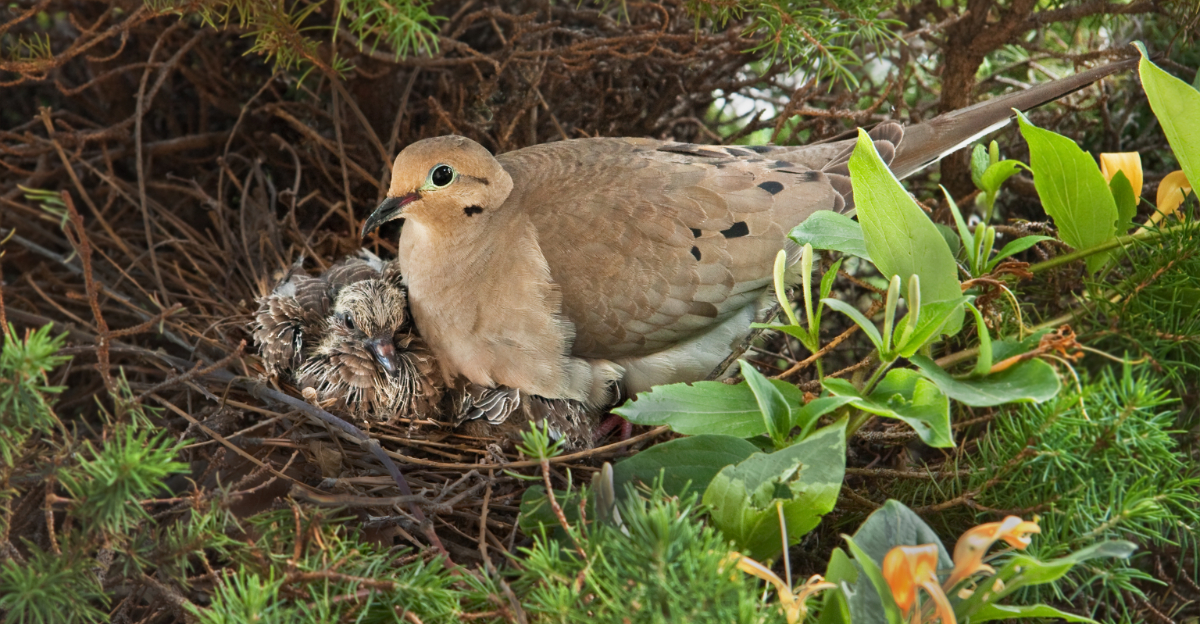
A mourning dove settling into your yard can feel oddly personal. Out of every tree, ledge, and quiet corner nearby, this gentle bird picked your space.
Suddenly, the backyard has a tiny new tenant with excellent taste and absolutely no interest in paying rent.
The nest itself may look surprisingly flimsy, which can make the whole setup seem a little risky.
Mourning doves are known for choosing simple spots and building with confidence that feels almost suspicious. Still, their arrival is rarely as random as it appears.
Something about the yard has made it feel safe enough for nesting. The timing can also reveal more than most homeowners realize, especially during Oregon’s warmer months.
Seeing a dove return again and again can turn an ordinary patch of greenery into a front-row seat for something special. It may also be a sign that your yard is doing more right than you think.
1. Your Yard Feels Quiet Enough To Nest
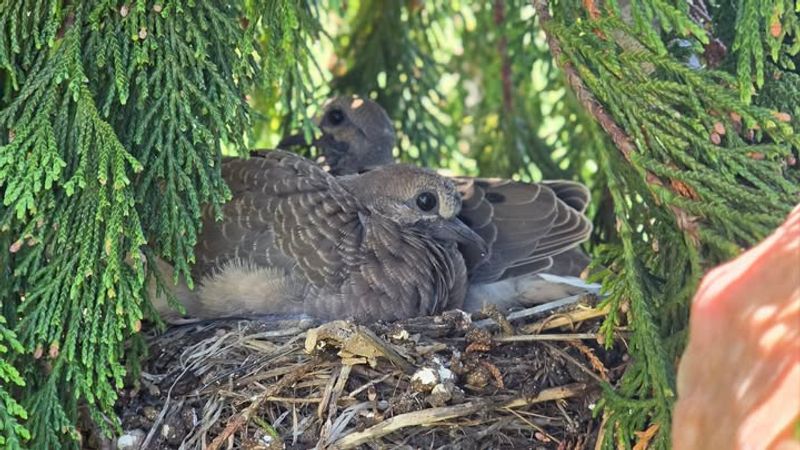
Mourning doves do not nest just anywhere. Before a pair commits to building, they spend time watching and listening to a space.
A yard that feels calm, predictable, and free from constant noise or activity is far more attractive to them than a busy or chaotic one.
Foot traffic, loud pets, and frequent disturbances near trees and shrubs will push doves away quickly.
They are not skittish birds exactly, but they do prefer low-stress environments where they can sit quietly without being startled every few minutes. If your yard has a peaceful rhythm, they notice.
Mourning doves often nest close to homes, sometimes just a few feet off the ground on a porch ledge, a low branch, or even a hanging basket. What they care about most is consistency.
A yard that stays relatively undisturbed during the morning and midday hours is especially appealing to nesting pairs.
You do not need a large property for this to happen. Even a modest city lot with a few trees and a calm atmosphere can attract nesting doves.
Reducing unnecessary noise, keeping dogs away from nesting areas, and simply spending less time near active nests goes a long way.
When a dove picks your yard, it is a real sign that your outdoor space feels safe and settled to the wildlife around you.
2. A Flimsy Nest Is Normal For Doves
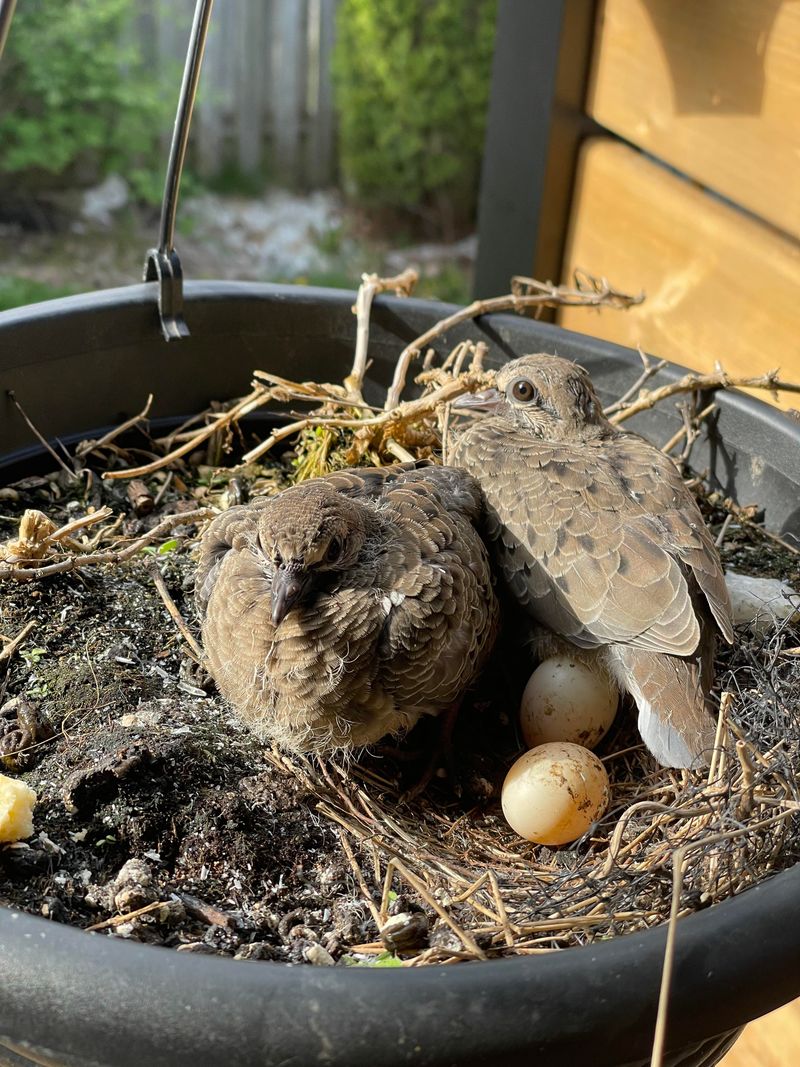
The first time most people see a mourning dove nest, they worry something is wrong. The nest looks barely finished.
It is a loose, flat pile of thin twigs with almost no structure, and it often looks like it could fall apart in a light breeze. That is completely normal.
Mourning doves are not skilled architects the way robins or orioles are. Their nests are simple, open platforms that take very little time to build.
A pair can put one together in just a day or two. The male brings sticks and the female arranges them, though the word “arranges” might be generous.
The result is a shallow, flimsy-looking cup that somehow works.
Your Oregon Garden Changes Every Week. Your Plan Should Too.
Gardening in Oregon changes quickly throughout the season. Every Friday you’ll receive a simple weekly plan showing exactly what to plant, prune, fertilize, harvest, and protect so you never miss the right timing.
What is surprising is how well these nests hold up. The eggs and chicks stay put more often than you would expect, even in wind and rain.
The parents sit low and tight on the nest, which helps protect the eggs and keep everything in place. Their body weight actually helps anchor the structure.
So if you spot a thin, messy pile of sticks in a low branch and see a dove sitting motionless on top of it, do not assume it needs help. Resist the urge to reinforce or move it.
A flimsy dove nest is doing exactly what it was designed to do, and the parents know what they are handling.
3. Sheltered Branches Matter More Than Height
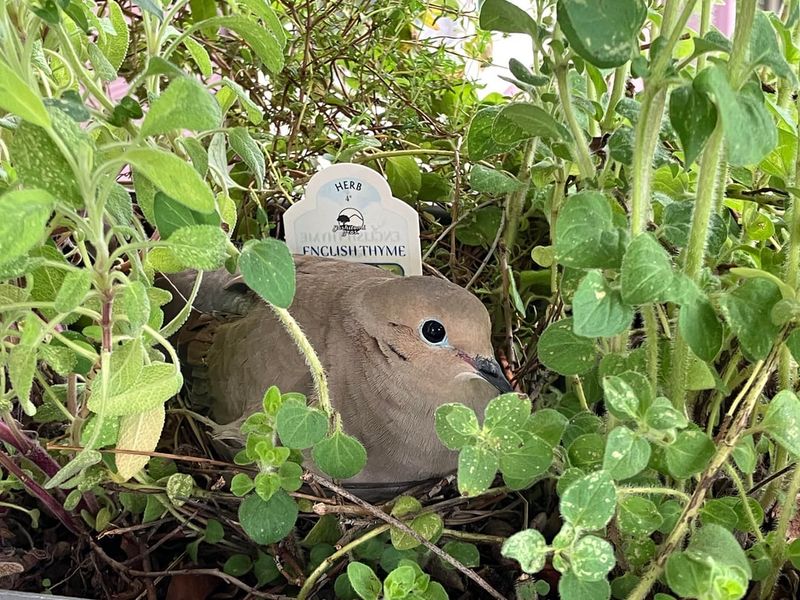
Many people assume birds want to nest as high as possible to stay safe. Mourning doves think differently.
They tend to choose spots based on cover and shelter, not height. A low branch tucked behind thick foliage is far more appealing to them than an exposed perch at the top of a tall tree.
Conifers, dense shrubs, and fruit trees are popular nesting spots across the Pacific Northwest.
The key is that the branch or surface offers some protection from above, whether from a layer of leaves, an overhang, or overlapping branches.
That overhead cover helps shield the nest from rain and from aerial predators like hawks.
Horizontal branches are preferred over steep or angled ones. Doves need a stable, flat surface to balance their loose nests.
A branch that juts out at a gentle angle with a fork or a natural ledge is ideal. They have also been known to nest on top of other birds’ old nests when the structure is the right shape.
If you want to make your Oregon yard more inviting for nesting doves, consider planting or maintaining low, dense shrubs and small trees with horizontal branching. You do not need to do anything fancy.
A simple evergreen hedge or a well-placed fruit tree can offer exactly the kind of sheltered branch a dove pair is looking for when the season begins.
4. Nearby Food Makes The Yard More Useful
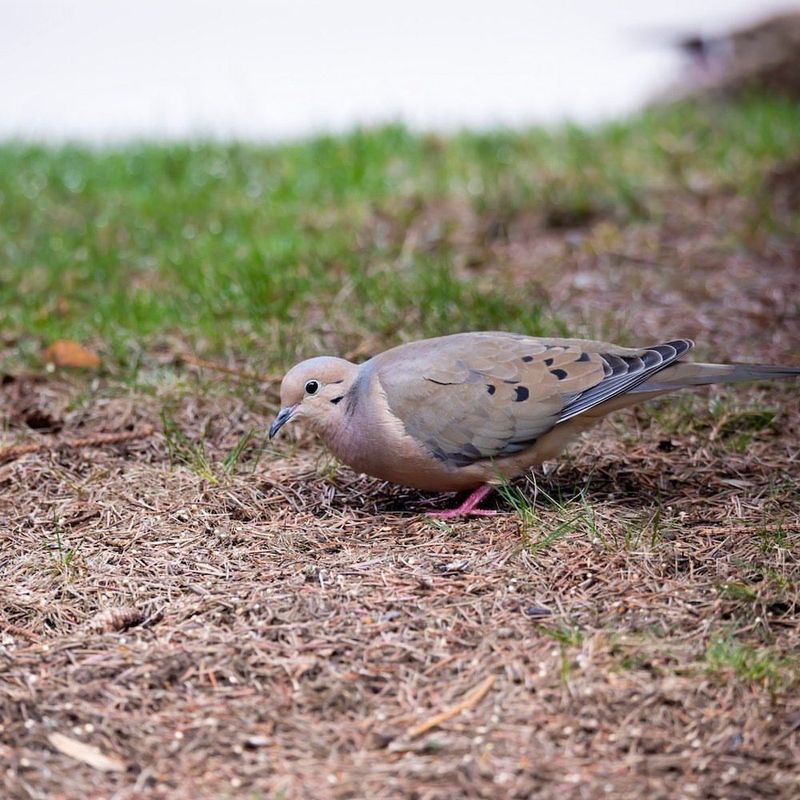
Mourning doves are ground feeders. They do not cling to feeders or peck at suet cakes.
Instead, they walk slowly across open ground, picking up seeds that have fallen or scattered nearby.
Having a reliable food source close to the nesting area is a big part of why they choose a specific yard.
Seeds are their primary food. They love millet, safflower, cracked corn, and sunflower seeds.
Sprinkling a small amount of birdseed on a flat, open patch of ground near your yard is one of the easiest ways to attract and keep mourning doves around. A platform feeder set low to the ground also works well for them.
What makes food especially important during nesting season is that both parents need to eat regularly to produce crop milk, which is what they feed their chicks.
Crop milk is a nutrient-rich secretion that both the male and female produce in their crop, a pouch in their throat.
Easy access to seeds nearby means the parents do not have to travel far, which keeps them closer to the nest.
Planting native grasses and Oregon wildflowers that go to seed naturally is another great way to support doves without a feeder. Grasses like fescue and native clovers produce seeds doves enjoy.
A yard that offers natural food sources year-round becomes a place they want to return to season after season.
5. Open Ground Helps Doves Forage
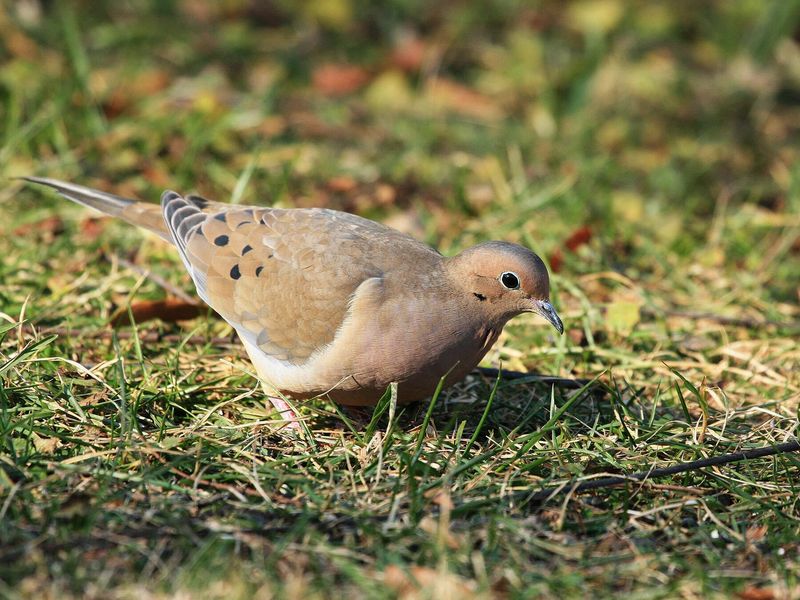
Unlike many Oregon backyard birds that dart through dense brush looking for insects, mourning doves prefer wide, open spaces to forage.
They walk methodically across flat ground, scanning for seeds with their eyes and picking them up one by one.
Open lawn areas, gravel patches, and bare dirt sections of a yard are all useful to them.
A yard that is completely covered in thick ground cover or dense plantings can actually make foraging harder for doves. They need space to move freely and see clearly.
Short grass and open patches between garden beds give them the visibility and room they need to feed comfortably and watch for anything that might approach.
This preference for open ground is part of why mourning doves are so common in suburban neighborhoods.
Lawns, driveways, and sidewalk edges all provide the kind of flat, accessible terrain they rely on.
Even a small open section of your yard can be enough to make the space functional for a foraging pair.
Keeping one part of your yard mowed short or leaving a small area of bare ground near a garden edge can help.
Avoid using pesticides or herbicides on areas where doves forage, since those chemicals can affect the seeds they eat.
A clean, open feeding area near their nesting spot means less travel and more time spent safely in your yard throughout the season.
6. Shallow Water Can Keep Them Nearby
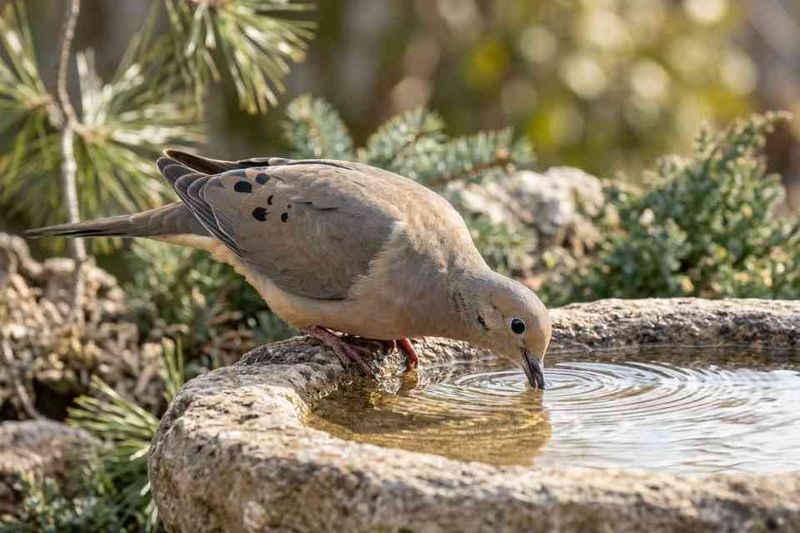
Water is one of the most underrated attractants for backyard birds, and mourning doves are no exception.
They need fresh water for drinking and occasional bathing, but they have a strong preference for shallow sources.
Deep birdbaths or steep-sided containers are not as useful to them as low, flat dishes with gentle edges.
Mourning doves drink differently than most birds. Instead of scooping water with their beaks and tilting their heads back, they submerge their bills and sip continuously, almost like using a straw.
This means they need a water source deep enough to submerge their beak but not so deep that it feels unsafe or unstable to stand in.
A simple terra cotta saucer, a shallow plastic dish, or a ground-level birdbath with a gradual slope works perfectly.
Placing it near your nesting area but in an open spot where the birds can see approaching threats gives them the confidence to use it regularly.
Changing the water every couple of days keeps it fresh and reduces mosquito breeding.
During dry summer months in Oregon, natural water sources can become scarce. A reliable birdbath in your yard can make a real difference for nesting pairs who need hydration without traveling far.
Doves that find consistent food, shelter, and water in one spot are far more likely to return the following year and nest again in the same location.
7. Repeated Visits Mean The Spot Feels Safe
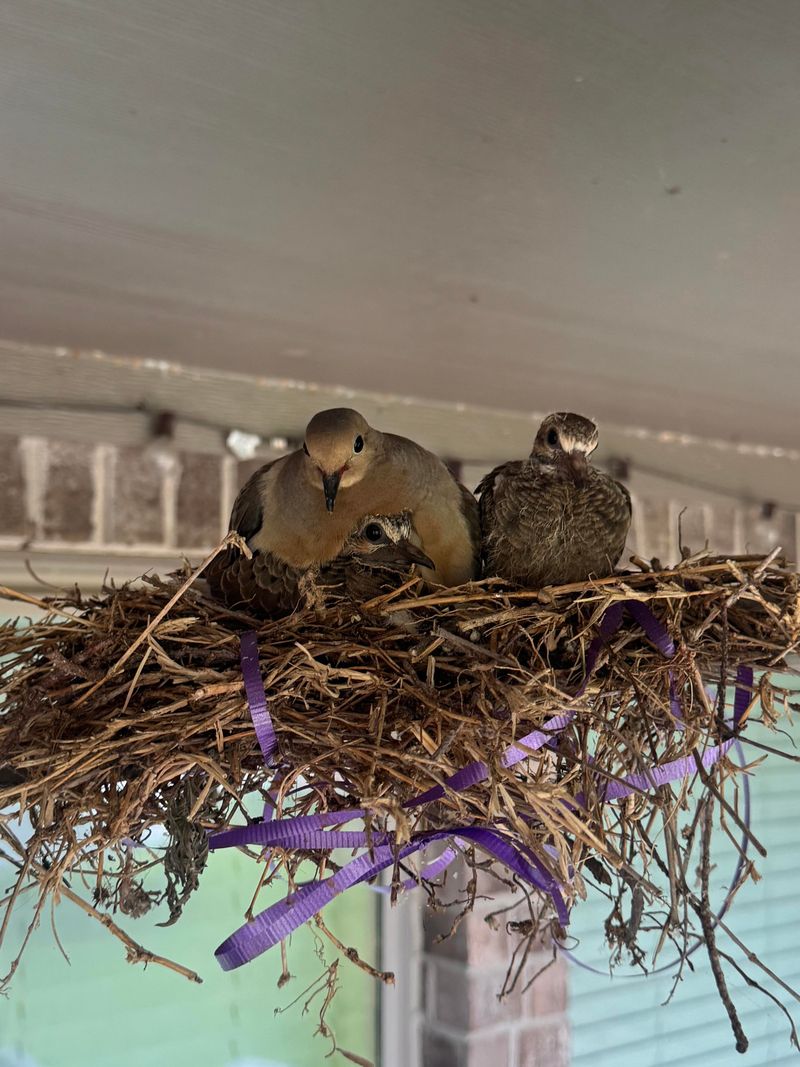
Once a mourning dove pair finds a spot they trust, they tend to come back to it. Seeing the same doves in your yard week after week, or even year after year, is not a coincidence.
These birds have strong site fidelity, which means they remember and return to places where they have successfully nested or fed before.
That kind of repeat behavior is a real compliment to your yard. It means the space has consistently offered what they need without too much disruption.
Doves are creatures of habit. They follow familiar routes, use the same perches, and often return to the same nesting branch or nearby tree for multiple broods in a single season.
Mourning doves can raise two to three broods per year in warmer parts of Oregon. Each time they successfully raise chicks in your yard, the location becomes more deeply embedded in their routine.
The male often returns to the same general territory even before the female, calling from a familiar perch to reestablish the space.
Paying attention to the patterns in your yard is part of the joy of hosting wildlife. If you notice a dove returning to the same branch or corner of your property regularly, that area has earned its trust.
Keeping that zone calm and undisturbed during nesting season is the best way to honor the relationship your yard has built with these birds over time.
8. Both Parents Help Raise The Young
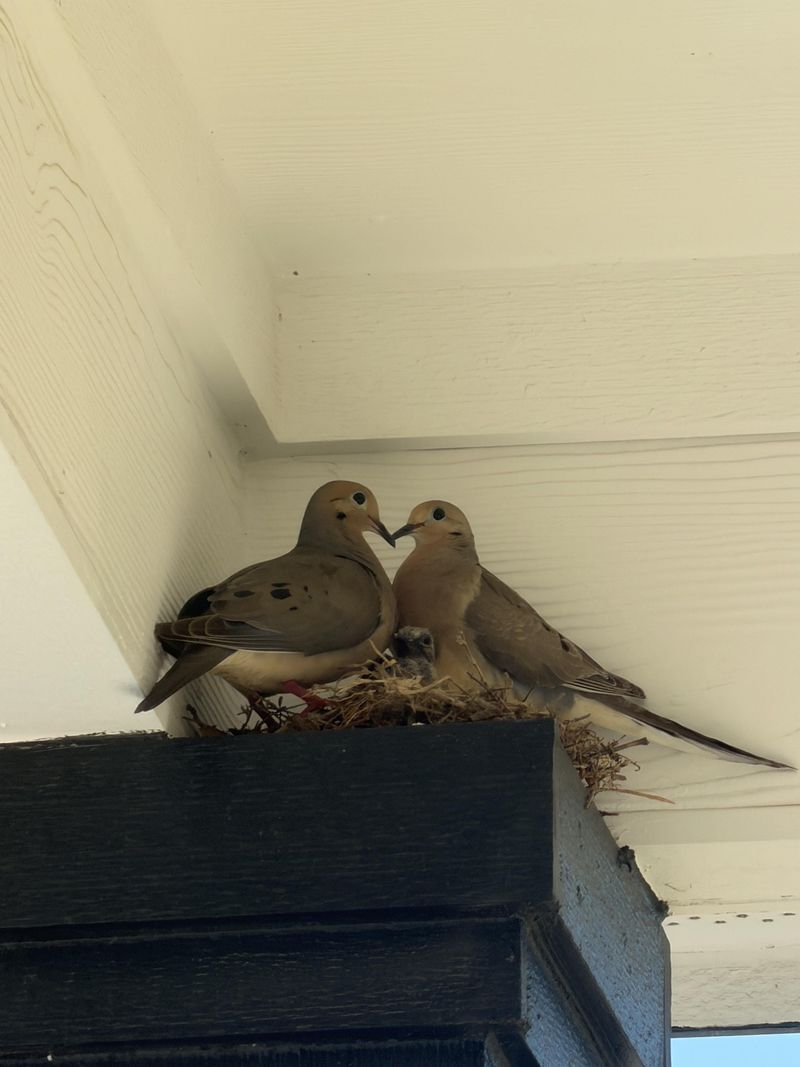
One of the most touching things about mourning doves is how evenly they share parenting duties. Both the male and the female take turns incubating the eggs, brooding the chicks, and feeding them.
It is a true partnership that starts the moment the eggs are laid and continues until the young birds are ready to leave the nest.
The division of labor is pretty consistent. The male typically sits on the nest during the day, often from mid-morning through late afternoon.
The female takes over in the evening and stays through the night. This schedule gives each parent time to forage and rest while keeping the eggs or chicks covered at all times.
After hatching, both parents produce crop milk to feed the nestlings. This rich, protein-heavy secretion is the only food the chicks get for the first several days.
As the young birds grow, the parents gradually shift to regurgitated seeds. The chicks develop quickly and are usually ready to leave the nest within two weeks of hatching.
Watching both parents work together near a nest in your yard is genuinely special. You might notice the male calling softly nearby while the female sits on the eggs, or see them switch spots in a smooth, quiet exchange.
That cooperative behavior is one of the reasons mourning doves have such strong nesting success rates when left undisturbed in a calm, supportive environment like a well-kept backyard.