Fire-Resistant Native Oregon Plants Every Homeowner Should Add Before Peak Fire Season
Oregon summers have changed, and most homeowners across the state already feel it. Longer dry stretches, earlier heat, and fire seasons that demand more attention than they used to.
The plants surrounding your home are part of that picture, and the choices you make in the landscape genuinely matter when conditions get extreme. Fire-wise planting is not about stripping your yard down to gravel and hoping for the best.
It is about thoughtful plant selection, smart spacing, regular maintenance, and being honest about what grows closest to the house.
Native plants that stay low, retain some moisture, and do not accumulate heavy dry debris can play a real role in reducing landscape fuel.
That said, no plant is fireproof, and good plant choices work best as part of a broader defensible-space plan that gets maintained consistently before peak fire season arrives.
1. Kinnikinnick Creates A Low Native Mat
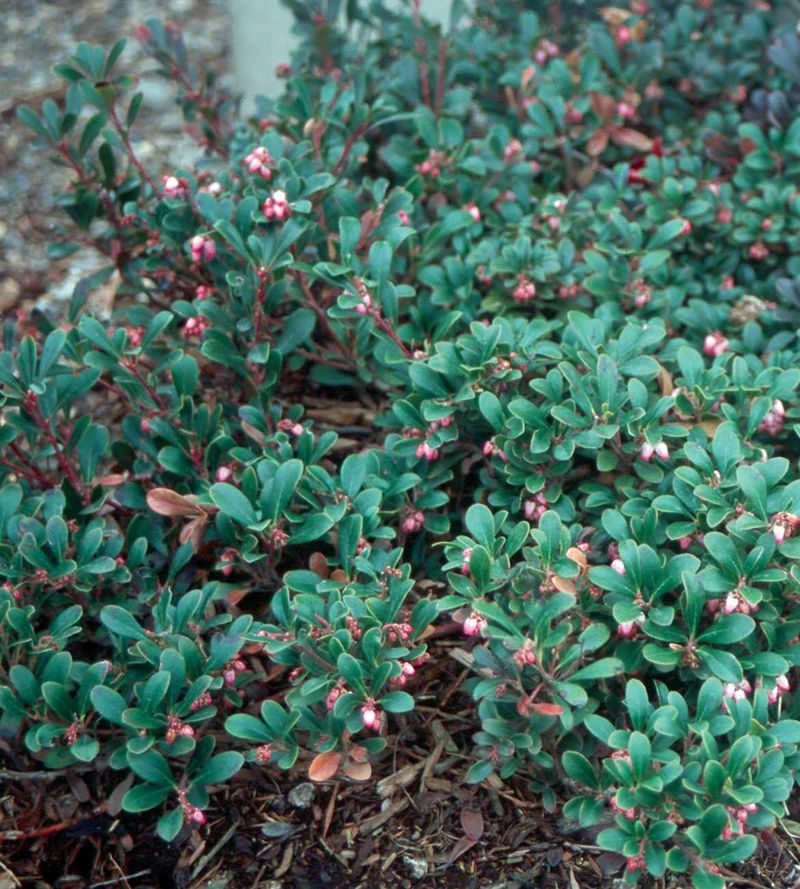
Few native groundcovers do as much quiet work as kinnikinnick, a low mat-forming plant that hugs the ground and holds its shape through Oregon’s dry summers without much fuss.
It spreads slowly across sunny or partly shaded spots, stays close to the soil, and rarely grows taller than about six inches, which keeps it from building up the kind of tall, dense fuel that worries fire-wise homeowners.
That low profile is one reason it fits well in the outer zones of a defensible-space plan.
Kinnikinnick works well along dry slopes, gravel edges, and open areas where other plants struggle to establish. It prefers well-drained soil and does not do well sitting in moisture, so rocky or sandy ground suits it.
Small pink flowers appear in spring, followed by red berries that birds enjoy through fall and winter.
Even though kinnikinnick stays low, it still needs attention before peak fire season. Plantings should not be allowed to grow into one continuous unmanaged mat, because dense connected groundcover can still carry fire along the ground.
Spacing plants, removing dry debris that collects between them, and keeping the area around them clear of fallen leaves and spent stems will help kinnikinnick fit a practical Oregon fire-wise landscape.
2. Pacific Stonecrop Handles Hot Dry Spots
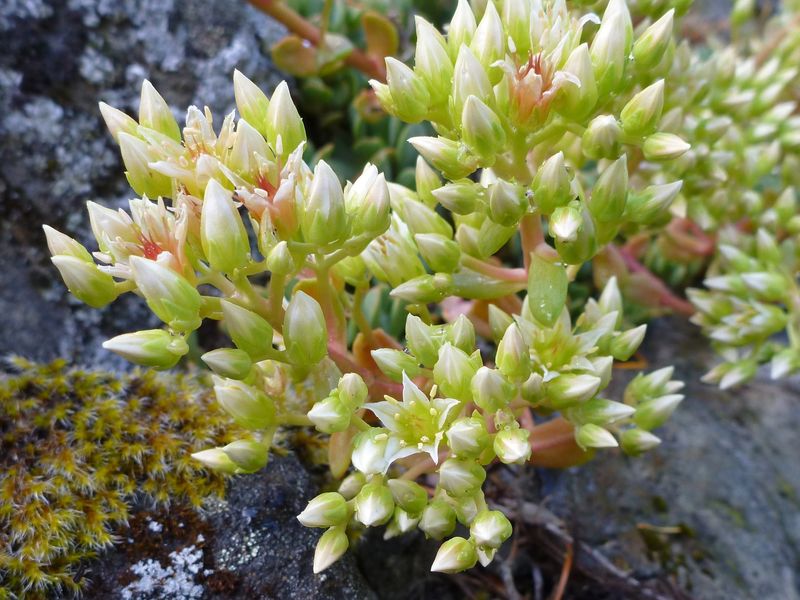
Rocky outcrops, gravel beds, and sun-baked edges that dry out completely by July are exactly where Pacific stonecrop feels at home.
This small native succulent stores water in its thick, fleshy leaves, which means it can push through Oregon’s hottest dry stretches without irrigation once it is established.
That drought tolerance, combined with its naturally low and compact form, makes it a sensible choice for hot, exposed spots where other plants wilt and dry out fast.
Pacific stonecrop works well in rock gardens, along dry stone walls, and as a low filler between larger plants. It stays small, usually under a foot tall, and its yellow flowers attract pollinators in late spring and early summer.
Because it does not build up thick woody stems or large amounts of dry leaf litter, it fits nicely as a break plant between heavier shrubs in a fire-wise bed.
Your Oregon Garden Changes Every Week. Your Plan Should Too.
Gardening in Oregon changes quickly throughout the season. Every Friday you’ll receive a simple weekly plan showing exactly what to plant, prune, fertilize, harvest, and protect so you never miss the right timing.
Placement matters with this plant. It does best in well-drained soil and full sun, and it tends to rot in heavy or wet ground.
Removing spent flower stalks and any dry debris that collects around it before Oregon’s peak fire season keeps the planting tidy and reduces small fuel sources near garden edges and borders.
3. Oregon Grape Adds Broadleaf Evergreen Structure
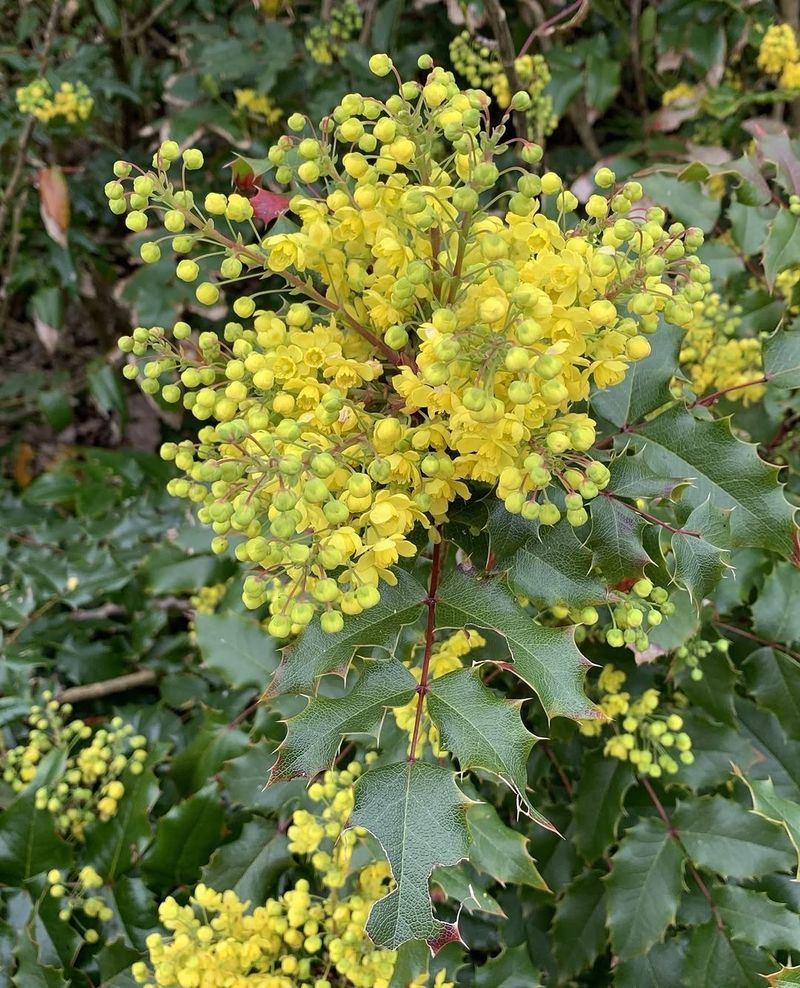
Walk through almost any native woodland edge and you are likely to spot Oregon grape holding its ground in the understory.
Its stiff, holly-like leaves stay green year-round, its yellow spring flowers are a favorite of early pollinators, and its blue-purple berries feed birds through the summer.
That combination of year-round structure, wildlife value, and native toughness makes it a popular choice for homeowners trying to build a more fire-wise landscape.
Low Oregon grape, which stays under about two feet, works well as a groundcover or low border plant. Tall Oregon grape can reach six feet or more and fits better as a background shrub or screen.
Both species handle dry shade reasonably well once established, which gives them an edge in spots under trees where other plants struggle.
Because Oregon grape is a shrub with real size and density, it should be placed with mature dimensions and defensible-space spacing in mind.
Planting it too close to a structure or allowing it to become crowded and overgrown increases fuel density near the home.
Pruning out deteriorating wood, thinning crowded stems, and clearing dry debris from around the base before peak fire season are all part of keeping this plant a responsible part of an Oregon fire-wise yard.
4. Serviceberry Brings Fire-Wise Shrub Form
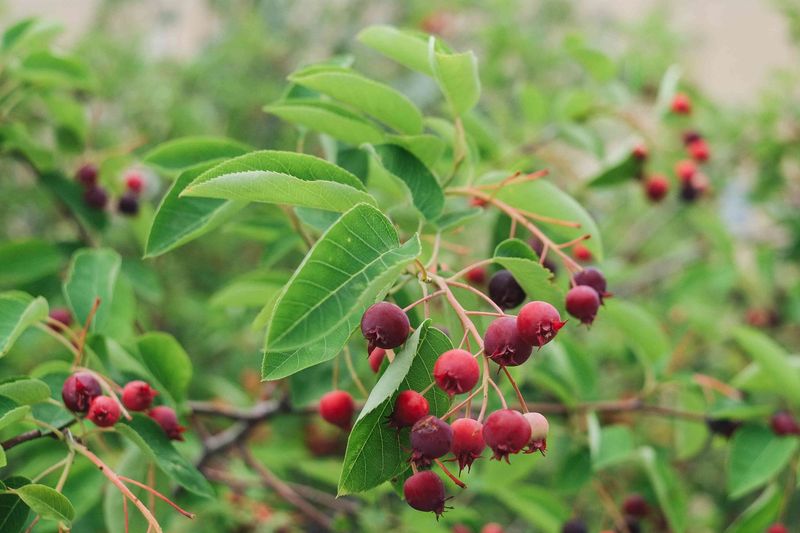
Homeowners who want something that looks like a small ornamental tree but behaves like a tough native shrub often land on serviceberry as a strong candidate.
It blooms early in spring with clusters of white flowers, produces small purple fruit that birds love, and turns warm shades of orange and red in fall.
That seasonal variety keeps the yard interesting from March through October without demanding much in the way of water once the plant is well established in Oregon’s soil.
Serviceberry can grow as a multi-stemmed shrub or be trained into a small tree form, reaching anywhere from six to twenty feet depending on the species and growing conditions.
That range means placement and spacing need thought.
It fits better in outer defensible-space areas or mid-yard shrub islands than directly next to a house, where its size and branching could become a fuel concern if it is not regularly maintained.
Before Oregon’s peak fire season, serviceberry benefits from removing any spent or crossing branches, clearing dry leaf litter from around the base, and checking that spacing between it and neighboring plants leaves enough open ground.
A well-maintained serviceberry in the right spot adds real structure and wildlife value to a fire-wise yard without contributing unnecessary fuel near the home.
5. Oceanspray Fits Dry Native Borders
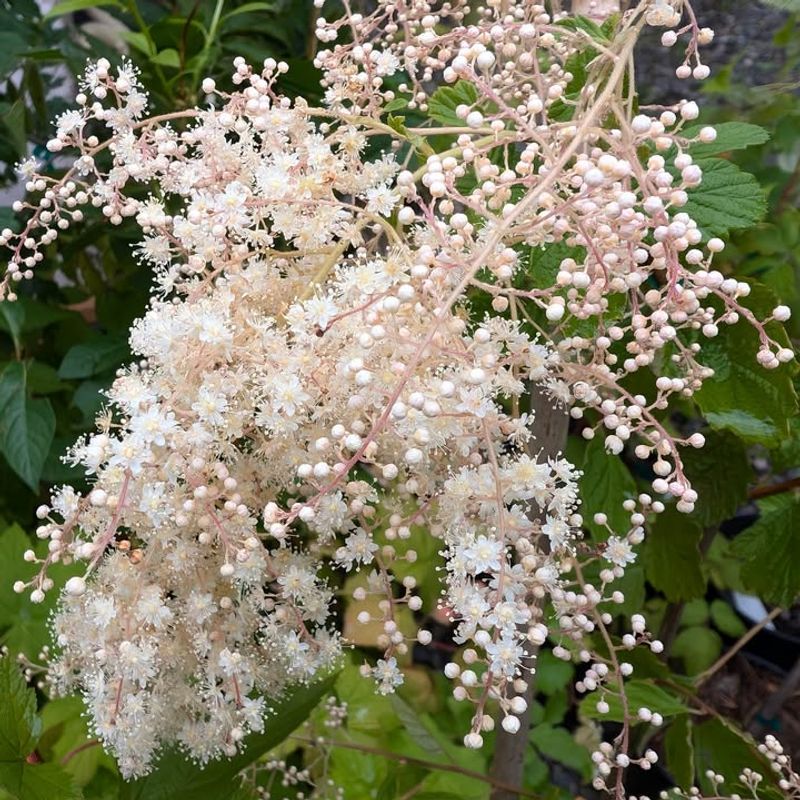
There is something quietly impressive about a shrub that blooms hard in June heat, handles Oregon’s dry summers without supplemental water once established, and still manages to look graceful doing it. Oceanspray earns that description.
Its arching branches carry long, creamy white flower clusters that give it a frothy, light appearance at peak bloom, and it fades into a reliable background shrub for the rest of the season without causing trouble.
Oceanspray grows best in well-drained soil and full to partial sun. It can reach eight to twelve feet at maturity, so it needs room to develop its natural arching form.
Crowding it against a fence, a wall, or other large shrubs keeps it from growing properly and increases the chance that dense, tangled stems will dry out and become a fuel problem near the home.
For fire-wise Oregon landscapes, oceanspray works well in open native borders, dry shrub islands, or outer yard areas where it has enough space to spread without becoming a packed mass of vegetation.
Pruning out deteriorating wood after bloom, removing dry flower clusters before they accumulate, and keeping the ground beneath it free of dry debris before peak fire season all help it stay a responsible and attractive part of a native planting.
It is not a good fit as a tight foundation plant.
6. Mockorange Adds Fragrant Native Flowers
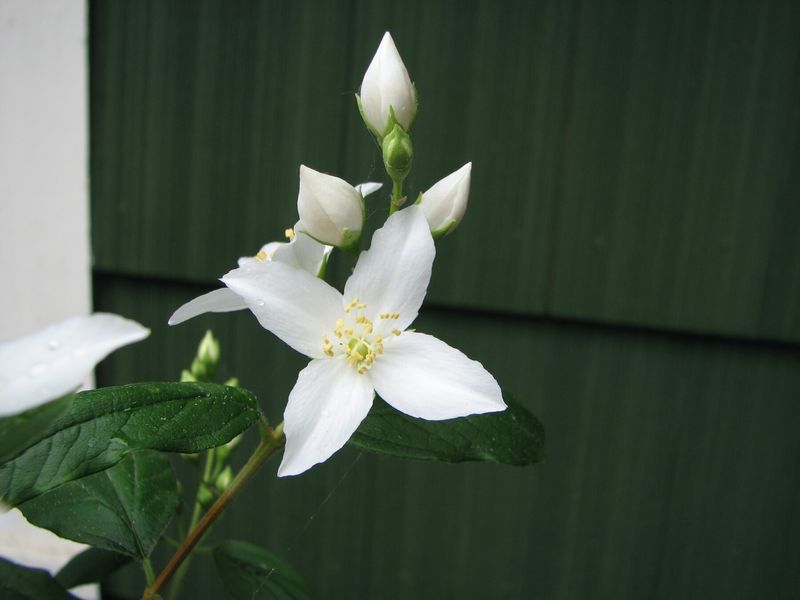
The scent of mockorange in bloom is one of those small Oregon garden moments that catches you off guard. The white flowers open in late spring to early summer and carry a sweet, citrus-like fragrance that drifts across the yard on warm evenings.
Beyond the flowers, mockorange brings a sturdy, upright shrub form that fills out a border quickly and handles dry summers with reasonable toughness once it is established in well-drained Oregon soil.
Syringa oregana, Oregon’s native mockorange, can reach six to ten feet at maturity with a similar spread. That size means it belongs in a spot where it can be pruned and shaped regularly rather than left to grow unchecked near a structure.
Overgrown mockorange with a thick tangle of old woody stems is a very different fire risk than a well-maintained one with open spacing and clean ground beneath it.
Pruning mockorange after it finishes blooming helps keep its size manageable and removes the oldest, woodiest stems that dry out the fastest.
Before Oregon’s peak fire season, clearing dry leaf litter and fallen twigs from around the base reduces small fuel sources at ground level.
Planted in an outer shrub border with room to breathe, mockorange adds real fragrance and native character to a fire-wise yard.
7. Flowering Currant Supports Birds And Pollinators
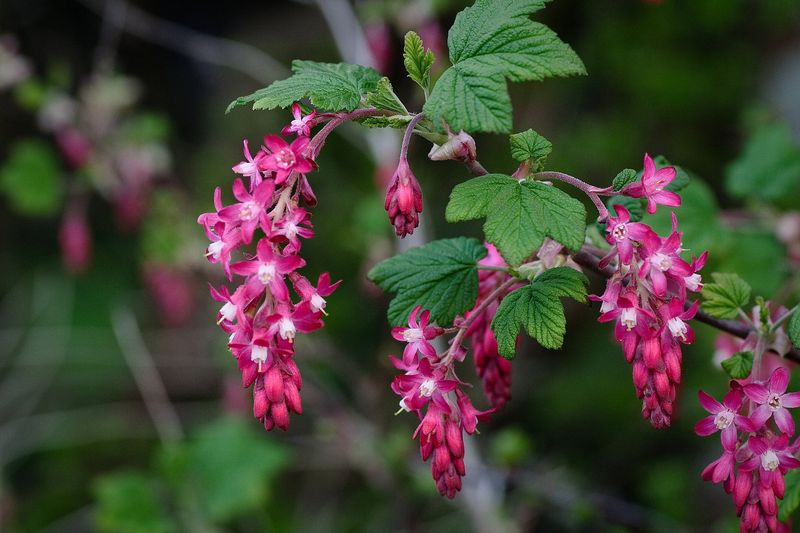
Hummingbirds show up in Oregon yards in early spring looking for nectar, and red-flowering currant is one of the first native shrubs to give it to them.
The bright pink to red flower clusters dangle from bare branches in March and April, often before the leaves are fully out, making it a striking early-season plant in a native border.
Golden currant offers a similar wildlife benefit with yellow flowers and a slightly different growth habit that suits sunnier, drier spots.
Both species work well in fire-wise Oregon plantings when they are given enough space and kept from becoming crowded masses near a home or structure.
Red-flowering currant typically reaches six to ten feet, while golden currant tends to stay a bit smaller.
Either one can be managed with regular pruning to keep size and density in check, which is important before peak fire season when dense shrub growth near a house adds fuel.
Placing flowering currant in a sunny or partly shaded shrub island, a pollinator bed, or an outer border gives it room to grow naturally while keeping it away from the immediate home ignition zone.
Removing dry stems, clearing debris from around the base, and thinning crowded interior branches before summer are all practical steps that help these native shrubs stay useful and lower-risk in an Oregon fire-wise landscape.
8. Native Roses Work Best As Managed Shrubs
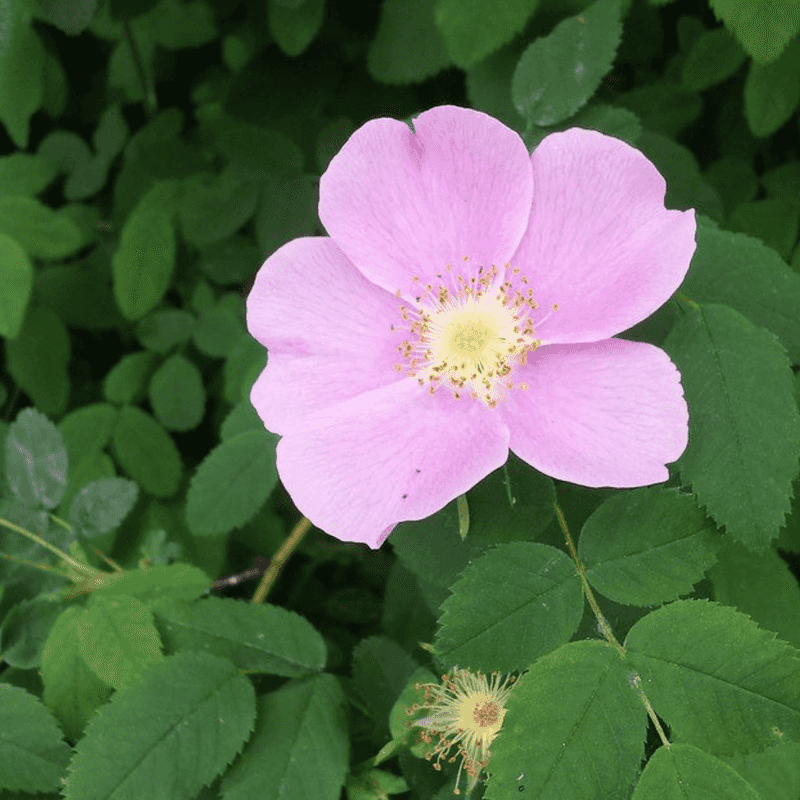
Native roses have a reputation for being tough, and in Oregon they earn it.
Wood’s rose, Nootka rose, and baldhip rose all grow wild across a range of Oregon habitats, from open meadows to woodland edges, and they bring real wildlife value through their flowers, hips, and dense branching.
Birds use them for shelter and food, and pollinators work the open pink blooms throughout early summer. That ecological value is genuine, but it comes with a practical note for fire-wise homeowners.
Left unmanaged, native roses spread by suckers and can form dense, thorny thickets with a lot of dry interior wood. A thicket like that near a home is a fuel concern, not a fire-wise feature.
The difference between a native rose that fits a fire-wise yard and one that does not is almost entirely about management and placement.
Keeping native roses as open, well-spaced shrubs through regular pruning and sucker removal changes the equation.
Removing spent canes, thinning crowded growth, and clearing dry leaf litter from around the base before Oregon’s peak fire season keeps them from becoming a dense fuel mass.
Planted in an outer border or a wider native bed with good spacing around them, managed native roses add seasonal color and wildlife value without becoming a liability near the home.
9. Western Red Columbine Adds Low Seasonal Color
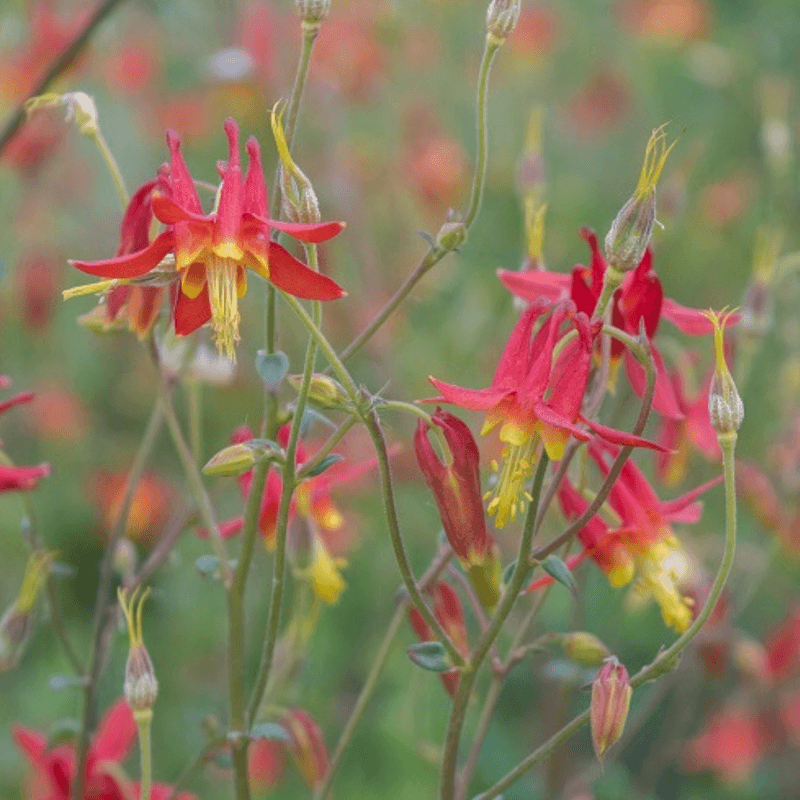
Tucked into a partly shaded corner of a native bed, western red columbine does something that few other Oregon native plants manage quite as well: it brings hummingbirds in close while keeping a low, delicate profile that never overwhelms the space around it.
The nodding red and yellow flowers dangle on slender stems from spring into early summer, and the plant stays compact enough to fit between larger shrubs or along the edge of a dry woodland border without crowding anything out.
Western red columbine grows naturally in moist to moderately dry spots with some shade, which makes it a good fit for the shadier corners of a fire-wise Oregon yard where low native color can be hard to find.
It typically reaches one to three feet tall and goes dormant seasonally, which is an important maintenance point for homeowners thinking about fire season.
As summer progresses and the plant finishes blooming, the foliage begins to yellow and dry.
That dry seasonal growth should be cut back and cleared away before Oregon’s peak fire season, because dried columbine stems sitting in a bed add small amounts of fine fuel at ground level.
Removing spent growth, tidying the bed, and keeping the area around it free of dry debris are simple steps that keep this low-growing native a clean and responsible part of a fire-wise planting.
10. Nodding Onion Fits Well-Drained Fire-Wise Beds
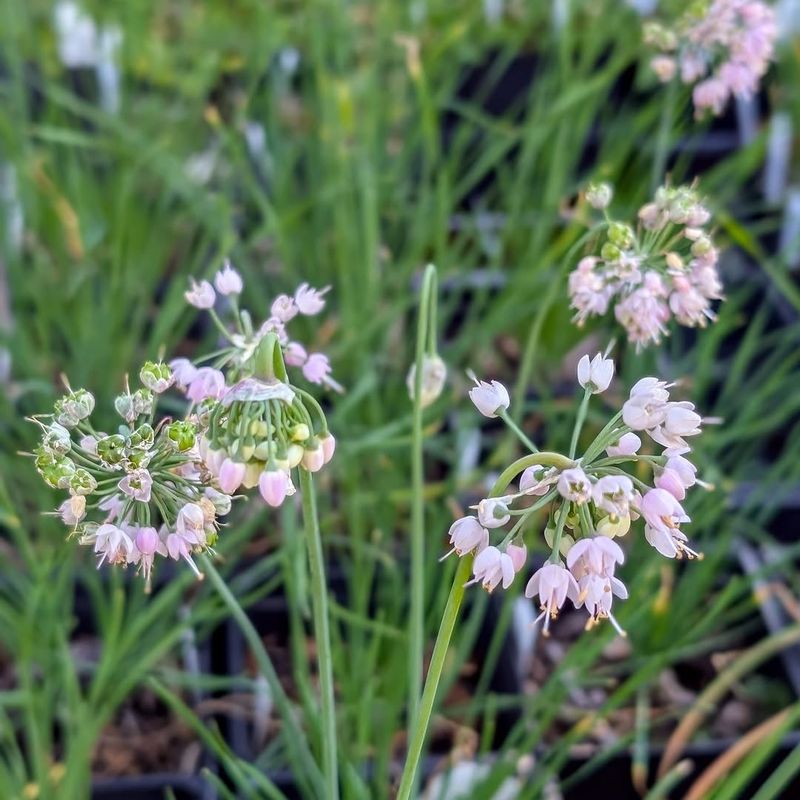
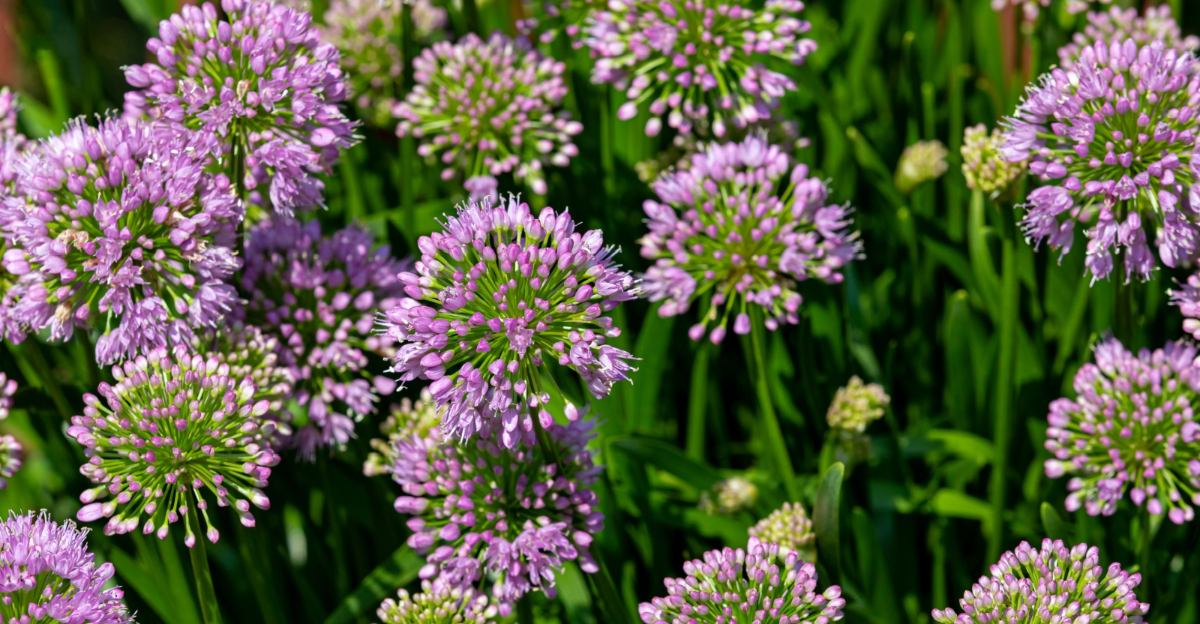
Sunny rock gardens and dry native beds in Oregon often have gaps between larger plants where the soil is shallow, gravelly, and drains fast enough to challenge most things. Nodding onion fits those gaps well.
This small native bulb sends up slender stems topped with drooping clusters of pink to rose-purple flowers in midsummer, adding a soft pop of color to spots that might otherwise stay bare through the hottest part of the season.
Nodding onion typically stays under two feet tall and forms small clumps that spread gradually over time. It handles dry, well-drained, rocky soil without complaint, and it does not need much irrigation once it is settled in.
That combination of low stature, drought tolerance, and preference for the kind of open, well-drained spots that already exist in many fire-wise Oregon landscapes makes it a practical and attractive filler plant.
From a fire-wise standpoint, nodding onion’s small size and open growth habit mean it does not build up significant fuel on its own.
Still, dry flower stalks and spent foliage should be removed as the plant goes dormant in late summer, before Oregon’s peak fire season brings the highest risk.
Keeping the surrounding bed clear of dry debris and maintaining open spacing between nodding onion clumps and neighboring plants helps the whole planting stay tidy and lower-risk.