Florida Front Yard Plants That Look Like A Landscaper Designed Them But Need Zero Trimming
Shrubs that need a haircut every three weeks, hedges that look wild before summer is even over, front beds that feel like a second job – sound familiar?
A lot of Florida homeowners want a yard that looks professionally planted without spending every Saturday with clippers in hand.
The good news is that some plants naturally grow into tidy, structured, or graceful shapes all on their own. Zero trimming does not mean zero maintenance ever.
These plants may still need seasonal cleanup, removal of tired or storm-damaged leaves, weed control while they fill in, or a light tidy after a rough weather event. What they skip is the constant shearing that turns a weekend into a chore.
The plants on this list were chosen because their natural habits can look intentional from the curb. That includes clumping, spreading, compact, or sculptural growth that does not need a hedge trimmer.
Right plant, right place still matters most. A low-trim plant dropped into the wrong soil, wrong sun, or wrong drainage zone can become more work, not less.
Match the plant to your site first, and the curb appeal tends to follow on its own.
1. Plant Coontie For A Naturally Tidy Foundation Look
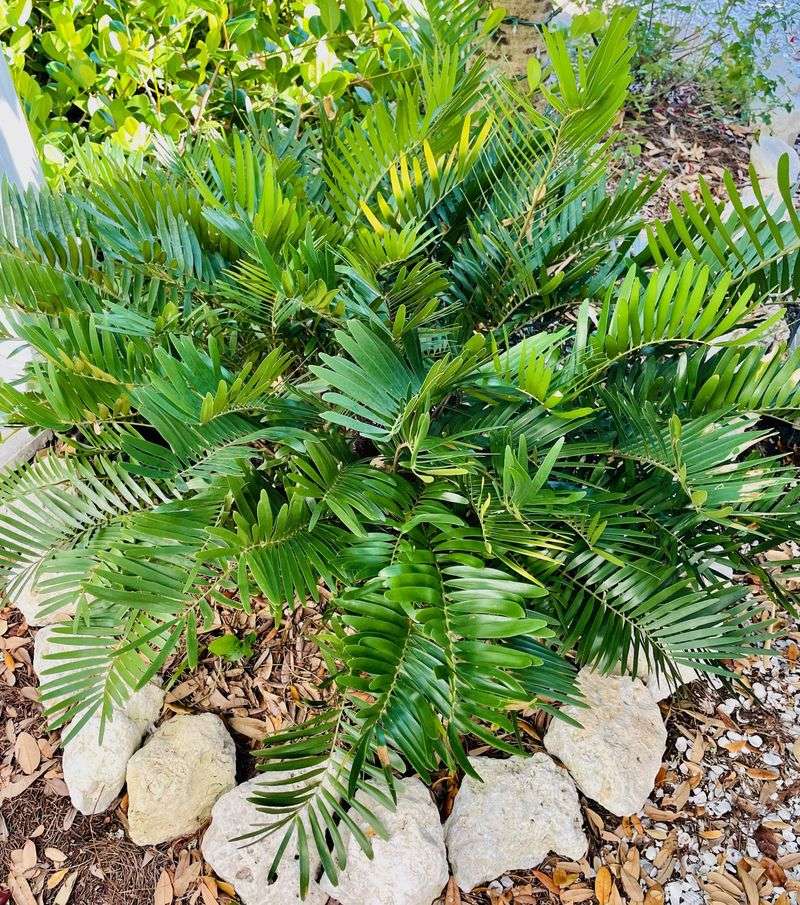
Picture a front foundation bed that needs real structure – something that looks planted with purpose, not just dropped in to fill space. Coontie does exactly that without asking for a weekly trim in return.
Its dark, feathery fronds grow in a naturally low, rounded form that reads as designed the moment it fills in.
According to UF/IFAS, coontie (Zamia integrifolia) is the only cycad native to this state. It handles drought well once established and is well-suited to foundation beds, accent spots, or mass plantings in sunny to partly shaded sites.
Its appeal comes entirely from its natural growth habit, not from clipping.
Coontie also serves as the sole larval host plant for the atala butterfly. That species was once thought to be locally gone before recovering alongside coontie plantings.
That ecological value adds a layer of purpose beyond curb appeal.
One important safety note: every part of coontie is toxic if eaten, including the seeds. Place it thoughtfully in yards where pets, small children, or curious visitors are regularly present.
Occasional removal of older fronds keeps it looking fresh, but shearing is never part of the routine.
2. Use Muhly Grass For Designer Texture Without Shearing
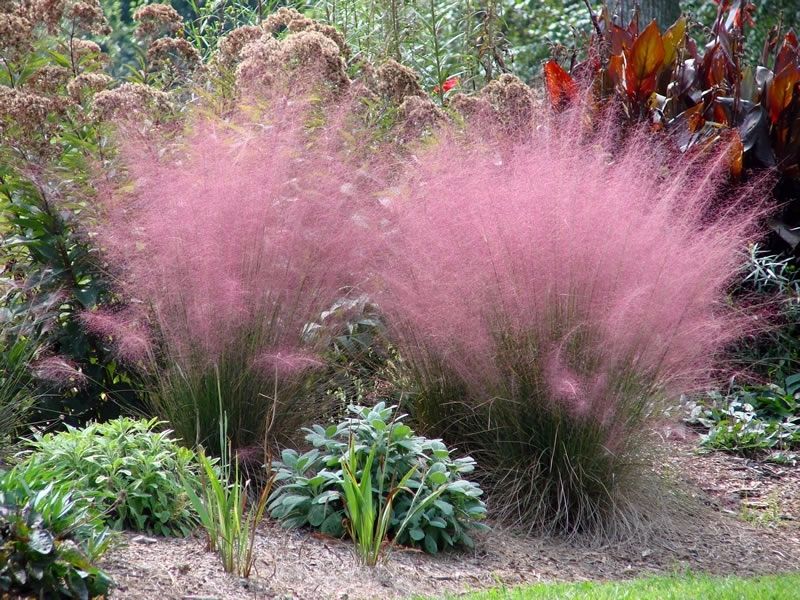
Imagine pulling up to a front yard that looks styled – not stiff, not clipped into green balls, but genuinely designed with movement and soft color. Muhly grass can deliver that feeling without a single pass of hedge trimmers.
Its airy pink-to-purple plumes appear in fall and turn a simple front bed into something people slow down to look at.
UF/IFAS confirms that muhly grass (Muhlenbergia capillaris) is a native clumping grass suited to sunny, well-drained sites. It does not need to be shaped like a hedge.
Planting it in groups or sweeps rather than as isolated single specimens gives beds a deliberate, landscape-designed feel that one plant alone cannot achieve.
Your Florida Garden Changes Every Week. Your Plan Should Too.
Gardening in Florida changes quickly throughout the season. Every Friday you’ll receive a simple weekly plan showing exactly what to plant, prune, fertilize, harvest, and protect so you never miss the right timing.
Muhly grass is not the right pick for soggy soil or deep shade. Drainage and full sun are what keep it performing well season after season.
After the plumes fade in late fall or winter, cutting it back near the base helps fresh growth return cleanly in spring.
That seasonal cutback is the main maintenance task. Outside of that, muhly grass largely takes care of its own shape.
Its clumping habit stays contained, and it never needs shearing to look intentional.
3. Choose Dwarf Fakahatchee Grass For Clean Front Yard Structure
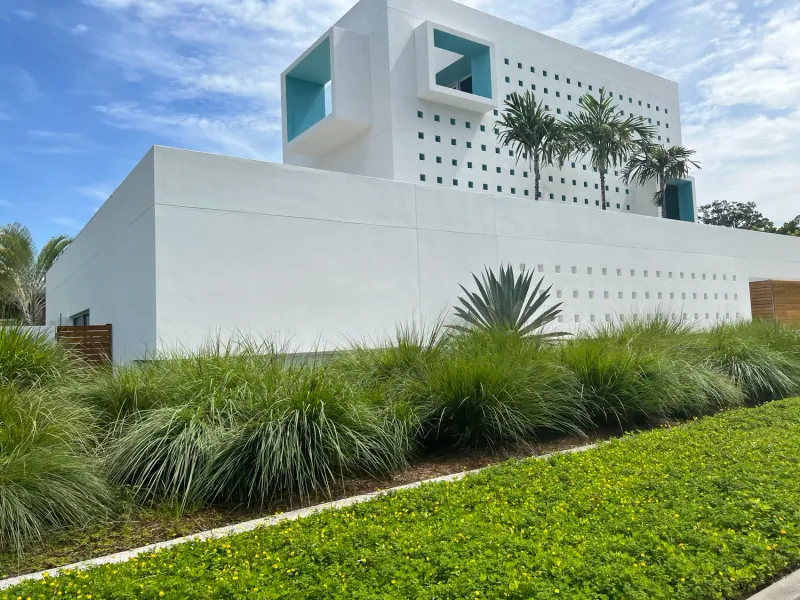
A bed that needs upright, grassy structure without the commitment of a formal clipped hedge is exactly where dwarf Fakahatchee grass earns its place.
Its arching, bright green blades form a neat clump that reads as intentional from the street without any shearing involved.
The shape it grows into is the shape it keeps.
UF/IFAS recognizes dwarf Fakahatchee grass (Tripsacum floridanum) as a compact native grass suited to front beds, borders, and accent spots in home landscapes.
Its more restrained size compared to full-size Fakahatchee grass makes it a practical choice for front yard use where scale matters.
The word “dwarf” can be misleading. This plant still reaches a size that deserves real space, so checking the mature dimensions and giving it proper room at planting prevents crowding problems later.
Spacing matters more than most homeowners expect when working with clumping grasses.
Site needs include sun and reasonable drainage. Occasional removal of older or browned blades keeps the clump looking clean, but routine shearing is not part of its care.
Its natural form does the design work, which is the whole reason it belongs on a low-trim front yard plant list.
4. Plant Sunshine Mimosa As A Soft Living Groundcover
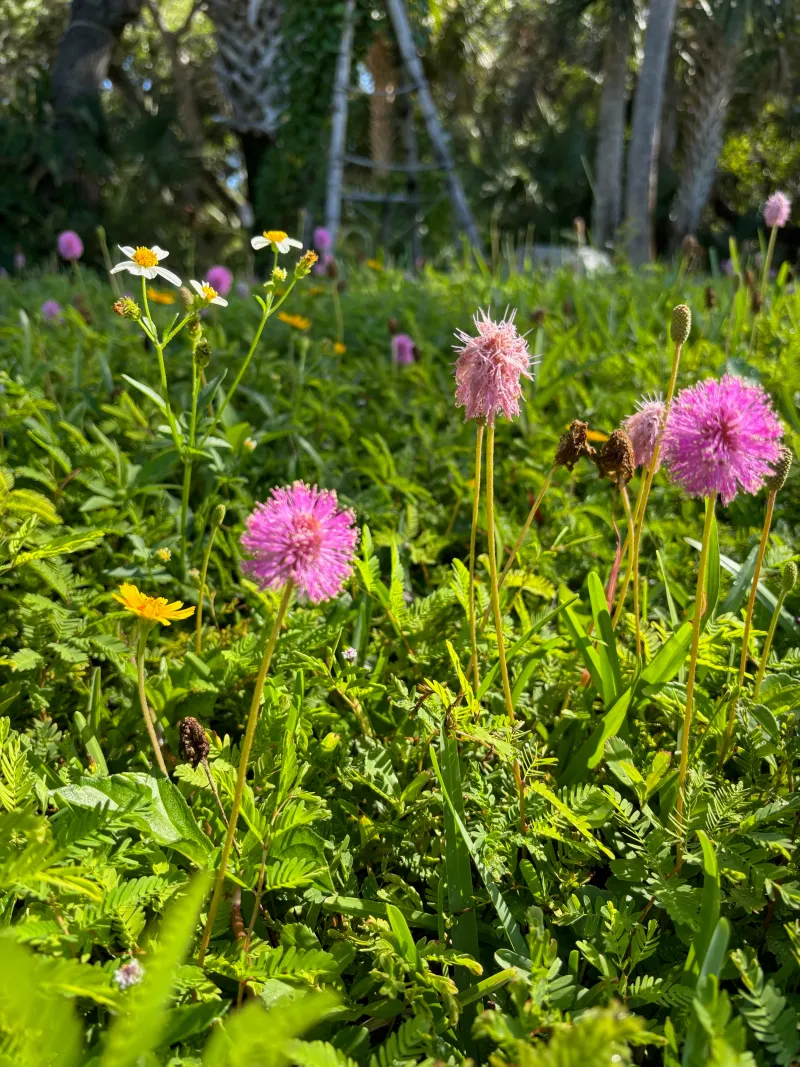
That sunny front patch where mulch always looks thin, faded, and unfinished after a few weeks of heat might just need a living solution instead of a bag of wood chips.
Sunshine mimosa can cover bare ground with feathery, fern-like leaves and cheerful pink powderpuff blooms that make a bed look genuinely planted rather than just covered.
UF/IFAS describes sunshine mimosa (Mimosa strigillosa) as a native spreading groundcover suited to sunny, open areas. It works especially well for filling ground that would otherwise need constant mulch refreshing or clipped edging to look tidy.
A living groundcover handles that job on its own once it fills in.
Spreading is part of what sunshine mimosa does best, which is useful for open, informal front beds but less ideal for tight formal designs where hard edges are expected. Removing weeds while it establishes helps it fill in evenly without competition slowing it down.
The pink flowers attract pollinators, which adds ecological value alongside the visual appeal. No shearing is needed to maintain its look.
Occasional cleanup of ragged edges or storm-affected patches keeps it sharp. The plant’s natural spreading habit handles most of the design work without any help from clippers.
5. Use Beach Sunflower For Loose Color In Sunny Beds
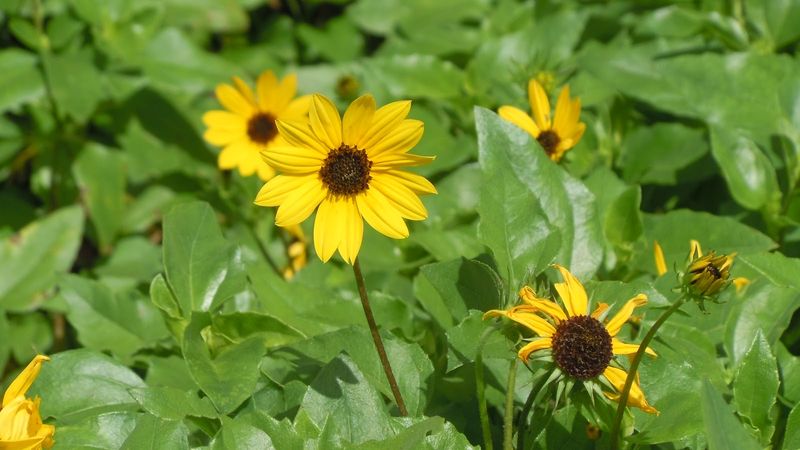
A hot, sun-blasted front bed that bakes all afternoon and chews through annual color replacements every season deserves a tougher answer. Beach sunflower brings cheerful yellow blooms that keep coming back without the fuss of replanting.
It also handles heat and sandy soil in a way that many showier plants simply cannot manage.
UF/IFAS supports beach sunflower (Helianthus debilis) as a native, spreading plant suited to sunny, sandy, and coastal-style beds. Its yellow, daisy-like flowers bloom generously and give front beds a relaxed, colorful look that feels intentional without being rigid.
It can also reseed, which keeps color returning in subsequent seasons.
Beach sunflower spreads. That is part of its character, and it works best in informal front beds where loose, natural color is the goal rather than a clipped, geometric border.
Trying to force it into a tight formal edge creates more work, not less. Letting it keep its natural spreading shape with only occasional cleanup is the right approach.
Coastal yards and sandy soils are where this plant truly performs at its best. Occasional removal of spent stems or straggly growth keeps it looking fresh.
No shearing is needed – its natural sprawl is exactly the look that makes a bed feel designed by someone who understood the site.
6. Choose Dwarf Yaupon Holly For A Compact Evergreen Shape
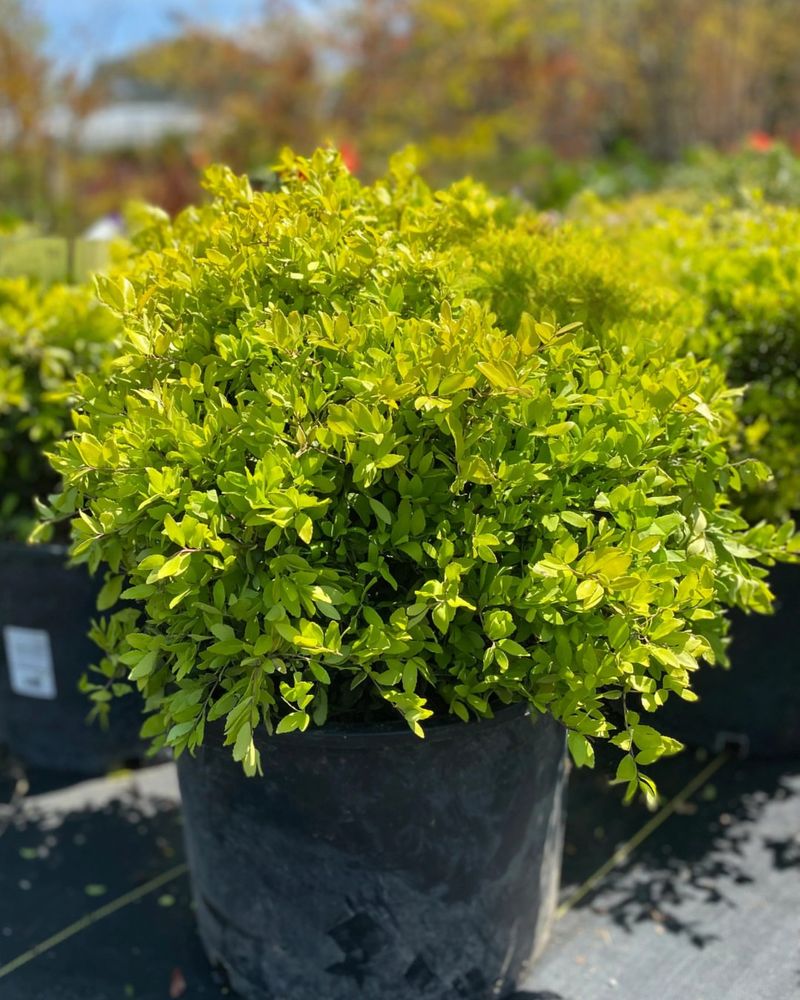
Evergreen structure in a front bed does not have to mean a boxy hedge that needs reshaping every six weeks.
Dwarf yaupon holly can provide that year-round green presence with a naturally compact, rounded form that looks neat without constant attention from hedge trimmers.
UF/IFAS recognizes yaupon holly (Ilex vomitoria) as a tough, adaptable shrub. Its dwarf cultivars are well-suited to foundation beds and front yard plantings across this state.
The key word is cultivar. Not every yaupon holly stays small.
Reading the plant tag, confirming the cultivar name, and checking mature size before buying prevents a common mistake. A compact-looking plant in a four-inch pot can become an oversized shrub that crowds everything around it.
A correctly chosen dwarf cultivar reduces the need for repeated hard shearing because the plant’s natural size stays in proportion with the space. Light pruning for the occasional stray branch is reasonable.
The plant should not need constant reshaping when it is placed in a spot that matches its mature dimensions. Yaupon holly handles heat, drought once established, and a range of soil types.
Its evergreen foliage holds color through winter when other plants look tired. That reliability is a big part of what makes it earn its place in a low-trim front yard design.
7. Plant Society Garlic For Neat Edges And Purple Blooms
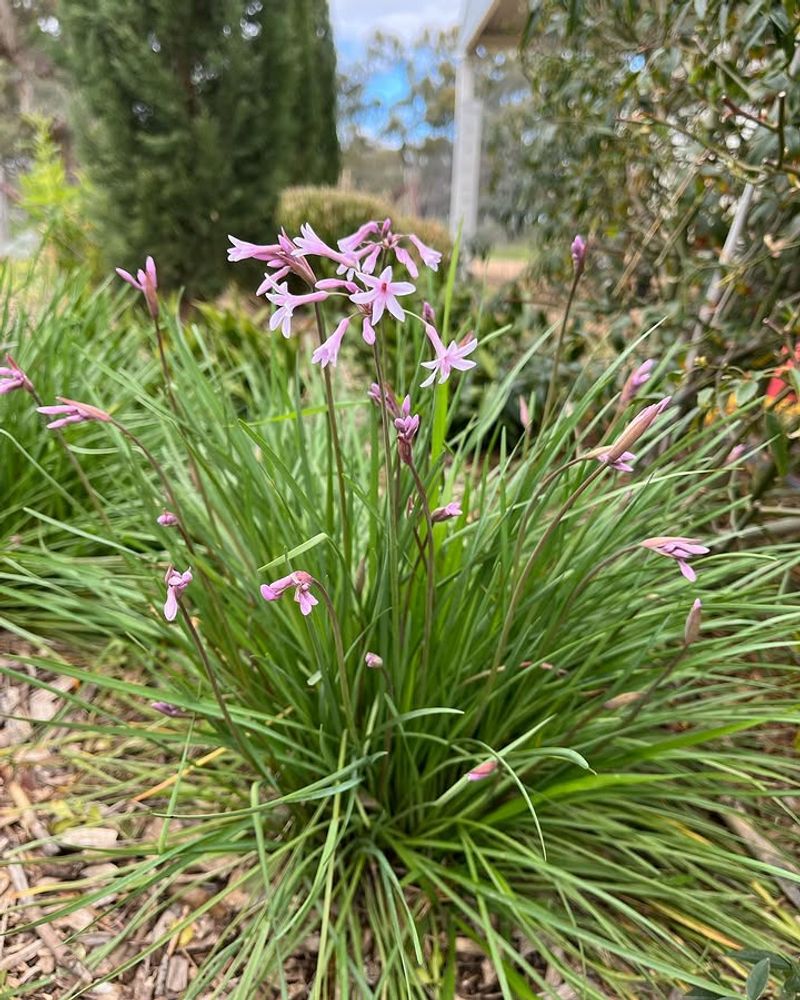
A front path that needs a clean, finished edge can be a maintenance problem. Society garlic handles that job quietly and reliably without someone crawling along it with edging shears every other weekend.
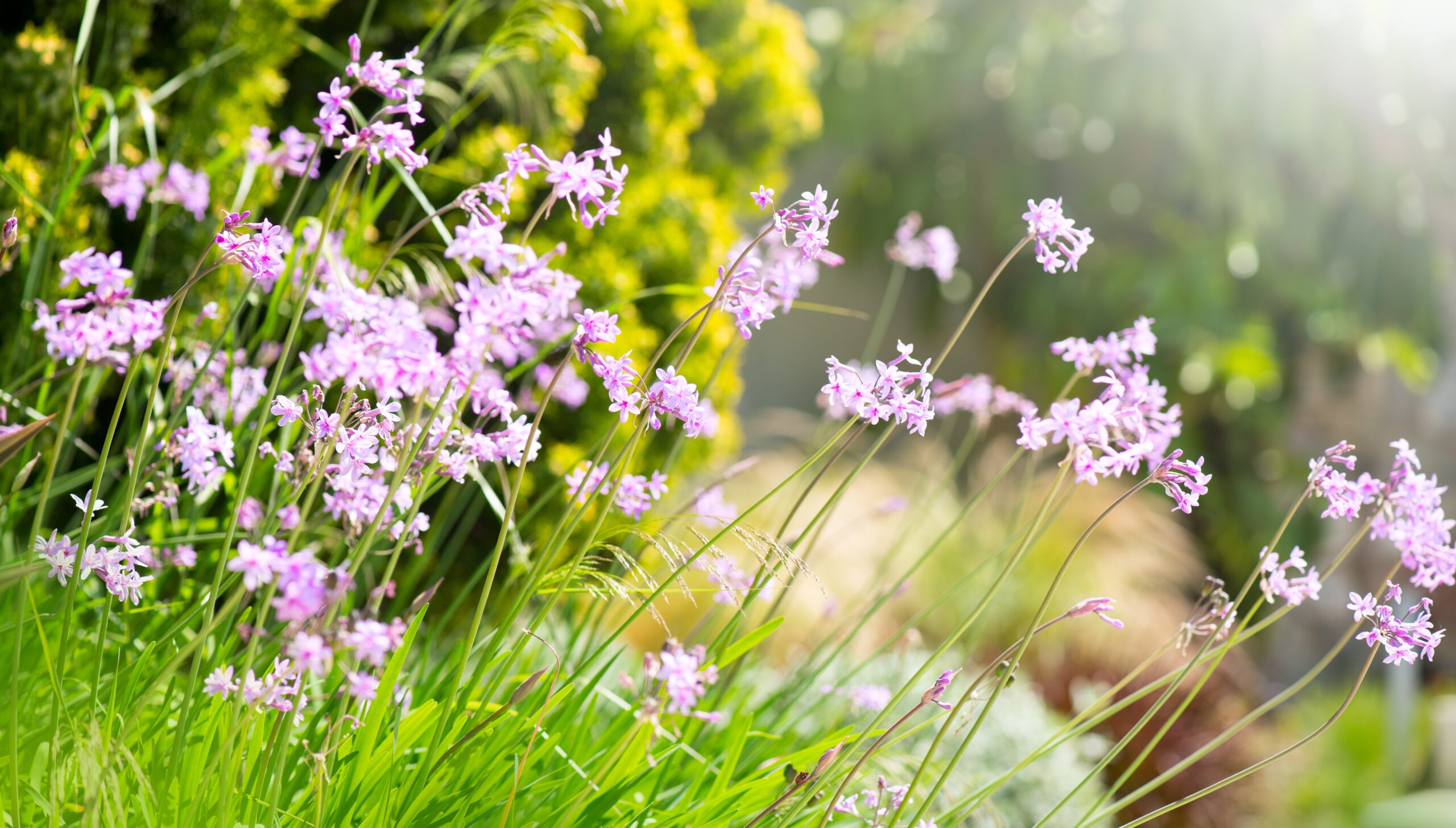
Its slender, grass-like leaves form tidy clumps that line a border with a polished look. The purple flower clusters that appear above them add color without any extra effort.
Society garlic (Tulbaghia violacea) is not a native plant. It is widely used as a Florida-Friendly ornamental and recognized for its adaptability and low-maintenance habit.
Its clumping form stays contained enough to look tidy without being clipped into a hedge shape.
One honest detail worth knowing before planting: the foliage carries a garlic-like scent when brushed or cut. That quality is not a problem in open beds.
It may be noticeable beside a narrow entry walkway, a seating area, or a front door where people brush against it regularly. Placement matters.
Society garlic handles heat and sunny, well-drained conditions well. Removing spent flower stems and tidying older foliage occasionally keeps clumps looking sharp.
No shearing is needed to maintain its neat appearance. The clumping habit does the structural work, and the purple blooms handle the color without any prompting.
8. Use Agave Where Reflected Heat Needs Sculptural Form
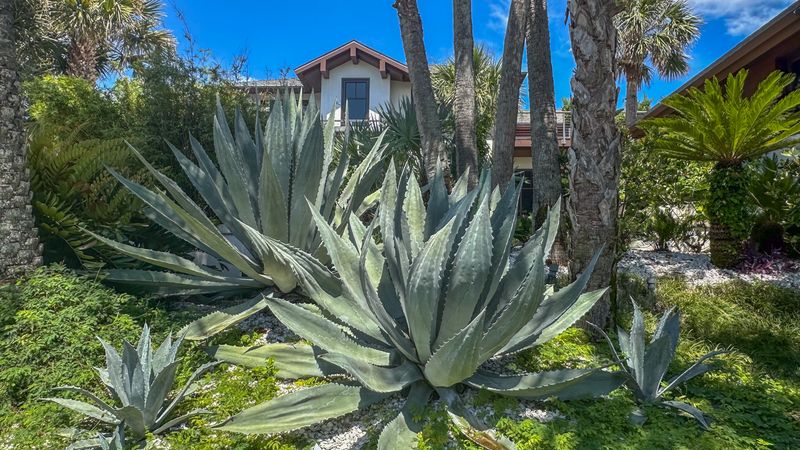
That front corner where reflected heat bounces off pavement or a light-colored wall and softer plants turn ragged by midsummer is exactly where agave makes sense.
Its bold, symmetrical rosette looks like something a landscape architect placed on purpose, and it reaches that form entirely on its own without a single pass of a trimmer.
UF/IFAS supports agave as a heat-tolerant, drought-tolerant option for hot, sunny, well-drained front-yard spots.
Its sculptural form provides strong visual structure that anchors a bed or corner planting in a way that soft, spreading plants simply cannot replicate.
The design impact comes from the plant’s natural geometry, not from pruning.
Placement is the most important decision with agave. Many species have sharply pointed leaf tips and serrated edges.
Putting agave beside a narrow walkway, near front steps, alongside a driveway, or anywhere guests or children regularly pass creates a genuine safety concern. Open beds with clear sightlines and generous clearance are the right spots.
Removal of damaged outer leaves after storms or cold events keeps the rosette looking clean. No shearing is ever needed, and the plant actually looks worse when someone tries to trim it into a softer shape.
Agave’s strength is its natural form, and the best maintenance decision is simply choosing the right location from the start.