Florida Plants That Support Owls Year Round And What That Does To The Whole Yard Ecosystem
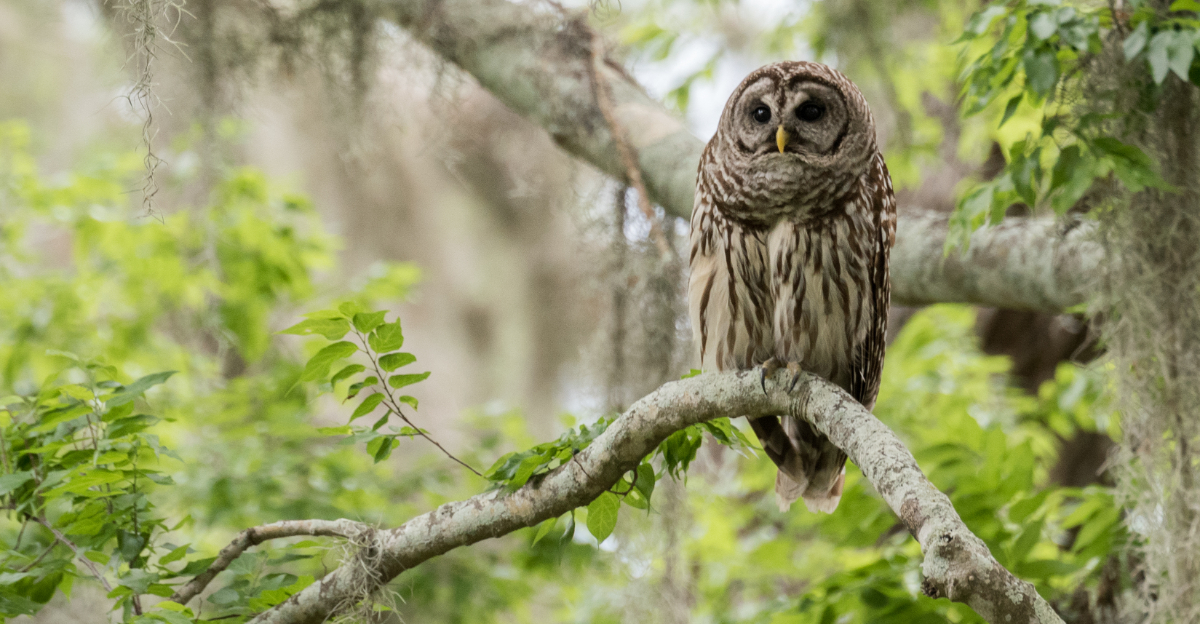
An owl that claims a Florida yard as regular territory changes the whole dynamic of that outdoor space. Not in a dramatic, visible way.
In a quiet, cumulative way that shows up over time in the balance of what lives there, what passes through, and what thinks twice before settling in. Owls are apex predators at the yard scale.
Rats, mice, large insects, small reptiles. A resident owl applies consistent pressure across that list in a way no trap or repellent replicates on its own.
What pulls owls into a Florida yard and keeps them there year round comes down largely to habitat. Specific plants create the structure, the cover, and the hunting conditions owls are drawn to.
Get that right and an owl does not just visit. It stays.
The plants that make a Florida yard worth claiming, and what follows from that claim, is a story worth understanding from the ground up.
1. Live Oak Builds The Roosting Structure Owls Need
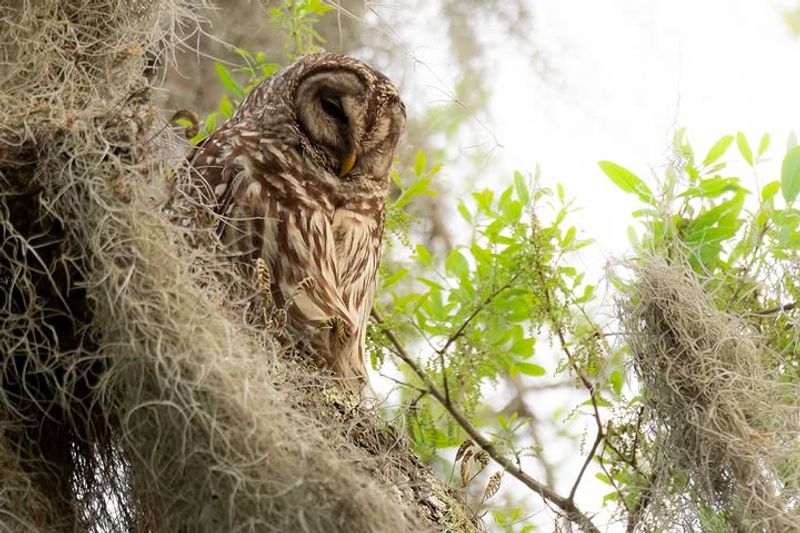
A wide limb stretched over a quiet yard at dusk can mean everything to a roosting bird looking for shelter. Live oak (Quercus virginiana) is one of this state’s most structurally significant native trees, and its value to the yard ecosystem goes far beyond shade.
Large, spreading limbs offer potential perching and roosting opportunities for owls and many other birds where the setting supports them.
The canopy supports an impressive web of life. Live oaks host hundreds of caterpillar species, which in turn feed nesting birds and their young.
Squirrels, lizards, and a wide range of insects use the bark, branches, and leaf litter. Acorns draw in additional wildlife, adding another layer of food-web activity close to the ground.
Owls may use large trees like live oak for daytime roosting, especially where dense canopy provides cover from weather and disturbance. That connection is real, but it is not guaranteed.
Placement matters enormously. Live oak needs space, well-drained soil, and careful siting away from foundations, roofs, utilities, and small lots.
Mature trees can reach 40 to 80 feet wide, so plan for the long term. A live oak planted in the right place can anchor an entire yard ecosystem for generations, supporting far more than any single species.
2. Slash Pine Adds Tall Perches Above Open Hunting Ground
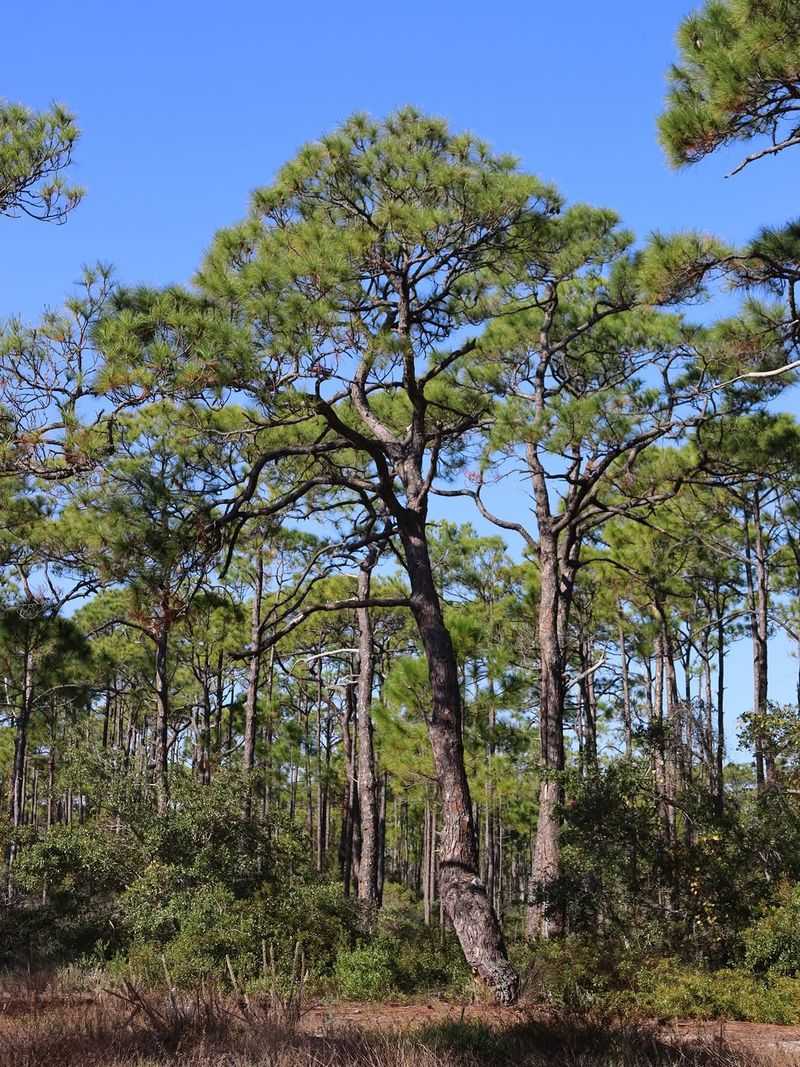
Height changes everything for a hunting bird. Slash pine (Pinus elliottii) is a native tree of Florida’s flatwoods, sandhills, and open uplands.
Its tall, relatively open branching structure makes it useful as a vantage point for birds that scan from above. Barred owls and great horned owls both use elevated perches near open areas.
A mature slash pine near a clearing or open edge can serve that function where the habitat supports it.
Beyond potential perch value, slash pine contributes meaningfully to the yard food web. Bark beetles, woodpeckers, and cavity-nesting birds all find value in mature pines.
Seeds from pine cones attract birds and small mammals. The vertical structure adds a canopy layer that many suburban yards completely lack, which matters for wildlife movement and nesting diversity.
Your Florida Garden Changes Every Week. Your Plan Should Too.
Gardening in Florida changes quickly throughout the season. Every Friday you’ll receive a simple weekly plan showing exactly what to plant, prune, fertilize, harvest, and protect so you never miss the right timing.
Slash pine needs full sun, good drainage, and plenty of room. It can grow 60 to 100 feet tall in the right conditions.
That makes it unsuitable for tight lots, areas near overhead lines, or spaces where falling limbs could cause problems. This is a tree for larger properties, open native beds, or yards with genuine room to grow.
Planting one near an open edge rather than directly over structures gives it the best chance to serve both the landscape and the broader ecosystem.
3. Southern Red Cedar Creates Dense Shelter Near Yard Edges
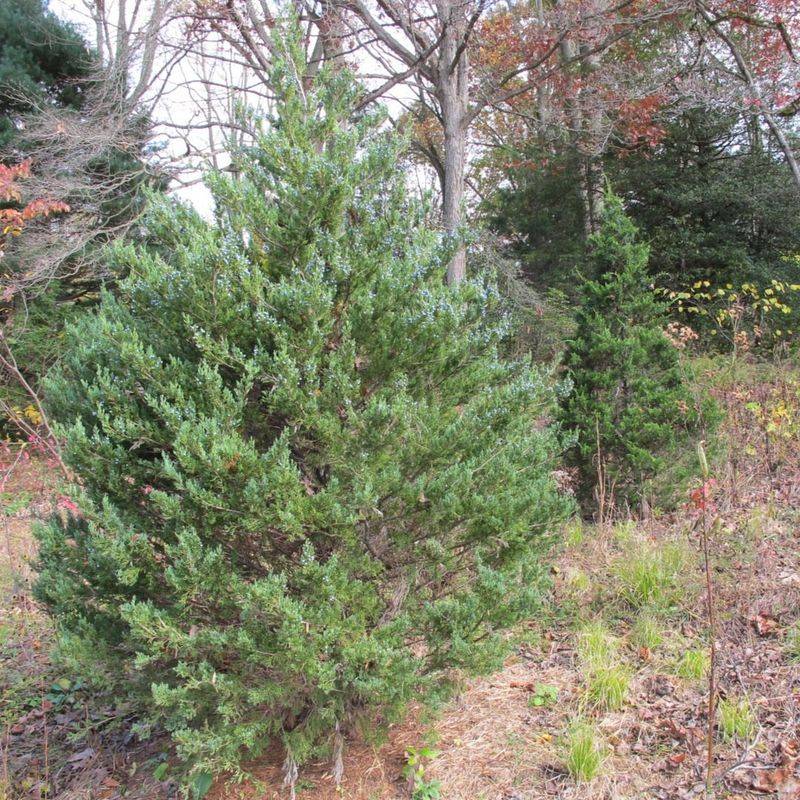
Not every owl-supporting plant needs to be enormous. Southern red cedar (Juniperus virginiana, including the regional variety silicicola recognized in some areas) brings something different to the yard.
It provides dense, evergreen structure that holds its cover through every season. That year-round thickness along a fence line or property edge can shelter roosting birds and support insect activity in bark and foliage.
It also creates a visual buffer that makes the yard feel more like a connected habitat.
Cedar berries are a reliable food source for birds including cedar waxwings and yellow-rumped warblers, which adds bird activity to the yard. That activity matters to the food web.
More birds moving through a yard means more insect pressure from foraging, more seed dispersal, and more general wildlife movement near the ground.
Owls may investigate areas with concentrated bird activity, though that connection is indirect and never certain.
Mature southern red cedar can reach 40 to 50 feet tall in ideal conditions, so it is not a shrub-scale planting. Spacing, regional suitability, and site selection all matter.
It grows well in a range of soils and tolerates some drought once established, which suits this state’s sandy conditions. Place it along a back fence or at a yard edge away from structures.
There, it can anchor a living wildlife border that benefits the whole ecosystem without requiring constant attention.
4. Wax Myrtle Builds A Brushy Layer For The Food Web
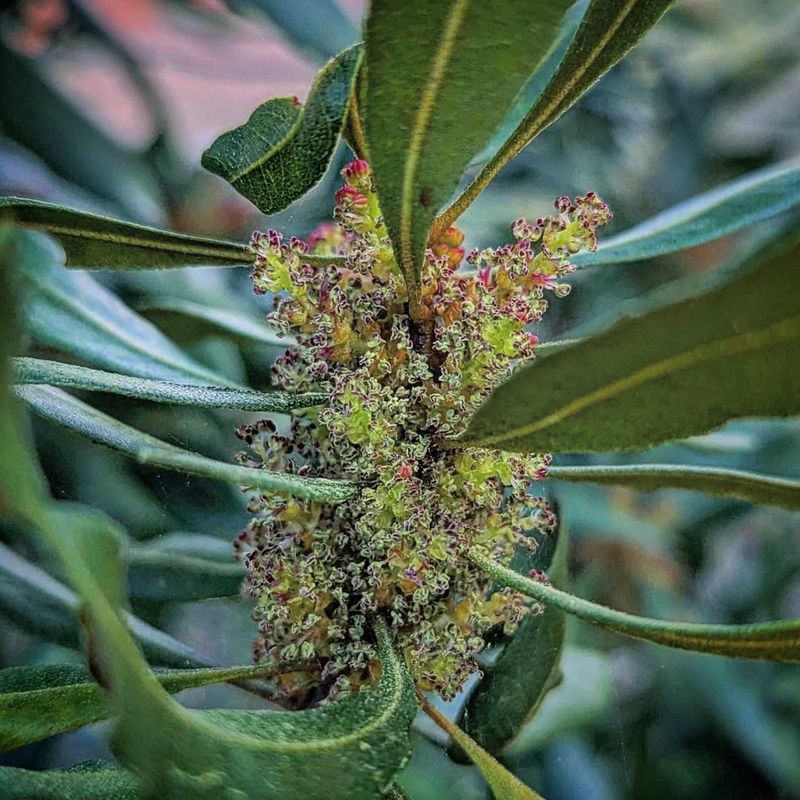
Wax myrtle (Morella cerifera) is one of those plants that quietly does a lot of work. This Florida native shrub or small tree grows fast, tolerates wet and dry conditions, and builds the kind of brushy middle layer that many yards completely skip.
That middle layer, sitting between the canopy and the ground, is where a huge amount of wildlife activity happens. Small birds nest and forage in dense shrubs.
Insects use the foliage and bark. Lizards and small mammals move through the cover at ground level.
The waxy, aromatic berries attract yellow-rumped warblers and other birds, particularly during migration and winter. Bird activity in the shrub layer adds movement, foraging pressure on insects, and general food-web richness that benefits the whole yard.
Owls do not hunt in dense brush, but the animals that use brushy layers are part of the prey base that supports owls in the wider neighborhood.
Wax myrtle can grow 10 to 15 feet tall or taller and may spread by suckering if left unchecked. Placement away from walkways, driveways, and small beds makes maintenance easier.
It works well along back fences, property edges, or as a natural screen. Regular light shaping keeps it from becoming too loose or sprawling.
In the right spot, wax myrtle builds a living layer that strengthens the entire yard ecosystem from the ground up.
5. Dahoon Holly Feeds Birds And Supports A Wilder Yard
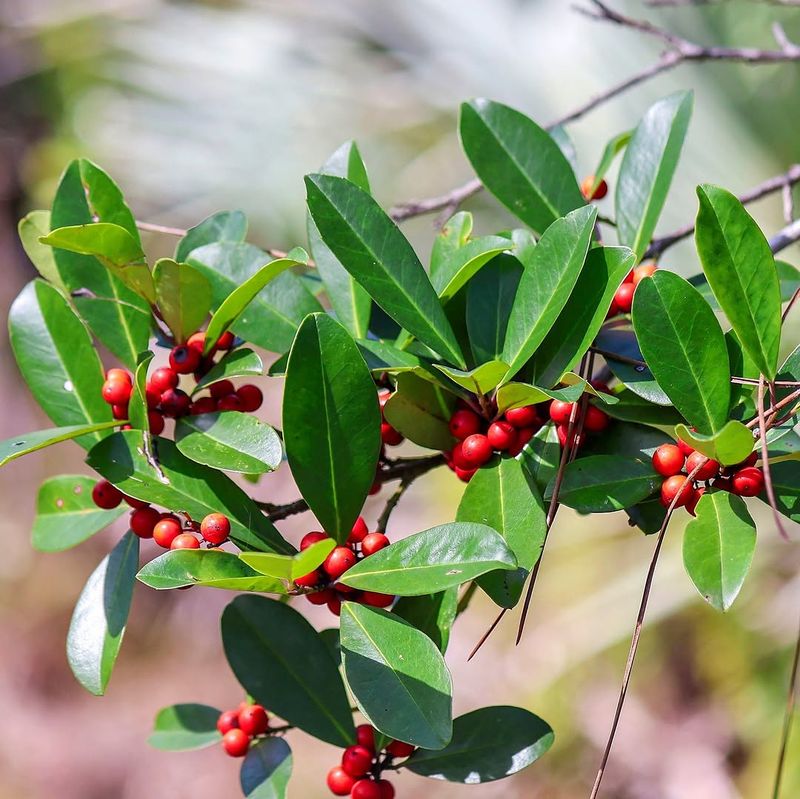
Bright red berries clustered along slender branches make dahoon holly (Ilex cassine) easy to spot in a naturalistic yard, and birds notice them too. This native holly is adapted to moist, low-lying areas and wet flatwoods across much of this state.
Where the site is right, it adds evergreen structure, reliable winter berries, and a layer of visual interest that connects the yard to something wilder and more alive.
Berry-producing plants like dahoon holly draw in robins, bluebirds, cedar waxwings, and other fruit-eating birds. They are especially useful during cooler months when food is less abundant.
That concentrated bird activity increases insect foraging and adds movement near the ground. It also contributes to the kind of layered, active ecosystem that supports a broader food web.
Owls are part of that web, though their connection to any specific shrub or small tree is always indirect.
Dahoon holly can reach 20 to 30 feet in height at maturity, so it needs room and the right moisture conditions. It does not perform well in dry, sandy upland sites without supplemental water.
Planting it near a swale, pond edge, or naturally moist area gives it the best chance to thrive. Note that berries and leaves may be toxic if eaten by people or pets, so placement near play areas or pet spaces should be considered carefully.
In the right location, dahoon holly adds genuine ecosystem value.
6. Beautyberry Adds Low Cover Where Small Wildlife Moves
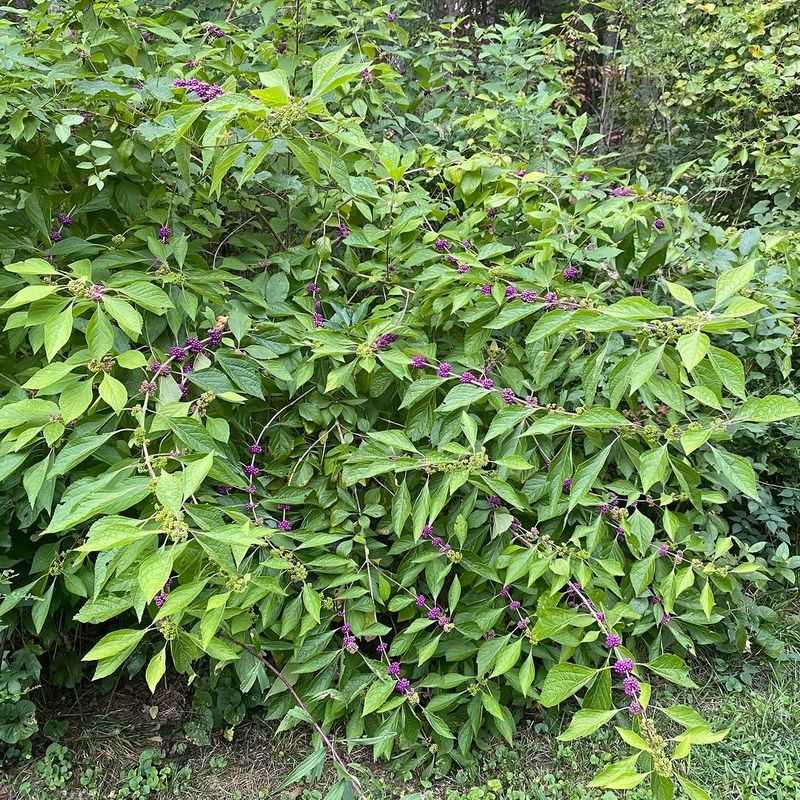
Few Florida native shrubs stop people in their tracks quite like American beautyberry (Callicarpa americana) in full fruit. Those vivid, magenta-purple berry clusters are striking, and they are genuinely useful to wildlife.
Birds including mockingbirds, cardinals, and towhees eat the berries in fall and early winter. Small mammals forage near the base.
The loose, arching stems create low cover that gives smaller animals a place to move, hide, and forage close to the ground.
That ground-level activity is where beautyberry connects to the broader owl-supporting ecosystem. Owls hunt along edges and in open areas.
Their prey base, including small birds, insects, lizards, and small mammals, depends on shrub cover and food sources like berries and insects.
A yard with a healthy shrub layer supports more of that prey diversity, which in turn makes the wider habitat more attractive to owls moving through the neighborhood.
Beautyberry is a native shrub suited to part shade or dappled light, and it grows naturally in open woodlands and forest edges across this state.
It can reach 6 to 9 feet tall and wide, with a loose, somewhat rangy shape that suits natural garden styles better than formal clipped beds.
It may cut back hard in winter and re-sprout from the base, which is normal. Placing it where a relaxed, seasonal shape fits the landscape makes it far easier to enjoy and maintain.
7. Muhly Grass Keeps Hunting Edges Open And Visible
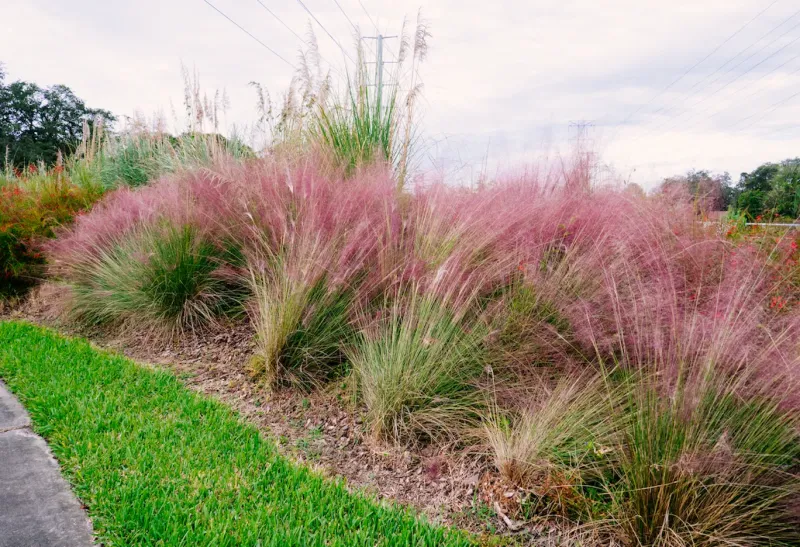
Open edges are part of what makes a yard usable for hunting birds. Muhly grass (Muhlenbergia capillaris) is one of the best native grasses for maintaining that openness while adding seasonal beauty.
In fall, its clouds of pink-purple seed heads catch the light in a way that few other native plants match. The rest of the year, it forms tidy, fine-textured clumps that keep the edge of a planting bed open, airy, and visible.
Owls hunting near yard edges need clear sightlines. Dense plantings that crowd every inch of open ground reduce the visibility that makes those edges functional.
Muhly grass planted along a border or at the transition between a taller planting and open lawn helps maintain that openness. Seed heads attract small birds and provide food in fall and winter, adding another layer of food-web activity near the ground.
This native grass grows best in full sun with well-drained soil. It tolerates drought well once established and handles this state’s sandy soils without much fuss.
Mature clumps reach about 3 feet tall and 3 feet wide, making them manageable for most yard sizes. Muhly grass is not a nesting plant for owls and should not be treated as a direct attractant.
Its value is in maintaining the open, sunny edge structure that complements taller roosting trees and enriches the overall yard habitat.
8. Fakahatchee Grass Turns Larger Spaces Into Wildlife Corridors
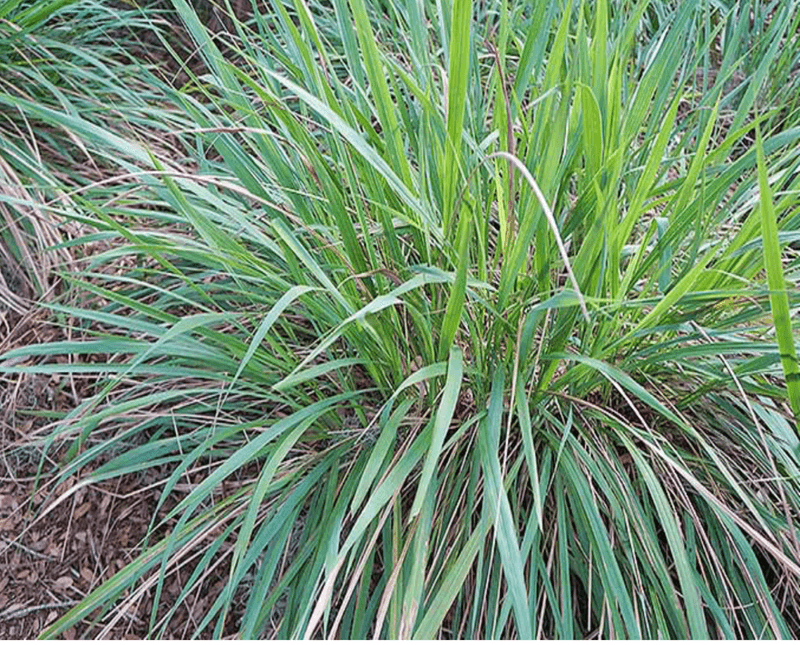
Bold, arching, and unmistakably substantial, Fakahatchee grass (Tripsacum dactyloides) is a Florida native grass built for spaces that can handle its scale. Clumps can reach 4 to 6 feet tall and spread just as wide.
They create the kind of dense, grassy structure that small animals, reptiles, and ground-foraging birds use for cover and movement. In larger yards, along swales, or near pond edges, it can anchor a planting that genuinely functions as a wildlife corridor.
Corridors matter in suburban and rural landscapes because they allow animals to move between habitat patches without crossing open, exposed ground. When wildlife can move safely through a yard, the food web becomes more connected.
Insects, frogs, lizards, and small mammals all benefit from that connectivity. Owls hunting along edges or open areas near larger yards may follow prey movement that corridors like this support, though no specific outcome is guaranteed.
Fakahatchee grass grows naturally in moist flatwoods, floodplains, and wet prairies across this state. It performs best with consistent moisture and full to part sun.
It is not suited to tight foundation beds, narrow walkways, or small clipped spaces. The scale and spread of mature clumps requires planning.
Cutting plants back in late winter encourages fresh growth and keeps the clumps from becoming too dense or floppy. In the right large-scale setting, this grass adds structure, cover, and genuine ecological depth to the yard.