9 Fruit Trees That Handle Harsh Upstate New York Winters
Old Forge once hit minus fifty-two degrees in 1979, the coldest reading ever recorded in New York. Somehow, backyard trees across the region still wake up each spring and hang heavy with sweet summer treats.
Cornell researchers in Geneva have spent over a century breeding fruit that shrugs off these bitter northern freezes.
Their work, plus a few tough natives from local woods, gives cold-climate gardeners more choices than most expect.
I used to think my snowy yard could only grow rhubarb and stubborn hope each year. After I tested a few hardy picks, my kitchen counter started filling with homegrown fruit every single autumn.
You might notice that the right variety matters far more than luck when Upstate New York winters bite hard. Which tough trees earned a sunny spot in my yard, and which surprise might win yours?
1. Apple Trees
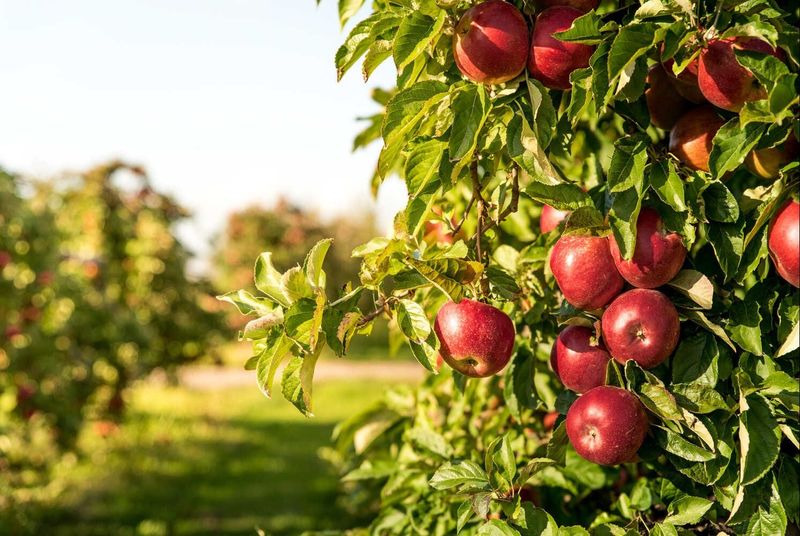
Few things beat the crunch of a cold apple picked straight off a branch on a frosty October morning in New York. Apples handle bitter winters beautifully, and many varieties grow happily from USDA Zone 3 through Zone 8.
Cornell’s breeding program in Geneva, New York, gave us SnapDragon and RubyFrost, two crisp apples built for northern orchards. Honeycrisp came from Minnesota, so it also laughs at deep cold that would bother softer fruit trees.
Plant your tree in full sun with well-drained soil, because soggy roots invite rot and weak growth. Spring planting works best here, giving roots a whole season to settle before the next hard freeze.
Most apples need a different variety nearby for pollination, since bees must carry pollen between two unlike trees. A neighbor’s tree or even a flowering crabapple within a few hundred feet can often do the job.
I strongly suggest dwarf or semi-dwarf rootstocks, which keep trees small enough to prune from a short ladder. They also start bearing sooner, sometimes within three years instead of the six or more for full-size trees.
Wrap young trunks with a plastic guard each fall, because hungry voles and rabbits love winter bark. That simple step protects your investment until spring blossoms return across New York and the busy bees get back to work.
2. Pear Trees
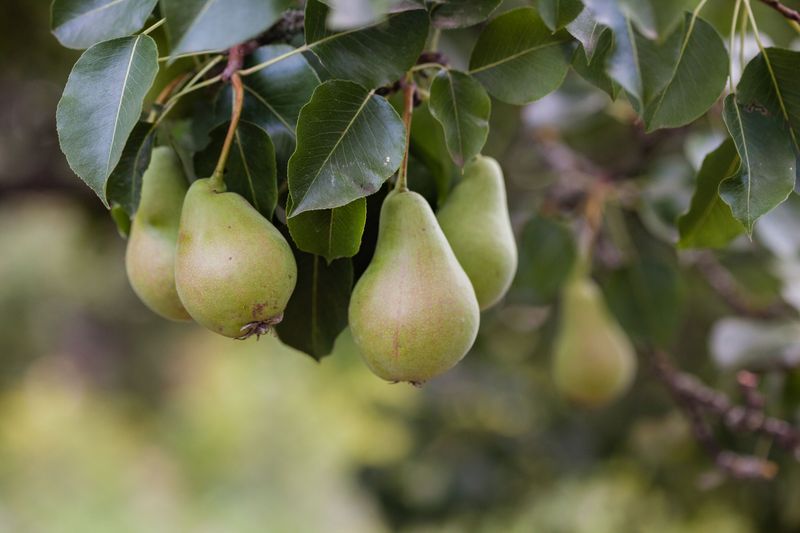
Pears ripen in a sneaky way, since most European types taste best when picked firm and softened indoors. Leave them on the branch too long, and the centers turn gritty and mushy before the skins change.
European pear, Pyrus communis, grows well in USDA Zones 4 through 8 with the right variety choice. Seckel is a small, honey-sweet favorite, while Bartlett remains the classic choice for canning and fresh snacking.
Fire blight is the main headache, a bacterial disease that turns shoot tips black and curled like shepherd’s crooks. Extension experts suggest choosing resistant varieties and cutting out infected branches during dry weather to slow its spread.
Plant two compatible varieties within about fifty feet, because most pears set poor crops with only one tree. Full sun and well-drained soil keep them happy, and they handle heavier ground better than many fruit trees.
I love how pear trees grow upright and tidy, almost like elegant green flames standing in the yard. Dwarf rootstocks can hold them near ten to fifteen feet, which suits smaller suburban lots quite nicely.
Pick fruit when it lifts easily as you tilt it sideways, then chill it for a few days. After that, let pears sit on the counter until the neck yields to gentle thumb pressure.
3. Plum Trees
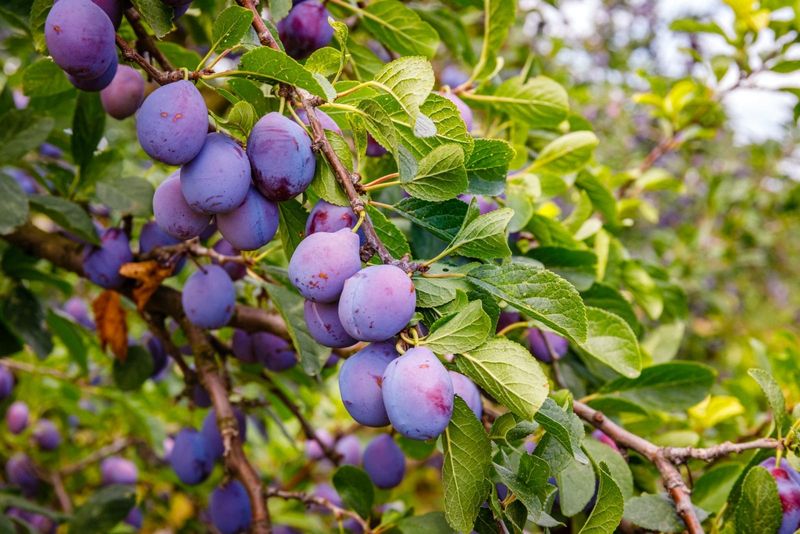
One of the most popular plums in America was born right here, at the Geneva research station in 1926. Stanley produces dark blue, oval fruit that splits cleanly from the pit and bakes into gorgeous tarts.
European plums like Stanley handle Zones 4 through 8, and many are self-fruitful, so one tree can produce. Japanese plums are juicier but bloom earlier, which makes their flowers more likely to meet a late frost.
For the coldest spots, the native American plum, Prunus americana, shrugs off winters in Zone 3 with ease. Its small red or yellow fruit makes tangy jelly, and the white spring blossoms smell wonderfully sweet.
Give plums full sun and soil that drains well after heavy rain, since waterlogged ground weakens roots. Watch for black knot, a fungus that forms lumpy black swellings on branches, and prune them out in winter.
I have learned that thinning young fruit to about four inches apart pays off with bigger, sweeter plums. Heavy loads can snap branches, so a little early thinning saves you real heartbreak later in summer.
Most plums ripen from late summer into early fall, depending on the variety you choose for your yard. Taste one before picking the whole tree, because color often shows up days before full sweetness arrives.
4. Sour Cherry Trees
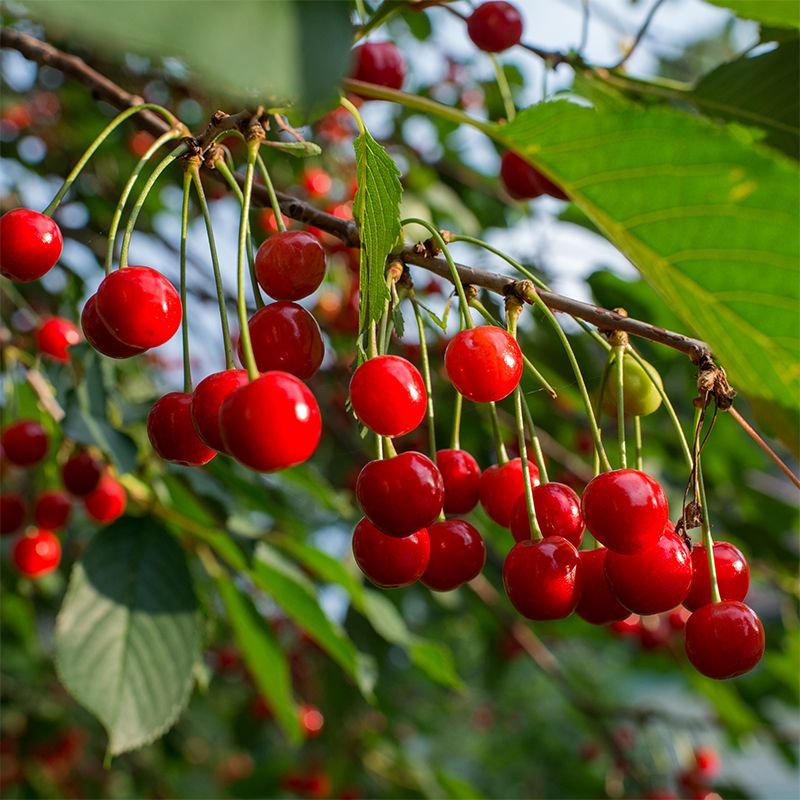
Michigan grabs the headlines for tart cherries, but sour cherry trees laugh at cold that cracks sweet cherry buds. Their bright red fruit glows like little lanterns among the dark green leaves each year in early summer.
Prunus cerasus grows well in USDA Zones 4 through 7, which covers most of the upstate region. Montmorency is the classic pie cherry, while Meteor and North Star stay nicely compact for small backyard spaces.
Best of all, sour cherries are self-fruitful, so a single tree can fill your freezer all by itself. One small North Star can produce enough fruit for several pies, which feels like a pretty sweet deal.
Choose a sunny site with rich, well-drained soil that holds a bit of moisture during dry spells. Cherry roots dislike standing water, so skip low spots where muddy puddles linger for days after spring storms.
Birds adore these cherries as much as you do, and they can strip a tree surprisingly fast. Draping lightweight netting over the branches as fruit colors up keeps most of the harvest in your hands.
Spit the pits out rather than crushing them, since cherry seeds contain compounds that can release cyanide. Pitting tools make quick work of a big batch, and frozen tart cherries taste wonderful in winter smoothies.
5. Hardy Peach Trees
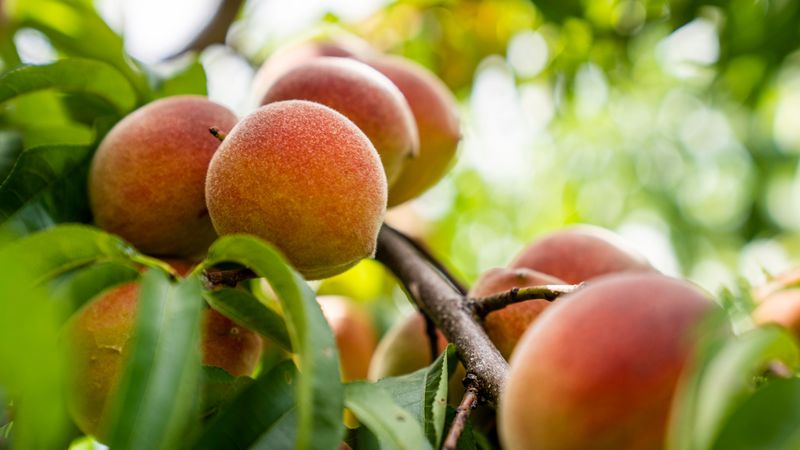
Growing peaches in snow country sounds like a dare, yet a few tough varieties accept the challenge cheerfully. Biting into a sun-warmed, fuzzy peach you grew yourself might be the sweetest bragging right in gardening.
Peach flower buds usually sustain damage around minus fifteen degrees, even though the wood itself handles colder snaps. That bud sensitivity explains why choosing a hardy variety matters so much in chilly Zone 5 gardens.
Reliance, bred in New Hampshire, is famous for keeping its buds alive through severe cold that ruins other peaches. Contender and Intrepid are also strong choices, offering tasty freestone fruit that suits many cold-climate backyards nicely.
Site selection makes a huge difference, so plant on a gentle slope where frosty cold air drains downhill. Peaches demand full sun and sharp drainage, because heavy wet soil invites root rot and stunted trees.
Unlike most apples, peaches are self-fruitful, so one lonely tree can produce a full crop without a partner. I recommend pruning them in early spring, right before bloom, since winter cuts can increase cold injury.
Expect a shorter lifespan than apples, often fifteen years or so, and plan to replace trees eventually. Like cherry pits, peach pits contain cyanide compounds, so toss them in the compost instead of cracking them.
6. Apricot Trees
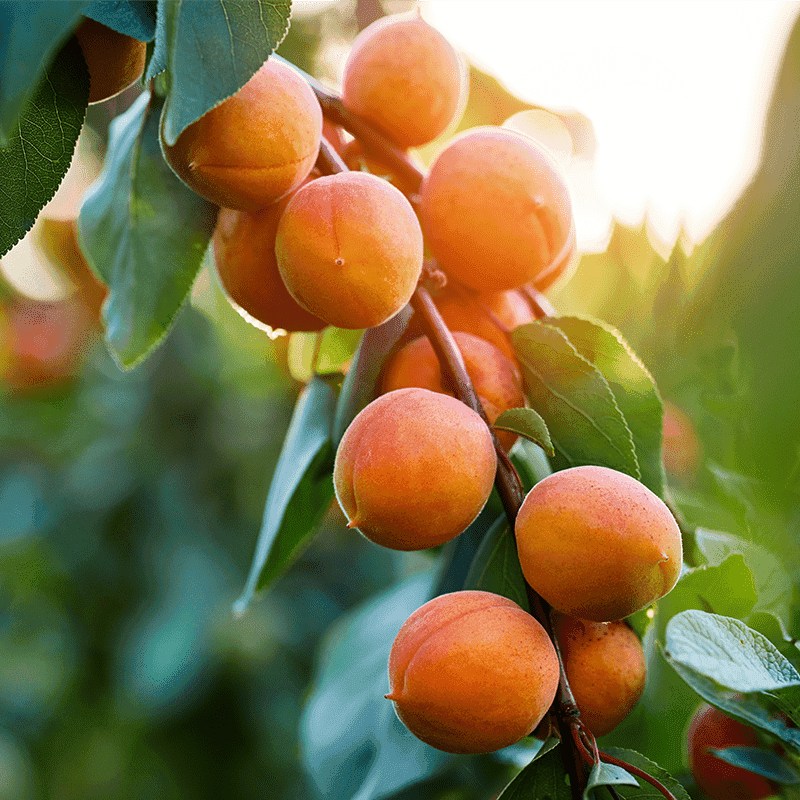
Apricots are the eager beavers of the orchard, often bursting into pink-white bloom before almost anything else wakes up. That early enthusiasm is charming, but it leaves their flowers exposed to the sneaky late frosts of spring.
The trees themselves handle winter cold quite well, and many varieties grow in USDA Zones 4 or 5 through 8. The real challenge is protecting those tender blossoms, which can sustain damage once temperatures dip into the upper twenties.
Harcot and Hargrand came from a research station in Ontario, so they understand northern weather pretty well. Manchurian apricot types and varieties like Moongold from Minnesota also bring extra toughness to colder gardens.
One sneaky trick involves planting apricots on a north-facing slope or near a north wall of your house. Cooler soil there delays bloom by a few days, which can help flowers dodge a damaging cold snap.
Avoid low frost pockets where icy air settles, and choose a sunny spot with soil that drains freely. Many apricots are self-fruitful, though planting two varieties often boosts the size of your harvest noticeably.
Trees usually start bearing within three to five years, and the golden fruit ripens around midsummer. Eat the sweet flesh freely, but skip the kernels inside the pits, since they contain cyanide compounds too.
7. American Persimmon
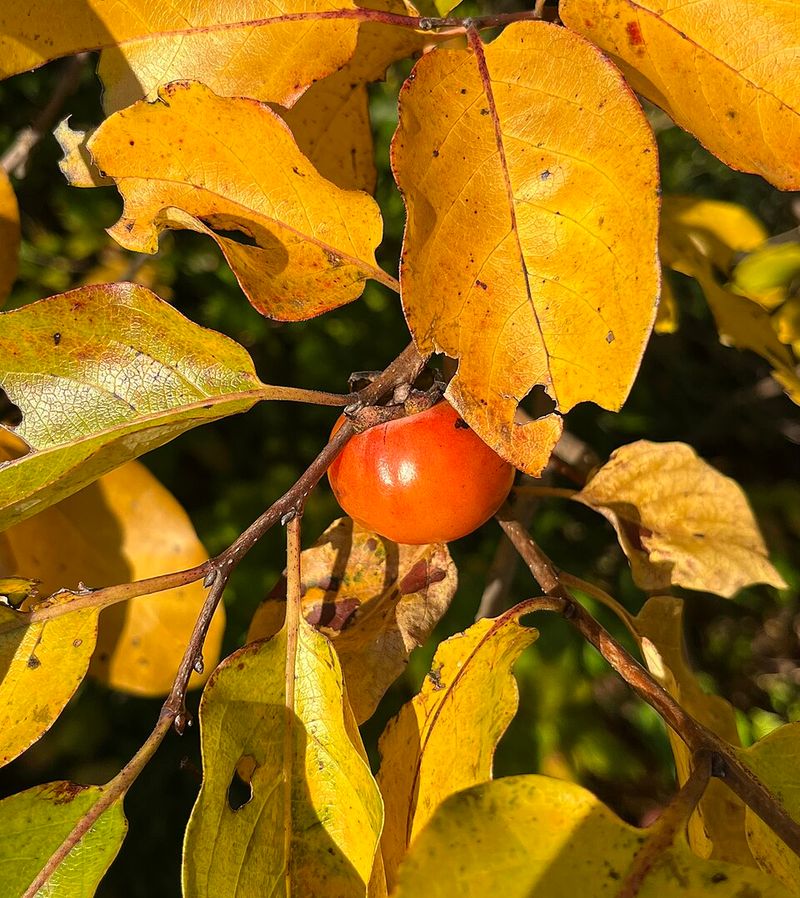
Bite into an unripe American persimmon, and your whole mouth puckers like you licked a chalky sock. Wait until the fruit turns soft and wrinkly, and it tastes like rich, honeyed pudding with hints of apricot.
Diospyros virginiana is a native North American tree, hardy in USDA Zones 4 or 5 through 9. Wild trees can reach thirty-five to sixty feet, with dark bark broken into chunky blocks like alligator hide.
Despite folklore, frost is not required for sweetness, since full ripeness is what removes the puckery tannins. Fruit often ripens in late fall, though, so a frosty morning harvest has become part of the legend.
Most trees are either male or female, so you usually need both for a reliable crop of fruit. Meader is a handy exception, since this cold-hardy variety can set seedless fruit without a male partner.
Persimmons adapt to many soils, though they prefer full sun and decent drainage for the best harvests. Their long taproot makes transplanting tricky, so start with a small container-grown tree and plant it carefully.
Wildlife loves this tree too, with deer and raccoons often visiting for the fruit that drops in autumn. I find it thrilling to stroll out in November and gather soft, sugary fruit from the frosty grass.
8. Pawpaw Trees
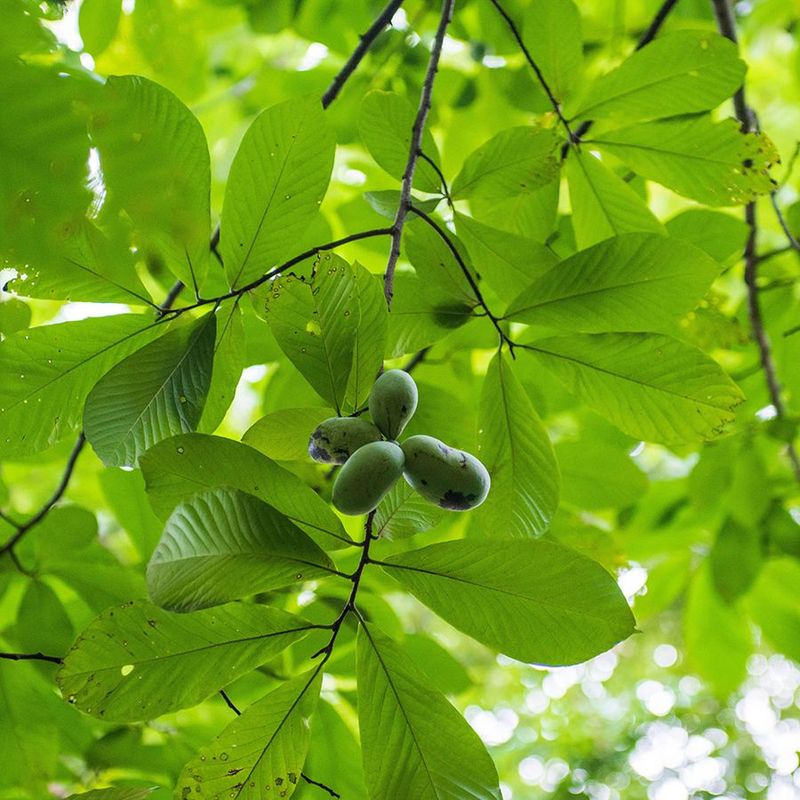
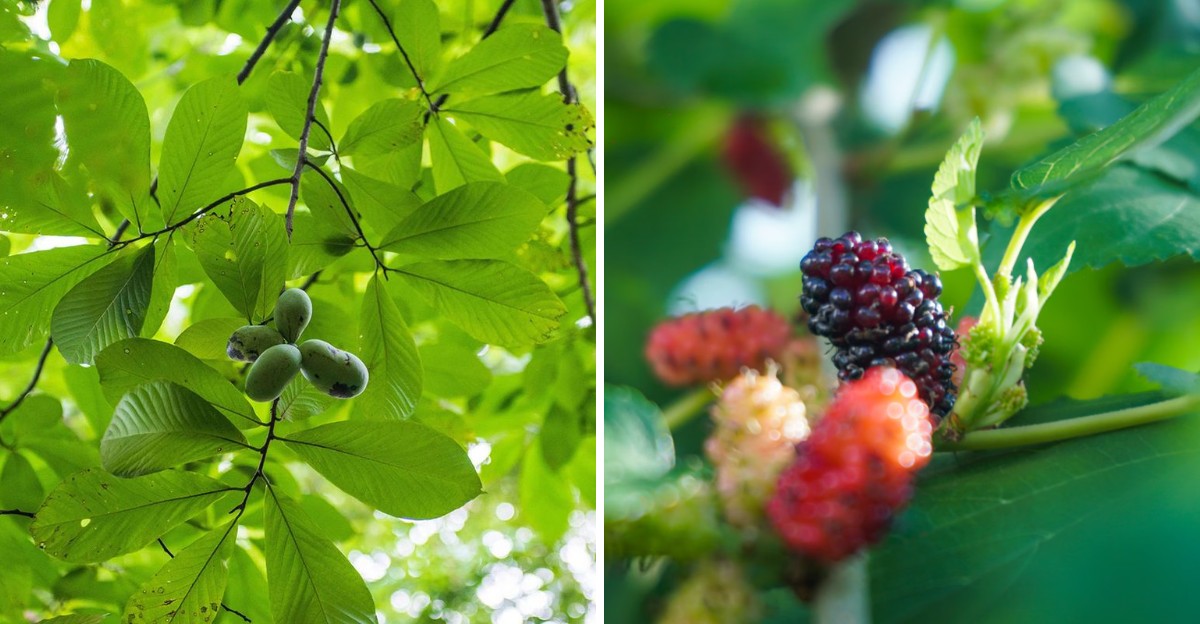
The largest edible fruit native to the United States grows on a modest understory tree you can plant upstate. Pawpaw flesh tastes like a creamy mix of banana and mango, with a custard texture that surprises everyone.
Asimina triloba grows wild in parts of western New York and handles winters in USDA Zones 5 through 8. Trees usually stay twelve to twenty-five feet tall, with big, drooping leaves that look almost tropical.
Young pawpaws appreciate some shade for their first year or two, since harsh sun can scorch tender leaves. Once established, they fruit best in full sun with deep, fertile, slightly acidic soil that drains well.
Plant at least two genetically different varieties, because pawpaws rarely pollinate themselves with much success in backyard settings. Their maroon flowers attract flies and beetles rather than bees, so fruit set can be spotty some years.
I get a kick out of hosting zebra swallowtail butterflies, whose caterpillars feed only on pawpaw leaves. Deer mostly ignore the foliage, thanks to natural compounds in the leaves and bark that discourage browsing.
Grafted varieties like Shenandoah and Sunflower may begin bearing within three to five years after planting. Fruit ripens from late August into October, and it bruises easily, so enjoy it fresh within a few days.
9. Red Mulberry Trees
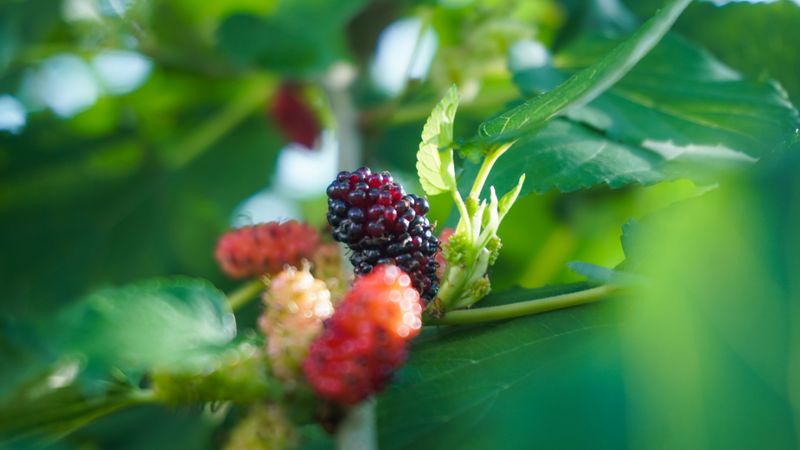
Purple-stained fingers and a goofy grin are the usual signs that someone found a ripe red mulberry tree. The berries look like long blackberries and taste sweet with a gentle tang that kids find irresistible.
Morus rubra is native to eastern North America, including parts of southern and western New York. It grows in USDA Zones 5 through 9, so it suits the milder valleys better than the high mountains.
Shop carefully, because white mulberry, an Asian import, has spread widely and often hybridizes with our native species. Ask nurseries for true Morus rubra, which helps protect wild red mulberries from losing their genetic identity.
Red mulberries tolerate many soil types, including clay, and handle full sun or partial shade quite well. Trees can reach thirty-five to fifty feet or more, so give them plenty of elbow room to spread.
Most trees are male or female, and only females bear fruit, though some individuals carry both flower types. Buying from a reputable native plant nursery improves your odds of getting a tree that actually produces berries.
Birds flock to the fruit in early summer, so expect cheerful company while you pick from the lower branches. I suggest planting away from driveways and patios, because dropped berries leave purple stains that linger for weeks.