These 8 Low-Water Plants Thrive In Missouri’s Hot Summers
If you’re spending every evening with a hose just to keep things green, there’s a better way. The right plants don’t just survive Missouri’s brutal summers. They thrive in them.
These eight low-water plants are built for the heat, the humidity swings, and the long dry stretches that come every single year. No babysitting required.
Some of them have been growing wild across the Midwest for centuries. Others are garden favorites that hold up when everything else gives out.
All of them have one thing in common: they keep going strong when the sun turns brutal and the soil goes bone dry.
Smarter choices in the ground mean less time watering and more time actually enjoying your yard.
1. Purple Coneflower Laughs In The Face Of Missouri Heat
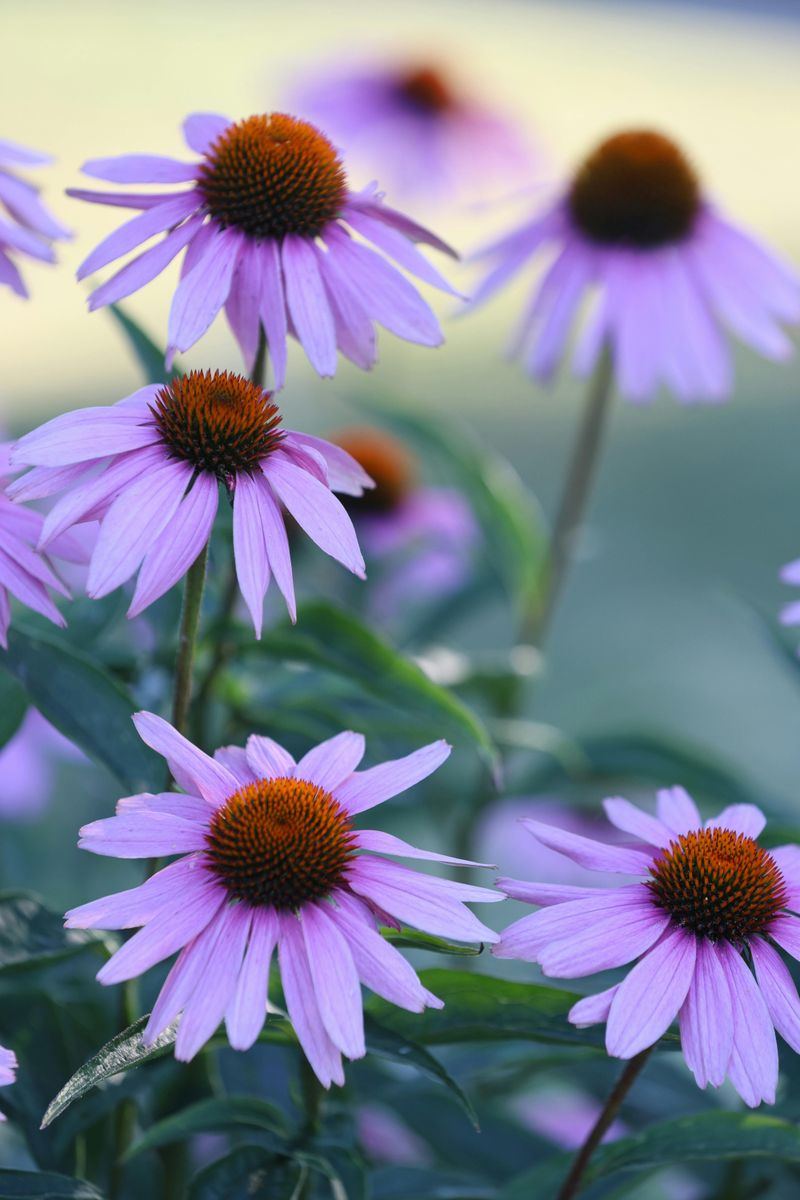
Spot them in almost any Missouri prairie in July, nodding in the heat like they own the place. Purple coneflowers are native to the Midwest and were thriving here long before anyone put them in a backyard.
These bold, daisy-like blooms come in shades of rosy purple and pink. The spiky orange center is what pollinators can’t resist.
Butterflies, bees, and goldfinches flock to them all season long. Your garden stays alive and buzzing even during the driest stretch of summer.
Once established, purple coneflowers need almost no supplemental water. They send their roots deep into the soil, pulling up moisture that shallower plants simply cannot reach.
Plant them in full sun for the best bloom show, though they handle partial shade without much complaint. They grow between two and four feet tall, so they work beautifully as a mid-border plant behind shorter ground covers.
Removing spent blooms encourages more flowers. Leaving the seed heads standing through fall and winter gives birds a natural food source.
Native plants like this one evolved right alongside Missouri’s climate. They are basically pre-programmed to handle the state’s summer heat.
If you want a low-maintenance, high-reward flower that delivers season after season, purple coneflower belongs at the top of your list. It is tough, incredibly gorgeous, and genuinely built for this.
2. Black-Eyed Susan Skipped The Watering Schedule And Nobody Noticed
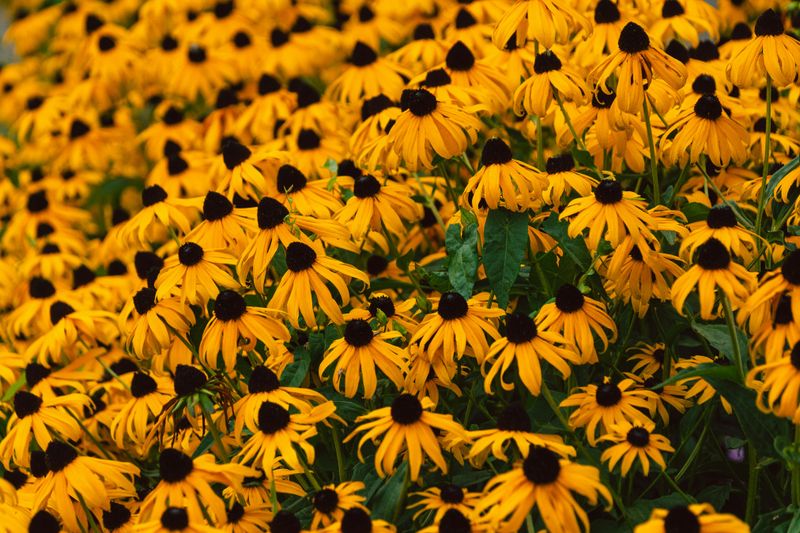
Few flowers say summer in the Midwest quite like a patch of golden black-eyed Susans catching the afternoon light. Rudbeckia hirta is cheerful, tough, and completely unbothered by hot, dry weather.
These sunny yellow blooms with their “dark chocolate” centers start showing up in June. They keep going strong well into September.
That is a longer bloom window than most perennials can claim. It makes them one of the hardest-working plants in any low-water garden. Black-eyed Susans grow best in full sun and well-drained soil.
They actually perform worse when they get too much water or fertilizer, which means neglect is practically part of the care routine.
Plant them in groups of three or five for maximum visual impact. A single plant is lovely, but a whole cluster of them along a fence line or driveway edge looks like something out of a seed catalog.
Your Missouri Garden Changes Every Week. Your Plan Should Too.
Gardening in Missouri changes quickly throughout the season. Every Friday you’ll receive a simple weekly plan showing exactly what to plant, prune, fertilize, harvest, and protect so you never miss the right timing.
They self-seed generously, so you will likely find new plants popping up nearby each spring without any effort on your part. This is one of those plants that rewards you for doing less, which is always a win in the summer heat.
Pairing them with purple coneflower creates a classic Midwestern wildflower combo that pollinators cannot resist. Low-water plants like this one prove that easy and beautiful are not mutually exclusive.
3. Little Bluestem Ghosted Your Garden Hose And Thrived Anyway
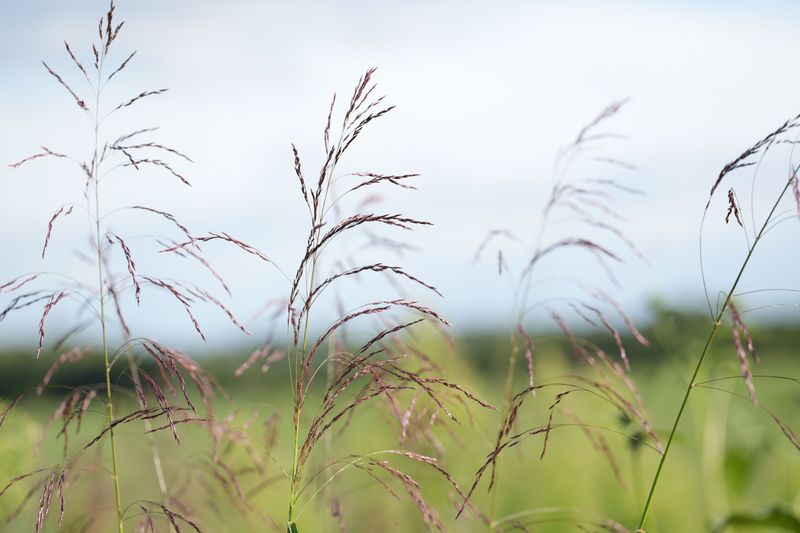
Not every garden hero blooms. Little bluestem, a native prairie grass with the scientific name Schizachyrium scoparium, is proof that texture and movement can be just as dramatic as any flower.
During summer, the upright clumps show off blue-green foliage that catches the breeze and shimmers in the heat. By fall, the whole plant shifts to a stunning copper-red that makes it look like something is always glowing in your garden.
Little bluestem is one of the most drought-tolerant plants native to Missouri’s tallgrass prairie. It evolved to handle months of baking sun and minimal rainfall, so your dry summer is basically its ideal vacation.
This grass grows two to four feet tall and forms tidy clumps rather than spreading aggressively, which makes it easy to manage in a home garden. It thrives in poor, rocky, or sandy soils where other plants struggle to survive.
Plant it along a slope to help prevent erosion, or use it as a border plant to add structure and seasonal interest. The fluffy, silver seed heads that appear in late summer attract birds and add a wispy, romantic quality to the landscape.
Cut it back to four inches in late winter before new growth begins, and that is all the maintenance it asks for. Among low-water plants for hot Missouri summers, little bluestem is a true workhorse with serious style.
4. Sedum Got Watered Once and Didn’t Ask Again
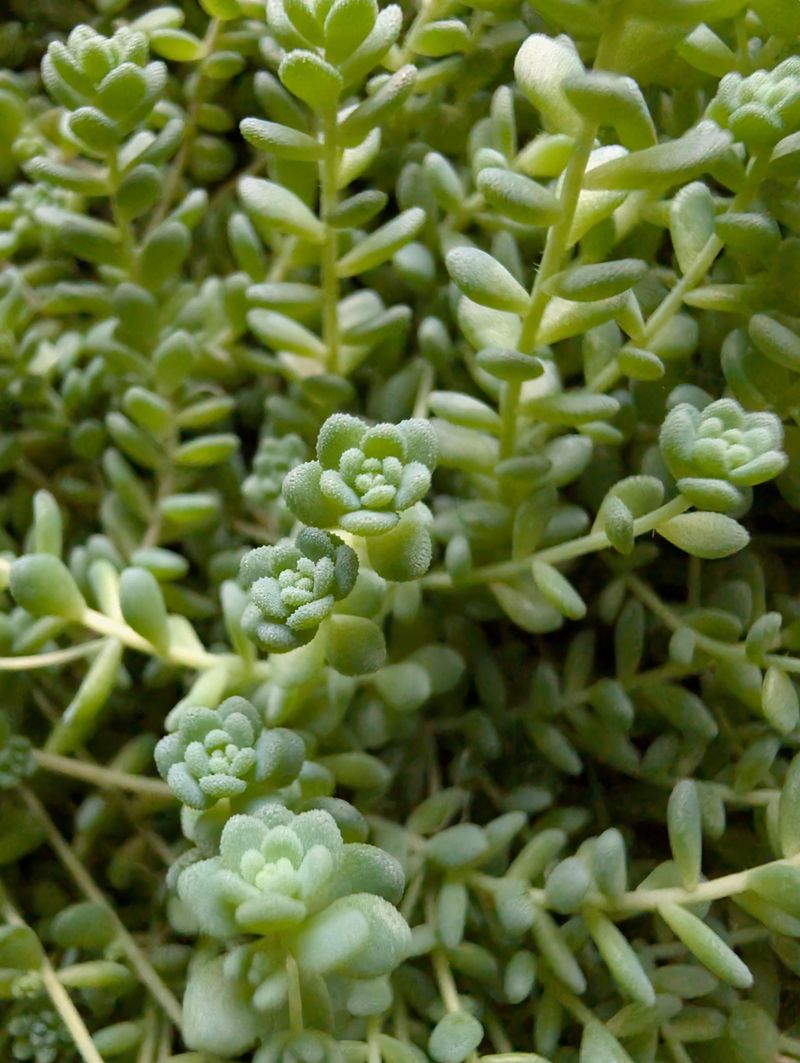
Image Credit: © Physical Pixel / Pexels
Sedum is the plant equivalent of a low-maintenance friend who always shows up looking great. These fleshy, succulent perennials store water right in their thick leaves.
That means they can coast through a dry spell without breaking a sweat. There are hundreds of sedum varieties, ranging from low-growing ground covers to upright types like Autumn Joy that reach nearly two feet.
All of them share the same superpower. They shrug off heat and drought like it is nothing.
Creeping sedums are perfect for filling gaps between stepping stones, spilling over garden walls, or covering bare patches of dry, sunny soil. They spread slowly but steadily, crowding out weeds as they go.
Taller varieties like Autumn Joy put on a show from late summer into fall, with flat-topped flower clusters that start out pale pink and deepen to a rich, dusty rose as temperatures drop. Bees and butterflies treat them like a late-season buffet.
Sedums ask for very little in return for all this beauty. Full sun and well-drained soil are the two non-negotiables; soggy ground is the one thing that can actually cause problems for them.
Plant them in a hot, dry spot where other plants have given up, and watch them settle in like they have always belonged there. For gardeners hunting for low-water plants that deliver year-round interest, sedum is genuinely hard to beat.
5. Russian Sage Brings All The Drama With None Of The Thirst
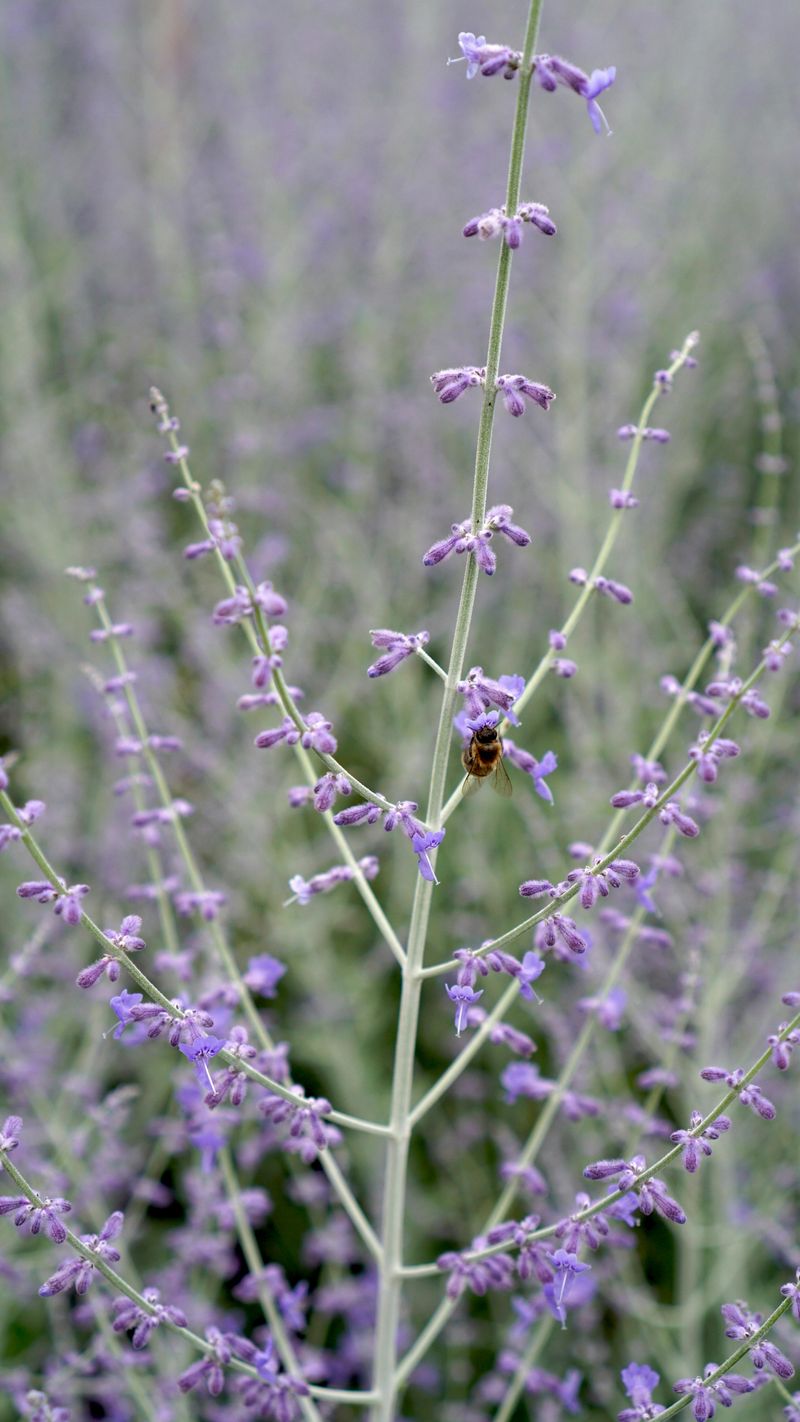
Image Credit: © Ewa Angoneze-Grela / Pexels
Picture a cloud of lavender-blue floating above silver stems in the afternoon heat. That is Russian sage in full bloom.
Perovskia atriplicifolia is one of the most striking low-water plants you can grow in a hot, sunny garden. Despite the name, Russian sage is not actually from Russia, and it is not a true sage either.
It hails from Central Asia and belongs to the mint family. That explains the aromatic, slightly medicinal scent that rises from the foliage when you brush against it.
The plant blooms from midsummer all the way through early fall, exactly when most gardens start looking tired and faded. Those long, airy spikes of tiny purple-blue flowers pair beautifully with bold-colored perennials like black-eyed Susans or coneflowers.
Russian sage grows three to five feet tall and up to four feet wide, so give it room to spread. It loves poor, dry, well-drained soil and actually produces fewer flowers when it gets too much fertilizer or moisture.
Cut it back hard in early spring to about six inches above the ground, and it will come back fuller and more floriferous than the year before. Deer tend to avoid it, rabbits ignore it, and most pests leave it completely alone.
For sheer drama with almost no effort, Russian sage earns its spot in any summer garden lineup.
6. Blazing Star Peaks In July When Everything Else Gives Up
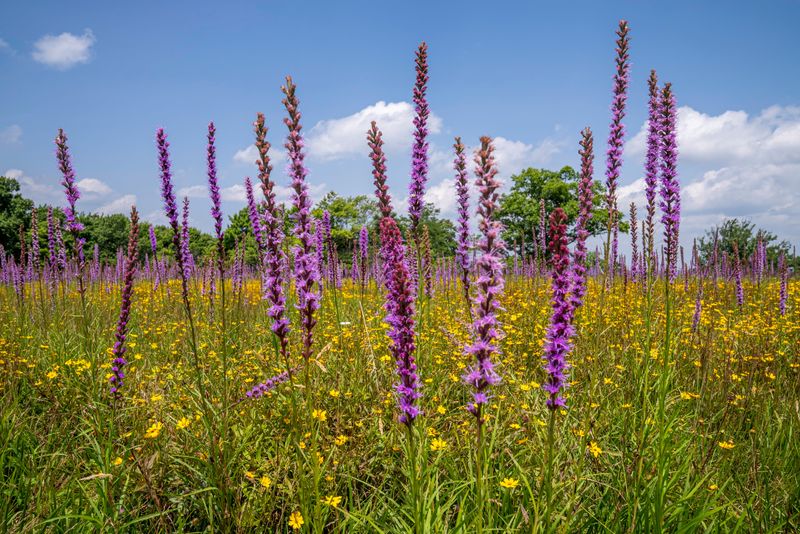
Blazing star has one of the most unusual bloom habits in the plant world. It opens from the top of the spike downward, which is the opposite of almost every other flowering plant.
This quirk makes it endlessly fascinating to watch as it slowly unfolds through the summer weeks. Liatris spicata is a native Missouri wildflower that grows naturally in prairies and open meadows across the Midwest.
It has been handling the region’s summer heat and periodic droughts for thousands of years. Long before it became a garden staple.
The tall, wand-like flower spikes rise two to four feet above grassy, strap-like foliage. They come in shades of rosy purple and, occasionally, white.
Monarch butterflies are particularly drawn to them. This makes blazing star a meaningful choice for gardeners who want to support pollinators during migration season.
Plant it in full sun and well-drained soil for the best results. It grows from a corm, a small bulb-like structure that stores energy and moisture.
That stored energy helps the plant push through dry stretches without any help from a garden hose. Blazing star pairs naturally with black-eyed Susans and coneflowers, creating a classic native plant trio that looks intentional and beautiful.
Among low-water plants native to Missouri, few match blazing star’s combination of height, drama, and ecological value.
7. Daylily Comes Back Every Year Whether You Like It Or Not
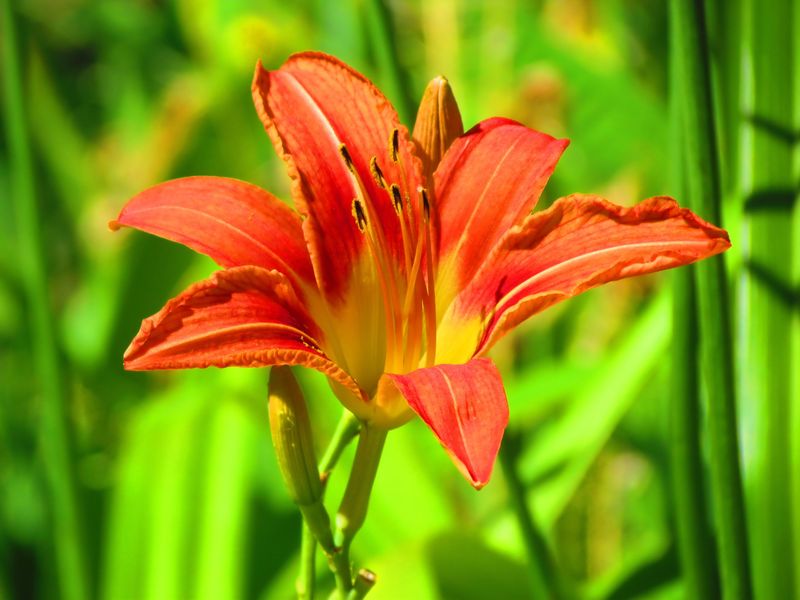
Daylilies have a reputation for being nearly impossible to stop once they get going. That reputation is completely earned.
These tough, adaptable perennials spread steadily each year. They fill in bare spots and produce more blooms with almost no input from the gardener.
Each individual flower lasts only one day, which is how they got their name. A single plant produces dozens of buds in sequence, so the overall bloom period stretches across several weeks in midsummer.
That keeps the garden looking full and colorful without much effort. Hemerocallis, the botanical name, means beauty for a day in Greek, which feels poetic given how fleeting each bloom is.
Modern hybrid varieties come in nearly every color imaginable. Think pale lemon yellow, deep burgundy, and fiery orange-red.
Daylilies thrive in full sun but manage reasonably well in partial shade. Their thick, fleshy roots store water and nutrients, giving them built-in drought resistance.
That makes them ideal for Missouri’s unpredictable summer rainfall patterns. Divide clumps every three to four years to keep them blooming vigorously.
This is also an easy way to share plants with neighbors or expand your own garden beds without spending a single dollar. Plant them along a sunny slope, at the base of a mailbox, or as a border edging.
8. Missouri Primrose Was Born Here And Needs Nothing From You
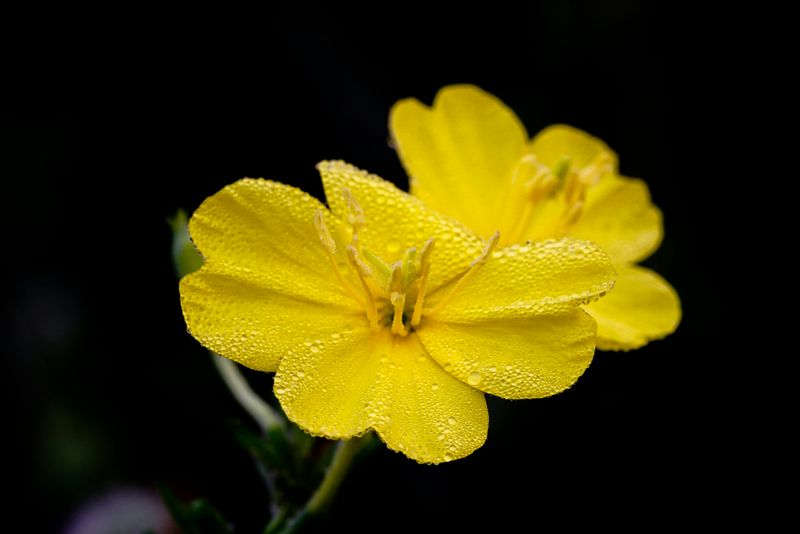
There is something almost defiant about Missouri primrose. It blooms its biggest, brightest blooms during the hottest, driest part of summer, as if the heat actually fuels it instead of slowing it down.
Oenothera macrocarpa, also called Ozark sundrops, is native to the rocky glades and dry prairies of the Midwest. Its large, silky, lemon-yellow flowers can measure up to four inches across, which is enormous for a plant that hugs the ground so closely.
The blooms open in the late afternoon and glow well into the evening. That makes Missouri primrose a wonderful choice for gardeners who spend time outside after work.
There is a quiet magic in watching those big yellow cups unfurl as the day cools down. This plant stays low and spreading, typically reaching only about a foot tall.
It sprawls two to three feet wide, making it a natural fit for rock gardens, dry slopes, or the front edge of a sunny border where the soil tends to bake in summer.
Once established, it roots deeply into dry, rocky ground and pulls through summer without any supplemental water. That kind of resilience is rare in a plant this ornamental.
Missouri primrose demands excellent drainage above all else. Give it gritty, lean soil and full sun, and it will ask nothing else of you for years.
The seed pods that follow are large, winged, and surprisingly beautiful. Missouri primrose deserves far more recognition than it gets.