Georgia Gardeners Should Add Pine Straw Mulch Around Hydrangeas This October
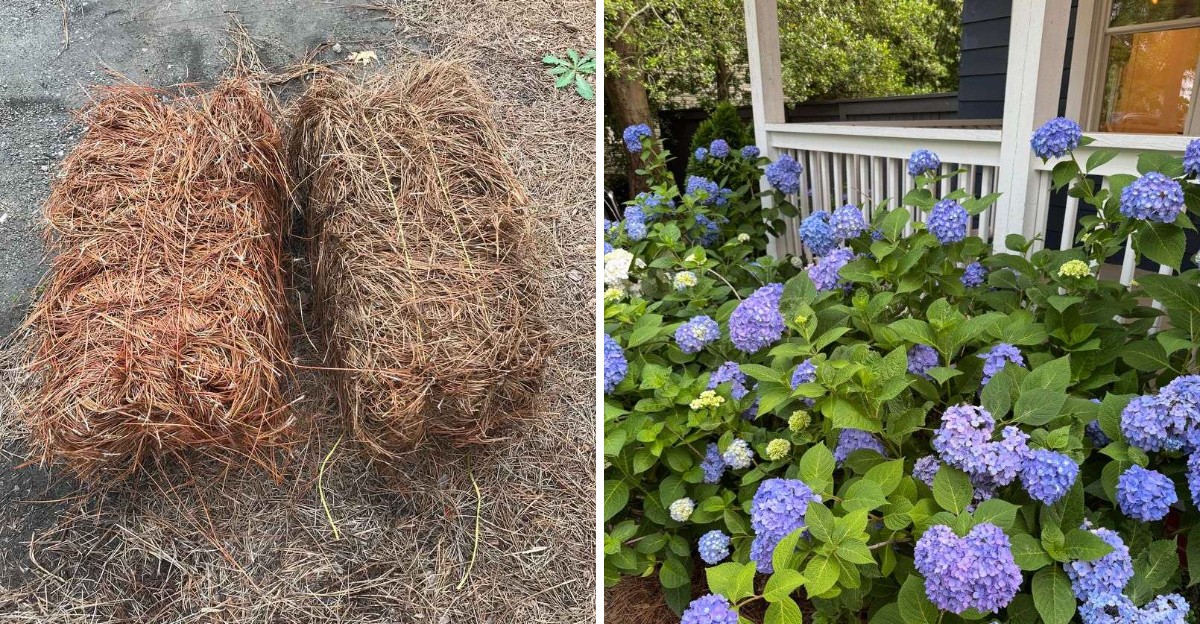
Bales of pine straw stacked outside garden centers are hard to miss right now. Many of them end up around azaleas and foundation beds, while hydrangeas get overlooked.
Hydrangea roots sit fairly close to the surface, which leaves them exposed when soil swings between mild days and cold nights.
Loose mulch helps even out those swings and holds moisture during dry winter stretches. Spread it a few inches deep, keeping it pulled back slightly from the stems.
Pine straw is a natural fit across Georgia, since it is easy to find, light to carry, and slow to break down.
It also stays put on slopes and in windy spots better than many shredded wood mulches.
Plants that go into winter with steadier roots tend to start spring with fewer setbacks.
1. Shallow Hydrangea Roots Appreciate A Light Winter Blanket
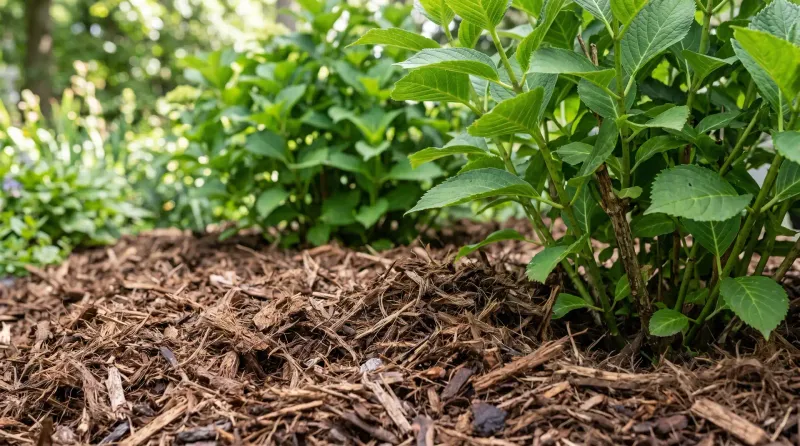
Hydrangea roots stay closer to the surface than you might expect. Most of the fibrous feeder roots spread through the top layer of soil, where they react quickly to heat, cold, and drying.
A loose layer of pine straw acts like a light quilt over that root zone.
Winters in Georgia tend to swing back and forth, with mild afternoons followed by sharp frosty nights. Mulch does not stop the cold, but it can slow how fast the soil temperature changes from day to night.
Gentler swings may reduce stress on roots, and they can also limit frost heaving in some soils.
Results vary across the state, of course. Gardeners in the north Georgia mountains face harder freezes than folks near Savannah, so mulch matters a bit more up north.
Aim for roughly two to three inches once the straw settles. Pine needles fluff up when fresh, so a layer that looks thick on day one will usually sink down within a few weeks.
Spread it out to the edge of the branches if you can, since roots often reach that far or farther.
Keep in mind that mulch protects roots, not flower buds. Bigleaf hydrangeas set buds on old stems, and a hard late freeze can still damage those buds regardless of what sits on the ground below them.
2. Pine Needles Let Rain Through Without Matting Down
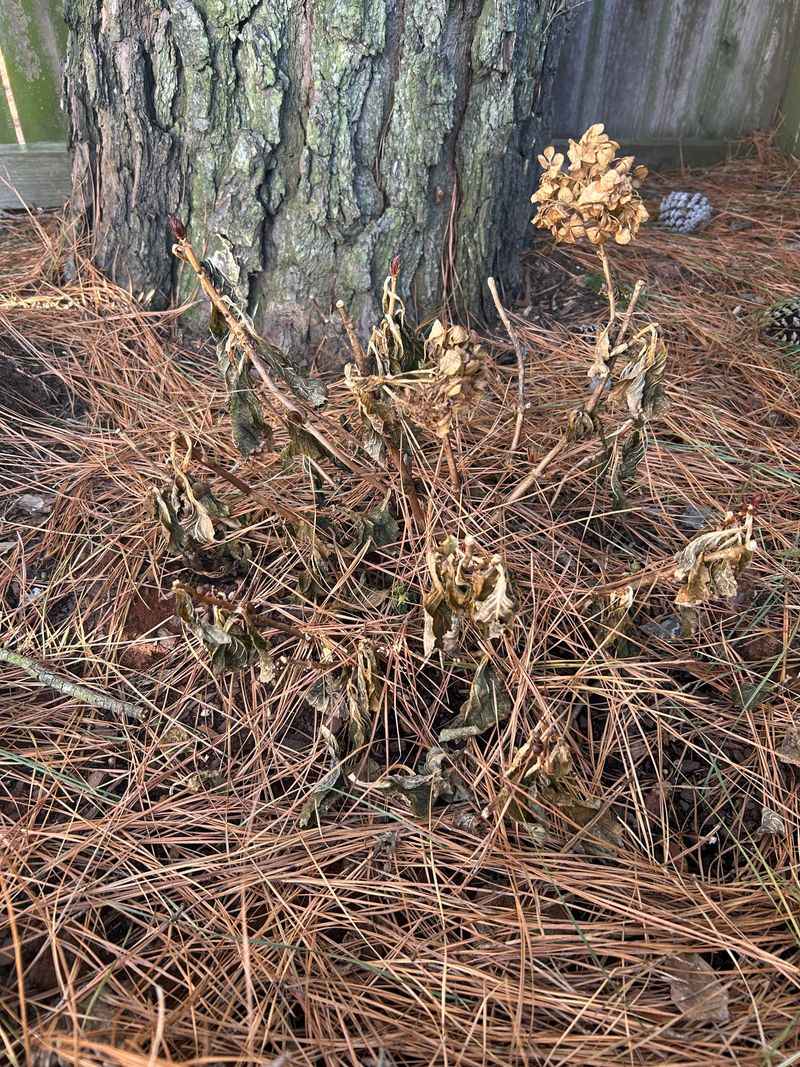
Shredded wood and fresh grass clippings can pack into a crust. Pine straw behaves differently because the long needles cross over each other and leave small air pockets between them.
Those gaps let rainfall and hose water reach the soil instead of running off the top.
Fall showers in Georgia can come as quick downpours rather than slow, soaking rains. A mulch that lets water pass through easily gives the soil a better chance to soak up what falls.
Air moves through the layer too, which can help the soil surface stay from getting soggy.
Needles do flatten somewhat over time, especially after heavy rain or foot traffic. Even so, they tend to stay looser than many fine-textured mulches, and a quick fluff with a rake can open them back up.
Your Georgia Garden Changes Every Week. Your Plan Should Too.
Gardening in Georgia changes quickly throughout the season. Every Friday you’ll receive a simple weekly plan showing exactly what to plant, prune, fertilize, harvest, and protect so you never miss the right timing.
Here is a simple test worth trying after a rain. Pull back a handful of straw and press a finger into the soil to see if the moisture made it down.
If the ground underneath feels dry while the needles feel wet, your layer may be too thick.
Thinning it a little usually solves the problem. Hydrangeas drink a lot, so getting water past the mulch and into the root zone matters more than how tidy the bed looks from the street.
3. Fall Dry Spells Pull Less Moisture From Covered Soil
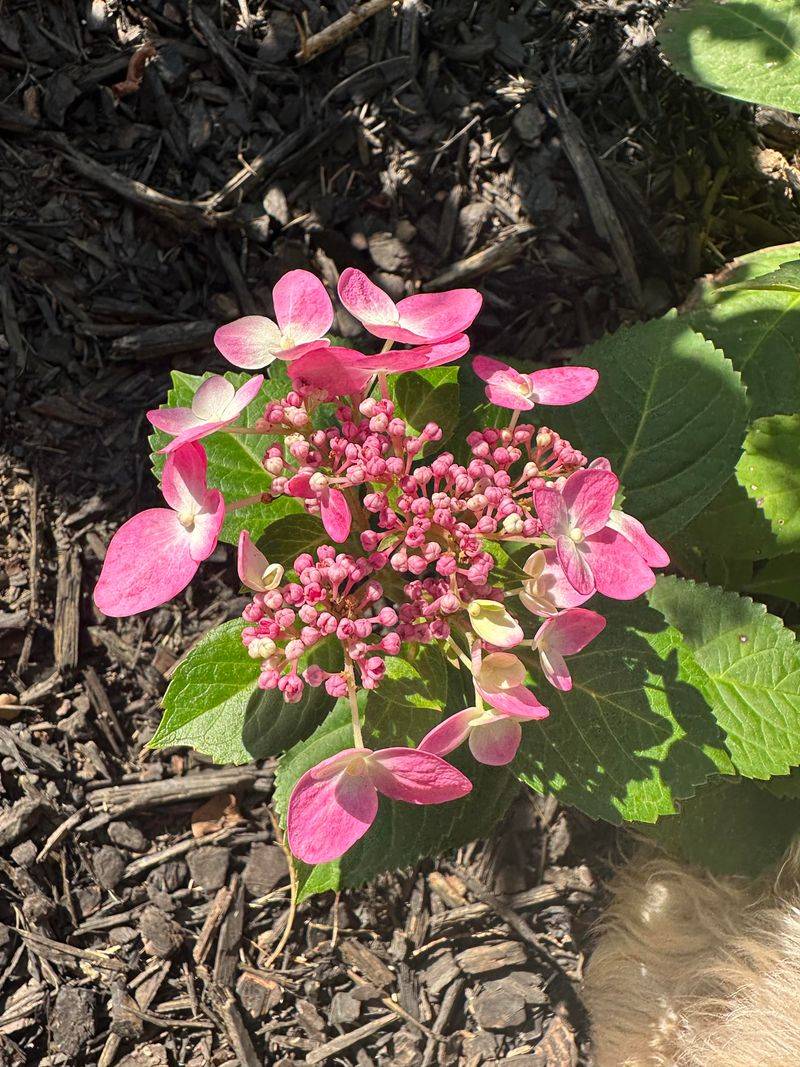
October is often one of the drier months across much of Georgia. Sunny days and steady breezes can pull water out of bare soil faster than you might notice.
Hydrangeas are still holding leaves at that point, so they keep using water until they go dormant.
Covering the soil slows evaporation from the surface. Pine straw shades the ground and blocks some of the wind, which can help moisture last longer between rains or waterings.
That does not mean you can skip the hose.
During a long dry stretch, mulched hydrangeas may still need a deep drink about once a week. Check the soil a few inches down before you water rather than following a fixed schedule.
Wilting in the afternoon heat is common for hydrangeas and does not always signal thirst. If leaves still droop the next morning, though, the roots likely need water.
Watering early in the day gives leaves time to dry before evening.
Soil type plays a big role here. Sandy ground in south Georgia drains fast and may need more frequent checks, while red clay in the Piedmont holds water longer but can take more time to soak.
Either way, mulch helps the water you do apply stay put a little longer.
4. Leave A Small Gap Between The Straw And The Stems
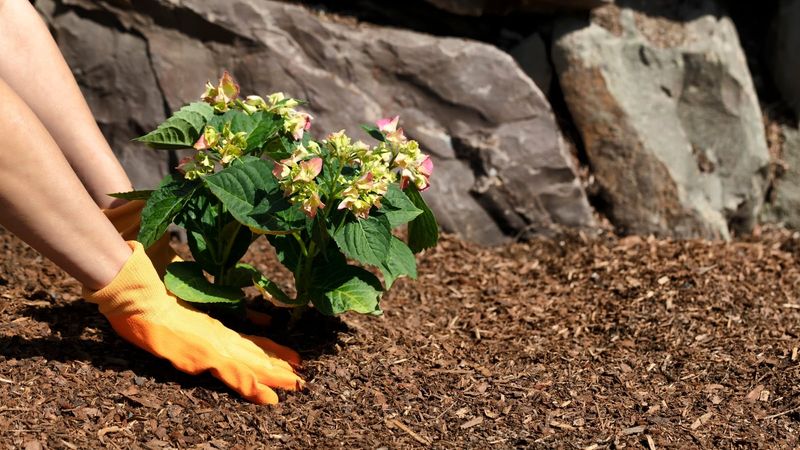
Picture a wet scarf wrapped around your ankles all winter. That is roughly what happens when mulch gets piled right up against hydrangea stems.
Bark that stays damp for weeks can soften and invite rot or fungal trouble.
A small open ring around the base helps prevent that. A few inches of bare ground is usually enough to let the lower stems dry out between rains.
Rodents are another reason to keep that space clear. Voles and mice sometimes tunnel under thick mulch in winter, and a pile against the stems gives them cover while they chew.
Not every yard sees this, but it does happen in some Georgia gardens.
Spread your straw starting from the outside edge of the shrub and work inward. Stop short of the stems, then use your hand to pull back any needles that drift toward the center.
Check that gap again after storms or leaf blowing.
Wind and rain tend to shift loose needles around, and they often collect in the crown of the plant. A quick look every few weeks keeps the ring open without much effort.
Doing it right takes only a minute per shrub. Your hydrangeas get the moisture benefits of mulch without the downside of soggy stems sitting in wet straw for months.
5. Bloom Color Won’t Shift Much From Pine Straw Alone
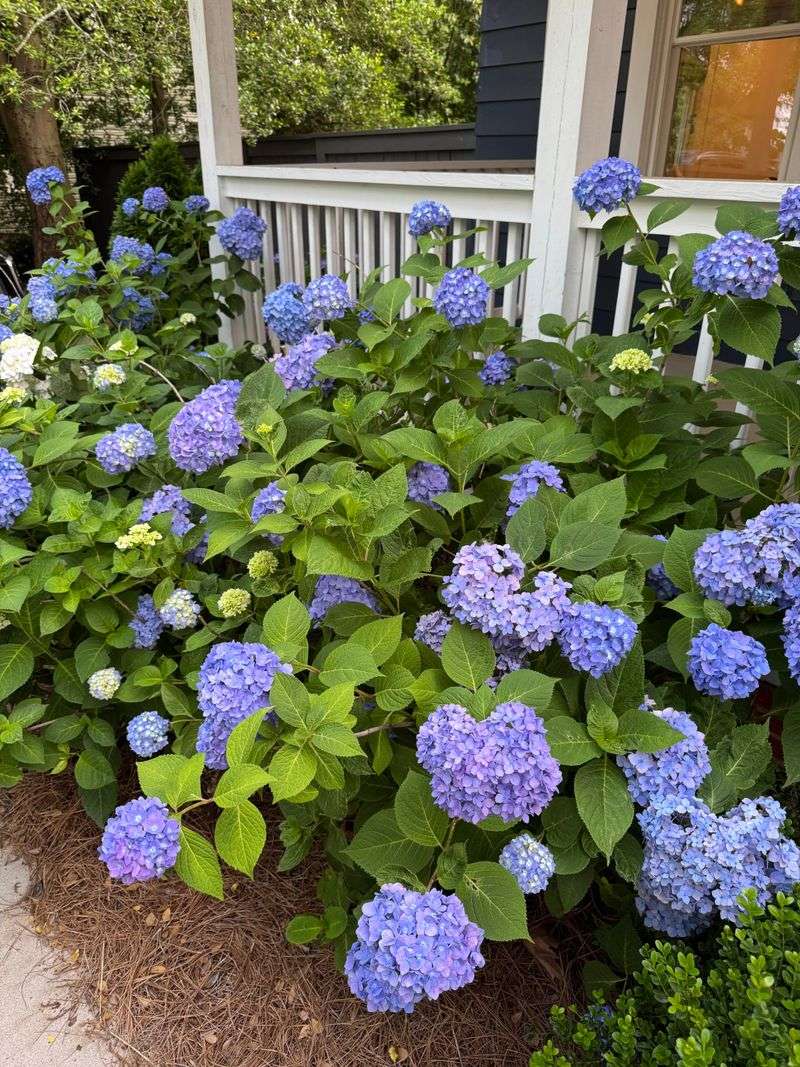
Here is a myth worth clearing up. Plenty of gardeners believe pine needles will turn pink hydrangeas blue because the needles are acidic.
In reality, pine straw has little effect on soil pH over the long run.
Fresh needles are somewhat acidic, but as they break down, their effect on the soil below is usually small. Extension specialists generally point out that mulch alone is not a reliable way to change pH.
Bloom color in bigleaf and mountain hydrangeas depends on how much aluminum the roots can take up. Acidic soil tends to free up aluminum and produce blue flowers, while less acidic soil often leads to pink.
Plenty of Georgia soils already lean acidic, which is one reason blue blooms are common here.
If you want to shift color, start with a soil test through your county Extension office. That result tells you where your pH stands and whether an amendment makes sense.
Changes take time, often a season or more, and they are not always predictable.
Also remember that white hydrangeas and most panicle or smooth types do not change color with pH at all. So spread pine straw for moisture and root comfort, and treat any color change as a separate project.
6. Beds Hugging The House Benefit From A Strip Of Bare Ground
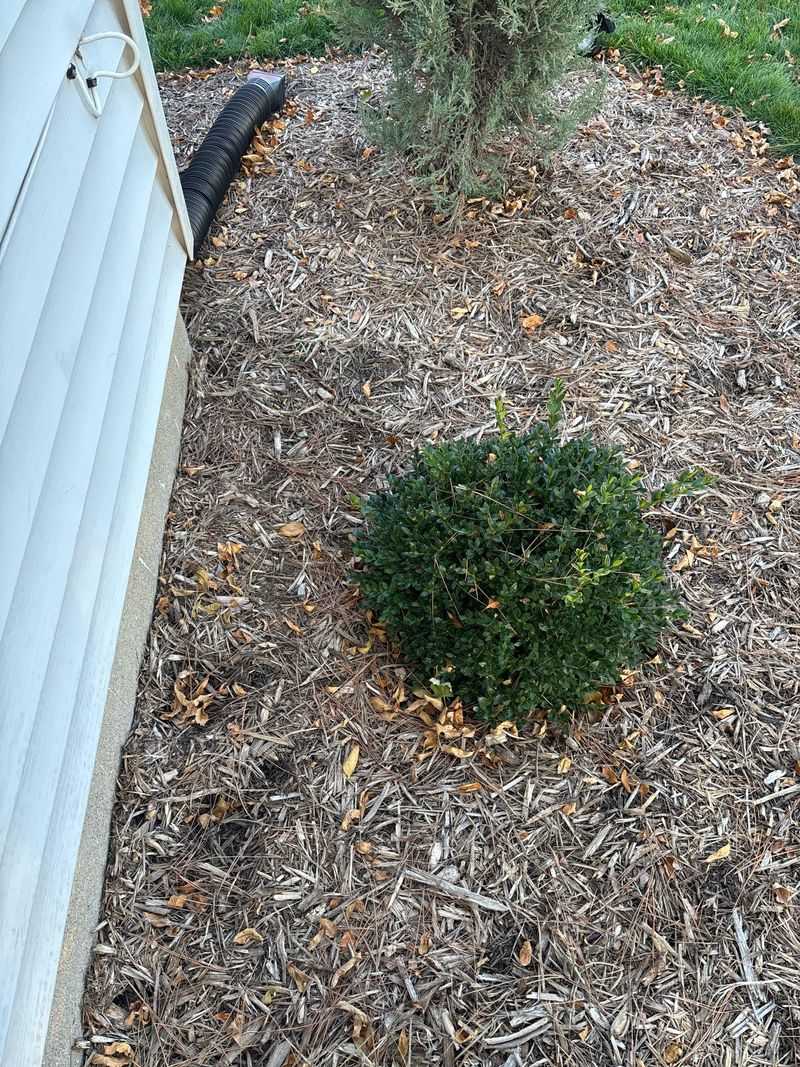
Foundation beds are a favorite spot for hydrangeas, especially on the shady side of a home. Before you spread straw right up to the brick, though, think about what lives in your walls.
Termites are active across all of Georgia, and mulch can keep soil moist near the foundation.
Pine straw does not attract termites on its own the way some people fear. Still, any mulch that holds moisture against a house can create conditions pests like, and it may hide signs of activity during inspections.
A narrow strip of bare ground or gravel next to the wall gives you a buffer. Many pest control professionals suggest keeping mulch pulled back several inches from the foundation for that reason.
Fire safety is worth a thought too.
Pine straw is dry and catches fire more easily than many mulches. Keeping it away from siding, vents, and spots where people toss cigarettes lowers that risk.
Check your termite treatment paperwork if you have a bond. Some contracts mention mulch placement, and disturbing treated soil can sometimes affect coverage.
Plant hydrangeas a few feet out from the wall when you can. They need room to spread anyway, and the extra space makes it easier to keep a clean strip while still mulching the full root zone.
7. A Fresh Layer Each Fall Replaces What Broke Down Over Summer
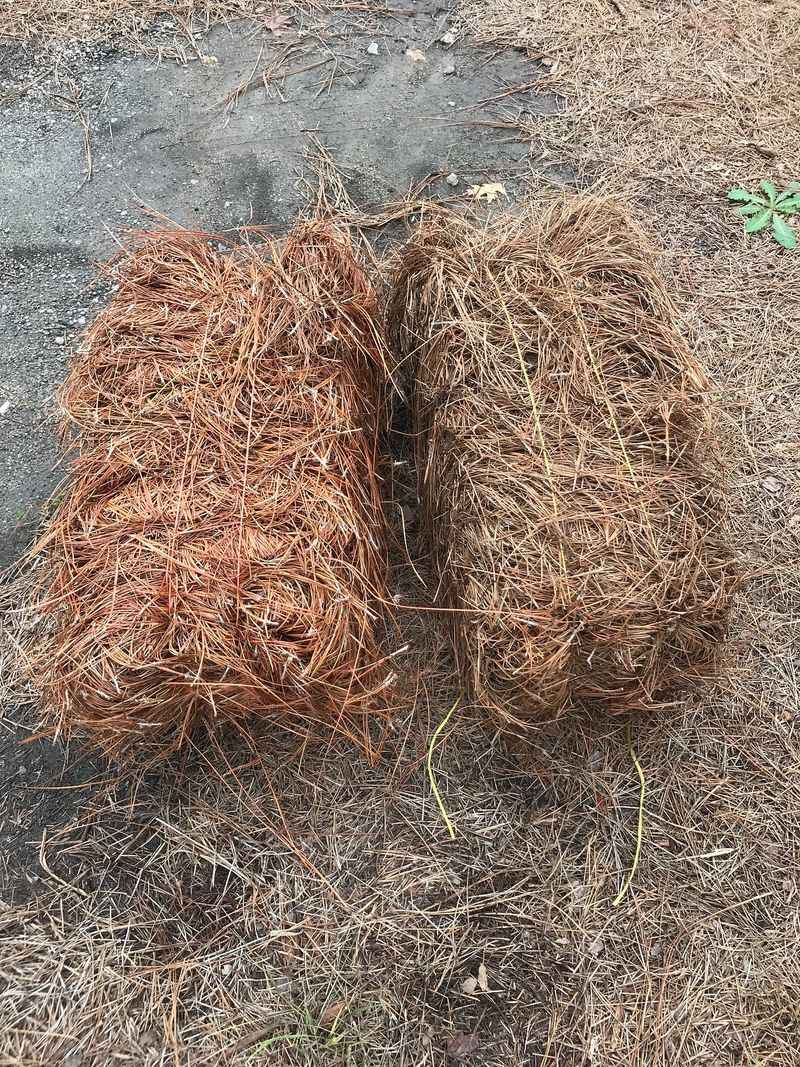
Look closely at last spring’s straw and you will likely see a thin, faded mat. Heat, humidity, and soil life work fast on organic mulch in the South.
By October, much of that layer has turned into soil or blown away.
That breakdown is actually useful. Decomposing needles add organic matter to the top of the soil, which over time can improve texture and help it hold water.
Topping off in fall brings the depth back to where it does some good. Most beds only need an inch or two of new straw over what remains, not a full fresh layer from scratch.
Resist the urge to pile it on every year without checking.
Too much buildup can smother roots and block water, especially in clay. Rake the old layer with your fingers first to see how much is left before you open a new bale.
Pine straw is sold all over Georgia at garden centers, feed stores, and roadside stands. Longleaf needles tend to be longer and last a bit better, while loblolly and slash pine straw often costs less.
Either kind works fine for hydrangeas. Pick what fits your budget, spread it on a calm day, and enjoy a tidy bed heading into winter.