Georgia Residents Should Know What To Do If They Spot This Giant Lizard
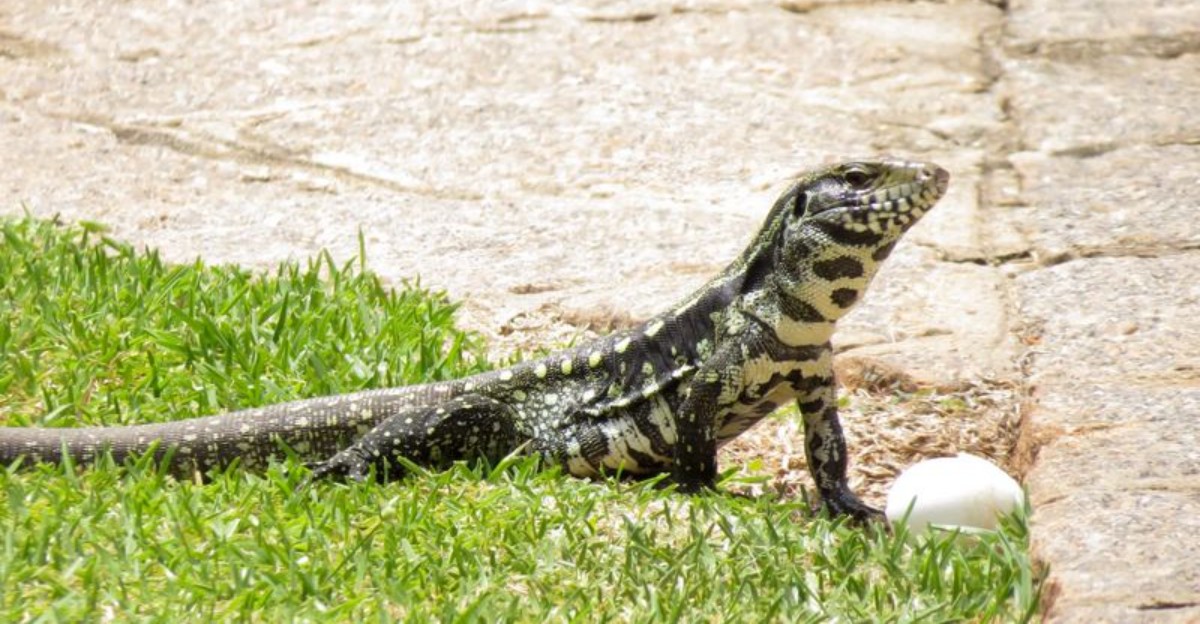
Something that looks almost prehistoric can stop you in your tracks when it appears beside a fence, driveway, or garden bed. Georgia now has a giant lizard worth recognizing.
The Argentine black and white tegu is not an oversized version of the small lizards commonly seen around homes.
It is a nonnative reptile that has established populations in parts of the state. That makes a confirmed sighting useful information for wildlife officials tracking its spread.
Your reaction matters, but getting close for a better look is not necessary.
Notice its size, coloring, and location from a safe distance, then know where a sighting should be reported. Information is more helpful than trying to handle the animal yourself.
Recognize this unusual visitor first, and you will know how to respond responsibly.
1. A Lizard This Large Is Worth A Closer Look
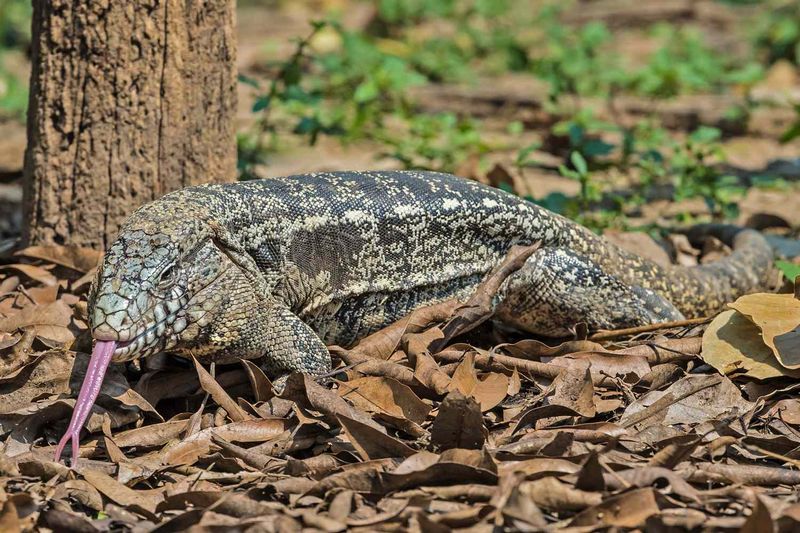
Most backyard lizards fit in the palm of your hand. A tegu does not, and that alone tells you something unusual is going on.
Anoles and skinks are the usual visitors around homes in Georgia. They dart along fences, hide under mulch, and rarely draw a second glance.
A tegu moves differently. It walks with a slow, deliberate stride, and its body sits low and thick against the ground.
People often mistake the first sighting for a small alligator or even someone’s escaped pet. Both guesses are understandable, since nothing else in the yard looks quite like it.
Wildlife biologists rely heavily on reports from residents who notice these differences. A single clear sighting can help fill in gaps on a distribution map.
If something looks far too big to be a normal yard lizard, trust that instinct. Stop, look carefully, and take a photo if it is safe to do so from a distance.
Size alone is not proof, though.
Young tegus can be fairly small, so markings and body shape matter just as much as length.
What matters most is paying attention instead of shrugging it off. A quick second look costs nothing and may end up being genuinely useful information.
2. Argentine Tegus Can Grow Up To Four Feet Long
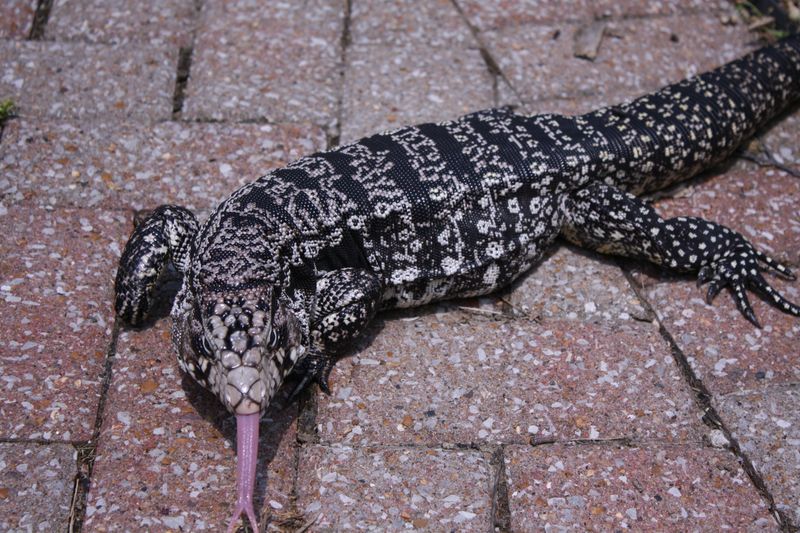
Four feet is a lot of lizard. Adult Argentine tegus can reach that length from snout to tail tip, with a good portion of it being tail.
Weight is the part that surprises people. A mature male can push past ten pounds, giving it a stocky, muscular build that looks nothing like a slender native lizard.
Females tend to run smaller, though they still dwarf anything else crawling around the yard.
Hatchlings start out around seven or eight inches. They grow quickly during warm months, which is why a lizard you saw in spring may look much bigger by late summer.
Size varies with age, food supply, and local conditions, so not every tegu you spot will be a giant.
Their bulk lets them travel farther and handle a wider range of habitats than smaller reptiles. Fields, forest edges, and brushy lots all work for them.
Your Georgia Garden Changes Every Week. Your Plan Should Too.
Gardening in Georgia changes quickly throughout the season. Every Friday you’ll receive a simple weekly plan showing exactly what to plant, prune, fertilize, harvest, and protect so you never miss the right timing.
Warm weather across south Georgia suits them well, which is part of why officials keep such close watch on established populations there.
Length also affects how people react.
A four-foot reptile looks intimidating, but tegus are not aggressive by nature and generally prefer to leave rather than confront anyone.
Understanding realistic size helps you describe what you saw accurately when reporting it.
3. Black And White Markings Make Them Easier To Recognize
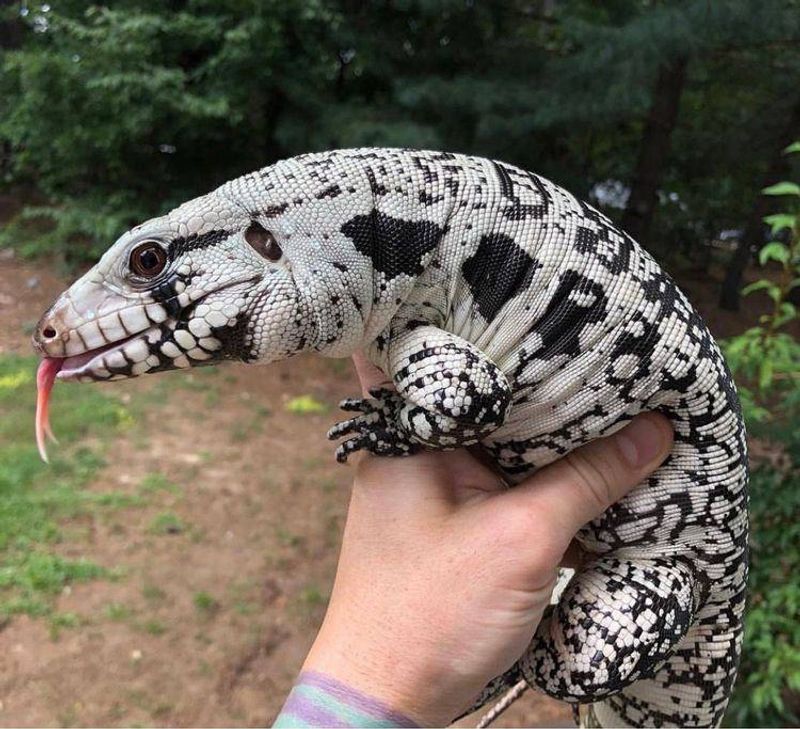
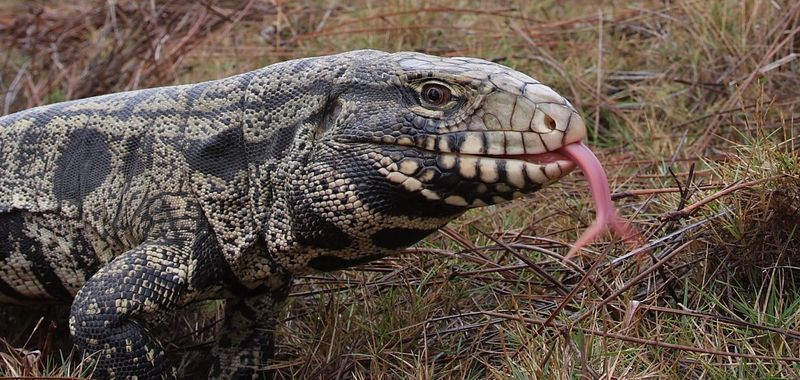
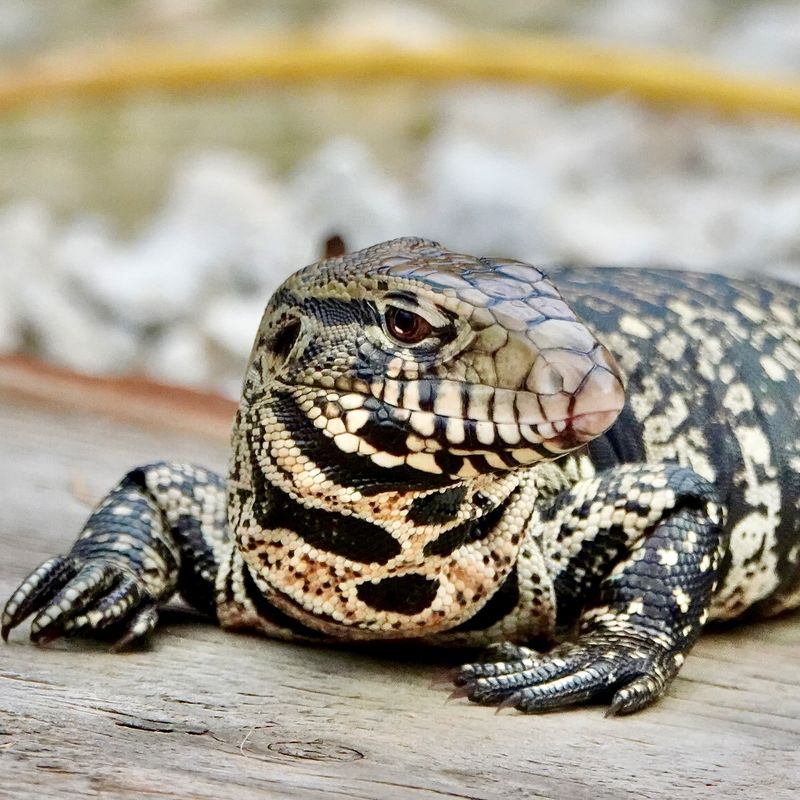
Look at the pattern before anything else. Argentine tegus wear a mottled mix of black and white that runs in rough bands across the back and tail.
Skin texture gives another clue. Their scales look beaded and slightly bumpy rather than smooth and glossy.
Heads are broad and blocky, especially on older males, who develop noticeable jowls along the sides of the face.
Younger tegus sometimes show a greenish tint on the head and neck. That color usually fades as they mature, which can confuse people expecting only black and white.
The tail is long and thick, banded like the body, and often makes up around half the animal’s total length.
Native lizards in Georgia simply do not look like this.
Broadhead skinks are shiny and brownish, while fence lizards stay gray and rough textured.
Photos help enormously when you report a sighting. A shot showing the head, back, and tail gives biologists what they need to confirm identification.
Lighting can wash out the pattern, so try to capture the animal from the side rather than straight down.
Getting the identification right matters. Misreporting a native lizard wastes time, and missing a real tegu delays a response that might otherwise happen quickly.
4. Keep Your Distance Instead Of Trying To Handle It
Grabbing a wild tegu is a bad idea, even a calm-looking one. These lizards are strong, quick over short distances, and equipped with real jaw power.
Watching from a comfortable distance is the smarter move. Ten or fifteen feet is usually plenty for a clear photo with a phone camera.
Pets should be brought inside if one shows up. Curious dogs tend to press too close, and that is when problems start.
Children need the same guidance. Explain that the lizard is not a pet and should be left alone.
Do not corner it against a fence or wall. Any animal that feels trapped becomes far more likely to react defensively.
Trying to capture a tegu yourself also risks injury to you and stress to the animal.
Trained staff have the right equipment and experience for that job.
Rural properties across Georgia often have brush piles and outbuildings where tegus like to shelter. Approaching those spaces slowly gives everyone room to react.
Note the exact location while you wait. A street address, a landmark, or dropped GPS pin all help responders find the spot later.
Calm observation beats a hasty reaction. You gather better information and nobody ends up with a bite or a scratch.
5. These Lizards May Defend Themselves When Threatened
Cornered animals push back. Tegus generally avoid people, but one that feels trapped can react in ways worth respecting.
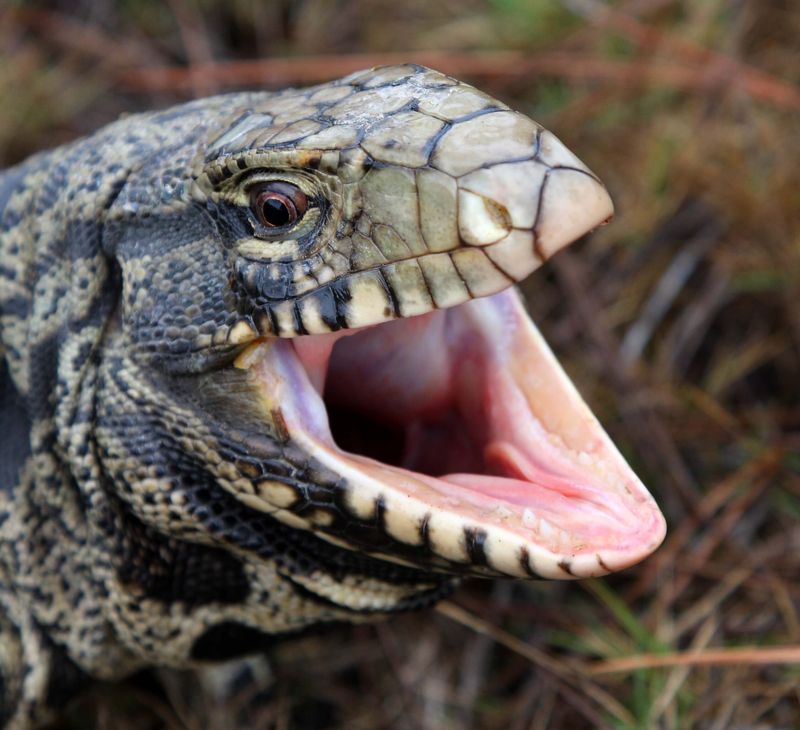
Warning signs come first. A tegu may puff up its body, hiss, or lift its front legs off the ground before doing anything else.
Tail whipping is another defensive move. The tail is muscular and can deliver a surprisingly sharp sting to a leg or hand.
Bites are possible if someone reaches in to grab one. Their jaws are built for crushing eggs and hard-shelled food, so the pressure is significant.
None of that means tegus hunt people or charge without reason. Escape is almost always their first choice when given an opening.
Give the animal a clear exit route. Stepping back a few feet often ends the standoff on its own.
Homeowners in Georgia sometimes encounter them near chicken coops or garden beds, where food is easy to find. Securing those areas reduces repeat visits.
Should a bite happen, clean the wound thoroughly and contact a medical provider. Any animal bite carries infection risk that deserves attention.
Respect works better than fear here.
Treat a tegu the way you would treat a raccoon or a snake, and encounters usually pass without incident.
6. Tegus Can Put Native Wildlife At Risk
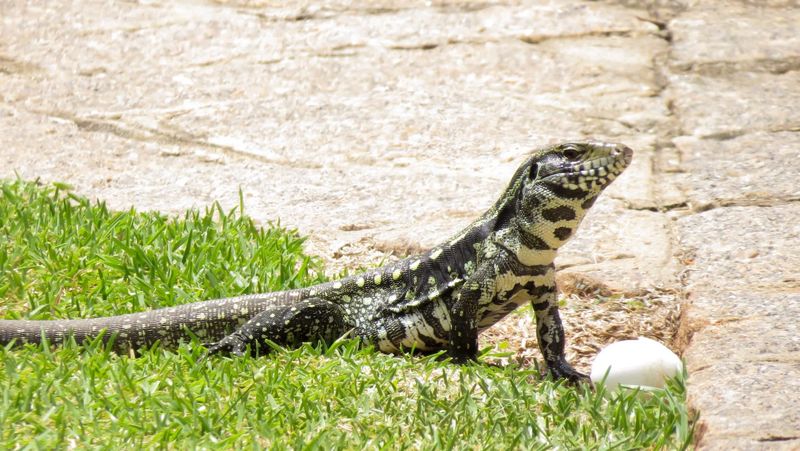
Eggs are the real concern. Tegus eat a wide variety of foods, and ground-laid eggs happen to be an easy meal for them.
Gopher tortoise nests fall into that category. Tortoises are already a protected species here, and added nest pressure is not something they need.
Ground-nesting birds such as quail face similar risk. Nests sitting on open soil offer little defense against a determined reptile.
Their diet is broad, covering fruit, insects, small animals, and carrion.
That flexibility helps them settle into new areas without much trouble.
Established populations have been documented in parts of south Georgia, particularly around Toombs and Tattnall counties.
Females can lay large clutches, which means numbers may climb quickly under favorable conditions.
Exact impacts still depend on local habitat, weather, and how many tegus are present in a given area. Biologists continue monitoring to understand the full picture.
Removal programs exist because early action is far easier than managing a widespread population later. Trapping efforts have been running in affected counties for several years.
What residents notice on their own land feeds directly into those efforts. Your sighting might mark the edge of a range nobody had mapped yet.
7. Report A Sighting To Wildlife Officials
One phone call can matter more than you think.
Wildlife agencies depend on public reports to track where non-native species are showing up.
The Georgia Department of Natural Resources accepts tegu sightings and asks residents to share details whenever possible.
Photographs carry the most weight. Even a slightly blurry image helps staff confirm whether the animal is truly a tegu.
Include the date, time, and precise location. A dropped pin from your phone map works better than a vague description of the road.
Mention what the lizard was doing. Whether it was crossing a driveway, digging, or resting near a burrow adds useful context.
Reports also help when nothing is found right away. Repeated sightings in one area can justify setting traps nearby.
Do not assume someone else already called it in. Duplicate reports are far less of a problem than a sighting nobody mentions.
Neighbors are worth alerting too, especially in rural neighborhoods where properties back up to woods or fields.
Keep expectations realistic. Response times vary with staffing and season, and not every report leads to an immediate visit.
Still, that small effort feeds a much larger monitoring picture. Reporting takes a few minutes and gives biologists information they cannot gather alone.