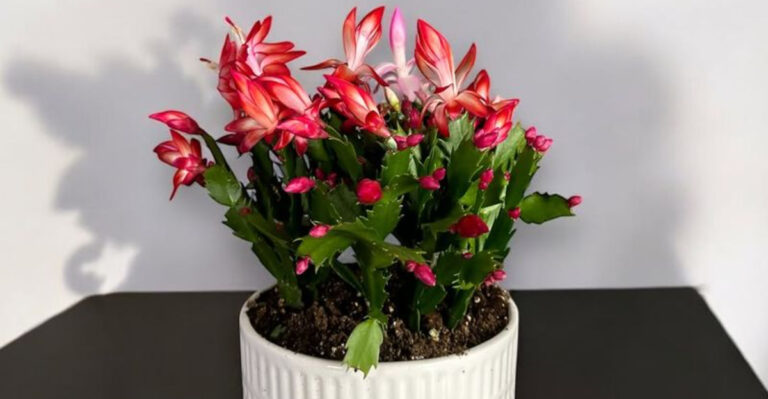
Got Healthy Leaves but No Buds on Your Holiday Cactus in Arizona? Here’s the Missing Signal
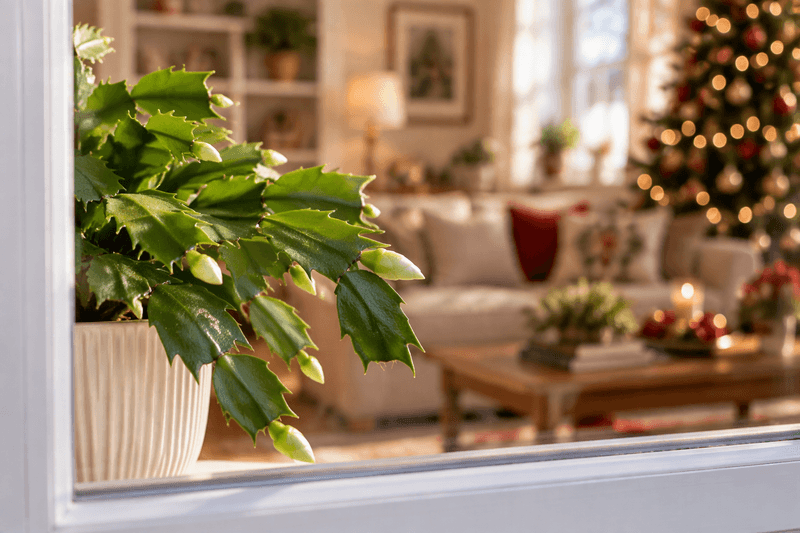
The missing signal is a long, uninterrupted night. Holiday cacti use darkness to decide when to make buds, and cool air helps too.
Healthy green segments cannot tell you whether that message ever arrived. Here is how to check, and how to run a simple test in your Arizona home this fall.
Long, Dark Nights Help Holiday Cacti Set Buds
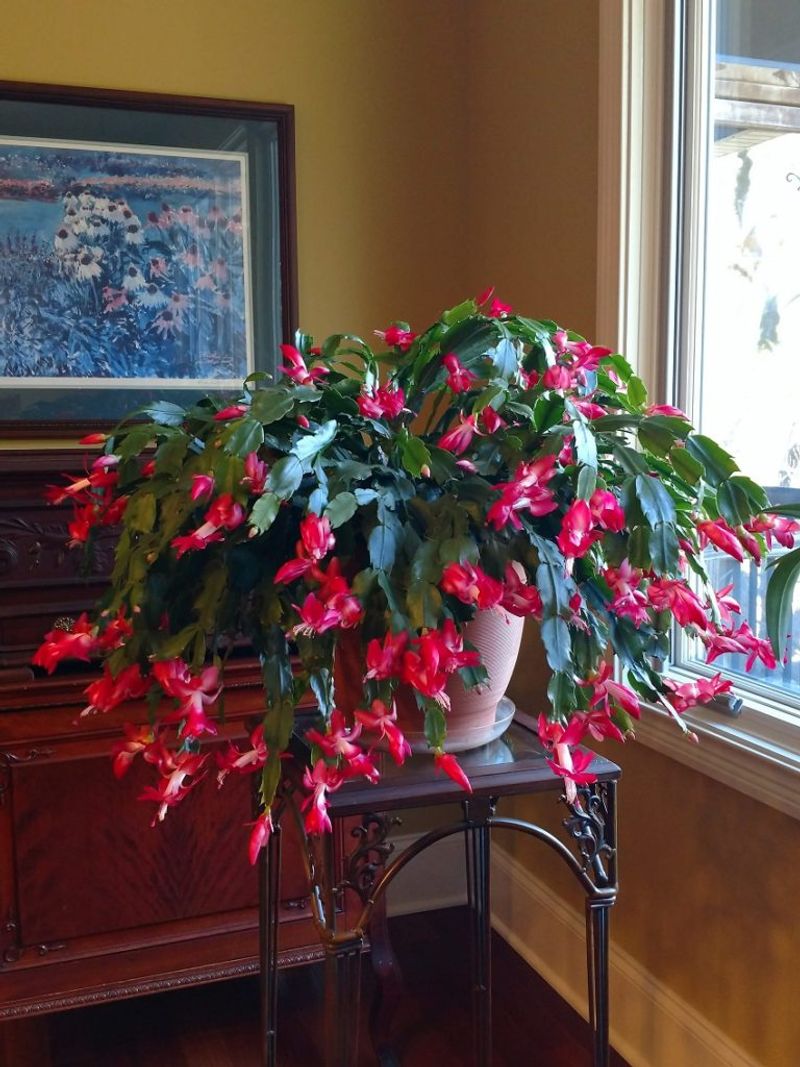
Green, plump segments look like success, yet they say little about flowering. A holiday cactus makes buds when it gets a long, uninterrupted dark period each night, and cool temperatures also play a part.
Guidance from Iowa State Extension says buds form as days shorten. The University of Arizona likewise points to long nights and cooler temperatures as the cues that favor flowering.
That is why a plant can look perfect and still skip its bloom show. Many indoor spaces stay lit well into the evening, so the plant may never get the quiet, dark stretch it wants.
A short dark-period trial is a sensible first step. It is not a guaranteed fix, since cultivar, temperature, and timing all shape the result, but it tests the cue that most often goes missing.
Holiday Cacti Keep Different Bloom Calendars
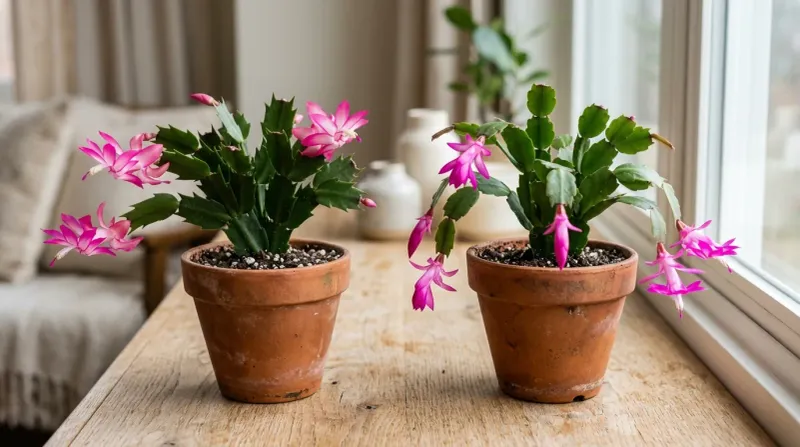
Nobody told your plant which holiday it was supposed to bloom for. The name holiday cactus covers several species and many hybrids, and each can flower on its own schedule.
According to UConn Extension, Thanksgiving cactus commonly blooms earlier than true Christmas cactus. Hybrids vary even more, so bloom timing can wander.
Look at the segment edges for a hint. Pointed, claw-like teeth often suggest a Thanksgiving type, while smoother, rounded scallops point toward a Christmas type.
If your plant has no buds in early fall, that alone does not prove a care problem. It may simply have a different flowering window, so treat the calendar as a loose guide rather than a deadline.
How Long a Night Can Encourage Buds
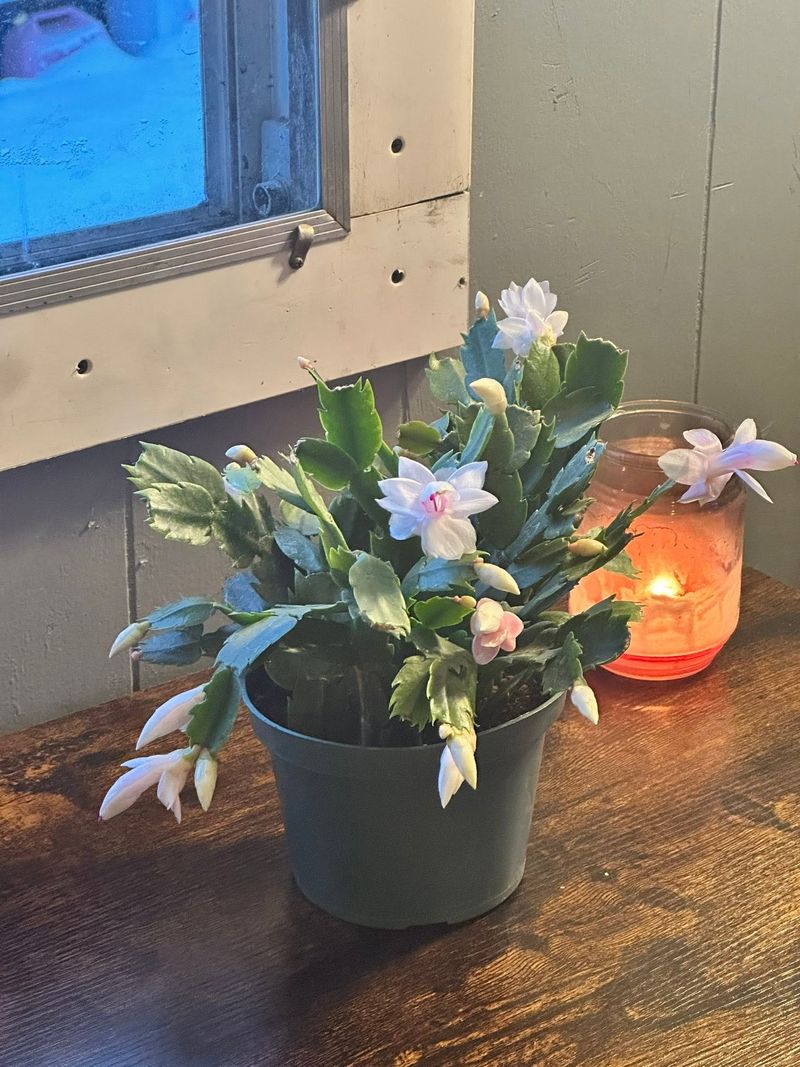
Shortening days are nature’s calendar for these plants. As nights stretch longer, a holiday cactus gets the signal to switch from growing segments to making buds.
Advice on the exact length of that night differs. Iowa State says most cultivars need 14 to 16 hours of darkness, while some respond to 12 hours.
Arizona Cooperative Extension also stresses long nights with cooler temperatures, though its details are not identical to Iowa State’s. Treat these numbers as helpful targets rather than hard cutoffs.
That variation is why a plant next door may bloom on a different timetable than yours. Start near the middle of the range, then watch how your own plant responds.
Try a Consistent Dark Period at Home
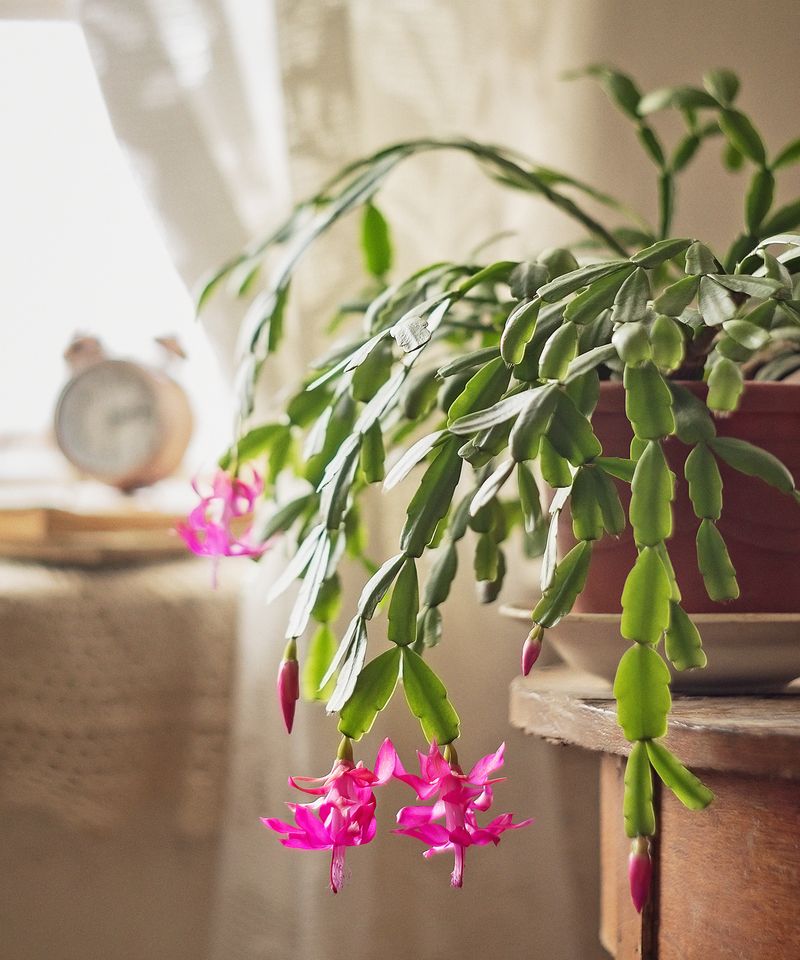
Here is a trial you can run without special gear. Give the plant 12 to 14 hours of uninterrupted darkness every night for four to six weeks, then bright, indirect light during the day.
Timelines differ by source. UConn suggests 12 to 14 hours for four to five weeks, while University of Minnesota Extension reports about six weeks at specified temperatures.
Iowa State leans longer, saying most cultivars need 14 to 16 hours. So this plan is a useful test, not a fixed rule for every plant.
Consistency matters more than perfection. Pick a lights-out time, keep it steady, and mark your calendar so you can judge the result.
Check Lamps and Other Evening Light
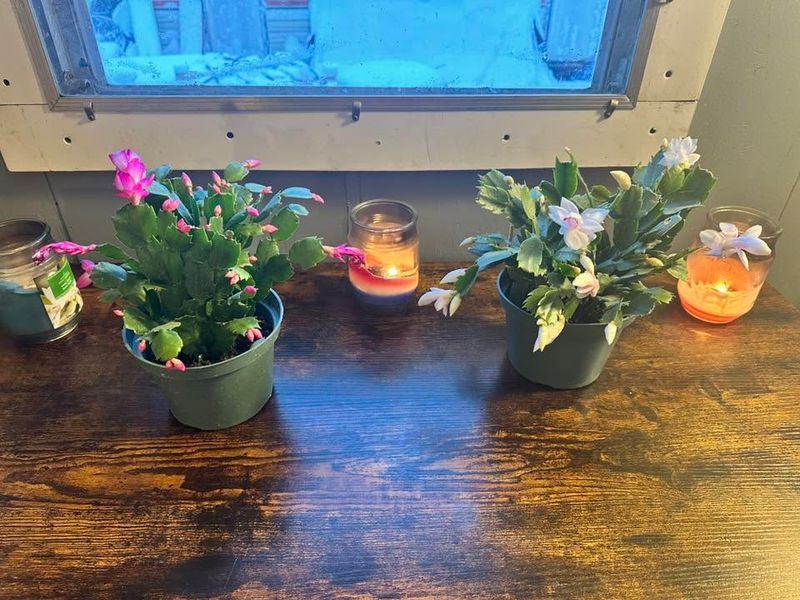
Your own home may be the culprit. A quick flick of the kitchen light or a lamp left glowing can break the plant’s night.
Iowa State notes that artificial light at night can interrupt the dark period. Walk through the room after sunset and see what reaches the plant.
A spare room that stays dark works well. If that is not possible, a box or cover that blocks light can do the job, as long as you lift it each morning.
By day, return the plant to a bright spot with indirect light. That daily swing between bright days and truly dark nights is the pattern you are aiming for.
Keep Nights Cool Without Chilling the Plant
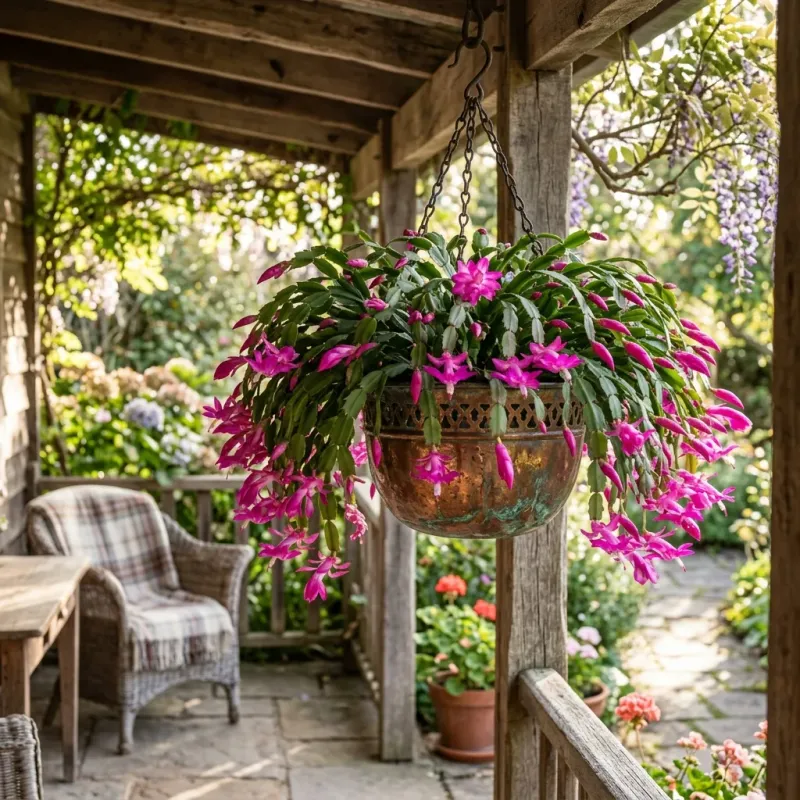
Darkness and temperature work as a team. Comfortably cool nights help the plant start buds, while warm nights can make that harder.
The University of Arizona says prolonged 50 to 55 degree temperatures favor flowering and reports fewer flowers above 70 degrees at night. Minnesota Extension suggests plants at 60 to 65 degrees need at least 12 hours of complete darkness for about six weeks.
Sources differ, so no single threshold fits every cultivar. Aim for a cool, stable room rather than a cold shock.
Arizona varies a lot by elevation, as the state climate office explains. Warm indoor nights may be a bigger issue in lower desert homes than in high country ones.
Do not leave plants outside overnight as a chilling trick. University of Arizona guidance says to bring them indoors before temperatures fall below 45 degrees F.
Keep Watering Steady While Buds Form
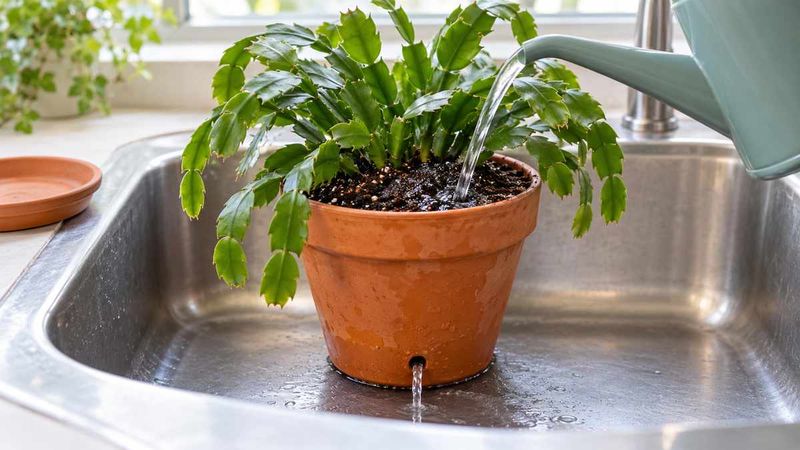
These plants are rainforest epiphytes, not desert cacti, so they do not want a bone-dry mix. They also dislike soggy roots.
Aim for steady moisture, using a well-drained pot and a mix that does not stay waterlogged. UConn and Iowa State both warn that overwatering and excessive dryness can cause trouble.
Empty the saucer so water never sits around the pot. Standing water is an easy mistake to make.
Skip tricks like drought stress, repotting, or special fertilizer as a bloom trigger. Light and temperature are the cues the extension sources emphasize, so steady care simply keeps the plant ready to respond.
Bud Drop Is a Separate Problem
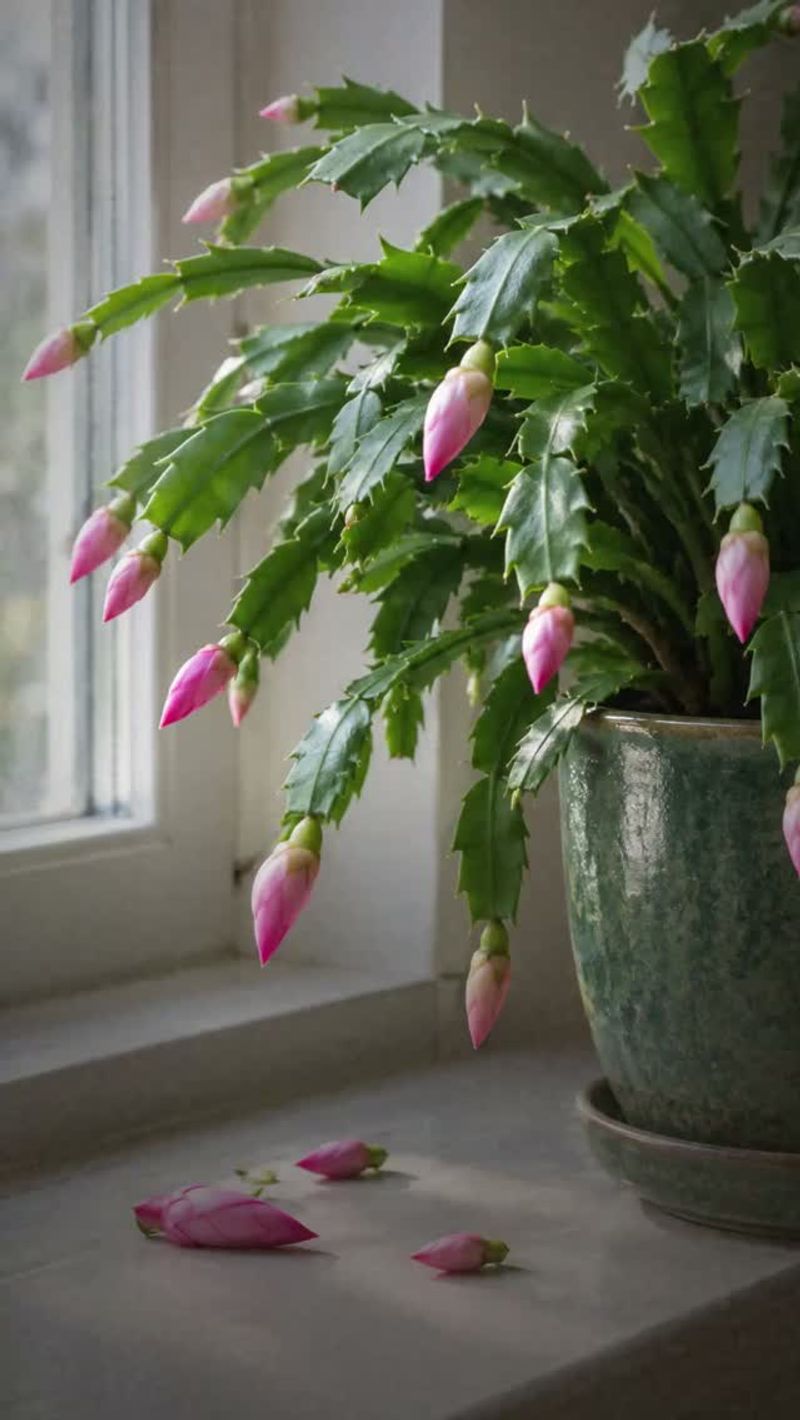
Sometimes buds appear and then fall off. That is a different problem from a plant that never makes buds at all.
Once buds show, drafts, sudden changes in temperature or light, and uneven watering can contribute to drop, according to Iowa State. Minnesota Extension gives similar cautions.
Those issues are not the signal that starts flowering. They only affect whether forming buds hang on.
Once you see buds, avoid moving the plant around, keep it away from vents and drafty doors, and water on a steady rhythm. Calm surroundings give young buds their best chance.
Start With Darkness, Then Watch the Plant
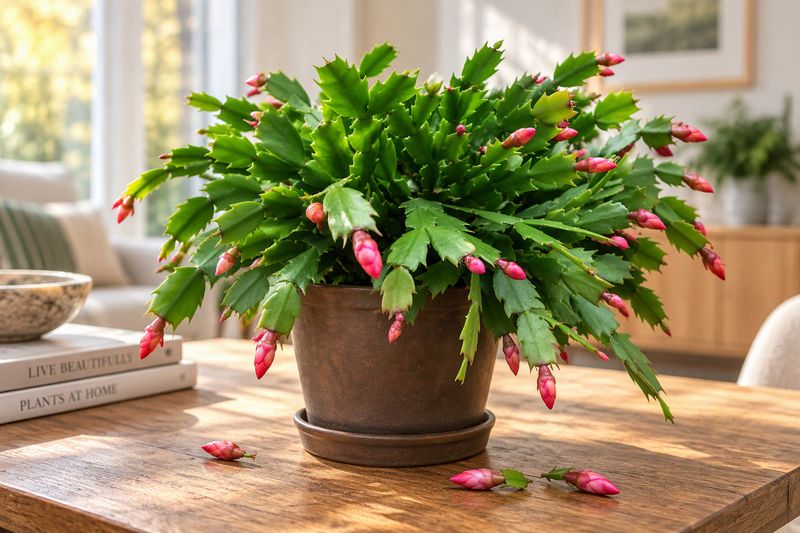
Begin with an uninterrupted night, bright indirect light by day, steady watering, and a stable, comfortably cool spot indoors. Cultivar timing and home conditions affect results, so treat this as an investigation.
As the University of Arizona and Iowa State guidance suggests, light and temperature are the cues to test.
Your plant keeps its own calendar, and the dark is how you ask it a question.