8 Birds That Only Show Up in Arizona Yards During Winter
Some tiny visitors fly in from Canada every fall just to spend the cool months hopping around Arizona patios and shrubs. A few of them arrive with the first crisp October mornings and leave again before the spring heat returns.
I love how a quiet yard suddenly fills with new chips, whistles, and flashes of yellow once these travelers land. Want to know which feathered guests are heading to your Arizona yard this season?
1. Dark-eyed Junco
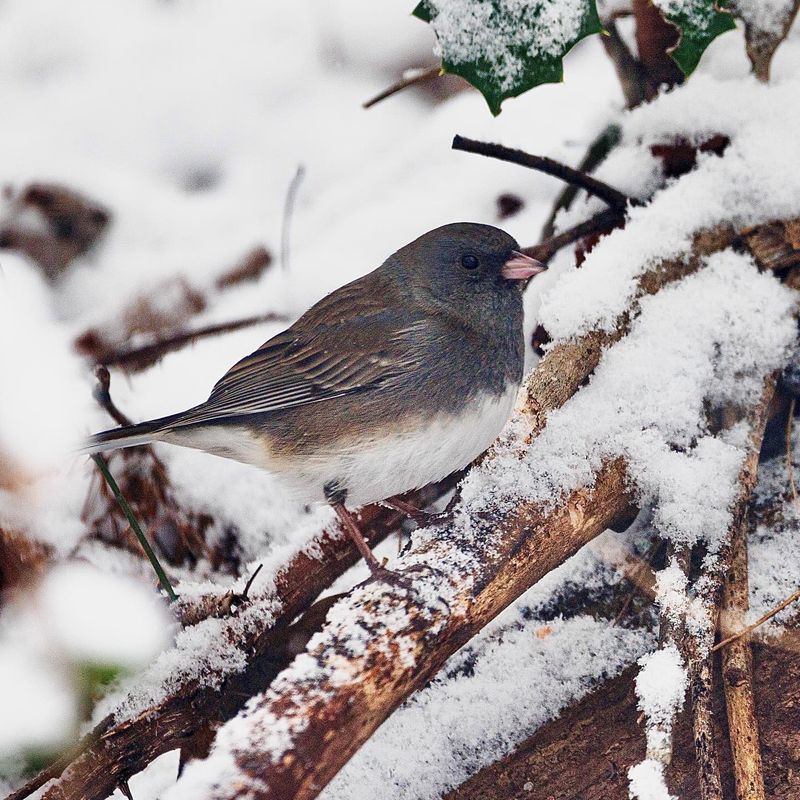
Folks around Prescott call them snowbirds, and the nickname fits these little gray birds with their snowy white bellies. They usually roll into lowland yards around October and stick around until February or early March.
You can spot them by the white outer tail feathers that flash like tiny signal flags whenever a flock flushes. Western birds come in several color forms, and some wear warm reddish brown on the back or sides.
I love how juncos travel in groups, sometimes fifteen or twenty birds hopping together beneath a single feeder. They often mix right in with White-crowned Sparrows and Chipping Sparrows, which makes ground watching extra fun.
Seeds make up roughly seventy-five percent of their diet, and millet tends to be their favorite winter treat. Scatter it on the ground or use a low platform feeder, since juncos rarely like eating up high.
October is a smart month to tuck a few dense native shrubs near your feeding area for quick cover. Hawks patrol yards in winter too, and juncos feel much braver when a hiding spot sits close by.
2. White-crowned Sparrow
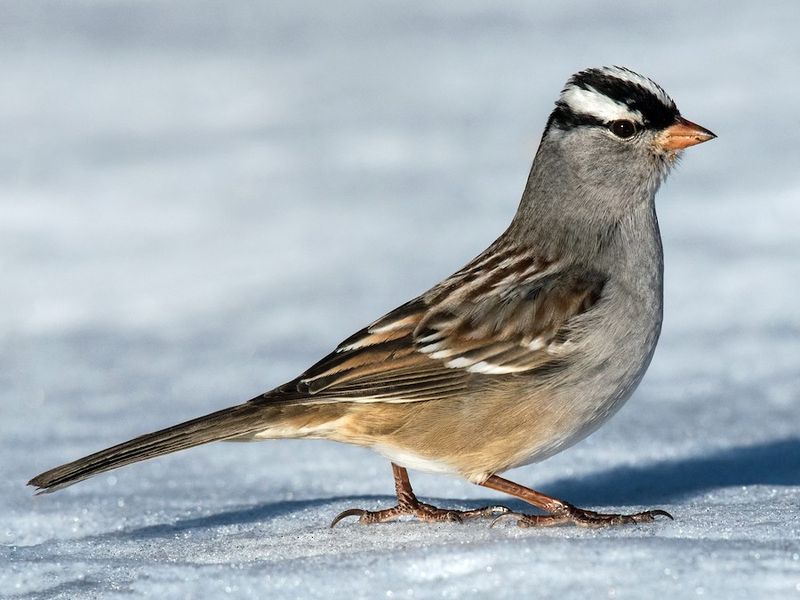
Bold black and white stripes on the head make this sparrow look like it just put on a tiny racing helmet. It ranks among the first winter migrants to land in the lowlands, often showing up by early October.
Young birds wear a softer version of the pattern, with tan and brown stripes instead of crisp black and white. Both adults share that pinkish orange bill, so males and females look nearly identical at your feeder.
Personally, I think their song steals the show, opening with clear whistles and finishing with a buzzy little trill. You might hear them singing on mild winter mornings, which feels like a bonus concert from your shrubs.
These sparrows feed mostly on seeds, though they also nibble green grass, tree buds, fruit, and the occasional insect. Scattering seed near brushy thickets is the easiest way to keep a hungry flock coming back daily.
Flocking helps them watch for predators, so they dash into bushes the moment you step outside with coffee. Leave a brush pile or thick native shrub nearby, and you will enjoy many more relaxed sightings all winter.
3. Yellow-rumped Warbler
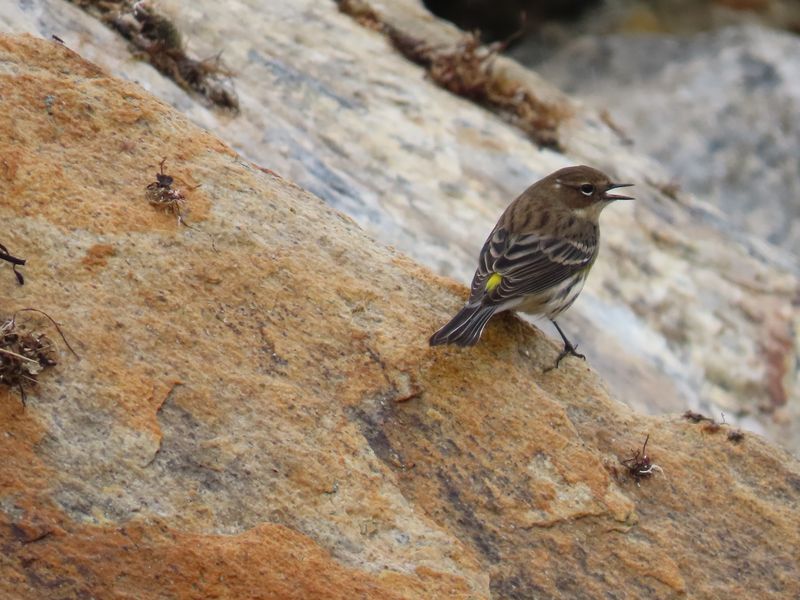
Birders lovingly call this one butter butt, thanks to the bright yellow patch that flashes on its rump during flight. It is the warbler you are most likely to spot in a desert yard once the weather cools down.
Most wintering birds here belong to the Audubon’s form, which sports a yellow throat along with that famous rump. Winter plumage looks duller and browner, so watch for the yellow spots rather than flashy blue gray.
Birds from the Rockies and western Canada drift into lowland neighborhoods, including urban Tucson, around October each year. They favor shrubby spots and residential areas, especially when berries hang on branches through the cooler months.
I have to admit their menu impresses me, because they catch insects from leaves, in midair, and from the ground. They can even digest waxy berries that other warblers skip, which helps them handle colder winter stretches.
Native shrubs that hold berries into winter make your yard far more tempting to these chatty little foragers. Some will visit suet feeders too, and a few even sip sugar water from hummingbird feeders on chilly days.
4. Ruby-crowned Kinglet
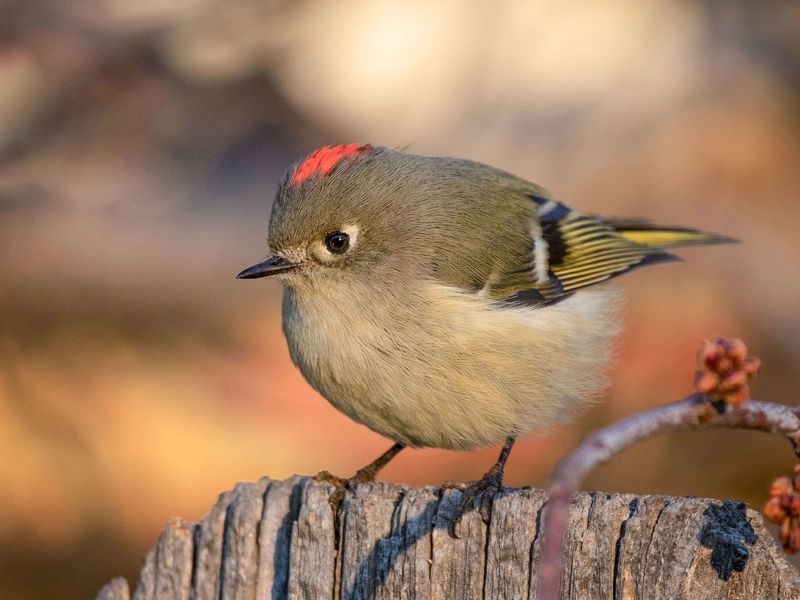
Smaller than a chickadee and packed with nervous energy, this little bird rarely holds still long enough for a photo. You will usually notice the constant wing flicking first, which is honestly the best clue for identification.
Its feathers look plain olive green and gray, with a white eye ring and two neat white wing bars. Males hide a brilliant ruby patch on the crown and raise it only when excited or feeling agitated.
What surprises me most is how rarely people notice that red crown, even after watching a kinglet for minutes. Catch one scolding a rival, though, and that tiny flash of color looks almost like a struck match.
Kinglets winter low in shrubbery, often traveling in mixed flocks with warblers and other small insect eaters. They pick tiny bugs off leaves and stems, giving your plants a free bit of pest patrol all season.
During winter they will also eat some berries and visit suet feeders when insects grow harder to find. Hang a small suet cake near dense shrubs this fall, and keep pesticide use low so their natural prey remains.
5. Chipping Sparrow
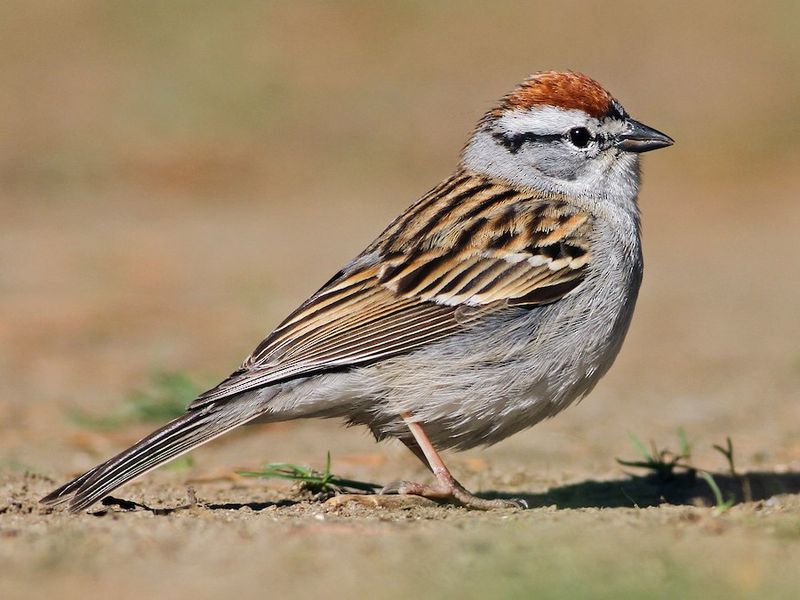
A rusty little cap and a crisp black eye line give this slim sparrow a surprisingly dapper look. Winter softens that style a bit, so the cap turns duller and the head stripes blur at the edges.
Some do nest in the cooler high country, but most lowland yard visitors are seasonal guests from farther north. In the desert valleys, they mainly appear for the cool months and head back out when spring warms up.
You need sharp eyes to separate them from other small sparrows, since their plain breast offers very few clues. Look for that white stripe above the eye and a noticeably slender body compared with chunkier neighbors.
Chipping Sparrows love company, often foraging in mixed flocks beside juncos and White-crowned Sparrows on open ground. I enjoy counting how many species share one patch of scattered seed on a quiet winter afternoon.
Millet and cracked corn tend to draw them in, especially when offered on the ground or a low tray. Keep a seed area open and sunny, but plant protective native shrubs nearby so they can retreat quickly.
6. Say’s Phoebe
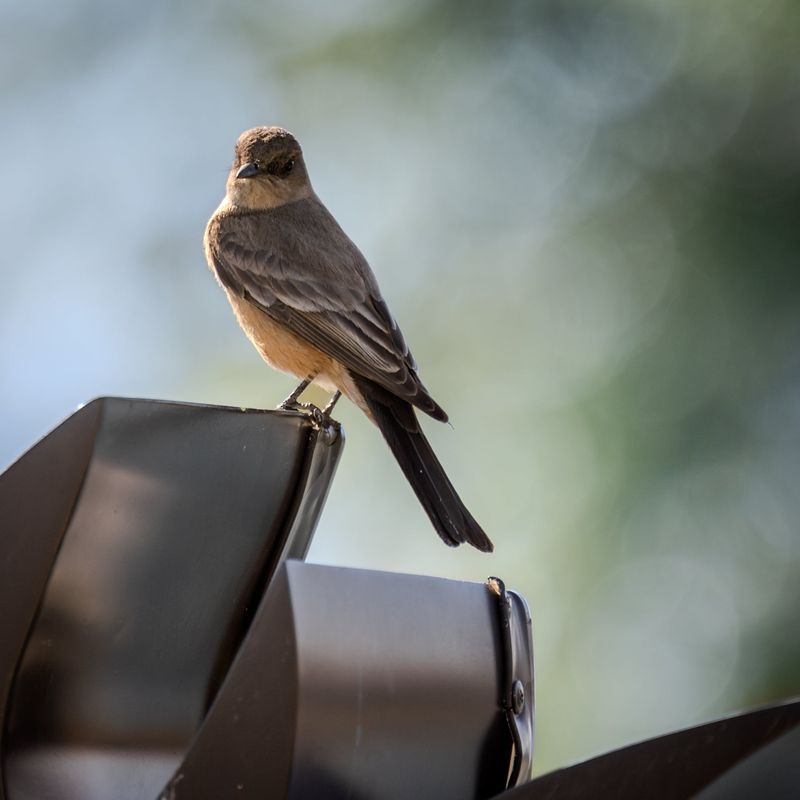
Perched upright on a fence and pumping its tail, this flycatcher looks like a tiny supervisor inspecting your yard. Its rusty belly and sandy brown back blend beautifully with desert gravel and pale adobe walls.
To be fair, some Say’s Phoebes live in parts of the state year round, so they are not strictly winter visitors. Many more arrive from farther north each fall, and lowland yards usually see the biggest numbers in winter.
I like how this bird hunts, launching from a perch to snag a flying insect and returning moments later. Those quick sallies help trim flies and gnats around patios, which feels like friendly, feathered pest control.
When insects run low during cold snaps, phoebes will also eat some berries to fill the gap. Native berry shrubs give them a backup menu, and they also help other winter birds on this list.
Open space plus a few tall perches makes your yard look like prime hunting ground to a phoebe. They tend to stay solitary, so listen for a plaintive whistle that announces your single resident flycatcher.
7. Phainopepla
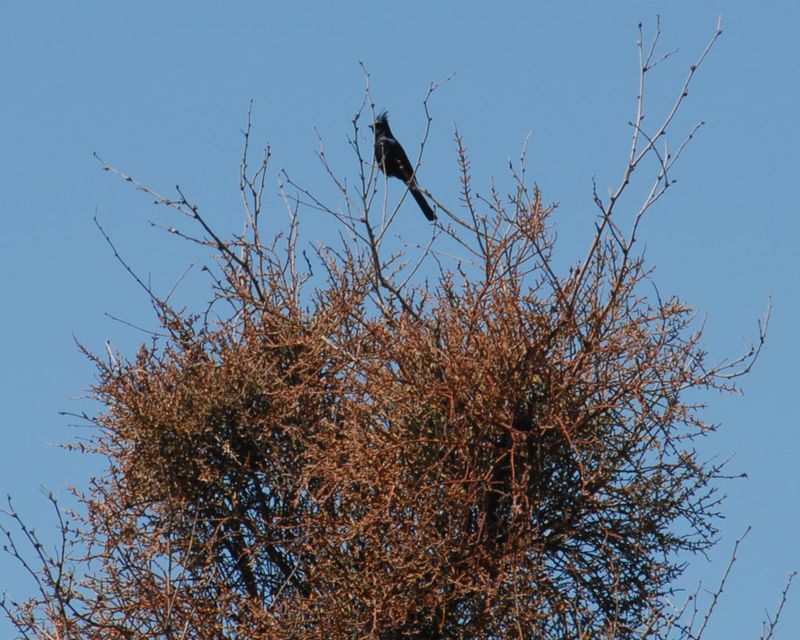
Glossy black feathers, a jaunty crest, and glowing red eyes make the male Phainopepla look almost dressed for a gala. Females wear softer gray, but they share the crest and those striking ruby colored eyes.
Honestly, this bird bends the winter only rule, since its movements depend on habitat and season across the Southwest. In the low desert, it shows up in larger numbers during the cooler months when mistletoe berries ripen.
You might notice white wing patches flashing during flight, which look a bit like lace on a black jacket. Their flight has a lovely, bouncy rhythm, and they often perch right on treetops where everyone can admire them.
Desert mistletoe berries make up a major part of their winter diet, and they also snatch insects midair. If a mesquite in your yard carries some mistletoe, you already own the best Phainopepla feeder possible.
Planting native trees like mesquite supports these birds over the long term with very little watering once established. Before trimming out mistletoe this fall, consider leaving some clumps, because that sticky fruit feeds a remarkable winter guest.
8. Pine Siskin
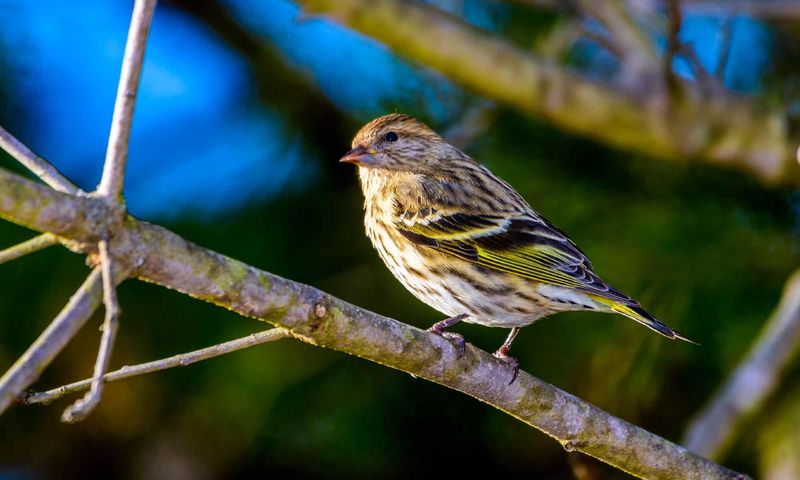
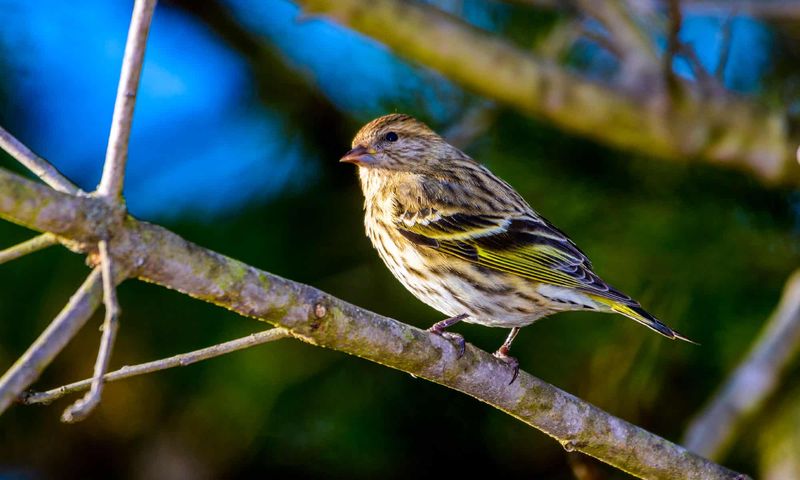
Some winters you might see zero Pine Siskins, and other winters a noisy crowd suddenly takes over your feeders. Birders call them irruptive visitors, meaning their arrivals depend heavily on food supplies far to the north.
These little finches look streaky brown at first, but yellow edges on the wings and tail glow during flight. Their sharp, pointed bills work like tweezers, pulling tiny seeds from cones and from feeder ports with ease.
I can’t imagine a more acrobatic feeder guest, since siskins often hang upside down while grabbing a snack. They crowd together and squabble constantly, which turns a quiet morning into a lively little show outside your window.
Nyjer seed ranks as their favorite, though they also eat sunflower chips and other small seeds quite happily. A tube feeder with tiny ports keeps nyjer from spilling and gives several siskins room to perch together.
Since big flocks crowd feeders closely, rinse and dry your feeders regularly to keep them clean and healthy. Fill one up this October, and you just might host one of these surprise visitors when winter arrives.