6 Hard-To-Find Native Texas Trees That Are Worth Planting
Most Texas yards tell the same tree story. There’s a live oak somewhere, maybe a crape myrtle along the driveway, and if someone got a little adventurous, a red maple near the back fence.
They’re solid choices, nobody is arguing that, but after a while every neighborhood starts looking like it was landscaped from the same short list of options.
Texas actually has a remarkable collection of native trees that most homeowners have never heard of, let alone considered planting.
These are trees that developed right here, shaped by Texas heat, Texas soil, and Texas weather patterns, which means they’re genuinely equipped to handle conditions that would stress out trees from other regions.
They also support local wildlife in ways that non-native species simply can’t. The only real catch is that you won’t find most of them at a standard garden center. They take a little hunting down, but the results are absolutely worth it.
1. Texas Madrone
Imagine a tree so beautiful that hikers stop mid-trail just to touch its bark. That is exactly what the Texas Madrone does to people.
Found growing wild in the mountains and canyons of West Texas and the Edwards Plateau, this evergreen native is unlike anything else you will ever see in a Texas landscape.
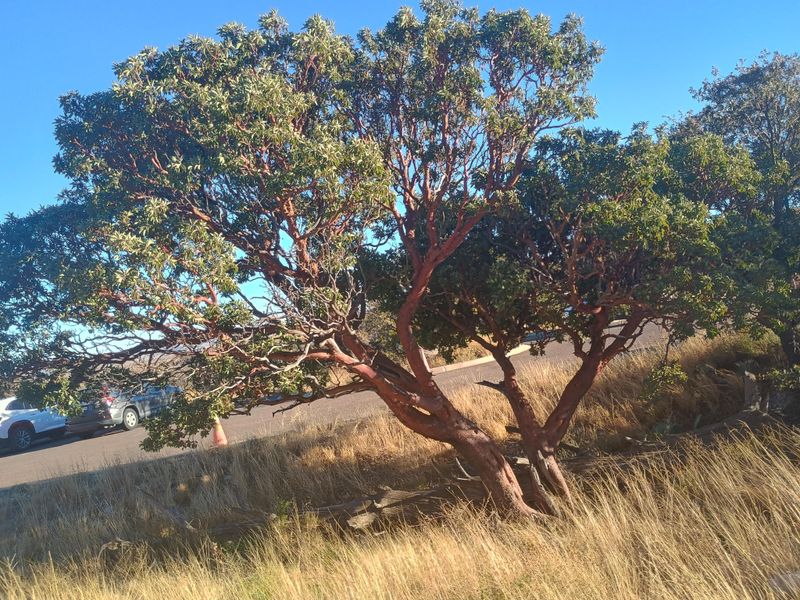
The bark is the real showstopper. It peels away in thin layers, revealing colors that shift from creamy white to deep cinnamon-red underneath.
No paint, no filter, just pure natural beauty. In spring, the tree produces clusters of small white flowers that smell faintly sweet. By fall, bright red berries appear and birds go absolutely wild for them.
Planting a Texas Madrone takes patience. Nurseries rarely carry it because the tree is notoriously finicky about transplanting.
Roots do not like to be disturbed, and seedlings need well-drained, rocky, or sandy soil to thrive. If you live in Central or West Texas, your best bet is to find a small container-grown specimen from a specialty native plant nursery.
Once established, though, it is drought tolerant and extremely low maintenance. Water it regularly for the first year or two, keep it in full sun, and make sure drainage is excellent. Avoid clay soils entirely.
For anyone serious about growing a truly jaw-dropping native Texas tree, the madrone is worth every bit of effort. It is rare, it is stunning, and it tells the story of Texas in a way that no imported ornamental tree ever could. Patience will absolutely pay off here.
2. Lacey Oak
Most people think of big, sprawling live oaks when they picture a Texas oak tree. Lacey Oak is here to completely change that mental image.
Native to the rocky limestone hills of the Edwards Plateau and Hill Country, this smaller oak has a personality all its own and fall color that will genuinely surprise you.
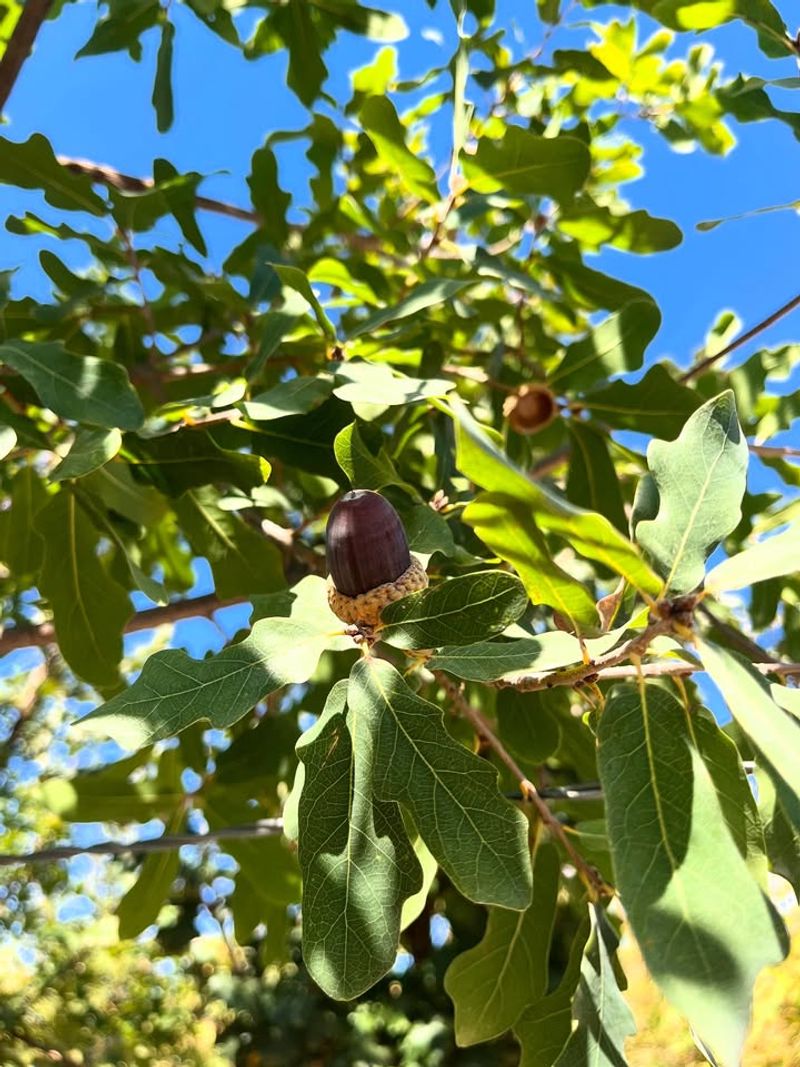
The leaves emerge in spring with a soft blue-green color that looks almost silvery in bright sunlight. Then, as temperatures cool in autumn, something magical happens.
Your Texas Garden Changes Every Week. Your Plan Should Too.
Gardening in Texas changes quickly throughout the season. Every Friday you’ll receive a simple weekly plan showing exactly what to plant, prune, fertilize, harvest, and protect so you never miss the right timing.
The foliage shifts to shades of soft pink and peachy orange, a color combination you almost never see on a Texas oak. It is subtle, warm, and absolutely gorgeous against a clear Hill Country sky.
Lacey Oak stays relatively compact, usually topping out between 20 and 30 feet tall. That makes it a smart choice for smaller yards or as a focal point near a patio or driveway.
It handles rocky, alkaline, limestone-heavy soil with ease, which is great news for Central Texas homeowners who struggle to grow anything in their rocky ground.
Drought tolerance is another huge selling point. Once established, Lacey Oak rarely needs supplemental watering and can handle the brutal Texas summer heat without complaint. The main challenge is simply finding one to plant.
Very few mainstream nurseries carry it, so your best option is to contact a specialty native plant nursery in the Hill Country or Edwards Plateau region.
Some native plant societies in Texas also host plant sales where Lacey Oak occasionally shows up. Keep an eye out and snap one up when you find it.
3. Texas Persimmon
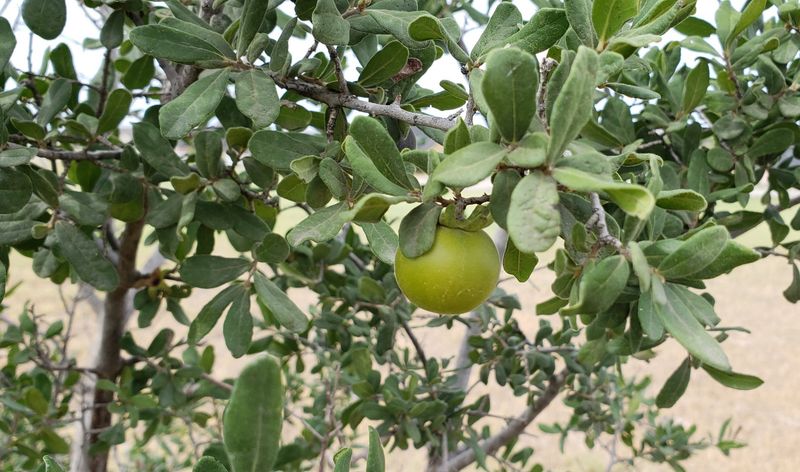
Tough, beautiful, and practically invisible at most nurseries, the Texas Persimmon is one of the most underrated native trees in the entire state.
Walk through the rocky brushlands of Central or West Texas and you will spot it growing in the most unforgiving conditions imaginable, thriving where other trees struggle to survive.
The bark alone makes this tree worth growing. It is smooth and gray, peeling away in patches to reveal creamy lighter tones underneath, somewhat similar to a crape myrtle but with a more rugged, wild character.
In late summer, small round fruits ripen to a deep, glossy black. Wildlife absolutely feast on them.
Birds, deer, coyotes, and even black bears in some parts of Texas will seek out these fruits with enthusiasm.
Texas Persimmon is a slow grower, typically reaching 15 to 20 feet tall over many years. It is naturally multi-trunked and has a shrubby, graceful shape that works beautifully in naturalistic landscapes.
Male and female flowers grow on separate trees, so you will need both to get fruit production. Keep that in mind when shopping.
Plant it in full sun with well-drained soil and give it time to settle in. Once established, it is extraordinarily drought tolerant and needs almost no care. It is a survivor by nature.
Finding one can be the hardest part. Specialty native plant nurseries in the San Antonio area and Hill Country region occasionally stock them.
Native plant sales hosted by local conservation groups in Texas are another great place to search. When you find one, grab it without hesitation.
4. Bigtooth Maple
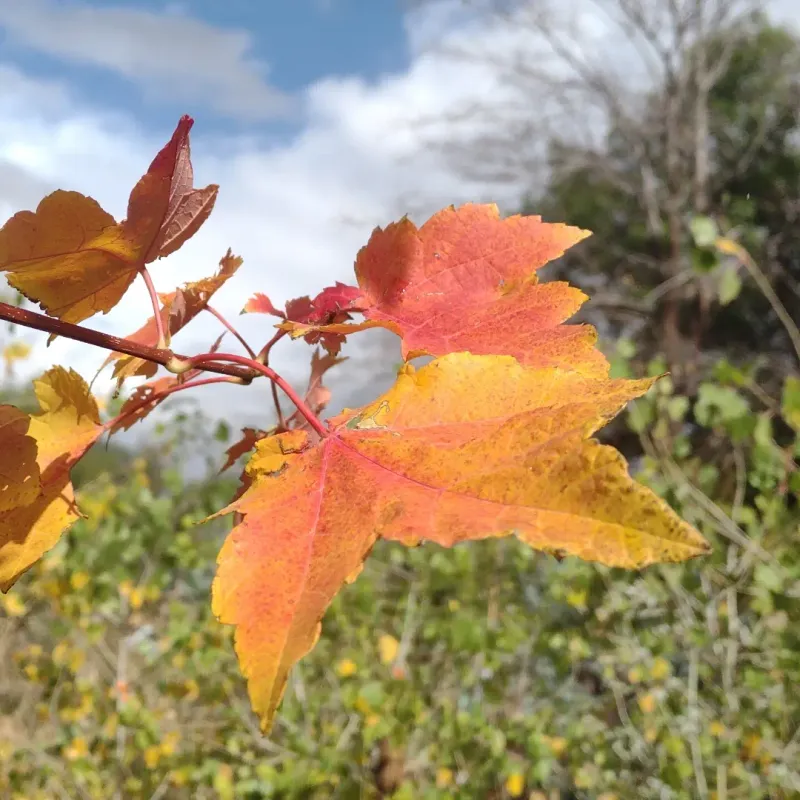
Fall foliage in Texas? Most people laugh at the idea. But anyone who has stood in Lost Maples State Natural Area in the Hill Country or hiked through the Guadalupe Mountains in October knows the truth.
The Bigtooth Maple puts on a fall color show that rivals anything you would see in New England.
Brilliant oranges, fiery reds, and warm yellows light up canyon walls and creek bottoms every autumn, drawing visitors from across the state and beyond.
The Bigtooth Maple is Texas’s own native maple, and it deserves far more attention than it currently gets in the nursery world. It is closely related to the Sugar Maple but is adapted to the drier, rockier conditions found in Texas.
In the wild, it grows in sheltered canyons and along creek beds where it gets some extra moisture and protection from the harshest summer heat. In a home garden, mimicking those conditions matters.
Plant it in a spot with afternoon shade, especially in hotter parts of Texas. Good drainage is essential, and it appreciates slightly deeper, moisture-retaining soil compared to some other native Texas trees.
Growth is moderate, and the tree usually reaches 20 to 40 feet tall at maturity. It is not a fast grower, but the payoff every autumn makes the wait completely worthwhile. Specialty native plant nurseries in the Hill Country are your best bet for finding one.
Ask around at native plant society sales in Texas too. Once you plant a Bigtooth Maple, every October becomes something genuinely worth looking forward to in your own backyard.
5. Mexican Plum
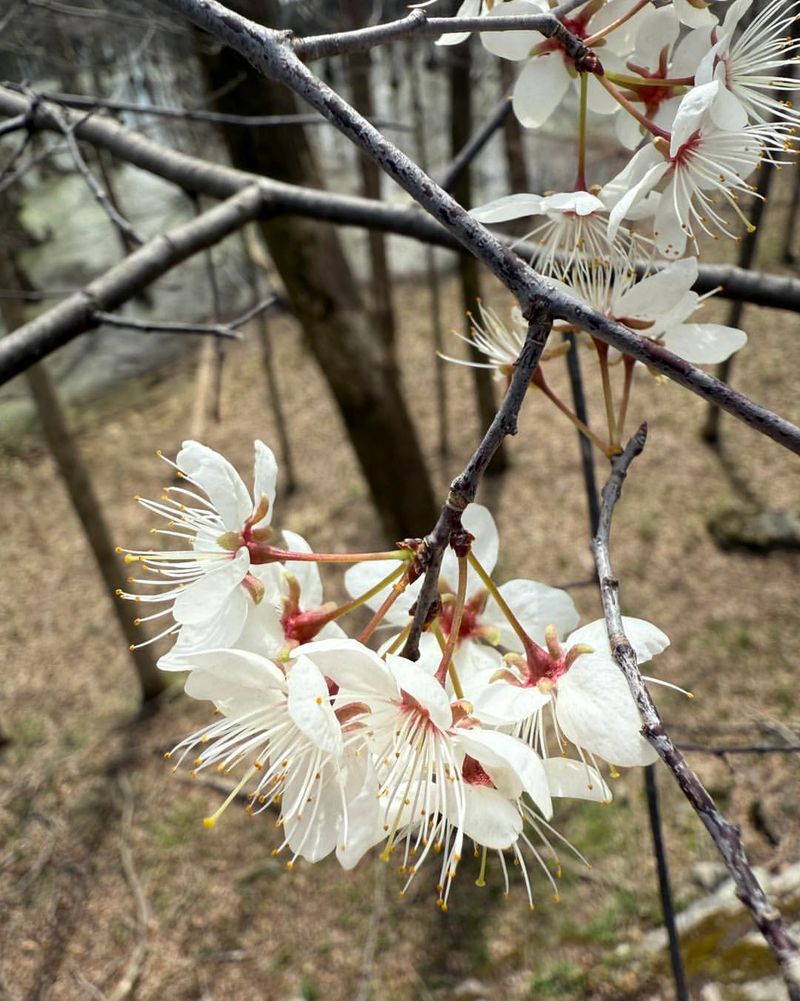
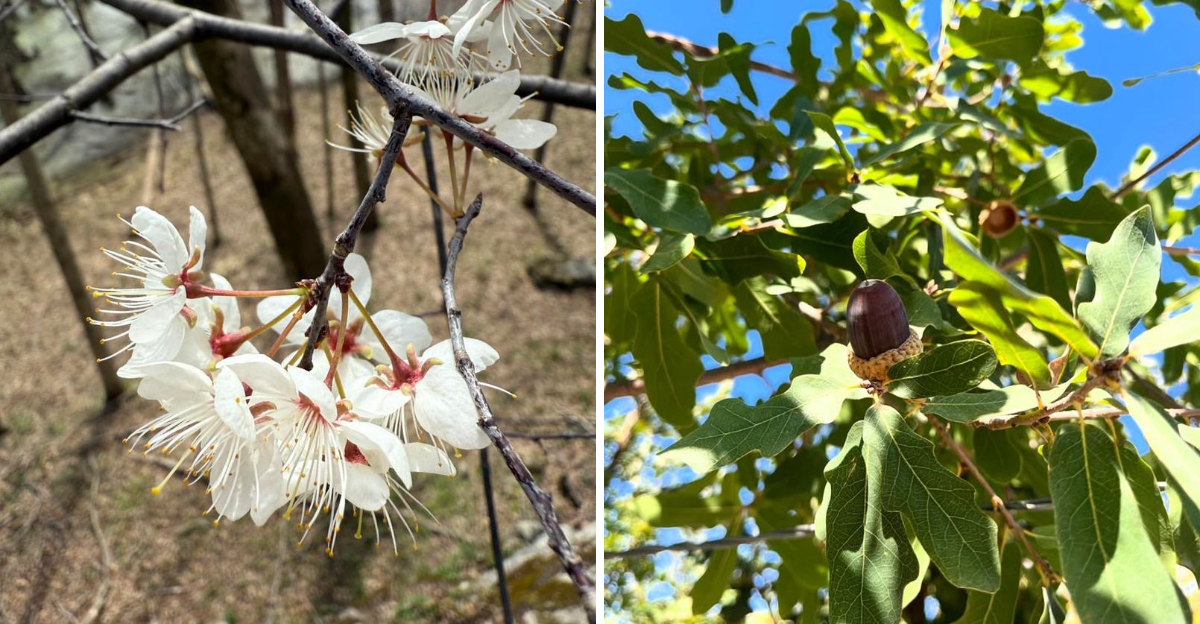
Every February, something extraordinary happens in parts of Texas. Before the redbuds bloom, before the bluebonnets appear, and before most trees have even thought about waking up from winter, the Mexican Plum bursts into a breathtaking cloud of fragrant white blossoms.
It is one of the earliest and most joyful signs of spring in the Texas landscape. The flowers are small but incredibly abundant, covering every branch in white so thick that the tree almost glows.
Bees swarm to it on warm late-winter days, making it one of the most important early-season pollinator trees you can plant in Texas.
After the blooms fade, small round plums develop through summer and ripen to a deep reddish-purple by late summer. Birds, foxes, and deer love them.
Mexican Plum is a small tree, usually staying between 15 and 25 feet tall with an attractive rounded canopy. The bark peels in interesting horizontal strips as the tree matures, adding year-round visual interest.
Fall color ranges from yellow to orange, giving the tree a fourth season of beauty that many gardeners do not even realize exists.
It handles drought well once established and adapts to a wide range of Texas soils, including rocky limestone. Full sun brings out the best flowering, but it can handle light shade too.
The main frustration is that most big-box garden centers across Texas simply do not stock it.
Your best bet is a native plant nursery or a spring plant sale hosted by a local Texas native plant society. Once you find one, you will wonder how you ever gardened without it.
6. Texas Sophora / Eve’s Necklace
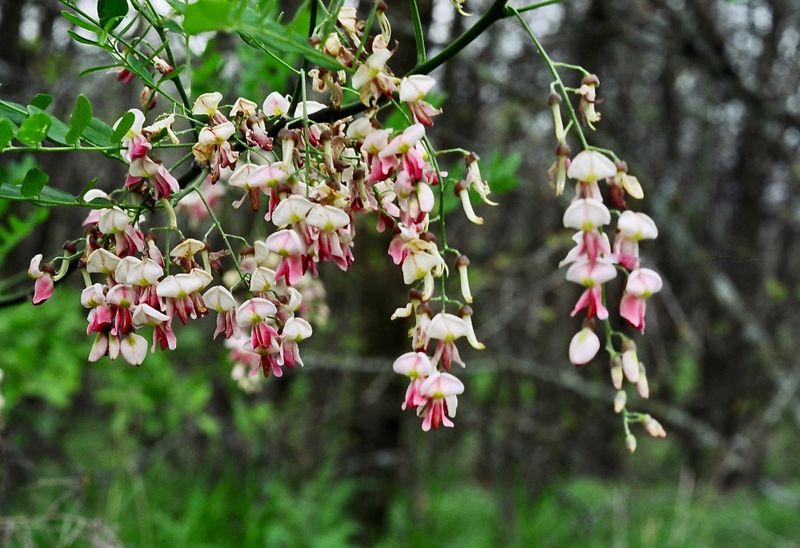
There is a tree growing quietly across the limestone hills of Central Texas that most gardeners have never heard of, and that is honestly a shame.
Eve’s Necklace, also called Texas Sophora, is one of those plants that makes you stop and stare the first time you see it in bloom.
Soft, rosy-pink flower clusters hang from the branches in spring like something out of a dream.
The blooms are not loud or flashy. They are delicate, elegant, and absolutely packed with pollinators.
Bees, butterflies, and hummingbirds visit constantly when the flowers are open. After the petals drop, something equally interesting takes over.
The seed pods develop through summer and by fall they turn jet black, forming long strings of bead-like segments that look remarkably like a necklace. That charming detail is exactly where the common name comes from.
Eve’s Necklace is a small to medium-sized tree, typically growing 15 to 25 feet tall with a graceful, open canopy.
It thrives in the rocky, alkaline limestone soils that cover much of Central Texas, making it an excellent choice for Hill Country gardens and San Antonio area landscapes where soil conditions can be challenging.
Drought tolerance is solid once the tree is established, and it requires very little supplemental care after the first couple of years. Full sun to partial shade both work well.
The main obstacle, as with so many wonderful native Texas trees, is simply finding one for sale.
Specialty native plant nurseries across Central Texas occasionally stock it. Native plant sales in Austin and San Antonio are also worth checking regularly throughout the year.