These Bougainvillea Varieties Handle Arizona’s Extreme Summer Heat The Best
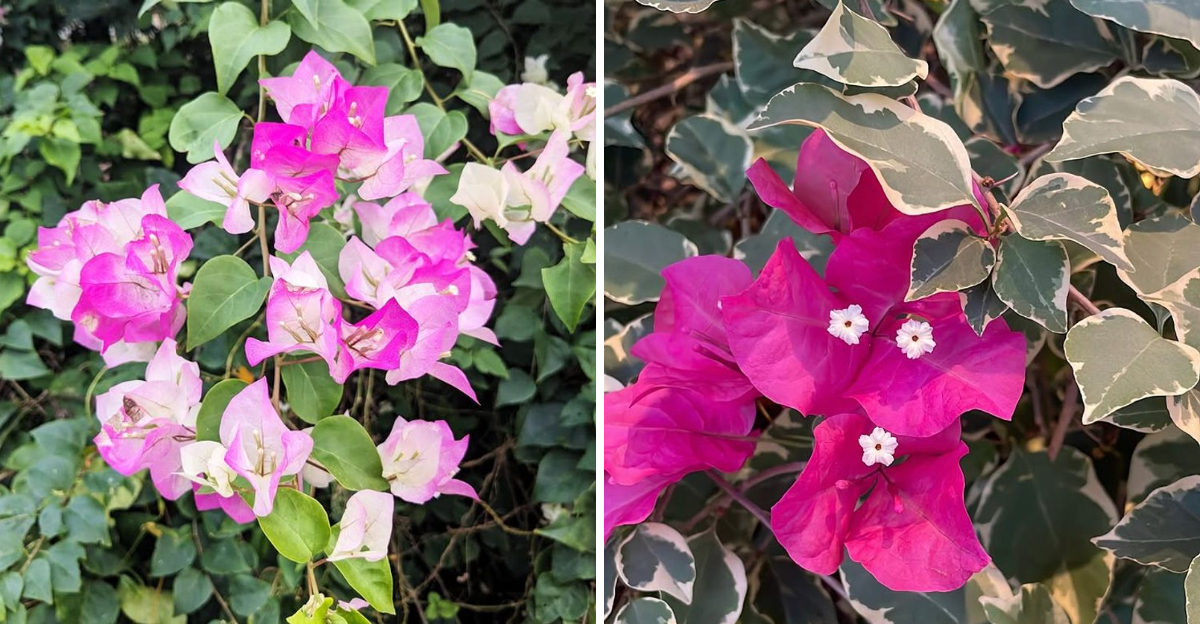
Some yards have that one plant everyone remembers. Weeks later, people may not remember the pots, the pathway, or the decorations, but they still remember the explosion of color they saw from the street.
That kind of impact is hard to ignore. A landscape does not need dozens of flowering plants to stand out.
Sometimes one shrub does most of the work, drawing attention every time someone passes by. The challenge is finding plants that can keep that show going when summer becomes relentless.
Bougainvillea has earned a reputation for doing exactly that. Its bright colors can transform walls, fences, and empty spaces into focal points that grab attention from a distance.
Yet anyone who has spent time looking at different varieties will notice they do not all perform the same way.
Arizona summers are a tough test for any flowering plant. Some bougainvilleas rise to the challenge far better than others, keeping the color coming long after many plants begin to struggle.
1. Barbara Karst Produces Color Through Intense Heat
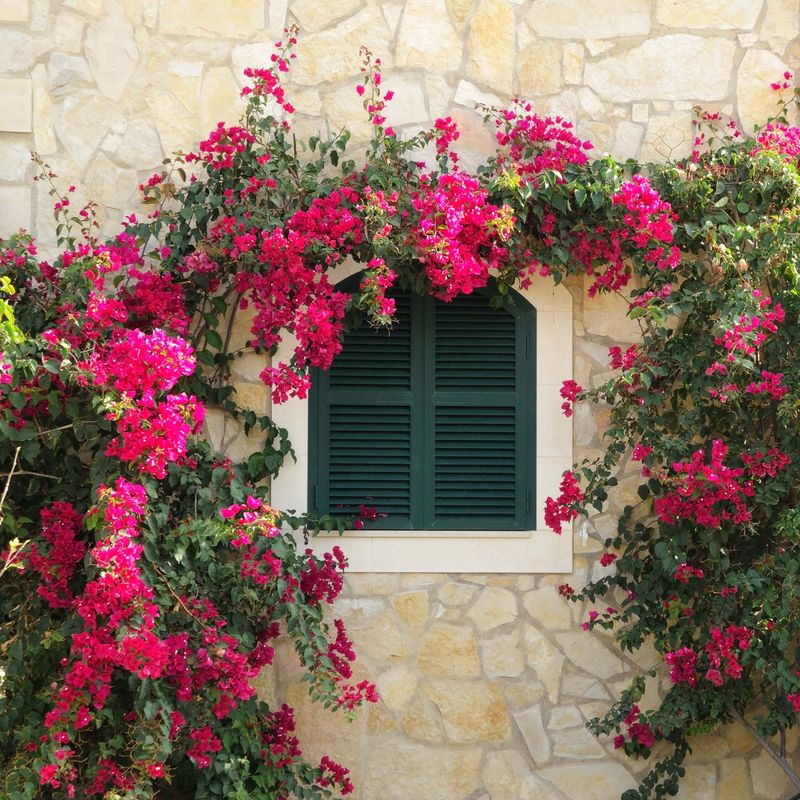
Few plants put on a show quite like Barbara Karst when summer temperatures are at their worst. While other plants look stressed and faded, this variety responds to heat with an explosion of deep magenta-red bracts that practically glow in the afternoon sun.
Barbara Karst is widely considered one of the most heat-tolerant bougainvillea varieties available. It handles prolonged triple-digit temperatures without significant leaf drop or bract fading.
Gardeners in the Phoenix and Tucson areas have relied on it for decades.
Growth is vigorous. Left unchecked, it can spread 20 to 30 feet along a wall or fence.
Regular pruning after bloom cycles keeps it manageable and encourages fresh rounds of color.
Water deeply but infrequently. Once established, Barbara Karst is quite drought tolerant.
Overwatering actually reduces blooming, so let the soil dry out between waterings.
Full sun is non-negotiable. Partial shade will slow blooming significantly.
Plant it where it gets at least six to eight hours of direct sunlight daily for the best results.
One practical tip: avoid fertilizing heavily with nitrogen during summer. High nitrogen pushes leafy green growth instead of bracts.
Use a low-nitrogen, high-phosphorus fertilizer to encourage that signature color to appear and last.
2. Rosenka Thrives In Hot Sunny Locations
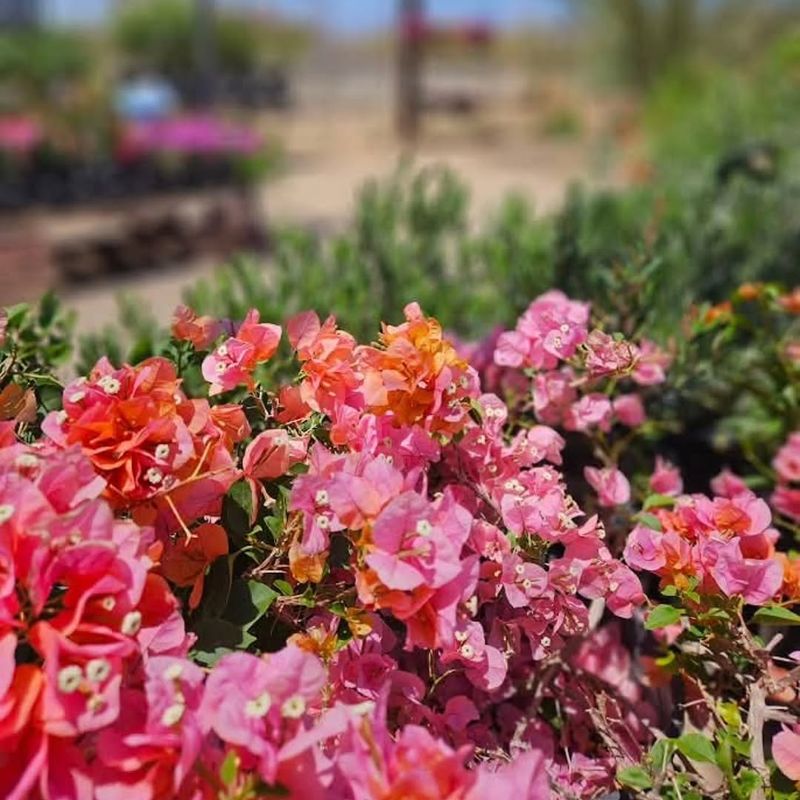
Rosenka does something unusual that most bougainvillea varieties don’t. Its bracts shift color as they age, moving from a warm golden yellow to a soft peachy orange.
In a single bloom cycle, you can see multiple shades on the same plant at the same time.
Hot, sunny spots are exactly where Rosenka performs best. It tolerates reflected heat from walls, pavers, and stucco surfaces without losing vigor.
South and west-facing exposures that would overwhelm other plants are actually ideal for this variety.
Growth habit is somewhat mounding and sprawling rather than strongly vining. It works well as a large ground cover on slopes or cascading over retaining walls.
Heights typically reach six to eight feet when grown without support.
Bloom cycles are frequent through the warm months. With a little pruning after each flush, you can encourage Rosenka to rebloom quickly.
Your Arizona Garden Changes Every Week. Your Plan Should Too.
Gardening in Arizona changes quickly throughout the season. Every Friday you’ll receive a simple weekly plan showing exactly what to plant, prune, fertilize, harvest, and protect so you never miss the right timing.
Sharp cuts just above a leaf node are all it takes to trigger new bract production.
Irrigation should be minimal once plants are established. Sandy or rocky desert soil actually suits Rosenka well.
Rich, amended soil tends to push too much vegetative growth at the expense of flowering.
One thing to keep in mind: Rosenka has thorns that are sharp enough to cause real scratches. Wear gloves and long sleeves when pruning or training the stems along any structure.
3. California Gold Keeps Blooming Through Summer
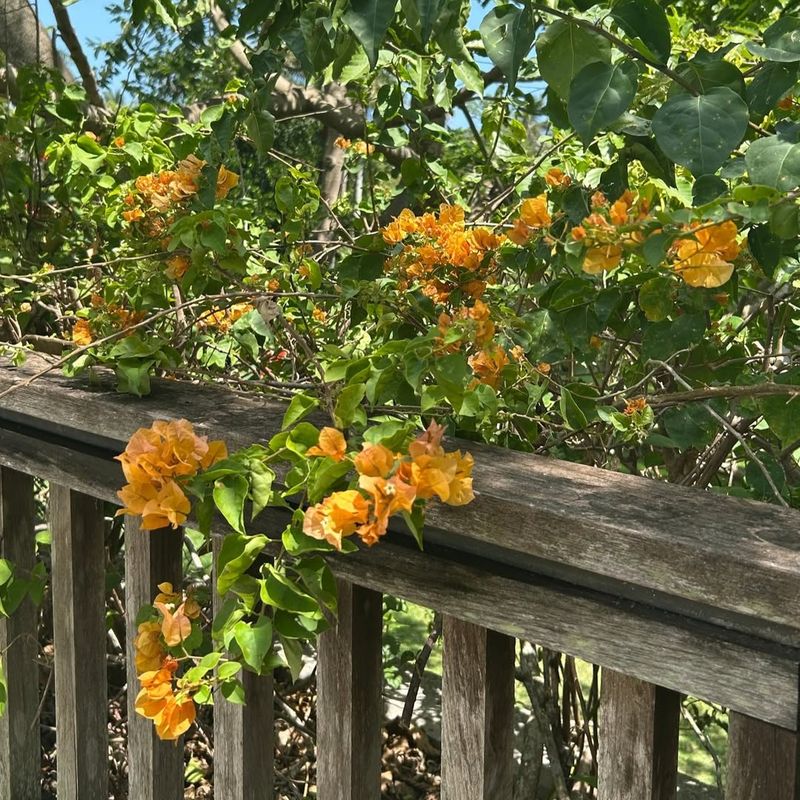
Yellow-flowering bougainvillea is harder to find than the typical magenta types, and California Gold fills that gap beautifully. Its bright golden-yellow bracts stand out sharply against adobe walls, dark gravel, and desert-toned landscaping in a way that pink and red varieties simply cannot.
Summer heat does not slow this variety down. Blooming continues through the hottest stretch of the year, which makes California Gold particularly valuable in landscapes that need year-round visual interest.
The color holds without fading even under intense afternoon sun.
Vine size is moderate compared to more aggressive varieties. Typical growth reaches 15 to 20 feet under good conditions.
It works well trained along a fence, over an arbor, or against a sunny wall with proper support.
Established plants need very little supplemental water during summer. Deep watering every two to three weeks is usually enough once roots are fully settled into the ground.
Drip irrigation works well for keeping moisture consistent without overwatering.
Soil drainage matters more than soil richness. Roots sitting in wet, poorly draining soil will cause yellowing leaves and reduced flowering.
Raised beds and sloped planting sites naturally improve drainage where native soil is heavy or compacted.
Light pruning after each bloom flush keeps the structure tidy. Heavy pruning is better saved for late winter or early spring before the main growth season kicks off.
4. Torch Glow Maintains A Compact Upright Form
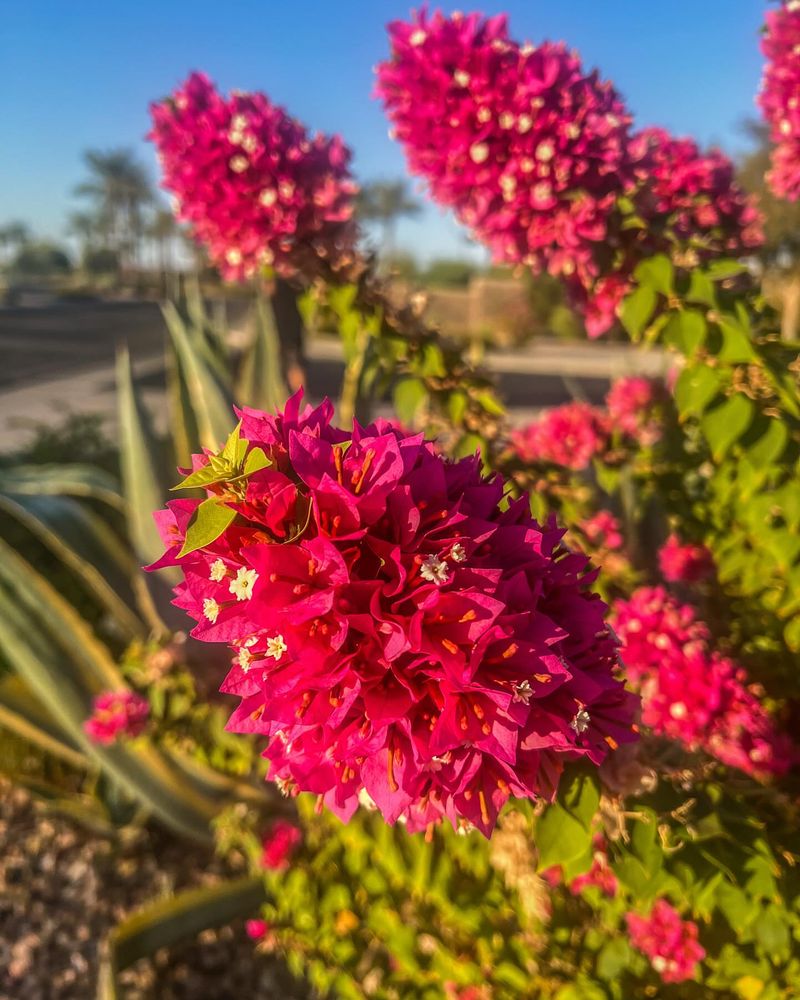
Most bougainvillea varieties want to sprawl, climb, and take over everything nearby. Torch Glow breaks that pattern completely.
It grows in a naturally upright, shrubby form that stays relatively compact, reaching six to eight feet tall without aggressive spreading.
That tighter growth habit makes it genuinely useful in spaces where other bougainvillea would become unmanageable. Front entry plantings, narrow side yards, and container gardens are all practical options.
You get the bold bloom color without the constant battle to keep things contained.
Bracts are a rich, deep pink with a slightly ruffled texture that gives clusters a full, almost pom-pom appearance. Blooming is heaviest in spring and fall, but summer heat does not shut it down completely.
Consistent watering during peak heat helps maintain flowering through July and August.
Unlike sprawling types, Torch Glow rarely needs heavy structural pruning. Light shaping once or twice a year keeps the natural form clean.
Removing spent bract clusters also encourages faster reblooming between cycles.
Container planting works particularly well with this variety. A large pot with excellent drainage lets you move the plant to optimize sun exposure through different seasons.
Use a gritty, fast-draining potting mix rather than standard garden soil.
One known limitation: Torch Glow is slightly more sensitive to frost than other varieties. In areas with occasional cold snaps, a sheltered south-facing wall provides helpful protection during winter months.
5. Purple Queen Covers Structures With Rich Color
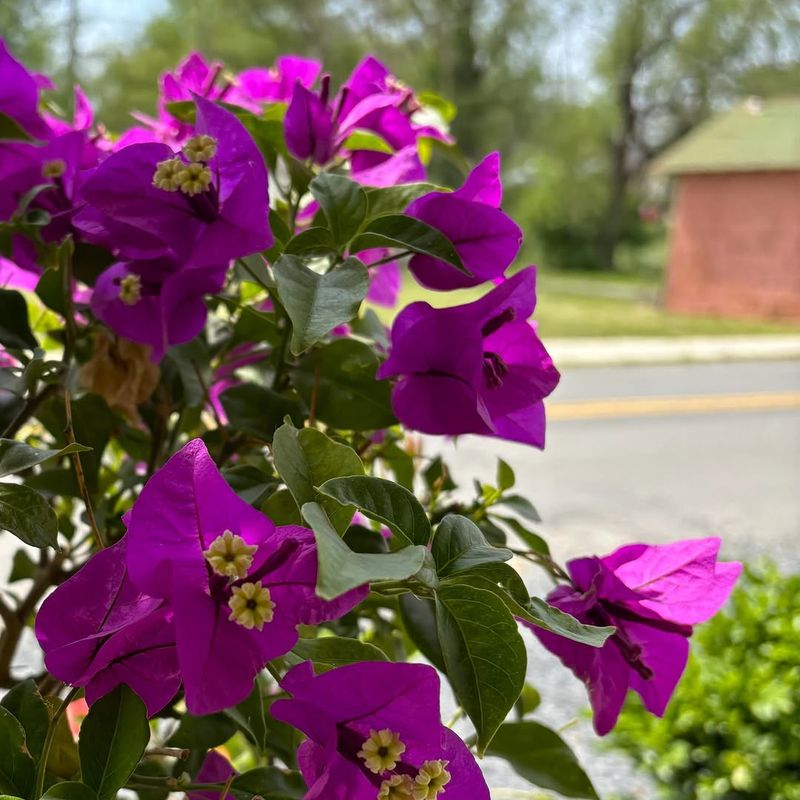
Purple Queen earns its name every single bloom cycle. The bracts are a true, saturated violet-purple that deepens in intensity under strong sunlight rather than washing out.
Against white stucco or light-colored block walls, the color contrast is genuinely striking.
Coverage is one of this variety’s biggest strengths. Given a sturdy trellis, pergola, or block wall to climb, Purple Queen fills vertical space quickly and densely.
Mature plants can cover 20 to 25 feet of structure in just a few growing seasons.
Heat tolerance is excellent. Established plants push through triple-digit temperatures without losing significant foliage or bract coverage.
The key is getting plants properly established before peak summer arrives, ideally planting in early spring to allow root development before heat peaks.
Watering deeply and infrequently trains roots to go deeper into the soil. Shallow, frequent watering keeps roots near the surface where they are more vulnerable during extreme heat events.
A slow drip system set for deep, periodic soaking works best.
Fertilizing lightly with a bloom-boosting formula in early spring and again in early fall helps maximize bract production. Avoid feeding during the absolute peak of summer stress when plants are working hard just to maintain themselves.
Thorns on Purple Queen are substantial. Training young stems while they are still flexible makes the process much easier.
Older stems become woody and rigid, making repositioning difficult without causing damage to the plant structure.
6. Juanita Hatten Fits Smaller Garden Spaces
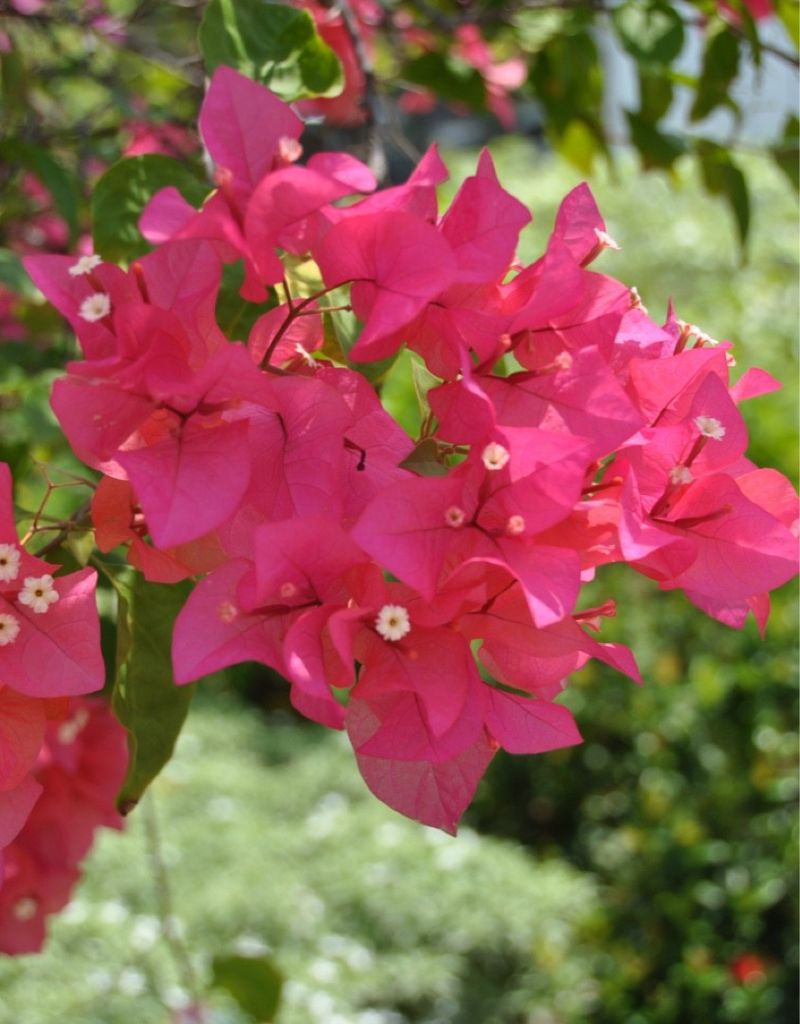
Not every garden has room for a massive spreading vine. Juanita Hatten was practically designed for tighter spaces.
It grows as a compact, bushy shrub rather than an aggressive climber, typically staying under six feet tall with modest lateral spread.
Bract color is a vivid, warm magenta-pink that holds well through intense heat. Bloom cycles are frequent compared to some larger varieties.
Regular light pruning keeps the plant dense and encourages faster repeat flowering through the warm season.
Courtyard gardens, small side yards, and raised planting beds near entryways are all excellent locations for this variety. It fits naturally in spots where a full-sized bougainvillea would quickly become overwhelming and require constant management to keep in bounds.
Container growing is another strong option. A large, well-draining pot works well, and the compact size makes it easy to reposition as needed.
Just make sure the container gets at least six hours of direct sunlight daily for strong bloom production.
Watering needs are similar to other varieties. Deep, infrequent irrigation is preferred over light, frequent watering.
Letting soil dry out between watering cycles actually encourages more consistent blooming rather than suppressing it.
One useful note for desert gardeners: Juanita Hatten handles reflected heat from paving and walls better than you might expect for a smaller plant. Planting near south-facing block walls can extend the bloom season by keeping nighttime temperatures slightly warmer in cooler months.
7. Imperial Delight Brings Soft Pink Color To The Landscape
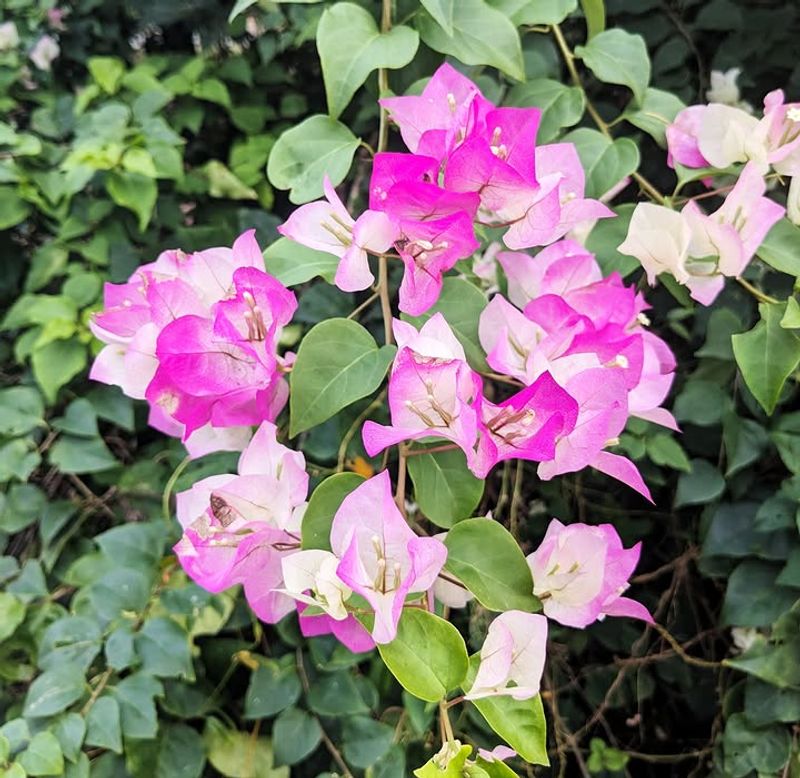
Soft colors can be hard to pull off in a desert landscape without looking washed out. Imperial Delight manages it well.
Its bracts open in a gentle lavender-pink shade that holds its tone even under harsh midday sun rather than bleaching to near white like some pale varieties do.
Color softness makes it a strong pairing with bold architectural elements. Against dark metal gates, deep-colored tile work, or richly stained wood pergolas, Imperial Delight provides a delicate visual counterpoint that feels intentional rather than accidental.
Vine growth is vigorous once established. Expect 15 to 20 feet of coverage over a few seasons with proper support.
Training young stems early while they are still pliable saves a lot of effort compared to trying to redirect mature woody growth later.
Heat tolerance is solid. Established plants handle prolonged extreme temperatures without major setbacks.
Getting through the first summer after planting is the main hurdle. Consistent deep watering during that establishment period makes a real difference in long-term plant health.
Bloom cycles follow the typical bougainvillea pattern, peaking in spring and fall with some continued flowering through summer. Mild water stress, deliberately reducing irrigation slightly before a desired bloom cycle, can trigger a stronger flush of bracts.
Fertilizing with a phosphorus-heavy formula in early spring gives the root system what it needs to support heavy blooming through the warmer months ahead. Avoid heavy nitrogen applications that push leafy growth over bract production.
8. Raspberry Ice Adds Interest With Variegated Foliage
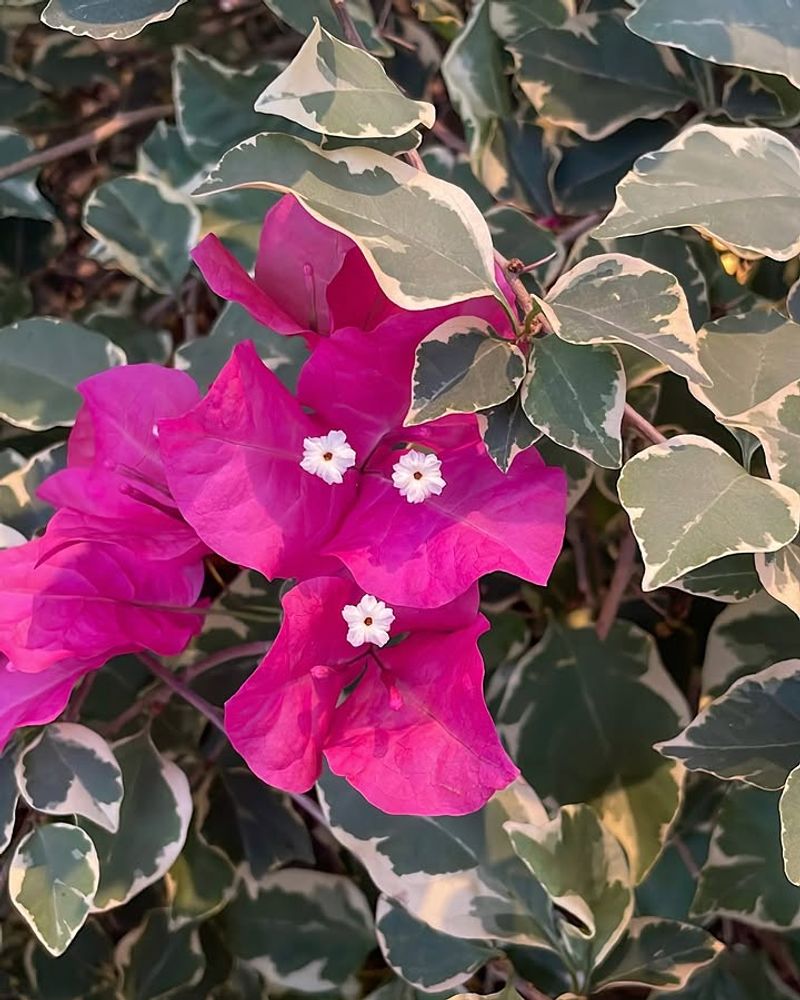
Raspberry Ice brings something extra to the table that most bougainvillea varieties skip entirely. Beyond the bright pink bracts, the foliage itself is variegated, showing a clean mix of deep green and creamy white.
Even when the plant is not in full bloom, it still looks visually interesting.
That two-season appeal makes it a smart choice for landscapes where you want consistent visual texture year-round. The variegated leaves hold their pattern through summer heat without reverting to solid green, which can happen with some variegated plants under stress.
Growth is moderate and semi-climbing. Left unsupported, it spreads as a sprawling mound.
With a trellis or fence, it will climb to about 10 to 15 feet. Either way, it stays more manageable than the most vigorous climbing types.
Bloom color is a clean, vivid pink that contrasts sharply with the two-toned foliage. Flowering is heaviest in spring and fall, though warm summers in the desert Southwest keep some bract production going between those main flushes.
One honest limitation worth knowing: variegated varieties sometimes show slightly less vigor than solid-green-leaved types. Providing good soil drainage, consistent deep watering, and occasional light fertilizing compensates for this tendency and keeps growth steady.
Pruning after each bloom cycle encourages dense regrowth. Removing older woody stems periodically keeps the plant looking fresh.
New growth shows the most striking variegation pattern, so refreshing the structure regularly pays off visually.