Here’s Why Michigan Homeowners Spray Vinegar Around Their Yards, According To A Lawn Pro
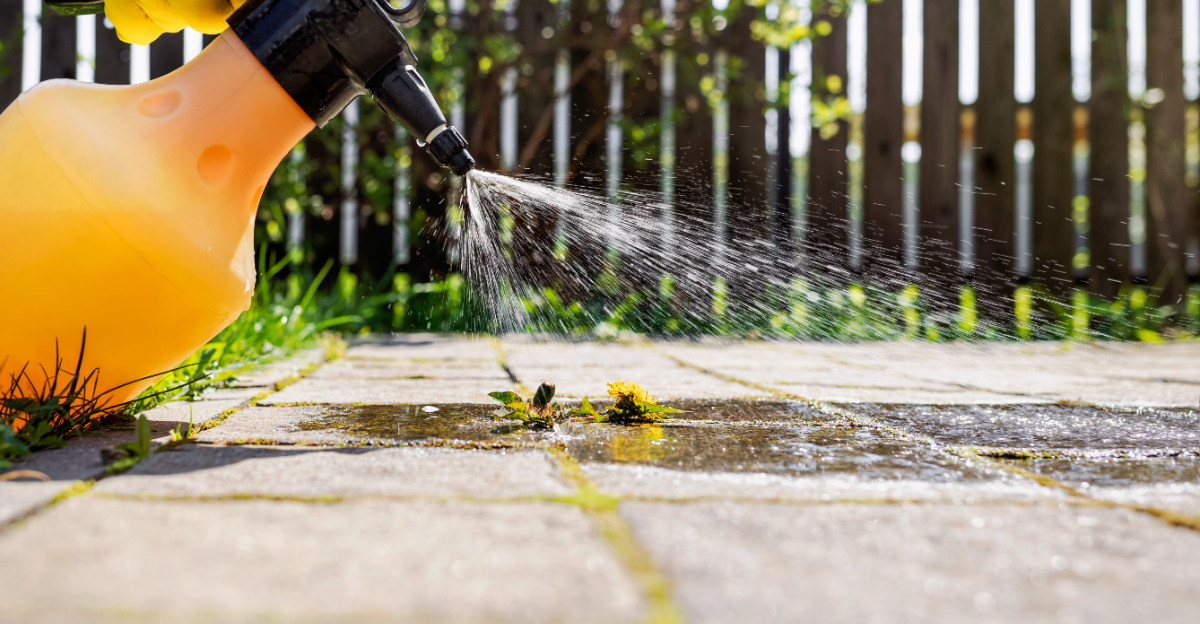
Vinegar has become a popular natural option for yard maintenance, with many Michigan homeowners using it as a simple, chemical free weed control method.
According to lawn care professionals, the acetic acid in vinegar works by drawing moisture out of plant leaves, causing weeds to wither fairly quickly after application.
This approach tends to work best on young, newly sprouted weeds rather than mature plants with more established root systems.
Household vinegar contains a lower acetic acid concentration, so many people opt for a stronger, horticultural grade version for more reliable results.
Applying vinegar during sunny, dry weather improves effectiveness, since rain can wash away treatment before it fully works.
Lawn professionals caution that vinegar is non selective, meaning it can damage desirable grass or plants if it drifts beyond the intended target.
Repeated applications are often necessary for weeds with deeper root systems that survive the first treatment.
Understanding both its benefits and limitations helps homeowners decide whether this natural method fits their specific yard needs.
1. Most People Are Using Vinegar On Weeds
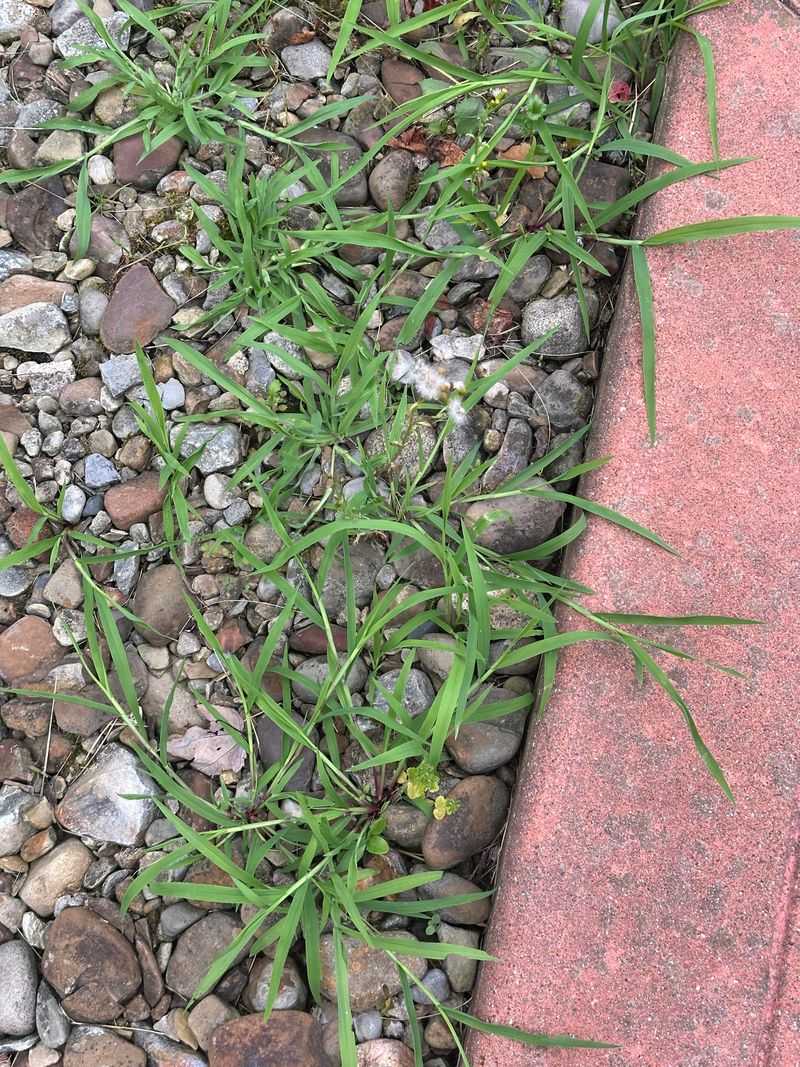
Walk through any gardening forum online and you will quickly notice that vinegar has become the go-to natural weed solution for homeowners in Michigan.
The idea is simple and appealing: spray it on weeds, and the foliage starts to shrivel up within hours. That fast visual result is exactly why so many people keep reaching for it.
The science behind it is actually pretty straightforward. Vinegar contains acetic acid, and when that acid lands on young weed foliage, it pulls moisture right out of the leaf cells.
The plant tissue breaks down quickly, and within a day or two, the leaves look brown and withered. It is genuinely satisfying to watch, especially when you are trying to avoid chemical herbicides.
However, the key word in all of this is “foliage.” Acetic acid works on what it touches directly, meaning the leaves and stems. It does not travel down into the soil or move through the plant’s vascular system the way some herbicides do.
So while the top of the weed may look finished, the roots below are often completely unaffected and ready to push out new growth within days.
Lawn pros see this misunderstanding constantly. Homeowners spray, celebrate, and then wonder why the same weeds reappear a week later.
Vinegar is not magic, but it does have a real place in yard care when used correctly and with realistic expectations. Knowing what it actually does to plant tissue helps you use it much more effectively.
2. Vinegar Works Best On Very Young Weeds
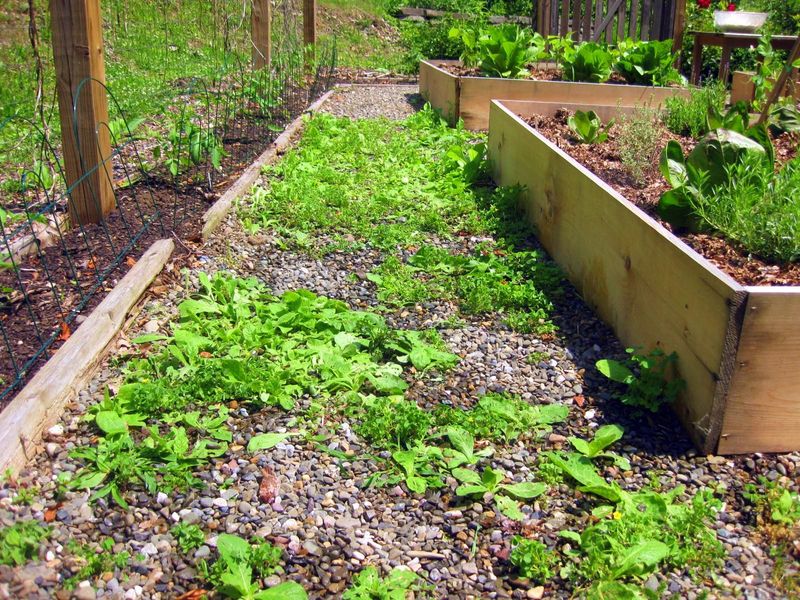
Timing really is everything when it comes to using vinegar in your yard. A weed that just sprouted yesterday is in a completely different situation than one that has been growing for three weeks.
Young seedlings are fragile, their root systems are barely established, and their leaf tissue is still tender and thin. That makes them far more vulnerable to the acetic acid in vinegar.
When a tiny seedling gets hit with a vinegar spray, the acid overwhelms its limited ability to recover. The plant simply does not have the stored energy or the root depth to bounce back.
Your Michigan Garden Changes Every Week. Your Plan Should Too.
Gardening in Michigan changes quickly throughout the season. Every Friday you’ll receive a simple weekly plan showing exactly what to plant, prune, fertilize, harvest, and protect so you never miss the right timing.
Compare that to a mature weed with a thick taproot or a spreading underground rhizome system.
Spraying vinegar on that plant might brown the leaves, but the roots are sitting comfortably underground, completely untouched, already preparing to send up fresh shoots.
Research from the USDA has shown that vinegar can be effective on young annual weeds, particularly in their first week or two of growth. Beyond that window, results drop off significantly.
Perennial weeds with established crowns rarely respond well at any stage because their survival system is entirely underground.
The practical takeaway here is to keep a close eye on your garden beds and walkways during spring and early summer when weed seeds are actively germinating.
Catching them early, within the first week or two of sprouting, gives vinegar its best chance of actually working. Waiting too long turns a potentially useful tool into a frustrating waste of time and effort.
3. Household Vinegar Is Not Very Powerful
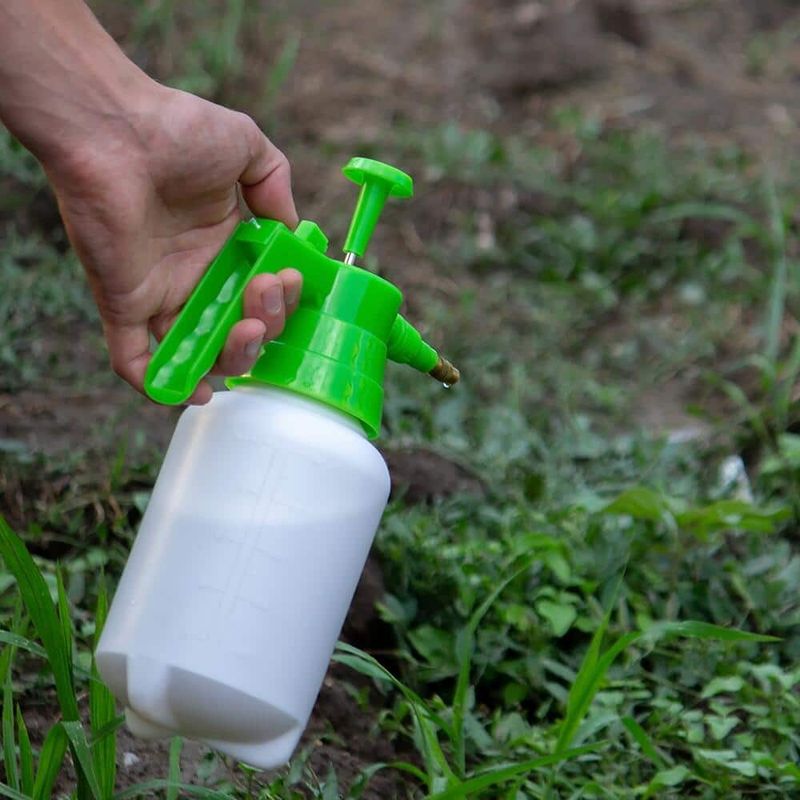
Most people reach for the white vinegar already sitting in their kitchen pantry, and that is completely understandable. It is cheap, widely available, and feels like a responsible, natural choice.
The problem is that standard grocery store vinegar contains only about five percent acetic acid, and that concentration is simply not strong enough to handle most established weeds in a yard.
Think of it this way: five percent acetic acid can irritate a young seedling, but a weed that has been growing for a month with a sturdy root system barely notices it.
Studies comparing different vinegar concentrations have consistently shown that five percent formulas provide only marginal control, especially on anything beyond the most delicate annual weeds.
The plant may wilt temporarily, then recover almost completely within a week.
Horticultural vinegar, which is sold specifically for outdoor use, typically contains between ten and thirty percent acetic acid. That is a dramatically different product with dramatically different results.
At those higher concentrations, the acid is aggressive enough to cause serious tissue damage even to more resilient plants.
It also comes with its own set of safety concerns, which is why it requires more careful handling than the bottle from your grocery store shelf.
So if you have been spraying regular vinegar on stubborn weeds and wondering why nothing seems to change, the concentration is almost certainly the issue.
Understanding this gap between household and horticultural strength helps set realistic expectations and saves you from repeated disappointment in the yard.
4. It Can Damage Your Lawn Too
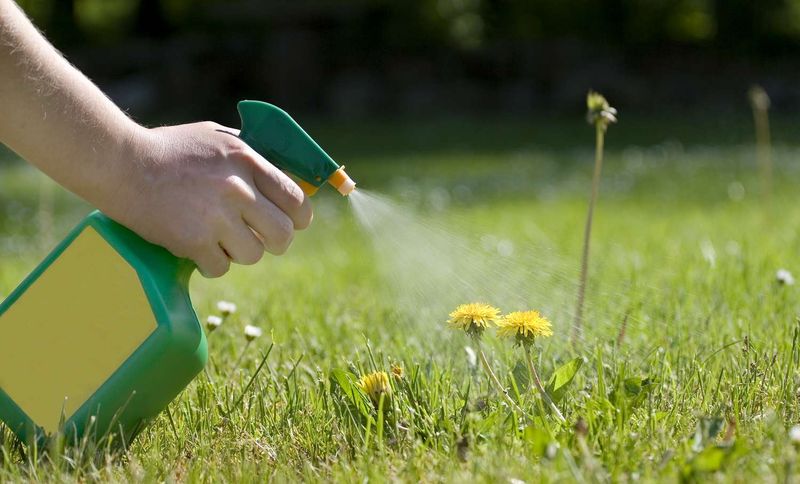
Here is something a lot of vinegar fans do not think about before they start spraying: acetic acid does not know the difference between a weed and your grass.
It is completely nonselective, meaning it will damage or destroy whatever plant tissue it lands on, whether that is a dandelion, a clover patch, or the perfectly healthy turf you have spent months nurturing.
Broad spraying is where most Michigan homeowners run into real trouble. Someone spots a few weeds scattered across the lawn, grabs the spray bottle, and starts misting the area.
The weeds get hit, but so does the surrounding grass. Within a day or two, brown spots start appearing in places that had nothing wrong with them before.
At that point, the cure has created a new problem that takes time and effort to repair.
Lawn pros are very specific about this: vinegar should never be used as a broadcast spray over an entire lawn or large grassy area. Even careful spot spraying carries some risk of drift onto nearby grass, especially on a breezy day.
Wind can carry fine droplets several feet away from where you aimed, and those droplets are acidic enough to cause visible damage to healthy turf.
If you want to use vinegar in your yard responsibly, precision matters more than anything else. A small, targeted application using a foam brush or a low-pressure squeeze bottle gives you far more control than a spray nozzle.
Protecting your lawn while treating weeds requires patience, a steady hand, and a clear understanding of what you are working with.
5. Perennial Weeds Often Grow Back
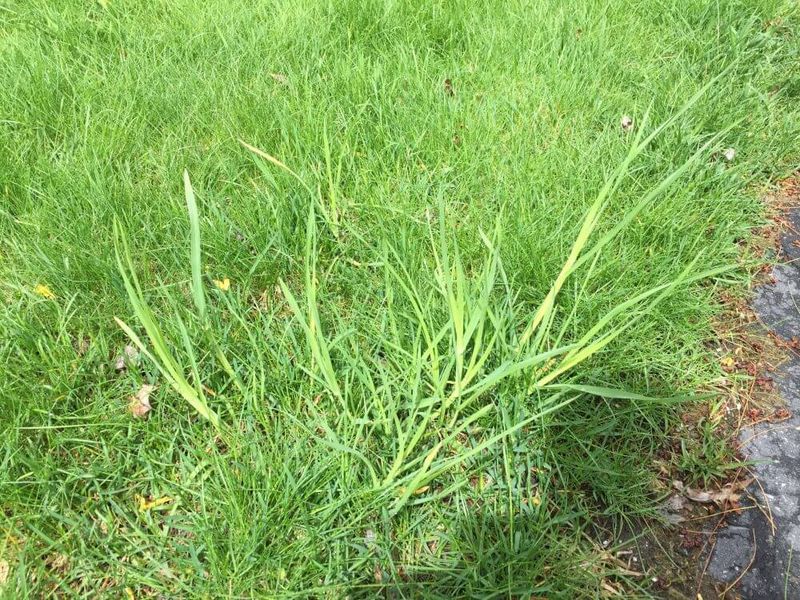
Dandelions, bindweed, thistle, ground ivy – these are the weeds that drive homeowners absolutely crazy, and they all share one very important trait. Their survival power is stored underground in their root systems, not in their leaves or stems.
Spraying vinegar on the foliage of a perennial weed is a bit like trimming the top off an iceberg and thinking the problem is solved.
Perennial weeds have developed deep taproots, spreading rhizomes, or underground stolons that allow them to regenerate season after season.
When acetic acid contacts the leaves and causes visible damage, the plant responds by drawing on its stored root energy to push out fresh growth.
Some perennial weeds can actually come back stronger and denser after repeated surface-level disturbances, making the situation worse over time.
A lawn pro will tell you that true control of perennial weeds requires addressing the root system directly.
That might mean manual removal with a proper weeding tool that extracts the full root, targeted herbicide applications designed to travel through plant tissue, or repeated cultivation that gradually exhausts the root’s energy reserves over a full growing season.
None of those approaches involve a simple spray bottle of vinegar. That said, vinegar can still play a small role in managing perennial weeds if used strategically.
Repeated applications during active growth periods can slowly weaken a plant over time, though this takes significant patience and consistency.
For most homeowners dealing with stubborn perennial weeds, combining methods and staying persistent is far more effective than relying on vinegar alone.
6. Strong Vinegar Needs Extra Caution
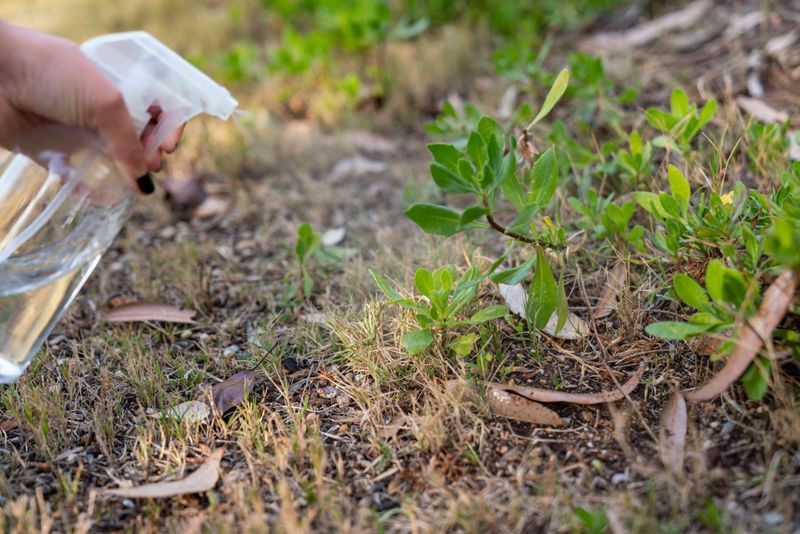
Horticultural vinegar sounds harmless because the word vinegar feels familiar and kitchen-safe. But a product with twenty or thirty percent acetic acid is a completely different animal from what you use in salad dressing.
At those concentrations, this liquid can cause serious chemical burns to skin and, if it contacts the eyes, can result in significant injury that requires immediate medical attention.
Many homeowners pick up horticultural vinegar without reading the label carefully, assuming it is just a stronger version of the same safe product they have at home. That assumption leads to careless handling.
Splashing a high-concentration vinegar solution on bare skin during spraying can cause redness, irritation, and in some cases, genuine chemical burns depending on exposure time and concentration level.
The label on any horticultural vinegar product exists for a reason, and a lawn pro will always stress reading it fully before opening the bottle. Protective eyewear is not optional with these products.
Gloves, long sleeves, and closed-toe shoes are equally important. Spraying on calm, low-wind days reduces the chance of mist drifting back toward your face or landing on skin you did not intend to expose.
Keeping strong vinegar away from children and pets during application and for a period after spraying is another step that should not be skipped.
The soil acidity can also shift temporarily in treated areas, which may affect nearby plants you actually want to keep.
Treating horticultural vinegar with the same respect you would give any powerful garden product keeps you and your yard much safer throughout the process.
7. Homemade Vinegar Mixes Can Cause More Problems
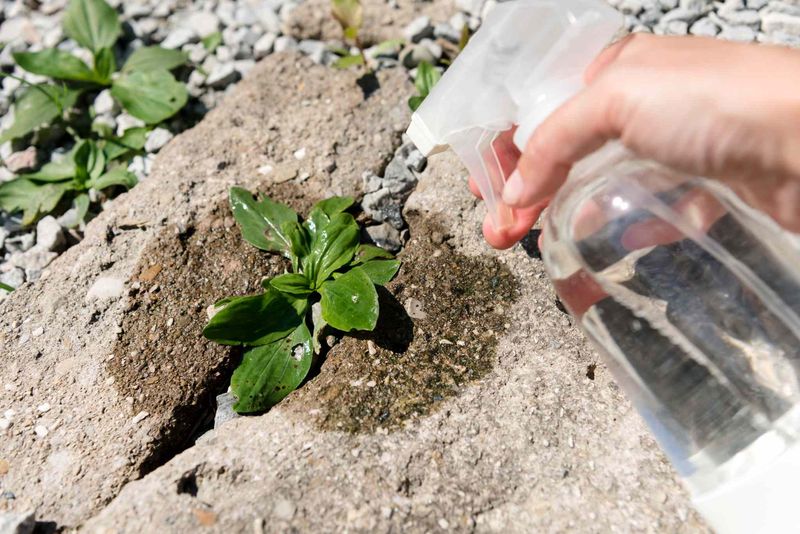
Scroll through any gardening group on social media and you will find dozens of homemade weed spray recipes combining vinegar with salt, dish soap, citrus juice, and other household ingredients.
The posts are always enthusiastic, the comments are full of people swearing it works, and the mixture sounds perfectly natural and safe. The reality, however, is more complicated than those posts suggest.
Salt is the ingredient that causes the most long-term concern. Sodium chloride, which is the salt most people use in these recipes, does not break down and leave the soil the way acetic acid does. Salt accumulates in the soil and raises sodium levels over time.
High sodium concentrations make it extremely difficult for any plant to absorb water properly, meaning your garden beds or lawn areas where you sprayed could struggle to support healthy plant growth for a long time afterward.
Dish soap is often added as a surfactant to help the mixture stick to leaves, and while that part makes some sense, many dish soaps contain ingredients that are not tested or approved for use on soil or plants.
Combining multiple untested household chemicals and applying them to your yard without understanding how they interact with your specific soil type is a gamble that often backfires.
A lawn pro’s advice on this one is simple: if you want to use vinegar in your yard, use it on its own or choose a properly formulated horticultural product.
Homemade concoctions might seem like creative problem-solving, but the potential for unintended soil damage or harm to nearby plants makes them more risky than they appear on a social media post.
8. Use Vinegar Only Where It Makes Sense
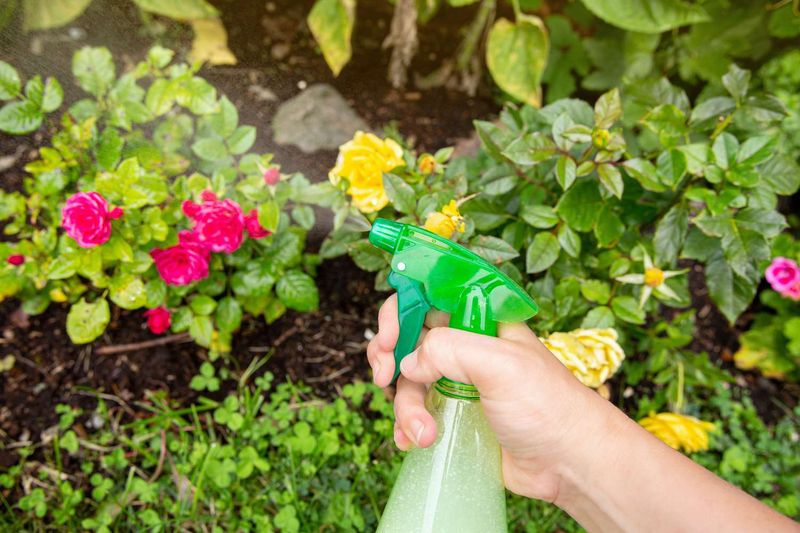
After learning everything above, you might wonder whether vinegar has any real place in yard care at all. The answer is yes, but only when you use it in the right spots for the right reasons.
Strategic, targeted application is where vinegar genuinely earns its reputation as a useful garden tool rather than an overhyped internet trend.
Cracks in driveways, spaces between patio pavers, gravel pathways, and bare dirt areas around fences are ideal places to use vinegar.
In these spots, there is no lawn to worry about protecting, the weeds are often young and exposed, and you can apply the vinegar precisely without risking drift onto plants you care about.
A small foam brush or a squeeze bottle with a narrow tip gives you the control you need to treat exactly what you want and nothing else.
Timing your application on a warm, sunny, calm day with no rain expected for at least 24 hours makes a significant difference in results.
Heat and sunlight accelerate the drying process, which intensifies the effect of the acetic acid on leaf tissue. Applying before a rainstorm just washes everything away and accomplishes nothing.
The broader lesson a lawn pro wants every homeowner to take away is this: vinegar is not a yard-wide solution, and treating it like one leads to frustration and collateral plant damage.
Used thoughtfully on young weeds in contained areas, it can be a genuinely helpful, low-chemical option.
Used carelessly across an entire yard, it creates more problems than it resolves. Precision always beats enthusiasm when it comes to yard care.