Here’s What It Means If A Hawk Keeps Coming To Your Tennessee Backyard
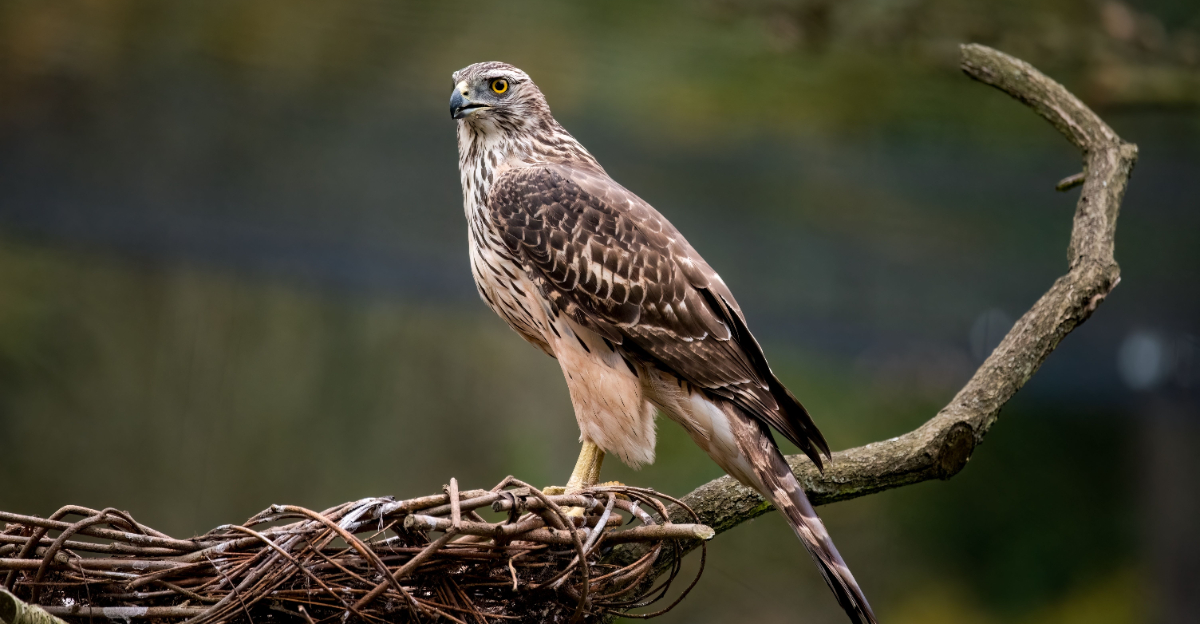
You did not invite it, but it keeps showing up anyway. A hawk, same fence post, same sharp stare, same unhurried confidence.
If this scene feels familiar, your Tennessee backyard has caught the attention of one of the most calculated hunters in the bird world. Hawks do not waste energy.
They do not show up twice to a place that has nothing to offer. So if one keeps coming back, your yard is giving it something worth returning for.
Something in that space checks every box on a hawk’s list, and you probably have no idea what it is.
Hawks notice what we miss. Soon, you will know exactly why your yard made the list, which species you are likely dealing with, and what those return visits actually mean.
Your Yard Checks Every Box On A Hawk’s List
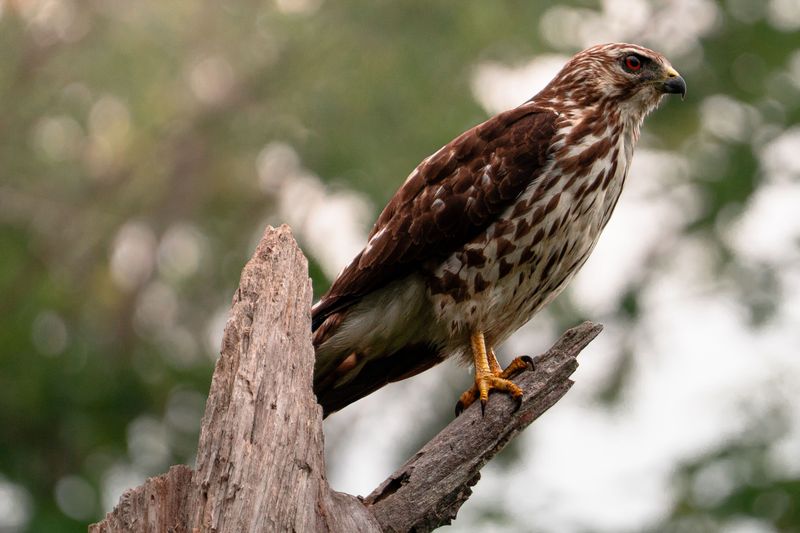
Your yard is basically a five-star restaurant for hawks. Bird feeders, open lawns, and mature trees create the perfect setup that draws these predators in fast.
When you hang a feeder, you attract sparrows, finches, and doves. Those smaller birds become the main course for any hawk cruising the neighborhood.
A well-watered lawn also signals easy hunting ground. Short grass means fewer hiding spots for prey, which makes your yard far more appealing than a neighbor’s overgrown lot.
Water sources like birdbaths add another layer of attraction. Hawks need to drink and bathe too, and a clean water feature is hard for them to resist.
Brush piles, garden beds, and leaf litter attract mice and voles. Those small mammals are prime targets for larger hawk species that prefer ground-level hunting.
Even your roof line and tall fences serve a purpose. Hawks use elevated perches to survey an area before swooping in, and your property likely offers several great vantage points.
If a hawk keeps coming to your Tennessee backyard, your space checks nearly every box on its needs list. Understanding this gives you real control over what happens next.
The Most Common Hawks In Tennessee Backyards
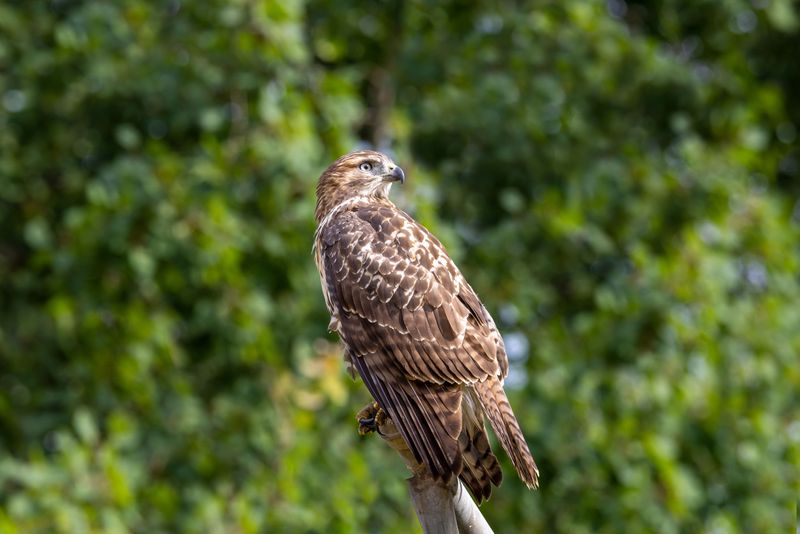
Not every hawk is the same, and knowing which one is visiting changes everything. Tennessee hosts several species that regularly patrol suburban and rural yards throughout the year.
The Red-tailed Hawk is the most recognized of the bunch. Its brick-red tail and broad wings make it easy to spot as it soars or perches on fence posts and power lines.
Cooper’s Hawks are frequent backyard visitors with a sneaky streak. They specialize in chasing small birds through dense shrubs, making them a common sight near feeders.
Sharp-shinned Hawks look almost identical to Cooper’s but run smaller in size. Both species are agile fliers that use backyards as hunting corridors during migration and winter months.
The Red-shouldered Hawk prefers wooded edges near water. If your yard backs up to a creek or wooded area, this vocal species is likely the one calling from your treetops.
Broad-winged Hawks pass through during spring and fall migration in large flocks. Spotting one in your yard usually means you are right in the middle of a major flyway.
Your Tennessee Garden Changes Every Week. Your Plan Should Too.
Gardening in Tennessee changes quickly throughout the season. Every Friday you’ll receive a simple weekly plan showing exactly what to plant, prune, fertilize, harvest, and protect so you never miss the right timing.
Knowing which species visits your Tennessee backyard helps you predict behavior and understand patterns. Each hawk has its own personality, and recognizing yours is half the fun.
How They Choose And Claim Their Territory
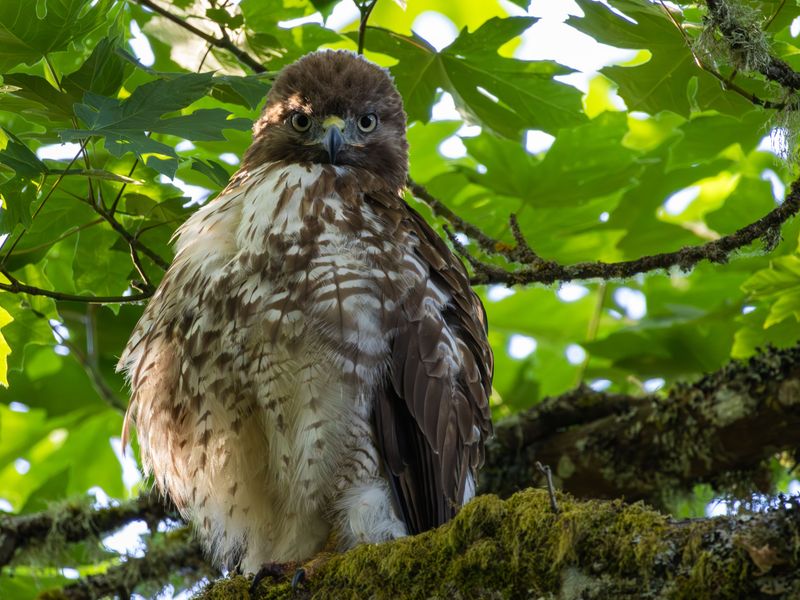
Hawks are not wandering randomly when they show up in your yard. Every visit is part of a calculated decision rooted in survival and territorial instinct.
A hawk scouts an area before committing to it. It watches prey movement, notes perch availability, and checks for competing predators before deciding a space is worth claiming.
Once a hawk picks a territory, it defends it with surprising intensity. You might notice it chasing off crows, other hawks, or even large songbirds that get too close.
Territory size depends on species and prey availability. A Red-tailed Hawk might patrol up to a couple of square miles, while a Sharp-shinned Hawk might focus on just a few connected backyards.
Calling is a major part of how hawks establish ownership. That loud, piercing cry you hear from above is often a territorial announcement, not a random sound.
Perch selection also signals territory. A hawk that returns to the same fence post, tree branch, or rooftop is marking that spot as part of its claimed space.
When a hawk keeps coming to your Tennessee backyard specifically, your yard likely sits inside its established territory. You are not just a visitor on its radar, you are a regular stop on its daily route.
A Hawk’s Hunting Strategy In Suburban Yards
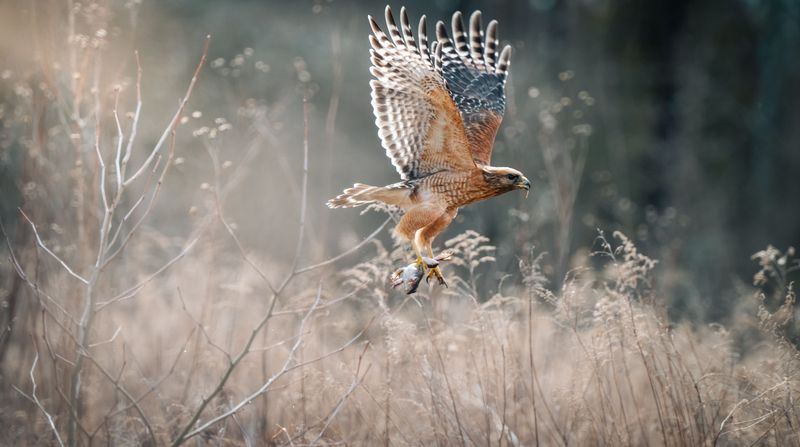
Watching a hawk hunt is like seeing a perfectly rehearsed performance. Every move is deliberate, efficient, and almost always successful when executed well.
Most hawks use a sit-and-wait approach in suburban settings. They perch somewhere high with a clear sightline, then launch a fast strike when prey moves into range.
Cooper’s Hawks take a different route entirely. They fly low and fast through shrubs and around obstacles, using the element of surprise rather than height as their advantage.
Bird feeders pull smaller birds into one predictable spot, and hawks know exactly how to take advantage of that. Smaller birds cluster together, which makes your feeder a highly productive hunting location for any hawk passing through.
Timing matters in a hawk’s strategy. Most hunting happens in the early morning or late afternoon, when light is lower and prey animals are most active and less cautious.
Hawks also read body language. A bird that hesitates, acts injured, or moves slowly gets targeted first because it signals easier success with less energy spent on the chase.
Understanding how hawks hunt in suburban spaces helps you make smart choices about your yard setup. If you want to protect feeder birds, strategic landscaping and feeder placement can genuinely make a difference.
Why The Same Hawk Keeps Returning To Familiar Spots
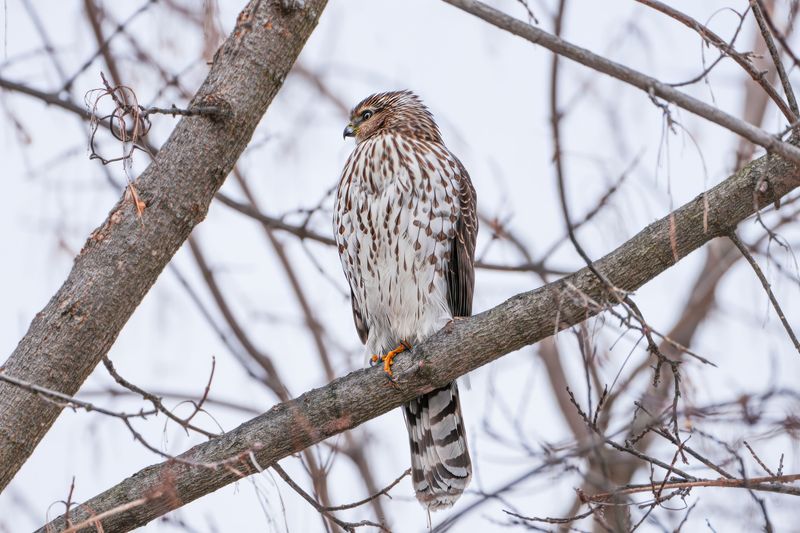
Familiarity breeds success in the hawk world. Once a hawk finds a reliable food source, it does not just move on and forget about it.
Hawks have impressive spatial memory that allows them to map productive areas. Your yard gets added to a mental route that the bird revisits on a regular schedule.
Prey availability is the biggest driver of return visits. If your yard consistently offers mice, songbirds, or squirrels, a hawk has every reason to swing back through often.
Seasonal patterns also play a role in repeat visits. A hawk might disappear for weeks during nesting season, then return to your yard like clockwork once its young are independent.
Perch loyalty is a real behavioral trait in raptors. Scientists have documented hawks returning to the exact same branch or post across multiple seasons, sometimes even multiple years.
The hawk you keep seeing may also be a juvenile learning its territory. Young hawks often establish habits in suburban areas because the prey is more predictable than in wild habitats.
When a hawk keeps coming to your Tennessee backyard again and again, treat it as a sign your space has earned a permanent spot on its mental map. That kind of loyalty says a lot about your yard.
The Times Of Year Hawks Are Most Active In Tennessee
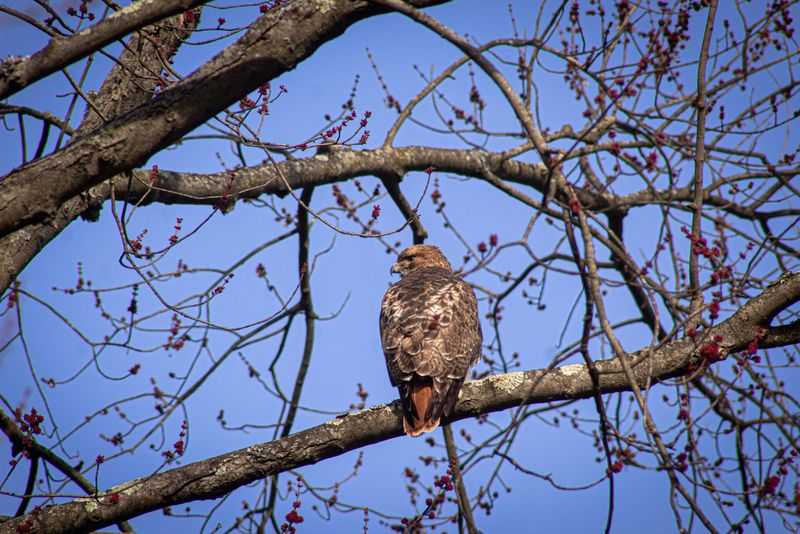
Hawks do not follow a random schedule, and your chances of spotting one depend heavily on the season. Tennessee sits in a prime location for hawk activity across nearly every month of the year.
Fall migration is the most dramatic period for hawk watching. From September through November, thousands of raptors funnel through the state on their way south, and your yard might sit directly in that path.
Spring brings another wave of northbound migrants heading back to breeding grounds. March through May is an exciting stretch when new species appear almost daily in backyards across the region.
Winter is when resident hawks become most visible and bold. With leaves off the trees and prey harder to find, hawks spend more time in suburban areas where food is easier to locate.
Summer activity slows down as hawks focus on raising young. You might notice a pair nesting in tall trees nearby, but active hunting in open yards becomes less frequent during this stretch.
Red-tailed and Red-shouldered Hawks are year-round residents that stay active in all seasons. Spotting one in January is just as likely as spotting one in October if your yard offers what they need.
Tracking which months bring the most hawk activity to your Tennessee backyard helps you anticipate visits. A little seasonal awareness turns casual sightings into something far more rewarding.
Signs It’s The Same Hawk Visiting Every Time
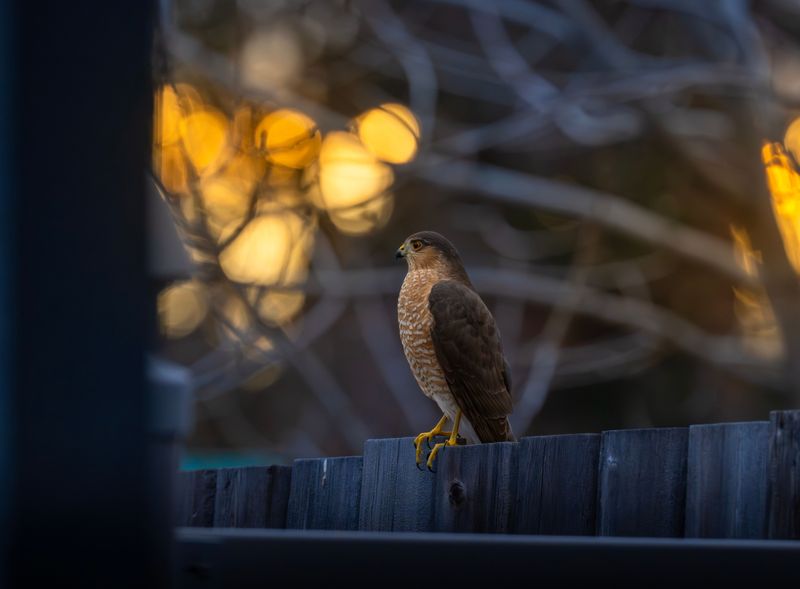
Most people assume every hawk sighting is a different bird passing through. In reality, you might be watching the same individual return week after week without realizing it.
Plumage markings are your best identification tool. Look for unique features like a notched feather, unusual coloring, or a pale patch that sets one bird apart from others of the same species.
Behavioral patterns are just as telling as physical traits. A hawk that always lands on the same post, at the same time of day, is almost certainly the same bird following a set routine.
Size and posture offer clues too. Hawks, like people, carry themselves differently, and once you watch one bird long enough, its specific stance becomes surprisingly recognizable.
Photographing each sighting helps you build a comparison record over time. Even a basic smartphone photo can reveal enough detail to confirm whether you are seeing one hawk or several.
Keeping a simple log of dates, times, and behaviors can reveal patterns you would never catch otherwise. When a hawk keeps coming to your Tennessee backyard, that journal becomes proof of something genuinely remarkable.