How Florida Lawns Stay Green Through Record Dryness Without Daily Watering
Record dryness is baking Florida lawns right now, and somehow a few stay perfectly green while everyone else watches their grass turn brown. It’s not the sprinkler running every evening.
In fact, the greenest lawns often get watered less than the neighbors struggling to keep their grass alive. Something about how these lawns handle water runs completely against what most homeowners assume works.
The difference comes down to one habit almost nobody thinks to change, and it has nothing to do with buying a better sprinkler system or watering more often. Skip the obvious fixes.
The real answer is simpler, cheaper, and already sitting in your daily routine waiting to be adjusted.
1. Choose The Grass That Handles Dry Spells Better
Not every grass type responds to heat and reduced rainfall the same way. Choosing the wrong turf for your region is one of the fastest ways to create a lawn that struggles every summer.
Matching the right species to your yard conditions is a much smarter starting point than trying to correct a poor fit later.
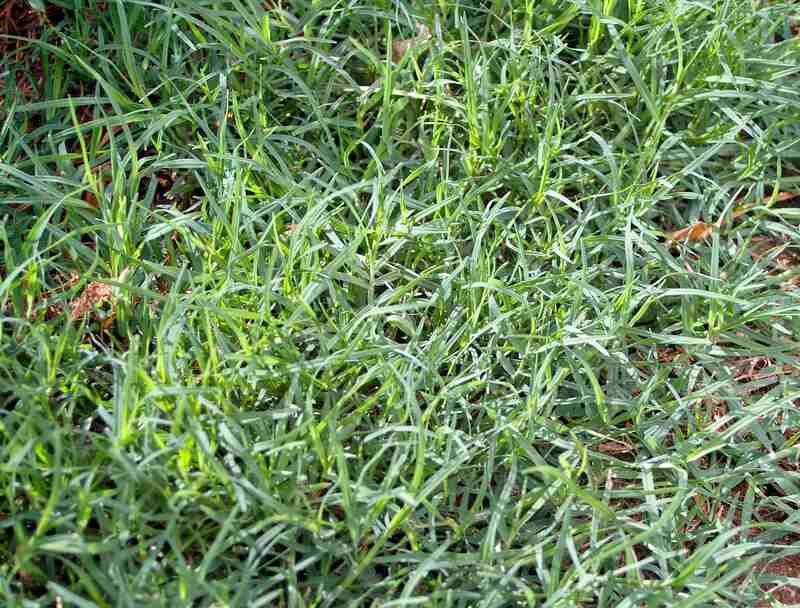
Bahiagrass is widely used across Florida for good reason. According to UF/IFAS, it performs well in low-maintenance situations and tolerates extended dry periods better than many other species.
St. Augustinegrass is popular for its thick coverage and shade tolerance, but it needs more consistent moisture than Bahiagrass to stay at its best.
Bermudagrass is another option with strong heat and drought tolerance. It thrives in full sun and handles traffic well, making it a solid pick for open yards.
Zoysiagrass sits somewhere in between, offering good density and moderate drought tolerance, though it establishes slowly.
No single grass type works perfectly in every Florida yard. Your region, soil type, sun exposure, and how much foot traffic the lawn receives all influence which species will perform best.
A turf that fits your actual conditions from the start requires far less correction, less water, and less frustration as the dry season sets in. Getting that foundation right matters more than most homeowners realize.
2. Build Deeper Roots Before Summer Drought Arrives
A dry week in late spring can reveal a lot about how a lawn was managed through the cooler months. Turf with shallow roots runs out of accessible moisture quickly because it can only pull water from the top few inches of soil.
Roots that grow deeper have more soil volume to draw from when surface moisture disappears.
Irrigation habits shape root behavior more than most people expect. Frequent, light watering encourages roots to stay near the surface because moisture is always available close to the top.
UF/IFAS irrigation guidance supports deeper, less frequent watering as a way to encourage roots to grow further down into the soil profile.
Soil condition also affects how deep roots can actually grow. Compacted or nutrient-poor soil creates physical barriers that limit root development.
Addressing soil problems before the dry season gives roots a better chance to establish at a useful depth.
Your Florida Garden Changes Every Week. Your Plan Should Too.
Gardening in Florida changes quickly throughout the season. Every Friday you’ll receive a simple weekly plan showing exactly what to plant, prune, fertilize, harvest, and protect so you never miss the right timing.
Preparation is the real story here. A lawn that enters dry weather with a well-developed root system is far better equipped to maintain its appearance and recover after stress.
Waiting until the yard looks parched to start thinking about roots is too late. The work that supports strong root growth happens weeks and months before the driest days arrive.
Consistent, thoughtful management through spring sets up a much more resilient lawn by summer.
3. Water Less Often But Much More Effectively
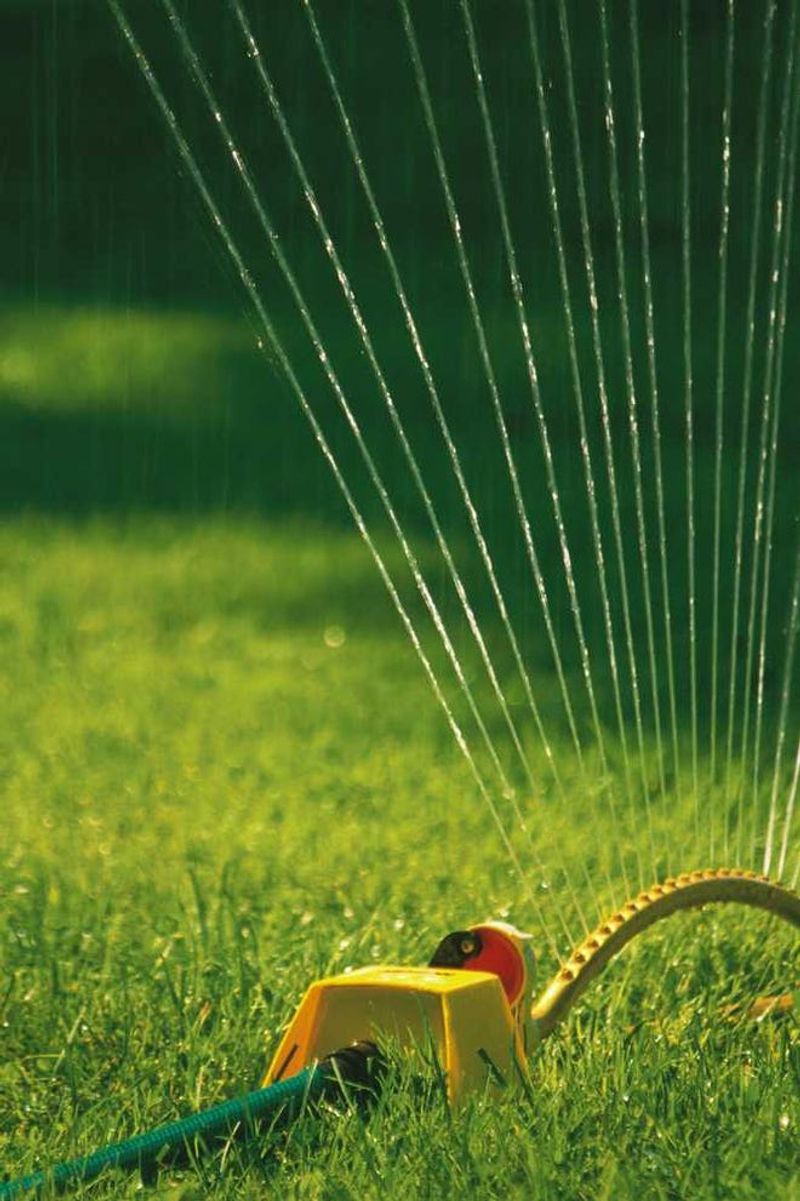
A change in watering habits can do more for a struggling lawn than simply running the sprinklers more often. Daily light watering keeps the top layer of soil moist but rarely pushes moisture deep enough to encourage roots to follow.
Over time, that pattern creates turf that depends on frequent surface moisture to survive.
UF/IFAS recommends watering only when turf shows early signs of stress, such as folded leaf blades, a blue-gray color, or footprints that stay visible after walking across the lawn. Watering on a fixed daily schedule, regardless of actual need, often applies more water than the turf requires and can contribute to disease and shallow rooting.
Timing also affects how efficiently water reaches the root zone. Early morning irrigation, typically between 4 a.m. and 10 a.m. according to UF/IFAS guidance, reduces evaporation loss and allows leaf blades to dry before evening.
Watering during the hottest part of the day wastes a significant portion of what the sprinkler applies.
Local water management districts in Florida also set irrigation restrictions that vary by season and county. Staying within those guidelines is both legally required and practically smart.
Applying water deeply and less frequently, only when the lawn actually signals a need, builds a more self-sufficient turf over time. Less water used more precisely is nearly always better than more water applied carelessly.
4. Raise Your Mower Blade During Dry Weather
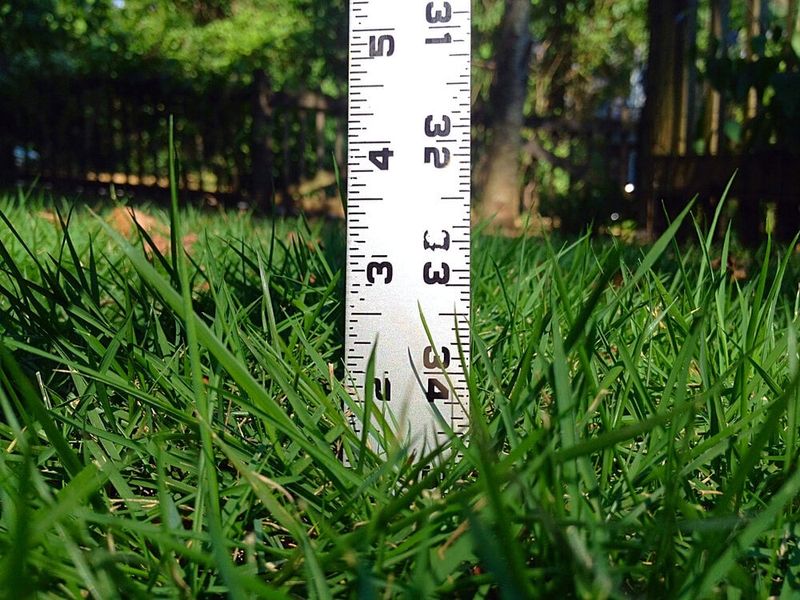
A freshly mowed lawn in July heat looks neat right after the mower passes, but cutting too short during dry conditions can create real problems fast.
Shorter leaf blades mean less surface area for photosynthesis, which reduces the plant’s ability to produce energy and maintain itself under stress.
The lawn ends up working harder at exactly the wrong time.
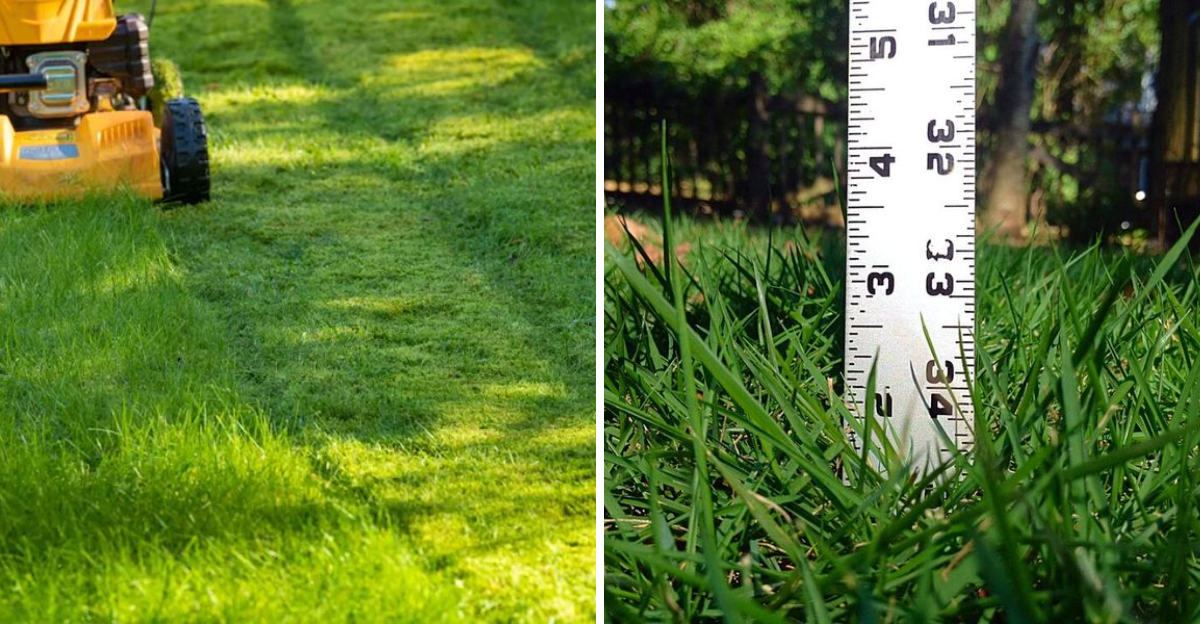
UF/IFAS provides species-specific mowing height recommendations for Florida turf. St. Augustinegrass, for example, performs best when maintained between 3.5 and 4 inches during periods of heat and reduced rainfall.
Bahiagrass is typically mowed at 3 to 4 inches. Bermudagrass tolerates lower heights but still benefits from staying near the top of its recommended range during dry spells.
The one-third rule is a practical guide for any mowing session. Never remove more than one-third of the leaf blade at one time.
Removing too much at once forces the plant to redirect energy toward leaf regrowth instead of root maintenance. That added stress compounds during dry weather.
Taller grass also shades the soil surface slightly, which can slow moisture loss from the top layer of ground. This is not a substitute for irrigation when water is actually needed, but it does help the lawn hold onto available moisture a bit longer between waterings.
Raising the mower blade a notch or two during the driest months is a simple adjustment with a meaningful payoff for turf health.
5. Stop Letting Short Grass Struggle In Heat
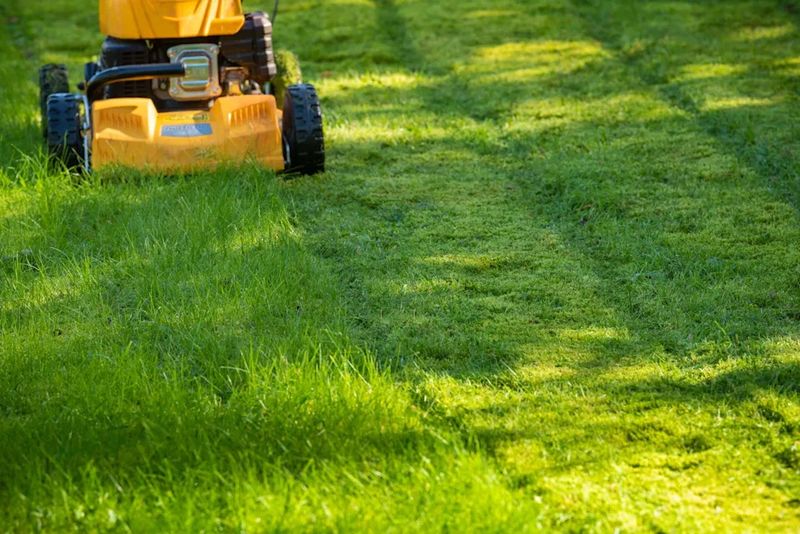
Many homeowners prefer a lawn that looks close-cropped and tidy, almost like a putting green. The previous table was not reliable because I included some entries that only became long after combining sentences.
I’ll redo this one correctly and only include the true single-sentence matches. Appearance and plant health are not always the same goal.
Scalping, which means removing so much leaf tissue that the crown of the plant is exposed, puts enormous strain on any turfgrass.
The plant loses its ability to shade its own root zone, speeds up moisture loss from the soil surface, and becomes more vulnerable to weed invasion.
Bare or thin areas that open up after scalping are often the spots where weeds establish most easily.
Every grass species has an ideal mowing range, and that range exists for biological reasons. St. Augustinegrass maintained below 2.5 inches during dry months will show stress far sooner than turf kept at 3.5 to 4 inches.
Bermudagrass handles shorter heights better than most species, but even Bermuda benefits from staying near the upper end of its range during extended dry spells.
Adjusting expectations about lawn appearance during the driest part of the year is part of managing turf realistically.
A lawn kept at the right height for its species will look better overall, hold up longer between waterings, and recover more quickly when rain finally returns.
Neat and healthy can coexist, but only when the mower is set at a reasonable height.
6. Fix Soil Problems Before Adding More Water
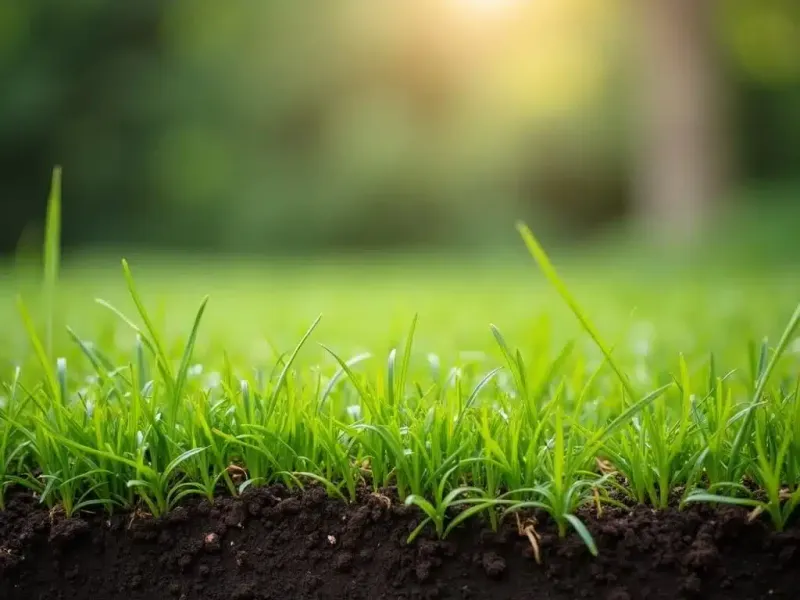
Sometimes the problem hiding beneath a struggling lawn has nothing to do with how much water gets applied.
Compacted soil prevents water from moving downward efficiently, leaving moisture sitting at the surface where it evaporates quickly rather than reaching the root zone.
Poor soil structure is one of the most common reasons lawns underperform during dry stretches.
Sandy soils, which are very common across much of Florida, drain quickly and hold less moisture than loam-based soils. That natural characteristic means water moves through the profile fast, sometimes faster than roots can absorb it.
Organic matter helps sandy soil retain moisture longer, but improving soil biology takes time and should be guided by a soil test rather than random amendment.
Core aeration is one practical tool for addressing compaction. By removing small plugs of soil, aeration opens pathways for water, oxygen, and nutrients to reach the root zone more effectively.
UF/IFAS recommends timing aeration based on grass species and growth cycle to avoid adding stress at the wrong time.
Thatch buildup is another hidden barrier. A thick thatch layer between the soil surface and the grass blades can actually repel water before it ever reaches the roots.
Managing thatch through dethatching or proper fertilization practices keeps the soil surface more receptive to irrigation. Addressing what is happening underground gives any amount of water applied above ground a better chance of actually doing its job.
7. Use The Right Plants Around Your Lawn
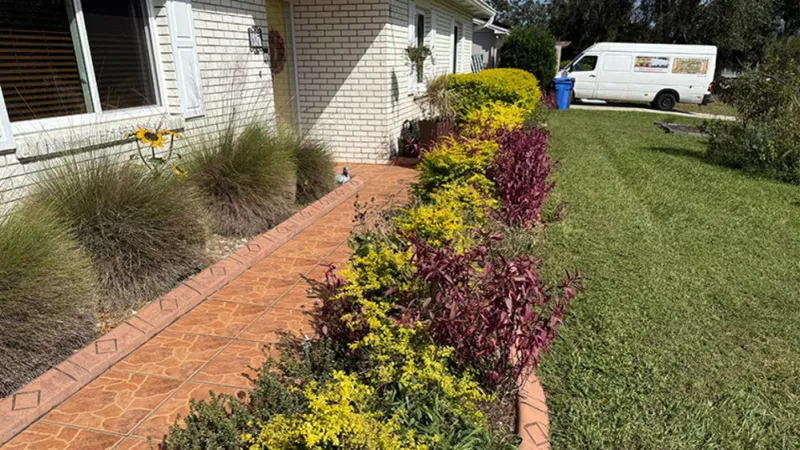
Reducing the amount of stress a lawn carries during dry months is not always about what happens to the grass itself. The design of the surrounding landscape plays a meaningful role in how much maintenance the entire yard demands.
A thoughtfully planned yard can reduce the area of turf that needs to survive difficult conditions in the first place.
Florida-Friendly Landscaping principles, developed through UF/IFAS, encourage using plants that are suited to local conditions.
Native trees, shrubs, and groundcovers that are adapted to the region typically need far less supplemental water than turf grass once they are established.
Replacing high-maintenance lawn areas with appropriate plantings reduces the total square footage that needs irrigation support.
Trees can provide valuable canopy that reduces soil surface temperature and slows moisture evaporation. However, not every grass species thrives in heavy shade.
St. Augustinegrass handles partial shade reasonably well, while Bermudagrass requires full sun to stay dense and healthy. Planting trees near turf areas without considering the grass species can create a new set of problems.
Tree roots and grass roots also compete for the same moisture and nutrients in the soil. In areas where competition is heavy, switching to a shade-tolerant groundcover or mulched bed often makes more practical sense than trying to maintain struggling turf.
Smarter yard design reduces the total demand on irrigation and creates a more manageable outdoor space throughout the entire year.
8. Create A Lawn That Recovers After Dry Periods
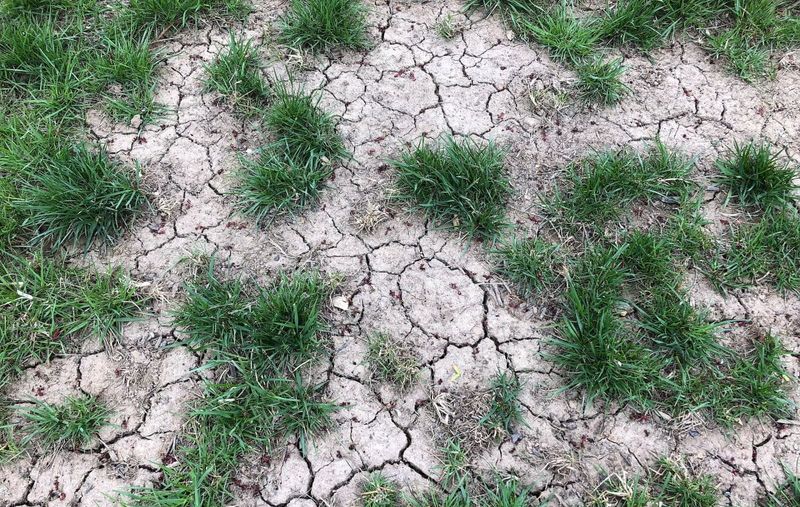
A patch of grass recovering after rain tells an important story about how well the lawn was managed before the dry period began.
Turf that bounces back quickly usually has a stronger root system, better soil conditions, and a history of reasonable mowing and irrigation practices.
Recovery speed is one of the most honest measures of overall turf health.
Some grass species naturally go dormant during extended drought rather than staying green. Bahiagrass, for example, can go partially dormant and then recover when rainfall returns.
Dormancy is a survival response, not a sign of failure. A lawn that goes dormant and recovers cleanly is often healthier than one that was pushed with excessive water and fertilizer to stay green under stress.
Bermudagrass is known for strong recovery potential after dry periods. Its aggressive growth habit and deep root capacity allow it to fill back in relatively quickly once moisture returns.
Zoysiagrass recovers more slowly due to its dense, slow-growing nature, so patience is needed after extended stress periods.
Building a resilient lawn means accepting that turf managed for the actual climate it lives in will always outperform turf managed against it.
Correct species selection, soil preparation, mowing at the right height, and watering based on real need rather than habit create a yard that handles adversity and returns to form.
No lawn stays unchanged through every season, but a well-managed one always finds its way back.