How Georgia Gardeners Can Overwinter Geraniums For Blooms Again Next Year
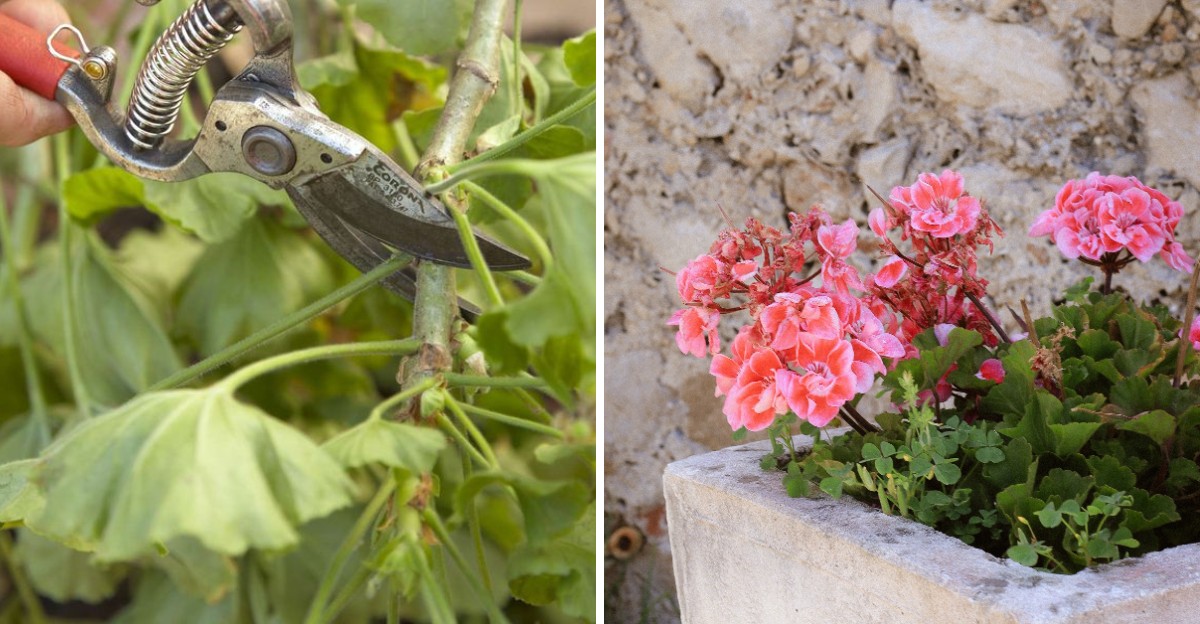
Old-time gardeners used to yank certain flowering plants out of the ground in fall and hang them upside down in the cellar like bundles of herbs. Come spring, those bare, sleepy stems sprouted fresh leaves again.
I love that trick because it feels like a magic act with roots. The plant in question is actually a tender perennial from South Africa, not a true annual at all.
Most of us still toss it on the compost pile every November.
Here in Georgia, that habit costs you money and a head start. A plant you save this fall often comes back bigger, woodier, and quicker to flower than any nursery six-pack.
You also get to keep that one color you could never find again.
Your favorite porch pots might have a second act waiting in the garage, saving you from buying new plants every spring.
1. Those Red Geranium Blooms Are Hiding A Tropical Secret
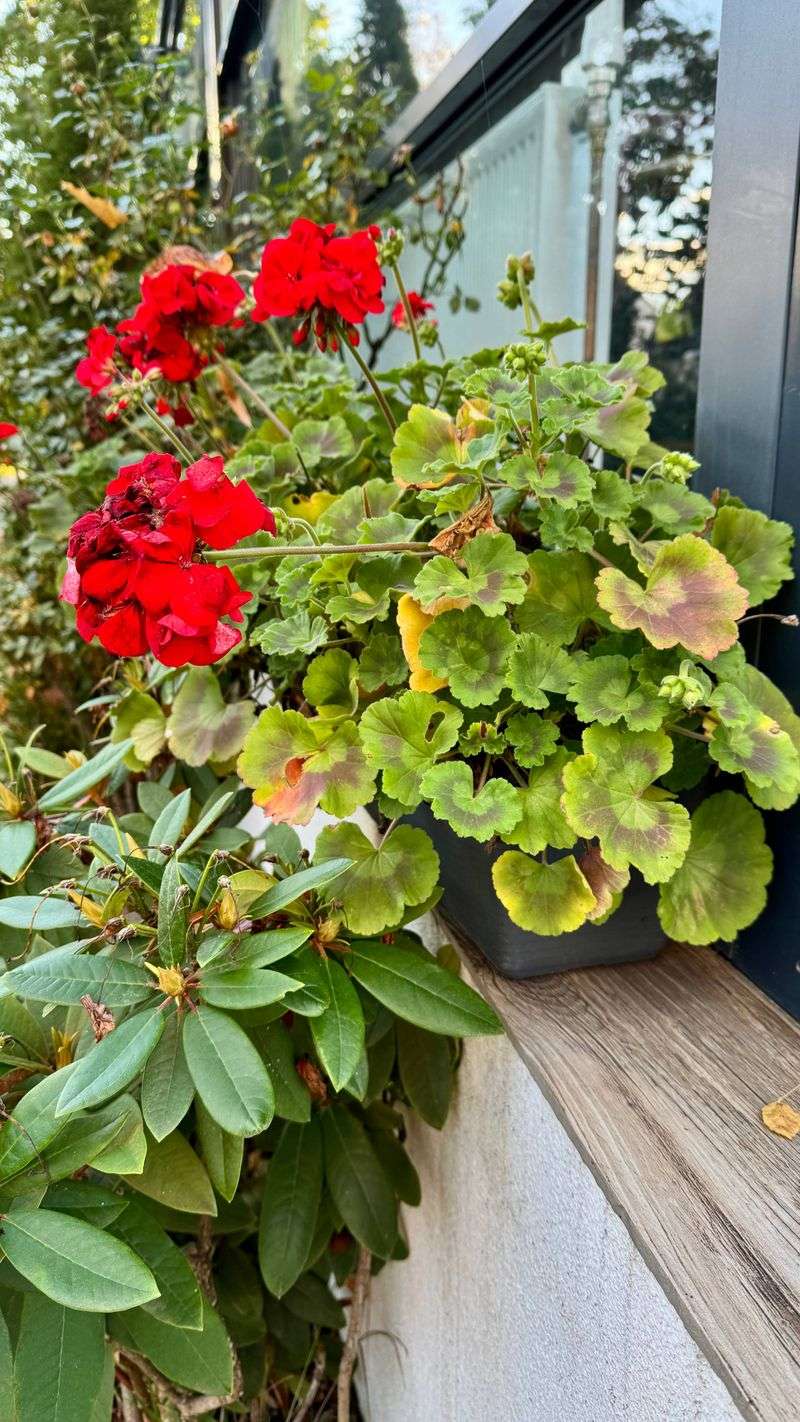
Common garden geraniums are not really geraniums at all. Botanists call them Pelargonium, and their wild ancestors grow in the warm, dry hills of South Africa.
That heritage explains a lot. These plants handle heat and drought surprisingly well, but they have little defense against hard freezes.
A night in the mid-20s usually turns soft stems to mush, while a light frost may only scorch the leaves.
Georgia sits mostly in USDA zones 7 and 8, with the far south reaching zone 9. In the warmest coastal and southern spots, a geranium tucked against a south-facing brick wall might squeak through a mild winter.
Most of the state gets too cold for that gamble, especially up in the mountains.
So the real secret is simple. Your plant wants to keep living, and it only needs shelter from cold.
Treat it like a perennial houseguest instead of a throwaway annual, and it can bloom for years.
I find that idea freeing. Once you know the plant’s true nature, saving it stops feeling like a chore and starts feeling like common sense.
Next, you just need to pick the right moment and the right method for your space.
2. Move Potted Geraniums Inside Before Nights Drop Below 45 Degrees
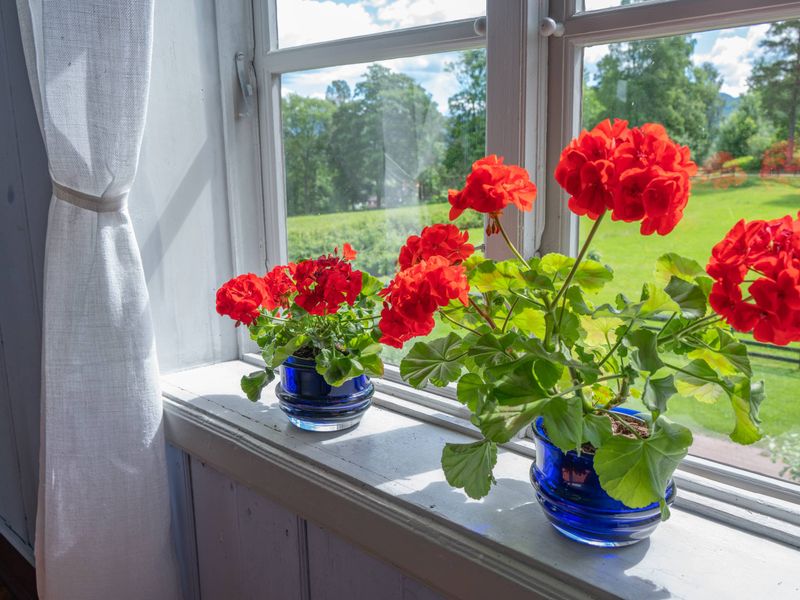
Timing is the step most people miss. University extension experts suggest acting once nights start dipping into the low 40s, well before the first freeze arrives.
In north Georgia, that often means mid to late October. Middle Georgia usually has until early November, and coastal gardeners may stretch things a bit longer.
Keep an eye on your local forecast rather than the calendar alone.
Before anything comes inside, give each plant a careful once-over. Choose only the sturdiest, healthiest specimens.
Skip any with yellow, spotted leaves, soft stems, or tiny whiteflies and aphids hiding underneath.
A gentle spray with water or insecticidal soap helps clean off hitchhikers. Snip off spent flowers and fading foliage too, since they invite gray mold indoors.
Personally, I set my pots in a shady spot for a few days before the move. That short transition helps plants adjust from bright outdoor sun to dimmer indoor light without dropping so many leaves.
Planted in the ground? Dig them up now with a good root ball, or take cuttings instead.
Either way, beating the cold by a week is far better than racing it by a night.
3. A Sunny Window Keeps Geranium Flowers Coming All Winter
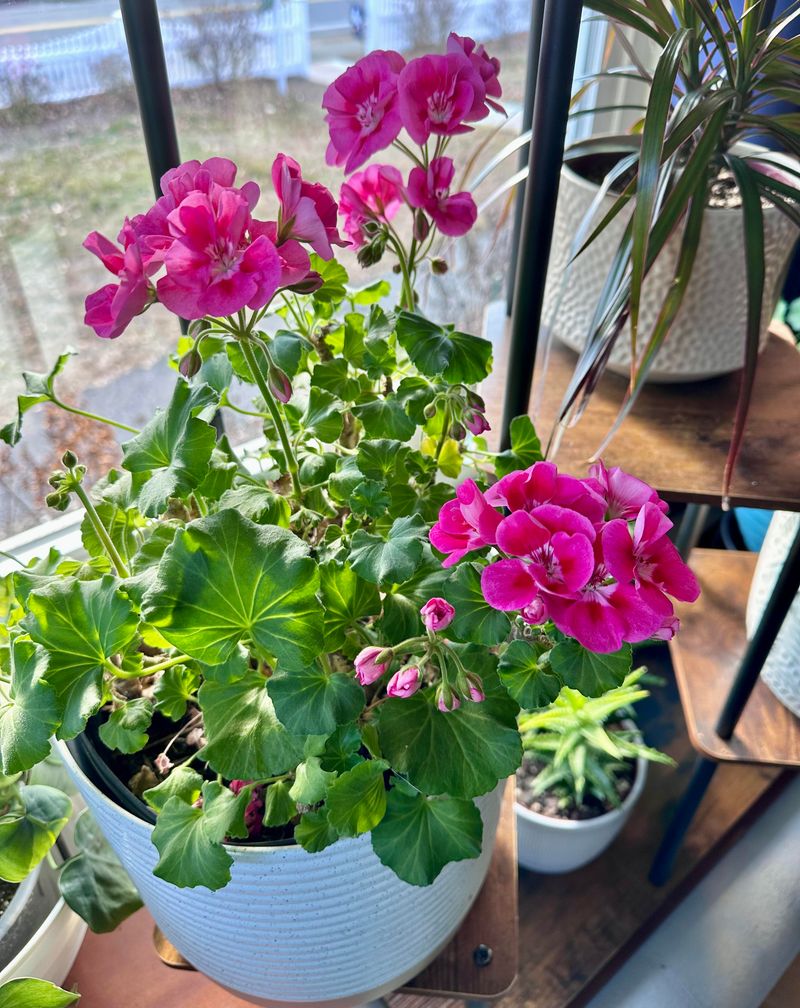
Few things cheer up a gray January like a geranium still blooming on the windowsill. Keeping your plant as a houseplant is the easiest method, especially for anything already growing in a container.
Start by trimming the plant back by about one-third to one-half. That smaller size means less stretching and a fuller shape later.
Light matters most. A south or west-facing window works best, and a simple LED grow light can help on dim days.
Daytime temperatures around 60 to 70 degrees suit them nicely, with cooler nights near 55.
Keep pots away from heating vents and fireplaces. Dry, blowing air stresses the leaves fast.
Watering takes a light touch. Let the top inch or so of soil dry out between drinks, then water deeply and empty the saucer.
Soggy roots in winter often lead to rot.
Hold off on fertilizer until late winter, when growth picks up again. Feeding a slow-growing plant mostly produces weak, floppy stems.
Expect a few yellow leaves during the move. Pluck them off and be patient, because the plant usually settles in within a couple of weeks and may keep flowering right through the cold months.
4. Bare-Root Geraniums Can Snooze In Paper Bags In Your Garage
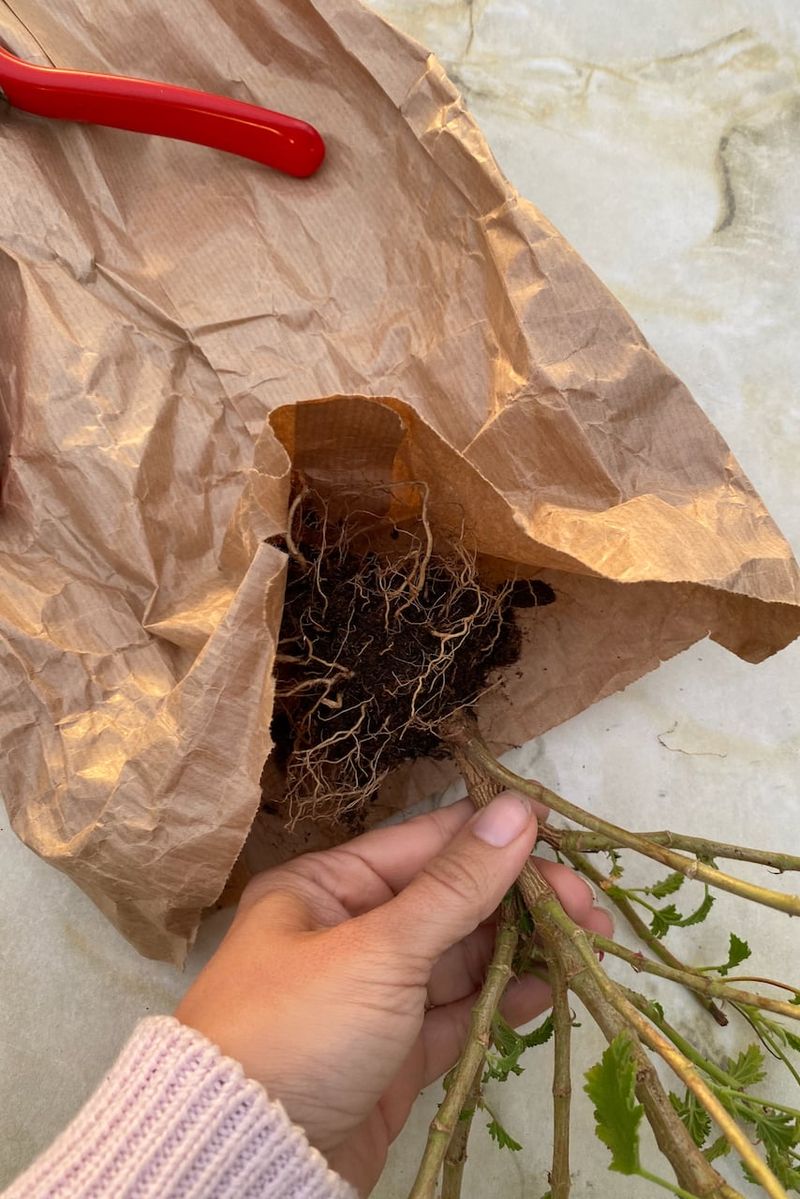
Grandma’s paper-bag trick still works, and it takes up almost no room. This dormant storage method suits gardeners who lack sunny windows but have a cool garage or basement.
Before a hard freeze, dig up the whole plant. Shake off as much soil as you can, then let the roots air-dry for a day so mold doesn’t settle in.
Next, remove leaves and flowers. Place one or two plants in an open paper bag or cardboard box, or hang them upside down from a rafter with twine.
The ideal storage spot stays cool, dark, and dry, roughly 45 to 55 degrees. It must stay above freezing, so an unheated room near the house works better than a drafty shed.
Check on your sleepers about once a month. If stems look badly shriveled, soak the roots in water for an hour or two, let them drain, and return them to storage.
Fair warning, success rates vary. Some plants pull through beautifully, while others give up quietly.
I like to store a few extras, so a couple of losses never break my heart. Firm, plump stems in spring mean you’re in business.
5. Geranium Stem Cuttings Give You Free Plants For Spring
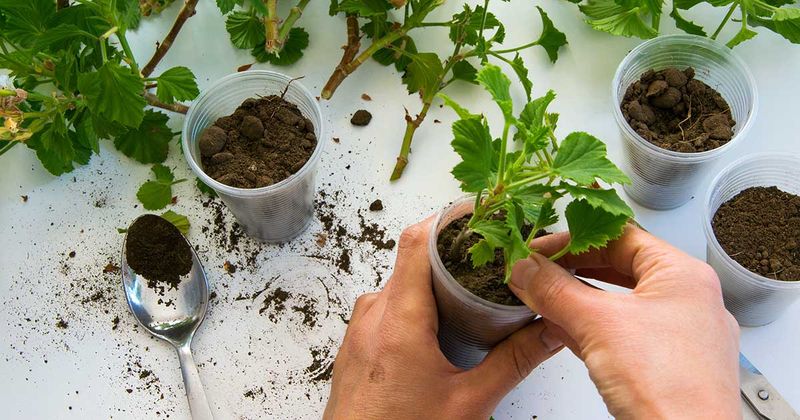
Short on space? Snip off a few stem tips and you can carry a whole collection through winter in a single tray.
Use clean, sharp pruners to cut 3 to 6-inch pieces from healthy, non-flowering stems. Remove the lower leaves so a couple of bare nodes show, since that’s where new roots form.
Rooting hormone is optional, but a light dusting can speed things up. Stick each cutting into a moist, well-draining mix, such as perlite, coarse sand, or a seed-starting blend.
Skip the plastic tent. Unlike many cuttings, geraniums prefer drier air and may rot when kept too humid.
Bright, indirect light works best during rooting.
Keep the mix lightly damp, not wet. Most cuttings root in about 3 to 8 weeks.
A gentle tug that meets resistance tells you roots have formed.
Once rooted, move each one to its own small pot of fresh potting soil and set it in your sunniest window.
Fun fact for history buffs: Thomas Jefferson grew pelargoniums and once gave one as a gift. These plants have been passed along by cuttings for centuries, so you’re keeping a very old tradition alive.
6. Leggy Winter Geranium Stems Mean Too Little Light, Not Failure
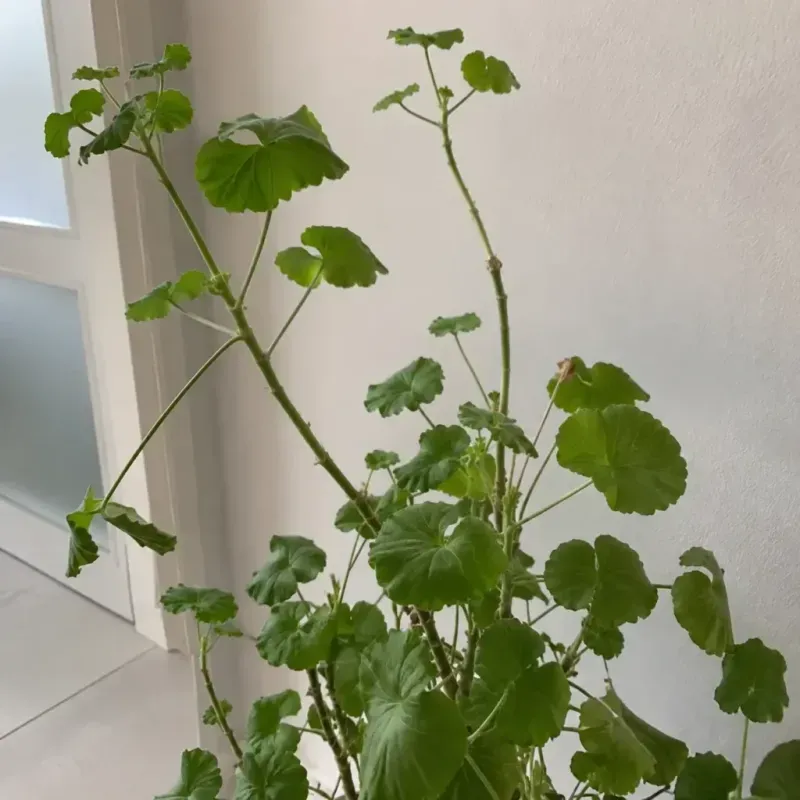
By February, many indoor geraniums look like they’ve been stretching for a yoga class. Long, bare stems with leaves only at the tips are normal for this season.
Short winter days simply don’t provide the light these sun lovers crave. The plant grows toward whatever brightness it can find.
Rotating the pot every week or so keeps growth more even.
Yellow lower leaves usually point to overwatering or low light. Stick a finger in the soil before you reach for the watering can.
Gray fuzzy patches on flowers or leaves often signal botrytis, a fungal problem that loves cool, damp, crowded conditions. Remove affected parts, space plants out, and improve airflow.
Tiny white insects fluttering up when you brush the leaves are whiteflies. Yellow sticky cards and insecticidal soap help keep their numbers down.
Hard little bumps or corky spots on leaf undersides, called edema, show up when roots take in more water than leaves can release. Watering less often usually solves it.
None of this means you’ve failed. Honestly, a scraggly geranium in late winter is a sign it survived.
A good spring haircut fixes the looks in a hurry.
7. Prune Geraniums Hard In Late Winter To Wake Them Up
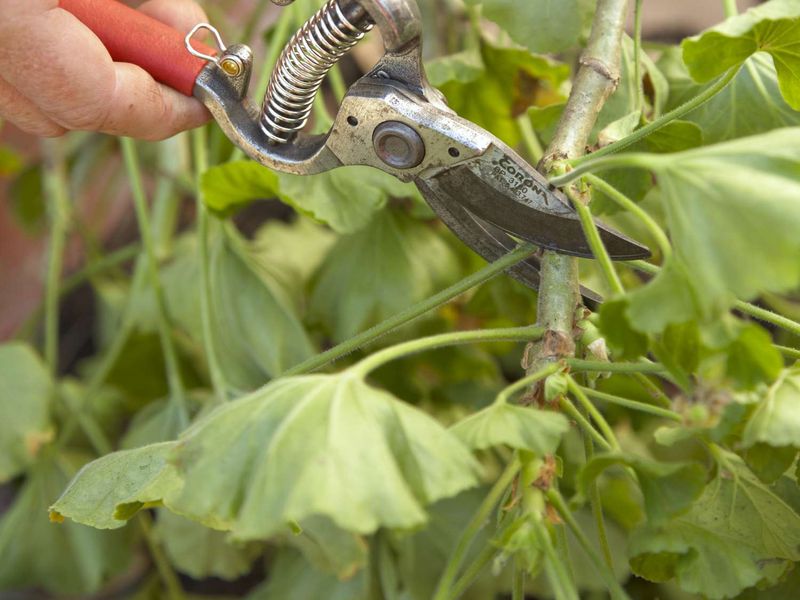
Late February through March is wake-up time. A bold pruning now sets the stage for a bushy, flower-packed plant later in spring.
For houseplant geraniums, cut stems back by about half to two-thirds. Make each cut just above a leaf node, because new shoots sprout from those spots.
Bare-root plants need a little detective work. Scratch the stems gently with a fingernail and look for green tissue underneath.
Trim away anything brown and brittle, then pot up the firm sections in fresh potting mix.
Water thoroughly once, then let the soil dry slightly before watering again. Set the pots in your brightest window and watch for tiny green buds within a few weeks.
When growth starts, begin feeding with a balanced, water-soluble fertilizer at half strength every couple of weeks. Pinching the tips of new shoots encourages branching and more flower clusters.
I’ll admit the first cut feels scary. Snipping a living plant down to stubs seems wrong somehow.
Trust the process, though, because geraniums respond to pruning with enthusiasm. The ones I prune hardest usually end up as the fullest pots on my porch.
8. Harden Off Your Geraniums Before They Return To The Porch
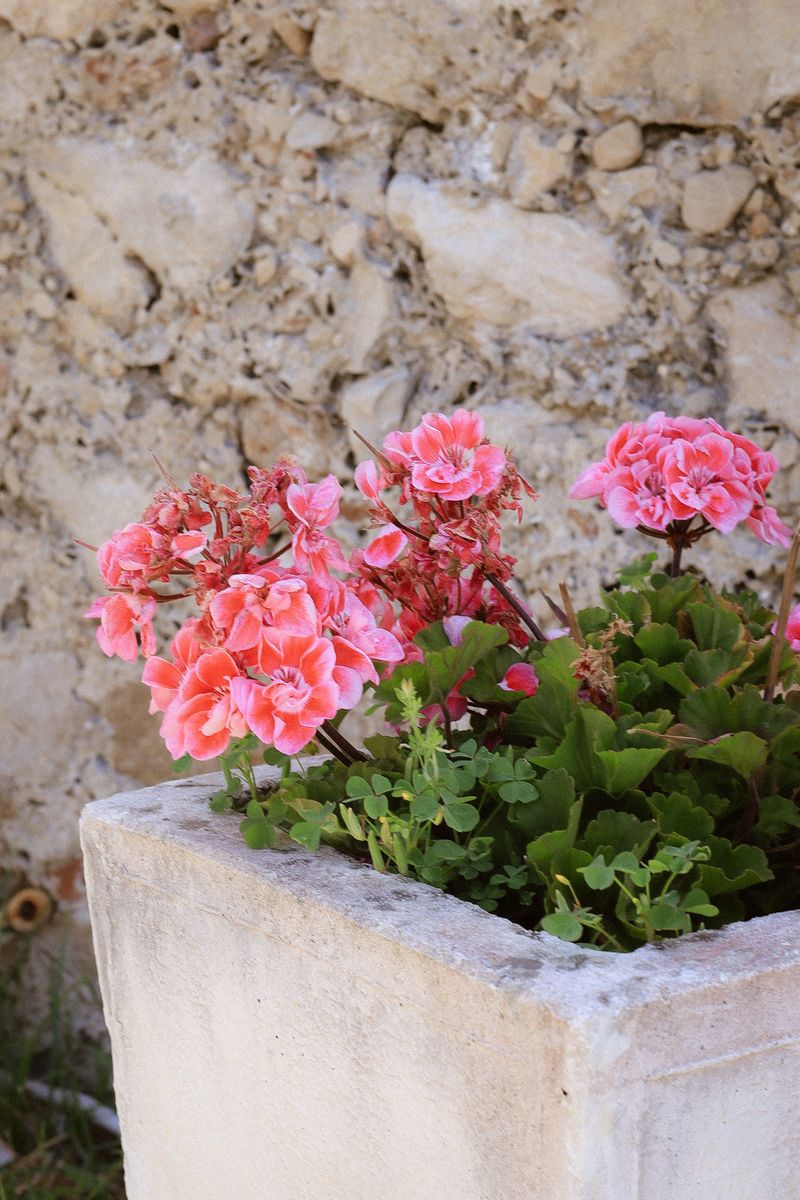
Patience pays off big at this last stage. Rushing plants straight from the windowsill into full Georgia sun can scorch tender leaves in a single afternoon.
Wait until frost danger has passed for your area. Average last frost dates run from about mid-March along the coast to mid-April or later in the north Georgia mountains.
Check your county Extension office for local timing.
Then harden plants off over 7 to 10 days. Start with a few hours in shade, and gradually add more sun and wind each day.
Bring pots back inside if a surprise cold snap appears in the forecast.
Once they adjust, give geraniums morning sun and some afternoon shade, especially in hot middle and south Georgia summers. Use well-draining soil, water when the top inch dries, and keep removing spent blooms.
My favorite takeaway is this one. Saving even one plant teaches you more about geraniums than buying a dozen new ones.
Start small this fall, perhaps with one favorite pot and a few cuttings. By next spring, you could have a porch full of blooms that cost nothing but a little care.