This Toxic Weed In Georgia Gardens Is Often Mistaken For A Tomato
Finding what looks like a volunteer tomato among your garden plants can feel like an unexpected bonus. That excitement should wait until you know exactly what appeared.
One toxic weed can resemble a tomato enough to cause confusion, especially before its obvious features develop.
The resemblance matters because both plants belong to the same botanical family and can share familiar leaves. In Georgia gardens, that makes careful identification important before you keep an unknown volunteer.
As the plant matures, several details begin separating it from the vegetable you expected.
Notice how the leaves, flowers, and fruit develop instead of trusting your first impression. Those changes can provide the clues you need.
Learn the differences before treating any unfamiliar plant like a tomato, and you can avoid a risky garden mixup.
1. Small Fruits Make This Weed Look Like A Tomato
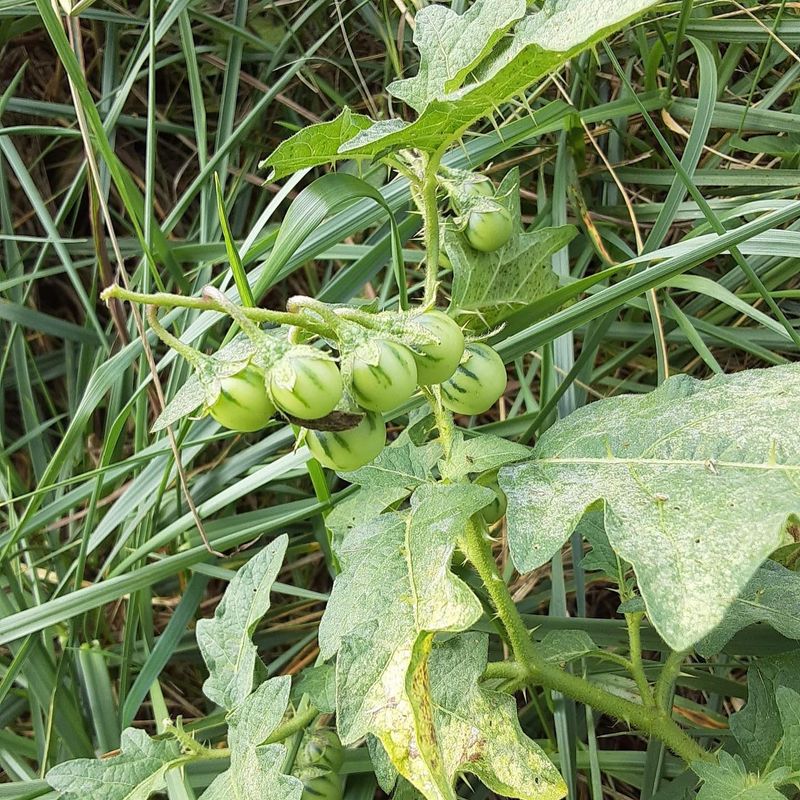
Green marbles dangling near a garden path fool plenty of experienced growers. Horsenettle berries look so much like small tomatoes that people reach for them without thinking twice.
Most of the fruits measure roughly half an inch across, round and smooth-skinned.
They hang in loose clusters along the upper stems, often two or three together. Late summer is when they show up most in Georgia vegetable beds.
Volunteer tomato seedlings sprout in those same spots, which adds to the confusion.
One quick check settles the question. Tomato stems feel soft and slightly fuzzy, while horsenettle stems carry stiff spines you can feel with a fingertip.
Smell helps too, since crushed tomato leaves give off that familiar sharp scent.
Leaf shape offers another clue, with wavy lobes instead of the toothed edges tomato foliage has.
Gardeners sometimes assume a stray tomato blew in from the compost pile. That guess is reasonable, but the prickles answer it fast.
Teach kids in the household to leave any unfamiliar berry alone. Small fruits sitting at eye level are exactly the kind of thing curious hands grab.
Pulling the plant before fruit sets saves you the guesswork later in the season.
2. Horsenettle Belongs To The Tomato Family
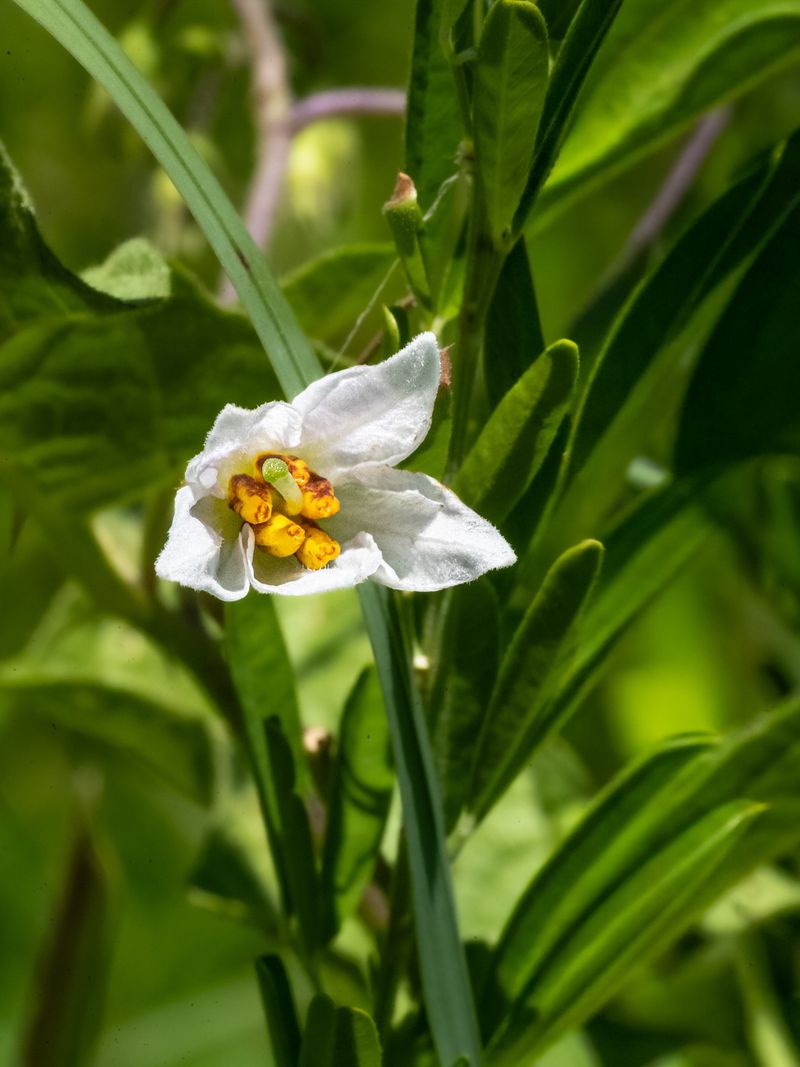
Blame the family tree for the mix-up. Horsenettle is Solanum carolinense, a real nightshade relative of tomatoes, potatoes, peppers, and eggplant.
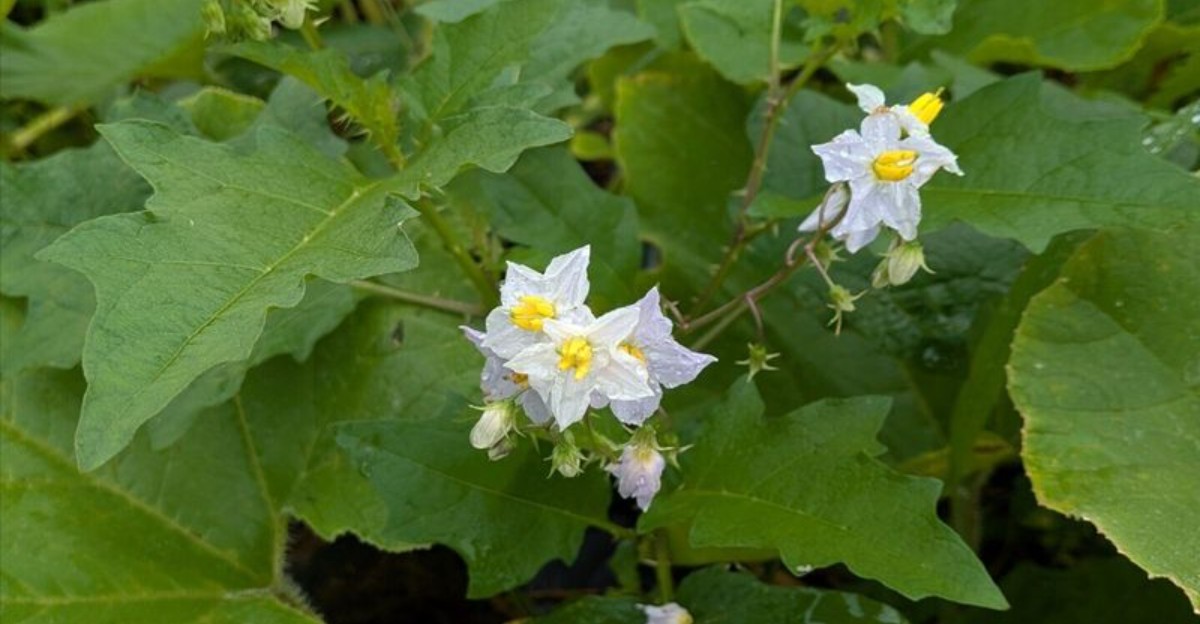
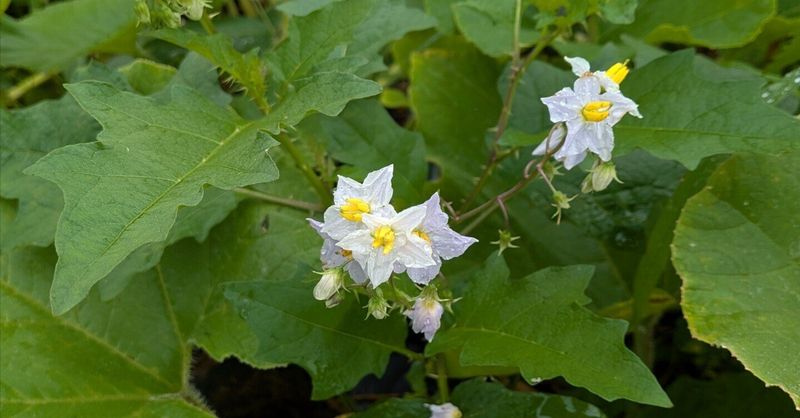
Its flowers show that connection with five pointed petals around a bright yellow center.
Blooms range from white to pale lavender and resemble potato blossoms. Bumblebees work them steadily through early and mid summer.
Perennial habit sets it apart from garden tomatoes, which finish after one season.
Height usually stays between one and three feet in open ground. Plants in richer soil can stretch taller and lean over nearby crops.
That shared ancestry matters to anyone growing food.
Horsenettle can host pests that also feed on tomatoes and potatoes, including flea beetles and Colorado potato beetles. It may carry some of the same plant viruses as well.
Leaving it standing beside a tomato row does your harvest no favors.
Across north Georgia, it shows up in pastures, roadsides, and neglected corners of yards. Seeds move from those places into cultivated soil pretty easily.
Your Georgia Garden Changes Every Week. Your Plan Should Too.
Gardening in Georgia changes quickly throughout the season. Every Friday you’ll receive a simple weekly plan showing exactly what to plant, prune, fertilize, harvest, and protect so you never miss the right timing.
Clearing it from fence lines and bed edges lowers pest pressure over time.
Results vary with your soil and how established the patch already is. Even so, fewer host plants nearby generally means fewer headaches later.
3. Sharp Thorns Cover Its Stems And Leaves
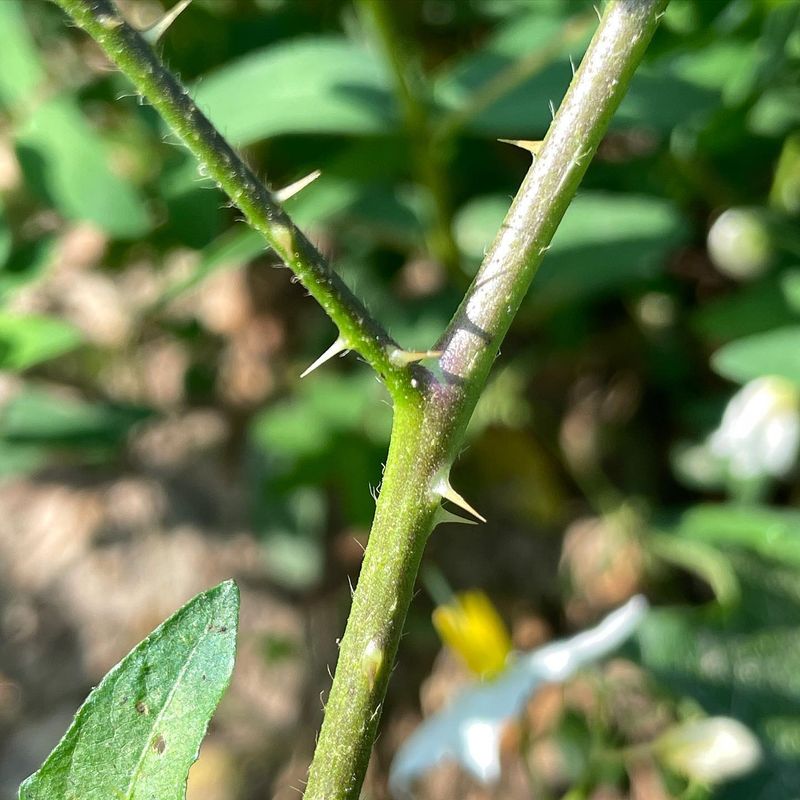
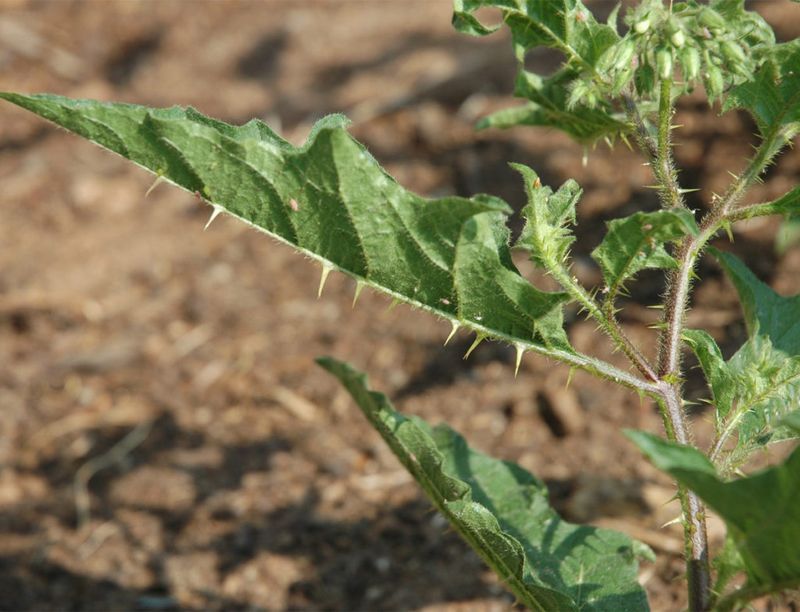
Reach for it bare-handed once and the lesson sticks. Stiff prickles run up the stems and even down the center vein of each leaf.
Those spines are pale yellow and sharp enough to slip through thin cotton gloves.
Leather gloves work much better. Long sleeves help too, especially when you are pulling plants out of a crowded bed.
Old dried stalks keep their prickles through winter, so raking a bare bed can still sting.
Thorn density varies from plant to plant and season to season. Younger shoots feel softer, though the spines firm up quickly.
Grazing animals tend to avoid the plant because of those prickles. That is one reason it lingers in Georgia pastures while grass gets nibbled down around it.
Hand-pulling rarely gets the whole root, and snapped stems come back.
A narrow spade or digging fork gives you a better shot at lifting more root. Moist soil after a good rain makes the job easier.
Bag the stems instead of tossing them onto a compost pile.
Barefoot walks near an infested spot are worth skipping. Fallen prickly stems hide well in mulch and turf.
Kids and pets usually learn to steer clear on their own, but a quick warning helps.
4. The Berries Turn Yellow As They Ripen
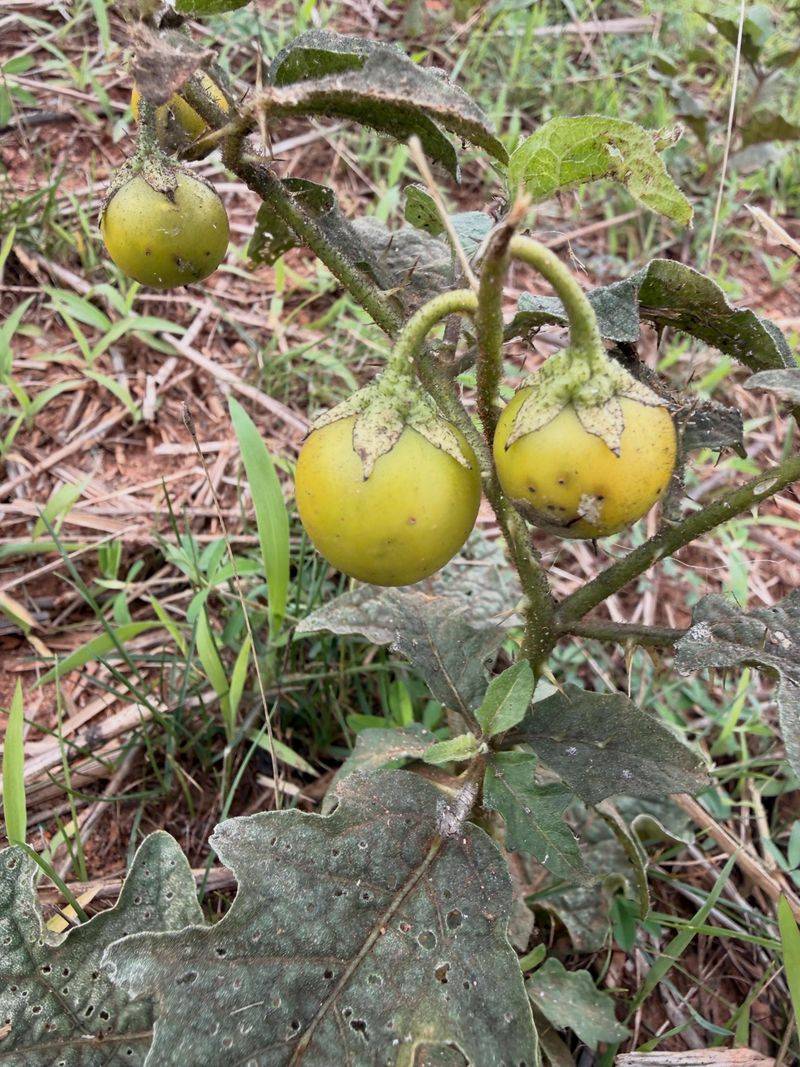
Color is the tell most people miss. Young horsenettle fruits are green with faint darker stripes, then shift to a plain waxy yellow.
Ripe berries look startlingly like small yellow cherry tomatoes.
That resemblance is exactly why the plant causes worry around families. Yellow signals ripeness to us, and children read it the same way.
Size stays small throughout, rarely bigger than a marble. Nothing about the fruit gets meaty the way a real tomato does.
By fall the skins wrinkle and the fruits sag into soft little globes.
Leaves drop first, so berries often hang alone on bare spiny stems. Winter gardens in Georgia hold onto them well past the first frost.
Flowering comes in waves, so green and yellow fruit frequently share one plant.
Snipping fruit clusters off before they yellow cuts down on seed spread.
Put clipped berries in the trash rather than the compost bin. Seeds inside can stay viable, and compost heat is uneven at best.
Birds sample ripe fruit and carry seeds to new corners of the yard.
Rain and heat shift the ripening window by a few weeks either way.
Watching for that yellow stage gives you a useful signal each summer. Clear the plants before it arrives and cleanup gets much simpler.
5. Every Part Of This Weed Is Toxic
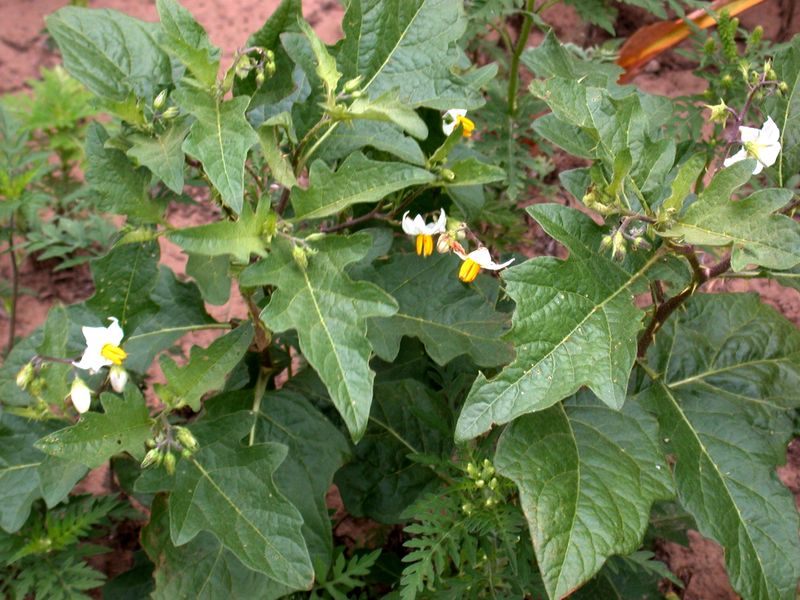
Toxic compounds sit in every part of the plant, not just the fruit. Leaves, stems, roots, and berries all contain glycoalkaloids related to solanine.
Ripe yellow fruit remains a concern, so ripeness does not make it safe.
Reactions usually start in the stomach, with nausea, cramping, or vomiting. Drowsiness and headache have also been reported.
Amounts matter, and one accidental taste is not the same as eating a handful.
Cattle and horses in Georgia generally leave it alone, though hungry animals on thin pasture sometimes nibble.
Hay cut from an infested field can carry dried stems and fruit. Checking bales is worth the trouble for anyone keeping livestock.
Skin contact is not the main worry, but broken skin from the prickles can get irritated.
Wash your hands after handling plants or pulled roots. It is a simple habit that costs nothing.
Foraging guides warn against sampling any wild nightshade fruit for good reason. Lookalikes in that group are easy to confuse out in the field.
When identification feels uncertain, treating a mystery berry as off-limits is the safer call.
6. Deep Rhizomes Help New Growth Return
Cutting the top off buys a few weeks at most. Horsenettle spreads by underground rhizomes that push up new shoots whenever the old stem disappears.
Those roots run sideways and can reach well below normal digging depth.
Tilling makes things worse by chopping roots into pieces. Each fragment with a bud on it can start a fresh plant.
Patience beats brute force with this weed.
Removing shoots every couple of weeks slowly drains energy stored in the root system. Progress shows up over a season or two, not overnight.
Thick mulch or cardboard over a cleared patch slows regrowth in beds.
Mowing keeps a patch shorter but does not shrink the root network much. Fruit production drops though, which limits new seedlings.
Results depend on soil type, moisture, and how long the patch has been there. Older colonies with wide roots take longer to weaken.
Your county Extension office in Georgia can point you toward labeled control products for lawns or pastures.
Treatments timed near flowering tend to work better than early spring sprays. Follow the label rates and site restrictions carefully.
Spot treatment near vegetables carries real risk of drift damage.
Marking problem spots with a flag helps you track them between garden visits.
7. Seeds Give Horsenettle Another Way To Spread
Roots are only half the problem. Every berry holds dozens of small flat seeds, and one plant can set a surprising amount of fruit.
Seeds can stay viable in soil for years, which explains sudden seedlings in a bed you cleaned out.
Birds eat ripe fruit and drop seeds beneath their perches. Fence lines, shrub edges, and spots under power lines collect more than their share.
Manure from animals that grazed an infested pasture can carry seed too.
Bulk topsoil and cheap mulch deserve watching in the weeks after delivery. New weeds appearing in a neat line usually trace back to a delivered load.
Knocking fruit off before it ripens is the cheapest prevention available.
Rinse mowers and tillers after working an infested area. Seed rides along in caked mud more often than people expect.
Georgia gardeners often find the first seedlings along driveway edges and raised bed corners.
Seedlings look deceptively harmless, with soft leaves and no visible prickles. Spines develop as the stem toughens up.
Young plants pull out fairly easily while the root stays shallow. Waiting a month makes that same job much harder.
Keeping a small bucket handy during garden walks makes disposal simple.
A quick weekly stroll through the beds catches most of them early.