Plant These Narrow Privacy Screens Instead Of Emerald Green Arborvitae In Georgia
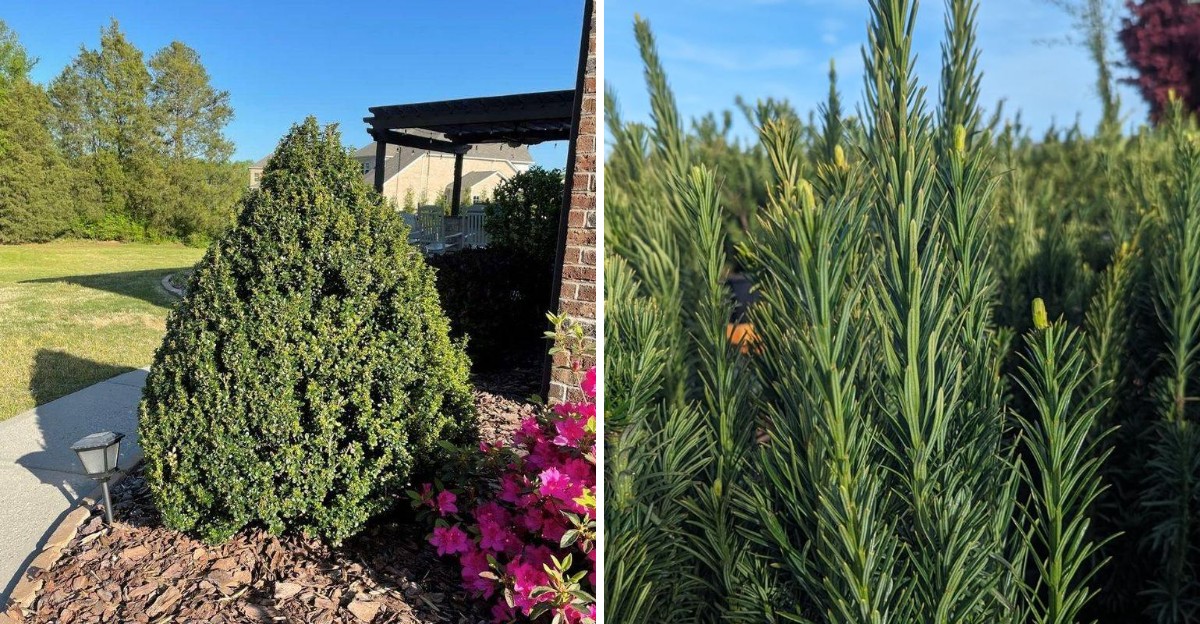
Emerald Green arborvitae appears on nearly every list of narrow privacy trees, making it a common pick for Georgia fence lines. Its tidy shape fits tight spaces where wider evergreens would crowd the yard.
Here in the South, though, it often struggles in ways that catalog photos do not show.
Long stretches of heat and humidity can stress it, and heavy clay soil does not help. Over time, a row that looked full at planting may thin out or brown in spots.
Replacing failing trees in a privacy line is frustrating, especially once the gaps show from the house.
Several narrow evergreens handle these conditions better while still fitting into tight side yards.
Measure the space you have before shopping, since width matters as much as height for a screen.
1. Sky Pencil Holly Fits Into Particularly Narrow Planting Spaces
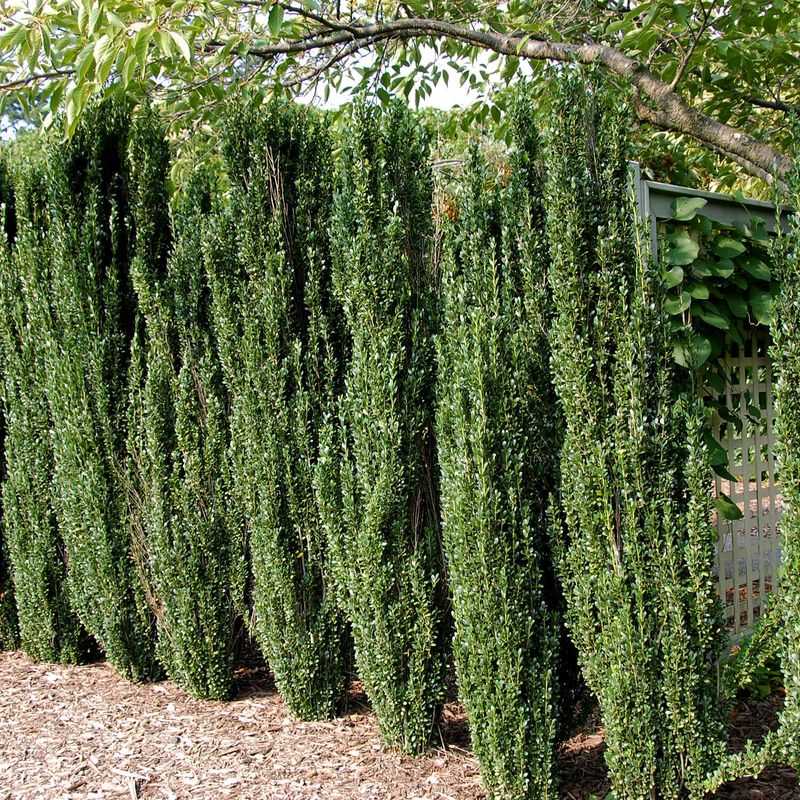
Got a strip of soil barely two feet wide? Sky Pencil holly was practically made for that kind of awkward spot between a driveway and a fence.
Mature plants often reach about 6 to 10 feet tall while staying roughly 1 to 2 feet wide.
Its small, dark green leaves look a bit like boxwood from a distance. Up close, they are smooth and soft, so brushing past them along a walkway feels fine.
Light is flexible here, since this Japanese holly grows in full sun or part shade.
In Georgia, afternoon shade can help it handle the hottest weeks of July and August. Good drainage matters even more, because soggy clay can lead to root rot and yellowing.
Planting on a slight mound is a smart move if your yard holds water after storms.
Older plants sometimes splay open after ice or heavy wet snow. A loose wrap of soft garden twine around the stems can help hold their shape through winter.
Spacing them about 2 to 3 feet apart creates a fairly solid line in a few years.
Growth is moderate, so patience pays off. Buying larger plants costs more upfront, but you get privacy sooner and fewer gaps to wait on.
Once established, its narrow shape needs very little trimming to stay neat.
The upright growth also works well for framing gates or entrances without crowding nearby paths.
2. Taylor Juniper Keeps The Familiar Red Cedar Look Narrow
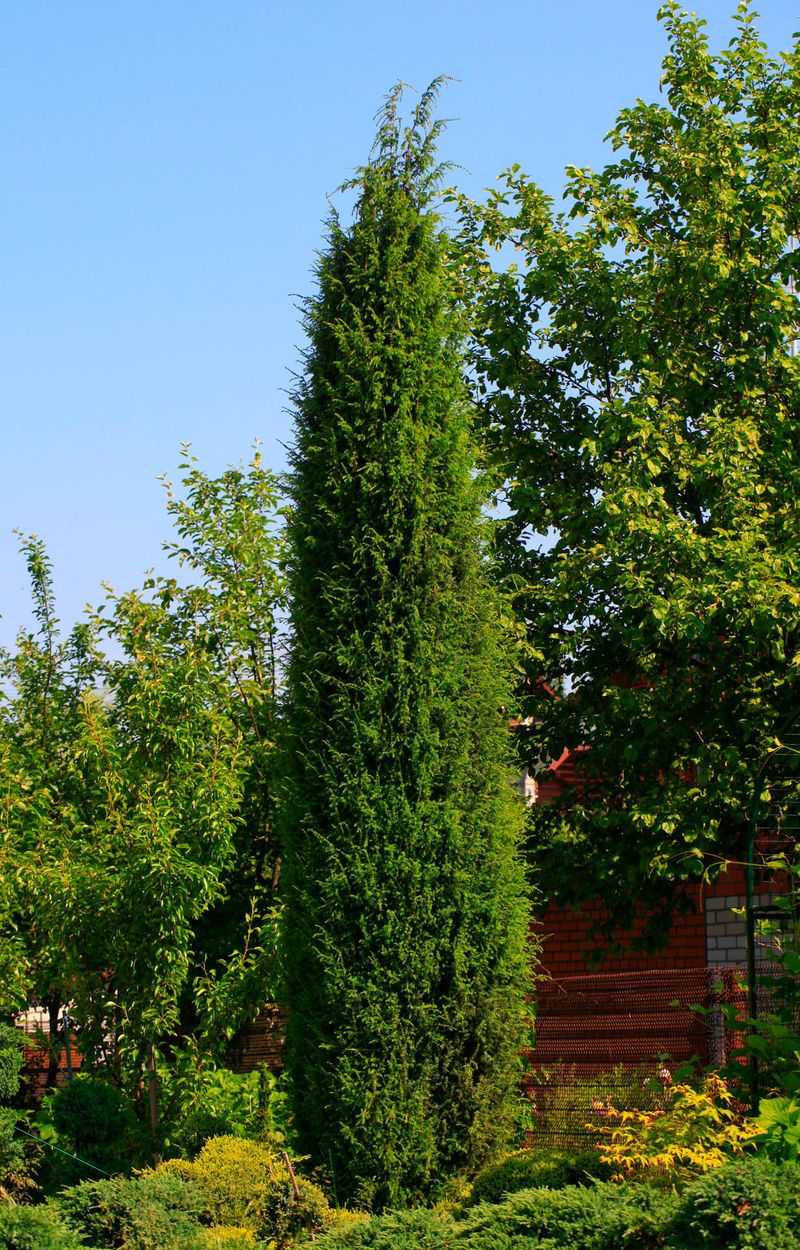
Red cedars grow wild along old fence rows all over the South. Taylor juniper is a selection of that same native tree, just trimmed down by nature into a slim column.
Expect a height of around 20 to 30 feet, with a width usually close to 3 to 5 feet.
That shape makes it handy for blocking a two-story view without eating up your whole yard. Its blue-green foliage gives a softer, airy look compared with heavier evergreens.
Full sun is a must for dense growth.
Shade tends to make junipers sparse and open, so pick your sunniest property line. Once established, Taylor handles dry spells well, which is a real plus during a Georgia summer drought.
Heavy, wet soil is the bigger risk.
Like other junipers, it prefers sharp drainage and can suffer in low spots that stay soggy. Sandy or rocky sites often suit it nicely.
Your Georgia Garden Changes Every Week. Your Plan Should Too.
Gardening in Georgia changes quickly throughout the season. Every Friday you’ll receive a simple weekly plan showing exactly what to plant, prune, fertilize, harvest, and protect so you never miss the right timing.
Cedar-apple rust can show up as orange, jelly-like galls in wet spring weather, especially near apple or crabapple trees. It usually looks worse than it is, but keeping some distance from those fruit trees may help.
Plant them about 4 to 5 feet apart for a tall, continuous green wall.
Give each plant enough room for air circulation, since crowded foliage can stay damp longer after rain. Its naturally upright form also means very little pruning is needed to keep the screen narrow and tidy.
3. Glossy, Spiny Leaves Make Dragon Lady Holly A Tough Barrier
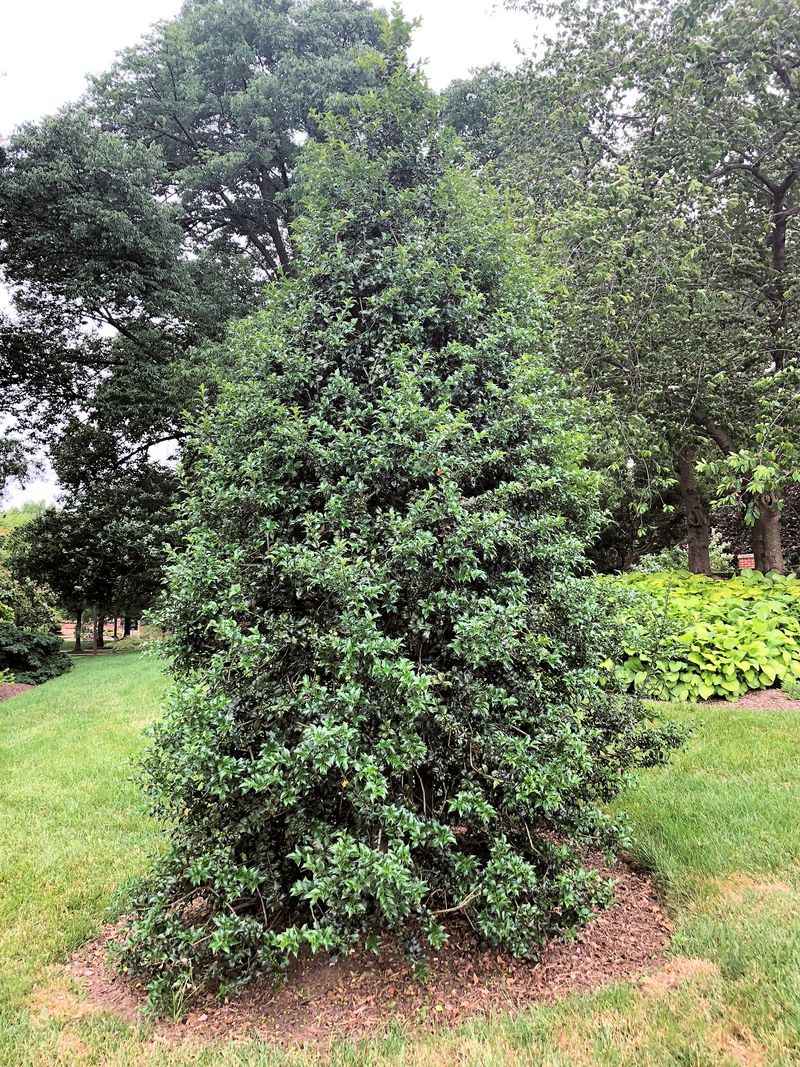
Nobody squeezes through a Dragon Lady hedge twice. Those sharp-tipped, shiny leaves make it one of the best living fences for keeping people and pets on their own side.
Plants generally grow 10 to 20 feet tall and about 4 to 6 feet wide.
Its narrow, upright form stays fairly tidy without much pruning. The deep green leaves hold their gloss through winter, so the screen keeps looking fresh in January.
Berries are another story.
Dragon Lady is a female holly, but it may produce few red berries unless a male holly grows nearby. If berries matter to you, ask your nursery about a suitable pollinator.
Full sun to part shade works well, and denser growth comes with more light.
In Georgia, steady watering during the first summer helps roots settle into heavy soil. After that, the plant usually needs only occasional deep soaking during long dry stretches.
Wear thick gloves when planting or trimming, because those spines are no joke.
Deer usually browse spiny hollies less than softer shrubs, though hungry deer may still nibble new growth. Space plants about 4 to 5 feet apart for a firm barrier along a busy street or open back lot.
Its dense evergreen growth also provides dependable privacy through every season. Give it enough room to mature so the lower branches stay full instead of becoming crowded.
4. Sun-Loving Spartan Juniper Stays Dense And Upright
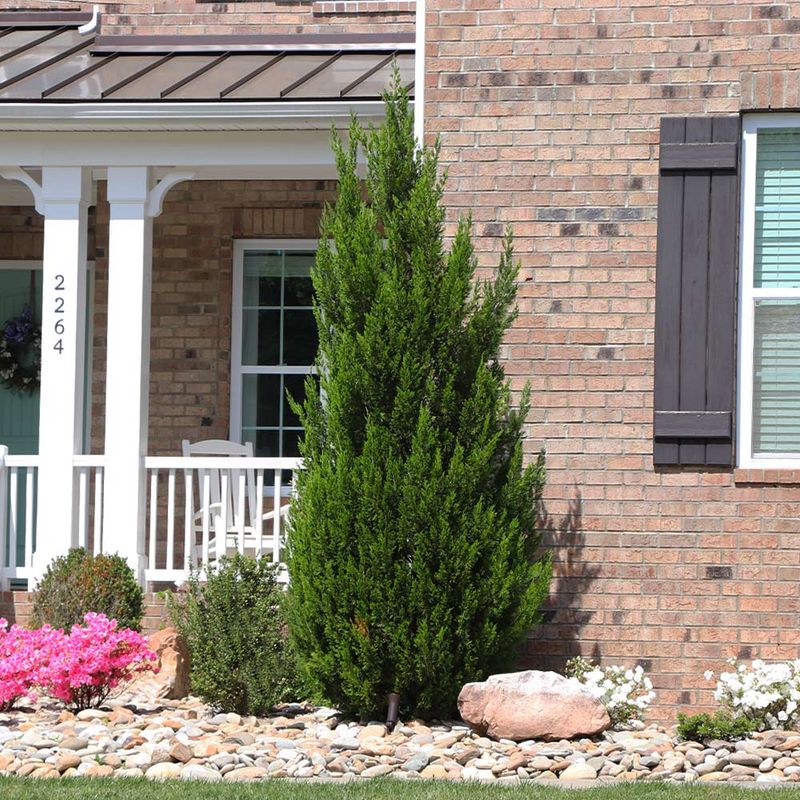
Hot, baking sun is where Spartan juniper feels at home. Plant it on the west side of a patio and it shrugs off afternoon heat that would scorch softer shrubs.
Size usually lands around 15 to 20 feet tall and roughly 3 to 5 feet wide over time.
Dense, rich green foliage gives it a fuller look than many junipers. Its shape is naturally pyramidal, so light shearing is optional rather than required.
Drainage can make or break this plant.
Clay soil that stays wet after rain may cause root problems, so improve the bed or plant on a gentle berm. Across much of Georgia, red clay is common, and a quick drainage test before planting saves headaches later.
Dig a hole, fill it with water, and see how fast it empties.
If water lingers for many hours, choose a better spot or raise the planting area. Once roots settle in, Spartan handles drought fairly well.
Watch for bagworms in summer, since junipers can attract them too.
Pulling off the small hanging bags by hand works well on young plants. For spacing, about 3 to 4 feet apart gives a thick screen while still allowing airflow between plants.
Its sturdy branches also hold up well in exposed sites where strong winds can challenge softer screening plants.
5. Where Shade Falls And Winters Stay Mild, Podocarpus Shines
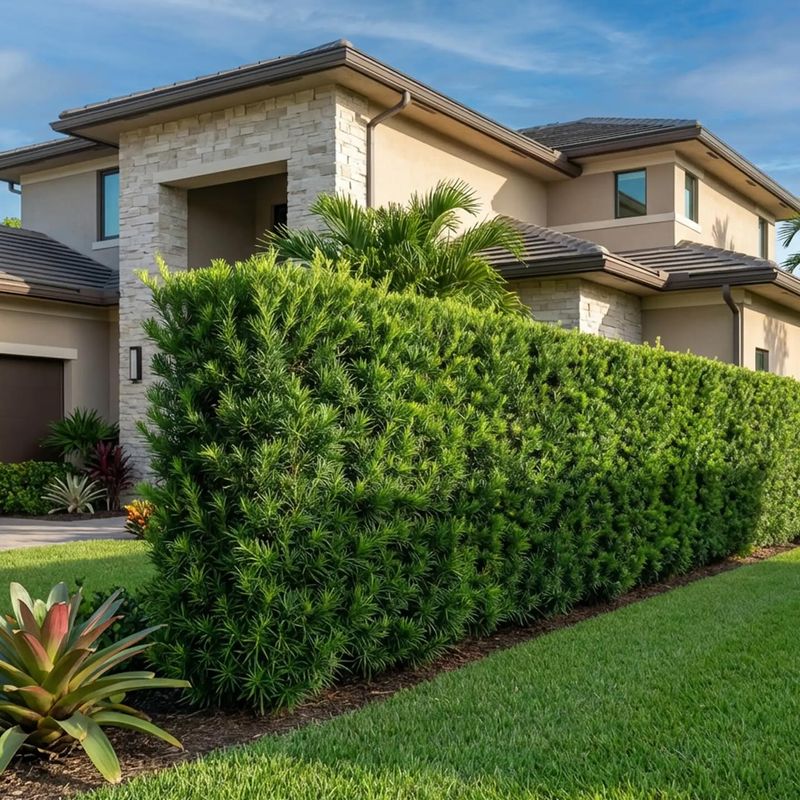
Soft, strappy leaves give podocarpus a look that feels almost tropical. It brings a lush, layered texture to shady spots where most screening plants sulk.
Often called Japanese yew, this plant can be kept narrow with light pruning.
Left alone, it may grow quite tall over many years. Regular trimming keeps it around 8 to 12 feet and just a few feet wide, which suits tight courtyards and side yards.
Cold tolerance is the main limit.
Podocarpus does best in milder areas, so it fits coastal and south Georgia more reliably than the mountains. In the Atlanta area, a hard winter may brown the leaves, especially on exposed sites.
Shelter from harsh winter wind helps if you garden near its cold edge.
It handles full sun to fairly deep shade, and it tolerates salty coastal air reasonably well. Well-drained soil keeps roots healthy, so avoid spots where water pools.
Deer tend to leave it alone more than many shrubs, though no plant is fully deer-proof.
Plant about 3 feet apart for a dense hedge. Shearing in late spring and again in summer keeps the screen thick from the ground up.
Light shaping can encourage fuller growth without taking up much extra space. Fallen foliage is usually manageable around patios and walkways.
Containers also work well near entrances where planting space is limited.
6. Upright Japanese Plum Yew Handles Shade And Deer Pressure Well
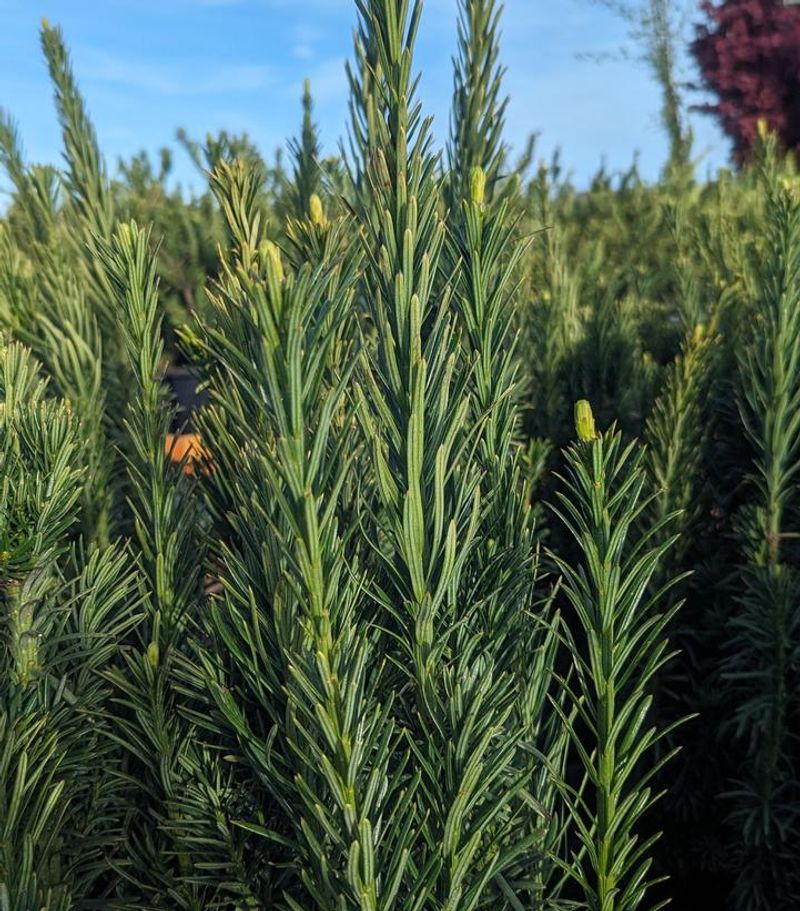
Deer stroll right past it. Upright Japanese plum yew is one of the few evergreens that looks like a classic yew yet usually escapes heavy browsing.
Dark green needles grow in neat, spiraling rows along stiff, vertical stems.
Upright types such as Fastigiata often reach about 6 to 10 feet tall and 3 to 5 feet wide. Growth is slow, so start with bigger plants if privacy is urgent.
Shade lovers, take note.
Plum yew handles part to full shade and tends to tolerate Southern heat better than true yews. In Georgia, it often looks best with morning sun and afternoon shade.
Hot, open sites can cause leaf scorch, especially in the first summer or two.
Moist but well-drained soil is ideal. Adding a few inches of pine bark mulch keeps roots cool and helps hold moisture during dry spells.
Spacing around 3 to 4 feet apart works for a hedge.
Pruning is simple, since the plant takes trimming well and can regrow from older wood. A light cut in late winter keeps it compact and encourages new branches to fill in from below.
Once established, the shrub can remain attractive for years with relatively little attention. Slow growth also makes it easier to control near paths and property lines.
Fallen needles rarely create the heavy seasonal cleanup associated with larger screening trees.
7. Compact For A Magnolia, Little Gem Screens With Fragrant Blooms
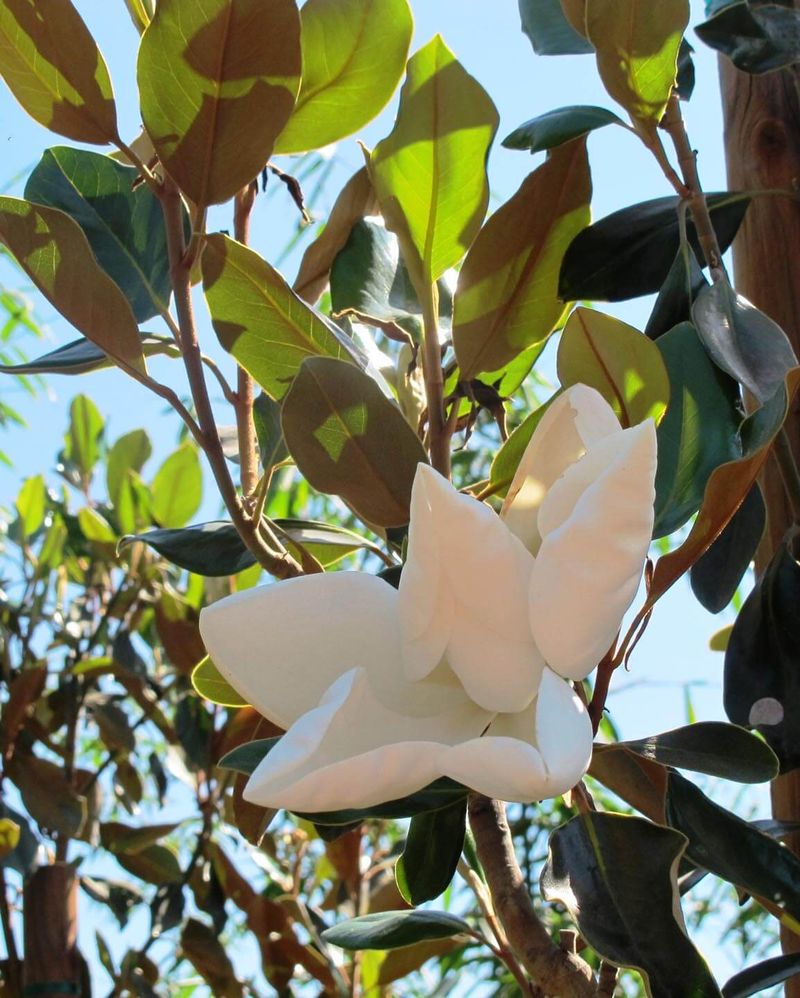
Imagine a privacy screen that smells like a Southern porch in May. Little Gem magnolia brings big white blooms to a much smaller frame than its giant cousin.
Standard Southern magnolias can grow 60 feet or more, which overwhelms most yards.
Little Gem typically reaches about 20 to 25 feet tall and 8 to 10 feet wide. That is still wider than other plants here, so give it a little more room.
Glossy leaves with fuzzy brown undersides stay on all year.
Flowers often open in late spring and may keep appearing lightly through summer. Few screens feel more at home in Georgia, where magnolias are part of the landscape story.
Plant in full sun to part shade for the best flowering.
Young trees need steady water during their first couple of summers. After that, they handle heat well, though long droughts can still cause leaf drop.
Leaves will fall throughout the year, so expect some raking near patios.
Keep lower branches in place, since they block views at eye level. Space trees about 8 to 10 feet apart, and avoid tight spots against the house, because roots spread wide and shallow.
Fallen leaves can be chopped with a mower and added to garden beds instead of being hauled away. Mature specimens also cast useful shade over nearby planting areas.
Choose the location carefully from the start, since moving an established magnolia later can be difficult.
8. Pick Steeds Holly For A Tidy Pyramidal Screen
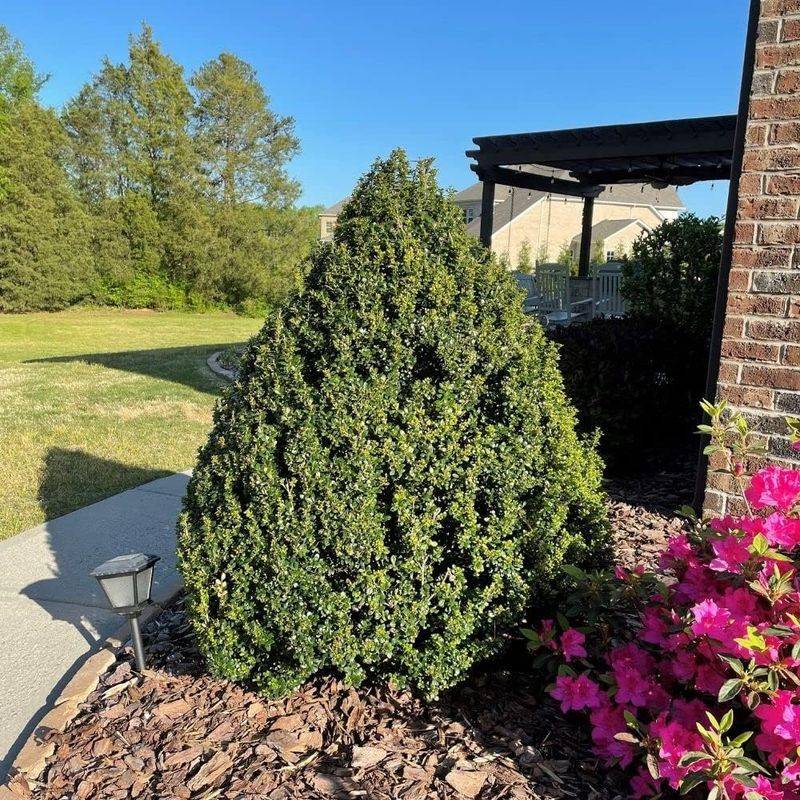
Neat freaks will love Steeds holly. Its naturally pyramidal shape looks clipped and polished even when you barely touch it.
Small, glossy leaves crowd tightly along the branches, giving it a fine, dense texture.
Most plants grow around 6 to 10 feet tall and 3 to 4 feet wide. That size works nicely for screening a patio, a front window, or a neighbor’s low deck.
Unlike spiny hollies, Steeds feels smooth to the touch.
Sun or part shade both work, though fuller sun usually means thicker growth. Gardeners across Georgia often use it as a tougher swap for boxwood in formal beds.
Root rot is a risk in soggy ground, as with other Japanese hollies.
Choose a spot with good drainage, and mix in compost or pine bark if your clay is dense. Water deeply once a week during the first summer unless rain does the job.
Spider mites may appear during hot, dry stretches.
Spraying foliage with a strong blast of water can help keep their numbers down. For a hedge, set plants about 3 feet apart and give them a light trim in late spring.
Once established, occasional shaping is usually enough to maintain a crisp outline. The compact footprint also leaves more room for flowers or groundcovers nearby.
Small branches are easy to manage with hand pruners when minor adjustments are needed.