How Ohio Gardeners Hand Pollinate Tomatoes For Bigger Harvests
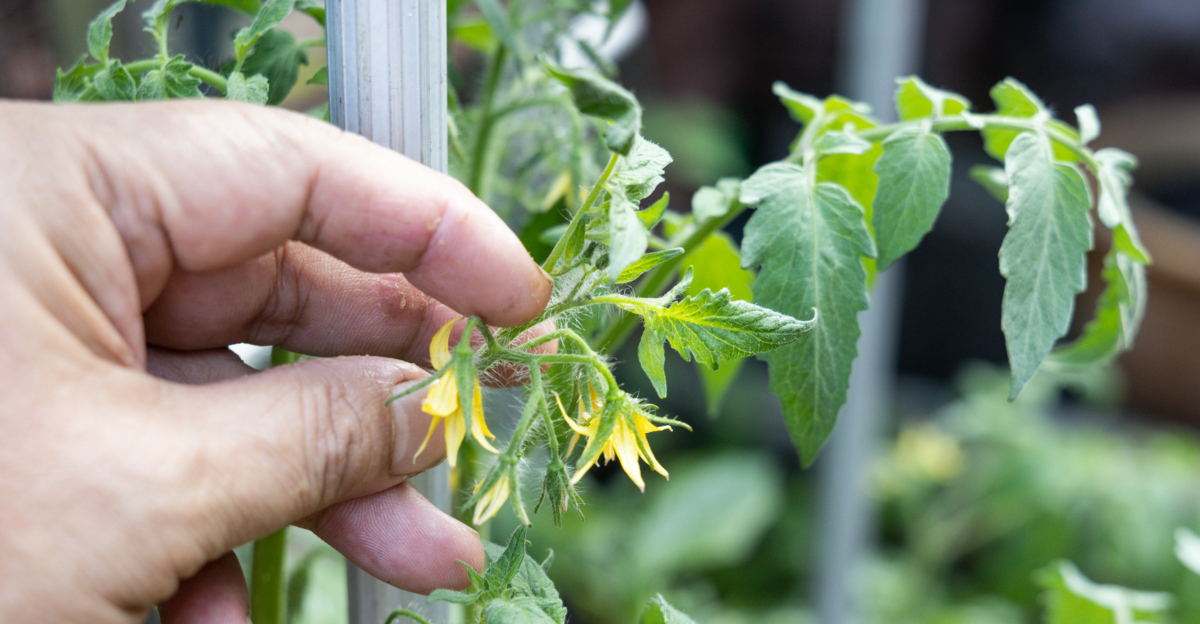
The tomato plants look healthy. The flowers are opening right on schedule. And yet the fruit set is disappointing in a way that does not match any obvious problem.
No pests. No disease. No visible damage. Just flowers that open, linger, and drop without ever becoming tomatoes.
Ohio gardeners growing in hoop houses, high tunnels, or during those long stretches of still, humid summer air run into this specific frustration more than most. The plant is doing everything right. The environment is not cooperating.
Tomatoes are self-pollinating, which sounds like it should remove all the uncertainty. Each flower carries what it needs.
The problem is that pollen needs movement to get where it has to go, and movement is exactly what disappears during Ohio’s muggiest weeks.
Have you ever tapped a tomato flower and watched what happens? Many gardeners never try it.
The ones who do tend to end up with noticeably more fruit from the same plants, the same season, with no other changes.
These techniques make hand pollination work. And believe it or not, none of them require anything special.
1. Tap Flower Clusters Gently
The fingertip is genuinely underrated as a gardening instrument.
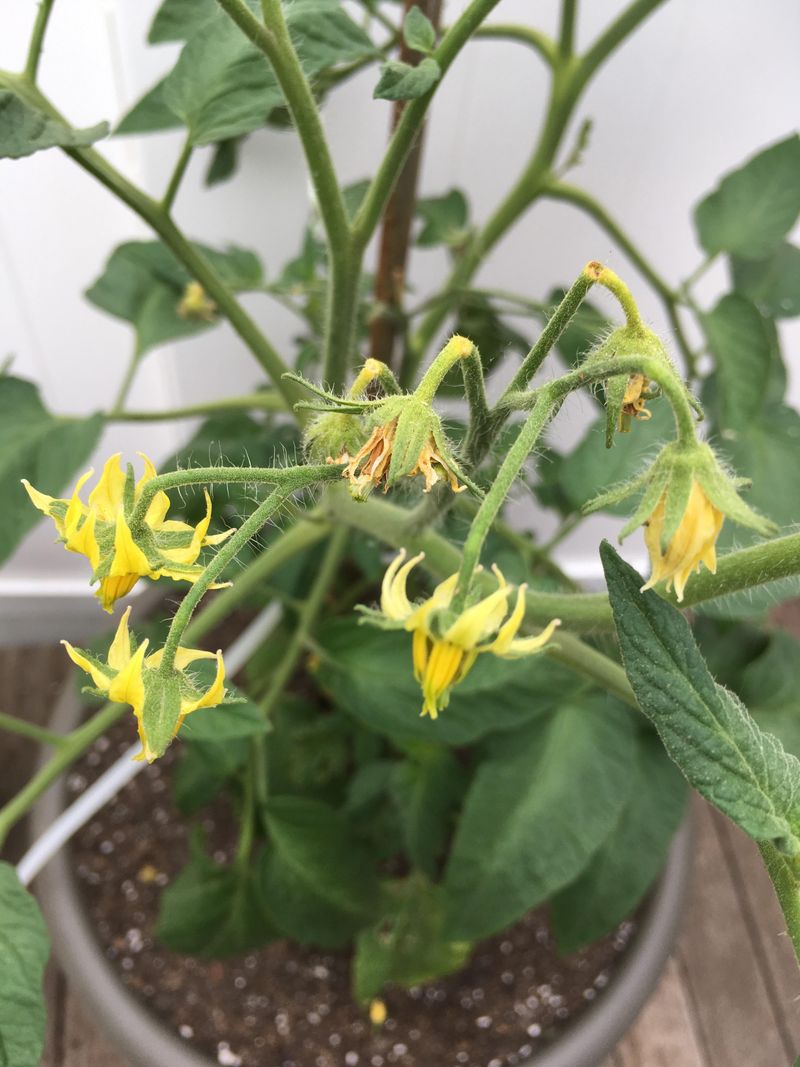
Tomato flowers hold pollen inside a cone-shaped structure called the anther tube. All it takes to release that pollen onto the stigma is a small vibration. A firm but gentle tap with one finger delivers exactly that.
Press one finger lightly against the back of a flower cluster or the stem just behind the open blossoms. Give it a quick, deliberate tap. Not a flick. Not a hard strike.
Just enough movement to feel the stem shift slightly. Under the right conditions, a faint yellow puff of pollen becomes visible.
Bumblebees perform a behavior called buzz pollination where they vibrate at a specific frequency to shake pollen free. The finger tap is a low-tech version of that same principle. Less elegant, equally effective.
Work through each flower cluster on the plant, spending a second or two on each open blossom. Focus on clusters where flowers have opened fully.
Partially closed buds are not ready. Blossoms that have already dropped their petals have closed their window and do not need attention.
This approach is especially valuable inside hoop houses and high tunnels across Ohio where bees rarely appear and still air is a persistent challenge.
On a still, humid July morning in a closed growing structure, the finger tap may be the only vibration those flowers receive all day.
That is a job worth doing. The tomatoes will confirm it.
2. Shake Plants During Dry Weather
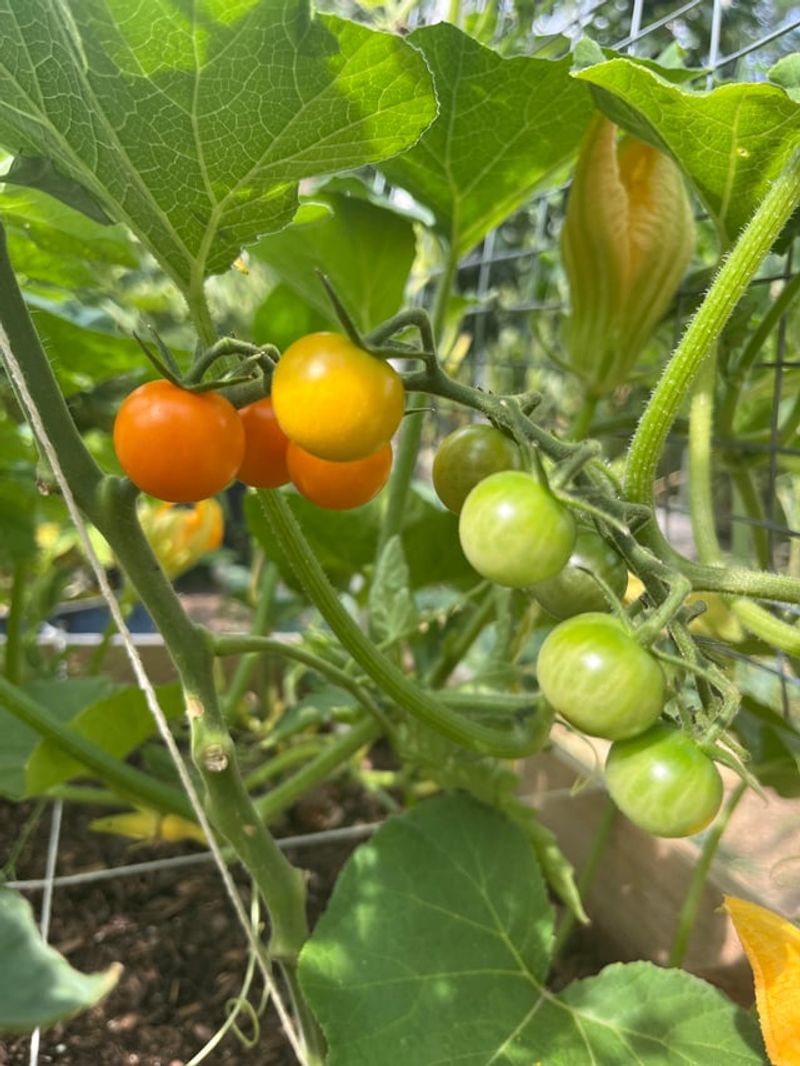
Wind is the original tomato pollinator.
On a breezy Ohio afternoon, plants sway back and forth and pollen moves exactly where it needs to go without any help from the gardener. Ohio’s muggy July and August stretches remove that advantage for days at a time.
Grab the main stem near the base and give it a gentle side-to-side shake for two or three seconds.
A moderate, steady motion is enough to send vibrations through the entire plant and rattle pollen loose from every open flower simultaneously. No need for force. The plant is more cooperative than it looks.
Your Ohio Garden Changes Every Week. Your Plan Should Too.
Gardening in Ohio changes quickly throughout the season. Every Friday you’ll receive a simple weekly plan showing exactly what to plant, prune, fertilize, harvest, and protect so you never miss the right timing.
The dry weather requirement is not optional. Pollen in tomato flowers is a fine powder that clumps together and sticks to wet surfaces rather than moving freely.
Shaking a plant right after rain or during peak morning humidity produces very little useful pollen movement. Wait until flowers feel dry to the touch and morning dew has fully evaporated.
This technique scales efficiently across a garden. Walk down a row and give each plant a few seconds of steady shaking, then move on. The whole row takes under five minutes and covers every open flower in one pass.
Mid-morning timing suits this method well. Repeat every two to three days during peak flowering.
For gardeners with multiple plants and limited time, this is the most efficient technique on the list. One pass, every plant, five minutes.
3. Use A Soft Brush Carefully
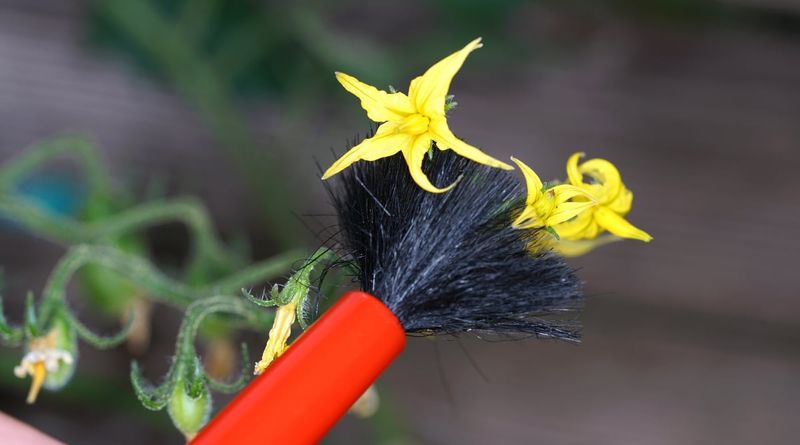
A small watercolor brush or a clean cotton swab turns hand pollination into something closer to craftwork. Many Ohio gardeners keep one near the tomato bed specifically for this purpose. The cost is negligible. The control it provides is not.
Press the brush tip lightly into the center of one open flower and twirl it gently. The bristles pick up yellow pollen from the anther tube.
Carry the brush to the next open flower on the same plant or a nearby plant of the same variety and repeat the motion. The pollen transfers to the stigma with each gentle pass.
The technique requires a light touch throughout. Tomato blossoms are small and somewhat fragile. Pressing too hard bruises petals or damages the pistil before pollination is complete.
The brush is meant to behave like a feather, not a cleaning implement. A barely-there contact is sufficient.
One brush covers an entire plant in a few minutes. After finishing, tap it against your palm to clear excess pollen. Rinse and dry it before moving to a different variety if keeping genetics separate matters for the plants you are growing.
This approach earns its place in high tunnel settings where Ohio growers raise specialty or heirloom varieties. Precise pollen transfer maximizes fruit set when every blossom represents real value.
A watercolor brush doing agricultural work is a genuinely satisfying crossover. The tomatoes do not care about the irony.
4. Pollinate During The Warmest Part Of Day
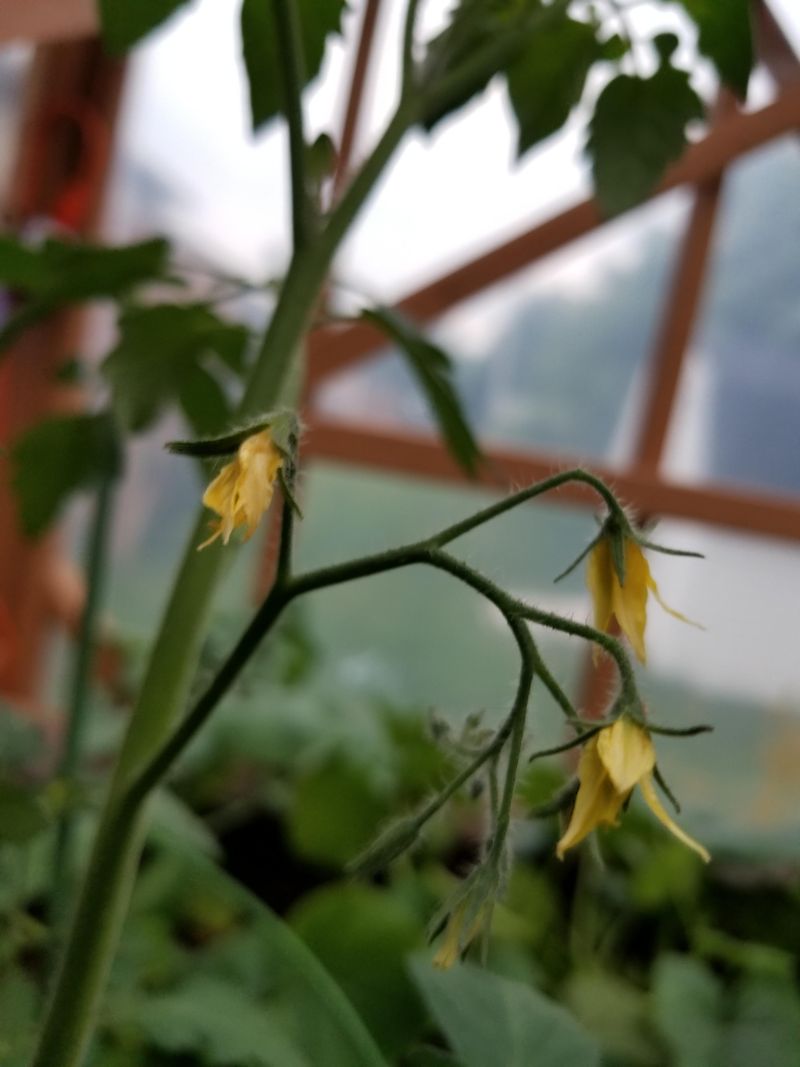
Showing up at dawn with a paintbrush and good intentions does not always produce results.
Tomato pollen sheds most freely during the warmest hours of the day, typically between ten in the morning and two in the afternoon. Earlier than that and the anther tubes have not yet dried enough for pollen to release effectively.
Warmer temperatures allow the anther tubes to dry slightly, which lets pollen grains fall more freely. Ohio summers provide plenty of warm afternoons.
But even on cooler spring days when tomatoes first begin flowering, waiting until midday produces noticeably better results than early morning sessions.
The productive temperature window for tomato pollen runs between about 68 and 77 degrees Fahrenheit. Below that range, pollen viability drops.
Above 90 degrees, pollen begins losing effectiveness from heat rather than gaining it. Checking a basic outdoor thermometer before starting a pollination session helps identify the best window without guesswork.
A simple routine fits neatly into a standard garden morning. Step outside around eleven on days when flowers are open and dry.
Spend five to ten minutes on tapping, shaking, or brushing through the plants. Return to other tasks and repeat every two to three days.
Building this into a consistent habit during peak bloom makes a measurable difference in fruit set for indeterminate varieties like Cherokee Purple or Brandywine.
The tomato plant is ready at eleven. The question is whether the gardener shows up on time.
5. Repeat Every Few Days
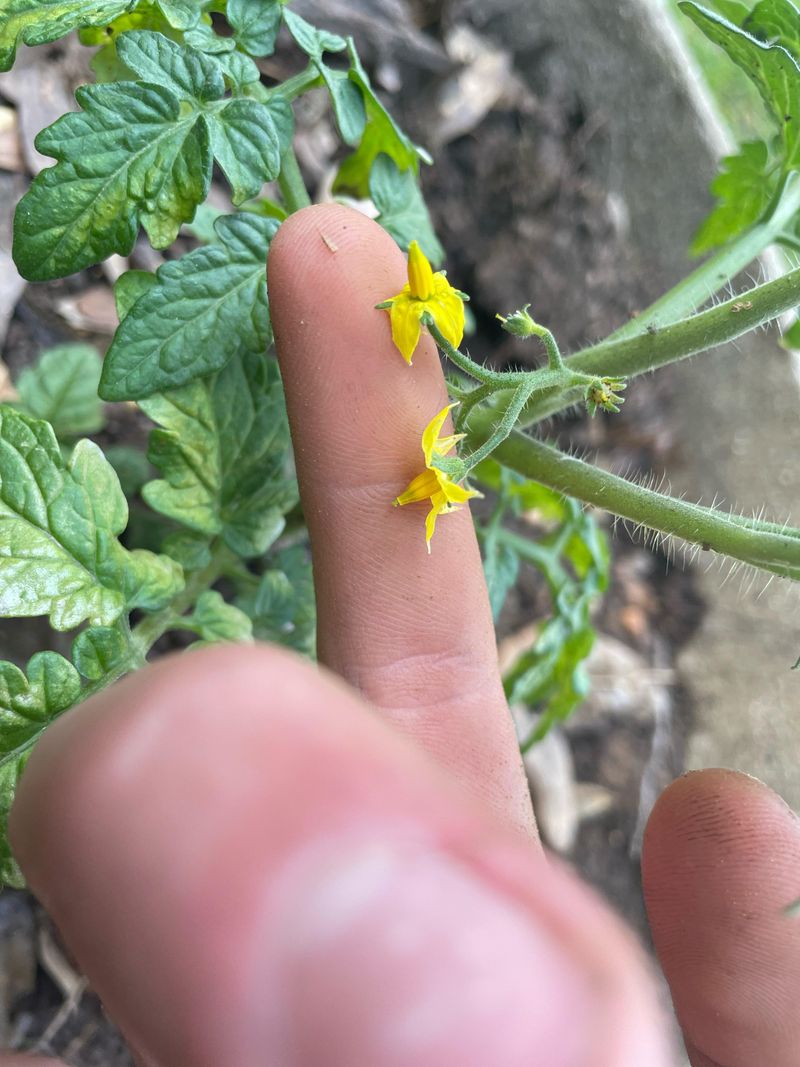
One round of hand pollination is a good start. Consistency is what actually builds the harvest.
Tomato plants are continuous bloomers. New flower clusters open every few days throughout the growing season.
A single pollination session covers only the flowers that happen to be open at that moment. Every cluster that opens afterward waits for the next visit.
A rhythm of every two to three days during peak flowering covers most of the productive window without requiring daily attention.
In Ohio, that peak typically runs from late June through August. Marking the days on a calendar or setting a phone reminder prevents the task from slipping during a busy week when the garden competes with everything else.
Each return visit reveals newly opened blossoms on clusters that were still closed during the last session.
Tomato flowers remain receptive for only a few days before dropping, which means skipping a full week can mean losing several clusters worth of potential fruit without the loss ever being visible in an obvious way.
A simple garden journal makes the pattern easier to track. Note which plants were worked and when. Check whether flowers from the previous session have started swelling into small green tomatoes.
That visible progress is one of the more satisfying things a vegetable garden offers, and it keeps the motivation to return consistent through a long Ohio growing season.
Consistent hand pollination does not replace good plant care. It complements it, and the combination is where the real harvest difference shows up.
6. Watch Heat Stress On Blossoms

Ohio summers can shift from pleasant to punishing within a few days. When daytime temperatures climb above 90 degrees and nights hold above 70 degrees, tomato plants frequently respond by dropping blossoms before any fruit can set.
No amount of hand pollination fixes blossom drop caused by heat stress because the problem starts before the flower is ready.
Pollen loses viability quickly at extreme temperatures. Research confirms that tomato pollen becomes less effective above 95 degrees Fahrenheit.
The plant shuts down reproductive activity as a stress response. Recognizing this pattern saves significant effort on flowers that cannot set fruit regardless of the technique applied.
During a heat spike, the productive response is to pause hand pollination and focus on protecting the plant instead. Shade cloth rated at 30 to 40 percent lowers canopy temperatures by several degrees.
Consistent deep watering helps plants handle heat and reduces the severity of blossom drop during the worst days.
Once temperatures return to the mid-eighties or below, new flower clusters emerge and those blossoms become far more receptive than anything that opened during the heat event.
Ohio heat waves rarely persist longer than a week or two. Patience during that window, combined with attentive plant care, positions the garden for a strong recovery as soon as conditions ease.
Choosing heat-tolerant varieties like Solar Fire or Heatmaster for Ohio planting reduces blossom drop during the hottest stretches and keeps the season productive when more sensitive varieties have given up entirely.
7. Improve Air Movement Around Plants
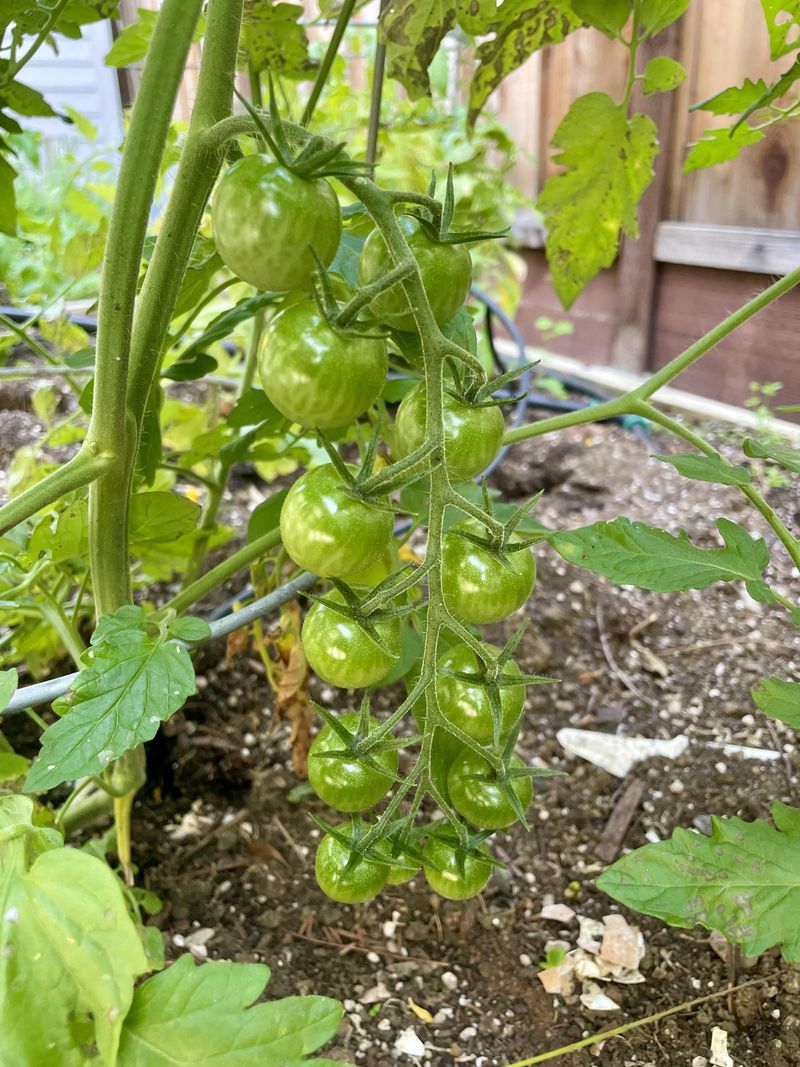
Hand pollination works best as part of a broader strategy rather than as a standalone fix for a crowded, airless planting.
One of the most overlooked contributors to poor fruit set is dense, poorly ventilated plants where pollen has nowhere to move even when conditions are otherwise ideal.
Indeterminate tomato varieties perform noticeably better with at least 24 to 36 inches of spacing between plants in rows wide enough to walk through comfortably. That spacing is not just a disease management recommendation.
It creates channels where even a light breeze moves through the canopy and assists pollen shed from open flowers naturally.
Light pruning opens the equation further. Removing the densest suckers from the lower portion of the plant opens the interior canopy without stressing the plant.
Better airflow through the middle of the plant means interior flower clusters get more natural movement and more opportunity for pollen release on their own.
Inside hoop houses and high tunnels, active ventilation becomes critical. Rolling up side walls during the warmest part of the day allows outside air to move through the structure.
Many Ohio high tunnel growers install roll-up sides specifically for this purpose during summer months.
A small box fan set on low near a row of container tomatoes on a patio makes a measurable difference. Consistent gentle airflow reduces how much hands-on pollination the garden requires throughout the season.
A well-ventilated tomato plant pollinates itself more efficiently. The gardener’s job gets smaller every time the air can move freely.