What To Do If You Keep Finding Spotted Lanternflies On Georgia Trees
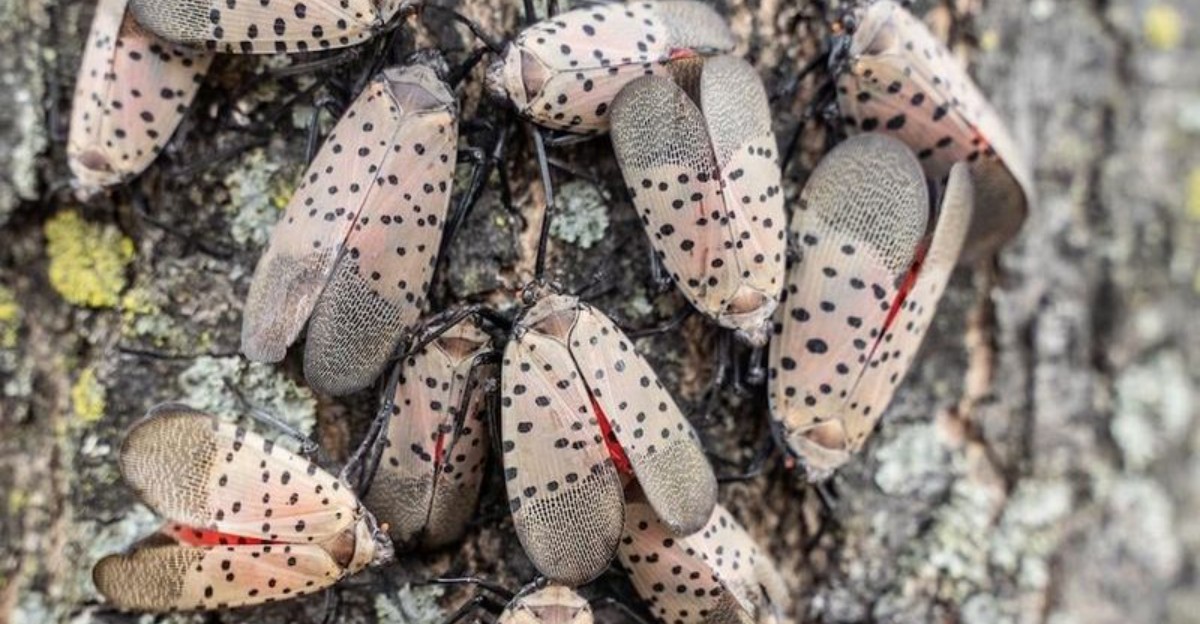
If you keep spotting gray, speckled bugs with flashes of red on a tree trunk, take a closer look.
Those could be spotted lanternflies, and finding more than one usually means they are settling in nearby.
This insect is still fairly new to Georgia, so every sighting matters more than it might seem. Officials are tracking where it has spread, and your yard could help fill in the gaps.
That makes your next move more important than swatting one away and forgetting about it.
You may also notice a sticky film on patio furniture or cars under the same tree. That residue often means a group is feeding on the branches above.
Pay attention to which trees they seem to favor, because that detail shapes how you handle the problem.
1. Repeated Sightings Deserve More Attention Than A Single Find
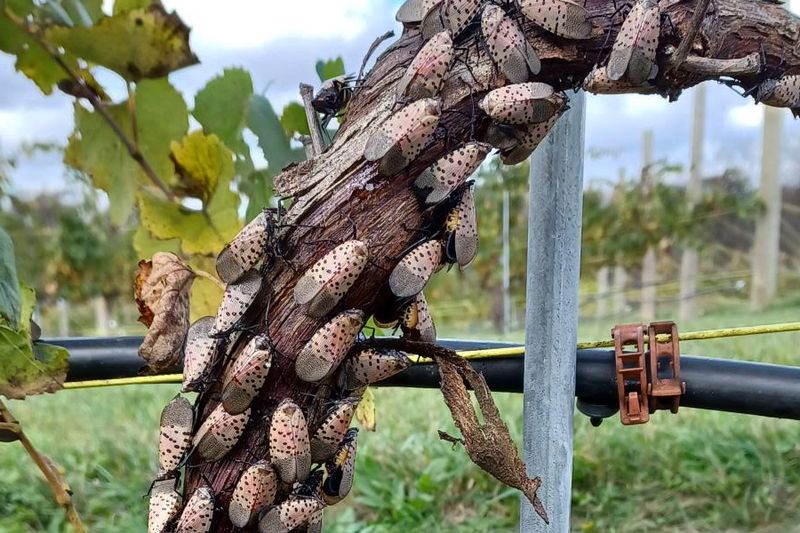
One bug is a curiosity, but five bugs on the same trunk every week is a clue. Seeing spotted lanternflies over and over usually means something nearby is supporting them.
A lone adult might have ridden in on a truck or trailer and wandered off.
Repeat visits are different, because they suggest the insects are feeding, resting, or even breeding close to your home. That shift from random to regular is worth taking seriously.
Start keeping simple notes on your phone about what you see each time.
Write down the date, the tree, the time of day, and a rough count of how many you spotted. After a couple of weeks, patterns often start to show up on their own.
You might notice they gather on one tree more than others, or that numbers climb in late summer.
Adults tend to be most noticeable from late summer into fall, while younger nymphs show up earlier in the warm season. Timing can shift with weather, so treat these windows as rough guides rather than fixed dates.
Your records can help state experts in Georgia understand how established a local group might be.
Smashing the ones you can reach is fine and often encouraged by agriculture officials. Just remember that squishing a few will not solve the bigger picture if a steady source is nearby.
2. A Quick Look Can Help Confirm What You Found
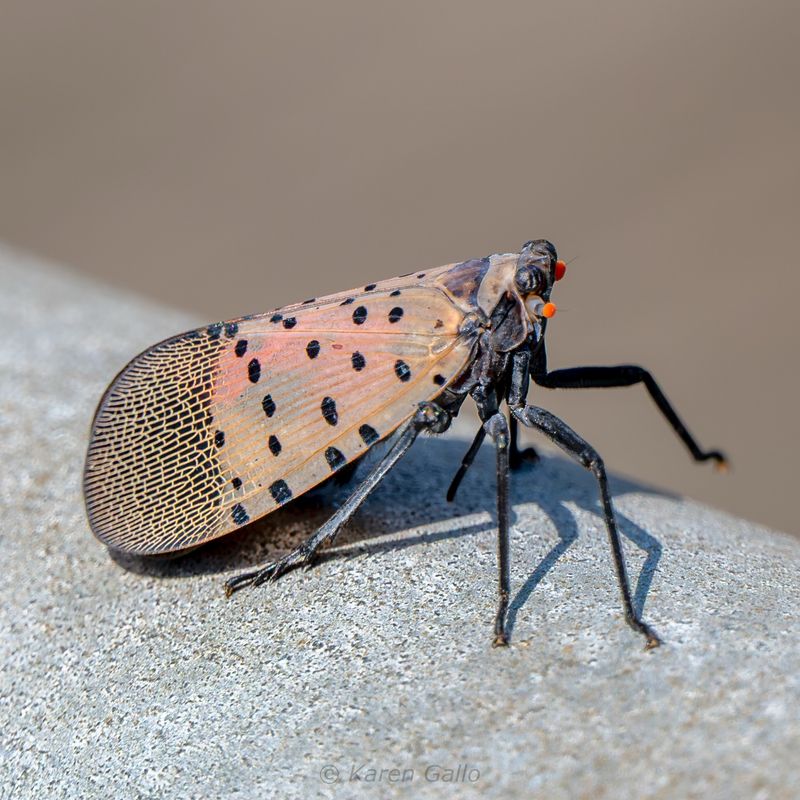
Plenty of harmless bugs get mistaken for spotted lanternflies. Moths, leafhoppers, and even some beetles can look similar at a glance, so a closer peek helps.
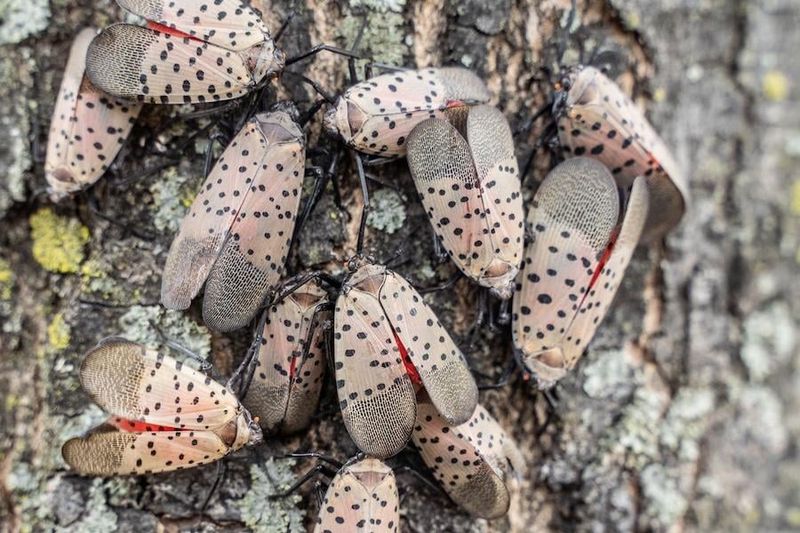
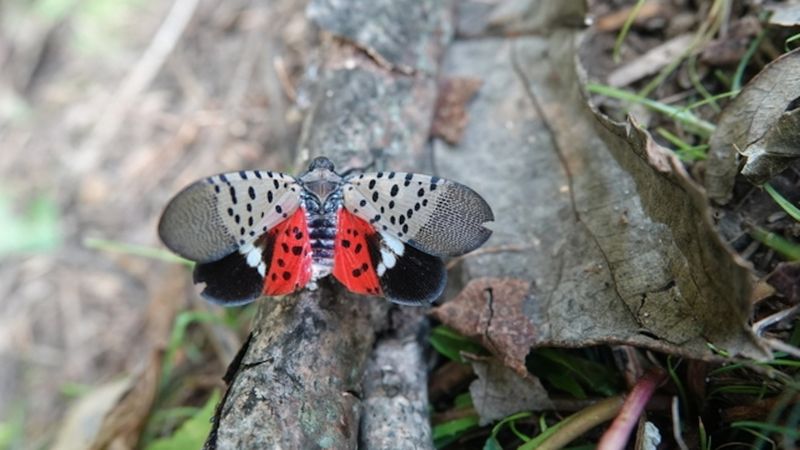
Adults are about an inch long, with grayish tan front wings covered in black spots.
When they open their wings or jump, you may catch a flash of bright red on the hindwings. That red patch is one of the easiest ways to tell them apart from native insects.
Younger stages look quite different, which trips up a lot of people.
Early nymphs are small, black, and dotted with white spots, and they hop quickly when disturbed. Later nymphs turn red with black and white markings before becoming winged adults.
Snap a clear photo before the bug jumps away, ideally from the top and side.
Your Georgia Garden Changes Every Week. Your Plan Should Too.
Gardening in Georgia changes quickly throughout the season. Every Friday you’ll receive a simple weekly plan showing exactly what to plant, prune, fertilize, harvest, and protect so you never miss the right timing.
Place a coin or your finger nearby for scale if you can do it safely. Good pictures make it much easier for experts to confirm an identification without guessing.
If you are unsure, the University of Georgia Extension and the Georgia Department of Agriculture share photo guides online.
Comparing your picture side by side with theirs can clear up confusion in a minute or two. When doubt remains, send it in anyway and let a trained eye decide.
3. Tree Of Heaven Nearby May Be Part Of The Pattern
Look past your favorite oak for a moment and check the scruffy tree by the fence. Tree of heaven, also called Ailanthus, is a favorite host plant for spotted lanternflies.
Originally from China, it spreads fast along roadsides, rail lines, and empty lots.
Its leaves are long and made of many small leaflets, a bit like sumac or black walnut. A quick way to check is to crush a leaf, since tree of heaven often gives off a strong, unpleasant smell.
Lanternflies will feed on other plants too, so this tree is not the only thing to watch.
Still, if one grows near where you keep seeing the bugs, it may be drawing them in. Some Georgia landowners have found groups gathered heavily on these trees in late summer.
Removing tree of heaven sounds simple, but it can be tricky.
Cutting it down often triggers lots of root sprouts, so extension offices usually suggest combining cutting with a targeted herbicide. Follow label directions closely, or ask a licensed professional to handle larger trees.
Male trees are sometimes left in place as trap trees under expert guidance, so talk with local extension staff before making a big plan.
4. Sticky Honeydew Can Reveal Where They Are Feeding
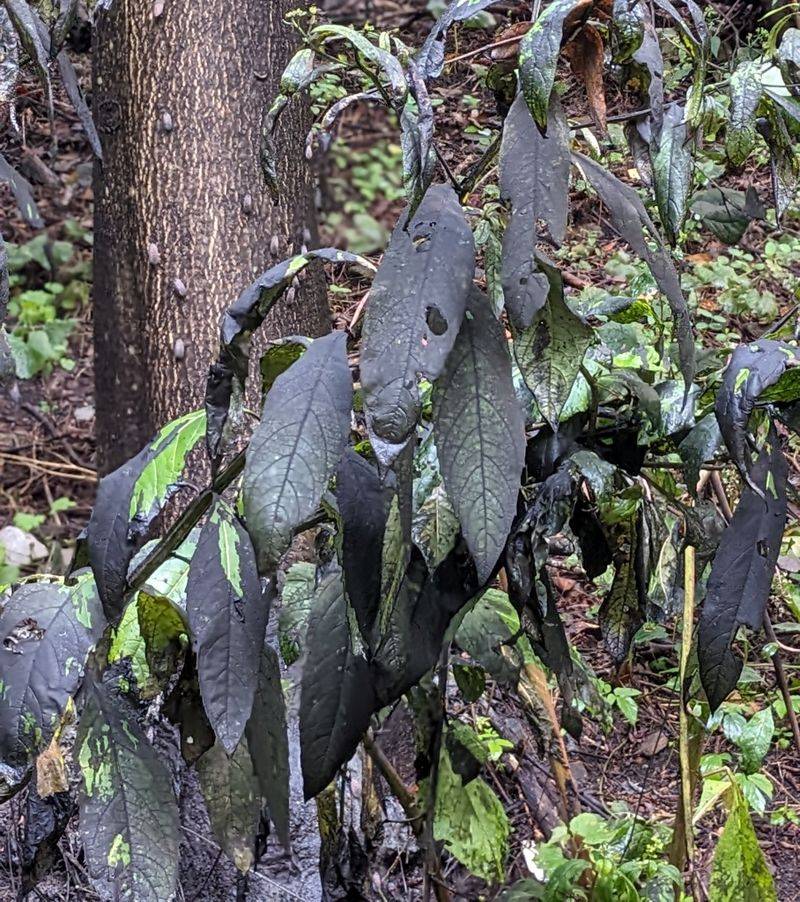
Ever touched a deck railing and felt it cling to your fingers? That sticky film could be honeydew, a sugary liquid lanternflies release while feeding on sap.
Honeydew drips onto whatever sits below, including leaves, patio chairs, and cars.
Over time, a dark fungus called sooty mold can grow on it and turn surfaces black. Sooty mold does not infect plants directly, but thick layers can block sunlight from reaching leaves.
Bees, wasps, and ants love the sweet residue, so a buzzing crowd around a trunk is a hint worth checking.
Aphids, scale insects, and some other pests also make honeydew, which means sticky surfaces alone do not prove lanternflies are present.
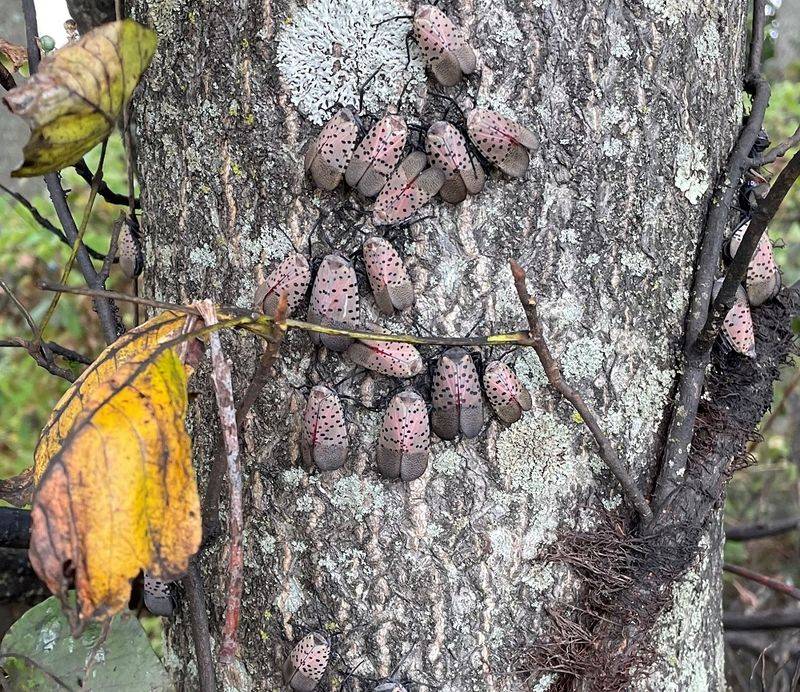
Use it as a pointer, then look up at the branches and trunk above the mess. You may spot the bugs lined up in rows, often facing upward as they feed.
Weeping sap on a trunk can also appear where heavy feeding has happened.
Warm, humid Georgia summers help sooty mold spread quickly on coated surfaces. Rinsing furniture and cars with soapy water helps, and moving outdoor items out from under busy trees saves you some scrubbing.
5. Every New Sighting Should Still Be Reported
Reporting feels pointless after the third or fourth time, but officials still want to hear from you. Each report helps map where the pest is showing up and how fast it moves.
In Georgia, sightings can be sent to the Georgia Department of Agriculture through its online reporting page.
You can also contact your county UGA Extension office for help if you are unsure where to send details. Having a photo, the date, and a location ready makes the process quick.
Maybe your neighbor already reported one last month.
That report does not replace yours, since repeated reports in one spot show that the insects may be settling in. Reports from new streets or towns can also reveal spread that nobody expected.
Try to include an exact address or GPS pin when possible.
Staff may reach out with questions or follow-up advice, so check your email after sending a report. Some areas may later fall under quarantine rules, and your reports help decide where those lines go.
Guidance can change as officials learn more, so check the official page now and then for updates.
6. Cars And Outdoor Items Can Carry Them Elsewhere
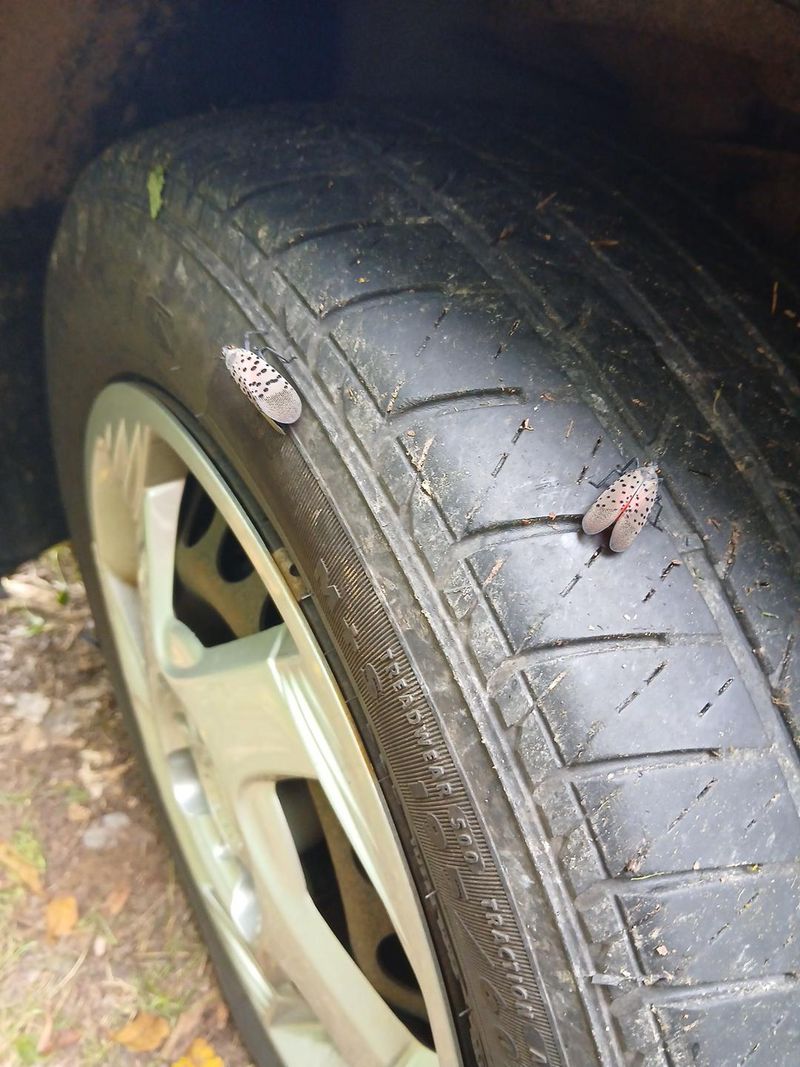
Lanternflies are not strong fliers, yet they travel hundreds of miles with a little help. People move them without realizing it, on cars, trucks, trailers, and outdoor gear.
Adults like to land on vehicles, and egg masses can end up on almost any flat surface outside.
Before a road trip, walk around your car and check the bumpers, wheel wells, and roof rack. Keep windows up when parked under trees where you have seen the bugs.
Outdoor items deserve the same attention.
Patio furniture, grills, kayaks, campers, and stacks of firewood can all carry eggs or hitchhiking adults. If you are moving house or selling gear, give everything a careful look first.
Firewood is a common way many pests spread, not just lanternflies.
Buying or gathering wood close to where you plan to burn it lowers the risk of carrying insects to new places. That habit protects forests across Georgia and beyond.
Found one inside your car? Squish it, then keep checking over the next few trips.
Hitchhikers sometimes show up in pairs or small groups, especially in late summer and fall.
7. Fall Is The Time To Start Watching For Egg Masses
Cooler weather does not mean the problem is over. Adult lanternflies typically begin laying eggs in early fall, and they often continue until hard frosts arrive.
Fresh egg masses look like a smear of gray putty, and older ones can resemble cracked, dried mud.
Each mass may hold roughly 30 to 50 eggs, so finding one is a big win. They usually hatch in spring, with timing that varies by weather.
Check tree trunks, the underside of branches, stones, fences, and outdoor furniture.
Egg masses are easy to miss because they blend right into bark. Looking with a flashlight at a low angle can help the texture stand out.
When you find one, scrape it off with a plastic card or putty knife.
Drop the scraped eggs into a zip bag with hand sanitizer or rubbing liquid meant for cleaning, then seal it tight. Crushing the eggs firmly is another option recommended by extension experts.
Winters in Georgia can be mild, which gives you plenty of chances to search. Keep checking through early spring, since a few missed masses can bring a new round of nymphs.