How To Care For Dieffenbachia Indoors In North Carolina Homes
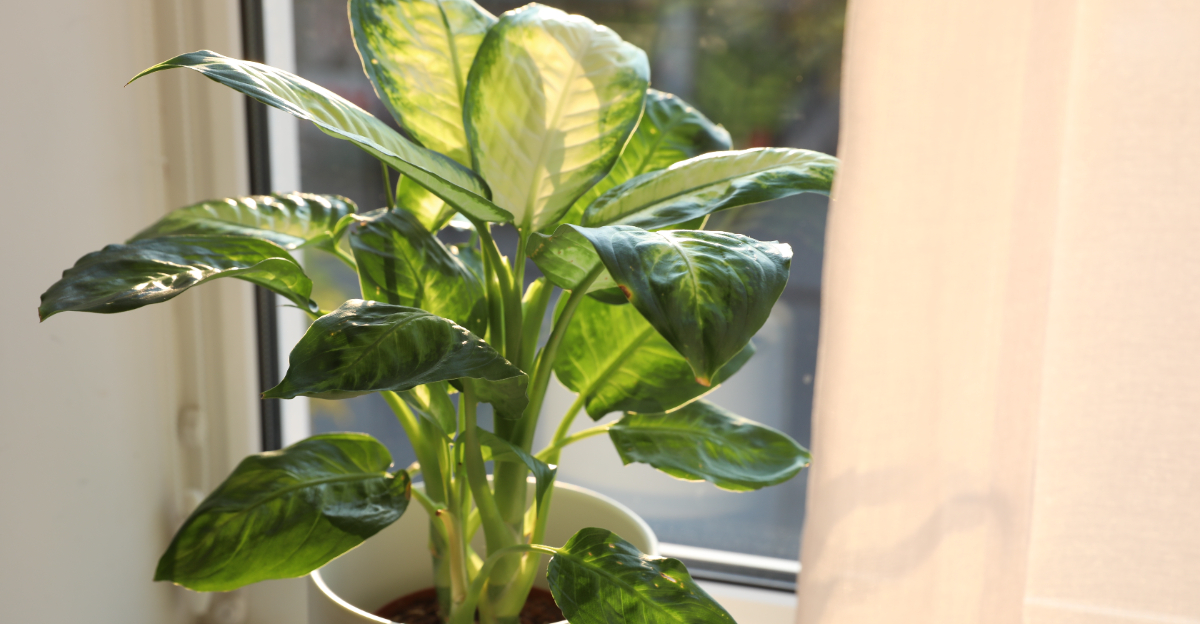
Dieffenbachia is a popular houseplant in North Carolina homes thanks to its bold leaves and easygoing nature, but it still needs the right care to truly thrive indoors.
While it can adapt to typical indoor conditions, small changes in light, watering, and humidity can make a big difference in how healthy it looks.
North Carolina’s seasons can affect indoor air, especially with heating in winter and air conditioning in summer, which means this plant may need a little extra attention throughout the year.
Many people keep dieffenbachia alive, but not everyone sees it grow full and vibrant the way it can.
Understanding what it prefers helps you avoid common issues like yellowing leaves or slow growth.
With a few simple adjustments, you can keep your plant looking lush, balanced, and strong as it settles into your home environment.
1. Provide Bright Indirect Light
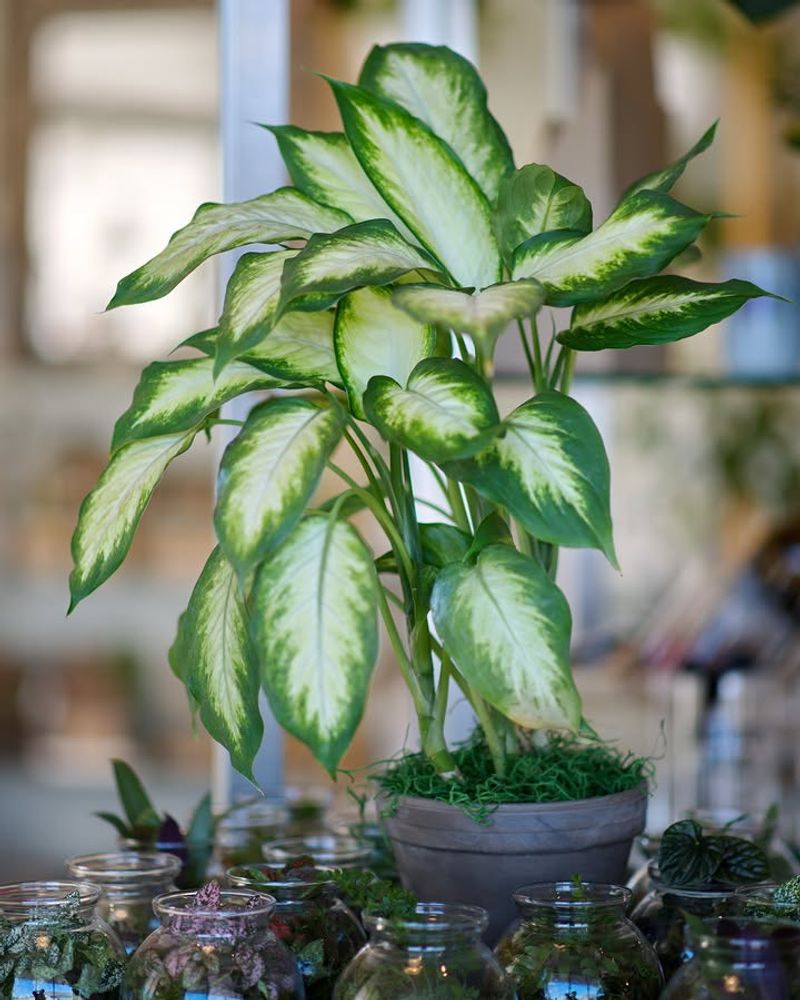
Sunlight is everything when it comes to keeping Dieffenbachia happy inside your North Carolina home.
This plant absolutely loves bright, indirect light, which means it wants plenty of natural brightness without harsh direct rays hitting its leaves.
A spot near an east-facing window is almost perfect, since morning light is gentle and consistent without being too intense.
South-facing windows can also work well in North Carolina homes, but you will want to hang sheer curtains to filter the stronger afternoon sun.
Direct sunlight will scorch those beautiful leaves and leave them looking faded and damaged, which nobody wants after putting in the effort to grow such a gorgeous plant.
During winter months in North Carolina, natural light levels can drop noticeably, especially on cloudy days.
Moving the plant a little closer to a window or adding a small grow light can make a real difference in keeping the foliage full and vibrant.
Dieffenbachia that does not get enough light will start to grow leggy and the stunning leaf patterns will begin to fade.
Keeping the light bright but filtered is truly the single most important thing you can do for this plant indoors, and getting it right from the start will save you a lot of trouble down the road.
2. Keep Soil Evenly Moist, Not Soggy
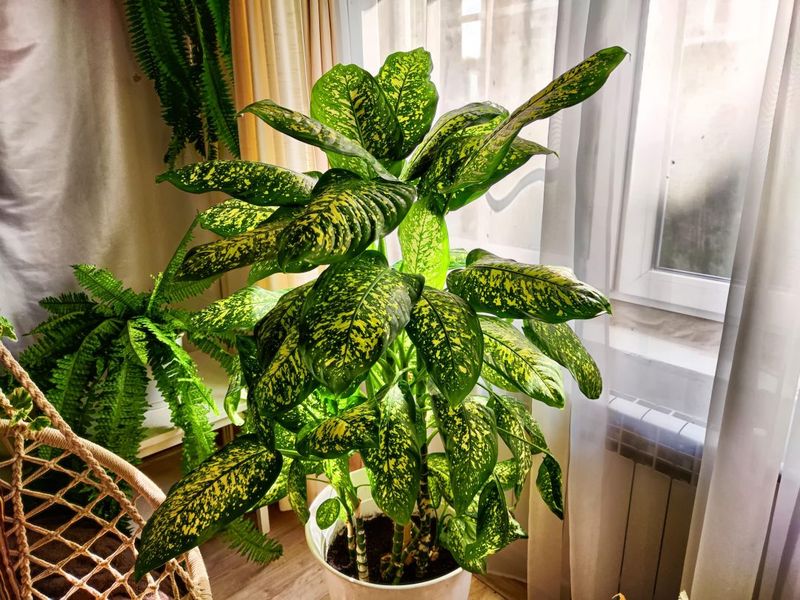
Getting the watering routine right for Dieffenbachia is one of those things that makes a huge difference in how healthy your plant looks over time.
The goal is to keep the soil consistently moist, but never waterlogged or sitting in standing water.
Overwatering is actually one of the most common mistakes people make with this plant, especially in North Carolina homes where indoor temperatures stay fairly warm year-round.
A simple rule to follow is to check the top inch or two of soil with your finger before reaching for the watering can.
If it feels dry to the touch, go ahead and water thoroughly until you see it draining from the bottom of the pot. If the soil still feels damp, wait another day or two before checking again.
North Carolina summers can warm up indoor spaces quickly, which means the soil may dry out faster than you expect during those months.
Your North Carolina Garden Changes Every Week. Your Plan Should Too.
Gardening in North Carolina changes quickly throughout the season. Every Friday you’ll receive a simple weekly plan showing exactly what to plant, prune, fertilize, harvest, and protect so you never miss the right timing.
In contrast, during cooler fall and winter periods, the plant slows down and needs less frequent watering.
Always empty the saucer under the pot after watering so the roots are never sitting in excess water.
Root rot can sneak up fast when drainage is poor, and once it takes hold it is very hard to reverse. Consistent attention to moisture levels keeps your Dieffenbachia thriving beautifully.
3. Use Well-Draining Potting Mix
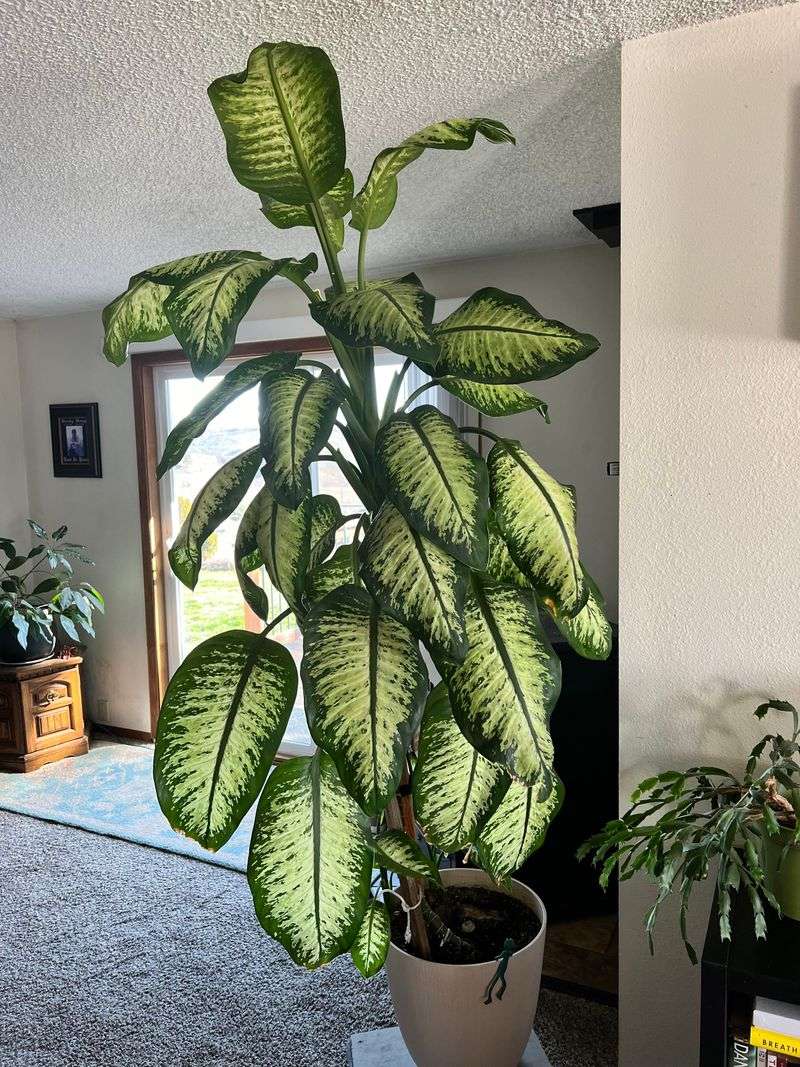
Not all potting mixes are created equal, and Dieffenbachia is a plant that really benefits from soil that drains well while still holding some moisture.
A standard indoor potting mix from your local North Carolina garden center works as a solid base, but adding a handful of perlite takes things to the next level.
Perlite improves aeration around the roots and prevents the soil from compacting over time.
Some growers also like to mix in a small amount of orchid bark, which adds extra drainage and mimics the loose, airy forest floor conditions that tropical plants naturally love.
The key is to avoid heavy, dense soils that stay wet for too long after watering, since Dieffenbachia roots need oxygen just as much as they need moisture.
Repotting every one to two years also gives you a chance to refresh the soil mix entirely, which is especially helpful in North Carolina where indoor humidity and warmth can sometimes speed up soil breakdown.
When the roots start creeping out of the drainage holes or the plant seems to dry out unusually fast, that is a clear sign it is time for a larger pot and fresh mix.
Choosing the right soil from the very beginning sets your Dieffenbachia up for strong, healthy growth season after season.
4. Maintain Warm Indoor Temperatures
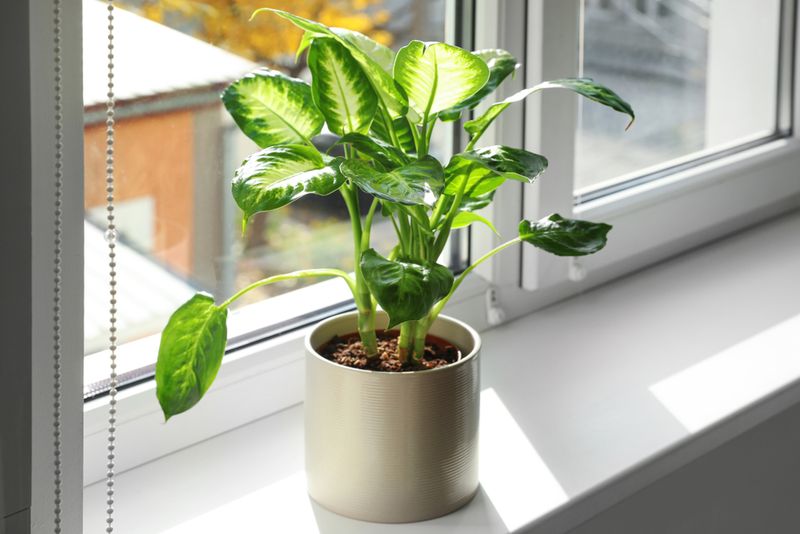
Dieffenbachia is a true tropical plant at heart, and it absolutely thrives in warm, stable indoor temperatures.
Keeping your home between 65 and 80 degrees Fahrenheit is the sweet spot for this plant, and the good news is that most North Carolina homes naturally stay within that range for a large part of the year.
Warm indoor conditions keep the plant actively growing and help it produce those big, gorgeous leaves everyone loves. Cold drafts are one of the sneakiest threats to Dieffenbachia indoors.
Placing the plant near a drafty window, an exterior door, or an air conditioning vent can cause the leaves to yellow and drop faster than you might expect.
During early spring in North Carolina, nights can still dip quite cool, so it is worth double-checking that your plant is not sitting too close to a cold window pane.
Sudden temperature swings are also hard on this plant, even when the overall average temperature seems fine.
Try to find a stable spot in your home where the temperature stays consistent throughout the day and night.
Rooms that face south or west in a North Carolina home tend to stay warmest and most stable, making them excellent choices for Dieffenbachia.
A warm, steady environment is the foundation for truly lush and full growth from this tropical beauty.
5. Increase Humidity When Possible
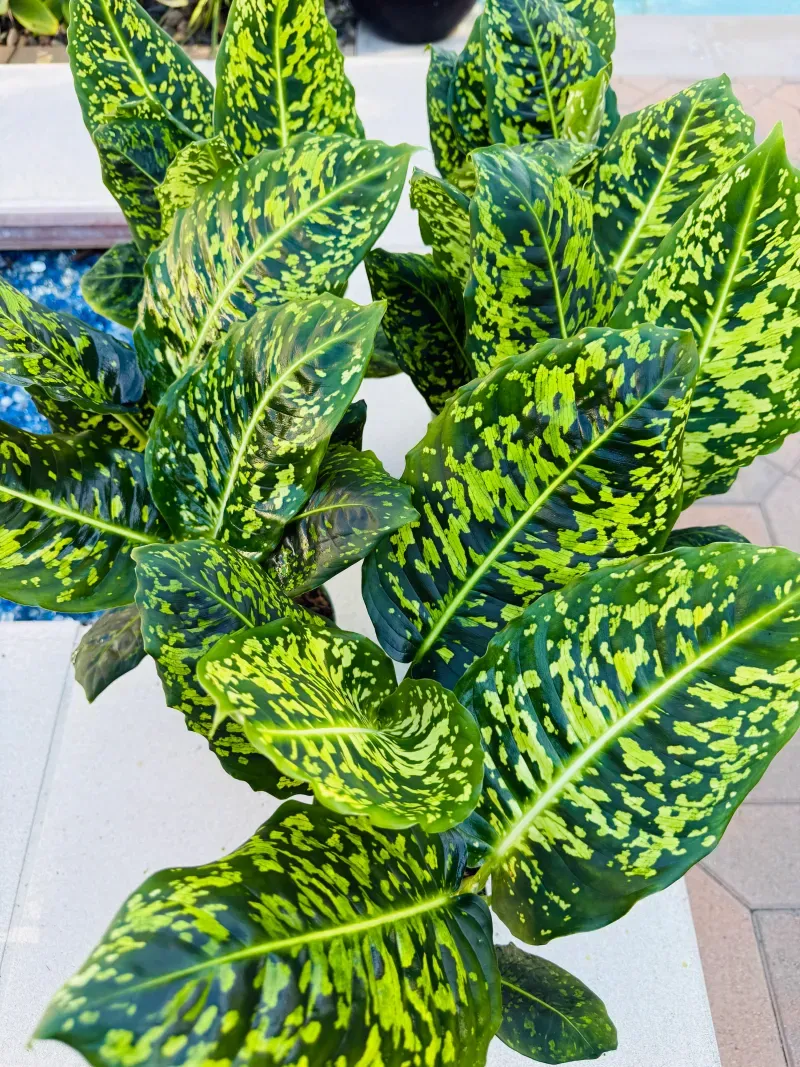
Tropical plants like Dieffenbachia genuinely thrive in humid conditions, and indoor air in North Carolina homes can get surprisingly dry, especially when heating systems run hard through winter.
Low humidity causes the leaf edges to turn brown and crispy, which takes away from the plant’s naturally lush appearance.
Bumping up the moisture in the air around your plant makes a noticeable difference in how full and healthy it looks.
One of the easiest ways to raise humidity is to place the pot on a shallow tray filled with pebbles and water. As the water slowly evaporates, it creates a small pocket of moisture right around the plant.
Grouping your Dieffenbachia together with other tropical houseplants also helps, since plants naturally release moisture into the air through a process called transpiration.
A small humidifier placed nearby is another fantastic option, especially in North Carolina homes where central air conditioning runs almost constantly through the long summer months.
Aim for a humidity level somewhere between 40 and 60 percent for the best results. Misting the leaves directly can work in a pinch but is less effective than the other methods and can sometimes encourage fungal issues if the leaves stay wet for too long.
Consistent humidity keeps Dieffenbachia looking its absolute best throughout the year.
6. Feed Lightly During Active Growth
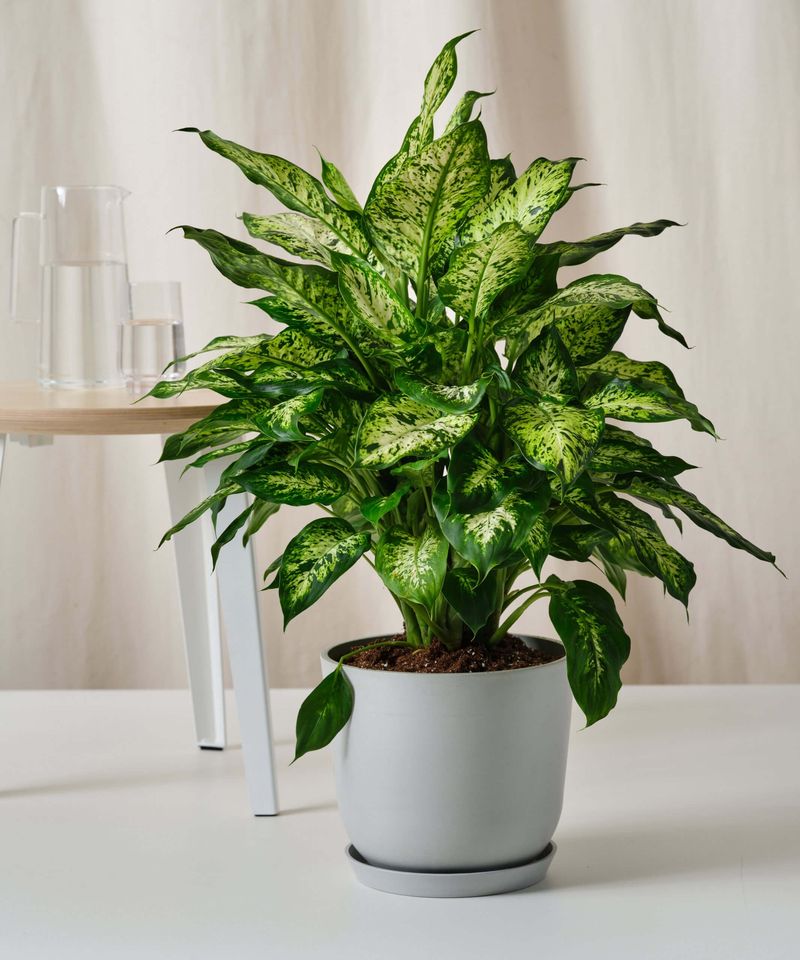
Feeding your Dieffenbachia during the right time of year makes a real difference in how quickly it grows and how bold its leaf colors stay.
Spring and summer are the active growing seasons for this plant, and that is exactly when it benefits most from a little extra nutrition.
A balanced liquid fertilizer, something like a 20-20-20 formula diluted to half strength, works really well and reduces the risk of over-fertilizing.
Applying fertilizer every three to four weeks during the growing season gives the plant steady support without pushing it too hard.
Too much fertilizer can actually cause more harm than good, leading to weak, stretched-out growth and sometimes even causing the leaf tips to burn.
Less is genuinely more when it comes to feeding Dieffenbachia. Once fall arrives in North Carolina and the days get shorter, the plant naturally slows its growth and needs much less feeding.
Cutting back to once a month or stopping altogether through winter is the right move during this quieter period.
Resuming fertilization in early spring, just as new leaves begin to push out, gives the plant a nice energy boost right when it needs it most.
Paying attention to the growth cycle of your Dieffenbachia and feeding it accordingly keeps it strong, vibrant, and consistently beautiful inside your North Carolina home.
7. Rotate The Plant Occasionally
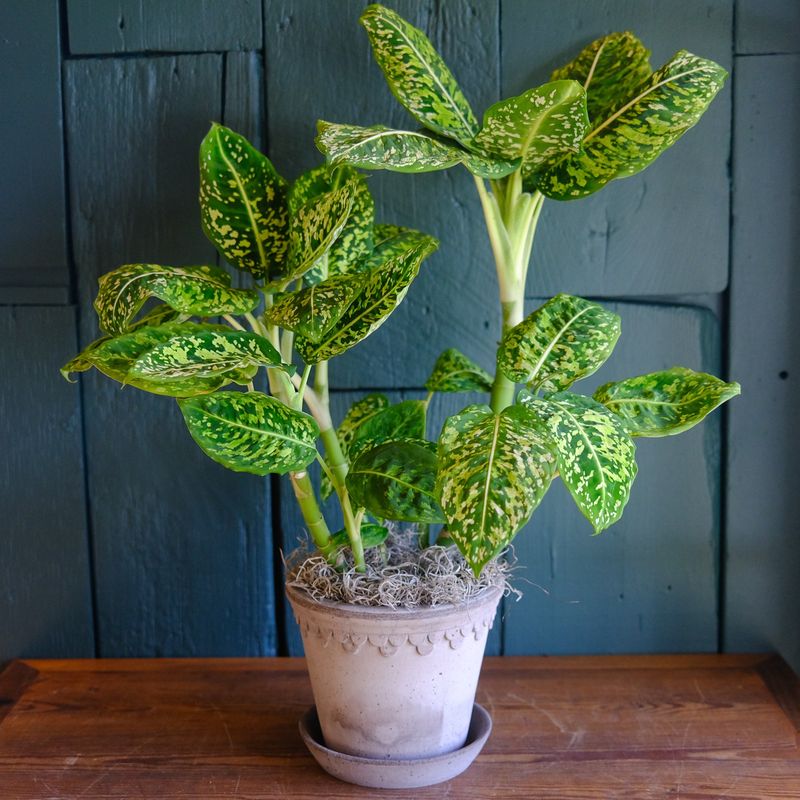
Here is a simple habit that most plant owners overlook but makes a surprisingly big impact on how Dieffenbachia grows over time.
Plants naturally reach toward their light source, and if you never move the pot, one side of the plant will grow much fuller and taller than the other. The result is an uneven, lopsided plant that looks a little sad compared to what it could be.
Rotating your Dieffenbachia a quarter turn every two weeks is all it takes to encourage balanced, symmetrical growth.
Every side of the plant gets equal exposure to the light coming through your window, and the whole plant fills out evenly over time.
It takes about thirty seconds and makes a genuinely noticeable difference over the course of a few months.
In North Carolina homes where most windows face a specific direction, the light coming in tends to be quite directional, making rotation even more important than it might be in spaces with light coming from multiple sides.
Keeping a small reminder on your phone or doing it on the same day every two weeks makes it easy to stay consistent.
Over time you will notice that your Dieffenbachia develops a much fuller, rounder shape that looks intentional and well cared for.
A small effort like this goes a long way toward making your indoor plant display look truly impressive.
8. Wipe Leaves To Keep Them Clean
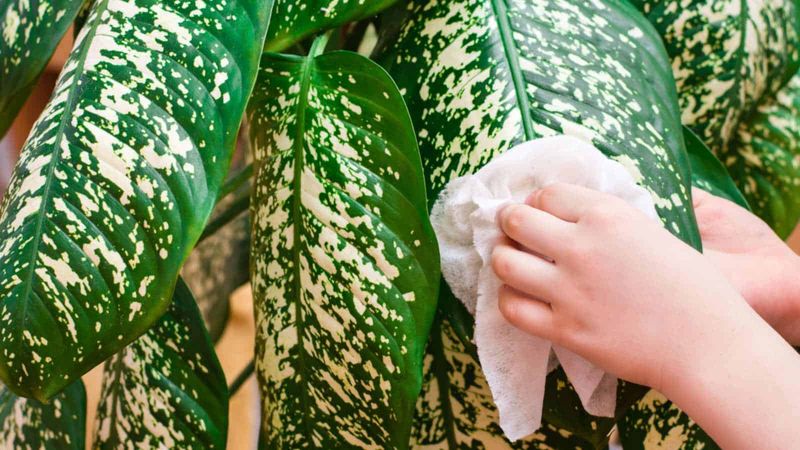
Those big, bold Dieffenbachia leaves are one of the main reasons people fall in love with this plant, so keeping them clean and glossy is absolutely worth the small amount of effort it takes.
Dust settles on the leaf surface over time and actually blocks light from reaching the cells that power photosynthesis. A dusty plant is a less efficient plant, plain and simple.
Wiping the leaves down with a soft, damp cloth every few weeks removes that buildup and lets the plant absorb light the way it is supposed to.
Work gently and support each leaf from underneath as you wipe, since the large leaves can be a little fragile at the stem.
Using plain lukewarm water is usually enough, though some people prefer a very diluted neem oil solution which also helps keep pests away.
In North Carolina homes, dust can accumulate faster in drier months when windows stay closed and air circulates mainly through heating and cooling systems.
Checking the leaves during your regular watering routine makes it easy to catch buildup before it becomes noticeable.
Clean leaves also make it much easier to spot early signs of pest activity like spider mites or mealybugs, so wiping them down doubles as a quick health check.
Your Dieffenbachia will reward this simple care habit with consistently bright, glossy, stunning foliage.