How To Deep-Water California Shade Trees Before The 100-Degree Heat Hits
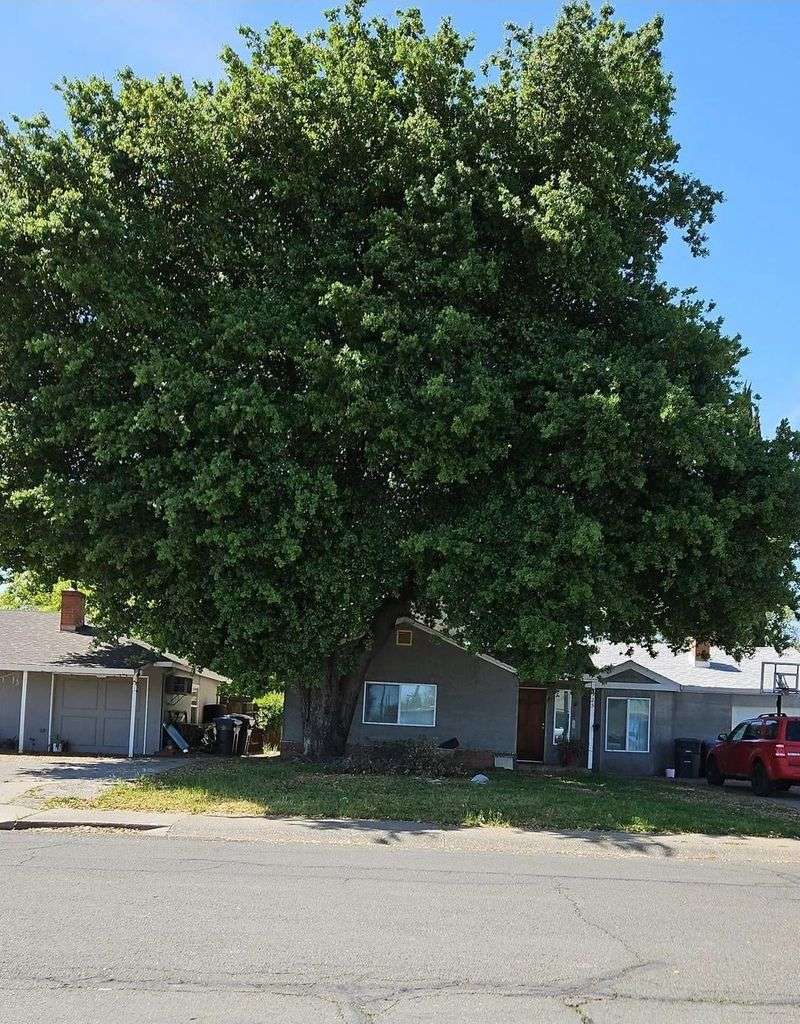
California heat does not knock before it walks in. Once the mercury climbs past triple digits, your shade trees are the first ones paying the price, often long before you notice a single wilted leaf.
By the time the canopy starts thinning or the bark looks scorched, the stress has usually been building for weeks. Most yards look fine right up until they suddenly do not.
There is a small window before the worst heat hits when a few smart moves can change everything for your trees. Miss it, and you are left playing catch-up all season.
Your trees are already telling you what they need. The question is will you catch the signal now or find out the hard way in August.
Water Deeply At The Base Rather Than The Leaves
Spraying leaves on a hot day feels satisfying, but it does almost nothing for your tree. Water needs to reach the roots, and roots are underground, not up in the canopy.
When you deep-water California shade trees, aim the hose directly at the soil near the trunk. Move the stream slowly around the drip line, which is the outer edge of the canopy above.
That drip line is actually a map of where the feeder roots are hiding. Those tiny roots absorb water and nutrients, so that is exactly where your moisture needs to go.
Watering the leaves can also invite fungal problems, especially when humidity spikes during summer storms. Wet foliage overnight is a recipe for disease, and nobody wants that added stress on top of the heat.
Set your hose to a slow, steady trickle and let it run for 30 to 45 minutes in one spot. Then move it to another position around the base and repeat the process.
A slow flow gives water time to soak down 18 to 24 inches, which is exactly where deep roots need it most. Fast watering just runs off the surface and evaporates before doing any real good.
Checking your soil after watering is a smart habit worth building. Push a screwdriver six inches into the ground near the base, and if it slides in easily, your moisture level is right where it needs to be.
Morning Watering Sessions Reduce Evaporation Loss
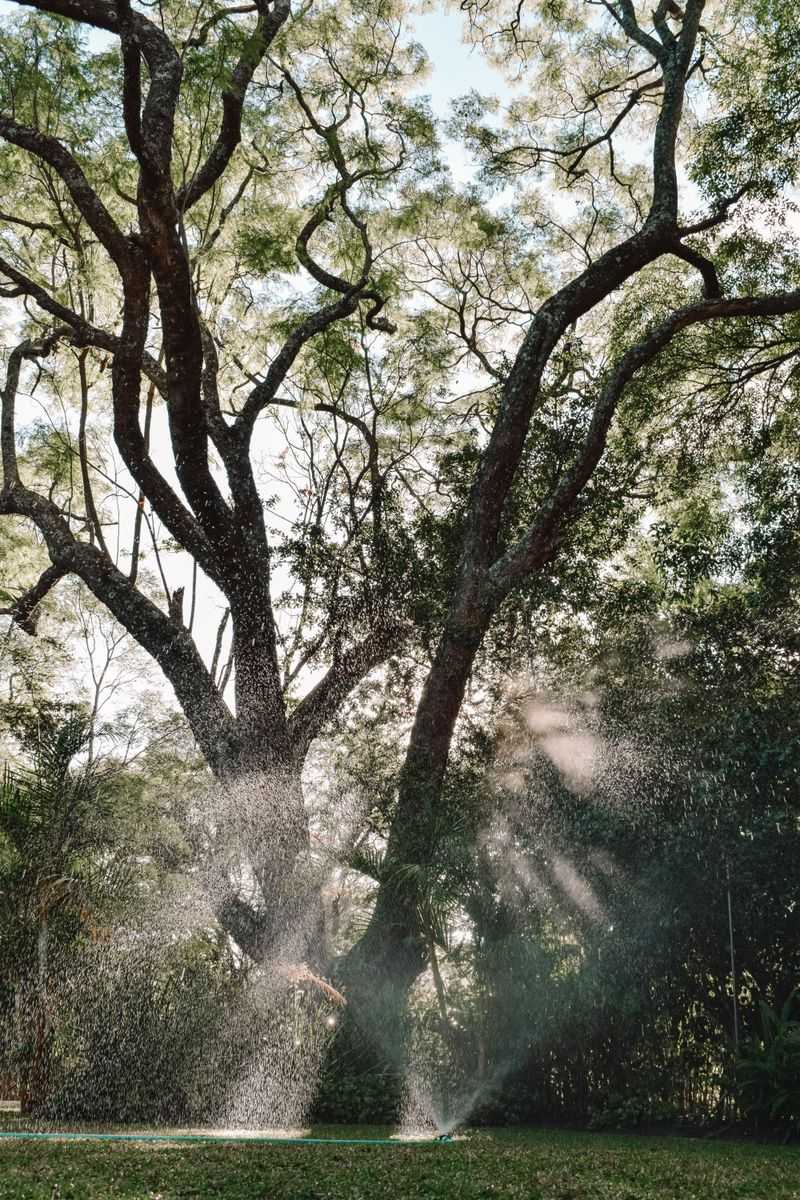
There is something almost magical about a garden at 6 a.m. The air is cool, the birds are loud, and your water actually reaches the roots instead of vanishing into thin air.
Morning is the single best time for deep watering California shade trees during summer. Temperatures are lowest then, which means evaporation rates are at their minimum for the whole day.
When you water at noon or in the late afternoon, the sun is working against you hard. A significant portion of what you apply simply lifts off the soil surface before roots ever get a chance to absorb it.
Starting your watering session between 5 and 8 a.m. gives moisture hours to soak deep into the ground. By the time the midday heat cranks up, that water is already where it belongs.
Your California Garden Changes Every Week. Your Plan Should Too.
Gardening in California changes quickly throughout the season. Every Friday you’ll receive a simple weekly plan showing exactly what to plant, prune, fertilize, harvest, and protect so you never miss the right timing.
Morning watering also allows any accidental leaf splash to dry off quickly. Dry foliage heading into the afternoon means far less risk of mold or fungal growth taking hold.
Consistency matters just as much as timing. Try to water on the same days each week so your trees develop a reliable moisture rhythm before the brutal heat arrives.
Setting a simple phone alarm for early morning makes the habit stick without much effort. Your trees cannot remind you themselves, but a 6 a.m. alarm can, and your yard will thank you for it every single day.
Slow Soaker Hoses Reach Roots Better Than Sprinklers
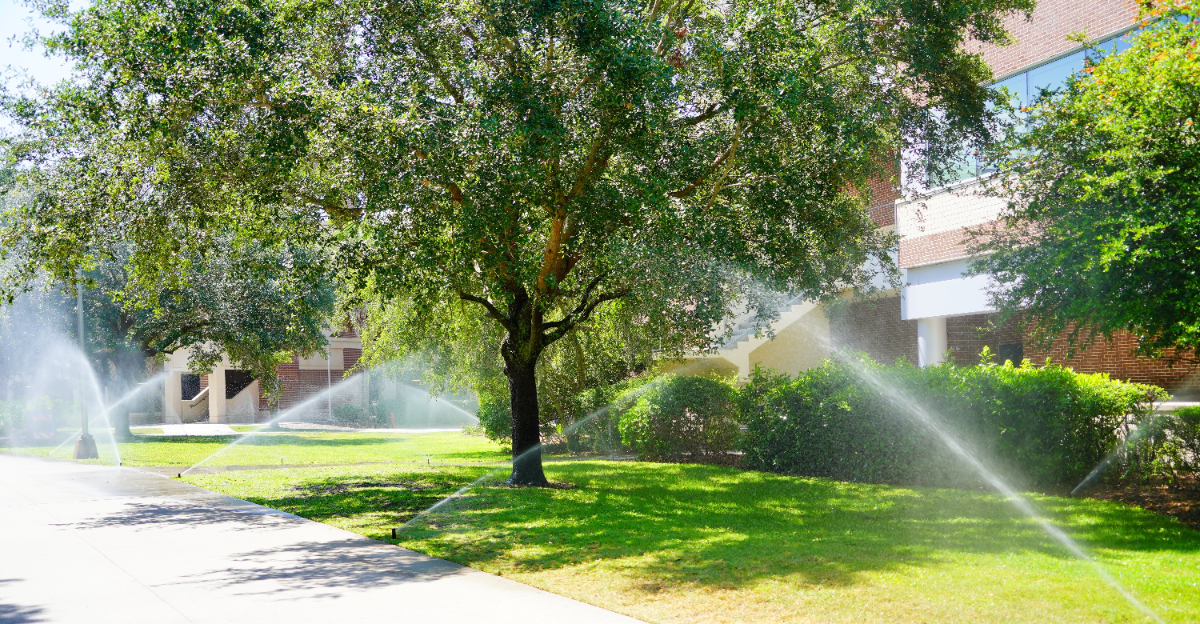
Sprinklers are crowd-pleasers, but they are not tree-pleasers. They toss water up and out, covering grass and walkways while leaving your tree’s deep root zone surprisingly dry.
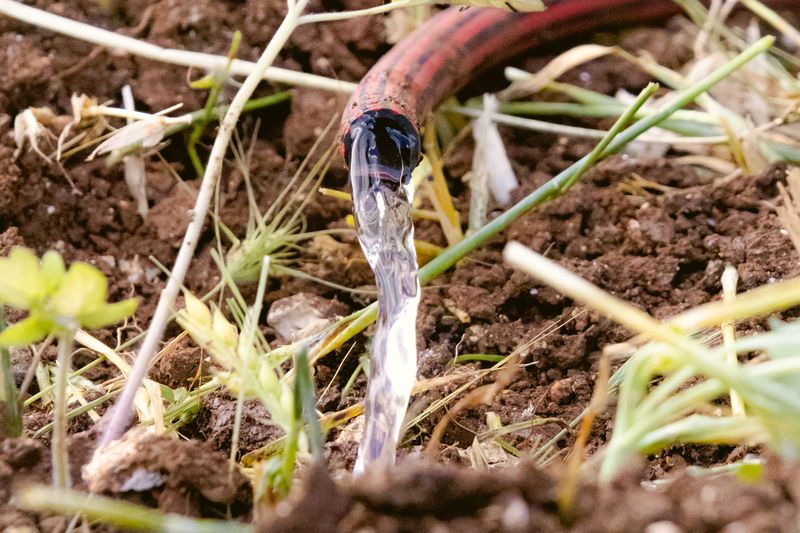
Soaker hoses are an entirely different tool. They seep water slowly along their entire length, delivering moisture right at soil level with almost zero waste or splash.
For deep-watering California shade trees, soaker hoses are genuinely hard to beat. You loop them around the drip line of the tree, turn on a low pressure, and let physics do the rest over an hour or two.
That slow delivery method allows water to penetrate 18 to 24 inches down, which is the sweet spot for mature tree roots. Sprinklers rarely push moisture past the top six inches of soil.
Setting up a soaker hose takes about ten minutes and a few hose connectors. Once it is in place around your tree, you can reuse it all season without moving it much at all.
Connecting your soaker hose to a simple timer makes the whole system nearly automatic. You set it once, and the tree gets watered on schedule without you having to remember a single thing.
Soaker hoses also cost far less than drip irrigation systems, making them a smart budget choice. A good-quality soaker hose runs about ten to twenty dollars at most hardware stores, and it pays for itself fast.
Mulch Layers Retain Moisture Around The Root Zone
Picture your tree’s root zone as a sponge sitting out in direct sunlight. Without any cover, that sponge dries out fast, and no amount of watering fully keeps up with the loss.
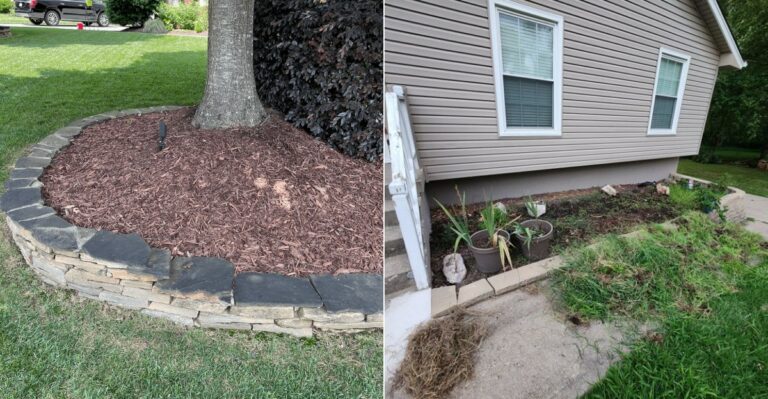
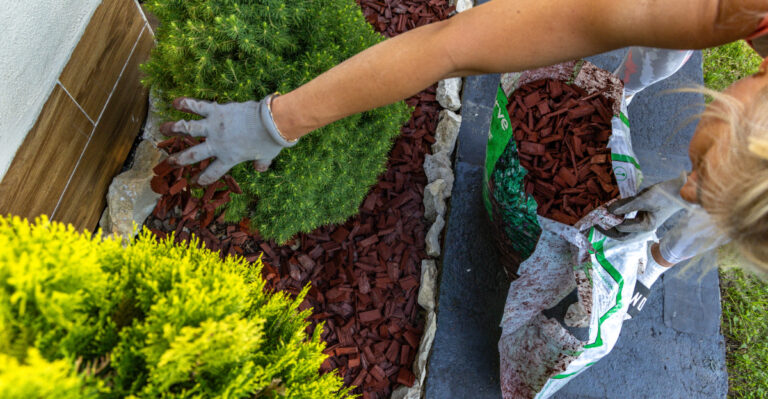
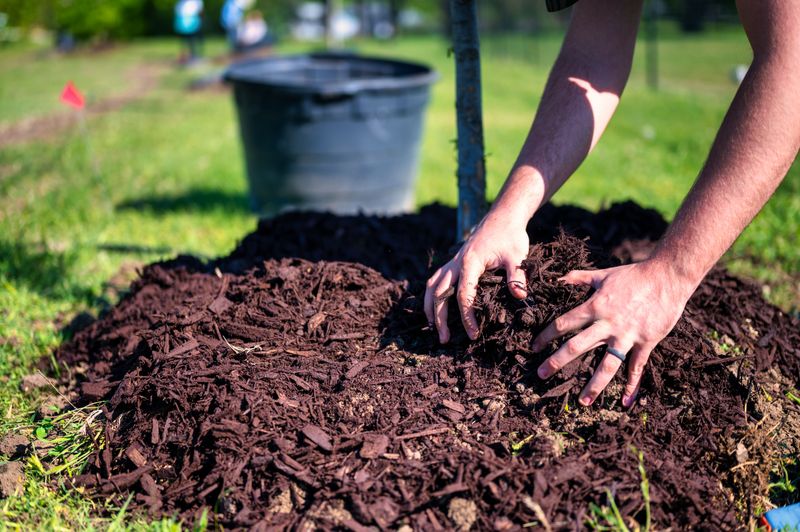
A thick layer of mulch acts like a blanket over that sponge. It slows evaporation dramatically, keeps soil temperatures cooler, and holds moisture in the ground far longer than bare soil ever could.
For deep-watering California shade trees to work at its best, mulch is a non-negotiable partner. Apply a three to four inch layer of wood chips or shredded bark around the base of each tree.
Spread the mulch out to the drip line if possible, covering as much of the root zone as you can reach. The wider the coverage, the more moisture your tree retains between watering sessions.
Keep mulch pulled back about three inches from the actual trunk. Piling it against the bark creates a damp environment that invites rot, insects, and other problems you do not want near your tree.
Fresh mulch in late spring sets your trees up perfectly before summer heat kicks in hard. Topping it off mid-season keeps the layer effective even as the bottom breaks down into the soil naturally.
Wood chip mulch from a local tree trimming service is often free for the asking. Call a crew working in your neighborhood and ask if they will drop a load, because most of them are happy to say yes.
Established Roots Need Less Frequent But Deeper Soaks
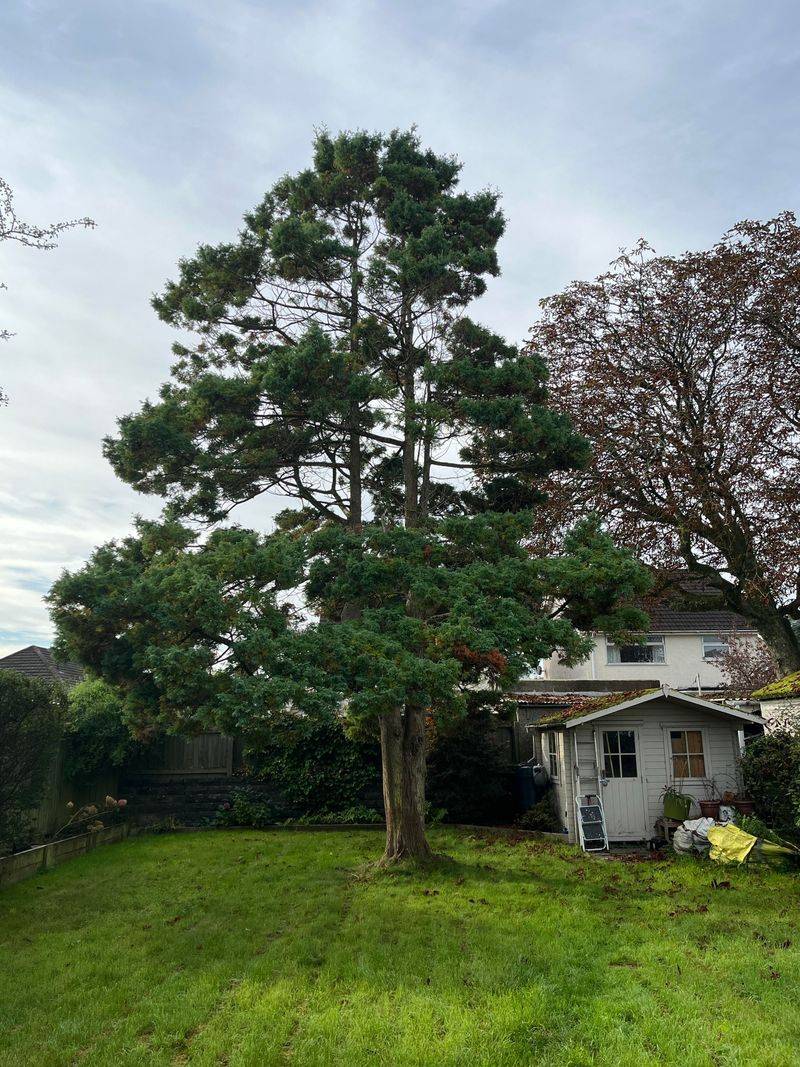
Young trees need hand-holding, but established trees have a different kind of thirst. A mature shade tree with deep roots wants long, infrequent soaks rather than quick daily sprinkles.
Frequent shallow watering actually trains roots to stay near the surface. That is the opposite of what you want when 100-degree heat is on its way to bake your yard.
Deep-watering California shade trees that are already established means soaking the soil slowly for one to two hours every one to two weeks. That schedule pushes roots to chase moisture deep into the earth.
Deep roots are resilient roots. When the top layer of soil turns to dust in a heatwave, trees with roots reaching two feet down still find moisture and stay stable.
Checking how long your tree has been planted helps you calibrate your schedule. A tree planted more than three years ago generally qualifies as established and thrives on the deep-soak routine.
Soil type also plays a role in how often you water. Sandy soil drains fast and may need soaking every ten days, while clay holds moisture longer and can stretch to every 14 days.
Resist the urge to water every day just because the weather feels punishing. Trusting the deep-soak schedule is one of the most empowering things a home gardener can do for a mature tree.
Signs Of Heat Stress Signal Extra Watering Sessions
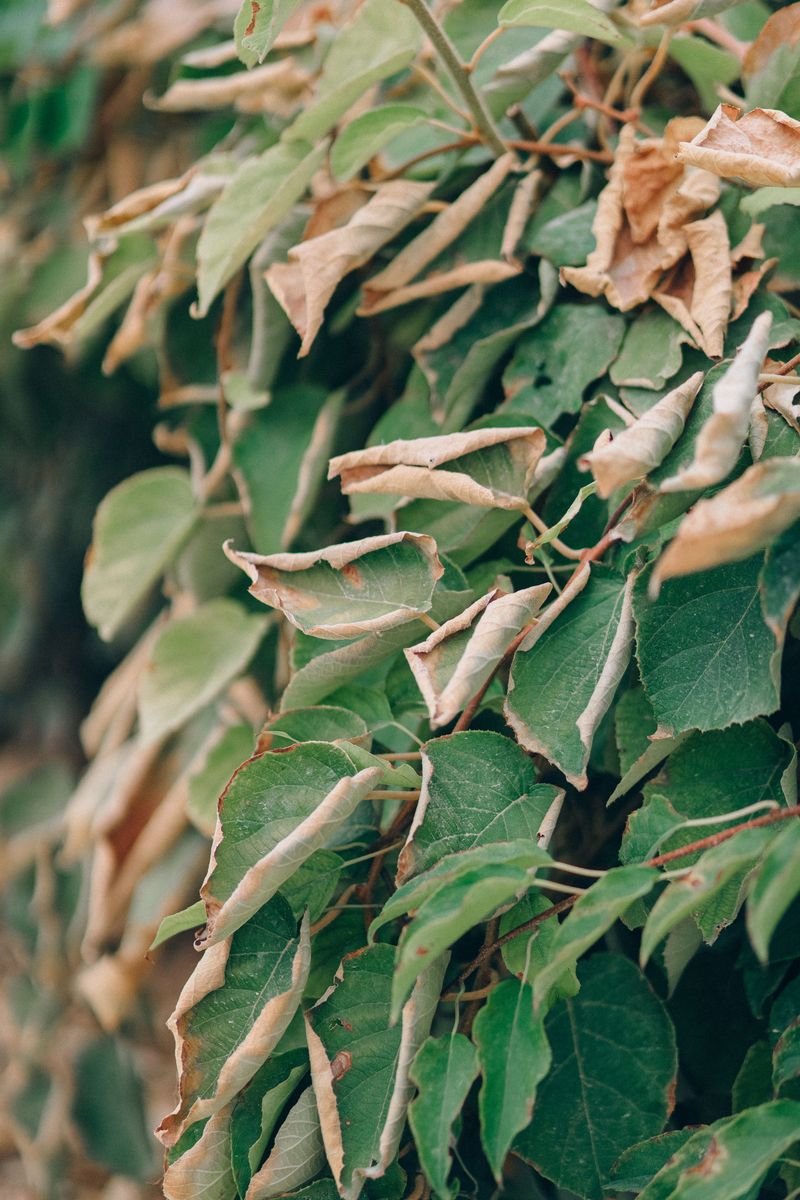
Your tree cannot talk, but it still communicates in its own way. Wilting leaves, scorched edges, and early leaf drop are your tree’s loudest way of saying it needs water right now.
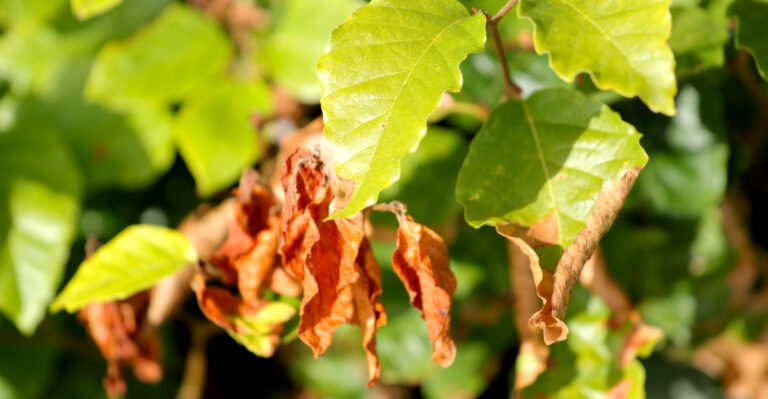
Leaf scorch shows up as brown, crispy edges on otherwise green leaves. This usually means the tree is pulling moisture away from leaf tips to protect its core, which is a stress response worth taking seriously.
Premature leaf drop in summer is another red flag most homeowners mistake for fall. When a shade tree sheds leaves in July or August, it is conserving energy because its water supply is running low.
Wilting that does not recover overnight after temperatures drop is a clear sign of trouble. Healthy trees perk back up by morning, but a stressed tree stays droopy even in the cool early hours.
When you spot any of these signals, add an extra deep-watering session within 24 hours. Do not wait for the next scheduled day on your calendar, because the tree is already working hard to cope.
After the emergency soak, check your mulch layer and refresh it if it has thinned out. Thin mulch means faster moisture loss, which can put you right back in the same stressful situation quickly.
Deep-watering California shade trees before the heat arrives prevents most of these stress signs from ever showing up. Stay ahead of the heat, read your trees closely, and your yard stays shady and thriving all summer long.