How to Keep a Rubber Plant Shiny and Dust-Free in Dusty Arizona Homes
A rubber plant can look like it wears a leather jacket right out of the nursery. Those big leaves show off a natural shine, and dust can hide it.
If you live in the lower desert, you may spot that haze sooner than you expect. A damp cloth and a little patience can bring the gloss back into view.
Arizona Dust Depends on Where You Live
Dust is a fact of life in some parts of the state, but it is not the same everywhere. The Arizona Department of Environmental Quality says dust is not uncommon in the lower deserts, especially during monsoon season.
It also points to several possible sources, such as weather, local activity, and dust carried in from somewhere else.
That detail matters because Arizona is a big place with very different climates. A home in the Phoenix area may see a different dust story than a home in a cooler mountain town.
Your neighbor across the county might even deal with something different from you.
So think of lower-desert dust as helpful background, not a rule for every household. It does not mean Arizona homes are dustier than homes elsewhere, and it does not call for a special statewide cleaning plan.
Your own leaves will tell you what is going on, and no cleaning routine can promise leaves that stay dust-free for good.
Rubber Plants Have a Natural Gloss
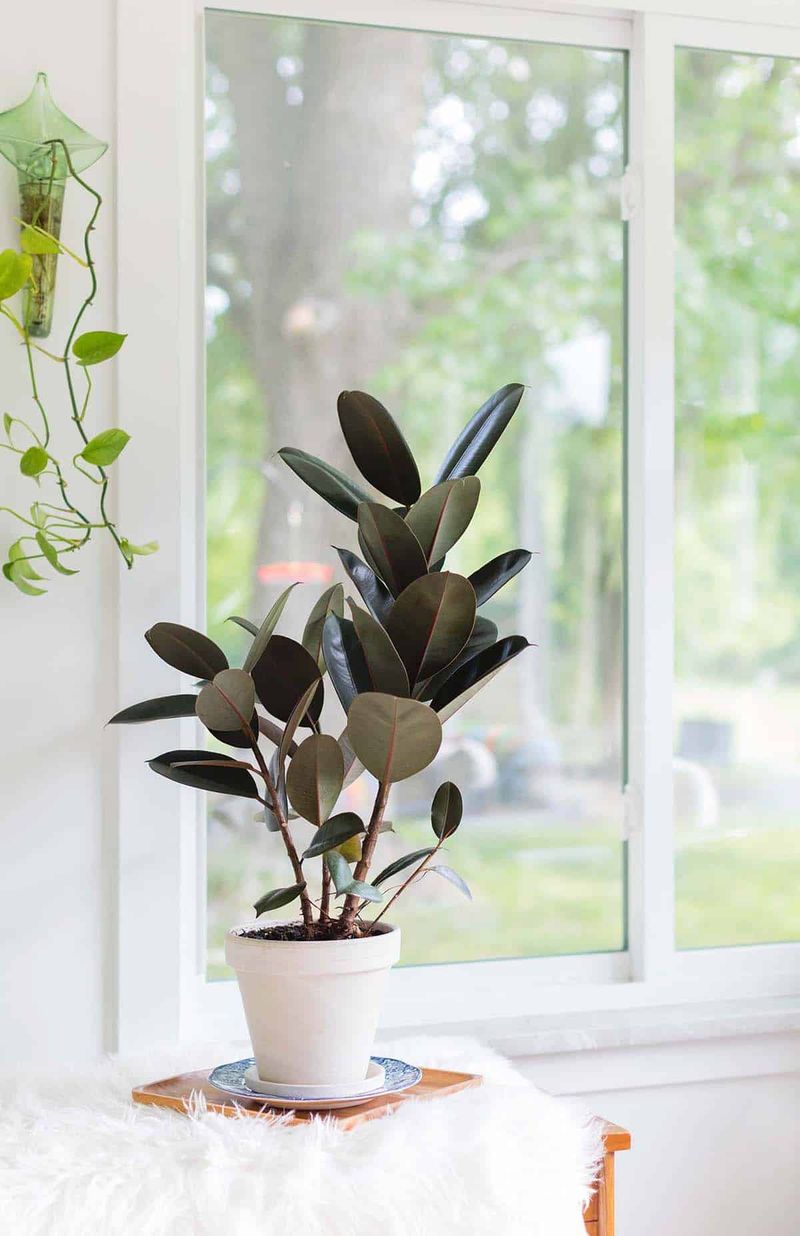
Run your eyes over a rubber plant and you will see why people love it. Ficus elastica has large, leathery leaves with a naturally glossy surface.
Clemson Extension describes the leaves as typically 8 to 12 inches long, which gives dust plenty of room to settle.
That built-in shine is the whole point of cleaning. When you remove dust, you are uncovering the leaf’s own surface, not adding anything to it.
The plant does not need a coating or polish to look glossy.
Think of it like wiping a dusty window. The glass was always clear, and you simply let the light back in.
A clean rubber plant leaf works the same way, and the plain, natural look is often the best one.
Let Visible Dust Set Your Cleaning Schedule
Skip the calendar and trust your eyes. Look over your leaves now and then, and clean them when they look dusty.
Run a finger across a leaf, and if it comes away gray, it is time.
The rubber-plant guidance from NC State Extension and Clemson Extension does not set a fixed interval. Nothing there says weekly or monthly is required, so there is no need to feel guilty about a missed date.
Your home’s conditions can guide how often you check. An open window, a busy road nearby, or a windy stretch might mean more dust on a shelf, and your plant may show it too.
That is a hint to look more closely, not a rule for every Arizona household.
Wipe Both Sides with Plain Water
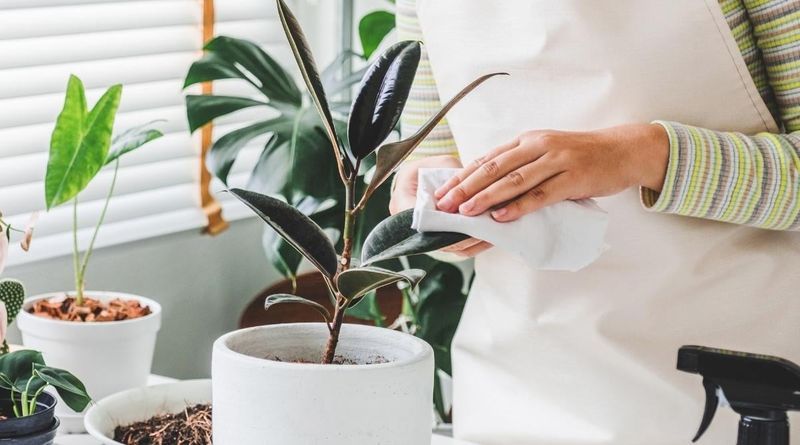
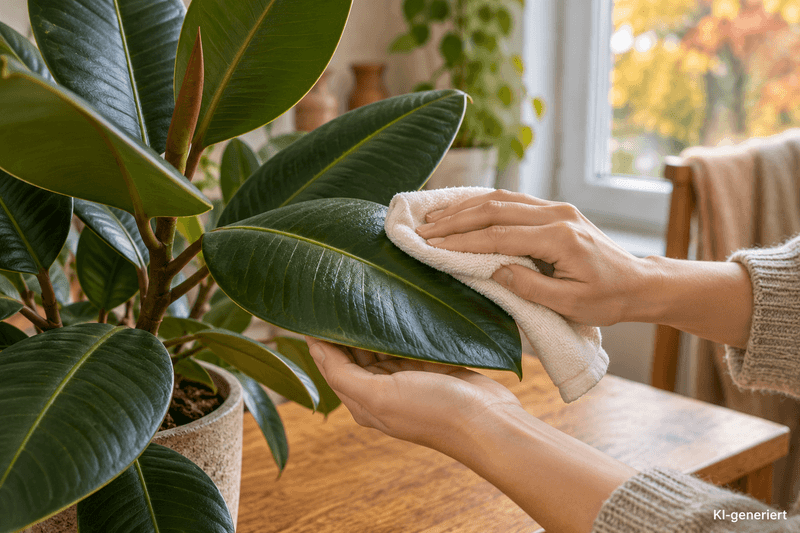
Here is the simple method. Dampen a soft cloth or sponge with clear water, and wring it out so it is not dripping.
NC State Extension recommends cleaning both leaf surfaces, and Iowa State Extension says clear water on a cloth removes dust in nearly all cases.
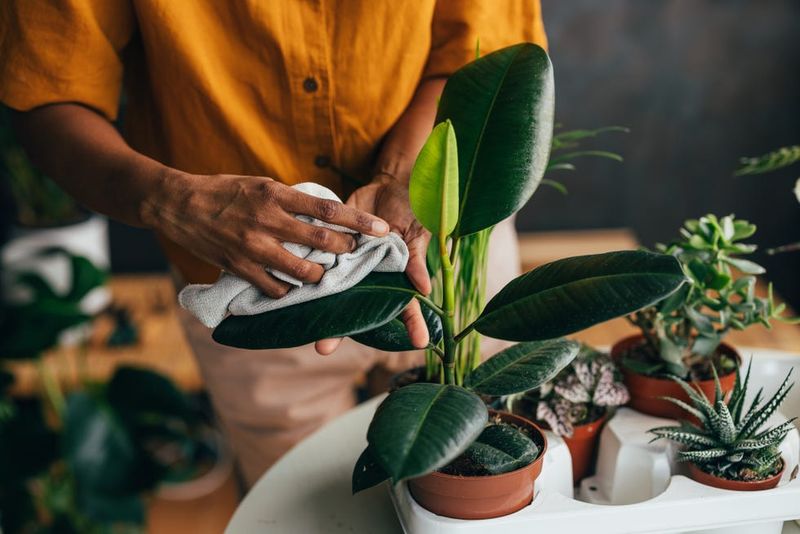
Cup one hand under the leaf to support it. Then wipe gently from the stem toward the tip with the other hand.
Supporting the leaf keeps it from bending or tearing under the cloth.
Flip the cloth or rinse it when it picks up dust, so you are not just moving dirt around. Do the undersides too, since dust settles there as well.
Light pressure is enough, because this is dusting, not scrubbing, and no products are needed.
Use a Lukewarm Rinse as an Alternative
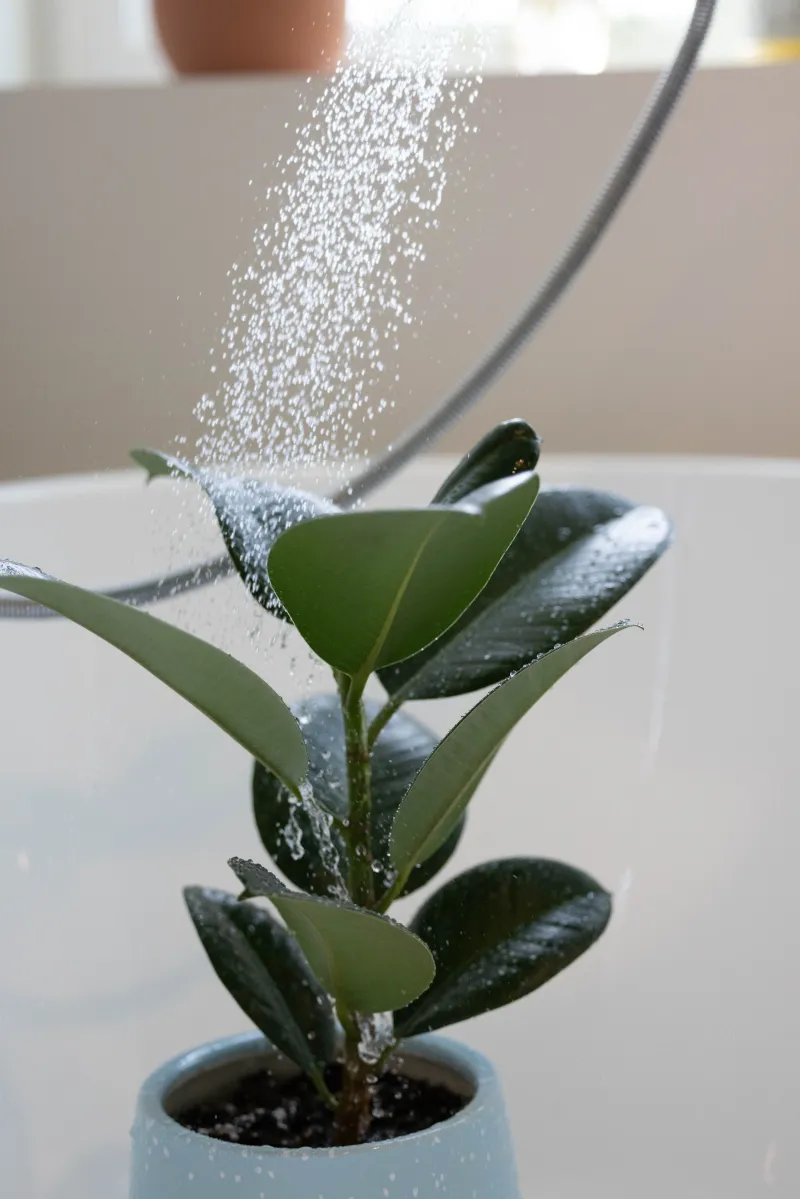
If your plant is small enough to move, a rinse can save time. Iowa State Extension says plants can be rinsed in a sink or shower with lukewarm water.
It is a handy swap for wiping every single leaf.
Check the water first. Test the temperature on your wrist so it feels neither hot nor cold.
Keep the pressure soft, since a hard blast could damage leaves or knock soil loose.
Let the plant drain before it goes back to its spot. A rinse is an option, not a requirement.
A tall plant in a big pot may be much easier to wipe, and that works just as well.
Treat Dust Research as General Context
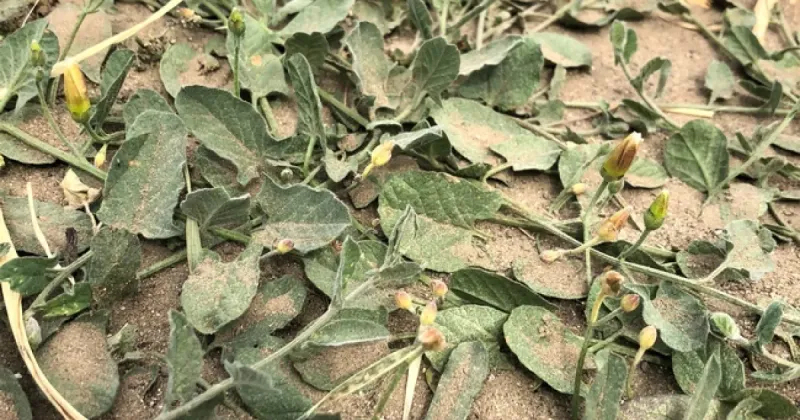
Scientists have looked at what dust does to leaves, but not on indoor rubber plants. A study of kidney bean and cucumber found that photosynthesis declined as experimentally applied dust increased.
A separate study of five roadside herbaceous species reported physiological changes. That work looked at plants growing near roads, and it did not use a dust gradient the way the bean and cucumber study did.
Both studies involved other species in other settings. Neither tested Ficus elastica, so they cannot tell us how much dust bothers a rubber plant or set a damaging threshold.
They also do not show that cleaning guarantees faster growth. Treat them as a reason to keep leaves tidy, not as proof of a specific result.
Skip Routine Shine Products and Household Detergent
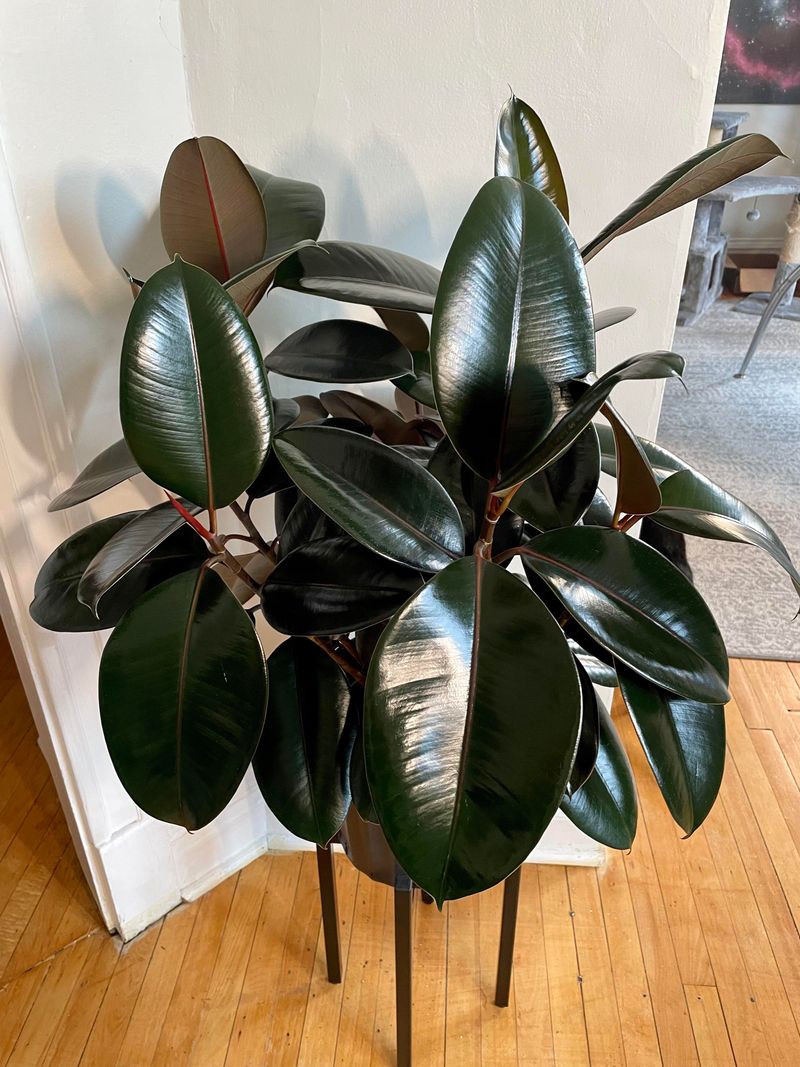
Plain water is the better-supported choice for ordinary dust. Extension advice on shine sprays is cautious.
NC State advises against leaf-shine products, citing dust attraction and effects on stomata. Clemson says residue may interfere with air exchange.
Not every product is the same, so no one claim fits all of them. One manufacturer describes its own water-based leaf shine as suitable for some hard-leaved plants.
Its examples do not specifically show it is right for rubber plants.
Soap is not needed either. Iowa State warns that household detergents may damage the leaf’s waxy surface and cause browning.
Oils, milk, and mayonnaise are not backed by the sources, so leave them in the kitchen.
Handle Leaves Gently
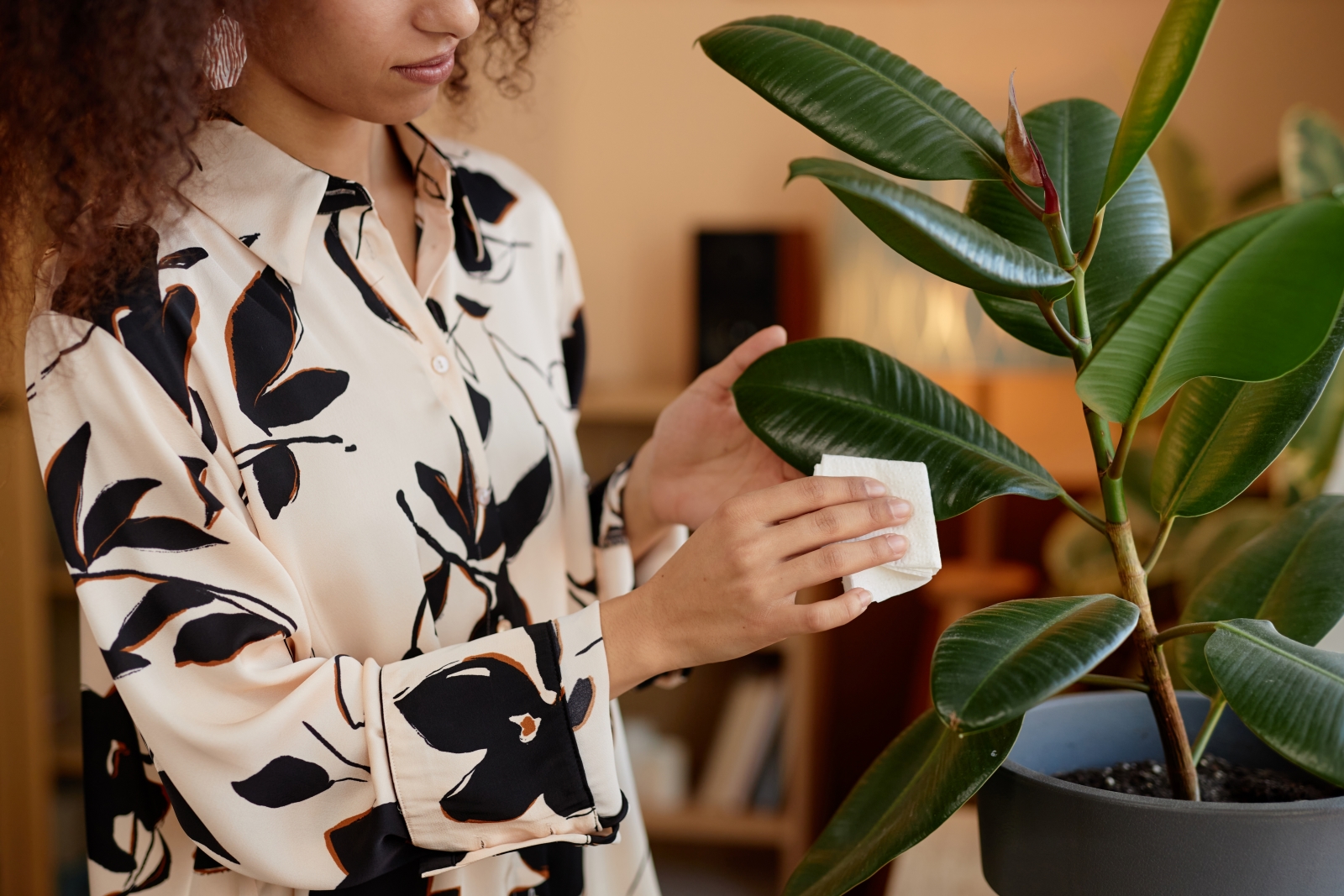
Check for visible dust, wipe with a damp cloth or try a careful rinse, and hold each leaf as you go. Gentle hands keep leaves from bending or breaking.
One quick caution: Clemson Extension notes that rubber-plant sap may irritate skin or the stomach if eaten. Keep curious pets and kids away.
A clean leaf is just a happy leaf showing off.