How to Make a Holiday Wreath Using Evergreens From Your Michigan Garden
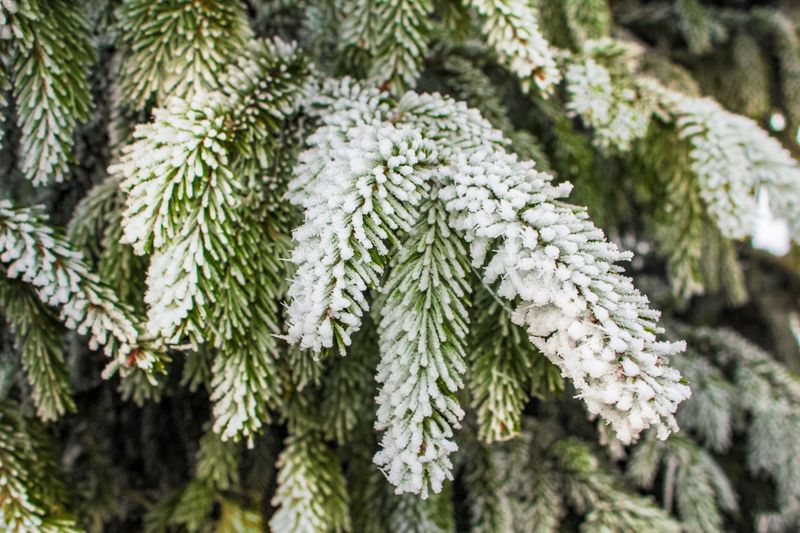
Balsam fir needles carry a scent strong enough that people once stuffed them into pillows to sleep better. I still find that a little wonderful.
That same piney perfume might be growing right outside your back door. Many Michigan yards hold a hidden supply of holiday decor in plain sight, tucked into foundation shrubs and windbreaks.
Personally, I love how a few snips can turn an overgrown branch into something your neighbors will stop to admire. You need nothing fancy, just some patience, cold fingers, and a willingness to get a little sap on your sleeves.
Store-bought versions often travel hundreds of miles before they reach a hardware store. Yours could travel about forty feet.
1. Those Cold-Weather Fir And Pine Branches Are Ready Sooner Than You Think
Cold weather does a sneaky favor for your evergreens. Once temperatures drop and the plants go dormant, the branches hold their needles much better after cutting.
Many gardeners wait until after a few hard frosts, often in mid to late November across much of the state. Up north and in the Upper Peninsula, that window usually arrives earlier, while southern Michigan may run a week or two behind.
I like to cut my greens on a cool, dry morning. Branches harvested on a warm, sunny afternoon tend to lose moisture faster, and that shows up later as brittle tips.
Plan your project for a weekend when you can cut and build on the same day or the next. Freshly cut greens look their best when they go straight from the shrub to a bucket of water and then onto the frame.
Fun fact: needles on firs and spruces have a waxy coating that slows water loss during winter. That natural wax is one reason a homemade wreath can stay green for weeks.
So keep an eye on the forecast. A string of chilly nights is your signal that the garden is ready to share its holiday supply with you.
2. Balsam Fir, Spruce, And White Pine Make The Sturdiest Wreath Bases

Not every evergreen behaves nicely in a wreath. Some hold their needles for a month, while others start shedding before the holidays arrive.
Balsam fir is the gold standard. Its flat, short needles stay put, and the fragrance is pure winter magic. Fraser fir and Canadian hemlock also look lovely, though hemlock may drop needles sooner indoors.
Spruce gives you stiff, bristly texture that fills gaps nicely. Wear gloves, because blue spruce needles are sharp enough to make you rethink your choices.
White pine, the Michigan state tree, adds soft, long needles and a graceful, feathery look. It works best as an accent rather than the whole base.
Arborvitae, juniper, and boxwood bring flat sprays, blue berries, and glossy leaves for contrast. Juniper berries are especially charming against darker greens.
Here is my favorite trick: use one sturdy green as about half your mix, then add two or three accent greens. That combination gives your wreath depth instead of looking like a flat ring.
Skip yew if you have small kids or pets nearby, since its foliage and seeds are toxic. Safety matters more than an extra shade of green.
3. Snip Evergreen Boughs Like A Pruner, Not A Lumberjack
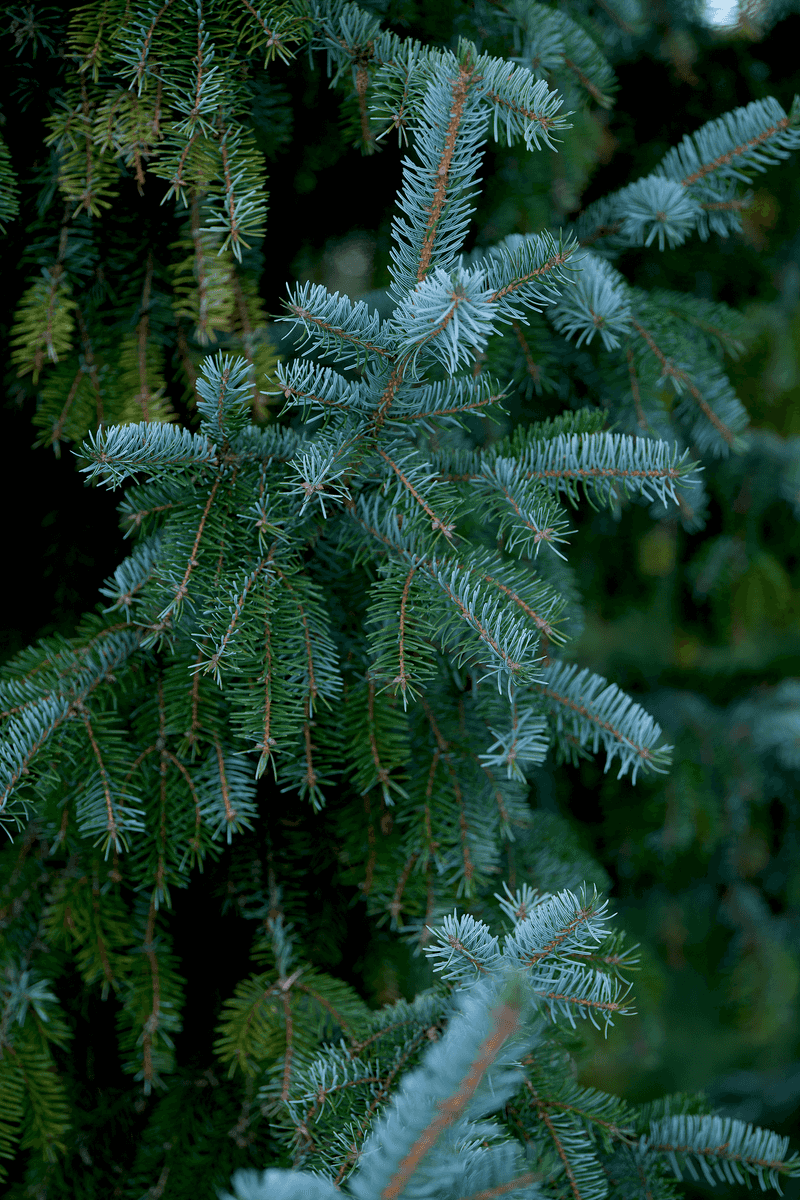
Good cuts help your wreath and your shrubs at the same time. Think of harvest day as a light winter pruning session rather than a raid.
Use sharp bypass pruners for clean cuts. Snip branch tips about 12 to 18 inches long, cutting just above a side branch or bud so the plant can fill back in come spring.
Spread your cuts around the whole shrub. Taking a little from many spots keeps the plant looking natural, and nobody will guess you borrowed anything.
A common guideline from tree care pros is to remove no more than about 25 percent of a plant’s foliage in a year. For a wreath, you will likely need far less than that.
Be careful with pines and spruces. They do not sprout new growth from bare wood, so avoid cutting back into sections with no needles.
Once cut, set your greens in a bucket of cool water in a shaded garage or porch. I let mine soak overnight so the stems drink up before I start building.
Cut stems at an angle before soaking. That small step gives them more surface area to pull in water.
4. Some Michigan Woods Are Off Limits For Gathering Greenery

A walk through a snowy forest might tempt you to bring home a few branches. Before you do, know the rules.
The Michigan Department of Natural Resources generally does not allow cutting or removing plants from state forests, parks, and recreation areas without permission. National forests have their own permit systems, and those vary by location.
Your own yard is the easiest and safest place to gather greens. Friends, family, and neighbors with overgrown shrubs often welcome a free trim if you ask politely first.
Trees on property lines can get tricky. Cutting a neighbor’s tree without permission can lead to disputes, so a quick conversation saves a lot of headaches.
Some townships and cities also have rules about trees in road right-of-ways or shared spaces. Checking with your local office takes a few minutes and keeps everyone happy.
Personally, I find that sharing a finished mini wreath with the neighbor who donated branches builds goodwill for years. It is a pretty great trade. Bottom line: if the land is not yours, get a clear yes before you cut anything at all.
5. Floral Wire And A Metal Wreath Ring Do Most Of The Work
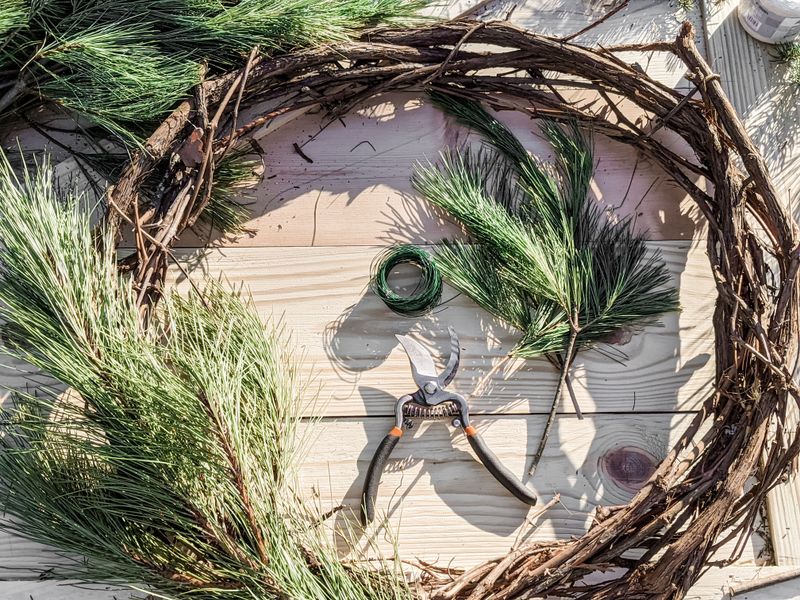
My first homemade wreath was held together with twist ties and hope. It lasted about four days before it started unraveling.
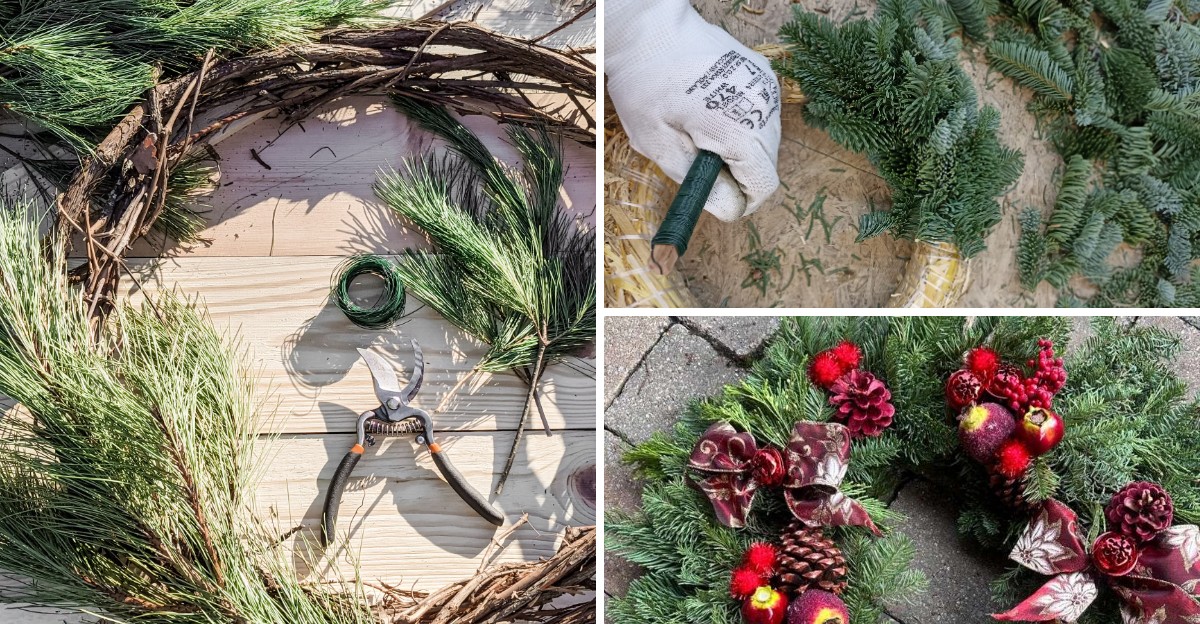
You can skip that drama with a short list of supplies. Start with a metal wreath ring or a grapevine base, usually 12 to 16 inches across for a front door.
Paddle floral wire is the star. It comes wrapped on a flat holder, so you can keep it attached and wrap continuously around the frame as you work.
Grab sturdy gloves, because sap is sticky and spruce needles are pokey. Wire cutters or old pliers will save your good pruners from getting dull on wire.
Bypass pruners handle the trimming of greens into smaller pieces. A cheap tarp or old sheet under your workspace makes cleanup much easier.
Want to go fully homegrown? Flexible grapevine or dogwood stems can be twisted into a sturdy ring. Just avoid Oriental bittersweet vines, which are invasive in Michigan and spread through their berries.
Keep a little rubbing tool handy too. Vegetable oil on a rag lifts sticky sap off your hands better than soap alone.
6. Layer Small Evergreen Bundles Around The Ring Like Shingles
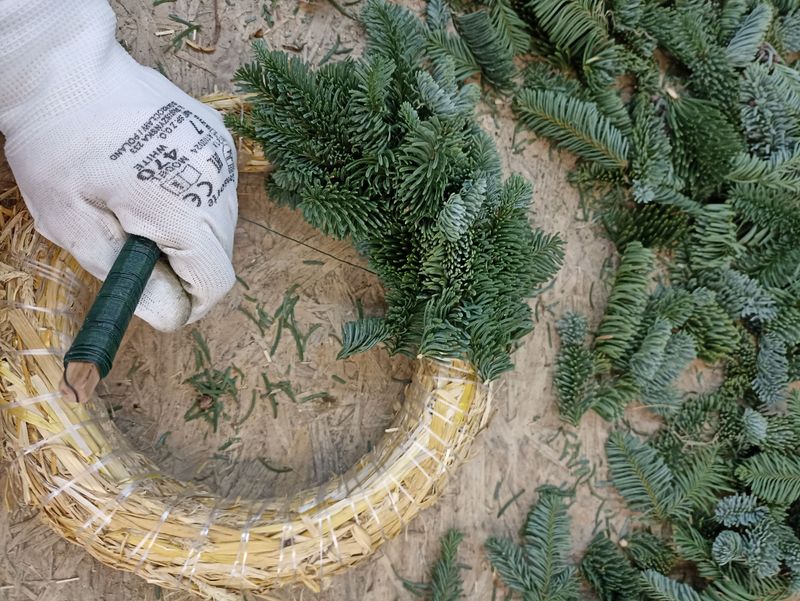
Building the wreath is where the magic clicks. Once you get the rhythm, the whole circle comes together faster than you expect.
Trim your soaked greens into pieces about 6 to 8 inches long. Make small bundles of three to five pieces, putting the fullest sprig on the bottom and a pretty accent on top.
Lay the first bundle against the frame and wrap the wire tightly around the stems two or three times. Keep the wire attached to the paddle.
Place the next bundle so it overlaps the stems of the first, like roof shingles. Wrap it the same way and keep going around the ring.
Angle your bundles slightly outward and inward as you go. That trick fills both the inner and outer edges so the wreath looks plump.
When you reach the start, gently lift the first bundle and tuck the last stems underneath it. Wire them in, then twist the end of the wire to the frame.
Finally, make a hanging loop on the back. Hold it up and trim any wild pieces sticking out for a neat, rounded shape.
7. Pinecones, Winterberry, And Dried Hydrangeas Add Garden Charm

Your garden has more to offer than greens. A quick winter stroll often turns up treasures you forgot were out there.
Pinecones from white pine or spruce add texture and a woodsy feel. Wire them on by wrapping wire around the bottom rows of scales.
Winterberry holly is a native Michigan shrub with bright red berries that pop against dark needles. Snip a few sprigs and leave plenty behind for the birds who rely on them.
Dried hydrangea heads, rose hips, seed pods, and ornamental grass plumes also look lovely. They bring a soft, old-fashioned touch that store wreaths rarely match.
Hold off on Oriental bittersweet, even though those orange berries look gorgeous. Birds spread the seeds, and the vine is invasive here. American bittersweet is the native lookalike, but many people still skip it to avoid confusion.
Finish with a ribbon if you like. Weatherproof ribbon handles snow and wind better than fabric on an outdoor door.
I usually add decorations in odd-numbered clusters, like three cones together. That small design habit makes the arrangement look relaxed instead of stiff.
8. A Little Misting Keeps Your Evergreen Wreath Green Into January

Michigan winters are your wreath’s best friend. Cold outdoor air keeps greens fresh for weeks, often lasting through the holidays and beyond.
Indoors is a different story. Warm, dry air pulls moisture from needles quickly, so mist the back of the wreath every day or two where the cut stems sit.
Keep indoor wreaths away from fireplaces, heat vents, and sunny windows. A cool entryway works much better than a spot above the stove.
Some gardeners use an anti-transpirant spray to slow moisture loss. Spray it outdoors on a day above freezing and let it dry before hanging.
Watch for curling needles or brown tips. Those signs tell you the wreath is drying out and ready to be refreshed with a few new sprigs.
When the season wraps up, remove wire and decorations. The greens can go into your compost pile or be laid over perennial beds as a light winter mulch.
I love that last step most of all. Your wreath starts in the garden and ends there too, which feels like a fitting way to close out the year.