The Alabama Law That Treats A Backyard Pest And A Protected Species Completely Differently
Two animals can dig almost the same hole in a sandy Alabama yard, yet one hole is fair game and the other is protected by law. I found that out the hard way, staring at a fresh mound of sand with a shovel in my hand.
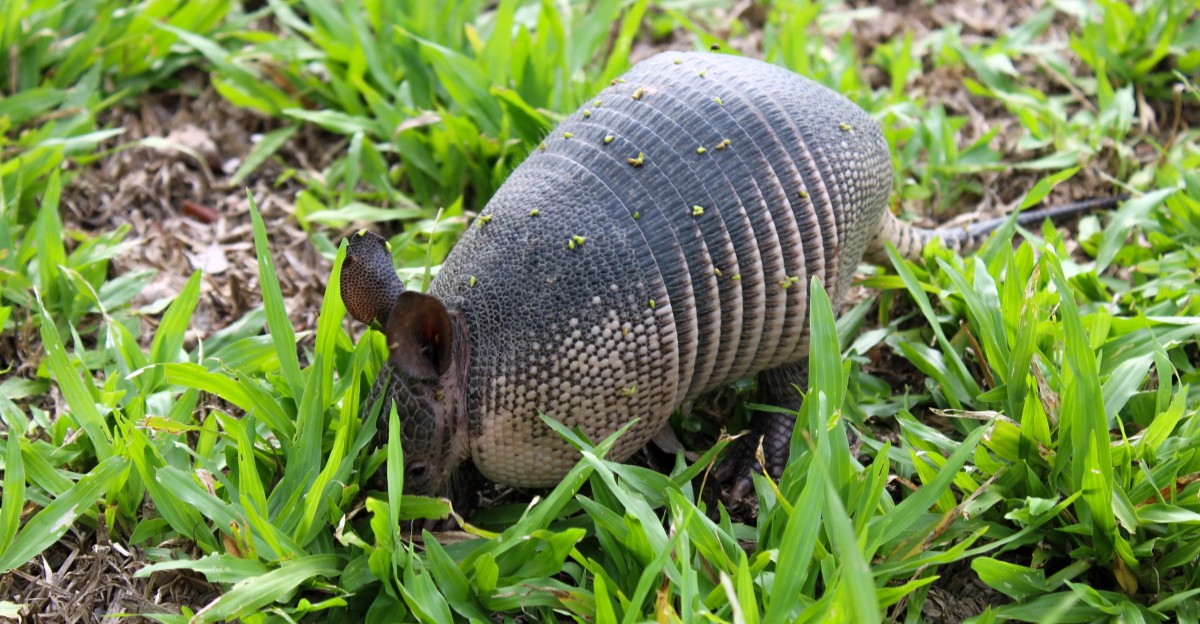
One digger is an armored night snacker that tears up lawns hunting grubs. The other is a slow, gentle reptile whose home shelters hundreds of other creatures.
In Alabama, the gap between how the law treats them is wide enough to cost you a hefty fine.
You might notice the sand first. You might smell turned earth on a warm morning and assume the worst about your neighbor, the critter variety.
I paused before acting, and I am glad I did. Know the hole before you fill it: one is a nuisance, the other is a home the law will defend.
That Fresh Hole in Your Sandy Yard Might Belong to a Legal VIP
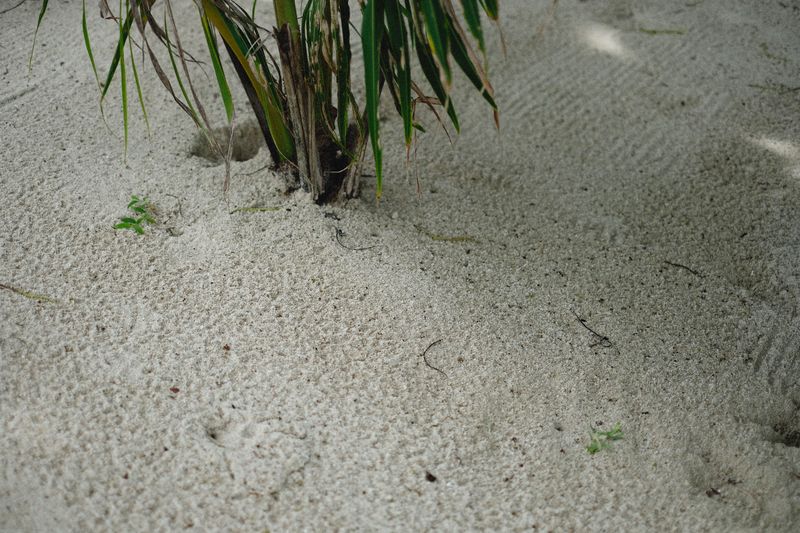
Sand sprayed across the grass, a dark opening near the pine straw, and a gardener wondering what moved in overnight. That scene plays out in backyards across the southern half of the state every year.
Two animals are usually behind it. The nine-banded armadillo is a common, unprotected nuisance. The gopher tortoise is protected statewide in Alabama.
The law splits them sharply. You can legally control an armadillo damaging your property. A gopher tortoise and its burrow must be left alone unless you have proper permits.
Armadillos arrived on their own over the last century, spreading east from Texas and also from releases in Florida. They now roam most of the state.
Gopher tortoises are old-timers, living in the sandy longleaf pine country of the southern counties for thousands of years.
Habitat explains a lot. If you live in the sandy Coastal Plain, either digger could be your visitor. If you live farther north, the culprit is far more likely an armadillo.
My advice is simple. Before you grab a shovel, trap, or hose, take ten minutes to figure out who actually dug that hole.
The Nine-Banded Armadillo Gets Almost No Legal Protection
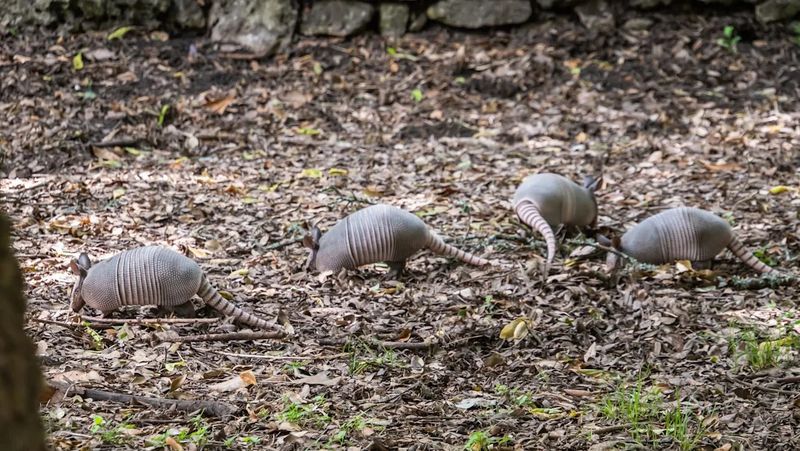
Grubs, beetles, and earthworms are the armadillo’s favorite menu, and your lawn is the buffet. That snout can root up a flower bed in a single night.
In Alabama, the nine-banded armadillo is not a protected game animal. According to the state Department of Conservation and Natural Resources, landowners may take armadillos causing damage to their property, and there is no closed season.
Trapping is a common, practical choice. Still, a few rules apply. Local city ordinances may limit discharging firearms in neighborhoods, so check before acting.
If you hire someone, Alabama licenses Nuisance Wildlife Control Operators who know local regulations.
Relocating a trapped animal is also regulated. Moving wildlife onto someone else’s land without permission causes headaches, so talk with a licensed operator or your local wildlife office first.
A quick health note matters too. Some armadillos carry the bacteria that cause Hansen’s disease, also called leprosy. The risk is low, but wear gloves and avoid handling them bare-handed.
So yes, the armadillo is the backyard pest in this story. That freedom to act comes with a responsibility to be sure you are dealing with an armadillo in the first place.
Gopher Tortoises and Their Burrows Are Off Limits
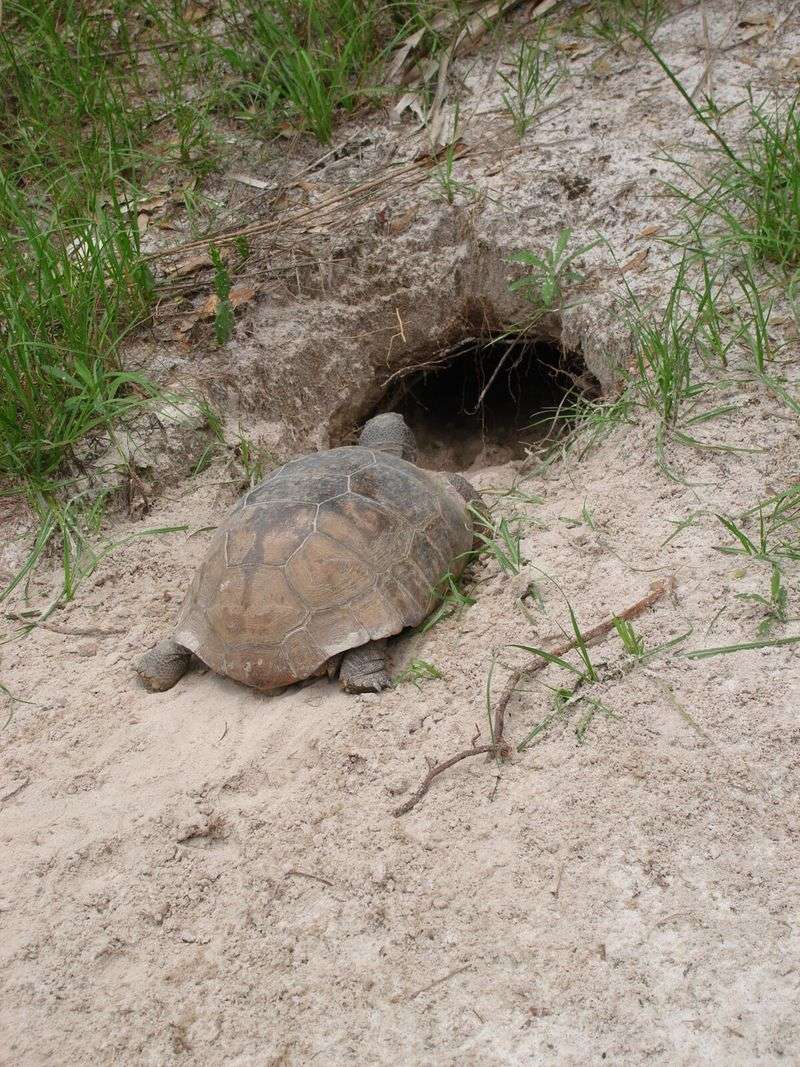
Few reptiles carry this much legal weight on such a slow-moving shell. The gopher tortoise is Alabama’s official state reptile, and it is protected statewide.
State regulations make it illegal to capture, harass, possess, sell, or transport a gopher tortoise or its eggs. Damaging an occupied burrow can also land you in trouble.
West of the Mobile and Tombigbee Rivers, in Mobile, Washington, and Choctaw counties, the tortoise is federally listed as threatened under the Endangered Species Act. That brings the U.S.
Fish and Wildlife Service into the picture. East of those rivers, the federal listing does not apply, but state protection still does. Either way, the burrow is not something to fill in.
What if one shows up where you plan to build a shed or pour a patio? Contact the state Division of Wildlife and Freshwater Fisheries before any work begins.
In federally listed areas, you will also need guidance from the Fish and Wildlife Service, and only authorized people can move tortoises.
Fun fact: these tortoises can live 40 to 60 years in the wild. The one in your yard may have been digging there longer than your house has stood.
A Half-Moon Burrow Opening Tells You Which Digger Moved In
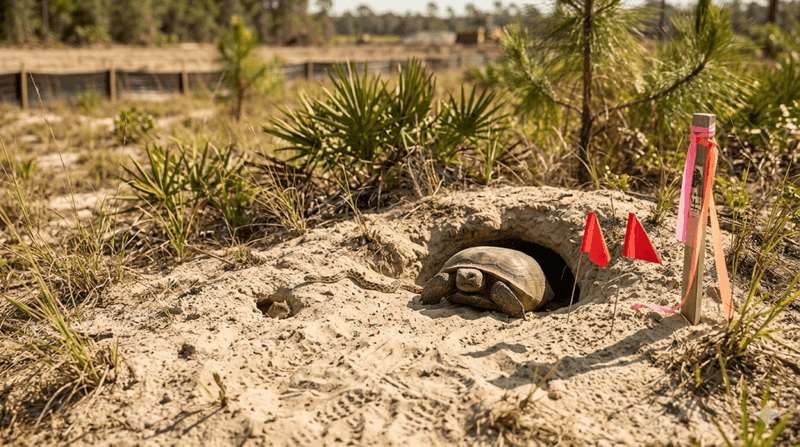
Grab a tape measure and look closely at the entrance shape. Your answer is often sitting right there in the sand.
A gopher tortoise burrow has a half-moon opening, flat on the bottom and rounded on top. It matches the shape of the tortoise’s shell.
Out front, you will usually see a fan of loose sand called an apron, sometimes marked with tortoise tracks.
Armadillo burrows look different. The opening is usually round, about seven to eight inches across, and often tucked under shrubs, stumps, porches, or foundations.
Feeding signs help most. Armadillos leave many shallow, cone-shaped pits, about one to three inches deep and three to five inches wide, scattered across lawns and beds. Tortoises do not pock lawns this way; they graze on grasses and low plants.
Timing gives clues as well. Armadillos mostly forage at night in warm weather, though they may come out in the afternoon during cold spells.
Tortoises are active during the day, especially in warm months, and stay near their burrows in winter.
Still not sure? Snap a photo with something for scale. Wildlife biologists and county Extension agents are happy to help you identify it.
Keep Armadillos Out of Flower Beds Without Breaking Any Rules
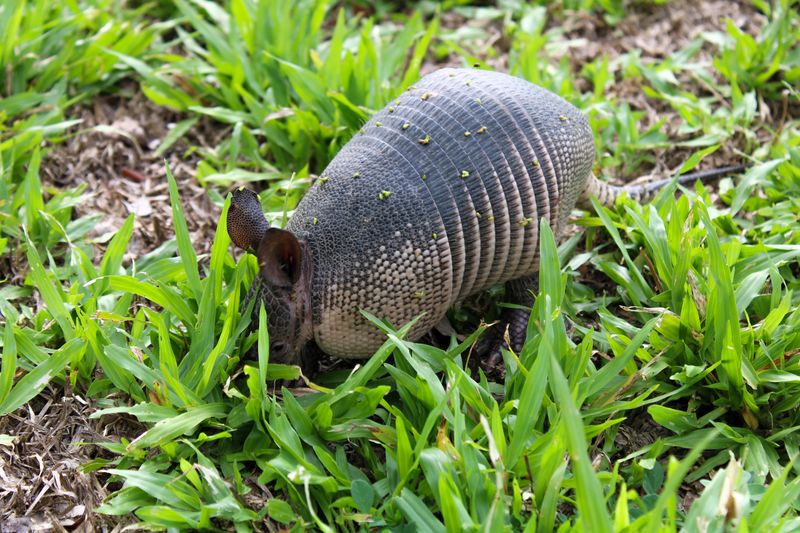
After my mulch beds got flipped three nights in a row, I started treating armadillos like a puzzle. Fencing turned out to be the most reliable piece.
Auburn’s Alabama Cooperative Extension System recommends sturdy wire fencing around gardens. Bury the bottom at least 12 inches deep, or bend it outward in an L shape along the ground.
Armadillos dig, so an unburied fence is little more than a suggestion. Live trapping works well too. Set traps along fences, walls, or travel paths near burrows, and use boards to make wings that funnel the animal inside.
Bait is often unnecessary, though some people add earthworms or overripe fruit. Reducing grubs may lower the attraction a bit. Be realistic, though, since armadillos eat many kinds of insects and worms, so pest treatments rarely solve the problem alone.
Repellents and mothballs get plenty of hype but little research support. Save your money for fencing.
Before setting any trap in sandy southern counties, double-check that the burrow is not a tortoise home. A trap at a tortoise burrow can cause harm and legal trouble.
Hundreds of Other Animals Depend on Gopher Tortoise Burrows
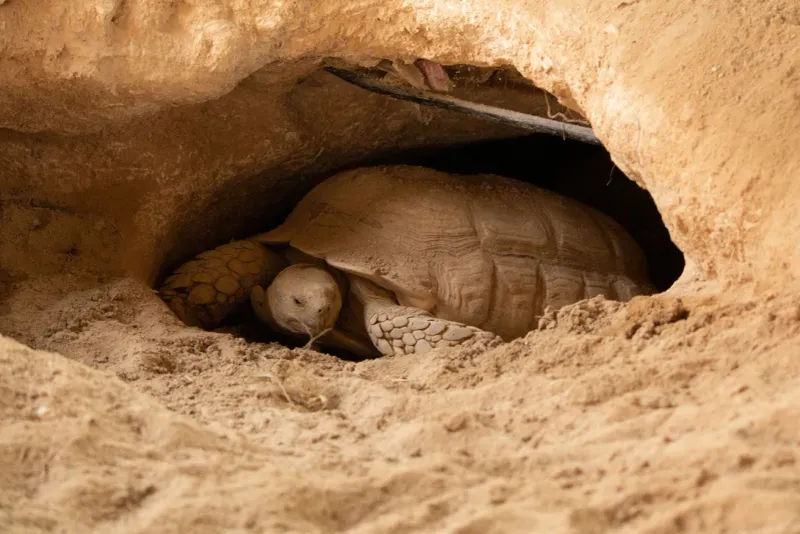
Biologists call the gopher tortoise a keystone species, and the reason lives underground. Its burrows can reach about 40 feet long and 10 feet deep.
More than 350 other species have been recorded using these tunnels. Gopher frogs, eastern indigo snakes, burrowing owls in Florida, mice, insects, and even foxes duck inside to escape heat, cold, and wildfire.
Wildfire matters here. Longleaf pine forests evolved with frequent fire, and tortoise burrows act as safe rooms when flames sweep through.
The trouble is habitat loss. Longleaf pine once covered roughly 90 million acres across the Southeast, and only a small fraction remains.
Development, fire suppression, and dense planted pines pushed tortoises into roadsides, pastures, and yes, some backyards.
Conservation groups and state agencies are working to restore longleaf habitat and manage it with prescribed fire. Tortoise populations respond when open, sunny, grassy ground returns.
So the protection is not about one cute reptile. Guarding a single burrow protects a whole apartment building of neighbors you rarely see.
A Tortoise-Friendly Yard Starts With a Quick Phone Call
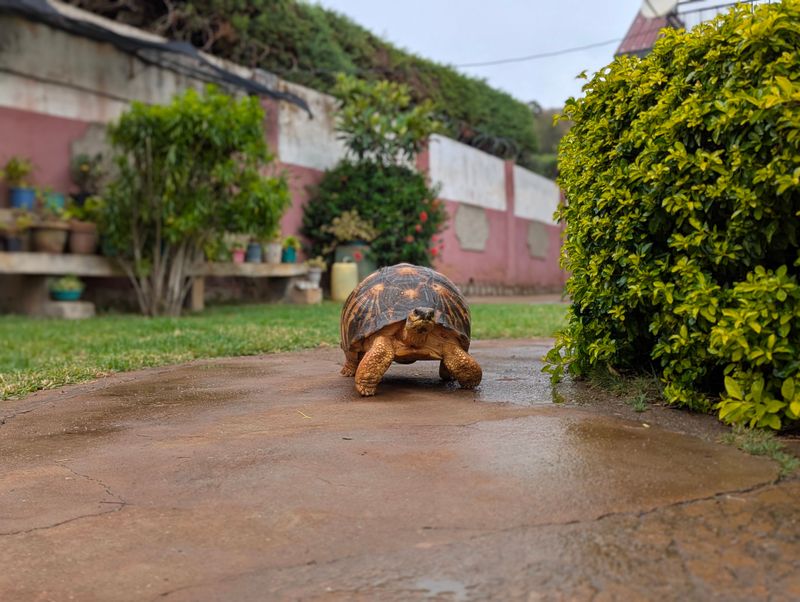
Here is my favorite takeaway. You do not need to choose between a tidy yard and doing the right thing.
Start with identification every time you find a new hole. Measure the opening, check for a sand apron, and look for shallow feeding pits nearby.
If it is an armadillo, use fencing, trapping, or a licensed Nuisance Wildlife Control Operator. Keep local ordinances in mind.
If it is a gopher tortoise, leave the burrow open and mark it so mowers and vehicles steer clear. Keep dogs away from the entrance.
Call the Alabama Division of Wildlife and Freshwater Fisheries before any construction, fencing, or digging nearby.
You can even make your yard more welcoming. Tortoises appreciate sunny, open spots with native grasses, wiregrass, and low plants like legumes.
Skip heavy shade and dense groundcover near their burrows. Share what you learn, too. A neighbor who spots a sandy mound may be one photo away from filling it in by mistake.
A few minutes of curiosity protects your garden, your wallet, and a reptile that has quietly shaped southern landscapes for ages.