That Huge Spider Strung Across Your Arizona Garden Might Be a Helpful Orb-Weaver
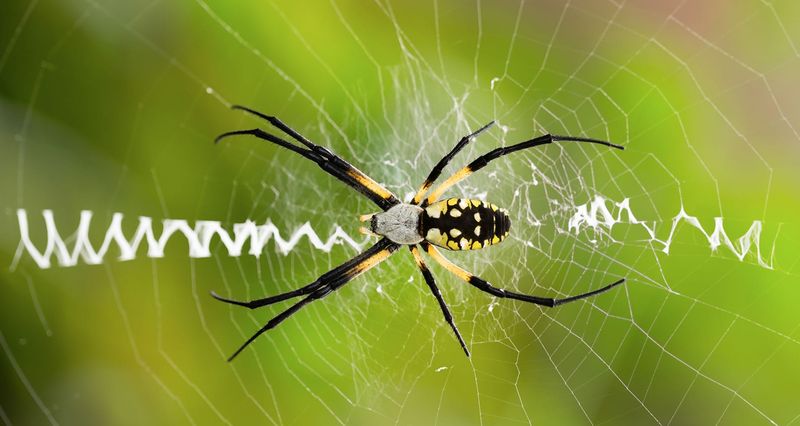
You step outside at dawn and find a wheel-shaped web stretched between two shrubs, with a big spider waiting at the center. Before you reach for the broom, it helps to know what that web may be telling you.
Some spiders in desert yards are predators that snag flying insects, while others call for more caution. Here is how to read the clues, decide what to do, and stay safe.
A circular web suggests an orb-weaver
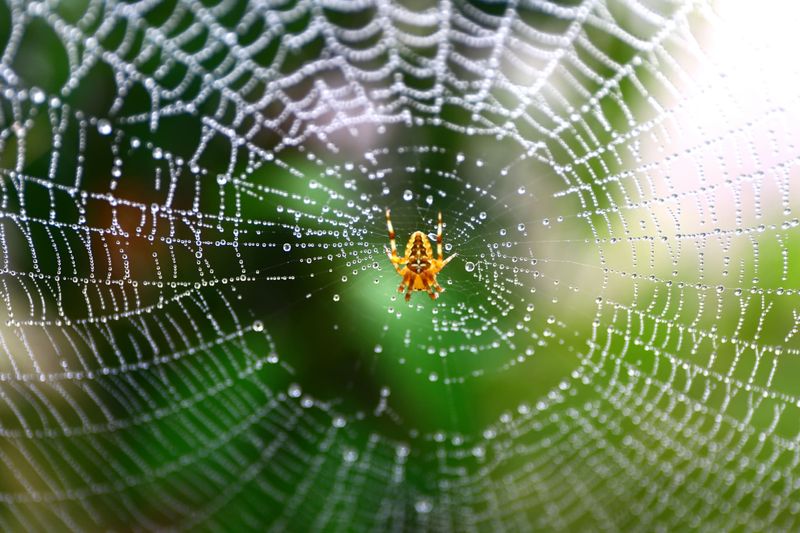
Few things in a desert yard look as neat as a round web with spokes running out from the center like a bicycle wheel. That shape is the signature of orb-weavers, a group of spiders that spin circular webs to trap prey.
University of Arizona Extension materials describe these circular webs and the way orb-weavers hunt from them.
Think of the web as a good clue, not a name tag. A wheel-shaped web is consistent with an orb-weaver, but a web alone cannot tell you the species.
Not every large web in Arizona belongs to an orb-weaver either, since other spiders build very different silk, from messy tangles to funnels.
Notice where the web sits and how it is built. Open space between plants, a flat circular pattern, and a spider resting at the center all point toward an orb-weaver.
Looking from a few steps back is plenty, and you do not need to get close.
Arizona has orb-weavers, but the web cannot name yours
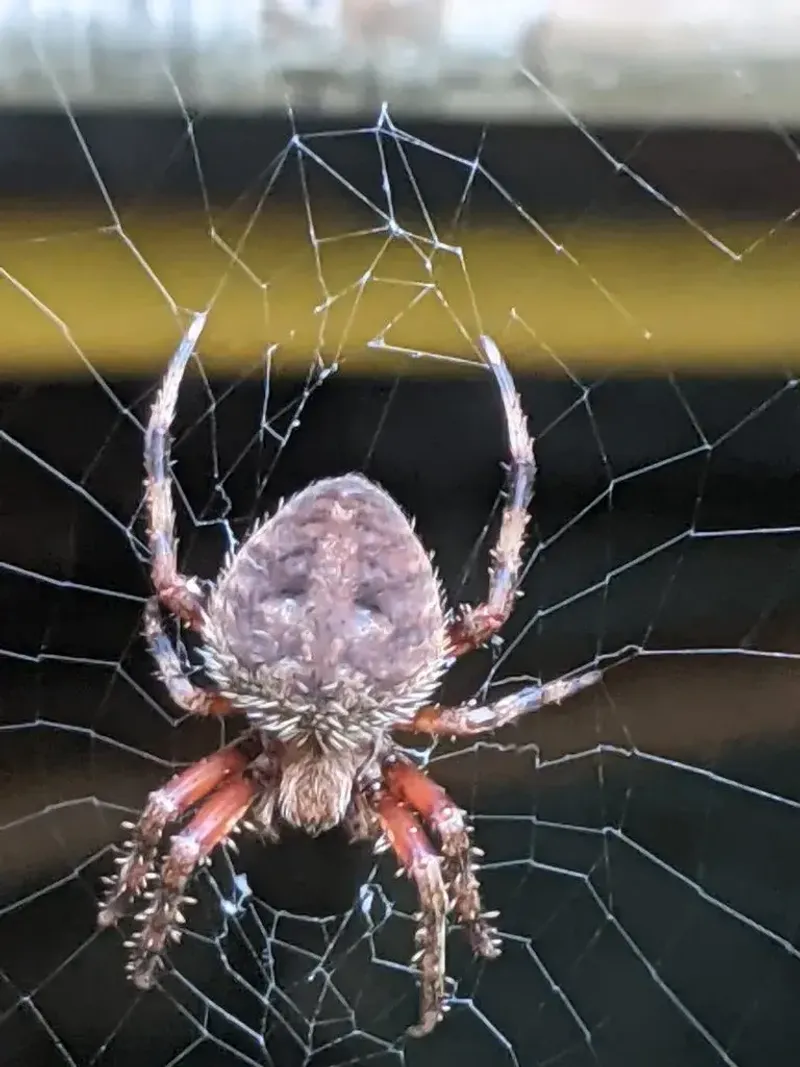
Arizona is home to several orb-weavers. One documented example is Neoscona crucifera, and University of Florida IFAS information lists its range as stretching southwest to Arizona.
That makes it a fair example of what could be out there.
It does not make it the spider in your yard. Without a clear photo and an expert look, you cannot say your spider is that species.
Several other orb-weaver groups also live in the Southwest.
That brings us to the original headline’s claim that the spider is probably native. A web cannot support it.
A species range on paper is not proof of native status, so any talk of native status should wait for an expert identification. For now, the safest wording is that the web may belong to an orb-weaver.
If you want a firm answer, take a sharp photo from a safe distance and ask your local Extension office for help.
Orb-weavers can contribute to insect control
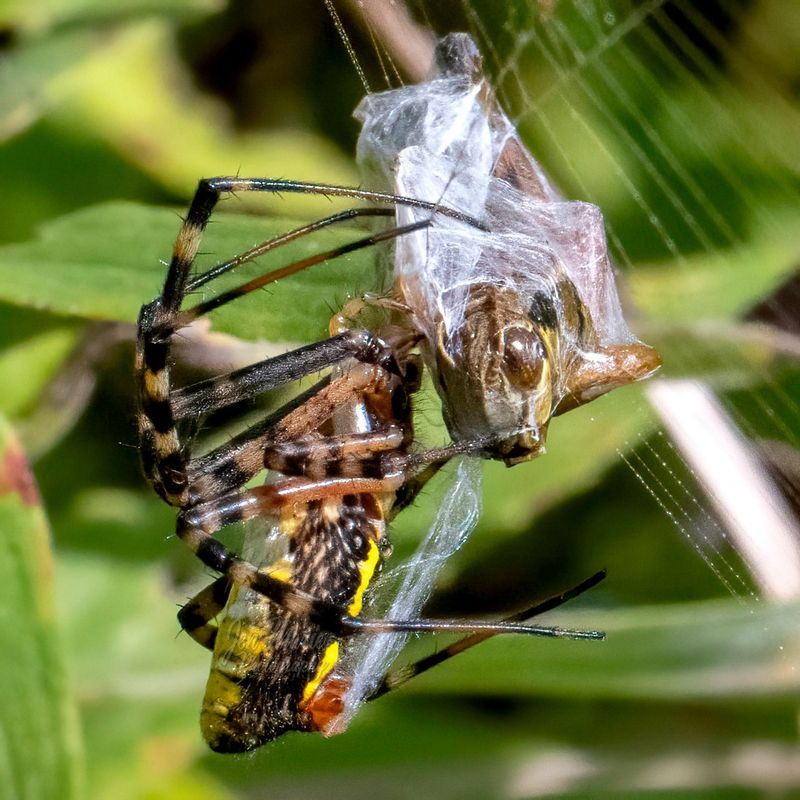
A web is a trap, and the spider waiting in it is a predator. Insects that fly into the silk become meals, which is why University of Arizona Extension calls spiders excellent pest controllers in gardens, landscapes, and homes.
Bigger studies back up the general idea. A meta-analysis reviewed 58 agricultural studies and found pest suppression in 79% of cases.
Keep that number in proportion. Those studies came from farms, not from low-desert backyards, and they say nothing about how much a single spider will help at your house.
One web may catch a few insects each night, but you should not expect it to clear out mosquitoes, scorpions, or any particular pest.
Your Arizona Garden Changes Every Week. Your Plan Should Too.
Gardening in Arizona changes quickly throughout the season. Every Friday you’ll receive a simple weekly plan showing exactly what to plant, prune, fertilize, harvest, and protect so you never miss the right timing.
The fair takeaway is modest. An orb-weaver is one more natural predator working quietly in your landscape, and it is a small bonus rather than a pest plan.
Leave an out-of-the-way web; clear an obstructive one
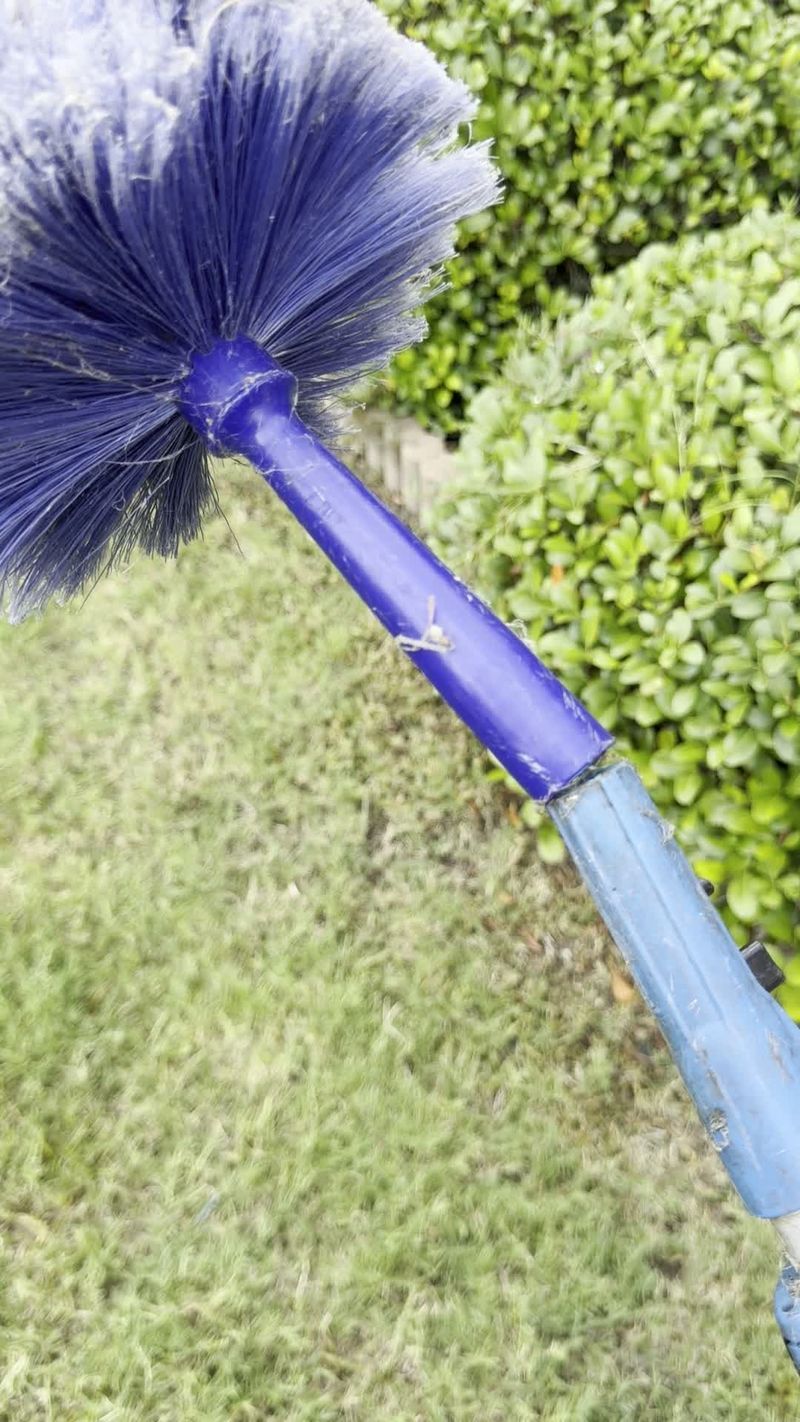
Where the web sits decides what you do. If it spans a back corner of the yard or a shrub nobody touches, leaving it alone fits Extension advice to respect and tolerate spiders.
Many orb-weavers rebuild their webs often, so there is no need to fuss over it.
A web across a doorway, gate, or walkway is another story. Walking into one is startling, and a startled person can get too close to the spider.
Clear it instead, and do not touch or grab the spider.
The supported method is simple. Reach out with a long-handled brush or broom, as described in Extension guidance on spiders, and sweep the silk away from a safe distance.
Wear gloves if you are working near plants or woodpiles.
There are no species-specific relocation steps to follow here, so skip any plan to scoop up or move the spider yourself.
Keep your distance and respond carefully to a suspected bite
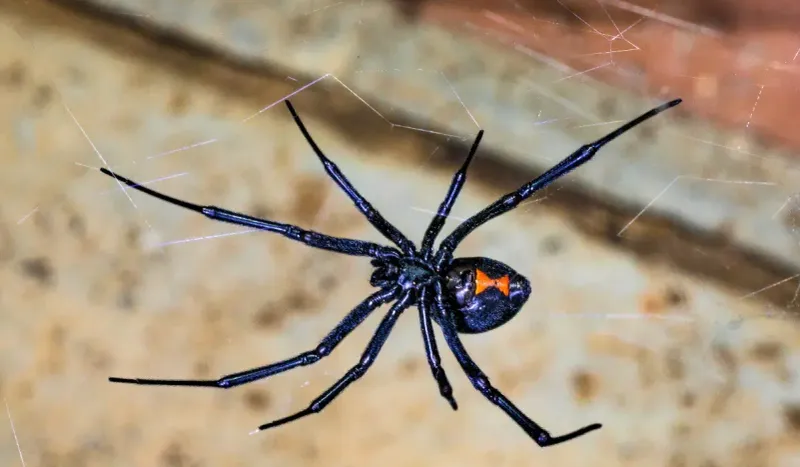
Talking about a likely orb-weaver should not make every spider seem harmless. Arizona also has medically concerning spiders, and University of Arizona Extension names black widows and Arizona recluse spiders among them.
Those spiders usually hide in sheltered spots rather than open wheel-shaped webs.
Never pick up or trap an unidentified spider. Do not assume a spider cannot bite just because it might be an orb-weaver.
If you suspect a bite, do not try to guess the cause from how the skin looks. Get the spider identified if that can be done safely, such as by taking a photo from a distance.
The Arizona Poison and Drug Information Center advises cleaning the bite and calling Poison Control if a brown spider bite is suspected.
If symptoms worsen or you feel unwell, call Poison Control or seek medical care right away.
Let the web guide your next step, not your species guess
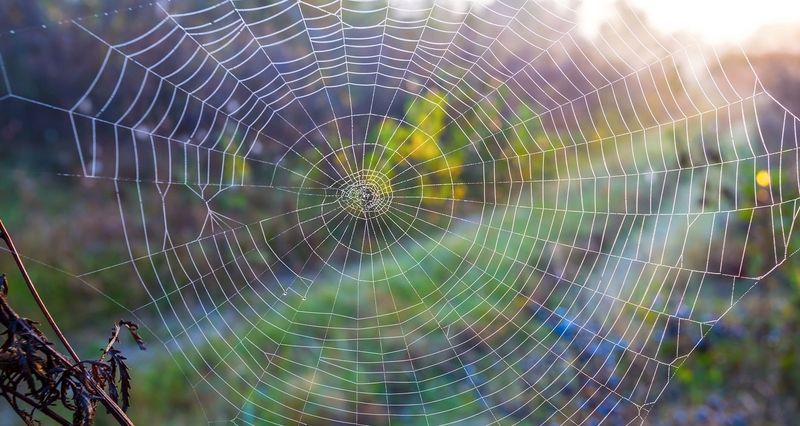
A round web is a friendly sign that a predator may be on duty, but it is only a clue. It does not name the species or show the spider is native.
Extension guidance favors tolerance, so let an out-of-the-way web stay. If you must clear one, use a long brush and keep clear of the spider.
Sometimes the best yard helper is the one you leave alone.