Hundreds Of Invasive Yellow-Legged Hornets Are Putting Georgia Honeybees At Risk
Small changes in a yard are easy to miss at first. Everything can look normal until one day something suddenly feels different.
That is often how bigger problems begin. They do not always arrive with obvious warning signs.
A quiet change today can turn into a much larger concern before you realize it. That is why paying attention to what is happening around your plants matters just as much as caring for the plants themselves.
That is exactly why invasive yellow-legged hornets are getting so much attention in Georgia. These hornets prey on honeybees, which play an important role in pollinating gardens and crops.
Their growing numbers have raised concerns because fewer healthy bees can affect far more than a single backyard.
Understanding what is happening now helps explain why this invasive species has become a serious concern.
1. Honey Bee Colonies Are The Main Target
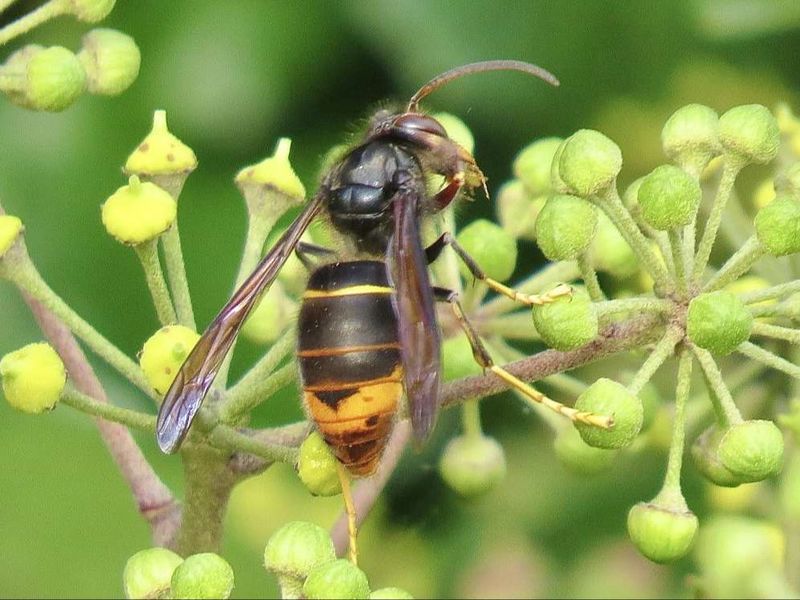
Healthy honey bee colonies support far more than honey production. They pollinate countless flowers, vegetables, fruit trees, and other plants that depend on insects to produce seeds and fruit.
That makes them one of the primary targets for yellow-legged hornets as this invasive species expands into new areas.
Rather than searching for nectar, these predators focus on catching adult honey bees flying to and from the hive. They often wait near the entrance, grabbing returning workers before they can make it safely inside.
Even a small number of persistent attackers can change how a colony behaves.
As the pressure continues, fewer workers leave to collect pollen and nectar because the area around the hive becomes too risky. With less food coming back, the colony has fewer resources to raise young bees and support normal growth.
Over time, that can weaken the entire hive, especially if attacks continue during the busiest foraging season.
Regular hive inspections can help beekeepers notice problems before they become more serious. Repeated hovering near the entrance or a noticeable drop in normal bee traffic may be early signs that yellow-legged hornets are hunting nearby.
Catching those changes early gives beekeepers more time to respond and reduce further stress on the colony.
2. Large Nests Are Often Hidden High In Trees
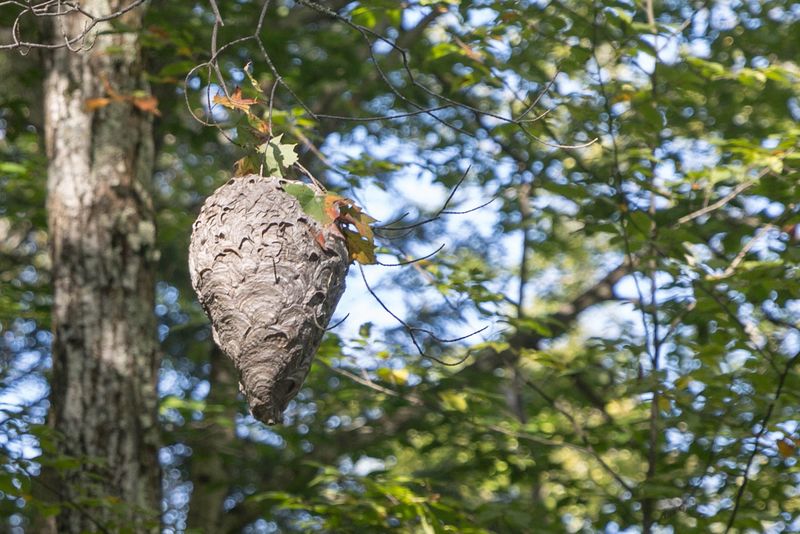
Finding a yellow-legged hornet nest is much harder than most people expect. Many are built high in the upper branches of tall trees, where dense leaves help hide them from view for much of the season.
From the ground, they can easily blend into the surrounding canopy.
The nests are usually large, rounded, and made from layers of chewed wood fibers that form a paper-like shell. As the colony grows, the structure expands and becomes much more noticeable after leaves begin to thin later in the year.
Until then, many remain hidden even in areas where people spend time outdoors.
Because these nests are often placed well above eye level, they can go unnoticed for weeks or even months. People may see individual hornets flying through the area without realizing a nest is directly overhead.
That hidden location also makes it unsafe to investigate a suspected nest too closely.
Your Georgia Garden Changes Every Week. Your Plan Should Too.
Gardening in Georgia changes quickly throughout the season. Every Friday you’ll receive a simple weekly plan showing exactly what to plant, prune, fertilize, harvest, and protect so you never miss the right timing.
If you notice repeated flights to the same spot high in a tree, avoid standing beneath it to get a better look. Observing from a safe distance is the better approach, since disturbing an active nest can trigger a defensive response.
Professional removal is the safest option when a yellow-legged hornet nest is confirmed.
3. New Queens Help The Species Spread
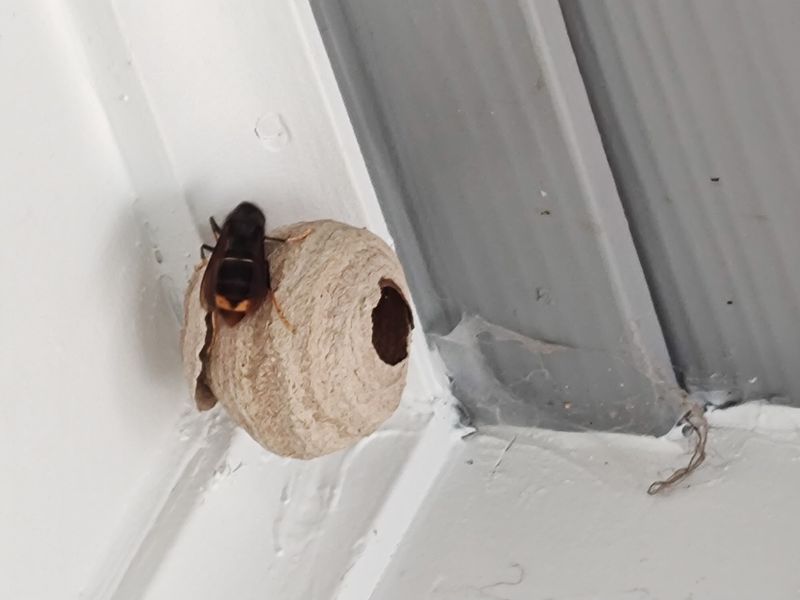
Stopping a single nest can prevent a much bigger problem the following year. That is because only newly mated queens survive through winter and start fresh colonies once temperatures warm in spring.
Every successful queen has the potential to establish a new nest in a different location.
A queen begins the season alone, building a small nest and raising the first generation of workers by herself. Once those workers emerge, they take over gathering food and expanding the nest while the queen focuses almost entirely on laying eggs.
The colony can then grow rapidly through the warmer months.
By late summer and early fall, the colony begins producing new queens instead of only workers. After mating, those young queens leave the nest and search for sheltered places to overwinter.
The original colony eventually dies out as colder weather arrives, but the surviving queens remain hidden until spring.
This annual cycle allows the species to spread steadily across new areas. Removing active nests before new queens are produced can help slow that expansion and reduce the number of colonies that appear the following season.
That is one reason early detection and prompt removal are considered so important.
4. Colonies Grow Larger As The Season Continues
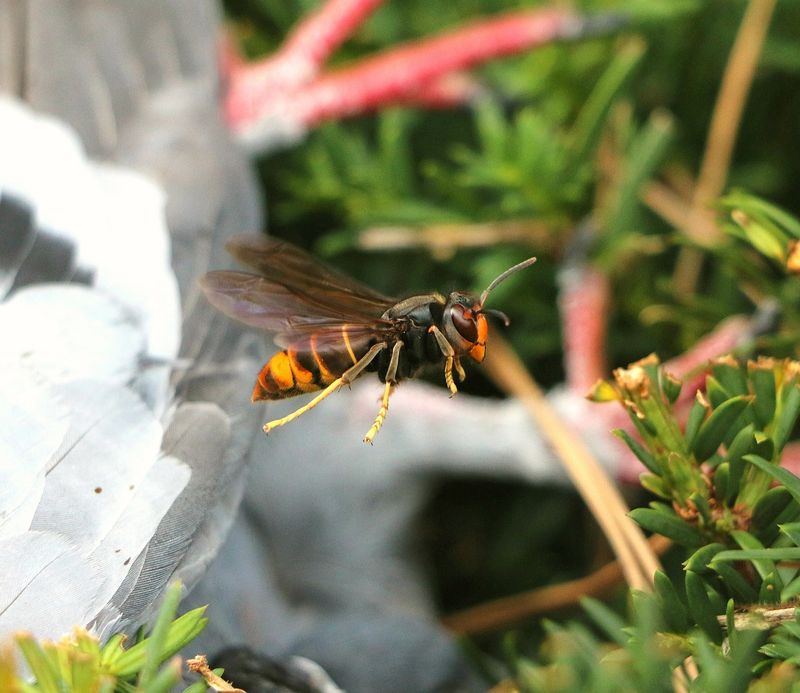
What begins as a small nest in spring can become surprisingly large before the season ends. Once the first workers take over daily tasks, the queen can devote nearly all of her energy to laying eggs.
That steady cycle allows the population to increase throughout the warmer months.
Food availability and favorable weather help determine how quickly a nest expands. As more workers emerge, they collect additional food for developing larvae, supporting continued growth.
By late summer, a well-established nest may contain hundreds of individuals, making it much more active than it was only a few months earlier.
A larger population also means more insects searching for food across a wider area each day. Increased activity makes sightings more common, especially around flowering plants, orchards, and managed beehives.
Even so, the nest itself often remains difficult to spot because it is usually hidden high in the tree canopy.
This steady growth is one reason early intervention is so important. A nest that seems relatively small at the start of summer can become far more difficult to manage by early fall.
Locating and removing it before the population reaches its peak helps reduce the number of invasive hornets in the surrounding area.
5. The Species Can Be Mistaken For Native Wasps
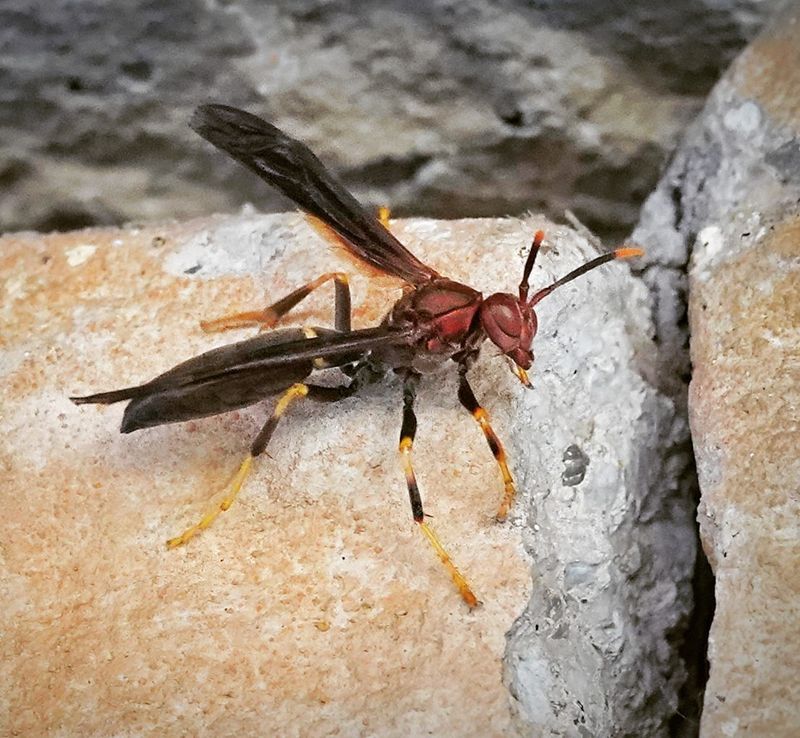
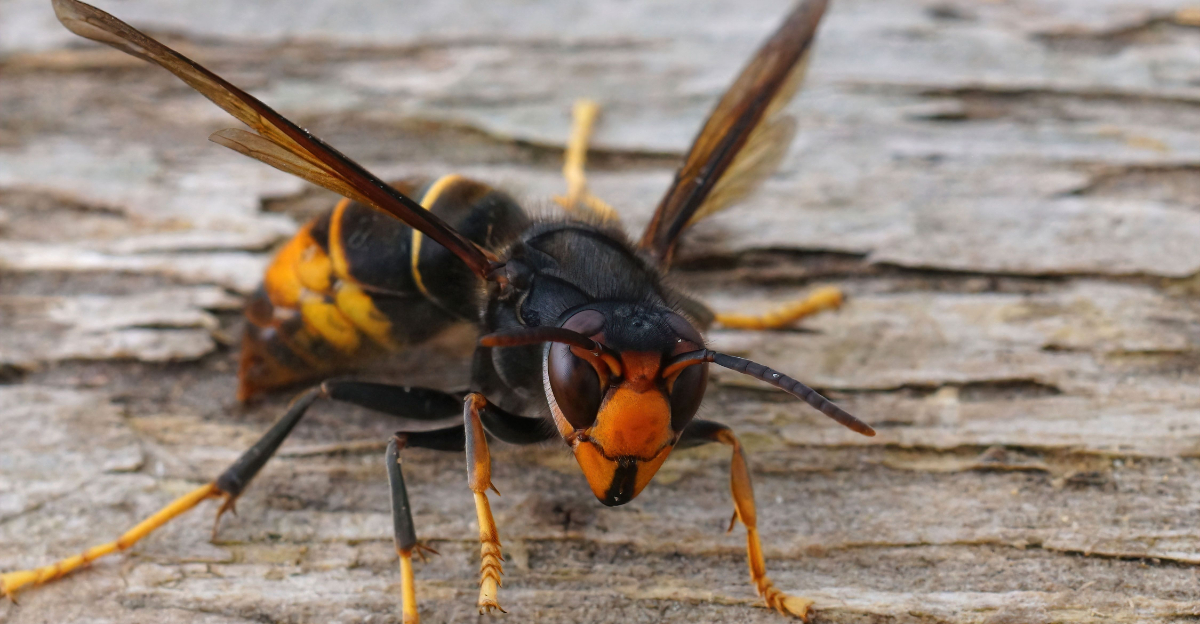
At first glance, yellow-legged hornets can look surprisingly similar to several native wasps. That resemblance makes misidentification fairly common, especially when the insect is flying or only seen for a few seconds.
Taking a closer look at a few key features helps separate this invasive species from native lookalikes.
Adults have a mostly dark body with a single broad orange-yellow band toward the end of the abdomen. Their legs appear yellow near the tips, which is one of the easiest identifying features.
Native paper wasps usually have slimmer bodies with more extensive yellow or reddish markings across the abdomen and thorax.
Size can also provide a useful clue, although it should not be the only feature you rely on. Yellow-legged hornets are generally larger and more robust than most common paper wasps found in residential landscapes.
Clear photos are often more helpful than trying to identify an insect from memory.
If you spot one that seems unusual, taking a picture from a safe distance allows specialists to confirm whether it is the invasive species or a harmless native wasp.
6. Worker Hornets Gather Outside Active Beehives
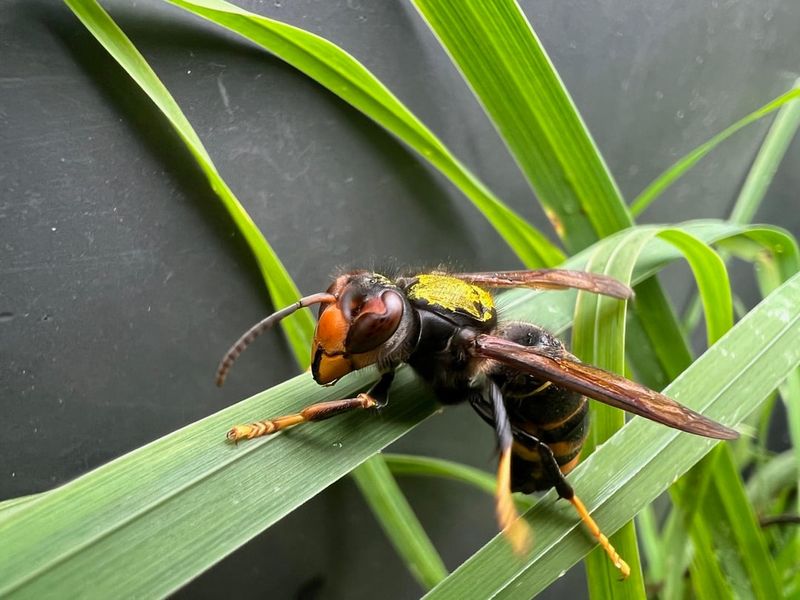
Foraging honey bees face their greatest risk just outside the hive entrance. Yellow-legged hornets often patrol this area, waiting for workers to leave in search of nectar or return carrying pollen.
That strategy allows them to catch individual bees without entering the hive.
Rather than attacking the colony directly, they intercept flying bees in midair and carry them away to feed developing larvae.
Repeated attacks can make the entrance an increasingly dangerous place, causing many workers to hesitate before leaving the safety of the hive. As a result, normal foraging activity begins to slow.
Reduced foraging means fewer food resources are brought back to support the colony. During periods of heavy pressure, bees may spend more time guarding the entrance instead of collecting nectar and pollen.
That shift can affect the colony’s overall strength if it continues for an extended period.
Regular observation around hive entrances helps reveal changes that might otherwise go unnoticed. Repeated hovering, frequent interceptions, or unusually quiet bee traffic can all indicate that yellow-legged hornets are hunting nearby.
Identifying those signs early gives beekeepers a better chance to protect their hives before the pressure becomes more severe.
7. Reporting New Nests Supports Control Efforts
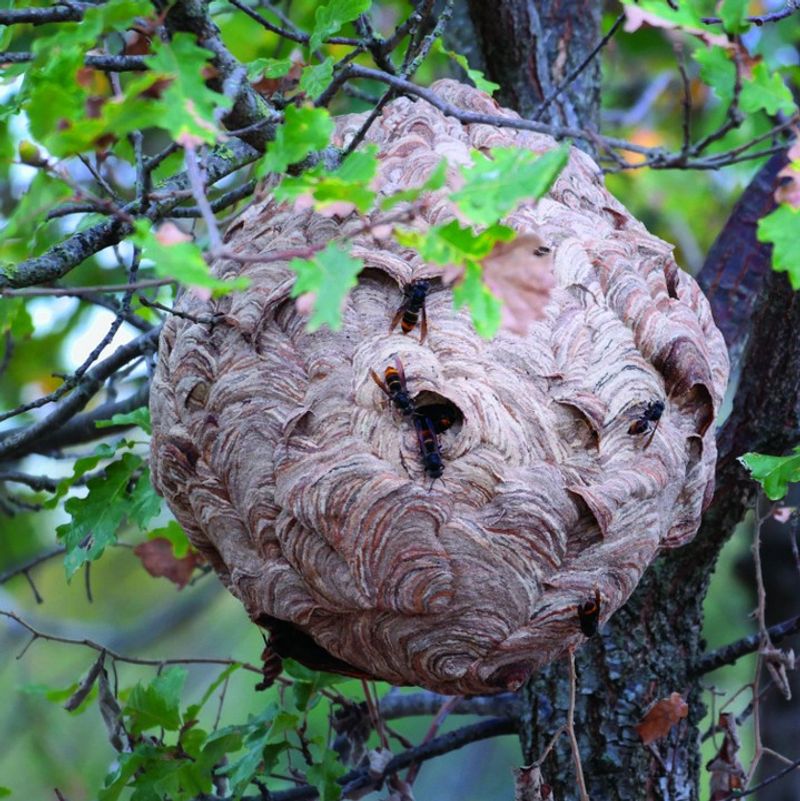
Early reports play an important role in slowing the spread of yellow-legged hornets. A newly discovered nest is usually much easier to remove than one that has been growing unnoticed for several months.
Acting sooner also helps limit the number of new queens produced before the season ends.
If you believe you have found a nest, avoid getting close enough to confirm it yourself. Large nests can contain hundreds of hornets, and disturbing them may trigger a defensive response.
The safest approach is to observe from a distance and note the exact location.
A clear photograph can make identification much easier for trained specialists. Even if you are not completely certain what you found, sharing an image and the location allows experts to determine whether further inspection is needed.
Accurate reports also help track where this invasive species is becoming established.
Reporting suspected nests as soon as possible supports ongoing monitoring and gives response teams a better chance to act before the population grows.
Every confirmed report adds valuable information that helps guide future control efforts and protects nearby pollinators from additional pressure.