If Your Oregon Garden Feels Behind, These 10 Perennials Can Still Save The Season
An Oregon garden can feel late before summer even gets going. Maybe spring was too wet.
Maybe planting plans got pushed aside. Either way, a bare bed does not mean the season is lost.
The right perennials can still bring color and life without making you wait forever. They can help fill gaps, brighten tired corners, and give pollinators a reason to visit.
The key is choosing plants that settle in fast enough to matter this year. A few smart picks can make the garden feel planned instead of unfinished.
You do not need to start over. You just need plants with enough energy to catch up. With the right perennials, a slow start can still turn into a strong summer show.
1. Catmint Fills Empty Borders Fast
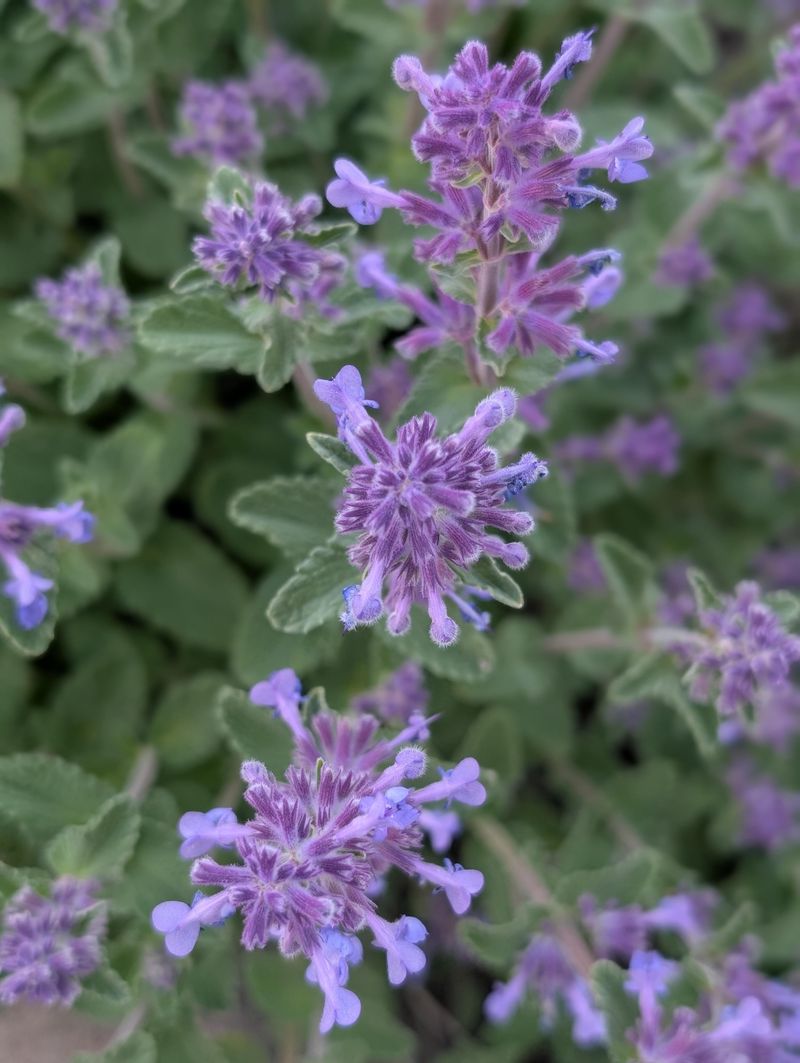
Few plants move as quickly from a small pot to a full, flowing border as catmint does. Plant it in a sunny spot, give it decent drainage, and watch it spread into a soft, silvery-green mound covered in lavender-blue flower spikes within weeks.
It is one of those plants that makes empty beds look intentional fast.
Catmint thrives in Oregon’s summer conditions without needing much water once it settles in.
The foliage smells lightly of mint, which deer tend to avoid, making it a smart pick for gardens near wooded areas.
Bees absolutely love it, so expect plenty of pollinator activity from the moment it starts blooming.
After the first big flush of flowers fades, just cut it back by about a third. New growth comes in quickly, and a second round of blooms often follows in late summer.
This makes catmint one of the most reliable repeat performers in the perennial garden.
It pairs beautifully with roses, ornamental grasses, and salvia. The soft purple tones work with almost any color scheme, from warm yellows to cool whites.
Catmint is also forgiving of neglect, making it a great choice for gardeners who want big impact without constant upkeep.
If your borders feel empty and the season is already moving, this plant is one of the fastest ways to change that picture.
2. Salvia Adds Instant Spikes Of Summer Color
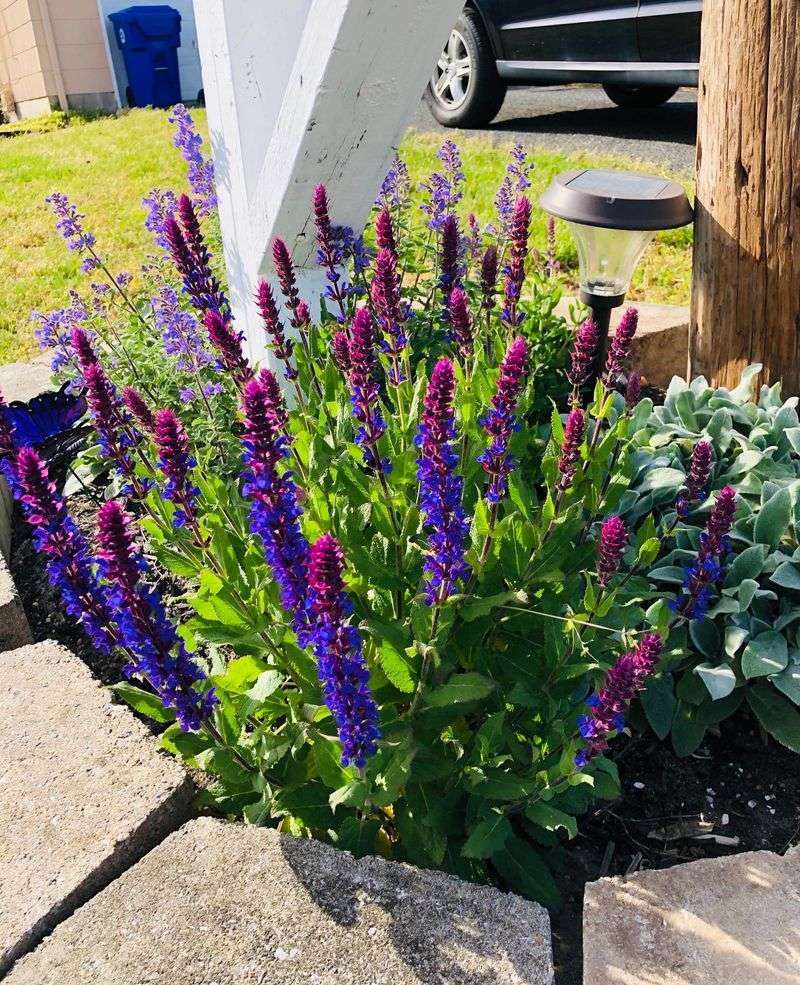
There is something almost electric about salvia in full bloom. The upright spikes of purple, blue, or red flowers shoot up fast and create bold vertical lines that make flat, boring beds suddenly look designed.
Even a single clump planted mid-season can shift the entire mood of a garden space.
Perennial salvias are tough performers in Oregon’s climate. They handle summer heat without complaint and bounce back after dry spells better than most flowering plants.
Once established, they need very little attention, which makes them ideal for gardeners working with limited time or water.
Pollinators go wild for salvia. Hummingbirds are especially drawn to the red and deep purple varieties, and bees work the flowers from morning until evening.
Planting salvia is practically an invitation to turn your backyard into a buzzing, fluttering ecosystem.
One of the best things about this plant is how well it plays with others. Pair it with coreopsis for a bold color contrast, or let it grow alongside ornamental grasses for a more relaxed, meadow-style look.
Your Oregon Garden Changes Every Week. Your Plan Should Too.
Gardening in Oregon changes quickly throughout the season. Every Friday you’ll receive a simple weekly plan showing exactly what to plant, prune, fertilize, harvest, and protect so you never miss the right timing.
Deadheading spent blooms keeps the show going longer, but even without that extra care, salvia keeps pushing out new flower spikes through summer and into fall.
For a late-start garden that needs height, color, and energy fast, few perennials deliver as reliably as this one does.
3. Coreopsis Keeps Blooming With Little Fuss
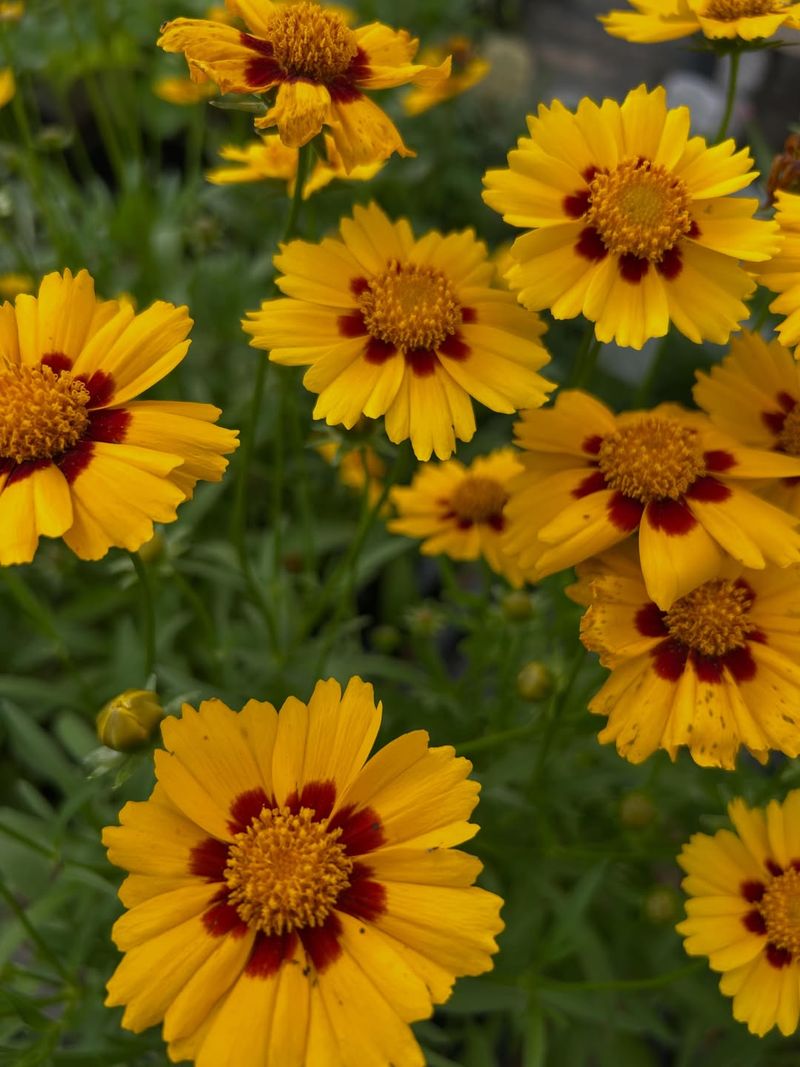
Cheerful is the word that comes to mind with coreopsis. The bright yellow, daisy-like flowers pop against green foliage and seem almost too happy for how little effort they require.
Plant it in a sunny spot, step back, and let it do its thing for months without much help from you.
Coreopsis is one of those plants that actually prefers lean soil. Rich, heavily amended beds can cause it to flop and produce more leaves than flowers.
In Oregon’s naturally variable soils, that tendency works in your favor. Skip the extra fertilizer and let the plant focus on what it does best, which is blooming.
The flowers attract butterflies and native bees in steady numbers. Because the blooms are small and plentiful, there is always something open and available for pollinators even when other plants take a break.
That steady supply of nectar makes it a valuable anchor plant in any pollinator-friendly garden.
Deadheading helps extend the blooming season, but even without it, coreopsis keeps going longer than expected. Some varieties bloom from early summer all the way to the first frost.
For a garden that feels behind schedule, that kind of staying power is exactly what you need.
It also works well in containers, along driveways, or massed in a sunny border where you want reliable color without constant replanting every year.
4. Black-Eyed Susan Makes Late Beds Look Full
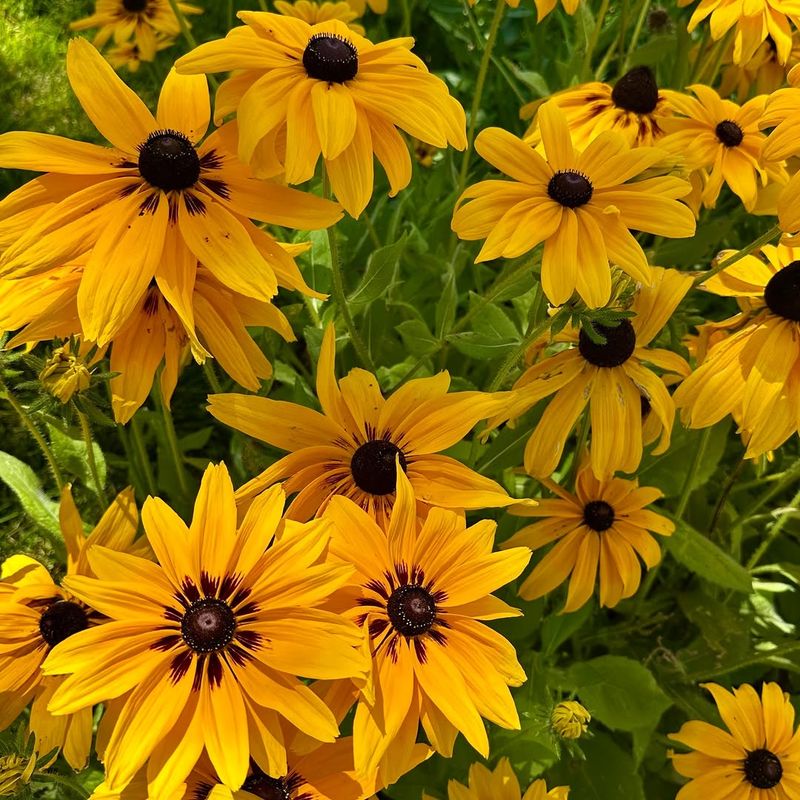
Golden yellow petals surrounding a dark chocolate-brown center, black-eyed Susan has one of the most recognizable faces in the perennial world.
Even a small grouping of these flowers can make a sparse summer bed look suddenly lush and full.
They spread gradually each year, filling in gaps without becoming invasive.
These plants are serious sun lovers and handle warm, dry summers better than many other perennials. In our state, where summer heat can arrive quickly and linger, that drought tolerance is a real advantage.
Once they find their footing, they rarely need supplemental watering except during extended dry stretches.
Black-eyed Susans bloom from midsummer into fall, which makes them especially valuable for gardeners starting late. While other plants are winding down, these are often just hitting their stride.
That extended bloom window is one of the reasons they are so popular in naturalistic and cottage-style gardens.
Birds love the seed heads left behind after blooming ends. Finches in particular will visit repeatedly to pick seeds from the dried stems through late fall and into winter.
Leaving the seed heads standing also adds structural interest to the garden during the quieter months.
For a late-season garden rescue, few plants offer this combination of fast establishment, long bloom time, wildlife value, and reliable return year after year. Plant them now and enjoy the payoff for many seasons ahead.
5. Echinacea Brings Structure And Pollinators
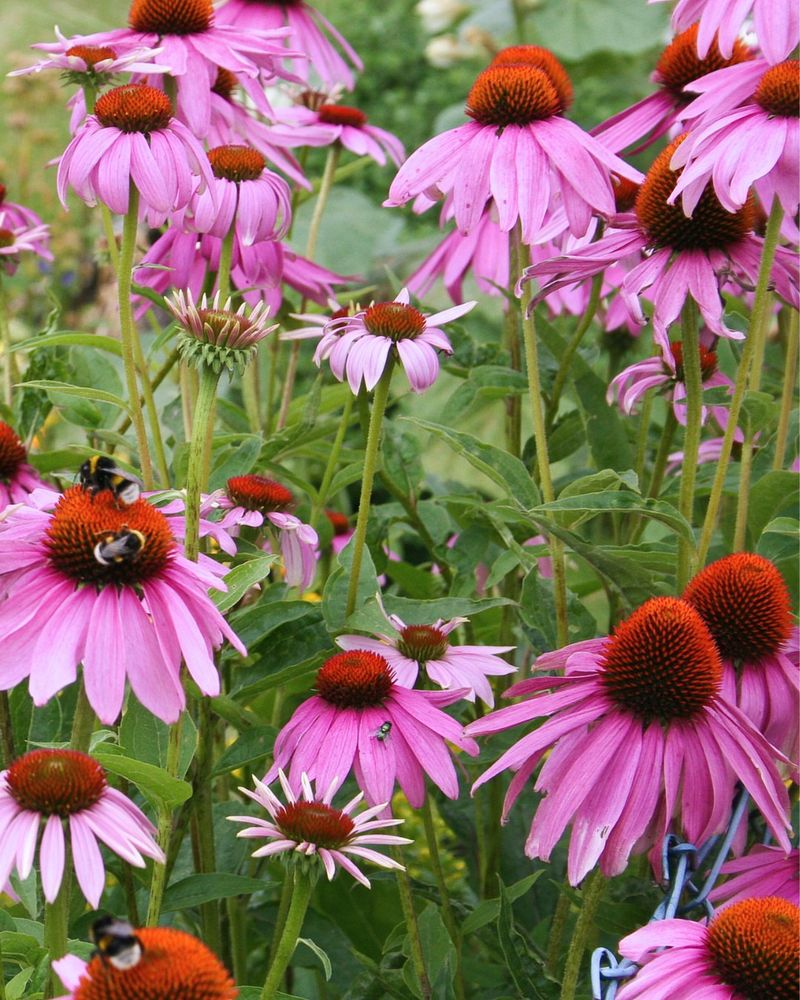
Bold, architectural, and buzzing with life, echinacea is one of those plants that earns its spot in the garden on multiple levels.
The raised, spiky center cones give it a strong visual structure that holds up even after the petals drop.
That means it looks interesting from midsummer all the way through the first hard frost.
Native to North American prairies, echinacea adapts well to Oregon conditions. It tolerates dry summers, average soils, and some neglect without losing its appeal.
In fact, overly rich or wet soil tends to weaken the stems and reduce flowering. Lean, well-drained beds are where it performs best.
Pollinators treat echinacea like a buffet. Bumblebees, honeybees, butterflies, and even beetles visit the flowers regularly.
Planting even a small patch can noticeably increase the pollinator activity in your entire garden. That ripple effect benefits every plant nearby.
One fun fact worth knowing: echinacea has been used in herbal medicine for centuries, originally by Indigenous peoples across North America.
While the garden varieties are grown mainly for beauty, that historical connection adds an interesting layer to a plant that already earns its keep visually.
Newer cultivars come in shades of orange, red, white, and deep magenta, so there is a color for nearly every design style.
For late-start gardens needing substance and life, echinacea delivers both in generous amounts every single season.
6. Gaillardia Handles Heat When Beds Look Tired
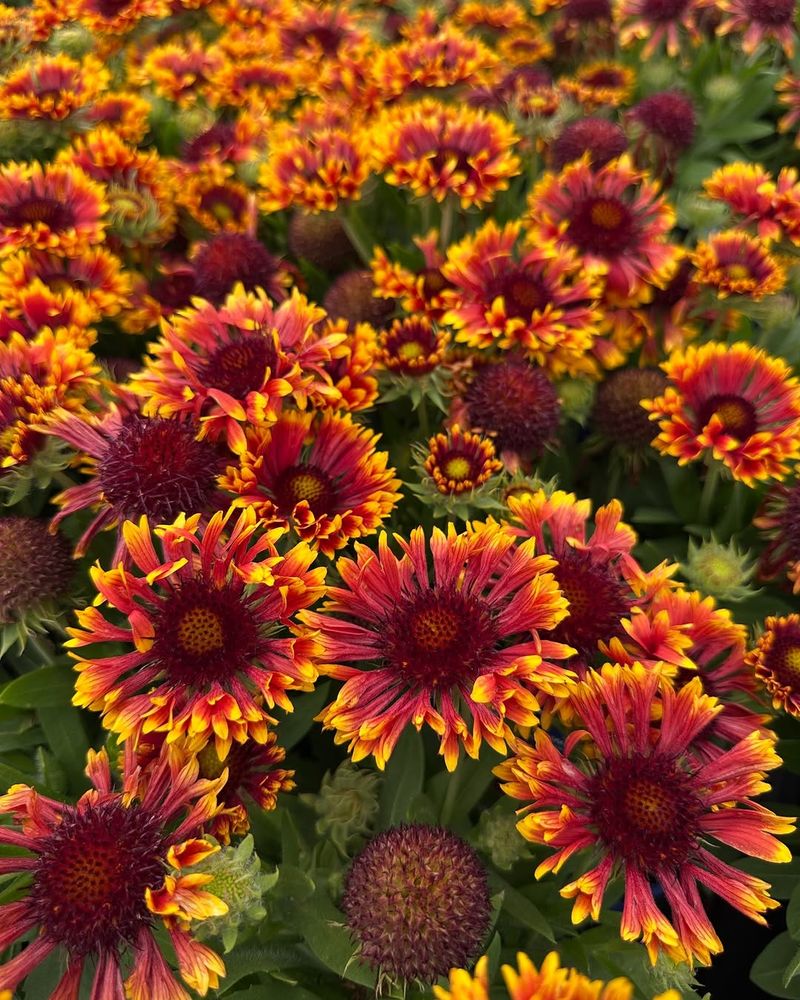
When summer heat pushes other flowers into a slump, gaillardia just keeps going. The bold, flame-colored blooms in shades of red, orange, and yellow look like tiny sunsets sitting on top of wiry stems.
Even in a garden that feels worn out by midsummer, a patch of gaillardia still looks full of energy.
Commonly called blanket flower, gaillardia is named after a French magistrate and amateur botanist named Gaillard de Charentonneau. That bit of history aside, what matters most to gardeners is how tough this plant is.
It thrives in poor, dry soil and actually struggles in overly rich or wet conditions. Oregon’s summer-dry climate suits it well.
Deadheading spent blooms regularly keeps new flowers coming at a steady pace. Without deadheading, it will still bloom, but the show slows down noticeably.
A few minutes of light grooming each week goes a long way toward keeping the display looking fresh and full through late summer and into fall.
Gaillardia works well in containers, rock gardens, and sunny mixed borders. It pairs naturally with black-eyed Susan, salvia, and ornamental grasses for a warm-toned, prairie-inspired planting.
Butterflies and bees are regular visitors, adding movement and life to whatever space it occupies.
For a late-season rescue plant that handles neglect, heat, and dry spells without skipping a beat, gaillardia belongs near the top of every Oregon gardener’s list this season.
7. Penstemon Gives Oregon Gardens A Native-Friendly Boost
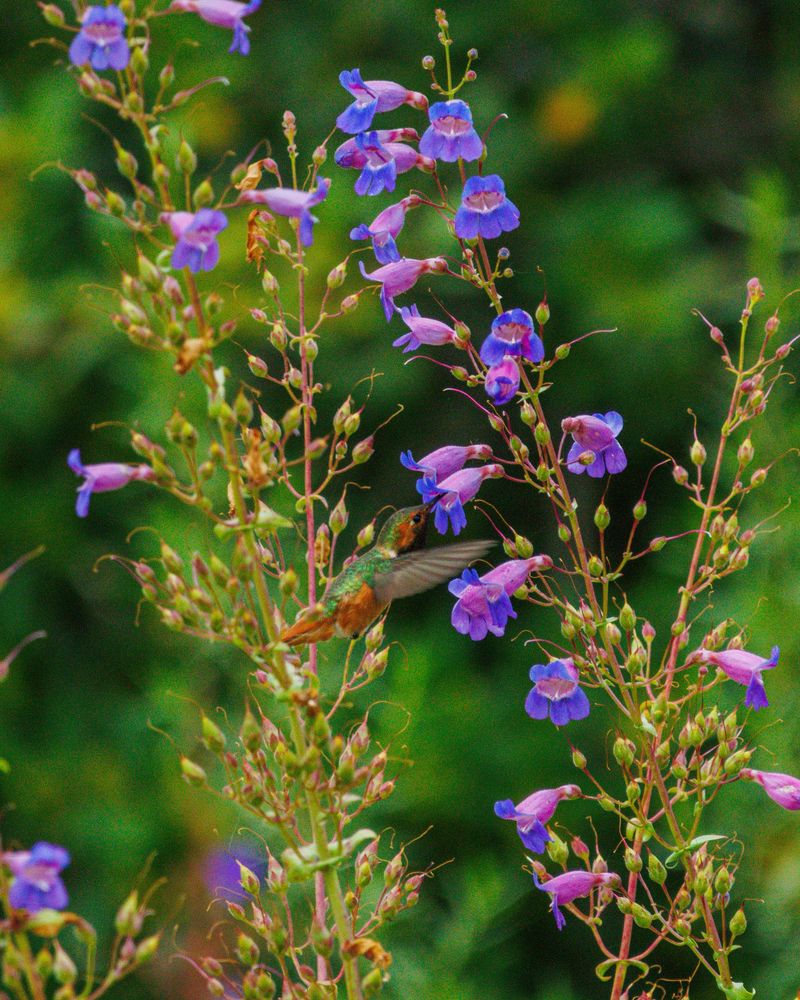
There is a strong case for planting more penstemon in our state, and it starts with the fact that many species are native to the Pacific Northwest.
That native connection means these plants are already adapted to local soils, rainfall patterns, and temperature swings.
They do not need to adjust to this climate because they evolved here. The tubular flowers come in shades of pink, purple, red, white, and blue, depending on the variety.
Hummingbirds are especially attracted to the red and coral types, and bees work the softer purple and lavender shades with consistent enthusiasm.
Few plants bring this level of wildlife activity to a garden while requiring so little from the gardener.
Penstemon prefers well-drained soil and full to partial sun. It does not appreciate sitting in wet ground, especially during winter.
Raised beds, slopes, and rocky gardens are ideal spots where drainage is naturally good. In heavier clay soils, amending with coarse sand or gravel before planting makes a noticeable difference.
One underappreciated quality of penstemon is its spring bloom time, which can extend into early summer.
For gardens planted late, established clumps from this season will reward you with early color next year.
The evergreen or semi-evergreen foliage also adds visual interest during the quieter winter months.
Choosing penstemon is both a practical decision and a small act of support for the native plant ecosystem that makes our state so ecologically rich and diverse.
8. Russian Sage Carries Color Into Fall
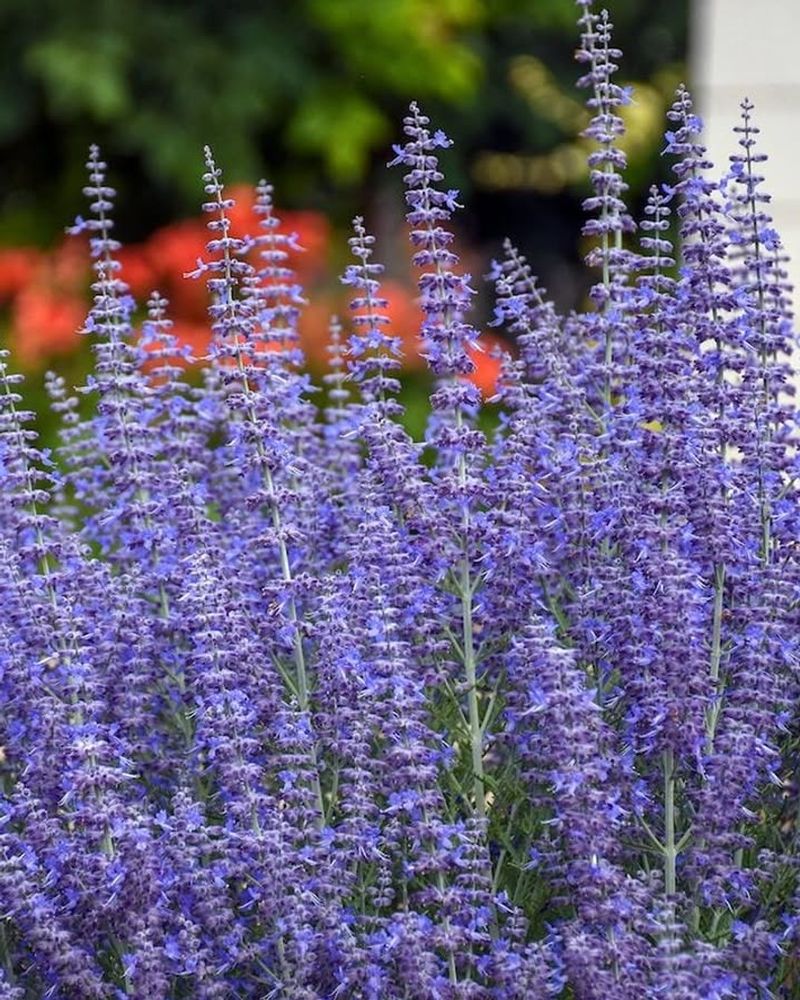
Not many plants look as elegant as Russian sage in late summer. The tall, airy stems covered in tiny lavender-blue flowers create a soft, hazy effect that looks almost like a watercolor painting when the light hits just right.
It is one of the most photographed plants in perennial gardens for good reason. Despite the name, Russian sage is actually native to Central Asia, not Russia.
It was introduced to Western gardens in the late 1800s and quickly became a favorite for its toughness and long bloom season.
In our state, it thrives in the hot, dry conditions of late summer without any extra help once established.
The silvery-white stems and aromatic foliage are deer-resistant, which is a significant advantage in many parts of our state where deer pressure is high.
The scent is pleasant to humans but off-putting to browsing animals, making it a smart border plant for exposed garden areas.
Russian sage blooms from midsummer all the way through fall, which is exactly the window when many other perennials are winding down. That extended season makes it invaluable for gardeners who want continuous color.
Pair it with ornamental grasses, sedums, or echinacea for a late-season combination that looks effortlessly beautiful. Cut the stems back hard in early spring and new growth will emerge quickly and reliably.
For filling the late-season gap with grace and color, few perennials match what Russian sage brings to the garden every year.
9. Hardy Geranium Softens Bare Edges Quickly
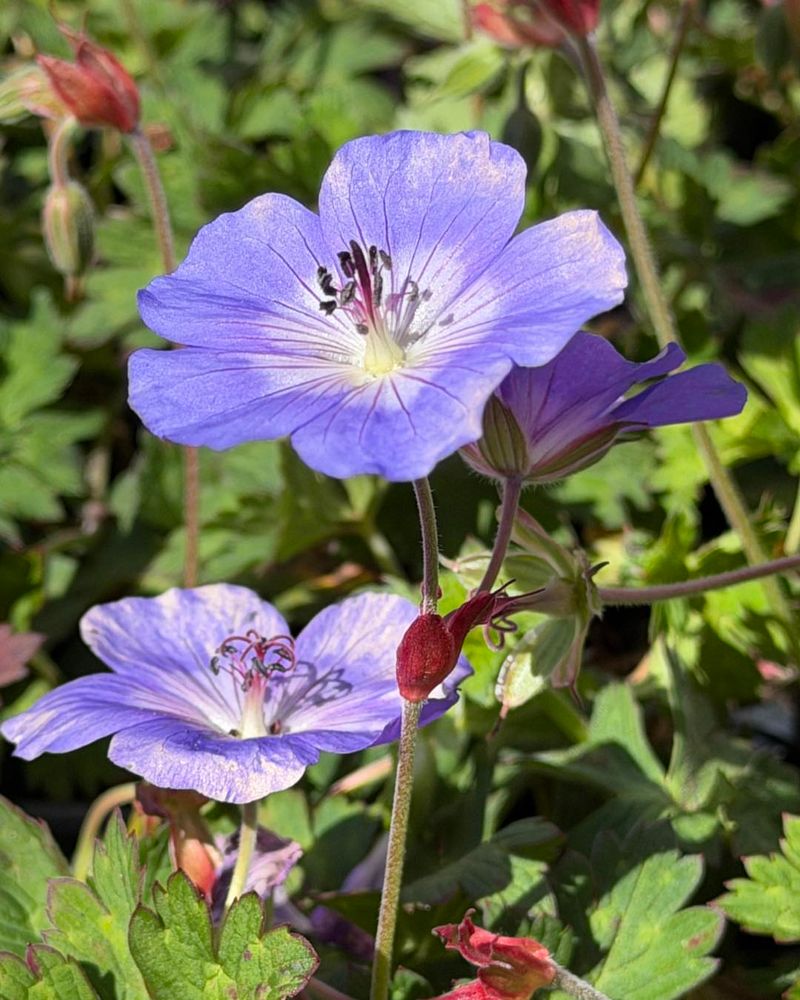
Hardy geraniums have a way of making a garden look like it has been there for years, even when it has not.
The low, spreading mounds of deeply lobed leaves fill in bare edges quickly, and the delicate flowers in shades of pink, purple, blue, and white add just the right amount of softness to any border.
Do not confuse hardy geraniums with the tender annual geraniums sold in hanging baskets. These are true perennials in the genus Geranium, also called cranesbills because of the shape of their seed pods.
They come back reliably every year and slowly expand their footprint without becoming aggressive or overwhelming neighboring plants.
One of the most useful things about hardy geraniums is their tolerance for partial shade. Many perennials struggle under trees or along shaded fences, but hardy geraniums handle those trickier spots with ease.
They also perform well in full sun as long as soil moisture is maintained during hot stretches.
After the main flush of flowers in late spring and early summer, cutting the plant back by half encourages a second round of blooms and fresh new foliage. That refreshed look carries the plant through the rest of the season looking neat and full.
For gardens with bare edges, awkward corners, shaded spots that need coverage, hardy geraniums are one of the most dependable solutions available at any nursery right now.
They reward patience and minimal care with years of consistent performance.
10. Sedum Saves The Season With Late Flowers
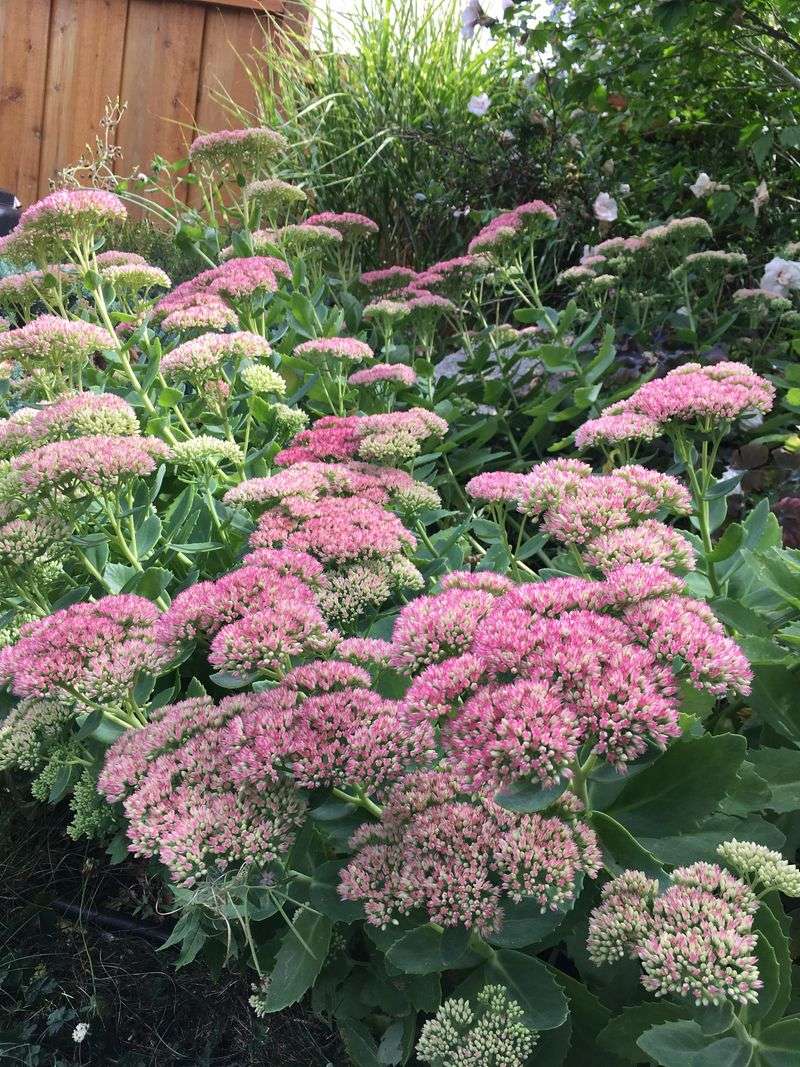
While most perennials are wrapping up their show, sedum is just getting started. The tall varieties, especially the popular Autumn Joy type, save their best display for late summer and fall when the rest of the garden is fading.
That timing alone makes sedum one of the most strategically useful plants for any gardener feeling behind.
The thick, succulent leaves store water efficiently, which means sedum handles dry spells without stress. Our state’s dry summers are no problem for this plant.
It actually prefers lean soil and good drainage over rich, wet conditions. Overwatering or heavy clay soil is the fastest way to cause problems with sedum, so plant it somewhere water moves through freely.
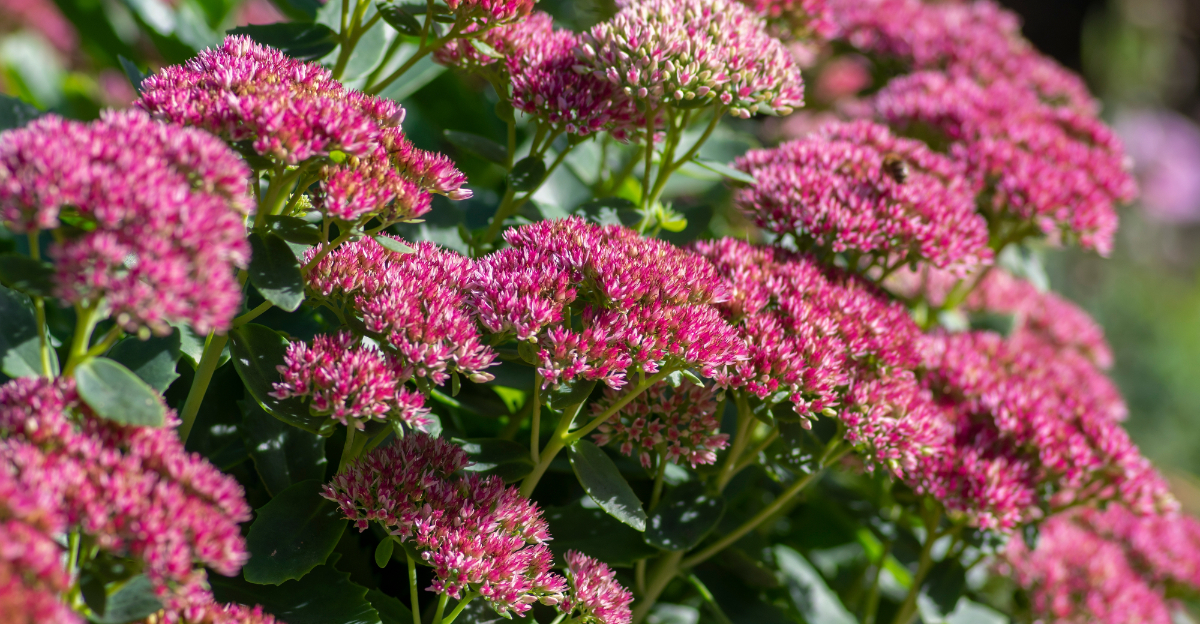
Flat-topped clusters of tiny flowers open in shades of pink, rose, and deep burgundy depending on the variety. The flowers age gracefully, shifting from soft pink to coppery red as fall progresses.
Even after the flowers dry out completely, the seed heads remain attractive and provide food for birds through winter.
Bees and butterflies visit sedum heavily during its bloom period, making it one of the most important late-season nectar sources in the garden.
Because it blooms when other flowers are scarce, sedum fills a critical gap in the pollinator food chain.
Pair it with Russian sage, ornamental grasses, or black-eyed Susan for a fall combination that looks thoughtfully designed.
For a late-planted garden that still needs a strong finish, sedum is the plant that delivers exactly when you need it most.