Plants That Fill Every Gap In North Carolina Gardens Without Taking Over
Every garden has those awkward empty spots that seem to collect weeds faster than anything intentional ever fills them.
North Carolina’s long growing season means those gaps stay visible and problematic for more months out of the year than gardeners in cooler climates ever have to deal with.
The challenge is finding plants that spread willingly enough to cover bare soil without becoming the next problem you have to manage.
There is a real difference between a plant that fills space helpfully and one that quietly takes over everything around it.
These options strike that balance well, spreading at a reasonable pace, handling the heat and humidity that North Carolina summers deliver, and making the garden look intentional rather than neglected from spring all the way through fall.
1. Green-And-Gold
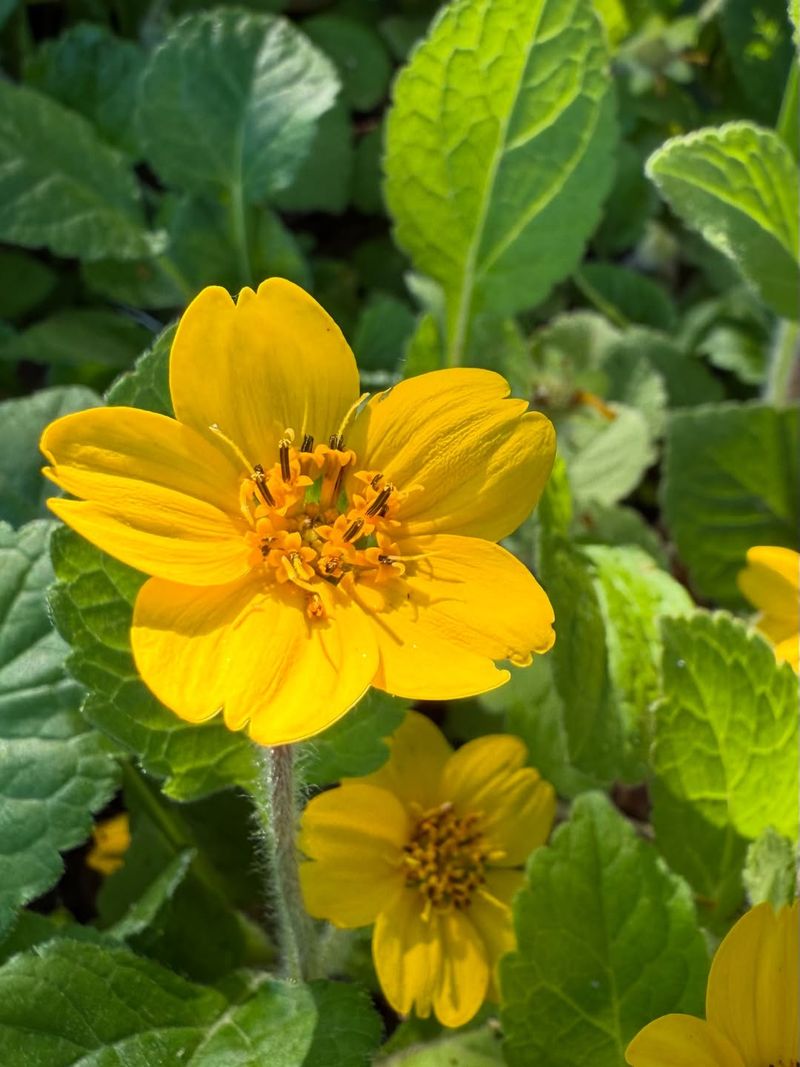
Cheerful, reliable, and completely at home in North Carolina, Green-and-Gold is one of those native plants that gardeners quietly rave about.
Its bright yellow, star-shaped flowers pop against deep green leaves from early spring through early summer, and sometimes even longer if conditions are right.
Few groundcovers offer that kind of color with so little fuss.
What makes this plant especially useful is its flexibility. It grows happily in full sun, partial shade, and even fairly dense shade, making it a strong candidate for tricky spots under trees or along shaded fence lines.
The plant spreads slowly by runners, filling gaps steadily without ever racing out of control. You can count on it to behave.
Green-and-Gold thrives in well-drained soil and handles drought reasonably well once established. It stays low, typically reaching only six to nine inches tall, so it never blocks other plants or views.
Pair it with ferns, wild ginger, or coral bells for a layered native planting that looks intentional and effortless.
Maintenance is refreshingly minimal. No deadheading is required, and it rarely needs dividing unless you want to spread it to new areas.
Planting it in early spring or fall gives roots the best start. For North Carolina homeowners who want a native groundcover with real seasonal color, Green-and-Gold delivers every single year without drama.
2. Wild Ginger
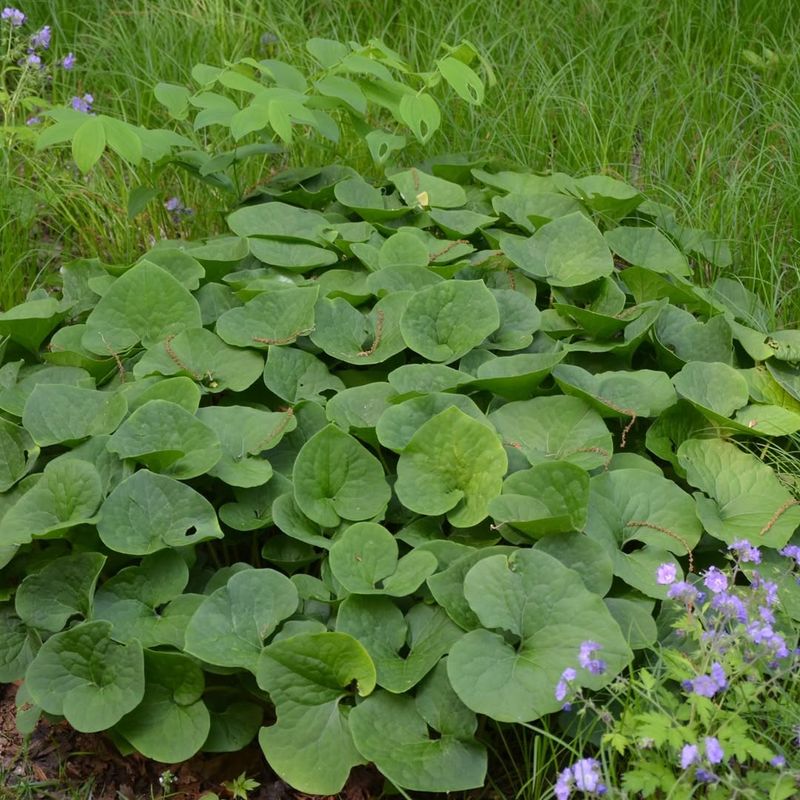
There is something quietly impressive about a plant that thrives where most others struggle. Wild Ginger loves deep shade, the kind found under mature oaks and maples where bare soil is a constant problem.
Its large, heart-shaped leaves form a thick, lush carpet that covers ground beautifully and keeps weeds from getting a foothold.
Native to eastern North America, Asarum canadense is perfectly suited to North Carolina’s piedmont and mountain regions. It spreads through underground rhizomes at a slow, steady pace that never feels threatening.
Unlike some groundcovers that expand aggressively and crowd out neighbors, Wild Ginger knows when to stop. It fills the space it needs and then settles in comfortably.
The small, brownish-purple flowers it produces in spring are hidden beneath the leaves, so most people never even notice them.
The real show is the foliage, which stays lush and green through the growing season before fading back in winter.
Your North Carolina Garden Changes Every Week. Your Plan Should Too.
Gardening in North Carolina changes quickly throughout the season. Every Friday you’ll receive a simple weekly plan showing exactly what to plant, prune, fertilize, harvest, and protect so you never miss the right timing.
Pair it with trillium, Solomon’s seal, or foamflower for a rich woodland floor that looks completely natural.
Planting Wild Ginger in moist, rich, well-drained soil gives it the best start. Adding compost to the planting area goes a long way toward mimicking its natural forest floor habitat.
Once established, it needs almost no attention, making it one of the most rewarding low-maintenance choices for shaded North Carolina gardens.
3. Foamflower
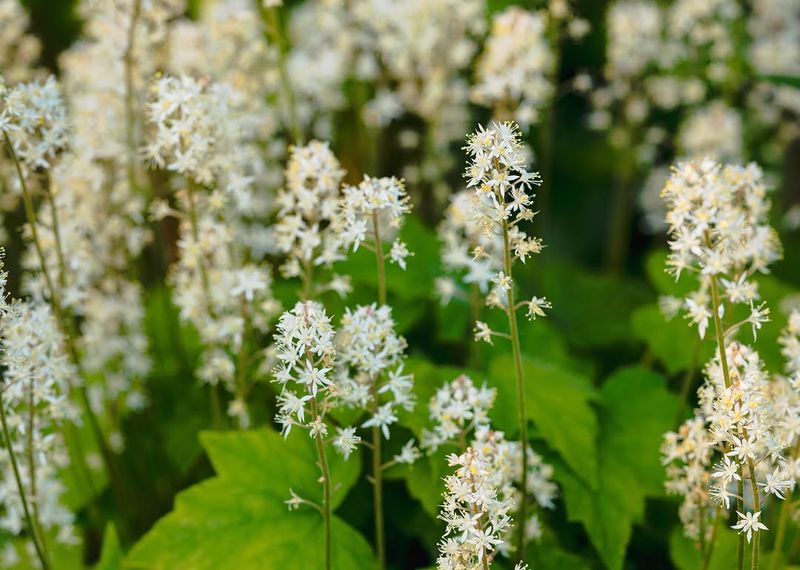
Picture a plant that looks like it belongs in a fairy tale, covered in soft, foamy white flower spikes that seem to float above the foliage. That is exactly what Foamflower brings to shaded North Carolina gardens every spring.
It is one of the most visually striking native perennials you can grow, and it spreads just enough to be genuinely useful without ever becoming a nuisance.
Tiarella cordifolia spreads through short stolons, creating colonies of deeply lobed, maple-like leaves that provide excellent ground coverage.
The foliage often develops attractive burgundy markings as the season progresses, adding visual interest long after the spring blooms fade. It is a plant that earns its place in the garden all year long.
Foamflower performs best in partial to full shade with consistently moist, organically rich soil. Mixing compost into your planting bed before putting it in the ground makes a noticeable difference in how quickly and vigorously it establishes.
It pairs wonderfully with ferns, wild ginger, and hellebores in shaded borders.
Spacing plants about twelve to eighteen inches apart gives them room to fill in naturally over one to two growing seasons.
Once established, Foamflower is quite drought-tolerant for a shade plant, though it appreciates occasional watering during dry summer stretches.
Dividing clumps every few years keeps plants vigorous and gives you new starts to expand your planting.
4. Wild Geranium
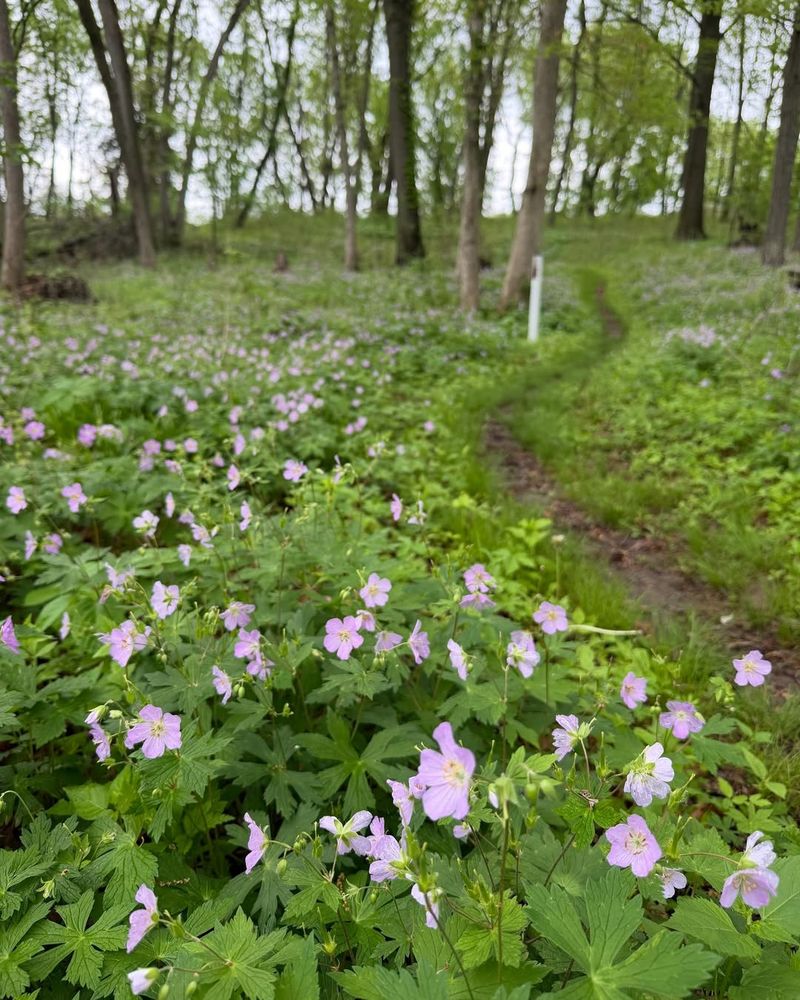
Soft lavender-pink flowers, deeply cut leaves, and a no-fuss personality make Wild Geranium one of the most underrated native plants for North Carolina gardens.
It blooms in mid-spring right when the garden needs color most, and it does so reliably year after year without asking for much in return. Gardeners who plant it once tend to keep planting it everywhere.
Geranium maculatum grows to about twelve to eighteen inches tall and spreads gradually through self-seeding and rhizome expansion. The key word is gradually.
It fills spaces at a pace that feels natural rather than alarming, slipping into gaps between shrubs, along path edges, or beneath deciduous trees without crowding its neighbors. That restrained behavior is exactly what makes it so valuable.
This plant adapts to a wide range of conditions, growing well in full sun to partial shade. It prefers well-drained, moderately fertile soil but tolerates average garden soil without complaint.
In sunnier spots, make sure the soil retains some moisture, especially during summer. Adding a layer of mulch around the base helps retain that moisture and keeps roots cool.
Plant Wild Geranium in fall or early spring for best results, spacing plants about twelve inches apart. The foliage often develops warm reddish tones in autumn, giving it a second moment of beauty before the season ends.
It combines naturally with black-eyed Susans, Virginia bluebells, and foamflower for a layered native garden that blooms in sequence across the seasons.
5. Black-Eyed Susan
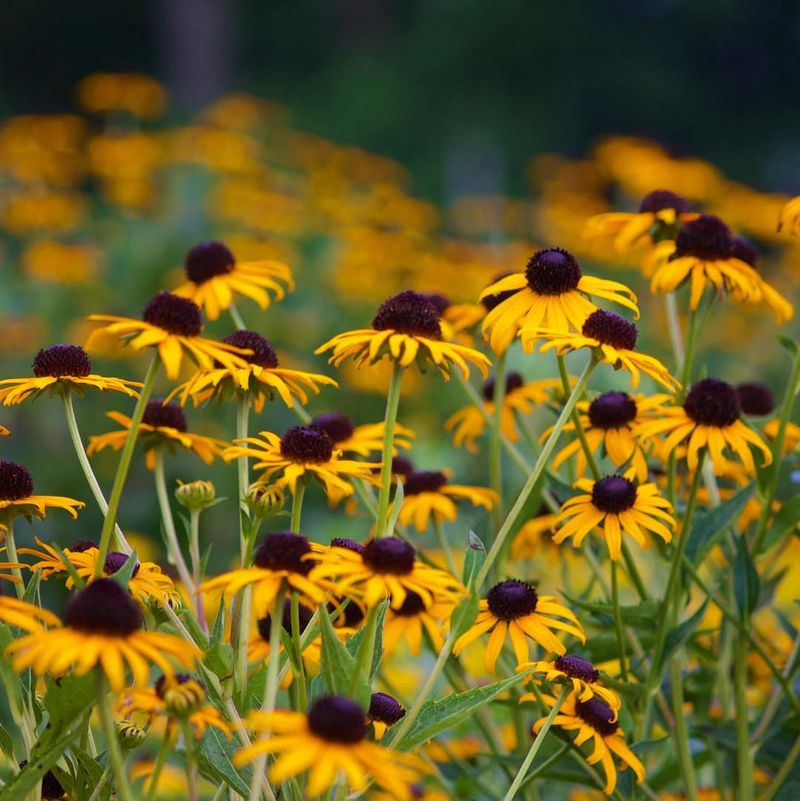
Few plants capture the spirit of a North Carolina summer like Black-Eyed Susan. Those bold golden-yellow petals surrounding a dark brown center are practically synonymous with sunny borders and pollinator gardens across the state.
Rudbeckia fulgida is not just pretty, though. It is a genuinely hardworking perennial that fills gaps in sunny beds while staying manageable season after season.
Unlike some Rudbeckia species that spread aggressively by seed, Rudbeckia fulgida spreads primarily through clump division rather than rampant self-seeding. This makes it far better behaved in a garden setting.
Clumps expand steadily over several years, filling empty space with lush foliage and a stunning summer flower display that attracts butterflies and bees by the dozens.
For best results, plant Black-Eyed Susan in full sun with well-drained soil. It tolerates clay soil better than many perennials, which is a real advantage in the North Carolina Piedmont.
Amending heavy clay with compost before planting improves drainage and gives roots an easier start. Space plants eighteen to twenty-four inches apart to allow clumps room to develop naturally.
Removing spent flowers through the blooming season extends the display noticeably. Leaving some seed heads in place at the end of the season feeds birds through fall and winter.
Dividing clumps every three to four years keeps plants productive and prevents them from spreading beyond their intended space. Pair with ornamental grasses or coneflowers for a classic, low-maintenance summer border.
6. Foamflower Hybrids
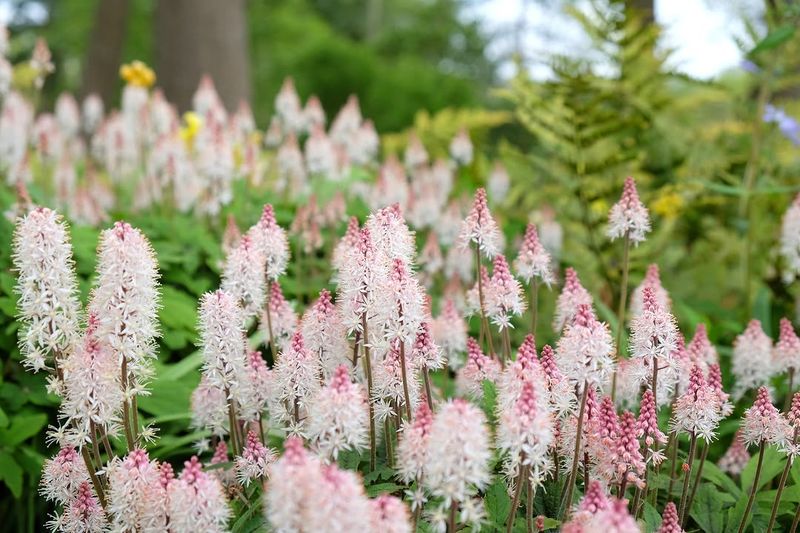
If the straight species of Foamflower impressed you, the hybrids will genuinely stop you in your tracks.
Plant breeders have taken Tiarella cordifolia and developed a stunning range of selections with dramatically patterned foliage, ranging from deep burgundy center markings to nearly black veining on bright green leaves.
The result is a plant that looks spectacular even when it is not in bloom.
Hybrid Foamflowers tend to be slightly more compact and controlled than the straight species, making them ideal for smaller garden spaces or tidy mixed borders.
They spread through short stolons just like their parent, filling gaps gradually without overwhelming neighbors.
Most hybrids stay under twelve inches tall, creating a neat, layered effect when planted alongside taller shade perennials.
These plants thrive in partial to full shade with moist, well-amended soil. Adding compost or leaf mold to the planting area gives them the rich, woodsy conditions they love.
Good drainage matters too, as sitting in waterlogged soil through winter can cause problems. A raised bed or sloped planting area in shaded spots works beautifully.
Popular hybrid selections like ‘Spring Symphony,’ ‘Iron Butterfly,’ and ‘Ninja’ offer distinct foliage patterns and flower colors, so mixing a few varieties in one bed creates a tapestry effect that changes subtly through the seasons.
Pair hybrid Foamflowers with hostas, astilbe, or coral bells for a shade garden that feels rich and designed without requiring constant upkeep. They are genuinely one of the smartest investments in a North Carolina shade garden.
7. Creeping Phlox
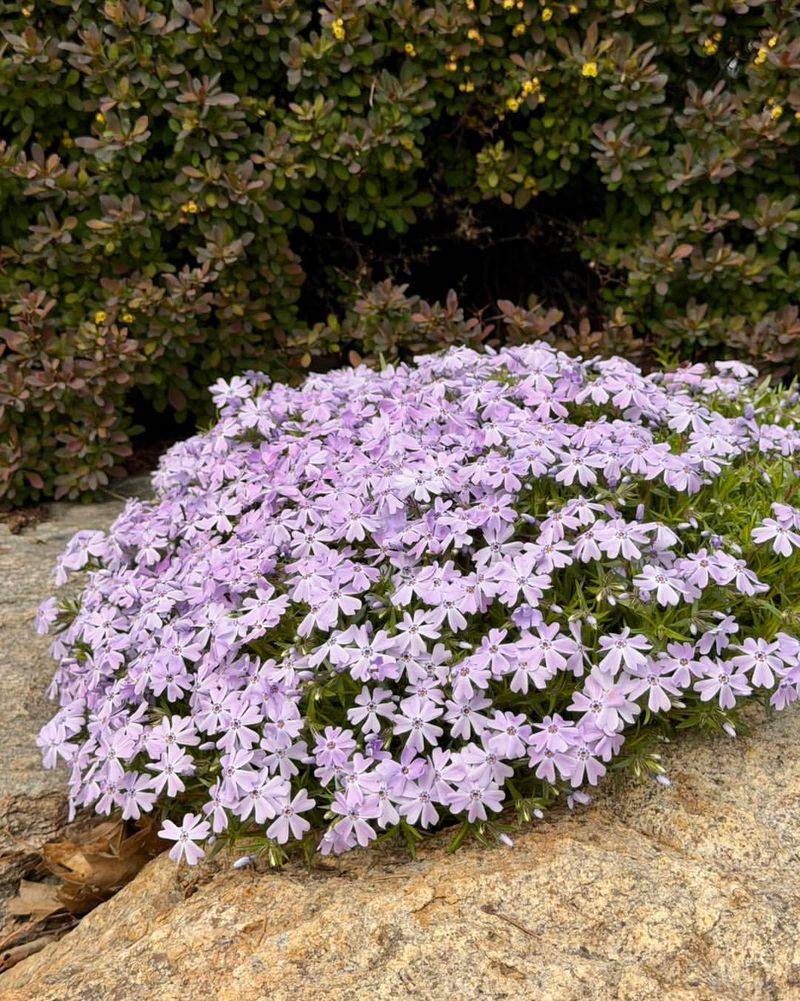
Early spring in a North Carolina garden gets a whole lot more exciting when Creeping Phlox decides to bloom.
Sheets of soft pink, lavender, or white flowers appear in March and April, covering the low foliage in a color display that feels almost too good to be true.
Phlox stolonifera earns its place in the garden with that annual spring performance alone, but the evergreen foliage it maintains through the rest of the year is a genuine bonus.
Unlike its cousin Phlox subulata, which prefers sunny, dry conditions, Phlox stolonifera is a shade lover that spreads steadily through stolons across woodland garden floors.
It stays low, typically six to twelve inches tall, and roots as it spreads, gradually filling gaps without piling on top of neighboring plants. The growth rate is satisfying without being stressful.
Plant Creeping Phlox in partial to full shade with moist, well-drained, slightly acidic soil. It performs especially well under the dappled shade of deciduous trees, where it gets bright light in early spring before the leaf canopy closes in.
Spacing plants twelve to fifteen inches apart gives them room to spread naturally over two to three seasons.
After blooming, give plants a light trim to keep them tidy and encourage denser growth. Water regularly during the first growing season to help roots establish firmly.
Once settled in, Creeping Phlox is surprisingly drought-tolerant for a shade plant. Pair it with wild ginger or green-and-gold for a native groundcover combination that covers bare soil beautifully.
8. Virginia Bluebells
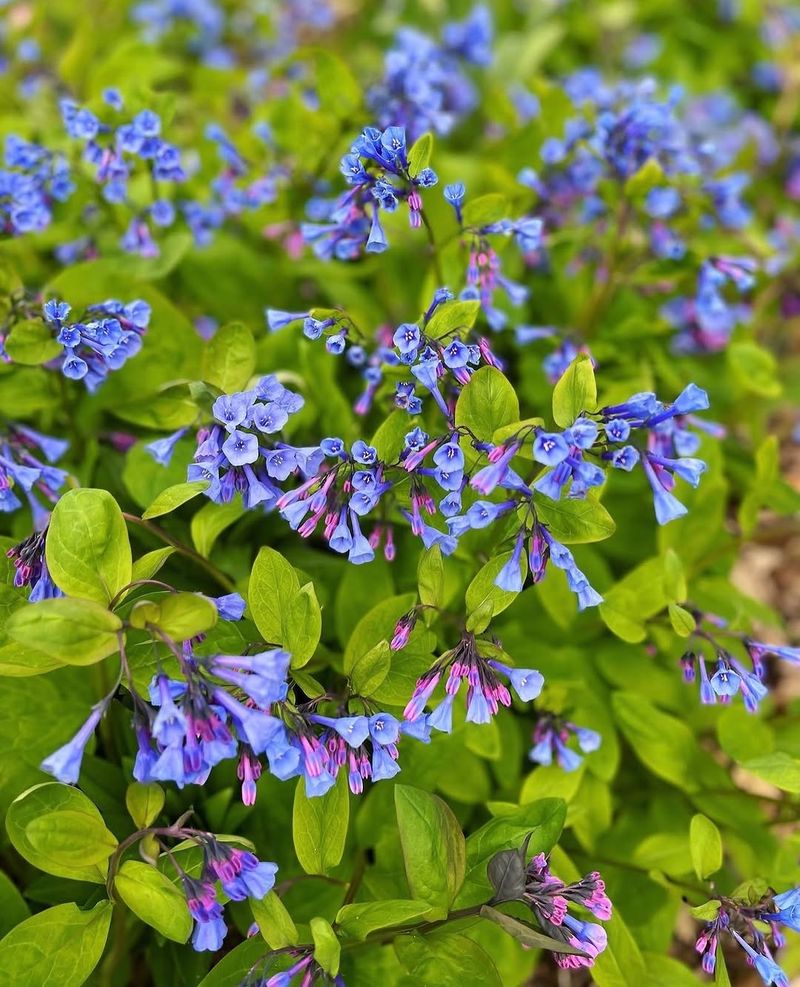
Sky-blue, trumpet-shaped flowers nodding gently above soft gray-green foliage make Virginia Bluebells one of the most breathtaking sights in a North Carolina spring garden.
Mertensia virginica blooms in March and April, filling shaded spots with a color that feels almost impossibly vivid for such an early time of year.
Gardeners who see it for the first time usually start looking for more space to plant it immediately.
What makes Virginia Bluebells such a well-behaved gap filler is its natural growth cycle. It emerges in early spring, blooms brilliantly, and then quietly fades back into the ground by early summer.
That summer dormancy means it never crowds out warm-season plants because it simply is not there to compete. The space it occupied in spring is ready for other plants to take over by June.
Plant Virginia Bluebells in partial to full shade with moist, rich, well-drained soil. They naturalize beautifully along stream banks, in rain gardens, or beneath deciduous trees where spring sunlight reaches the ground.
Planting in drifts of ten or more creates the most visually impressive effect, mimicking how they grow naturally in the wild.
Because they go dormant, pair Virginia Bluebells with hostas, ferns, or astilbe that will fill the gap left behind when foliage fades. They self-seed modestly, slowly expanding colonies over several years without becoming a problem.
Planting in fall from bare-root divisions or potted transplants gives the best establishment results. For a spring spectacle with zero summer maintenance, few natives can compete.