These Houseplants Don’t Mind a Chilly North Carolina Sunroom or Mudroom All Winter
Victorian families once kept a sturdy green favorite in chilly, gas-lit parlors where many tropical plants quickly sulked. That plant shrugged off smoky air and cold drafts, and it still earns a spot in modern homes.
Winter nights in North Carolina often dip near freezing, and Charlotte averages lows around 33 degrees in January. A glassy sunroom can feel toasty at noon, then turn surprisingly cold soon after the sun goes down.
I love tucking plants into those cooler rooms because it frees up space beside my sunniest living room windows. You may be surprised how many popular houseplants handle a 50-degree room without fussing or dropping leaves.
A few even prefer the chill, and one of them needs cool nights before it will bloom at all.
1. Cast Iron Plant
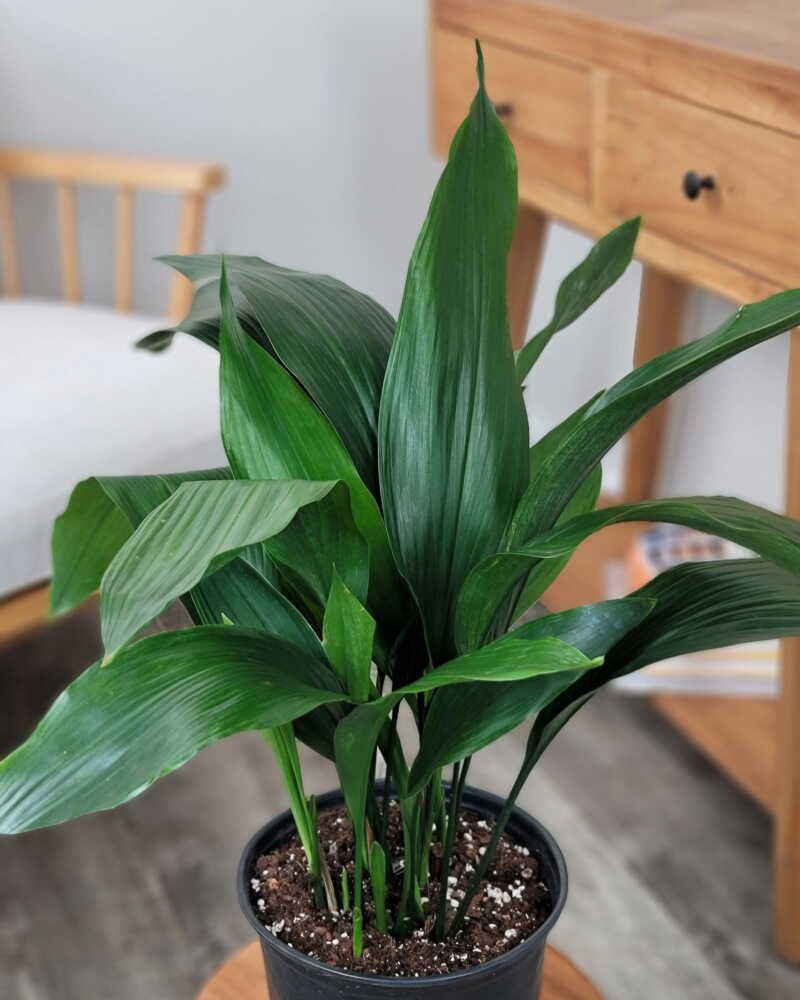
Victorian homeowners loved this plant because it survived gas lamp fumes that made ferns and palms sulk badly. Its tough reputation earned the nickname you know today, and honestly, I think it deserves every bit of it.
Aspidistra elatior comes from forests in China and Japan, where it grows in deep shade under taller plants. That background explains why a dim mudroom corner suits it far better than a bright, sunny window ledge.
Cold barely bothers it, since many sources report it handles temperatures close to freezing without real trouble. In fact, gardeners in the warmer parts of the state often grow it outdoors as a shade groundcover.
Direct winter sun through glass can scorch the leaves, leaving pale or brown patches on the dark foliage. Keep it a few feet back from bright panes, or let taller plants cast a little shade nearby.
Watering is where most folks go wrong, since soggy soil in a cold room invites root rot quickly. Let the top couple of inches dry before watering, which might mean once every few weeks in winter.
The glossy, strappy leaves reach about two to three feet tall and grow slowly, so patience helps here. Wipe dust off them now and then with a damp cloth, and they will shine like polished leather.
I keep one beside my back door, and it has handled muddy boots and slammed doors for years. Few houseplants forgive neglect so gracefully, which makes it my top pick for any drafty entryway.
2. ZZ Plant
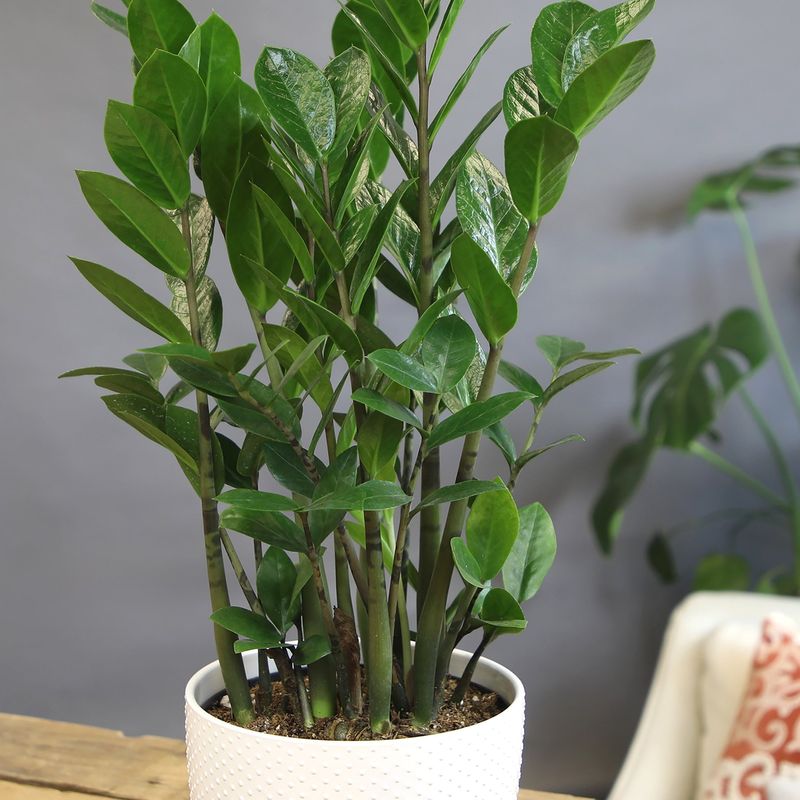
Those waxy leaves look so shiny that visitors often reach out to check whether the plant is plastic. I have watched friends do exactly that, and their surprised faces still make me grin every single time.
Zamioculcas zamiifolia comes from eastern Africa, where it rides out long dry seasons using thick underground rhizomes. Those potato-like structures store water, so the plant can go weeks without a drink and stay perfectly calm.
Cool rooms suit it reasonably well, though you should aim to keep temperatures above about 50 degrees. It will pause its growth in the chill, which is fine, since it rests through winter anyway.
A mudroom with one small window works nicely, because the ZZ handles low light better than most houseplants. Brighter indirect light does speed up new shoots, so a spot near a sunroom wall works too.
Overwatering is the main way people lose this plant, especially when cold soil stays wet for days. Let the pot dry thoroughly before you water, then soak it and let all the excess drain away.
Yellowing stems usually signal too much water, while wrinkled stems hint that the rhizomes need a deeper drink. Keep it away from pets and small children, since all parts can irritate mouths and skin if chewed.
Wear gloves when you divide or repot it, because the sap can bother sensitive hands for a while. Beyond that small caution, it ranks among the easiest plants I have ever brought home from a nursery.
3. Snake Plant
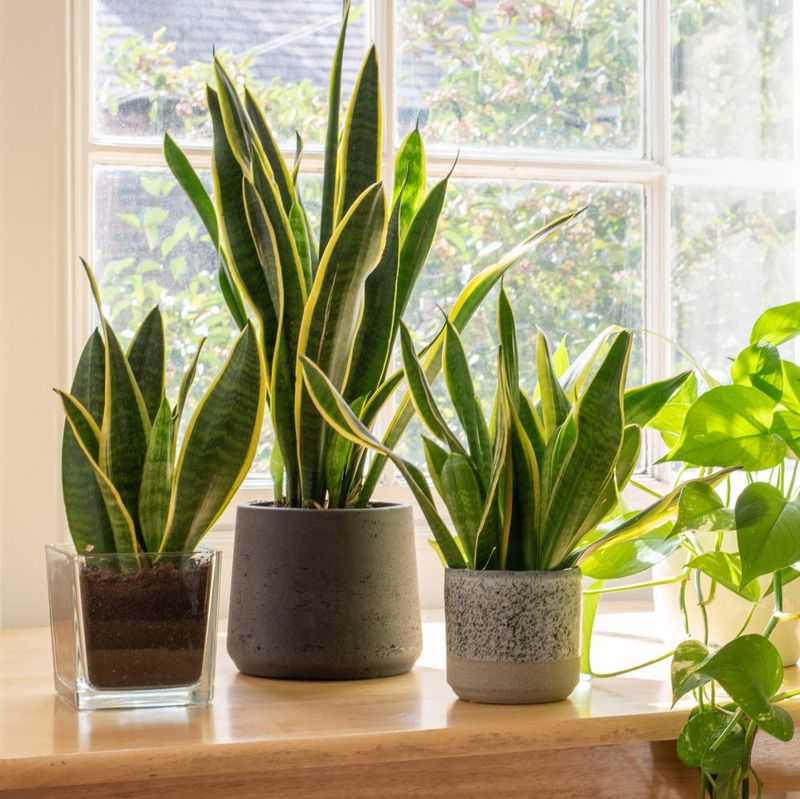
Some people call it mother-in-law’s tongue, a cheeky nickname inspired by those sharp, pointed leaves standing straight up. I prefer to think of them as green swords guarding the doorway against winter gloom and gray skies.
Botanists moved this plant from Sansevieria into the genus Dracaena, so its proper name is now Dracaena trifasciata. Most garden centers still use the old label, so you will likely see both names on tags.
It copes with rooms around 50 degrees, though leaves can turn mushy if they sit through freezing temperatures. Keep the foliage from touching icy window glass on frosty nights, since cold panes can damage the tips.
Light needs are wonderfully flexible, and the plant handles a dim corner or a bright sunroom bench equally well. Variegated types keep their bold yellow edges best when they get some bright, indirect light during the day.
Winter watering can drop to roughly once every four to six weeks in a cool room. Check that the soil is dry all the way down before adding water, and empty the saucer afterward.
A heavy clay or terracotta pot helps, because tall leaves can tip lightweight plastic containers in busy mudrooms. Terracotta also breathes, letting extra moisture escape from the soil faster than glazed or plastic pots allow.
You may hear claims that it cleans indoor air, but a few plants make only a tiny difference. I grow mine for the striking shape anyway, and that alone earns it a permanent spot by the door.
4. Spider Plant
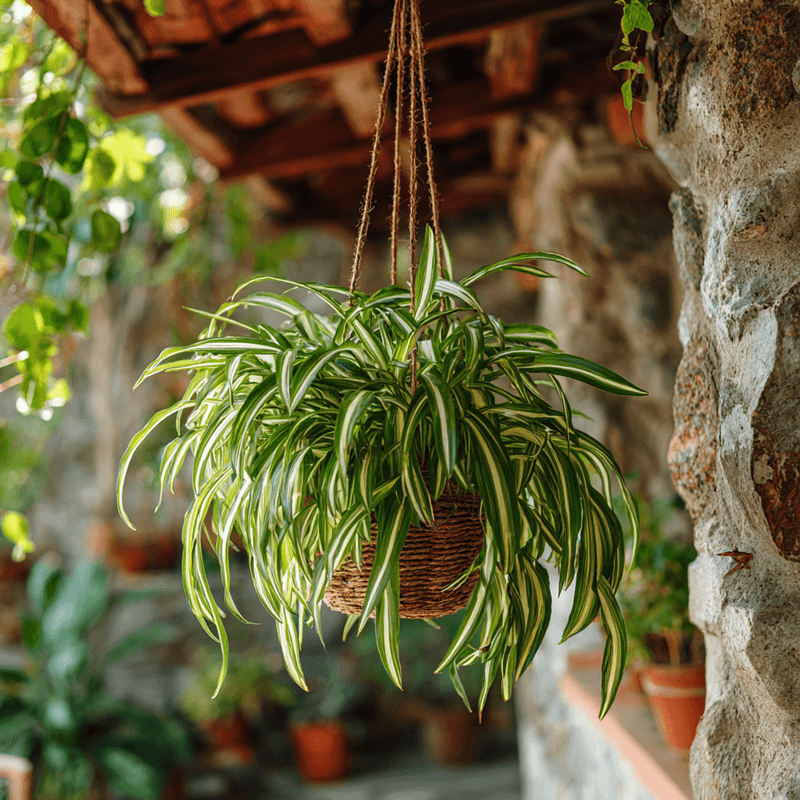
Few sights cheer me up in January like a spider plant dangling dozens of tiny babies from arching stems. Those little plantlets sway whenever the mudroom door opens, almost like they are waving hello to everyone.
Chlorophytum comosum hails from southern Africa, and it handles cool rooms better than many people expect. Several sources say it tolerates temperatures in the 40s, although it grows best when rooms stay above 50.
Cold drafts bother it more than steady coolness, so avoid hanging it right beside a leaky exterior door. A hook near a bright sunroom window gives it plenty of light without blasts of icy outdoor air.
Bright, indirect light keeps the striped leaves crisp and colorful, while deep shade makes them pale and floppy. Harsh afternoon sun through glass can scorch the leaf edges, so filter it with a sheer curtain.
Water when the top inch of soil feels dry, which happens less often once the room cools down. Thick white roots store moisture, so an occasional forgotten watering usually causes no lasting harm at all.
Brown leaf tips often come from fluoride or salts in tap water, so rainwater or distilled water helps. Snip the brown ends with clean scissors, following the natural leaf shape so nobody notices the trim.
Pet owners can relax a bit, since the ASPCA lists spider plants as nontoxic to cats and dogs. Pin a baby into a small pot of soil, and you will soon have gifts for every friend.
5. Jade Plant
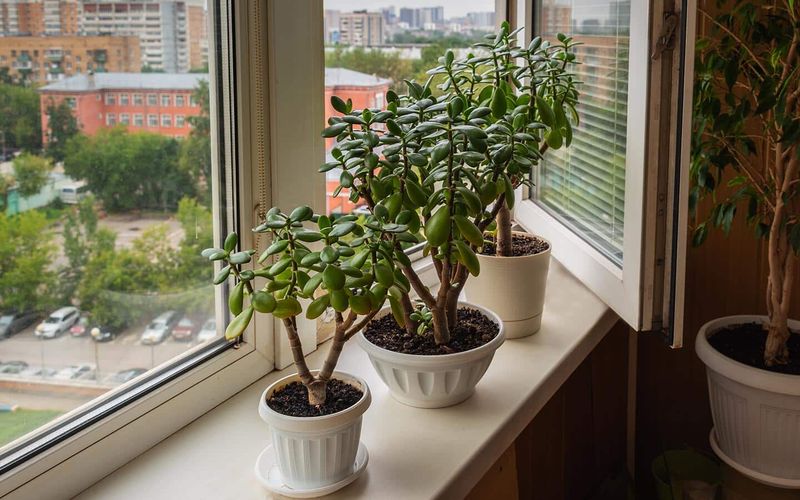
Plump, glossy leaves make this succulent look like a tiny tree carved from green jelly beans. Mine started as a single leaf cutting years ago, and now it needs two hands to move safely.
Crassula ovata comes from South Africa, where dry winters and chilly nights are a normal part of life. That history helps it handle a cool sunroom, and it can take brief dips into the low 40s.
Frost is another story, though, so move it away from the glass when a hard freeze is forecast. Frozen leaves turn soft and translucent, and that damage rarely recovers once it shows up a day later.
Bright light matters more than warmth here, and a south-facing sunroom window is honestly the ideal winter home. With enough sun, leaf edges may blush red, which is a healthy stress response rather than a problem.
Cool temperatures and short days can even coax mature plants into producing clusters of starry white or pink flowers. Not every jade blooms indoors, so enjoy it as a pleasant bonus if yours decides to join in.
Water sparingly in winter, letting the soil dry fully between drinks, since thick leaves hold plenty of moisture. Use a gritty cactus mix and a pot with drainage holes, because wet roots rot quickly in cold rooms.
Many folks call it a money plant and give it as a symbol of good luck and prosperity. Keep it out of reach of cats and dogs, though, since the ASPCA lists it as toxic to pets.
6. Christmas Cactus
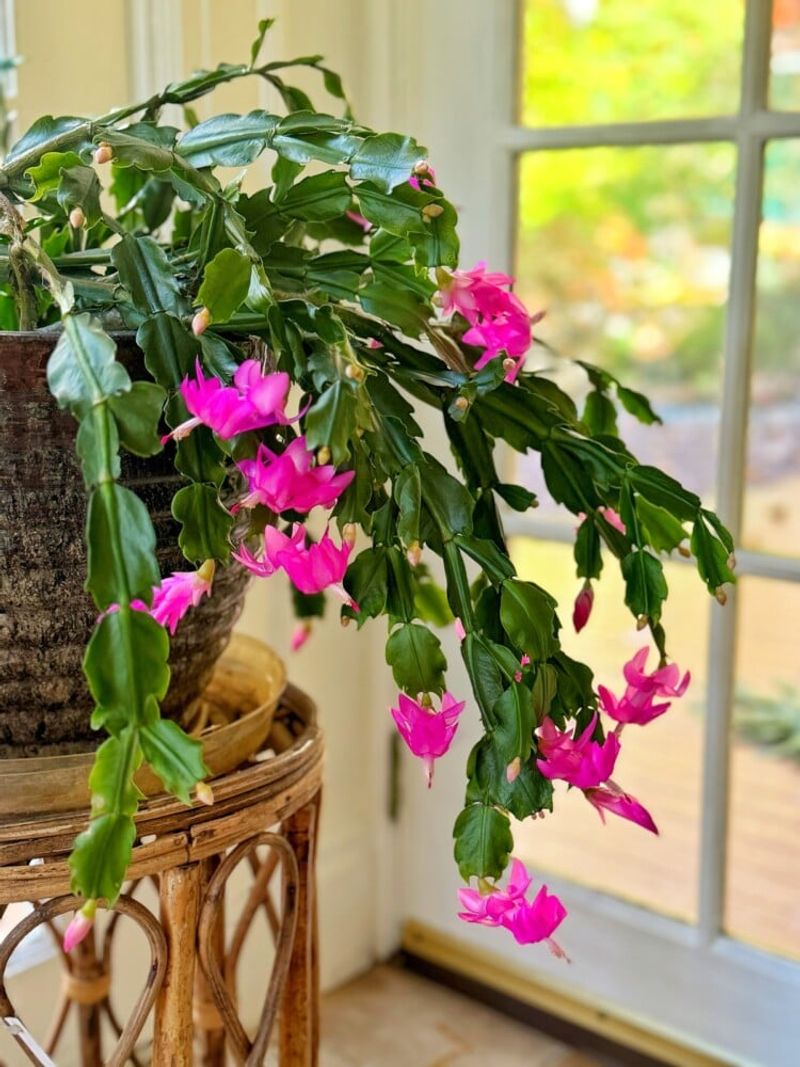
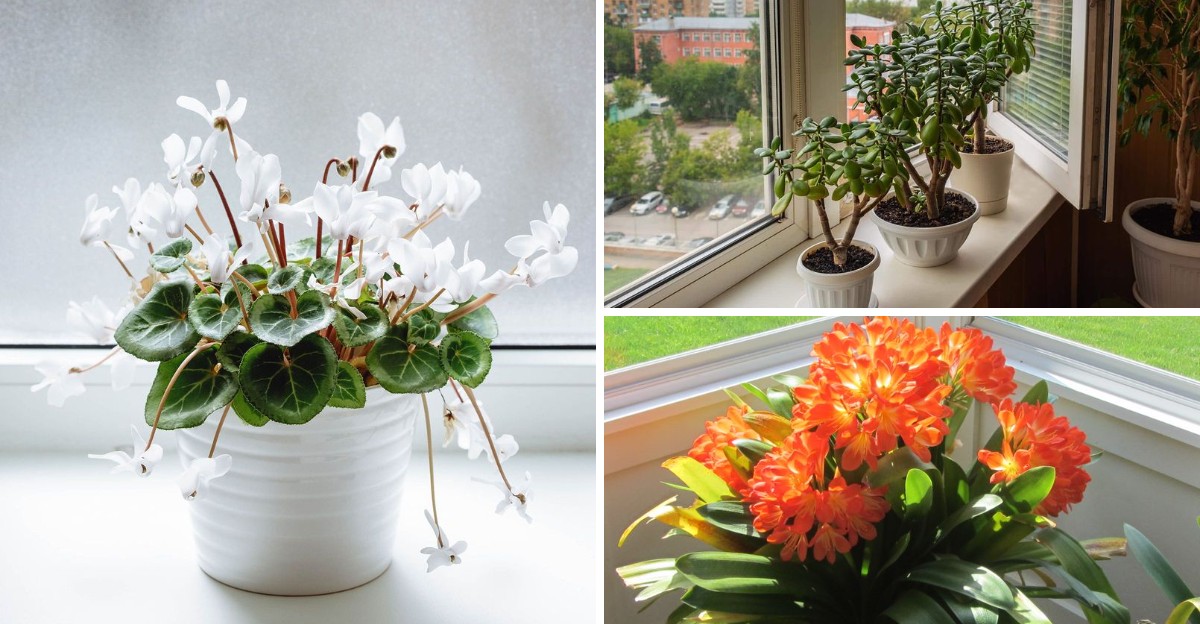
Unlike most houseplants on this list, this one does not merely tolerate a chilly room – it actually craves one. Cool nights in fall help set flower buds, which is why my mudroom specimen blooms better than my kitchen one.
Schlumbergera species grow on trees and rocks in the coastal mountains of southeastern Brazil, not in dry deserts. That rainforest background explains why it likes more moisture and less harsh sun than a typical cactus.
University extension experts note that nights around 50 to 55 degrees trigger buds, along with long, dark nights. An unheated sunroom in autumn often provides both conditions naturally, with no fancy tricks or closet shuffling required.
Once buds form, try not to move the pot around, since sudden changes can make buds drop off. Keep it away from heating vents and icy drafts too, because both shocks can cause the same disappointing result.
Bright, indirect light suits it best, such as an east-facing window or a spot filtered by sheer curtains. Water when the top inch of soil feels dry, and keep it slightly moist while flowers are open.
Many plants sold as Christmas cactus are actually Thanksgiving cactus, which has pointed teeth on its stem segments. Both types enjoy the same cool treatment, so you can grow them side by side without changing anything.
These plants can live for decades, and many families pass cuttings down through several generations of relatives. I treasure one rooted from my grandmother’s plant, and it still blooms pink every single December.
7. Clivia
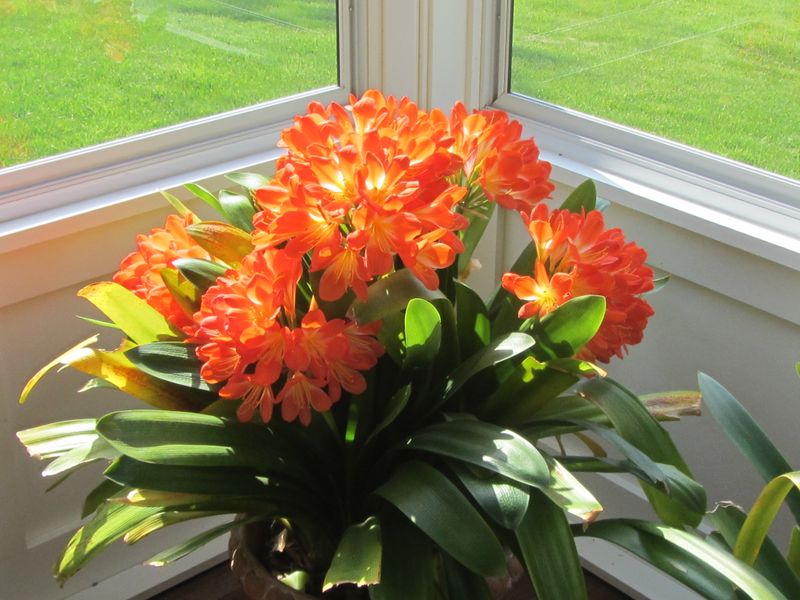
Bright orange trumpets in late winter feel almost unfair, especially when the yard outside looks brown and bare. Clivia pulls off that trick, and the secret to its show is a cool, dry winter rest.
Clivia miniata, sometimes called bush lily or natal lily, grows wild in shady forests of southern Africa. Its thick, strappy leaves stay dark green all year, so it looks handsome even when not blooming.
Growers recommend about two to three months of cool temperatures, roughly in the 40s and 50s, starting in fall. A chilly mudroom or unheated sunroom provides that rest beautifully, as long as temperatures stay above freezing.
Water very little during this rest, just enough to keep the leaves from wrinkling or drooping. Once a flower stalk rises between the leaves, move it somewhere a bit warmer and water more regularly.
Bright, indirect light keeps it happy, while direct midday sun through glass can bleach the leaves yellow. Strangely, it blooms best when slightly crowded, so resist the urge to repot it every year or two.
I waited three seasons for my first bloom, and that cool rest finally made the difference for me. Keep it away from curious pets and kids, because all parts of the plant are considered toxic if eaten.
Mature plants can be pricey, but they last for decades and slowly form tidy clumps of fans. Divide an overgrown clump after flowering, and you will have extra plants for friends who admire yours.
8. Florist Cyclamen
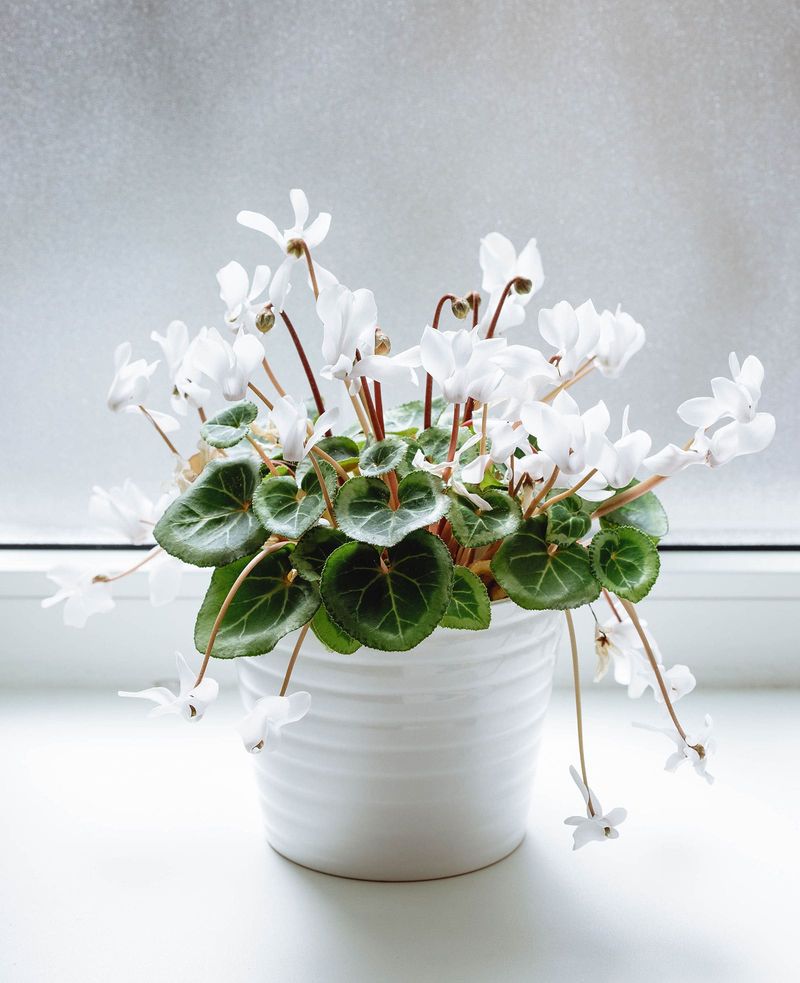
Swept-back petals make cyclamen flowers look like tiny butterflies hovering above heart-shaped, silver-marbled leaves for weeks in a cool room. Most people treat them as short-lived gifts, but a chilly sunroom can keep them flowering surprisingly long.
Florist cyclamen, Cyclamen persicum, comes from the eastern Mediterranean, where it grows through cool, damp winters. It goes dormant in hot, dry summers, which explains why warm living rooms make it yellow and slump.
Extension guides suggest days around 60 to 65 degrees and nights near 50 for the longest bloom time. That describes many North Carolina sunrooms in winter almost perfectly, which feels like a happy coincidence to me.
Bright, indirect light keeps buds coming, so set the pot near a window but out of hot sun. Watch for freezing nights, though, because this plant is far tougher about cool air than real frost.
Water from the bottom by setting the pot in a saucer for about twenty minutes, then draining it. Pouring water into the crown, where stems meet the tuber, can lead to rot in cold, damp rooms.
Pull faded flowers off with a gentle twist at the base, instead of snipping, to keep things tidy. Leftover stubs can rot and invite gray mold, which loves cool, still air in crowded plant collections.
When leaves yellow in late spring, the plant is simply heading into its normal summer rest. Keep the tubers away from pets, since the ASPCA lists cyclamen as toxic, especially the underground parts.
9. Dragon Tree
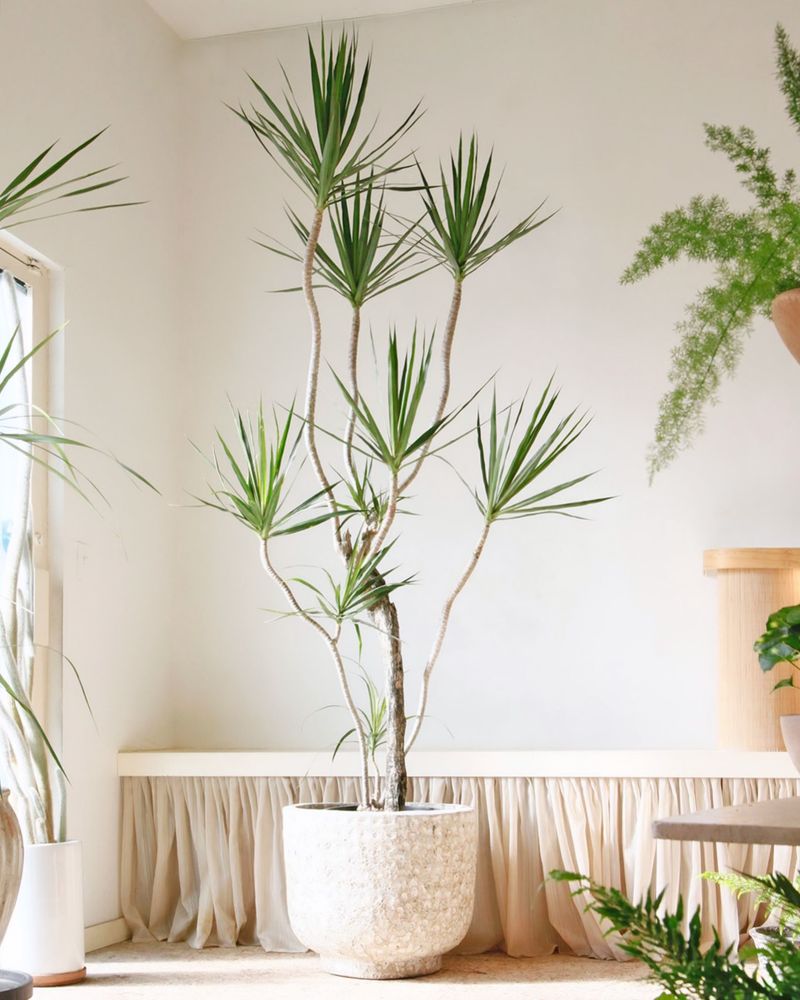
Spiky, red-edged leaves bursting from slender, twisting canes give this plant the look of a Dr. Seuss illustration. I bought mine on a whim, and it has become the sunroom’s quirky centerpiece ever since that day.
Sold as Dracaena marginata, it is now often listed by botanists as Dracaena reflexa variety angustifolia. Most nurseries still use the familiar name, and it comes from the island of Madagascar off Africa.
It handles cool rooms reasonably well, though it prefers staying above 50 degrees for steady, healthy leaves. That makes it a better fit for a lightly heated sunroom than a truly frigid mudroom by the garage.
Bright, indirect light brings out the best red edges, but the plant tolerates dimmer spots with slower growth. Rotate the pot every few weeks so the canes grow upright instead of leaning toward the window.
Growth slows a lot in winter, so let the top half of the soil dry before watering. Soggy roots in a chilly room lead to yellow, drooping leaves faster than almost any other mistake.
Dracaenas are sensitive to fluoride, so collected rainwater is a smart choice for keeping leaf tips green. Lower leaves naturally drop as the cane grows taller, leaving that charming palm-like trunk behind over time.
Cats and dogs should stay away from it, since the ASPCA lists dracaenas as toxic to pets. Give it a sunny, sheltered corner and a light hand with water, and it will reward you for years.