Iowa’s Most Photographed Fall Attraction Is Blooming At An Ames University Garden
You won’t guess what’s blooming on this quiet campus corner. Petals in vivid colors now line paths you probably cross often. Bees still work blossoms you might mistake for decorations.
Cameras fill fast because you can’t look away for long. Tripods click while you compete with toddlers for best angle. Sketchbooks fill quickly once you notice the colors in motion.
Mulch and warm petals scent air you won’t forget quickly. Leaves crunch beneath your boots along winding brick paths. Chances are you’ve scrolled past this scene without knowing it.
Iowa rarely gets credit for scenery this striking in autumn. Word about this hidden acreage spreads before you even hear the name. Central Iowa suddenly feels like the center of your map.
Rumors about this place spread quickly through nearby towns long before autumn fully arrived. Here’s the exact location, the peak bloom window, and why you must see it yourself.
Reiman Gardens Sits Right Beside Jack Trice Stadium
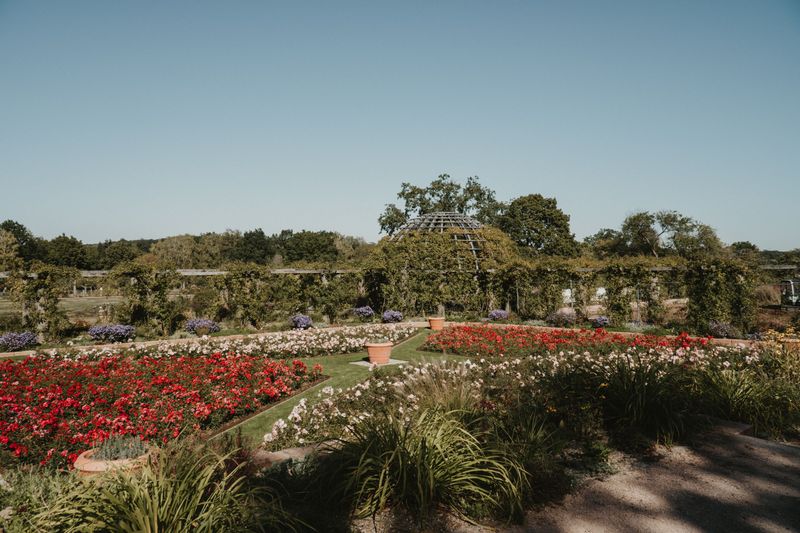
Tucked along University Boulevard in Ames, this 17-acre public garden shares a fence line with Iowa State University’s football stadium. On game weekends, you can hear the marching band while standing among the mums.
The garden was dedicated in 1995 on its original five acres, following a gift from Roy and Bobbi Reiman in the early 1990s, and it has grown steadily since to its current 17 acres.
Iowa State owns and operates it, which means horticulture students, researchers, and volunteers all have a hand in how it looks.
Getting there is simple. From Interstate 35, take the US-30 exit west toward Ames, then follow signs for University Boulevard and watch for the brick entrance sign on your right.
Parking is free and sits directly in front of the visitor center, so you will not be hunting for a spot along a busy street. Strollers and wheelchairs roll easily on the paved loops, and benches show up often enough that you can rest whenever you like.
In 2023, the garden earned a place on a list of the Top 10 Gardens Worth Traveling For in North America. That kind of recognition puts a small Iowa attraction on the same page as much larger botanical centers.
Plan on 90 minutes for a relaxed walk, or half a day if you bring a camera and a snack. General admission runs around $12 for adults, less for seniors and kids, and goes straight back into funding the plant collections you’re walking through.
September Fills The Mum Beds With Color

Ask anyone who works there what September looks like, and the answer involves thousands of chrysanthemums.
Bronze, burgundy, butter yellow, and deep rust all land at once, and the effect is striking. Mums are the backbone of autumn color here because they handle cool nights without complaint.
Iowa State’s horticulture program has long studied hardy varieties, so a number of the plants on display were bred to survive Midwest winters rather than get tossed after one season.
Your Iowa Garden Changes Every Week. Your Plan Should Too.
Gardening in Iowa changes quickly throughout the season. Every Friday you’ll receive a simple weekly plan showing exactly what to plant, prune, fertilize, harvest, and protect so you never miss the right timing.
Photographers love these beds for a practical reason. The flowers grow in tight, rounded mounds that fill a camera frame with solid color, which makes even a phone snapshot look intentional.
If you want the richest tones, come during the last two weeks of September through mid-October. Morning light after a light rain makes the petals glow, and you will have the paths largely to yourself before 10 a.m.
Gardeners can pick up ideas here too. Notice how the staff pair mums with ornamental grasses and dark foliage plants so the colors read stronger instead of blending into mush.
Jot down the variety names on the small labels stuck beside each grouping. Many are sold at Iowa garden centers, which means you can recreate a slice of the display in your own front bed next spring.
Elwood The Giant Gnome Is A Favorite Selfie Spot
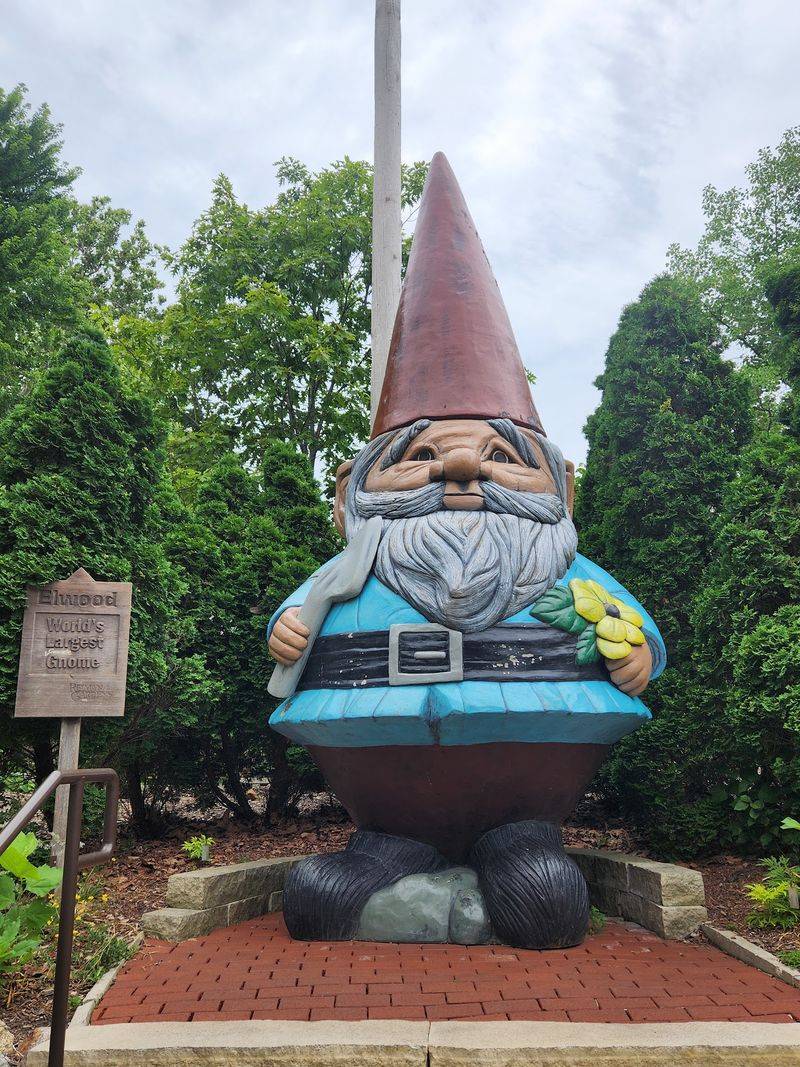
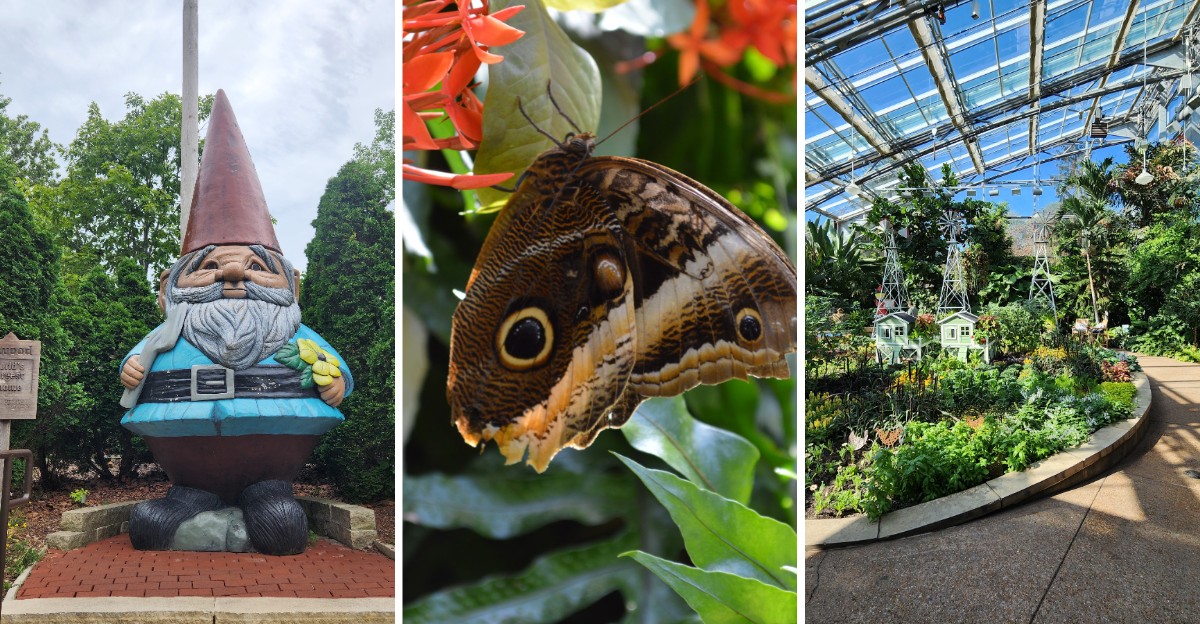
Standing 15 feet tall with a cherry-red hat, Elwood is hard to miss and a popular photo stop. He was recognized as the world’s largest concrete garden gnome when he was dedicated in 2010.
The name is a nod to Elwood Drive, a street near campus, and his cardinal-and-gold color scheme winks at Iowa State pride. Kids sprint toward him; adults pretend they are not going to pose, then pose.
What makes him such a photo magnet in fall is the setting. Staff surround his base with pumpkins, gourds, cornstalks, and low mounds of mums, so the whole scene reads like a postcard without any editing.
For the cleanest shot, stand back about 20 feet and shoot slightly upward so his hat clears the treeline. Crouching down also works if you want the flowers filling the bottom third of the frame.
Weekday mornings are your friend if you would rather skip the line of families waiting their turn. Weekend afternoons in October get busy, especially when a home football game brings extra visitors into town.
Fun detail worth knowing: Elwood weighs about 3,500 pounds, which is why he stays put through Iowa wind and ice storms.
He has become something of an unofficial mascot, showing up on postcards, T-shirts, and thousands of Instagram posts tagged in Ames.
Butterflies Still Flutter Inside The Christina Reiman Wing
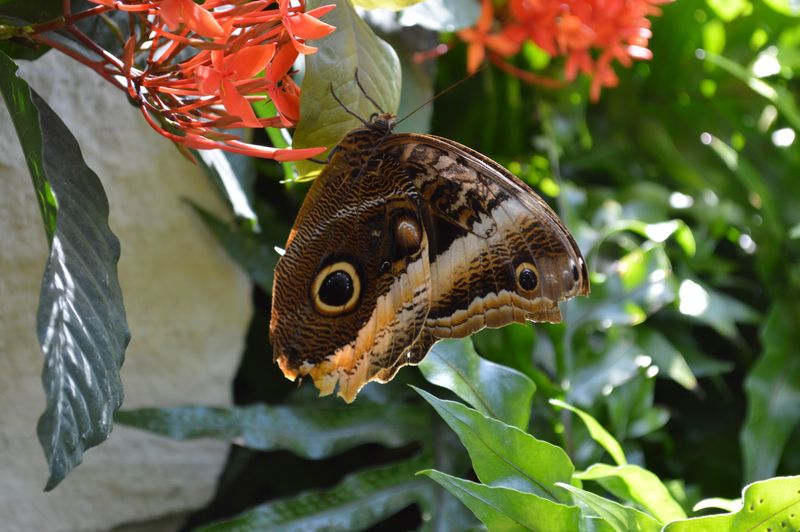
Step through the double doors of the butterfly wing and the temperature jumps about 30 degrees. Warm, humid air hits your face, tropical plants crowd the walkway, and something orange drifts past your shoulder.
The Christina Reiman Butterfly Wing keeps hundreds of butterflies in flight year-round, with species arriving as chrysalises shipped in from butterfly farms around the world. A glass case near the entrance lets you watch new wings unfold, which is oddly hypnotic.
September is a smart month to visit because the indoor wing pairs nicely with the outdoor fall color. Chilly mornings outside, tropical warmth inside, all within a five-minute walk.
A few tips from regulars. Wear bright clothing if you want butterflies to land on you, move slowly, and resist touching their wings since the scales are delicate.
Staff run a check station at the exit so nobody accidentally carries a hitchhiker into the Iowa air. Expect a quick mirror glance and a friendly reminder to spin around once.
Camera settings matter here. The glass roof gives plenty of light, but the bugs rarely hold still, so bump your shutter speed up and shoot in short bursts.
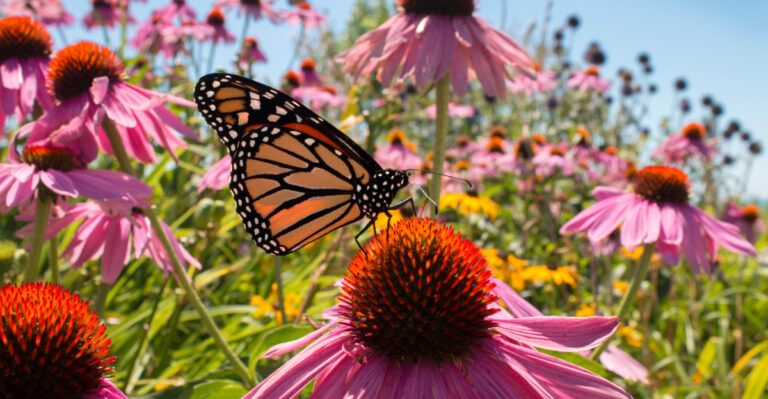
Monarch migration also peaks in Iowa during September, and the outdoor gardens include milkweed plantings meant to support them. Watching wild monarchs fuel up outside, then walking into a room full of tropical relatives, makes the connection click.
Spooky Science Brings Pumpkins, Lights, And Weird Experiments

Late October transforms the gardens for Halloween. Hundreds of carved jack-o-lanterns line the paths, string lights glow overhead, and science demonstrations pop up between the flower beds.
The event is called Spooky Science, and it leans into the goofy side of chemistry and biology. Think dry ice fog, glowing liquids, giant bubbles, and volunteers in lab coats explaining why any of it works.
Families with elementary-age kids get the most out of it, though plenty of college students wander through for the photo ops. Costumes are welcome and encouraged.
Tickets tend to sell out, so buying online ahead of time saves you a disappointed drive. Check the garden’s official website closer to your visit for exact dates, times, and ticket availability, since these are set fresh each year.
Bring a jacket and closed-toe shoes because Iowa evenings in October get sharp once the sun drops. A small flashlight helps on the darker stretches of path near the conifer collection.
Photography after dark takes a little patience. Rest your phone on a railing or bench to steady it, and use night mode rather than the flash, which flattens the pumpkin glow.
The combination of lit pumpkins against still-blooming mums is what makes these images spread so widely online. You end up with fall color and Halloween mood in one frame, which is not something you can stage in your own backyard.
Plan Your Trip Around Weather, Crowds, And Campus Traffic
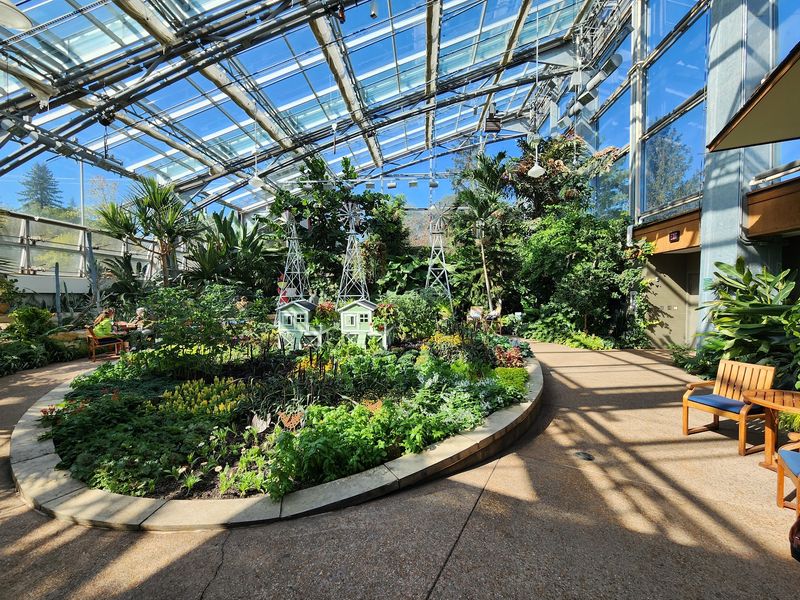
A little planning turns a good visit into a great one. The garden opens daily, typically 10 a.m. to 6 p.m. in summer and 10 a.m. to 4:30 p.m. once fall hours begin. It’s worth checking the current schedule before you go, since hours shift with the season.
Check the Iowa State football schedule before you commit to a date. Home games fill nearby lots and slow traffic on University Boulevard, though some visitors enjoy the tailgate energy next door.
Weather in central Iowa during September swings wildly, from 80-degree afternoons to mornings in the 40s. Layers solve the problem, and a light rain jacket rarely goes unused.
Members get in free, which pays off quickly if you live within an hour and want to watch the beds change week by week.
Reciprocal programs, like the American Horticultural Society’s network, also let members visit hundreds of other gardens across the country for free or discounted admission.
Photographers should know that tripods are usually fine for casual use, but formal portrait and wedding sessions require a paid permit arranged in advance. Calling ahead avoids an awkward conversation mid-shoot.
Food options sit a short drive away in Ames, including plenty of spots along Lincoln Way and in Campustown. Packing water and a snack still makes sense since the garden cafe keeps limited hours.
Give yourself time to sit somewhere quiet before you leave. The Rose Garden benches in late afternoon, with low gold light and a breeze moving the grasses, tend to be the part people remember longest.