7 Lichens on New York Trees and What Each One Reveals About Your Air Quality
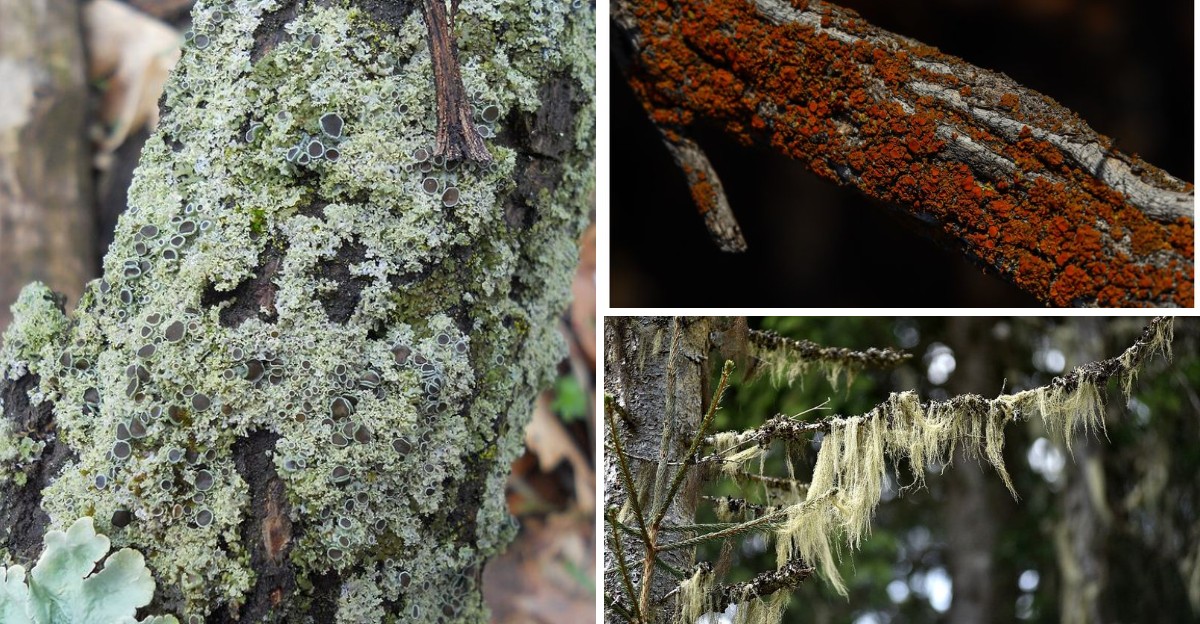
Back in the 1960s, a botanist mapped a wide zone around New York City where trees carried almost no bark crusts. Today those same trunks are slowly filling back in, and the returning tenants are sending us a message.
Those tiny patches are not mold, and they do not harm the trees they sit on at all. Each one is a fungus and an alga sharing a home, soaking up whatever drifts through the air.
Between you and me, I scraped a few off my maple years ago, thinking I was helping. Looking back, I was erasing a free air quality report that my backyard had been writing for decades.
Across New York, different colors and shapes show up depending on how clean or nitrogen-heavy the air feels. So which ones are hanging on your trees, and what exactly are they trying to tell you?
1. Candleflame Lichen
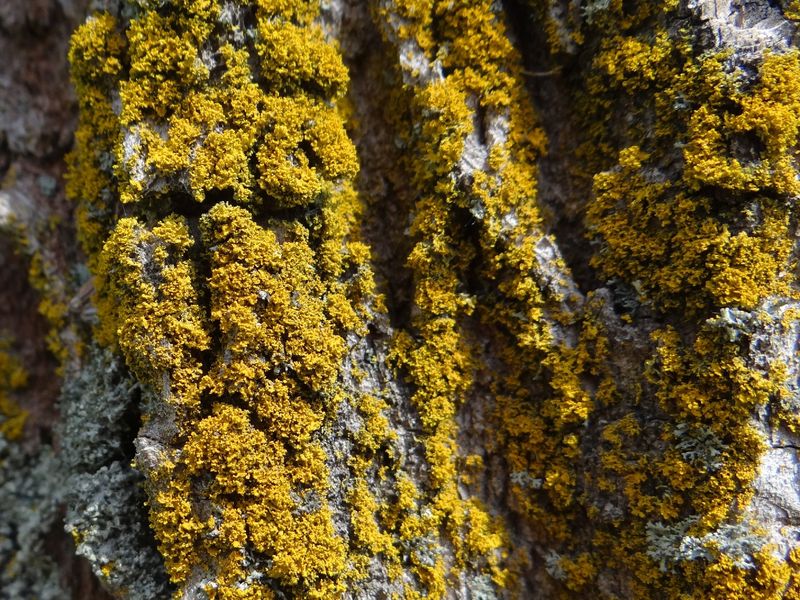
Bright egg-yolk yellow smudges on a city street tree look almost painted on, and they catch my eye every time. That cheerful color belongs to Candelaria concolor, a tiny leafy lichen that rarely grows wider than an inch or two.
Look closely and you will see minute lobes edged with powdery granules that help it spread to new bark. A hand lens makes those crumbly edges pop, and honestly it turns a boring trunk into a treasure hunt.
Candleflame belongs to a group scientists call nitrophytes, meaning it actually welcomes extra nitrogen in the air. Ammonia from fertilized fields and nitrogen compounds from heavy traffic both seem to suit it just fine.
In my own yard, it crowds the trunk of a maple near the road more than any other tree. That pattern makes sense, because dust and exhaust from passing cars settle on the side facing the street.
So a trunk coated in yellow suggests your air carries a noticeable nitrogen load, though it may not be dangerously polluted. Researchers in New York City have found it on many park and sidewalk trees throughout the boroughs.
For what it is worth, you do not need to remove it, since it uses bark only as a perch. It takes no water or nutrients from the tree, so your maples and oaks can share space peacefully.
Try comparing a roadside tree with one deep in a park or backyard corner on your next walk. If the yellow fades away from traffic, you are reading a real nitrogen gradient with your own eyes.
2. Mealy Rosette Lichen
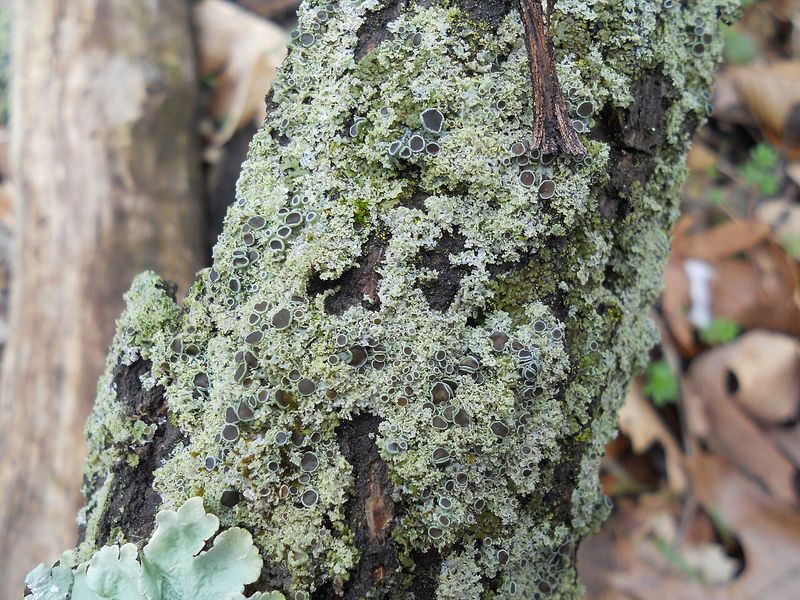
Pale gray rosettes no bigger than a quarter dot the bark of countless urban trees, and most people stroll past them. Physcia millegrana is probably one of the most common leafy lichens growing on trees across the eastern United States.
Its narrow, crinkled lobes radiate from a center like a tiny frilly doily pressed tightly against the bark. The tips carry small powdery bundles called soredia, which give the edges that floury, mealy look its name suggests.
Funny thing is, this little rosette seems to enjoy the same messy city air that sends gardeners indoors on hot days. It tolerates nitrogen-rich conditions well and shows up on trees along busy streets and crowded parking lots.
Lichen surveys in New York City have recorded it as one of the steadiest residents of street and park trees. It also turns up on fences and stone walls, so it is hardly picky about where it settles.
On its own, a mealy rosette suggests moderately stressed air rather than a clean country breeze. When it shares a trunk with leafy green shields and hairy tufts, though, your air quality is probably improving.
Take it from someone who confused it with mold for years, the gray color is perfectly normal and healthy. Mold looks fuzzy and often grows on damp, decaying wood, while this rosette sits flat and tidy on living bark.
Snap a photo of one rosette each season and watch how slowly it grows over the coming years. Most leafy lichens add only a few millimeters annually, so a broad patch has likely been there a long time.
3. Orange-Cored Shadow Lichen
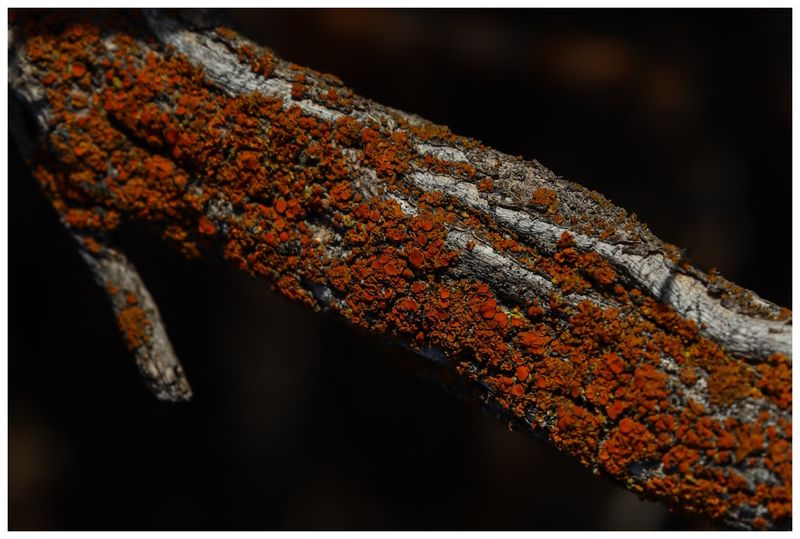
Scratch the surface of this drab gray-green patch gently with a fingernail, and a surprising flash of orange appears underneath. That hidden color is the trademark of Phaeophyscia rubropulchra, nicknamed the orange-cored shadow lichen by curious naturalists.
The inner layer, called the medulla, carries that red-orange pigment, while the upper surface looks dull and ordinary. It forms flat, leafy rosettes on tree bases and trunks, often near the damp lower few feet of bark.
Between you and me, I love showing kids this trick because it feels like finding buried treasure on a tree. Only a tiny scratch is needed, and the lichen keeps growing afterward, so please be gentle with it.
This species ranks among the more pollution-tolerant lichens found on hardwoods in urban parks across the Northeast. Studies of New York City lichens list it among the most frequently encountered species on city trees.
Its presence alone tells you the air is decent enough for tough lichens, though not necessarily pristine. Think of it as a passing grade, not an honor roll mark, when you are judging your local atmosphere.
It also loves nutrient-rich bark, so maples and elms along roads often host surprisingly large colonies of it. Dust drifting from nearby soil and pavement may add minerals that help those colonies spread over time.
Next time you rake leaves, check the base of your largest tree for these low, shadowy rosettes. A quick scratch test confirms the identity, and suddenly your backyard has a new resident with a name.
4. Dust Lichen
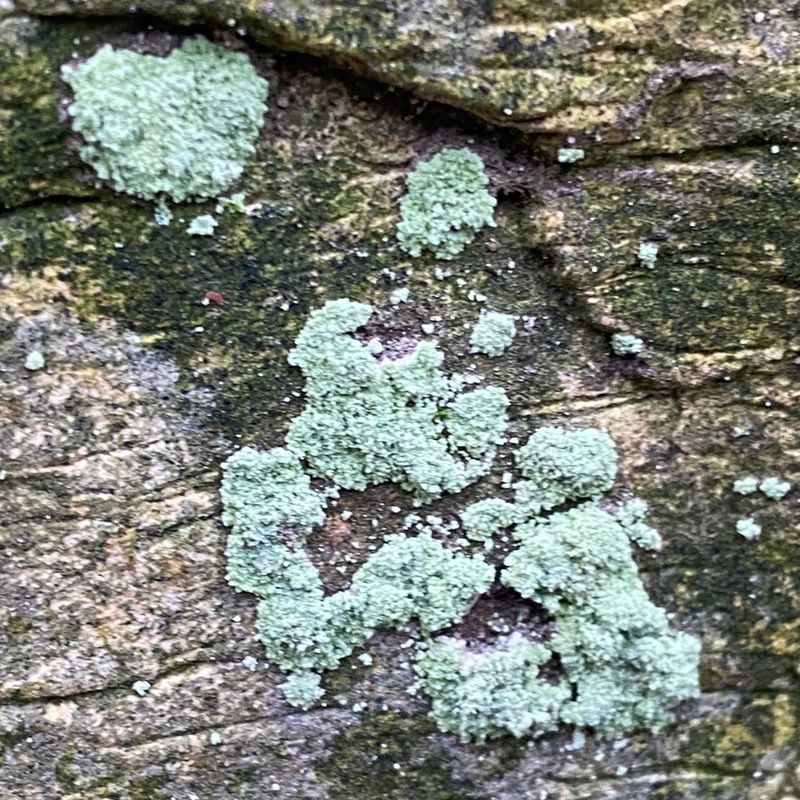
Some trunks look like someone sprinkled pale green powdered sugar across the shady side, and that fuzz is alive. Lepraria, commonly called dust lichen, grows only as a soft layer of loose powdery granules without leaves.
It produces no fruiting bodies at all, so it spreads by those tiny granules blowing or washing onto new bark. That simple lifestyle helps it colonize shady trunks and damp rock overhangs with remarkable ease over time.
Dust lichens rank among the most pollution-tolerant lichens, and they often linger where showier species have vanished. In heavily trafficked areas, a thick green dust might be the only lichen you can find on many trees.
Let’s just say I once mistook it for leftover spray paint on an old oak near a parking lot. A closer look revealed tiny granules that brushed off easily, unlike paint that clings in a solid film.
A tree covered mostly in dust lichen hints that conditions are tough, with limited variety for more sensitive neighbors. Shade and moisture also matter, though, so do not judge air quality from one damp north-facing trunk alone.
Compare several trees in sunny and shady spots before drawing any conclusions about your neighborhood air. Variety is the real clue, since cleaner air usually supports many lichen types living side by side.
Like the other species here, dust lichen does not harm bark, so you can leave it in place without worry. Small insects and mites even hide among the granules, giving backyard birds a little extra foraging opportunity.
5. Common Greenshield Lichen
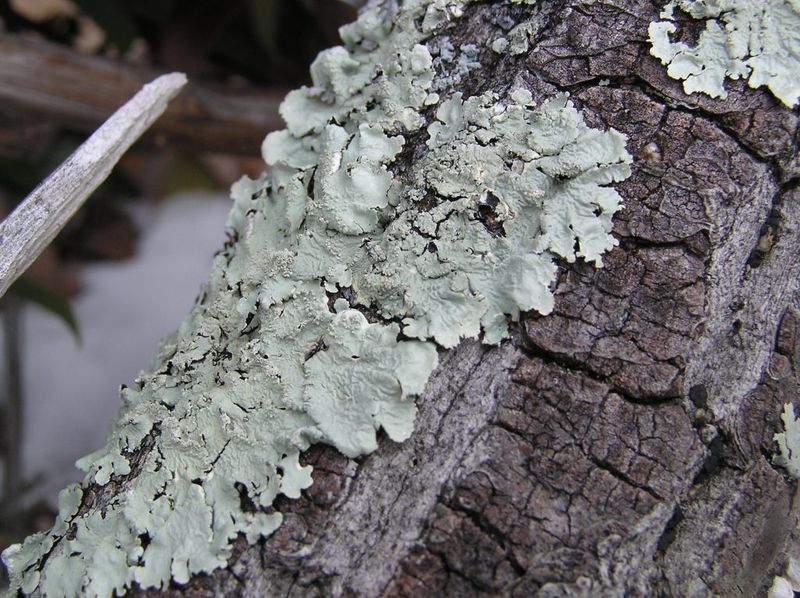
Mint green patches the size of a saucer spread across oak trunks, and their wrinkled centers look like crumpled tissue paper. Flavoparmelia caperata, the common greenshield lichen, is one of the easiest leafy lichens to spot in eastern forests.
Its broad lobes have rounded tips, and older centers develop bumpy wrinkles dotted with powdery soredia for reproduction. Wet it with a little water and the pale green deepens noticeably, since the algae inside become more visible.
Greenshield is considered moderately sensitive to sulfur dioxide, the pollutant once released heavily by coal and oil burning. During the worst decades of urban pollution, it largely disappeared from trees in and around big northeastern cities.
My garden taught me patience, because the first small greenshield on my oak appeared only after years of watching. Now several patches have spread across the trunk, and each spring they look a little bigger than before.
Lichenologists have noted greenshield returning to New York City parks since sulfur dioxide levels dropped after cleaner fuel rules arrived. Its comeback is one of the most visible signs that clean air laws produced real, measurable results for trees.
If greenshield thrives on your trees, your air is likely in fairly decent shape for sulfur pollution levels. It tolerates some nitrogen, though, so it can share bark with yellow candleflame on suburban trees and roadsides.
Look on the sunnier side of older oaks and maples during your next relaxed stroll around the backyard. A patch wider than your palm has probably been growing quietly there for well over a decade.
6. Rough Speckled Shield Lichen
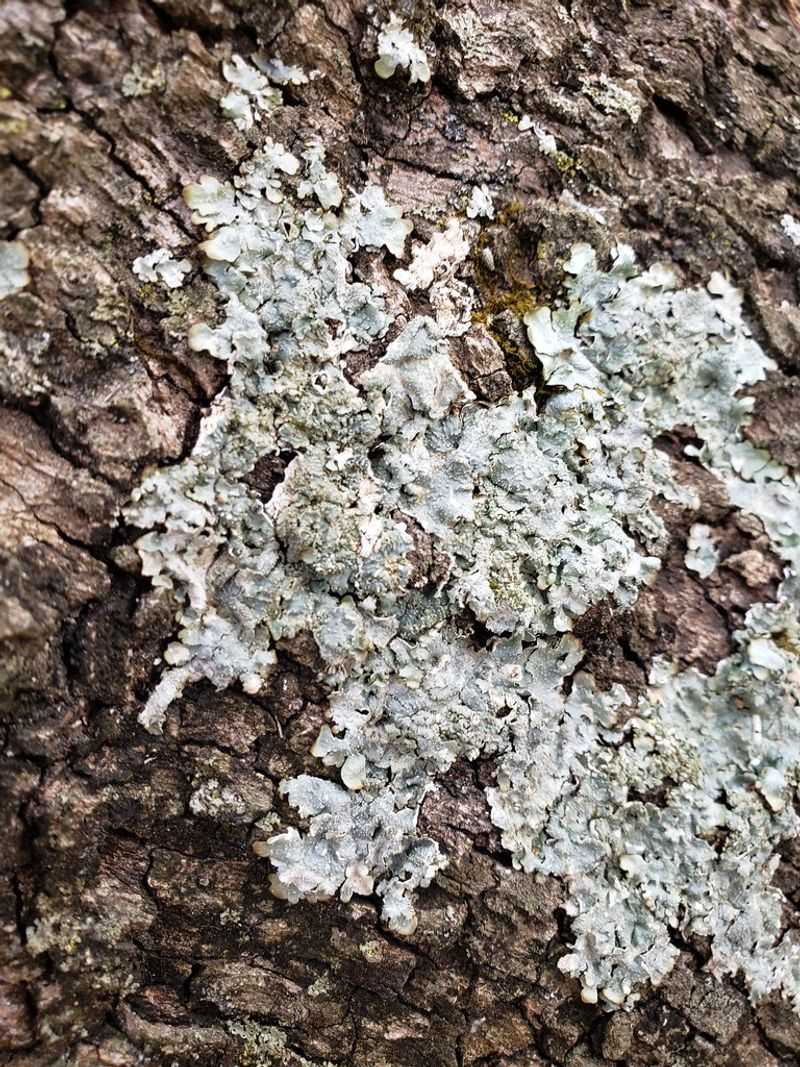
Blue-gray lobes sprinkled with tiny white dots and rough little bumps make this lichen look like a speckled bird egg. Punctelia rudecta, the rough speckled shield, often coats the trunks of hardwoods in rural and suburban woods.
Those white specks are pores called pseudocyphellae, which let air move into the lichen body for better gas exchange. The rough bumps are isidia, small outgrowths that snap off and start new colonies on nearby bark.
What caught my attention first was how often it grows right beside greenshield, like two neighbors comparing notes. Both species are moderately sensitive to sulfur dioxide, so finding them together usually signals reasonably healthy air.
Rough speckled shield has been reported making a return to New York City after many decades of scarcity. Its reappearance in city parks fits the larger story of lichens moving back as sulfur pollution declined.
Compared with candleflame, this species prefers air with less nitrogen, so it thins out near very busy roads. A trunk with plenty of speckled shield and little yellow suggests your air leans toward the cleaner side.
Mature oaks and maples in shady yards are its favorite homes, especially on the lower and middle trunk. Protecting older trees gives slow growers like this one the decades they need to spread across bark.
If you ask me, a simple notebook listing which lichens appear on each backyard tree is incredibly rewarding. Over several years, you may notice speckled shields arriving, which is a quiet win for your neighborhood air.
7. Beard Lichen
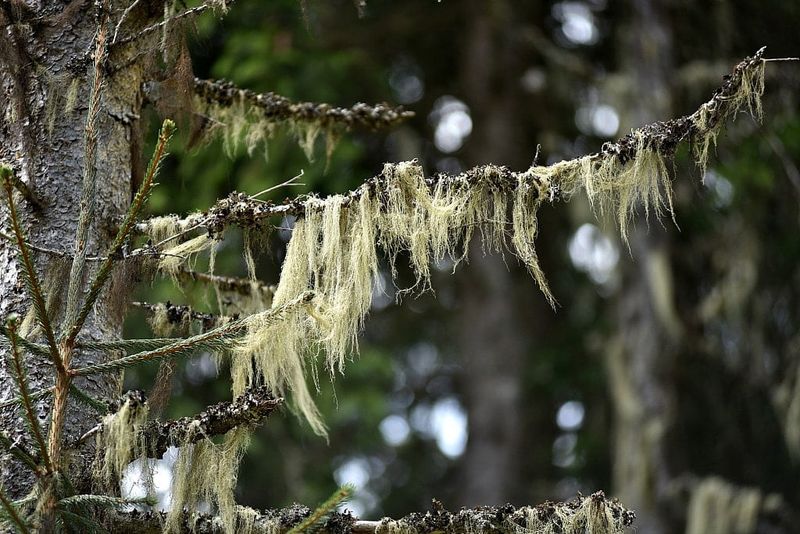
Pale green tufts dangling from twigs like tiny Spanish moss beards are the real celebrities of clean forest air. Usnea, nicknamed beard lichen or old man’s beard, grows as a shrubby tangle of thin branching strands.
Gently pull one strand apart, and a stretchy white cord appears in the center like elastic inside a cable. That central cord is the easiest way to confirm Usnea and separate it from look-alike hanging lichens.
Beard lichens are among the most pollution-sensitive lichens, reacting quickly to sulfur dioxide and other harmful gases. Abundant tufts usually point to clean, humid air, the kind found in Adirondack and Catskill forests upstate.
Long absent from New York City for many decades, beard lichen has reportedly been spotted there again in recent years. Scientists see small returns like this as hopeful hints that urban air has improved since the regulations of the 1970s.
Don’t make my mistake of expecting beard lichen on a busy street tree, because it rarely tolerates that environment. Look instead on twigs and branches in quiet woodlands, especially after windstorms knock down small limbs.
Fallen twigs are perfect for close study, since you can examine the strands without climbing or harming living trees. Birds sometimes tuck these soft fibers into nests, which makes sense given how springy and light they feel.
Finding beard lichen near your home is honestly a reason to celebrate the quality of the air you breathe. If it is missing, keep watching, because cleaner air may invite it back to your trees someday.