8 Low-Maintenance Ohio Shrubs That Bring Lasting Beauty With Little Effort
Ohio gardeners earn their summers.
You push through the gray stretch of winter and wait out a spring that cannot make up its mind. By the time the yard is finally ready to cooperate, the last thing you want is a lineup of shrubs that need constant attention just to look halfway decent.
Low-maintenance gets thrown around a lot in gardening circles, so let’s be straight about what it actually means here. These are shrubs that, once they settle in and establish, ask very little from you.
No aggressive pruning schedules, no finicky watering routines, no replanting every few seasons because they could not handle an Ohio winter. They show up, they fill out, and they earn their spot in the yard year after year.
Ohio’s climate is not exactly forgiving. Humid summers, hard freezes, and everything in between.
The shrubs on this list have the track record to back up the label, not just a tag at the garden center that says so.
1. Plant Buttonbush Where The Soil Stays Moist
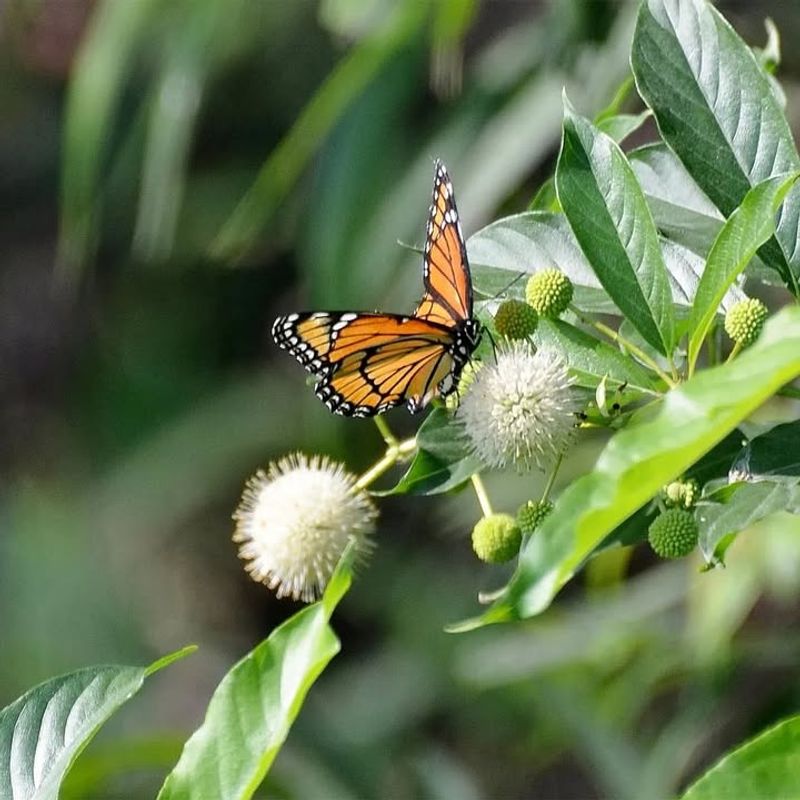
If you have a low spot in your yard where water pools after every spring rain and other shrubs just sulk, buttonbush might be exactly what you have been looking for.
Cephalanthus occidentalis is a native shrub that actually thrives in consistently moist to wet soils, making it a natural fit for rain gardens, pond edges, swales, and soggy corners where drainage is poor.
Most shrubs planted in those spots struggle within a few seasons, but buttonbush handles standing water with ease.
The flowers are one of the most distinctive features you will find on any native shrub.
Round, golf ball-sized white blooms appear in mid to late summer and attract bees, butterflies, and hummingbirds in impressive numbers.
Beyond the blooms, the seeds that follow provide food for waterfowl and songbirds well into fall and winter.
Mature buttonbush can reach six to twelve feet tall and wide, so give it plenty of room before planting. It is not a good choice for tight foundation spaces or dry, sunny borders with fast-draining soil.
Full sun to part sun brings the best flowering. In northern regions, buttonbush fits naturally along retention areas and lakeside properties where seasonal flooding is common.
Mulch the root zone after planting and water regularly through the first full growing season to help it settle in.
2. Choose Ninebark For Tough Native Structure
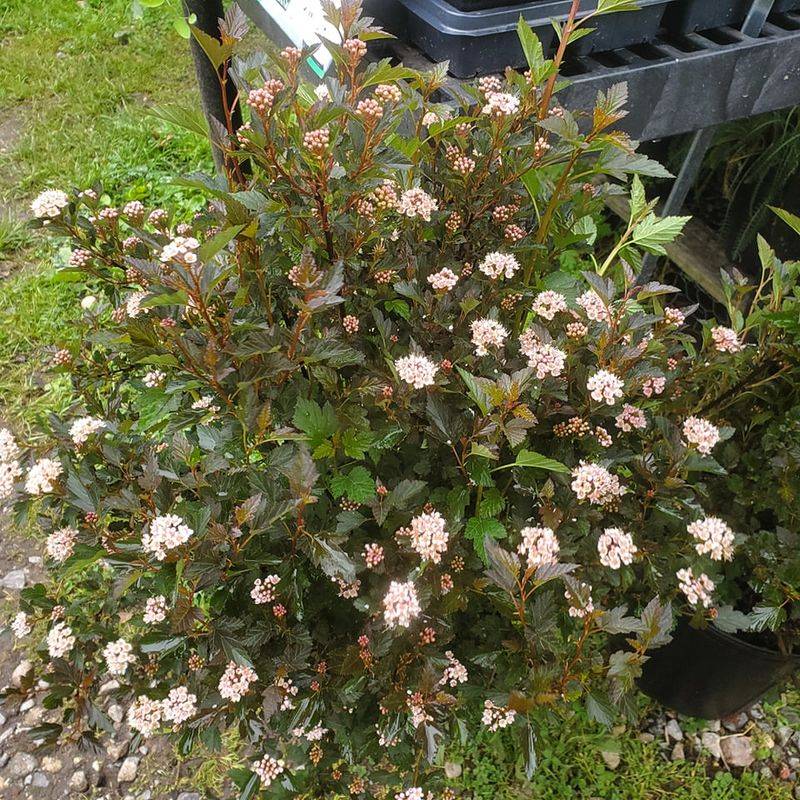
Some shrubs earn their place in the landscape not by being flashy, but by being dependable. Ninebark, known botanically as Physocarpus opulifolius, is exactly that kind of plant.
Native to Ohio and much of the eastern United States, ninebark offers multi-season interest through clusters of white or pale pink flowers in late spring.
Plus, it features attractive seed heads through summer, and peeling cinnamon-colored bark that adds texture to the winter garden when everything else looks bare.
One of the strongest selling points for homeowners is its adaptability. Ninebark can handle clay soil, moderate drought once established, and a range of light conditions from full sun to part shade.
Your Ohio Garden Changes Every Week. Your Plan Should Too.
Gardening in Ohio changes quickly throughout the season. Every Friday you’ll receive a simple weekly plan showing exactly what to plant, prune, fertilize, harvest, and protect so you never miss the right timing.
It is a solid choice for mixed shrub borders, property line screens, and naturalized areas.
Cultivars vary widely, with some staying compact at four to five feet and others stretching to ten feet or more, so always check the mature height and spread before buying.
Purple and bronze-leaved cultivars like Diablo and Coppertina have become popular in landscapes and add strong color contrast to beds through the growing season. Ninebark rarely needs heavy pruning, but a light shaping after flowering helps maintain a tidy form.
Central and western gardeners dealing with heavy clay will appreciate that ninebark rarely complains about compacted or poorly structured soils once it gets established.
3. Grow Black Chokeberry For Flowers Berries And Fall Color
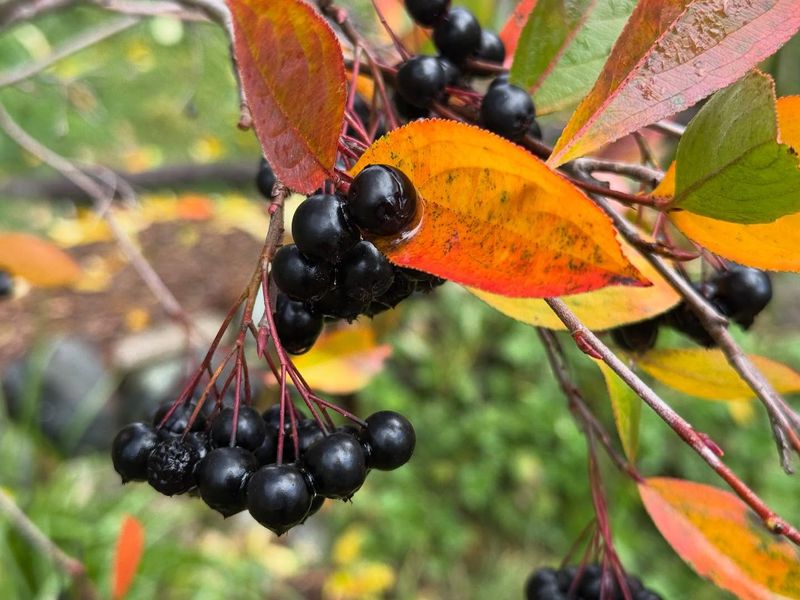
Few native shrubs pack as much seasonal value into a single plant as black chokeberry.
Aronia melanocarpa opens spring with clusters of small white flowers that attract early pollinators. It follows up with glossy dark berries through summer and fall, then closes the season with vivid red and orange foliage.
Birds, especially cedar waxwings and robins, are drawn to the berries once temperatures drop.
Black chokeberry handles a wide range of soil conditions, including the wet, poorly drained spots that challenge many ornamentals. It grows well in full sun to part shade, with the best fall color showing up in sunnier locations.
Mature plants typically reach three to six feet tall and spread gradually through suckers, which can be a real advantage in naturalized areas, slopes, or spots where you want to fill space without replanting every few years.
In formal beds or small foundation spaces, that suckering habit may need occasional management through simple pruning at the base.
Ohio State University Extension recognizes chokeberry as a strong native option for rain garden plantings and wildlife-friendly landscapes.
Give new plants consistent moisture through their first summer. Once established, black chokeberry is genuinely low-fuss when matched to a site with decent moisture and reasonable light.
4. Use Winterberry Holly For Bright Cold Season Interest
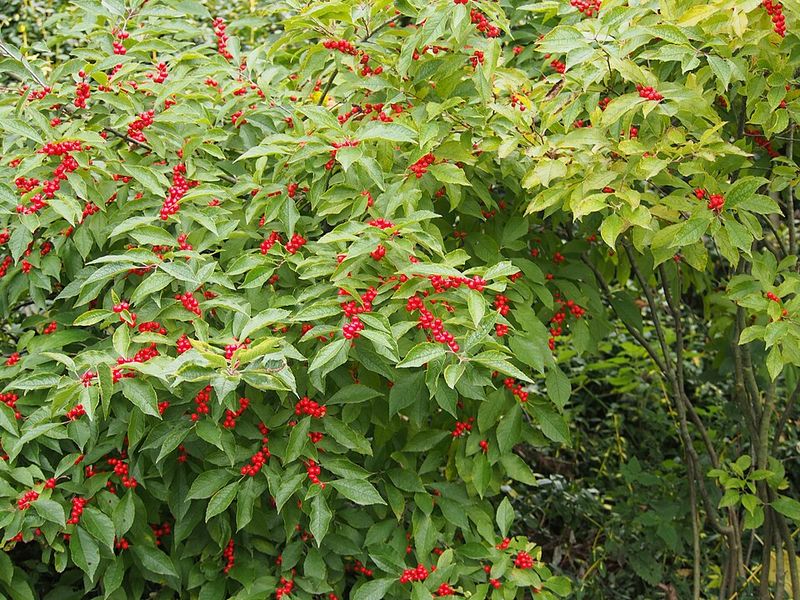
Walk past a winterberry holly in January and you will stop in your tracks.
When the leaves have dropped and most of the yard looks gray and dormant, Ilex verticillata lights up the landscape with dense clusters of brilliant red berries clinging to bare branches through the coldest months.
For homeowners who want something that earns its keep in winter, very few shrubs can compete with this native deciduous holly.
Winterberry thrives in moist to wet soils, making it a natural companion for rain garden edges, low spots, stream banks, and naturalized borders where the ground stays damp.
It grows well in full sun to part shade, though heavier shade tends to reduce berry production.
Mature plants can reach six to ten feet depending on the cultivar, so check the label before planting near foundations or tight spaces.
Here is the nuance that trips up many first-time buyers: female plants produce the berries, but they need a compatible male pollinator planted nearby to set fruit. Make sure the male and female cultivars you choose bloom at the same time.
Popular pairings like Jim Dandy with Red Sprite or Apollo with Sparkleberry are well-matched and widely available at nurseries. One male plant can typically pollinate several females within a reasonable distance.
Mulch well and water consistently through the first full season to help roots establish before winter arrives.
5. Add Smooth Hydrangea For Easy Native Blooms
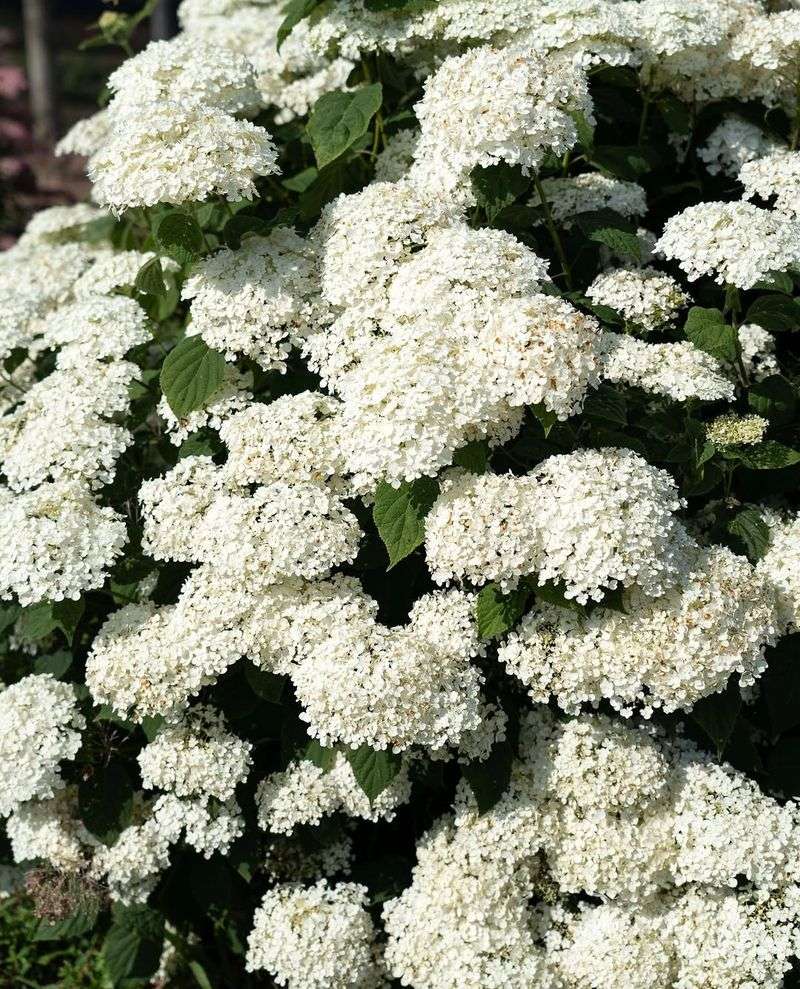
Smooth hydrangea is one of those plants that genuinely surprises people with how well it performs when placed in the right spot.
Hydrangea arborescens is native to Ohio and much of the eastern United States. Unlike some of its showier cousins, it tends to be forgiving and adaptable when matched to a site with part shade and consistent moisture.
The large, creamy white flower heads that appear in mid to late summer are a reliable highlight in any mixed border or woodland garden edge.
Part shade is where smooth hydrangea really shines in landscapes, especially during hot, humid summers when full sun can stress the plant and cause wilting even in moist soil.
Popular cultivars like Annabelle and Incrediball produce enormous flower heads that can get heavy and flop after a summer rainstorm.
Choosing a more compact cultivar or planting near supportive neighboring shrubs can help manage that.
Smooth hydrangea blooms on new wood, which means you can prune it back in late winter or early spring without sacrificing the season’s flowers. A hard cutback to about twelve inches in early spring encourages strong new growth and a tidy form.
Avoid planting in dry, exposed spots with full afternoon sun, particularly in central region where clay soils can bake hard in summer. Mulch generously and water through the first two growing seasons for the best long-term results.
6. Try Virginia Sweetspire For Fragrant Flowers And Fall Color
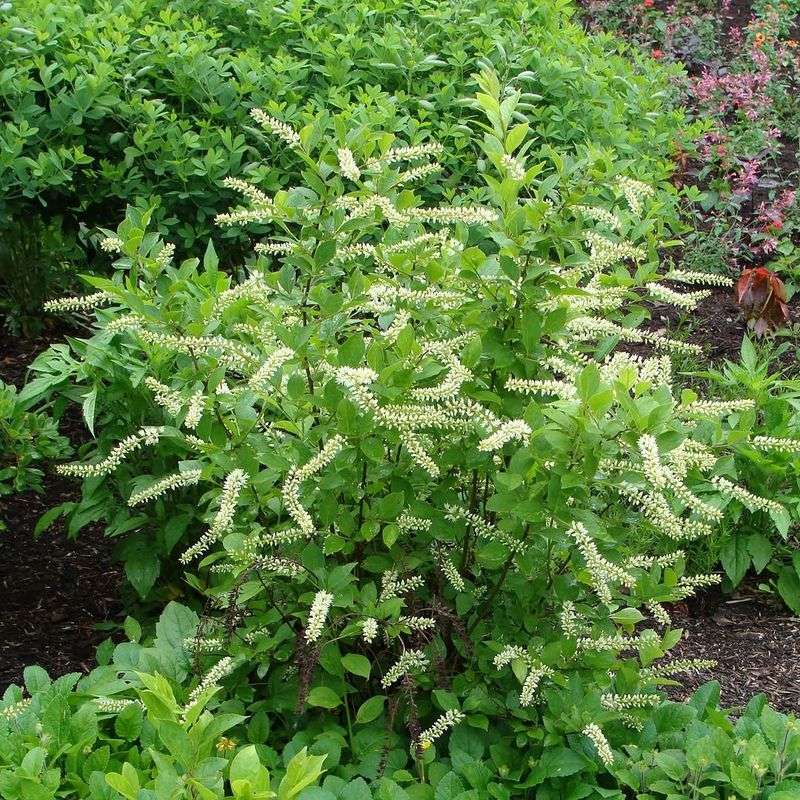
There is something quietly special about a shrub that earns attention in two completely different seasons.
Virginia sweetspire, Itea virginica, opens early to mid-summer with long, arching spikes of small white flowers that carry a gentle fragrance and draw pollinators reliably.
Then, as temperatures cool in fall, the foliage shifts into some of the most persistent and vivid red, orange, and burgundy color you will find on any native shrub in landscapes.
Virginia sweetspire handles moist, moderately fertile soils well and adapts to both full sun and part shade. It works particularly well along rain garden borders, stream edges, and low-lying areas where moisture is more consistent.
Unlike some moisture-loving shrubs, it also performs reasonably well in average garden soil as long as it does not dry out completely during summer heat.
Mature plants typically reach three to five feet tall with a similar spread, and they spread gradually through suckers. In naturalized areas or on slopes where coverage is the goal, that spreading habit is a genuine advantage.
In a small, formal bed, occasional pruning at the base keeps the plant contained without much effort. Extension and native-plant resources often recommend Virginia sweetspire as a strong native option for rain gardens and wet-tolerant shrub borders.
Give new plants regular water through their first full season and apply a two to three inch layer of mulch to hold soil moisture and moderate root temperature.
7. Let Spicebush Support Pollinators In Part Shade
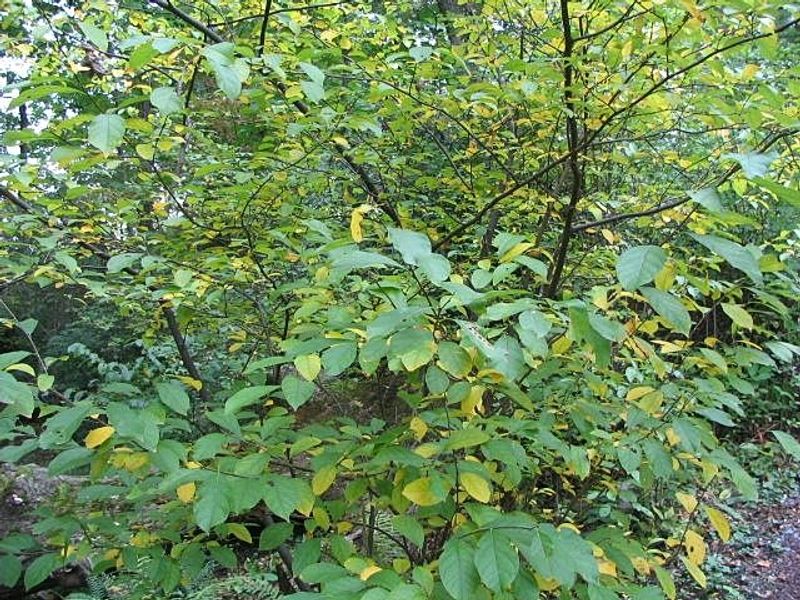
Before most trees even think about leafing out, spicebush is already doing something remarkable.
Lindera benzoin bursts into bloom in very early spring, covering its bare branches with clusters of tiny, bright yellow flowers. They provide critical early-season nectar for native bees and other pollinators emerging from winter.
In a shaded yard or along a woodland edge, that early bloom is genuinely striking against the bare gray-brown of late March.
Spicebush is native to Ohio and much of the eastern United States. It is well-adapted to the kind of part shade, moist woodland conditions found in older neighborhoods, creek corridors, and naturalized backyard edges.
The leaves release a spicy, aromatic scent when crushed, which is a fun detail that surprises most people the first time they notice it.
Wildlife value extends well beyond the flowers: spicebush is a documented host plant for the spicebush swallowtail butterfly. Female plants produce glossy red berries in fall that songbirds and migratory thrushes consume eagerly.
Male and female plants are needed for berry production, so planting at least one of each is worth planning ahead. Mature spicebush typically reaches six to twelve feet tall and wide, so give it adequate space in the landscape.
Avoid extremely dry, compacted soils where it will struggle. Spicebush fits naturally into informal, wildlife-friendly, or woodland-style gardens rather than tight formal foundation plantings.
8. Choose Oakleaf Hydrangea For Bold Leaves And Long Interest
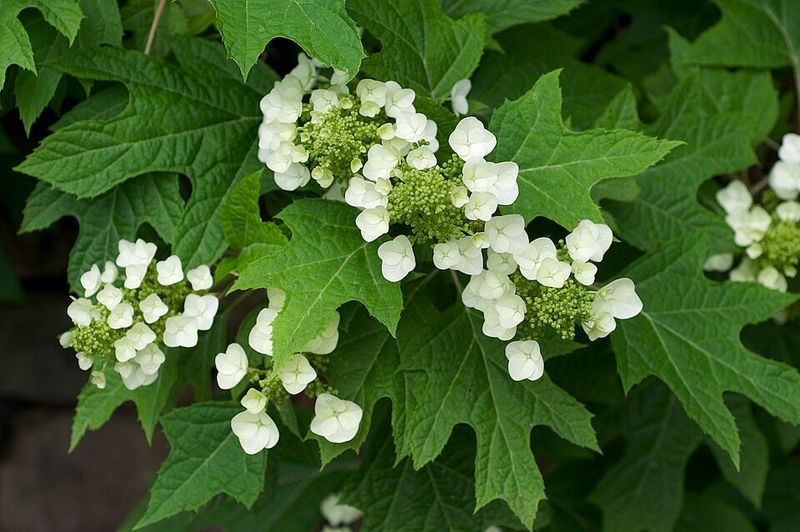
Bold is the right word for oakleaf hydrangea. The deeply lobed, oak-shaped leaves can reach eight inches or more across, the cone-shaped flower panicles open white in early summer and age to parchment and rose-pink through fall.
The exfoliating cinnamon-colored bark adds genuine winter interest when the plant is bare.
For gardeners who want a shrub that commands attention across multiple seasons, Hydrangea quercifolia delivers in a way few plants can match.
One important note: oakleaf hydrangea is native to the southeastern United States, not specifically to Ohio, which means it performs best in protected sites rather than exposed, harsh locations. In southern regions, it generally adapts well.
In northern regions and areas with heavy lake-effect wind exposure, choosing a sheltered spot near a building or within a mixed border gives the plant a better chance of thriving.
Well-drained soil is a firm requirement; soggy clay will cause root problems over time.
Oakleaf hydrangea blooms on old wood, which is the opposite of smooth hydrangea. Avoid heavy pruning in late fall or early spring because you will remove the buds set the previous season.
If shaping is needed, do it immediately after flowering in summer. Mature plants can reach six to eight feet tall and wide, so allow adequate space.
Part shade suits it well, especially in sites with hot afternoon sun and dry summer conditions.