8 Florida Walkway Border Ideas That Remain Neat Year-Round Without The Need For Replanting
Florida gardeners know the struggle. You spend a weekend planting a gorgeous walkway border, and three months later it looks like a battlefield.
It’s usually overgrown in some spots, bare in others, and crying out for attention you simply don’t have time to give. But what if your borders could look intentional and polished every single month of the year?
Florida’s climate is brutal on traditional landscaping choices, but it’s actually a paradise for the right plants and materials. You don’t need fussy plants to make a Florida walkway look expensive.
You need the ones that can take the heat, handle the humidity, and still look good when you forget about them for a few days.
These picks do exactly that. They stay neat, pretty, and polished without constant trimming, replanting, or babysitting. And they can make your walkway look like someone’s been secretly maintaining it for you.
1. Frame The Walkway With Heat-Tough Evergreens
Your small front walkway can look way nicer if you just pick the right plants. It’s always a good idea to go for evergreen shrubs that stay green and neat during Florida’s summer storms, winter dry times, and everything else in between.
Compact varieties are your best allies in this situation because they grow slowly, behave well, and require much less trimming than fast-growing hedges that seem to grow inches overnight.
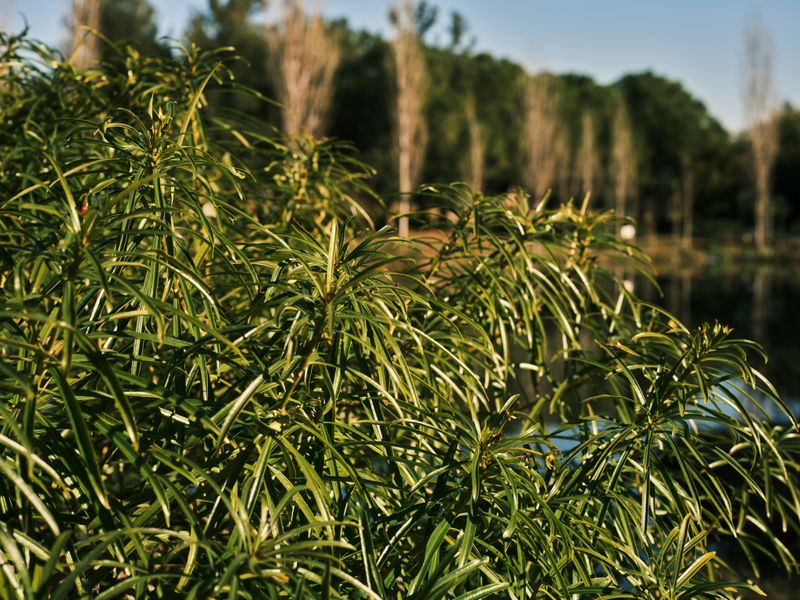
Podocarpus creates a beautiful formal evergreen edge, especially in narrow or upright shapes, but give it an inch and it will take a yard. If you skip regular pruning, this shrub will eagerly try to become a full-sized tree.
Dwarf Walter’s viburnum is a more laid-back native option, staying dense and tidy, managing drought once established, and thriving in full sun to partial shade without any fuss. Spacing is more important than most people think when planting an evergreen border.
Shrubs that are planted too close together have to compete for space, and this competition leads to uneven growth and annoying gaps over time. Always check the mature width of any shrub before planting and space them accordingly, even if the border seems a bit sparse at first.
A slow-growing compact variety planted at the right distance will look much neater after two years than an aggressive grower that is constantly pushing into the walkway. Don’t you agree?
2. Use Coontie For A Clean Tropical Border
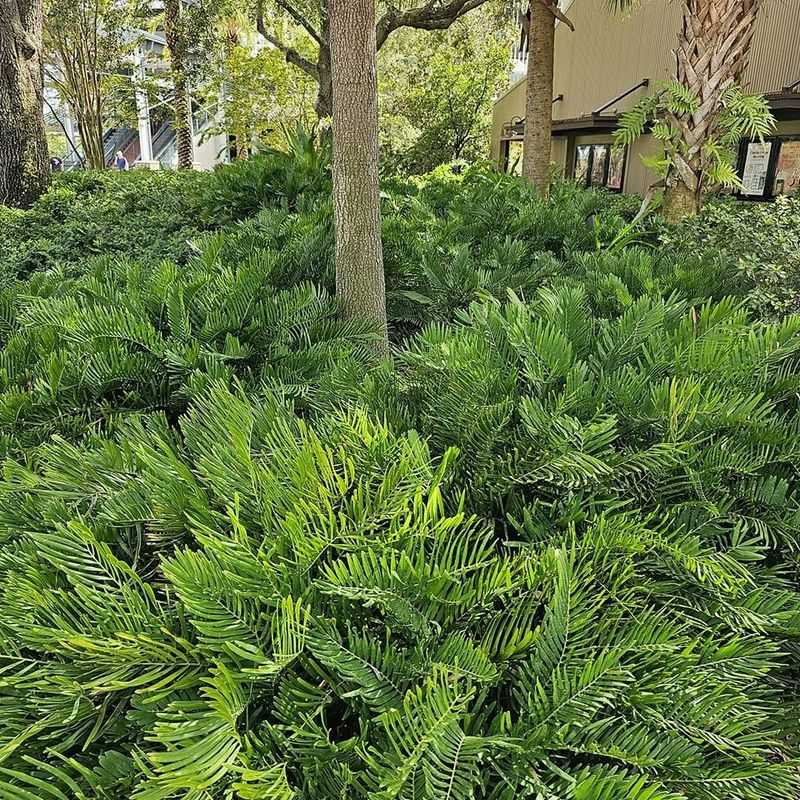
Few plants deliver as much year-round reliability as coontie, and yet it remains underused in walkway borders. Coontie is Florida’s only native cycad, a plant group that has existed for millions of years.
That deep-rooted toughness translates directly into a border plant that asks for very little once it finds its footing. Coontie stays low, typically reaching only two to three feet in height and spread, which makes it easy to predict and plan around.
Unlike many tropical-looking plants, it does not suddenly shoot up and block a pathway or push into foot traffic areas. Drought tolerance is one of coontie’s most valuable traits for walkway borders.
Your Florida Garden Changes Every Week. Your Plan Should Too.
Gardening in Florida changes quickly throughout the season. Every Friday you’ll receive a simple weekly plan showing exactly what to plant, prune, fertilize, harvest, and protect so you never miss the right timing.
After the first growing season, established plants handle dry periods without supplemental irrigation, which fits well with Florida-Friendly Landscaping principles. Coontie also performs in full sun or partial shade, giving homeowners flexibility along paths that pass through varying light conditions.
3. Line Sunny Paths With Muhly Grass
Sunny walkways can be tough environments. Reflected heat from concrete or pavers, limited soil depth near hardscape edges, and full afternoon sun create conditions where many plants simply struggle.
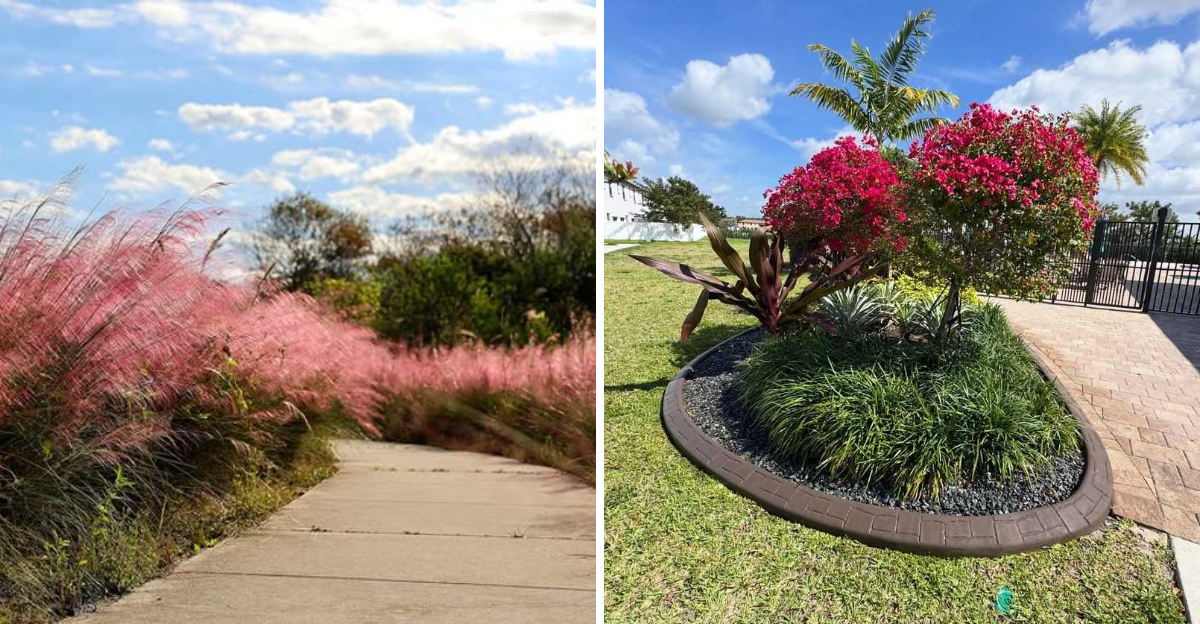
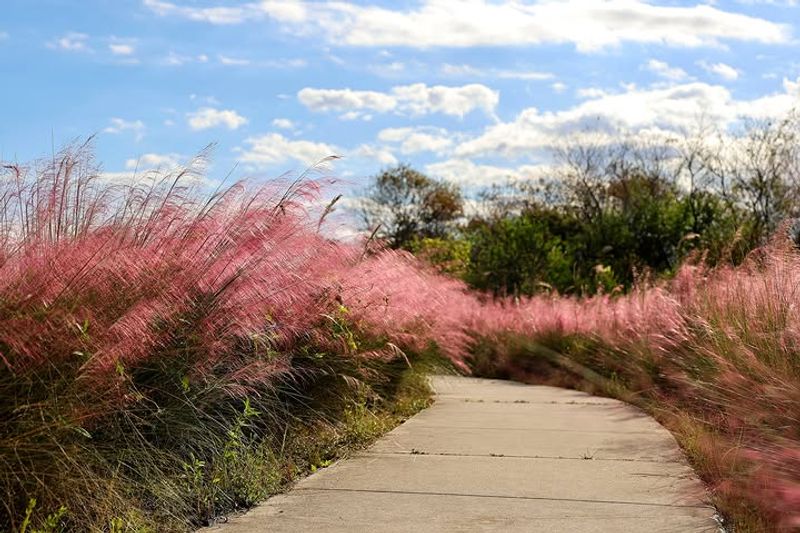
Muhly grass, a Florida native ornamental grass, meets those conditions without flinching. During most of the year, muhly grass forms a clean, arching clump of fine green blades that sit neatly along a path without flopping or spreading aggressively.
In fall, typically October through November. the plants produce a soft cloud of pink to rose-purple plumes that catch the light and add quiet seasonal interest. No replanting required to get that display year after year.
Mature clumps of muhly grass reach about three feet tall and two to three feet wide, so spacing plants correctly from the start prevents overcrowding. It’s a low-maintenance, drought-tolerant option once established, and it fits naturally into Florida-Friendly Landscaping designs.
It performs best in well-drained soil and full sun, making it a strong match for open, exposed walkway edges.
4. Keep Shade Borders Fresh With Wild Coffee
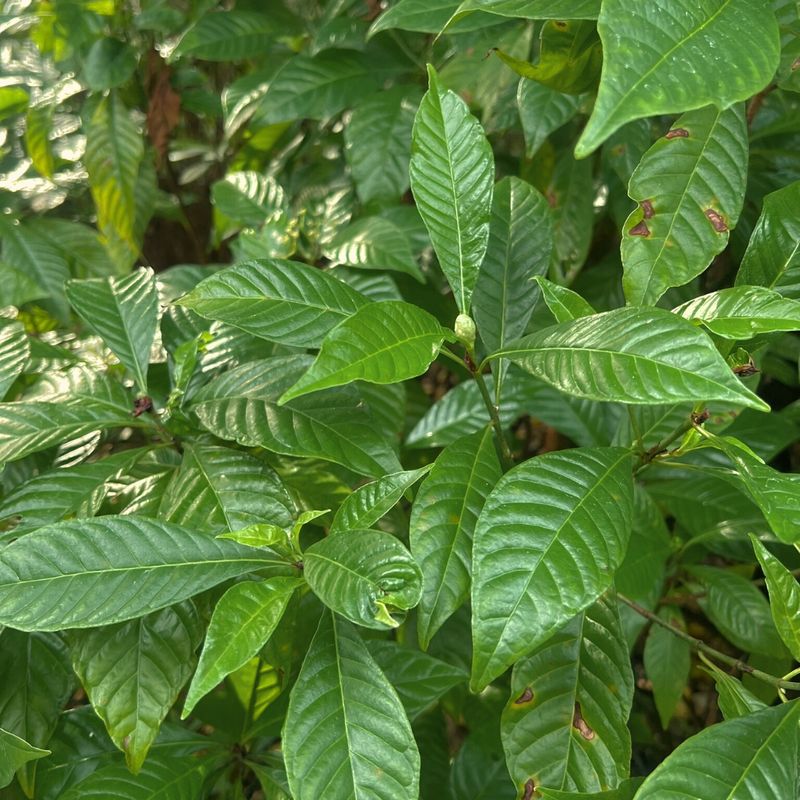
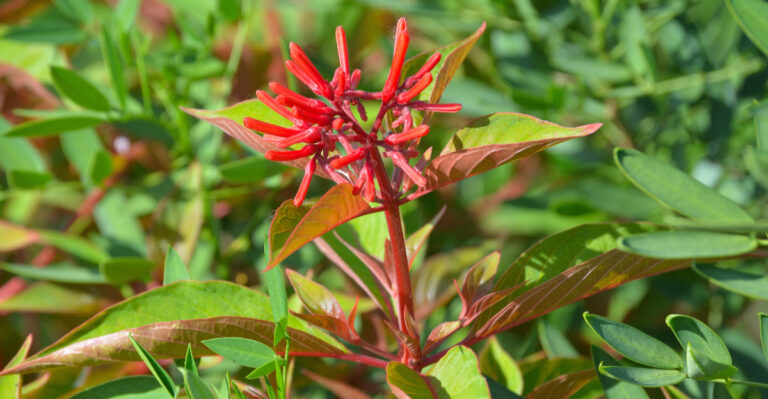
Shady paths can still look lush without constant fuss, and wild coffee is one of the best plants for proving that point. Native to South Florida and found naturally in hammock understories, wild coffee thrives in the kind of dappled or deep shade that discourages most other border plants.
Wild coffee grows as a medium shrub, typically reaching four to six feet tall, though it can be kept shorter with occasional light shaping. The leaves are dark, deeply veined, and have a polished look that reads as intentional and tidy rather than wild or weedy.
Small white flowers appear in spring and are followed by clusters of red berries that attract birds and add seasonal color to an otherwise shaded border.
From a maintenance standpoint, wild coffee is genuinely low-effort. It handles drought reasonably well once established, though it appreciates some moisture in shaded sites.
Because it grows at a moderate pace, it rarely requires aggressive trimming to stay in bounds along a walkway.
5. Create Crisp Edges With Stone And Mulch
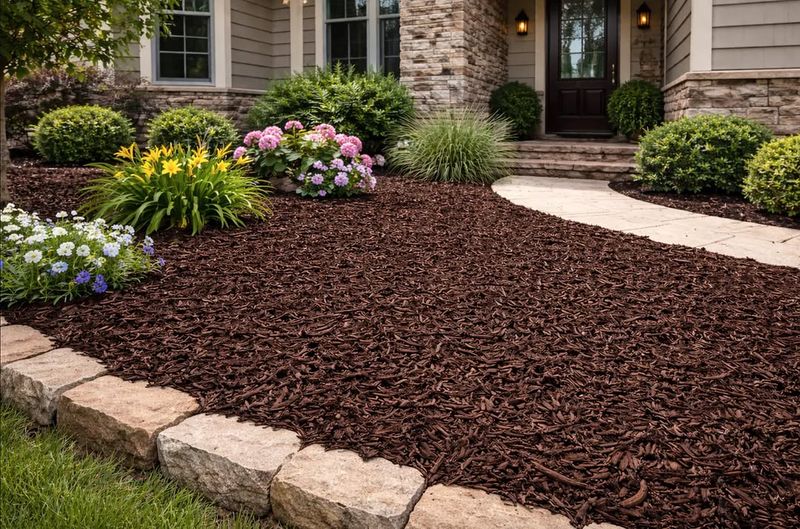
A neat border often starts before the first plant goes in, and sometimes the cleanest solution for a walkway edge involves very little plants at all. Stone edging, shell, gravel, and mulch create defined lines that hold their shape through rain, wind, and heavy foot traffic without any of the maintenance that plants require.
Hard edging is one of the most underrated tools in landscape design. Concrete edging benders, natural limestone, or manufactured stone borders physically separate the planting bed from the walkway surface.
Once installed, they prevent grass and weeds from creeping into the bed and keep mulch from washing onto the path during heavy summer rains.
That physical barrier alone reduces maintenance time significantly compared to soft edges that blur over time. Pine straw mulch is widely used in Florida landscapes because it stays in place better than some wood chips on sloped or rain-exposed areas.
A two to three inch layer of pine straw or shredded wood mulch over the planting bed suppresses weeds, retains soil moisture, and gives the border a finished, professional appearance between plants.
6. Pick Salt Tough Borders Near Coastal Paths
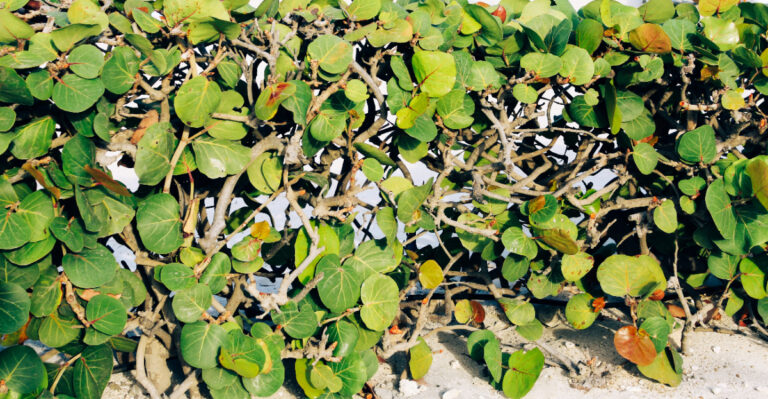
Coastal homes need borders that can handle more than sunshine. Salt spray, sandy soil, strong winds, and occasional flooding create a combination that eliminates most typical landscape plants quickly.
Walkway borders near the beach or bay require a completely different plant palette than inland yards, and getting that choice right means the difference between a border that thrives and one that constantly needs replacing.
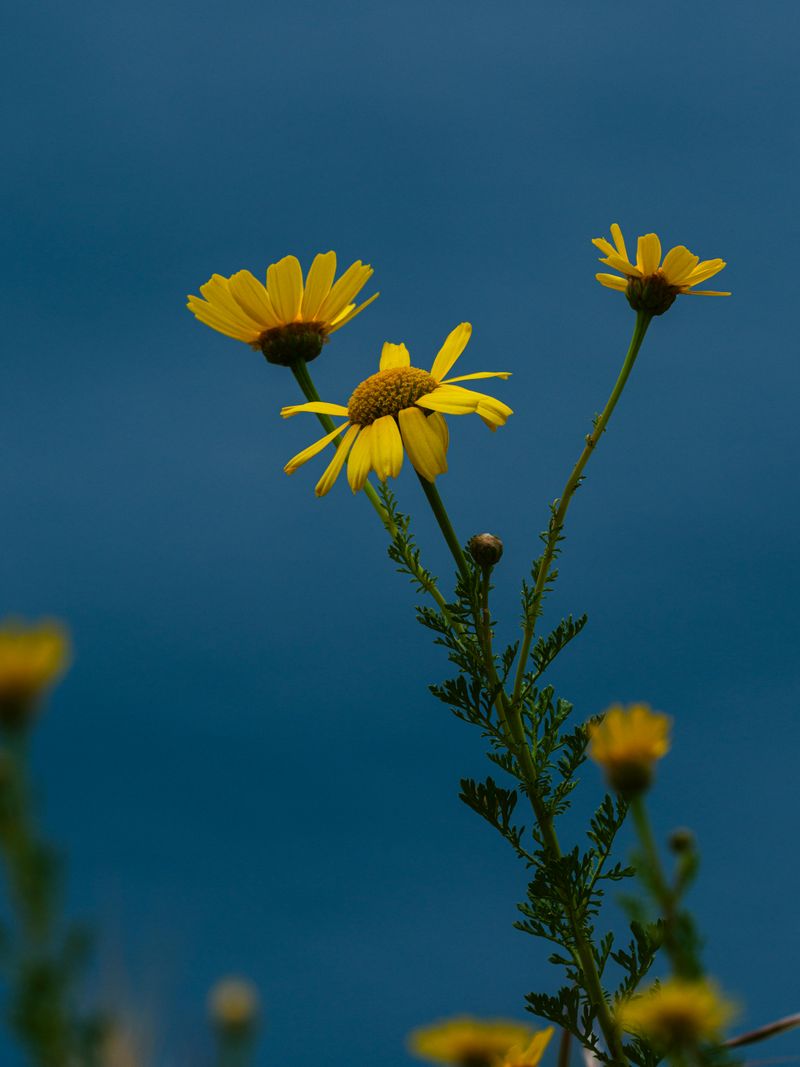
Sea oxeye daisy is a Florida native coastal plant that handles salt spray, sandy soil, and full sun with impressive resilience. It forms a low, spreading mound of gray-green foliage topped with cheerful yellow flowers and stays attractive through most of the year.
Railroad vine and gopher apple can work on larger coastal sites or dune-style plantings, but they spread quickly, so they are better for open areas than narrow formal walkways.
Materials like crushed shell, coral rock, or coarse gravel are great for coastal walkway borders. This is mainly because they drain quickly, resist salt damage, and usually need very little maintenance.
Combining a few tough native plants with generous shell mulch or gravel edging creates a coastal path border that looks right at home in its environment and stays neat without any seasonal fuss or replanting after storms roll through.
7. Repeat One Plant For A Designer Look
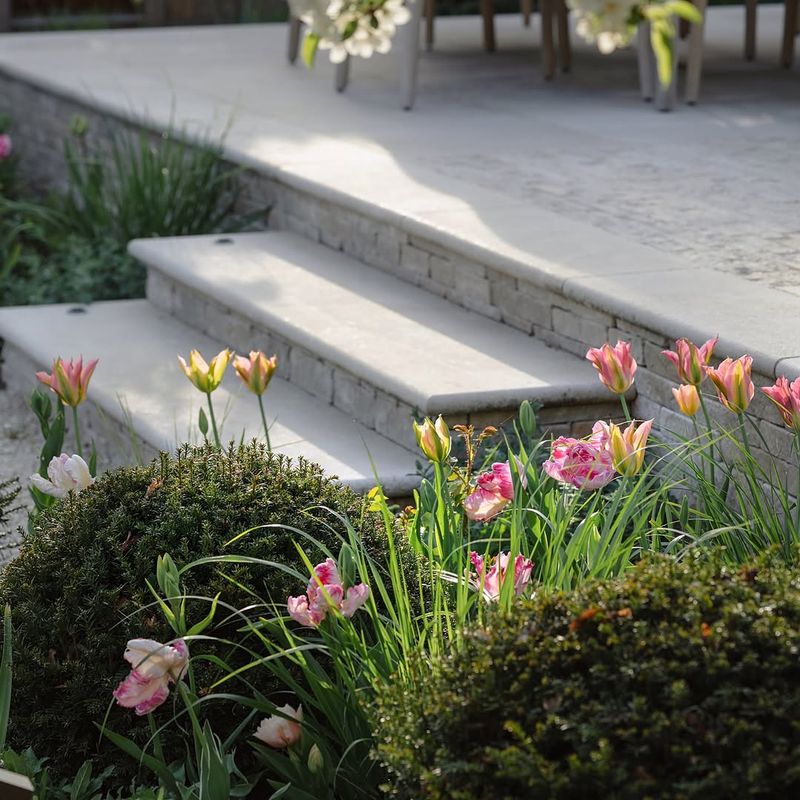
Some yards need structure more than color, and the simplest way to achieve a clean, designed look along a walkway is to pick one reliable plant and repeat it. Good design, it turns out, is all about staying on pattern.
Professional landscape designers use repetition constantly because it creates visual rhythm, makes a space feel intentional, and reduces the chaos that comes from mixing too many different plants in a narrow border. Choosing one plant means you only need to learn the care requirements, spacing needs, and mature size of a single species.
Maintenance becomes more consistent because every plant in the border behaves the same way and responds to the same schedule. That simplicity pays off in a walkway border that looks polished without requiring a lot of decision-making throughout the year.
For example, Coontie planted at even three-foot intervals creates a formal, tropical feel along a shaded or sunny path.
Spacing is the detail that makes or breaks a repetition planting. Measure the mature spread of the plant you choose, then space each plant at that distance to allow full natural development without crowding.
Within two to three growing seasons, a properly spaced single-species border fills in beautifully and holds its neat, designed appearance year after year with minimal intervention from you.
8. Plan For Mature Size Before Planting
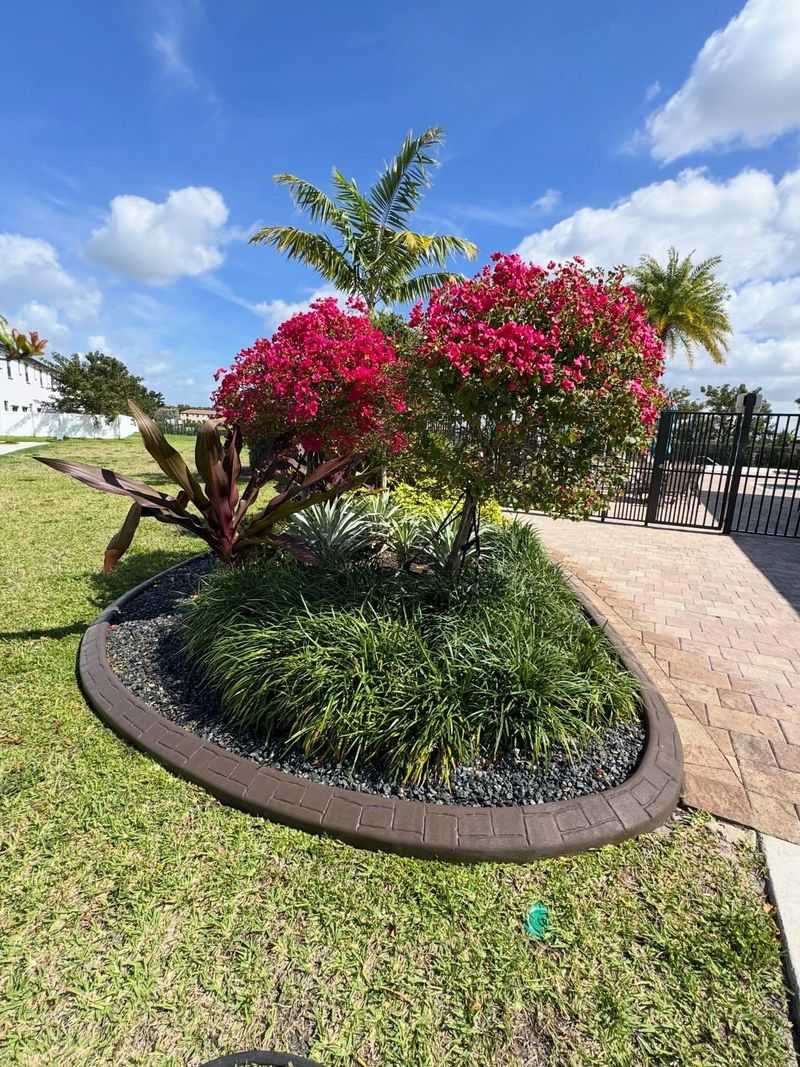
Right plant, right place is one of the most repeated principles in Florida-Friendly Landscaping, and nowhere does it matter more than along a walkway. A border that looks tidy in year one can become a constant battle by year three if the plants were chosen without checking how wide and tall they actually grow at maturity.
Overgrown borders push into walkways, block entry doors, and require aggressive pruning that stresses plants and creates more work. So, before buying any plant for a walkway border, measure the available planting width between the path edge and the nearest structure, fence, or lawn area.
Compare that number against the mature spread listed for the plant. If the border space is eighteen inches wide, a plant with a four-foot mature spread will never look right, no matter how often it gets trimmed.
Sunlight is equally important. A plant rated for full sun placed in afternoon shade will stretch, thin out, and lose its compact shape over time.
A shade-loving plant placed in full sun can show stress, leaf scorch, or poor growth that makes the border look neglected. Matching light requirements to the actual conditions of the walkway site is a step that saves significant frustration later.
Taking time to plan mature size and light exposure needs before the first plant goes in the ground is the single most effective thing a homeowner can do to keep a walkway border neat for years without constant replanting or correction.