Missouri Rules And Tips For Removing A Boundary Tree

A boundary tree can turn into a legal headache long before anyone touches a saw. One wrong cut on a shared trunk might cost more than the tree itself was ever worth.
Missouri courts have handled their fair share of arguments over branches, roots, and property lines. The details of who owns what, and who covers the damage, rarely match what most homeowners assume going in.
Maybe the tree has stood there since before the fence went up, or maybe it showed up as a surprise after a new survey. Either way, the rules around ownership and removal turn out to be far more specific than a quick online search would suggest.
A single overgrown branch can shift from a minor annoyance into a full-blown dispute with a neighbor almost overnight. Getting familiar with the actual legal framework first is what keeps that shift from happening at all.
What Legally Counts As A Boundary Tree In Missouri
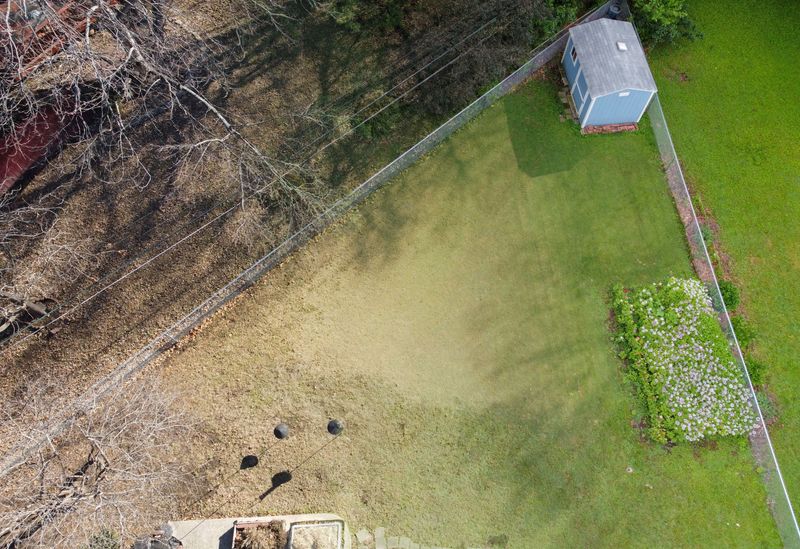
Not every tree near a fence is a boundary tree. Location is everything when the law gets involved.
A boundary tree in Missouri is one whose trunk straddles the property line. Both neighbors technically own that tree together.
If the trunk sits entirely on one side, it belongs to that landowner alone. Even if branches hang far over the neighbor’s yard, ownership follows the trunk.
Courts look at where the trunk grows from the ground. Survey maps and property plats are the best evidence for this determination.
A tree leaning heavily toward one yard does not change ownership. Only the trunk’s base location at ground level matters legally.
Knowing this distinction saves you from making a costly mistake. Many people assume a shared fence means a shared tree, but that assumption is wrong.
Missouri courts generally point to trunk location as the deciding factor. Get clarity on this before any removal conversation starts with your neighbor.
Misidentifying a boundary tree can lead to serious legal liability. One wrong cut on a neighbor’s tree could cost you triple the tree’s value under state law.
Walk your property line carefully and note the large trees nearby. A small step to one side can mean a completely different legal situation.
Understanding what qualifies as a boundary tree is the foundation for everything else. Get this part right, and the rest of the process becomes much clearer.
Shared Ownership And Why Consent Matters Before Removal
Shared ownership sounds simple, but it carries real weight. Both neighbors must agree before anything happens to a boundary tree.
Think of it like owning a car with someone else. You cannot sell it, scrap it, or repaint it without the other owner’s approval.
Missouri law treats boundary trees as jointly owned property. Neither party can remove or significantly alter the tree without mutual consent.
Skipping that conversation and cutting the tree anyway opens you up to a lawsuit. Your neighbor does not need to prove you acted with bad intent to win damages.
Your Missouri Garden Changes Every Week. Your Plan Should Too.
Gardening in Missouri changes quickly throughout the season. Every Friday you’ll receive a simple weekly plan showing exactly what to plant, prune, fertilize, harvest, and protect so you never miss the right timing.
Even if the tree is diseased, consent still matters. Document the tree’s condition and get written agreement before hiring anyone.
Some neighbors are surprisingly cooperative when approached respectfully. A calm conversation about safety or aesthetics often leads to a quick agreement.
Others may refuse even when the tree poses obvious risks. In those cases, you may need a mediator or legal counsel to move forward.
Mediation is cheaper and faster than going to court. Some Missouri counties offer low-cost dispute resolution services that can help in situations like this.
Always approach your neighbor first and listen to their concerns. Sometimes people just want to feel included in the decision-making process.
Consent is not just a legal formality here. Getting buy-in from your neighbor protects your relationship, your wallet, and your property for years to come.
Triple Damages Under Missouri Law For Unauthorized Cutting

Missouri does not play around when it comes to unauthorized tree cutting. The financial penalty can hit three times the tree’s actual value.
This rule comes from Missouri Revised Statute 537.340. It allows courts to award triple damages when someone wrongfully cuts timber on another person’s land.
A mature oak or walnut tree can be appraised at thousands of dollars. Triple that number and the financial hit can be significant.
Some people assume a small trim will go unnoticed. Neighbors often notice immediately, and photos taken before and after can be powerful courtroom evidence.
Ignorance of the law is not a valid defense in these cases. Judges have little sympathy for someone who acted without checking the rules first.
Even hiring a contractor does not fully protect you from liability. If you ordered the work, you are responsible for the outcome.
The triple damages rule discourages people from taking shortcuts with someone else’s property. It sends a clear message that trees have real monetary and ecological value.
Appraisers use trunk diameter, species, age, and location to calculate tree value. A single large boundary tree in a nice neighborhood can appraise surprisingly high.
Before any cutting begins, consult an attorney familiar with property law. A one-hour legal consultation is far cheaper than a triple-damages lawsuit.
The stakes are real and the law is clear. Protect yourself by doing things the right way from the very start of the process.
Your Rights To Trim Branches That Cross Onto Your Property
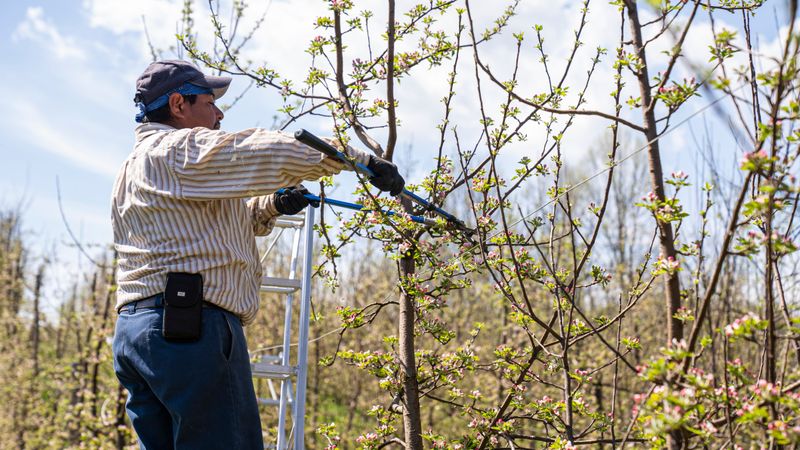
Branches hanging over your yard are annoying, and you do have options. Missouri law gives you the right to trim encroaching branches up to the property line.
You do not need your neighbor’s permission to prune what hangs over your side. That airspace above your yard is legally yours to protect.
That right comes with a limit, though. Cutting so aggressively that the tree cannot recover crosses into a different legal territory, one where you could end up owing your neighbor for the damage.
Ownership of the tree itself stays with whoever’s side the trunk and roots grow from. Overhanging branches give you permission to trim, not a claim on the tree as a whole.
Keep all trimmed branches and debris on your side of the line. Tossing cut limbs back into your neighbor’s yard is considered dumping in some jurisdictions.
Take photos before and after any trimming work. Good documentation protects you if a dispute arises later about who caused what damage.
Trimming is your legal right, but exercising it wisely keeps the peace. A thoughtful approach protects both your property and your relationship with the people next door.
Local Ordinances Can Add Extra Restrictions
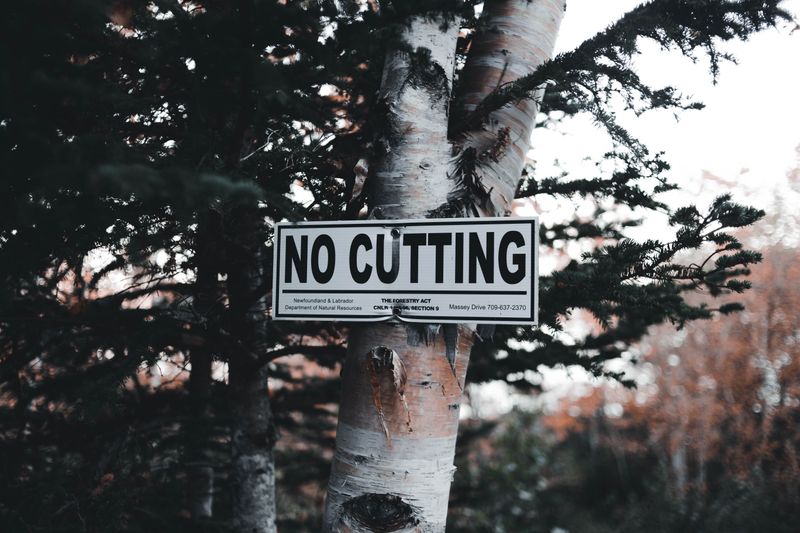
State law sets the baseline, but your city may have stricter rules. Local ordinances can add layers of protection that go well beyond what Missouri statutes require.
Many Missouri cities have tree preservation codes that apply to specific species. Oaks, walnuts, and native trees often receive special protection under local rules.
Some municipalities require a permit before removing any tree above a certain trunk diameter. Skipping the permit process can result in fines even if the tree is entirely on your property.
Historic districts and conservation neighborhoods sometimes have the toughest restrictions. Removing a tree in those zones without approval can trigger serious penalties.
Contact your local city or county planning office before making any moves. A quick phone call can tell you exactly what approvals are needed in your area.
HOA rules add yet another layer on top of local ordinances. Many homeowners associations have their own tree policies that require board approval for removal.
Violating HOA guidelines can lead to fines or forced replanting at your expense. Check your HOA documents carefully before scheduling any tree work.
Rural areas outside city limits may have fewer restrictions overall. However, county regulations still apply in many unincorporated parts of the state.
Avoid assuming that because a tree is on your property, you can do whatever you want with it. Local rules exist to protect neighborhood character and environmental quality.
A small amount of research upfront saves major headaches later. Knowing your local code puts you in a position of confidence before the conversation even starts.
A Tree Line Can Legally Become The New Boundary

A row of trees along a fence line looks like a simple landscape feature. Over time, though, that tree line can become a legally recognized property boundary.
This concept is called boundary by acquiescence. It happens when both neighbors treat a tree line as the boundary for a long period of time.
Missouri courts have recognized this doctrine in property disputes. If both parties act as though the tree line is the boundary, a court may legally establish it as such.
The required time period varies, but long-term consistent behavior matters most. Decades of treating that tree line as the edge of your land can shift legal ownership.
This situation often surprises new homeowners who buy a property without a fresh survey. What looks like a decorative row of trees might actually define where your land ends.
Adverse possession is a related but separate concept. It requires open, continuous use of land for ten years under Missouri law to potentially claim ownership.
Both doctrines highlight why surveys and title research are so important. A professional survey reveals the true legal boundary regardless of where trees or fences sit.
If you suspect a tree line has become a de facto boundary, consult a real estate attorney. Acting without legal clarity could mean accidentally removing trees on land that is not yours.
This is one of the trickier areas of property law for homeowners. Getting professional guidance early prevents you from making a mistake that is very hard to undo.
Get A Survey And An Arborist Assessment Before Taking Action

Two professionals can save you from an expensive mistake. A licensed surveyor and a certified arborist are worth every penny before any removal begins.
A land survey gives you the exact legal boundary of your property. Without it, you are guessing, and guessing wrong can cost you triple damages in court.
Surveys use recorded plats, GPS coordinates, and physical markers to pinpoint property lines. The result is a legal document you can rely on and reference in any dispute.
An arborist assessment tells you the condition and value of the tree. This matters both for safety reasons and for understanding potential financial liability.
A certified arborist can identify disease, structural weakness, or root damage that justifies removal. That professional opinion carries weight if you ever need to defend your decision legally.
Arborists can also suggest alternatives to full removal. Sometimes strategic pruning or cabling extends a tree’s life and resolves the problem without conflict.
Both professionals provide written reports you can share with your neighbor. Documentation builds trust and shows you are acting in good faith, not just in self-interest.
Survey costs in Missouri typically range from a few hundred to over a thousand dollars. Arborist consultations are usually much less and are often worth requesting first.
Skipping these steps to save money almost always costs more in the long run. One lawsuit or neighbor dispute can quickly outweigh whatever those savings were worth.
Knowledge is your best protection here. Go in informed, documented, and prepared, and the entire process becomes far more manageable from start to finish.
Put Any Agreement With Your Neighbor In Writing

A handshake deal feels friendly, but it does not offer legal protection. Putting your boundary tree agreement in writing is the smartest final step you can take.
Verbal agreements about property are notoriously hard to enforce in court. Memories fade, people move away, and stories change when money is involved.
A written agreement should include the tree’s location, the agreed action, and cost-sharing details. Both parties should sign and date the document in front of a witness.
You do not need a lawyer to draft a basic neighbor agreement. A clear, plain-language document that both parties understand is often enough for simple situations.
However, for high-value trees or complex situations, legal review is a good investment. An attorney can ensure the agreement holds up if challenged later.
Include a clause about who handles cleanup and debris removal. Small details like this prevent arguments after the work is already done.
Note the name of the tree service you both agreed to hire. Having that contractor detail in writing avoids disputes about who authorized the work.
Keep a copy of the agreement in a safe place after signing. If the property ever sells, this document becomes part of the transaction history.
Future owners benefit from knowing what agreements were made about boundary trees. A paper trail protects everyone who comes after you as well.
Removing a Missouri boundary tree the right way means finishing strong with solid documentation. A written agreement is the clean, confident close to a process done properly from the start.