Most Arizonans Are Clueless About This Desert Vine’s Power — It Feeds More Pollinators Than Any Ornamental
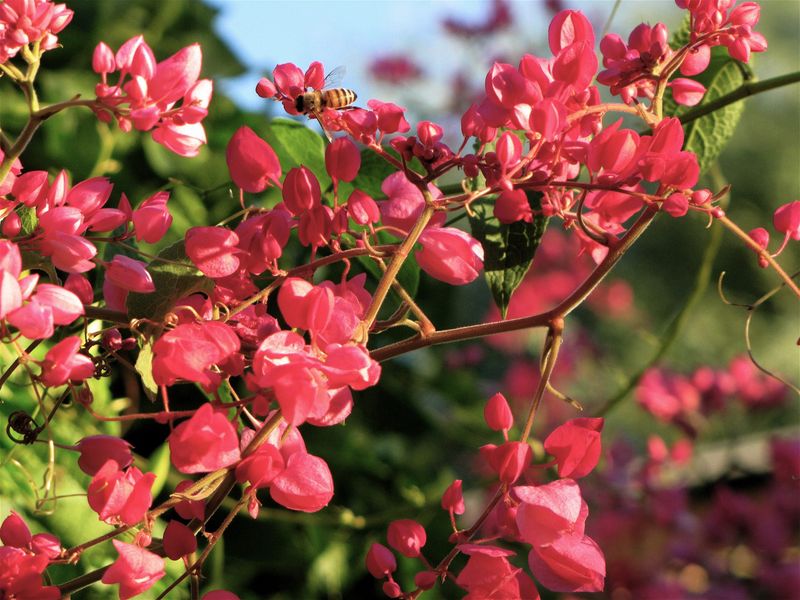
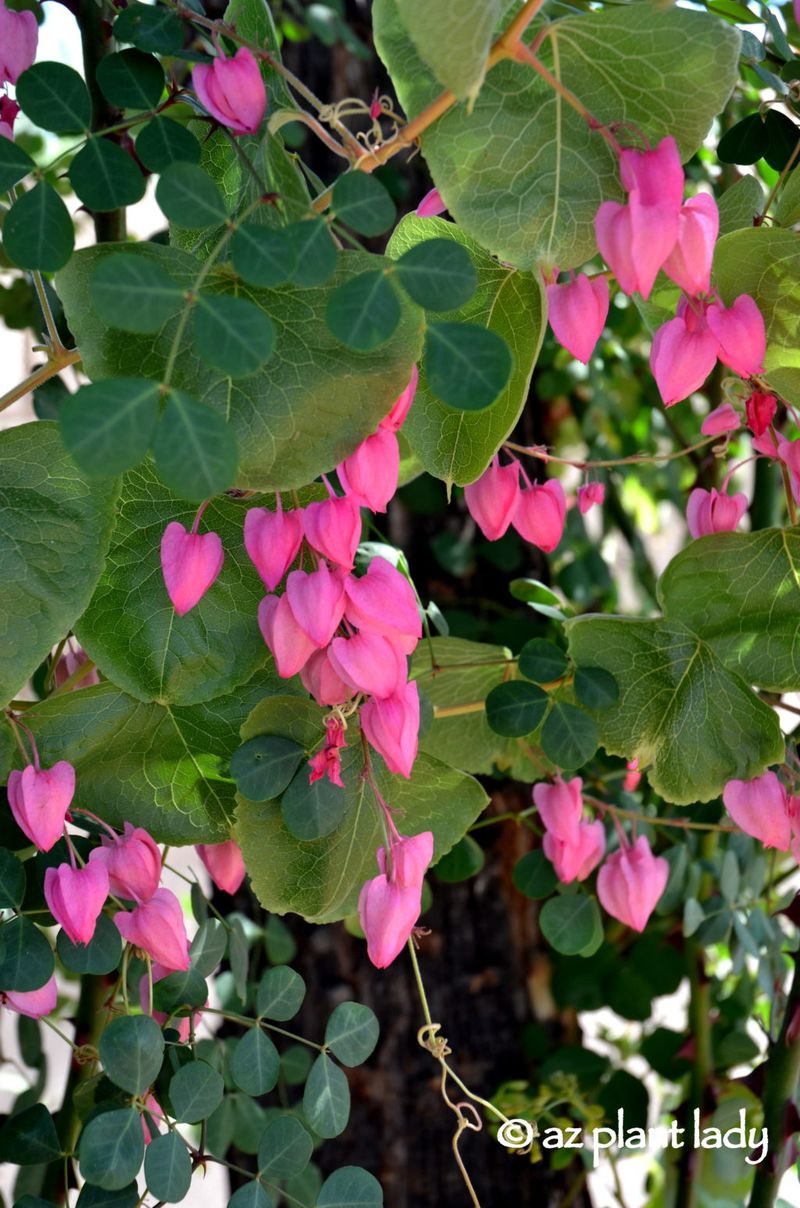
Queen’s wreath, also called coral vine or Antigonon leptopus, is a fast-growing vine that thrives in Arizona’s brutal summer heat and produces bright pink flowers just when most other plants have given up. What makes it stand out is the steady stream of bees and other insects it draws during late summer and early fall, a time when blooms are scarce across the low desert.
Knowing what this vine can realistically offer, and what it demands in return, helps you decide whether it belongs in your yard.
Queen’s wreath draws several kinds of flower visitors
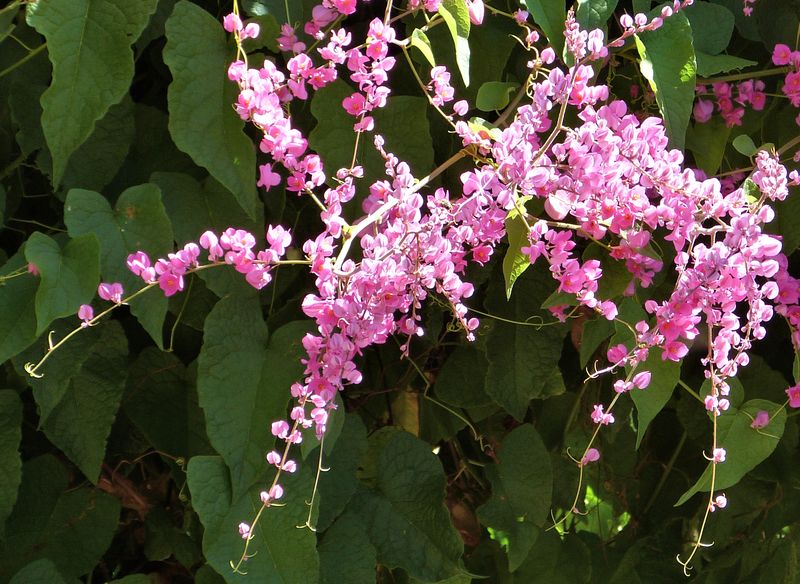
Queen’s wreath, botanically known as Antigonon leptopus, produces clusters of bright pink flowers that attract a noticeable range of insects. The Arizona Native Plant Society notes that the vine is very attractive to bees, and birds have also been recorded as wildlife visitors.
A published pollination study documented an even wider cast of insect visitors on the flowers, including bees, wasps, flies, butterflies, and thrips. Not every insect that lands on a flower pollinates it, and the study identified bees specifically as key players in moving pollen from flower to flower.
That study was not conducted in Arizona, and it did not compare Queen’s wreath against other ornamental plants. So while the documented visitor list is genuinely diverse, it cannot be used to rank the vine above other garden plants on pollinator value.
What you can reasonably expect in a Phoenix-area or low-desert yard is a vine that bees find appealing, particularly during its late-season bloom window when other nectar sources are winding down.
Its late-season flowers suit low-desert heat
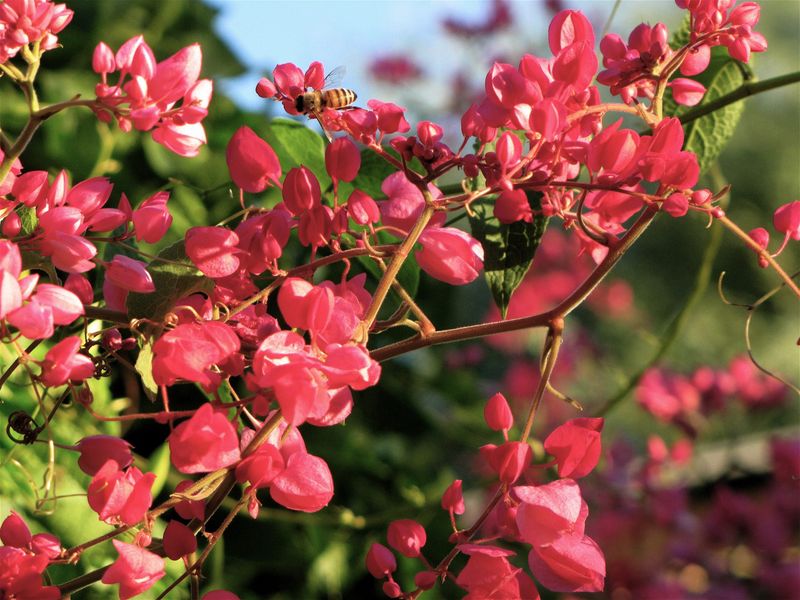
Most flowering vines slow down or stop entirely once Phoenix temperatures climb past 100 degrees. Queen’s wreath does the opposite.
University of Arizona Cooperative Extension describes it as fast-growing, thriving in full sun and high heat, and producing flowers through late summer and into early fall.
That timing is one of its clearest practical advantages for low-desert gardeners. Bees and other flower visitors are still active in September and October, but the number of blooming plants drops sharply after monsoon season fades.
A vine that peaks right in that gap fills a real need in the garden calendar.
Queen’s wreath performs best in the Phoenix metro and other low-desert areas where summers are long, hot, and dry. Gardeners in higher-elevation parts of Arizona, where frost arrives earlier and summers are cooler, may find it less reliable.
If your yard gets full sun and summer temperatures regularly push past 100 degrees, this vine is well matched to those conditions. Plan for it to grow vigorously once it settles in, and give it a support structure before the growing season begins.
Low water use still requires establishment irrigation
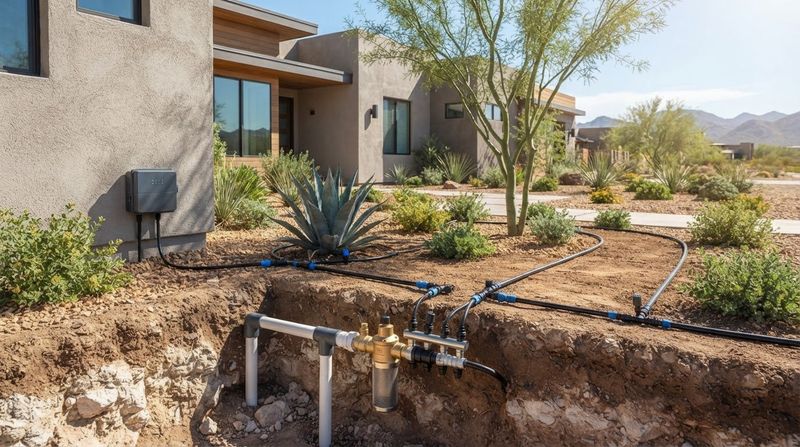
Calling Queen’s wreath a low-water vine is accurate but needs context. The Arizona Department of Water Resources low-water-use plant list places coral vine in relative water-use category 2, which means low compared with other plants on that list, not zero irrigation required.
Your Arizona Garden Changes Every Week. Your Plan Should Too.
Gardening in Arizona changes quickly throughout the season. Every Friday you’ll receive a simple weekly plan showing exactly what to plant, prune, fertilize, harvest, and protect so you never miss the right timing.
New plantings need regular watering during their first two to three years while roots spread deep enough to handle dry stretches on their own. Skipping that establishment period can stress or set back even a tough desert-adapted vine.
Once established, you can scale back irrigation significantly, but occasional deep watering during the hottest and driest stretches still helps maintain steady growth and flowering.
One counterintuitive point worth knowing: overly rich or consistently moist soil can push the plant toward lush foliage at the expense of flowers. Queen’s wreath actually tends to bloom more freely when conditions lean lean and warm rather than fertile and wet.
If you are growing it primarily for its pollinator appeal, resist the urge to pamper it with extra water or fertilizer once it is settled in. Average desert soil and a sensible watering schedule are usually the right combination.
Give this vigorous vine room and sturdy support
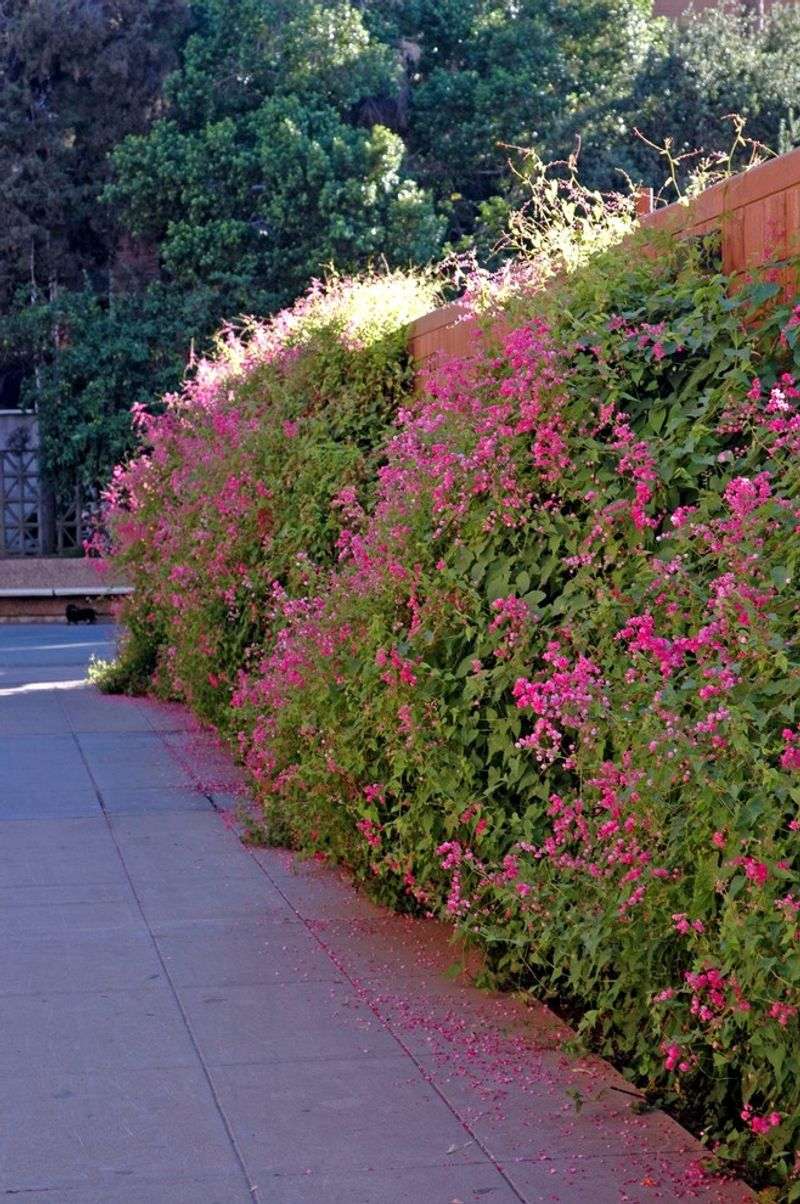
Before planting Queen’s wreath, measure your space carefully. The Arizona Municipal Water Users Association gives a typical mature size of about 15 by 15 feet, and that is not a slow process.
The vine puts on significant growth during the warm months and will quickly test whatever structure you give it.
A lightweight trellis, thin wire, or small shrub nearby may not hold up well once the vine gains momentum. A sturdy pergola, heavy-gauge fence, or solid masonry wall gives it a better long-term home.
If it runs out of intended support, it will reach for adjacent plants, and it can easily shade out or tangle smaller neighbors. Placement away from low-growing perennials or young shrubs saves you from having to untangle or cut it back repeatedly.
Cold snaps can cause Queen’s wreath to lose its above-ground growth, but the roots typically survive and send up new stems once temperatures warm again in spring. That die-back is not permanent damage, but it does mean a hard-pruned or frost-set-back plant may look bare for part of the year.
Winter or late-winter pruning, before new growth pushes, is a practical way to manage size and keep the vine tidy heading into its next growing season.
Queen’s wreath is not an Arizona native
Queen’s wreath is often grouped with Arizona-friendly plants, and for practical purposes it fits well in the low desert. But its geographic origin matters if nativity is a priority for your garden.
The Arizona Native Plant Society identifies it as native to Sonora and Baja California in Mexico, not to Arizona itself.
That distinction does not make it a poor choice for Phoenix-area yards. It is adapted to conditions that closely match Arizona’s low desert, which is why it performs so reliably here.
Still, describing it as an Arizona native plant would be inaccurate, and some gardeners specifically want plants with documented ecological ties to their local landscape.
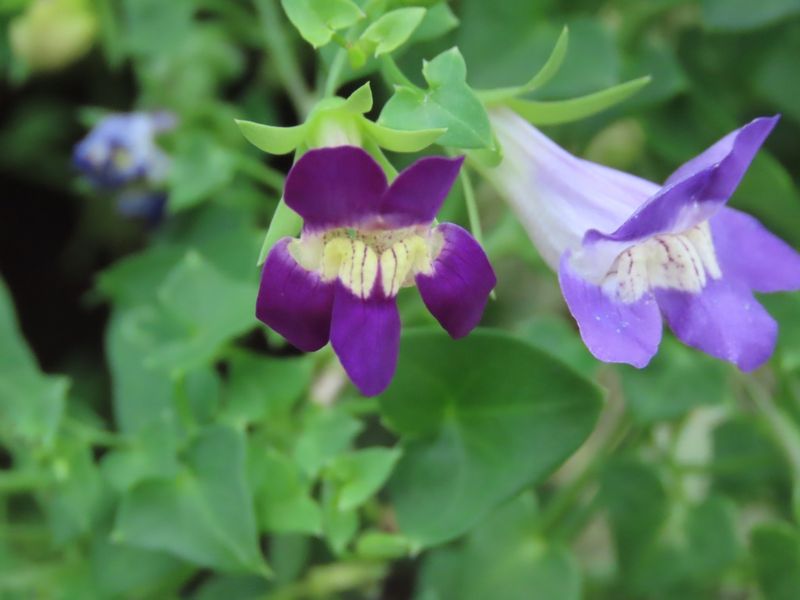
If a true Arizona native climbing vine is what you are after, snapdragon vine (Maurandya antirrhiniflora) is worth considering. The Arizona-Sonora Desert Museum notes that it is native to Arizona and adjacent Sonora, climbs fences and shrubs, and serves as a larval food plant for Common Buckeye butterflies.
It is a more delicate plant than Queen’s wreath, with a smaller footprint, and it plays a different ecological role. The two vines are not interchangeable, but snapdragon vine gives you a genuinely native option if that is your priority.
Choose it for its strengths, not a pollinator ranking
Queen’s wreath earns a place in a low-desert yard on practical grounds: it handles intense heat, blooms during a stretch when most other plants have stopped, and draws bees and other flower visitors documented in published research. Those are real, useful qualities for homeowners who want a yard that supports wildlife through the summer and into fall.
What the available evidence does not support is ranking it above other ornamental plants for pollinator value. No comparison study has established that it attracts more insects, more species, or more total pollinators than other garden choices.
Planting it because it suits your climate, fits your space, and blooms at the right time of year is solid reasoning. Planting it based on a pollinator leaderboard that does not exist sets up an expectation the vine cannot be expected to meet.
If you can commit to establishment watering for the first couple of years, provide a sturdy support structure, and manage its vigorous spread, Queen’s wreath is a well-matched vine for Arizona’s low desert. The bees that show up during its bloom season are a genuine bonus, not a guarantee, but a bonus worth having in a yard that works hard all summer long.