These Are The Florida Salt-Tolerant Plants Coastal Homeowners Are Planting Instead Of Everything Else
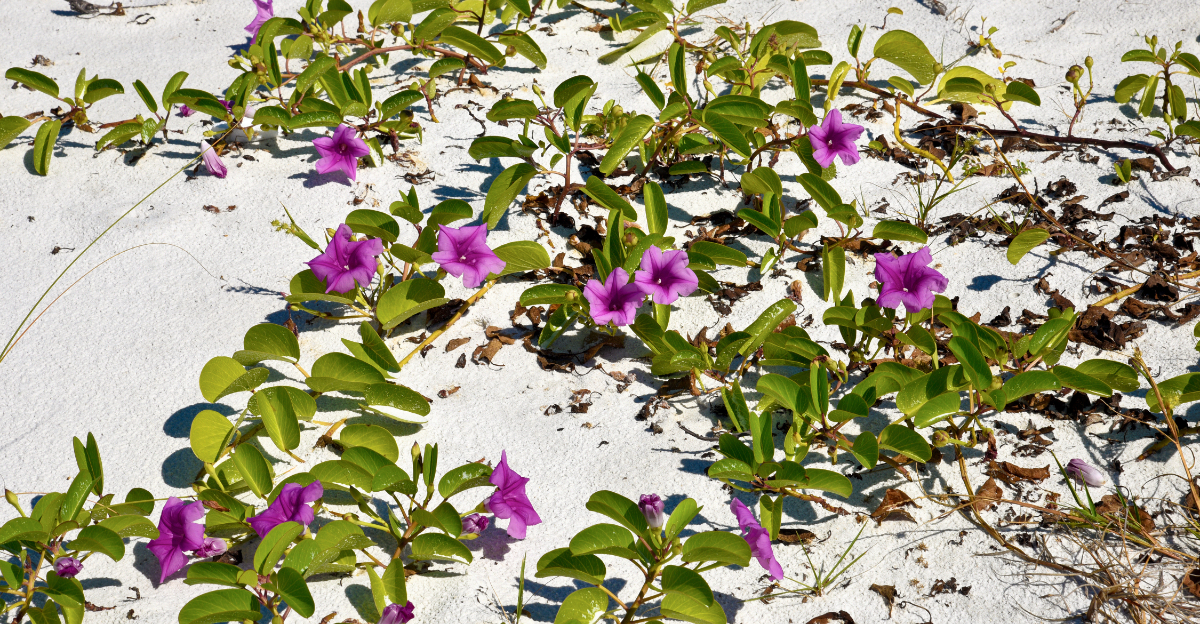
Coastal Florida homeowners learn the same lesson eventually. A plant that thrives a few miles inland turns into a brown, struggling mess the moment salt spray enters the picture.
Wind off the water is relentless and soil salinity creeps higher than most plants can handle. Standard landscaping advice written for inland gardens falls completely flat near the coast.
The replacement cycle gets expensive fast. Beautiful plants that looked perfect at the nursery barely last a season before the salt wins.
At some point coastal gardeners stop guessing and start asking what actually survives long-term in these conditions. The answer is always the same group of plants, ones that have spent generations adapting to exactly this environment.
Salty air, periodic flooding, sandy soil, punishing sun. They are built for it.
Coastal Florida gardeners who figure this out early stop fighting their landscape and start genuinely enjoying it.
1. Plant Sea Oats For Frontline Dune Strength
Picture a stretch of windblown sand where nothing seems to hold, grains shifting with every gust off the water. That is exactly the kind of site where sea oats shine brightest.
This native grass has been anchoring coastal dunes along this state’s beaches for centuries, and its reputation for toughness is completely earned.
Sea oats grow upright with slender, arching blades and topped with distinctive seed heads that sway beautifully in the breeze. That natural, grassy silhouette blends perfectly into a beachside landscape.
According to UF/IFAS, sea oats are one of the most important dune-stabilizing plants on the Atlantic and Gulf coasts. Their deep root systems grip sandy soil and reduce erosion under harsh conditions.
They thrive in full sun and well-drained, sandy soils. They do not do well in wet, shaded, or heavily compacted spots.
If your property sits right on the dune line or has a sandy, exposed edge, sea oats are worth considering seriously.
One important note before you plant: sea oats are protected under state law in many coastal areas. Homeowners should contact their local county Extension office or check with their municipality before taking action.
This includes planting, trimming, or disturbing sea oats near protected dune zones. Do not collect plants or seeds from wild beach areas, as this is both harmful and illegal in many places.
Buy nursery-grown sea oats from a reputable source, and plant them where they have open sun and room to spread. Given the right spot, they will reward you with a natural, beautiful coastal barrier that holds the ground season after season.
2. Grow Beach Sunflower For Salt Tough Color
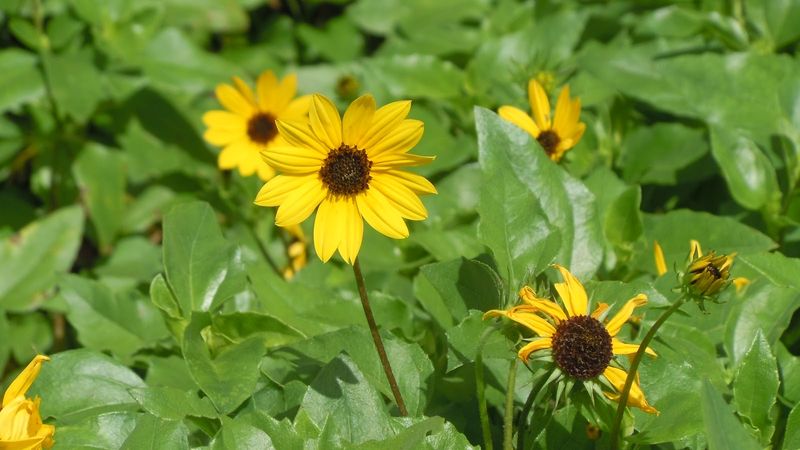
A coastal flower bed does not have to look tired and sparse. If you have a sunny, sandy spot along a path or open garden edge and you want real color without constant replanting, beach sunflower deserves a serious look.
Those bright yellow blooms show up reliably and bring a cheerful, informal energy that most coastal yards are missing.
Beach sunflower, known botanically as Helianthus debilis, is a low-growing native groundcover that handles heat, salt spray, and sandy soil with ease.
Your Florida Garden Changes Every Week. Your Plan Should Too.
Gardening in Florida changes quickly throughout the season. Every Friday you’ll receive a simple weekly plan showing exactly what to plant, prune, fertilize, harvest, and protect so you never miss the right timing.
UF/IFAS Gardening Solutions lists it as an excellent choice for sunny coastal sites, praising its ability to spread across open beds while producing continuous blooms.
The flowers attract butterflies and bees, making it a great pick for homeowners who want to support pollinators.
This plant works especially well along walkways, open garden borders, and sunny coastal edges where you want a relaxed, natural look. It spreads by runners, so give it plenty of room and trim it back if it starts moving into spaces you want to keep clear.
A little maintenance goes a long way toward keeping it tidy.
Plant beach sunflower in full sun and well-drained sandy soil. It does not like sitting in wet, shaded, or clay-heavy conditions.
Once established, it is remarkably self-sufficient, needing little water or fertilizer to keep blooming through warm months.
For homeowners who have struggled to find a flowering plant that actually thrives near the shore, beach sunflower is a refreshing change. It delivers the curb appeal of a traditional garden bed without asking for much in return.
3. Use Railroad Vine To Cover Sandy Ground
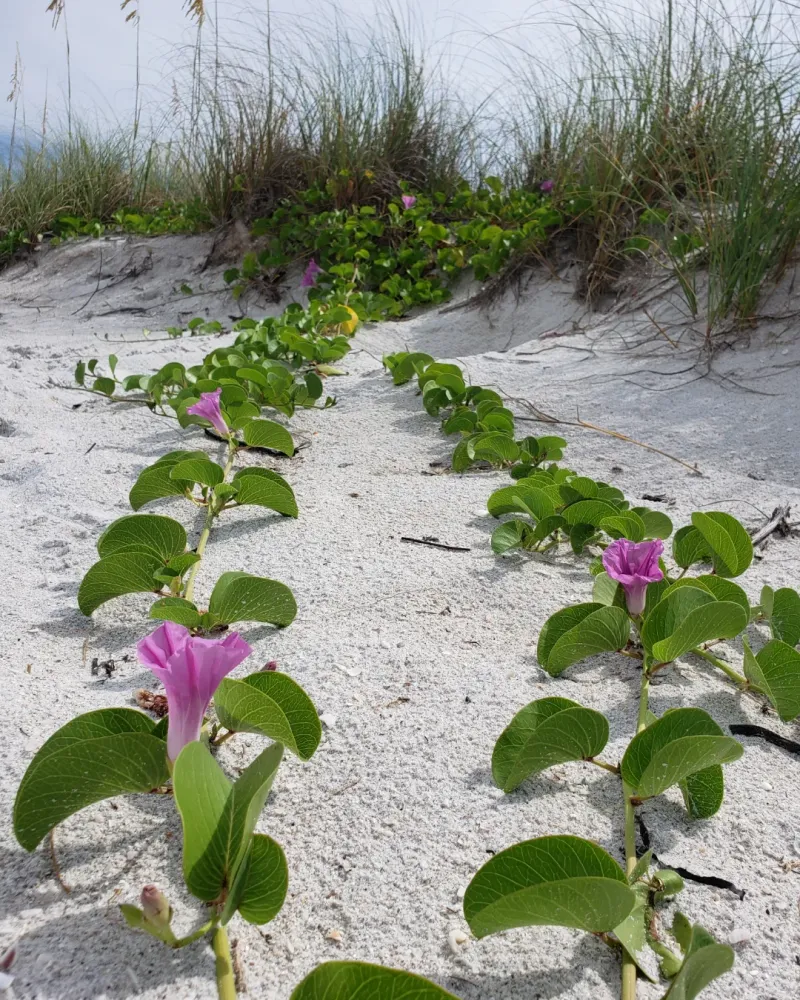
Bare sand between the yard and the waterline is more than just an eyesore. It is an open invitation for erosion, especially when wind and rain hit exposed coastal ground.
Railroad vine is one of the most practical living solutions for that problem, and it has been doing the job naturally along this state’s coasts for a very long time.
Formally named Ipomoea pes-caprae, railroad vine is a vigorous trailing plant that sends long runners across sandy ground, rooting as it goes. Its showy purple flowers resemble morning glories, adding unexpected beauty to an otherwise bare stretch of sand.
UF/IFAS Extension recognizes it as a native beach plant well-suited to open, sandy, salt-exposed sites along both coasts.
The best spots for railroad vine are sandy slopes, beachside edges, open coastal beds, and any area where you need a tough, spreading plant to hold the ground.
It is not a good fit for tight foundation beds, formal garden spaces, or areas where you need to control spread carefully.
Its long runners can cover a lot of ground quickly, so placement matters.
Plant it in full sun with fast-draining sandy soil. It handles drought well once established and does not need fertilizing to perform.
Supplemental irrigation during the driest stretches helps it get going, but mature plants are impressively self-sufficient.
Think of railroad vine as a living carpet for the toughest spots in a coastal yard. Where other plants struggle or refuse to grow at all, this tough native spreads steadily, covers the ground, and blooms with a color that surprises visitors every time they see it.
4. Choose Muhly Grass For Wind Swept Texture
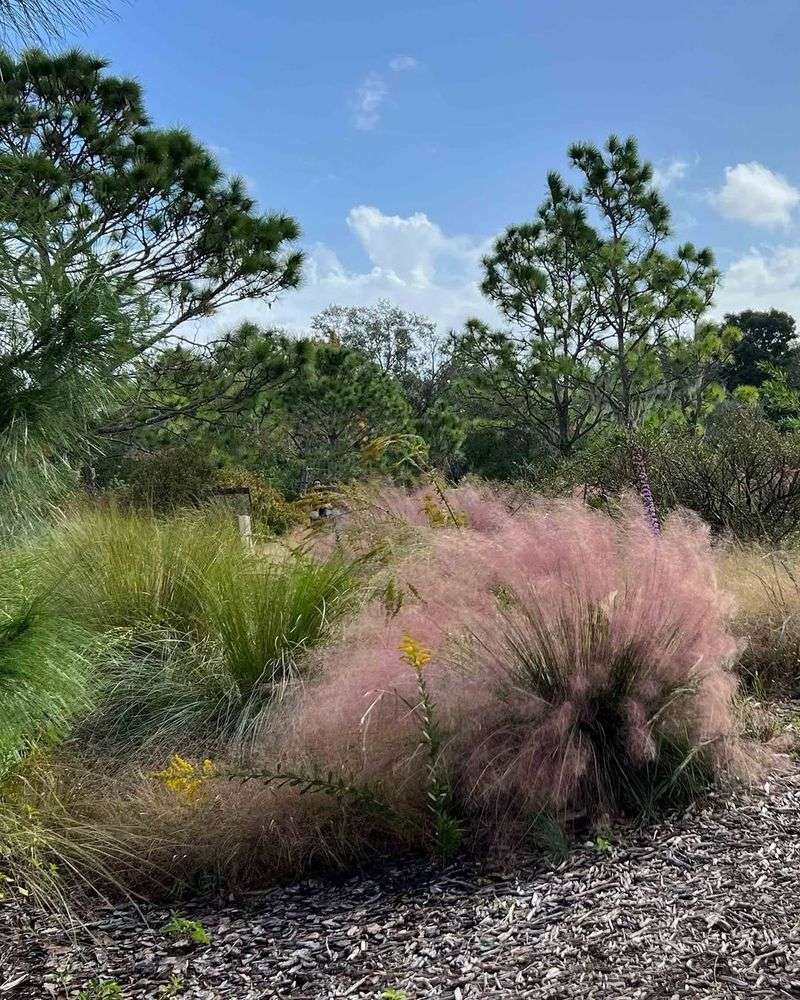
Some yards near the shore feel hard-edged and rigid, all fences and concrete with nothing soft to break the wind. Muhly grass changes that completely.
When a sea breeze moves through a stand of muhly, those feathery plumes catch the light and sway in a way that makes the whole yard feel more alive and welcoming.
Muhly grass, or Muhlenbergia capillaris, is a native ornamental grass that UF/IFAS Gardening Solutions highlights for its outstanding seasonal display. In fall, it produces clouds of airy pink-to-purple plumes that float above the narrow green blades.
That combination of soft texture and seasonal color makes it one of the most popular native grasses for coastal landscapes across the state.
Plant muhly grass in full sun and well-drained soil for the best form and the showiest plumes. It tolerates sandy coastal soils well and handles salt air without complaint.
Mass plantings along a sunny border or mixed into a native plant bed create the most dramatic effect, especially when the fall color arrives.
Cut it back hard in late winter or very early spring to encourage fresh, tidy new growth before the warm season begins. Beyond that, muhly grass asks for very little.
No heavy fertilizing, no constant watering once established, and no complicated care routine.
For homeowners who want texture, movement, and a seasonal pop of color in a tough coastal yard, muhly grass delivers all three without fuss.
It softens harsh edges, attracts birds and pollinators, and holds its shape through heat and salt spray that would send less resilient plants into a rapid decline.
5. Plant Fakahatchee Grass For Native Coastal Structure
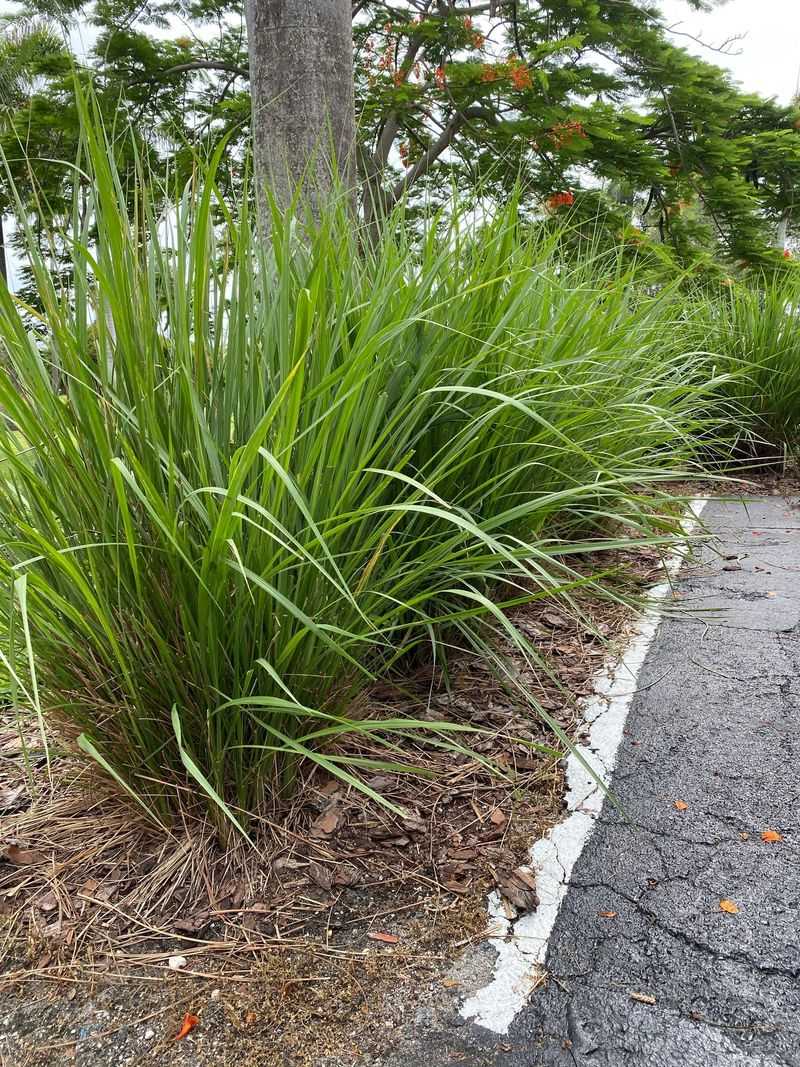
Sometimes a coastal yard needs more than flowers and low groundcovers. It needs something with real presence, a plant that anchors the whole planting bed and gives the eye a place to rest.
Fakahatchee grass does exactly that, and it does it with a distinctly Florida-native character that fits coastal landscapes naturally.
Fakahatchee grass, known as Tripsacum dactyloides, is a large, clumping native grass that UF/IFAS recognizes as a sturdy, adaptable species for Florida landscapes.
Its bold arching blades create a strong clumping form that adds height and structure to larger beds, naturalized areas, and open coastal landscapes where smaller grasses would simply disappear visually.
This grass is a solid choice when you want to create a visual anchor in a planting bed or establish a more naturalized coastal look.
It pairs well with other native plants and works especially well in spots where you need something that can hold its own against wind and salt air without constant attention.
Give Fakahatchee grass plenty of room when you plant it. Mature clumps can become quite wide, and crowding them against walkways or small foundation beds creates more work than necessary.
Use it in open areas, larger mixed borders, or naturalized sections of the yard where its size is an asset rather than a challenge.
Trim it back in late winter to keep it looking fresh as the new growing season starts. Beyond that seasonal cut, it is a low-maintenance plant that rewards you with bold, year-round structure.
For coastal homeowners who want a strong native presence without a high-maintenance planting scheme, Fakahatchee grass is a reliable and handsome answer.
6. Use Buttonwood Where Salt Spray Hits Hard
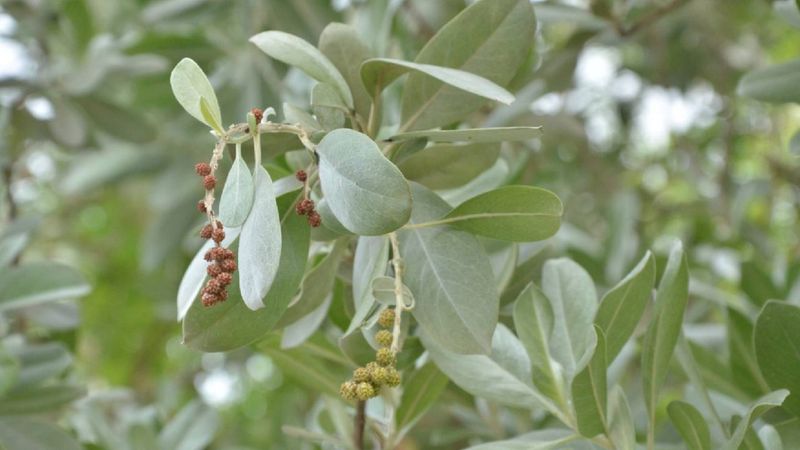
Salty wind off the water does not just sting your face on a bad day. Over time, it strips moisture from leaves, scorches tender growth, and turns a carefully planted hedge into a brown, ragged mess.
Buttonwood was practically built for that problem, and coastal homeowners who plant it in the right spot rarely regret the decision.
Buttonwood, or Conocarpus erectus, is a native coastal shrub or small tree that UF/IFAS lists as highly salt-tolerant and well-suited to exposed sites near the shore.
Its dense, compact growth makes it an outstanding choice for screening, wind buffering, and creating living privacy barriers along coastal property edges.
The silver-leaved variety adds an extra layer of visual interest with its distinctive gray-green foliage.
Use buttonwood where you need a tough, reliable screen between your yard and the saltiest, most exposed sections of your property. It handles difficult conditions that softer shrubs simply cannot manage.
Allow room for its mature size when you plant it, because a well-established buttonwood can grow considerably larger than it looks in a nursery pot.
Prune it carefully and consistently if you want to maintain a formal hedge shape. Left to grow more freely, it takes on a naturally layered, slightly irregular form that looks right at home in a coastal setting.
Either approach works, as long as you plan for the space it will eventually need.
Buttonwood also provides food and habitat for birds and other wildlife, making it a functional and ecologically valuable addition to any coastal planting plan.
Few plants handle the front line of salt spray as gracefully or as dependably as this tough native.
7. Plant Sea Grape For Bold Salt Tolerant Screening
Privacy near the coast is hard to come by when most screening plants struggle with salt spray and sandy soil.
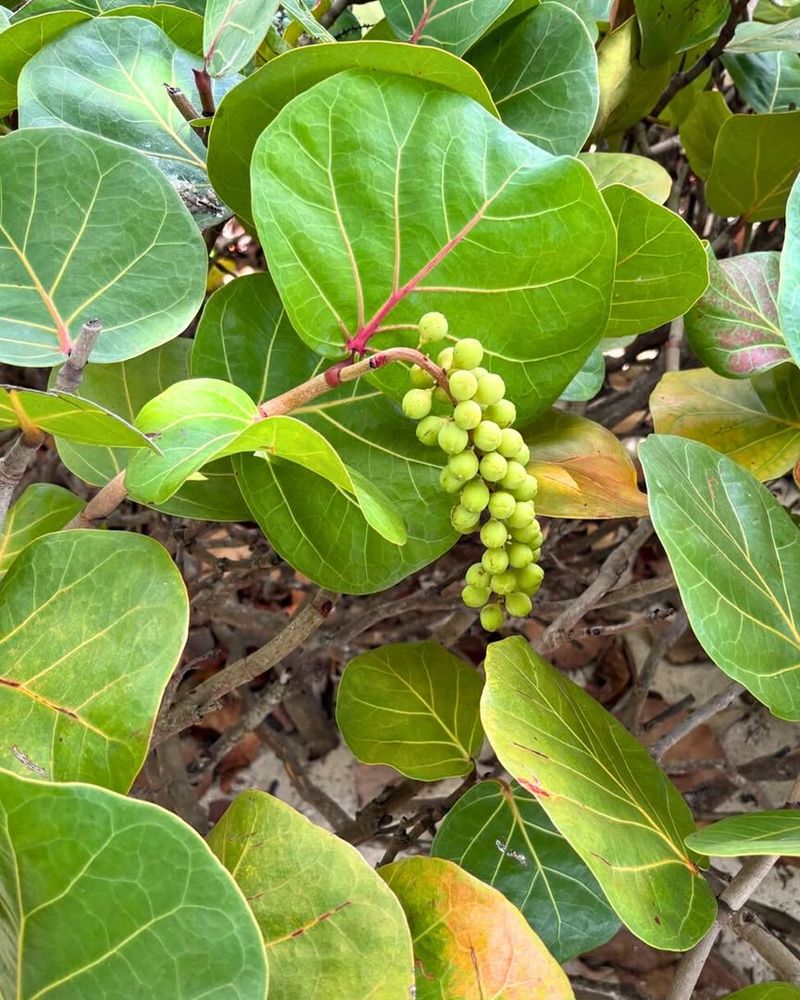
Sea grape solves that problem with big, bold, leathery leaves that make a visual statement while standing up to conditions that would flatten a typical privacy hedge within a season or two.
Sea grape, or Coccoloba uvifera, is a native coastal plant. UF/IFAS describes it as highly salt-tolerant and valuable for screening, specimen planting, and informal hedging along coastal properties.
Its large, rounded leaves have a striking tropical look that gives coastal yards a lush, full appearance even in tough exposure zones. The plant also produces clusters of grape-like fruit that attract birds and can be used to make jelly.
Place sea grape where you have genuine room for a large plant. Mature sea grapes can grow into substantial shrubs or small trees, and placing them too close to structures, walkways, or utility lines creates problems down the road.
Use them along property edges, open coastal borders, or as a bold specimen in a spacious bed.
Sea grape is best suited to the southern and central regions of the state, where winter temperatures stay mild.
In northern regions, cold snaps can damage or set back growth significantly, so homeowners in those areas should check with their local Extension office before planting.
As an informal hedge, sea grape can be shaped with regular pruning, but its natural form is part of its appeal. Let it grow with a relaxed hand, give it the space it deserves, and it will reward you with a screen that handles salt air with remarkable ease and style.
8. Add Saw Palmetto For Hardy Coastal Backbone
Every coastal yard needs at least one plant that simply refuses to back down, no matter what the weather throws at it. Saw palmetto is that plant.
It has been thriving along this state’s coastlines for thousands of years, and it brings a rugged, deeply native character to any landscape that uses it well.
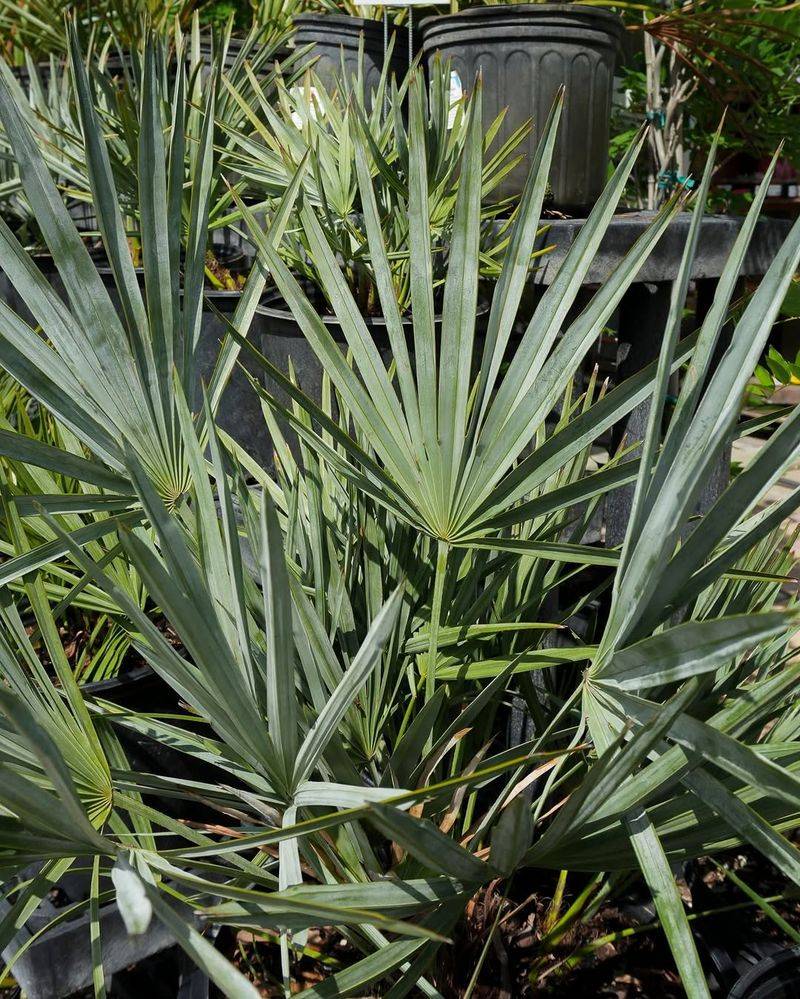
Saw palmetto, or Serenoa repens, is a native shrub. UF/IFAS Gardening Solutions recognizes it as extremely tough, drought-tolerant, and well-adapted to sandy coastal soils and salt air.
Its fan-shaped fronds range from green to silvery blue-green depending on the individual plant, and that variation adds natural visual interest to a coastal bed without any extra effort on your part.
Plant saw palmetto in full sun to partial shade, in well-drained sandy soil. It is slow to establish but remarkably persistent once it takes hold.
Use it as a low-maintenance foundation plant, a naturalized mass along a property edge, or a structural anchor in a mixed native bed. Its spreading habit and low profile make it a natural fit for open coastal areas where you want coverage without height.
One practical note: saw palmetto has serrated leaf stems, which is exactly how it earned its name. Wear gloves and long sleeves when working around it, and plant it away from high-traffic walkways where brushing against the fronds would be uncomfortable.
Beyond its toughness, saw palmetto provides critical habitat and food for wildlife, including birds and native pollinators. For homeowners who want a plant that earns its place in a coastal yard year after year, saw palmetto is as dependable as it gets.