8 Native Georgia Shrubs That Outperform Leyland Cypress As Privacy Screens
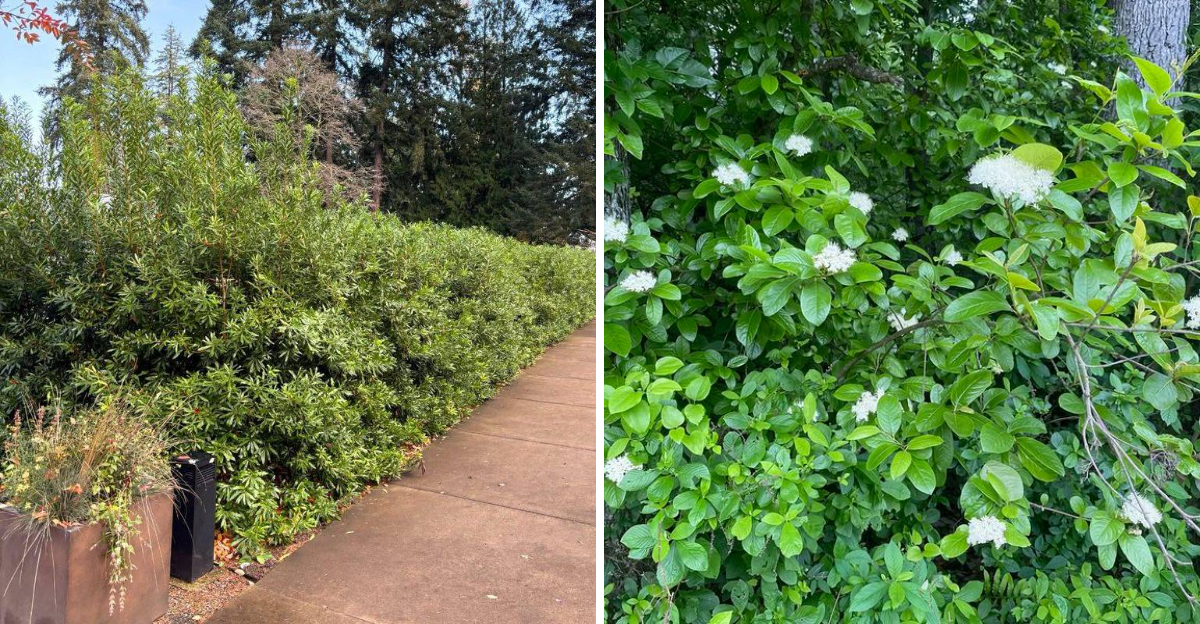
A full, lush privacy screen can make a yard feel calm and complete, but the wrong choice turns that same space into a constant headache.
Many Georgia yards still rely on one familiar option that looks good at first, then slowly starts to thin, struggle, or break down when heat, humidity, and soil conditions take over.
That shift catches people off guard, especially once gaps start to show and the upkeep keeps piling on. It does not take long before the search begins for something that actually holds up and fills in the way it should.
More reliable shrubs are starting to take over across Georgia, and the difference shows in how evenly they grow and how little effort they need once established.
Some hold their shape, some handle tough soil, and some simply refuse to fall apart under pressure. These shrubs grow full, keep their shape, and hold up in Georgia conditions without turning into a long term problem.
1. American Holly Forms A Dense Evergreen Screen Year Round
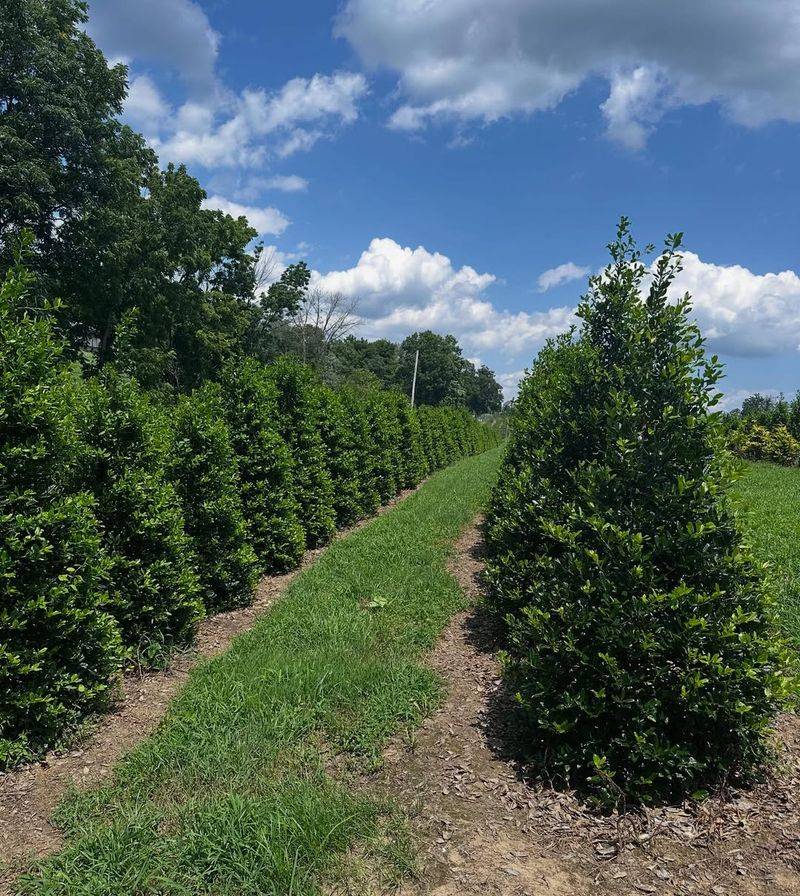
Few plants hold their own through a Georgia summer and still look sharp in January — American Holly does both without much fuss. It keeps its leaves year round, which is exactly what you want from a privacy screen.
That thick, dark green canopy doesn’t thin out when temperatures drop, and it won’t leave you exposed during the off-season.
American Holly can reach 15 to 40 feet tall depending on conditions, so it’s not just a shrub — it becomes a real structure in your yard over time. Growth is steady rather than explosive, usually adding one to two feet per year under decent conditions.
Planting in well-drained soil with decent sun speeds things along, though it tolerates partial shade reasonably well in Georgia’s variable climate.
Female plants produce those classic red berries that birds absolutely flock to in winter, which is a nice bonus if you enjoy watching wildlife from your porch.
You’ll need at least one male plant nearby for berry production, so keep that in mind when planning your layout.
Spacing plants eight to twelve feet apart typically gives them room to fill in without crowding each other out. Across Georgia, this native has a long track record of handling heat, humidity, and clay soils that would stress less-adapted plants considerably.
2. Wax Myrtle Grows Fast And Fills In Thick For Privacy
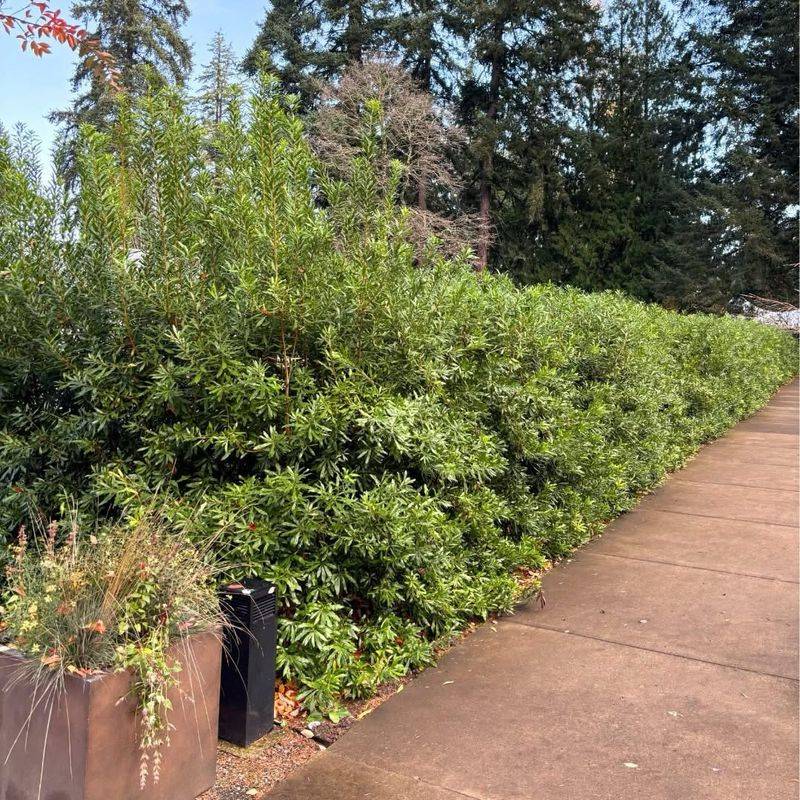
Speed matters when you want privacy, and Wax Myrtle is one of the fastest-filling natives you can plant in Georgia. Under good conditions, it can put on three to five feet of growth in a single growing season.
That kind of pace is hard to match with most native options, and it doesn’t come at the cost of plant health.
Wax Myrtle handles Georgia’s tough spots well — wet low areas, sandy coastal soils, heavy red clay, even occasional flooding. It’s not picky about where it grows, which makes it useful across a wide range of Georgia landscapes.
The aromatic gray-green foliage has a pleasant scent when you brush against it, and small waxy berries attract birds through fall and winter.
Your Georgia Garden Changes Every Week. Your Plan Should Too.
Gardening in Georgia changes quickly throughout the season. Every Friday you’ll receive a simple weekly plan showing exactly what to plant, prune, fertilize, harvest, and protect so you never miss the right timing.
Expect mature plants to reach ten to fifteen feet tall, sometimes taller when left unpruned. You can keep it shaped as a tight hedge or let it go more naturally — both work.
One thing to know is that Wax Myrtle can sucker from the roots and spread wider than you planned, so check the base occasionally and remove unwanted shoots if you need to keep it contained.
In coastal Georgia especially, this plant has proven itself as a tough, reliable screen that holds up through salt air, wind, and summer storms without significant setbacks.
3. Eastern Red Cedar Creates A Tall Natural Barrier Over Time
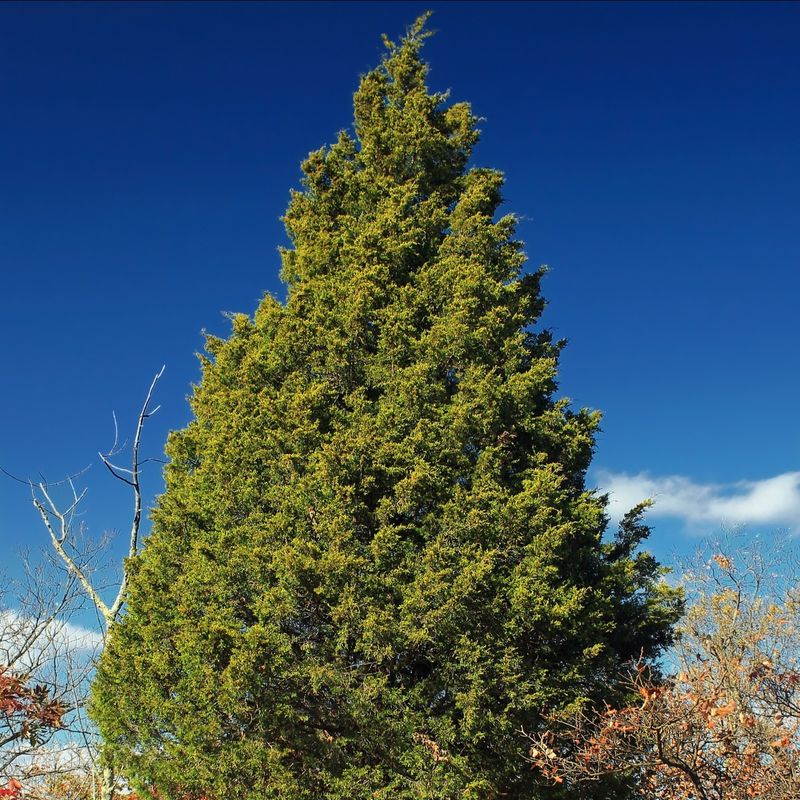
Eastern Red Cedar earns its place as a privacy screen the old-fashioned way — it just keeps growing, year after year, until it’s a serious wall of green.
It’s not the fastest grower in the lineup, but the payoff is a dense, columnar tree that can eventually reach 30 to 40 feet with a tight, upright form that’s naturally suited to screening.
Across Georgia, this native thrives in rocky, poor, or dry soils where other plants struggle to establish. It handles drought stretches without much drama, which is a real advantage during Georgia’s unpredictable dry summers.
Full sun is where it performs best, and it rewards that exposure with tight, full branching from the ground up.
Berries — technically small blue cones — feed cedar waxwings and other birds, making it genuinely useful for wildlife, not just aesthetics.
One honest note: Eastern Red Cedar can host cedar-apple rust, which affects nearby apple trees, so placement matters if you grow fruit nearby.
Growth rate averages one to two feet per year, so patience is required. Spacing plants six to eight feet apart in a staggered double row speeds up coverage and creates a more solid visual barrier.
In north Georgia especially, this tree has been creating natural boundaries on farms and homesteads for generations without much help from the people growing it.
4. Yaupon Holly Builds A Tight Hedge With Minimal Care
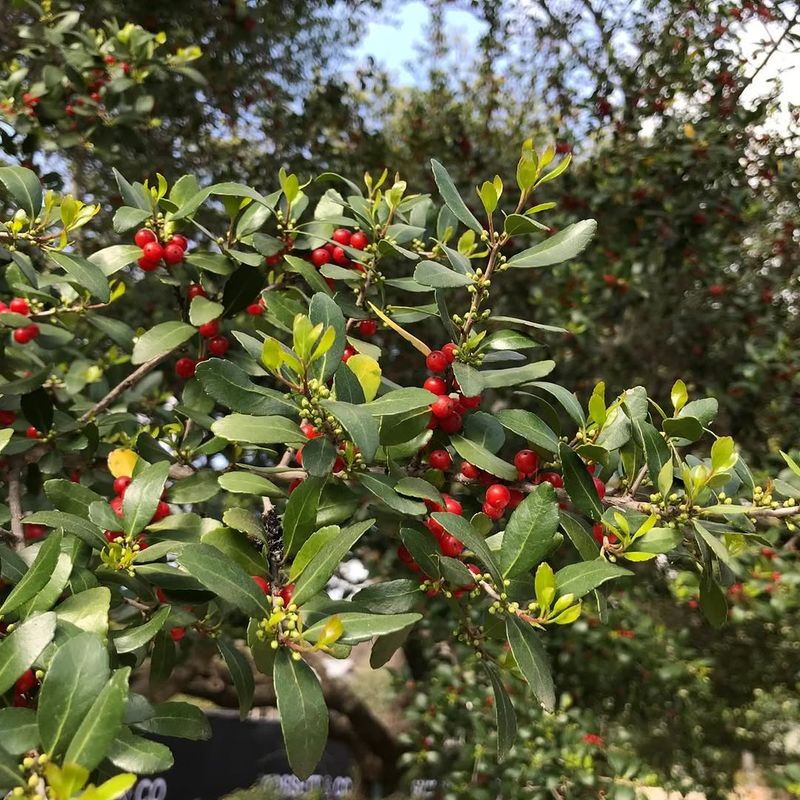
Yaupon Holly might be the toughest native shrub in Georgia — and that’s not an exaggeration. Full sun, deep shade, drought, clay, poor drainage — it handles all of it without significant complaint.
That kind of adaptability is rare, and it’s exactly why this plant keeps showing up in conversations about reliable native privacy screens.
Left unpruned, Yaupon Holly reaches fifteen to twenty feet tall with a naturally dense branching structure that fills in tight over time. It responds well to shearing if you prefer a formal look, but it also works as a more relaxed, layered screen.
Either way, the coverage stays consistent through every season since it holds its leaves year round.
Female plants produce small red berries that birds eat through winter, adding life and movement to your yard during the quieter months. You don’t need to fuss over fertilizing or watering schedules once plants are settled into the ground — just let them grow.
Spacing plants five to eight feet apart gives them room to develop without leaving gaps in the early years.
Yaupon Holly is native throughout Georgia, from the coastal plains near Brunswick all the way up into the Piedmont, so it’s genuinely adapted to the full range of conditions the state throws at it.
Few shrubs offer this combination of toughness, year-round coverage, and low input requirements.
5. Sweetbay Magnolia Adds Height And Soft Full Coverage
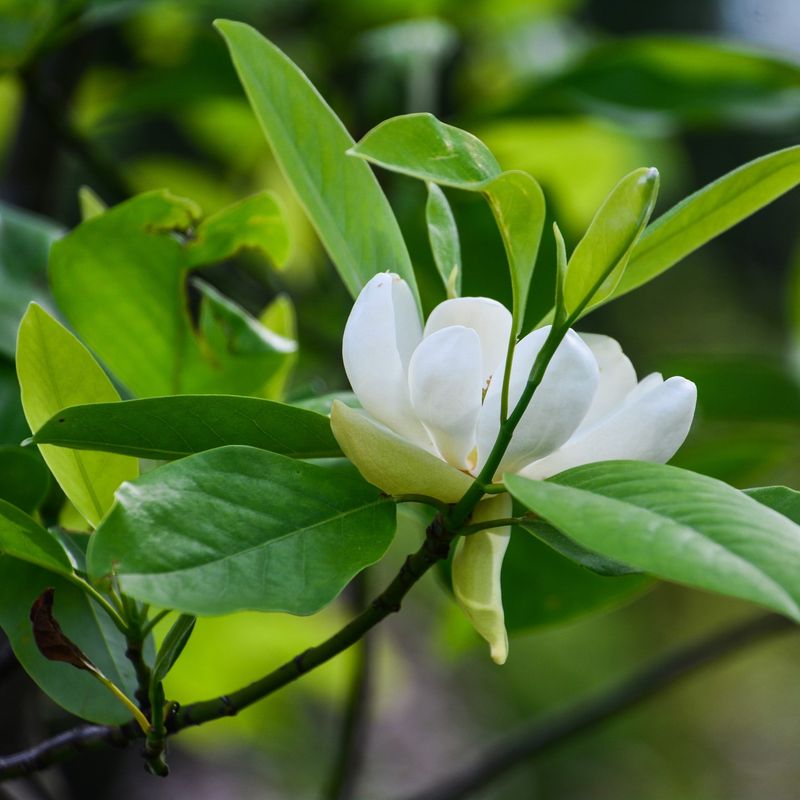
Sweetbay Magnolia doesn’t get talked about enough as a privacy plant, but it deserves more attention from Georgia gardeners.
It grows in a multi-stemmed form that fills out wide and tall, creating a layered, lush screen that feels more like a natural treeline than a planted hedge.
The white flowers in late spring are a genuine bonus — fragrant and pretty without being showy in an overdone way.
In Georgia’s warmer southern regions, Sweetbay Magnolia behaves as a near-evergreen, holding most of its leaves through winter.
Further north in the state, it drops more foliage in cold snaps, but the dense branching structure still provides meaningful visual screening even without full leaf cover.
Wet, poorly drained areas are actually where this plant shines brightest.
It can reach fifteen to twenty feet tall over time, sometimes taller in ideal conditions near streams or low spots. Growth is moderate — not fast, but consistent enough to build real height within several years of planting.
Birds use the plant for nesting cover, and the seed clusters attract several species in fall. Spacing plants eight to ten feet apart in a line gives them room to develop their natural spread.
If you have a soggy corner of your Georgia yard that’s been sitting unused, Sweetbay Magnolia is one of the better options for turning that problem spot into a productive privacy planting.
6. Arrowwood Viburnum Thickens Quickly And Supports Wildlife
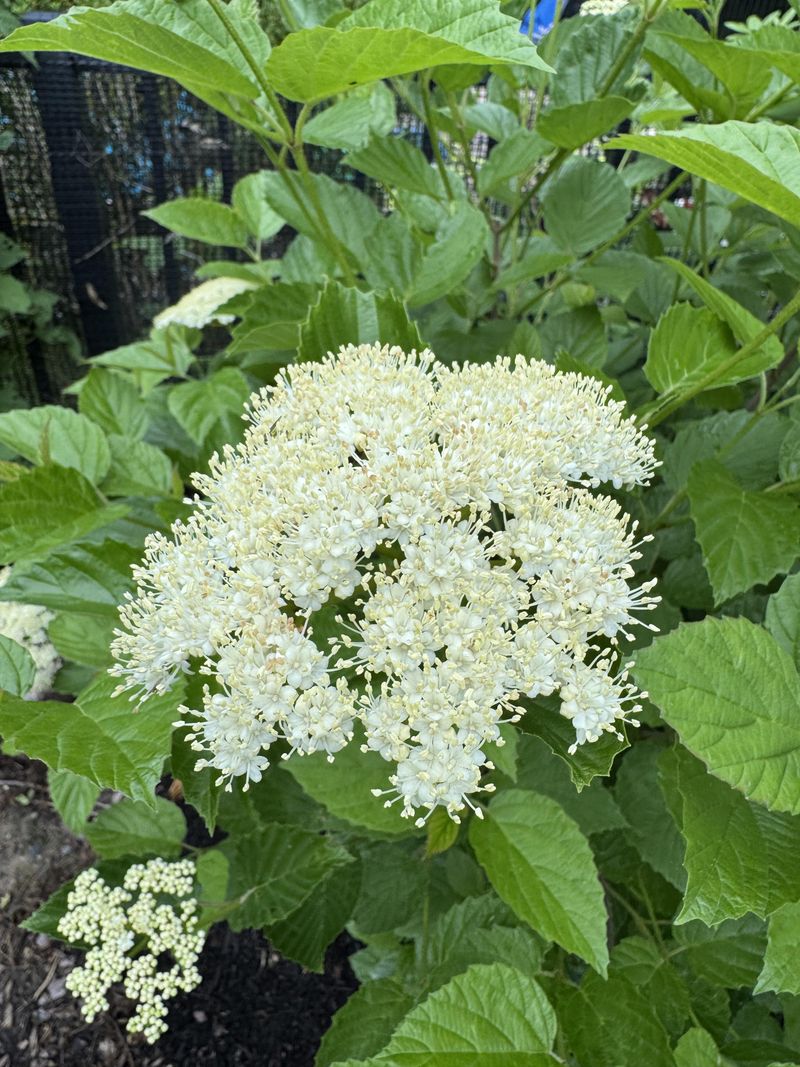
Arrowwood Viburnum is the kind of shrub that earns its space twice over — once as a privacy screen and again as a wildlife magnet.
Birds rely on the dark blue-black berries heavily in late summer and fall, and pollinators work the flat-topped white flower clusters hard in late spring.
Planting it means you’re feeding your local ecosystem, not just blocking your neighbor’s view.
Growth habit is naturally upright and dense, typically reaching six to ten feet tall with a similar spread. It fills in from the base rather than leaving open gaps near the ground, which is exactly what you want in a privacy planting.
Partial shade or full sun both work in Georgia, giving you flexibility depending on your yard’s light situation.
Arrowwood Viburnum handles Georgia’s clay soils and moderate drought without much visible stress, though it appreciates consistent moisture during dry spells in its first year or two in the ground.
Fall color is a genuine highlight — leaves shift through shades of red, orange, and purple before dropping.
Yes, it’s deciduous, so winter screening is reduced, but the dense branching still breaks up sightlines even without foliage. Planting in a staggered double row with spacing around five to six feet between plants helps build a thicker overall screen.
Across Georgia’s Piedmont and mountain regions, this viburnum has proven to be a dependable, fast-thickening native that’s genuinely worth planting.
7. Inkberry Holly Stays Low But Forms A Solid Evergreen Screen
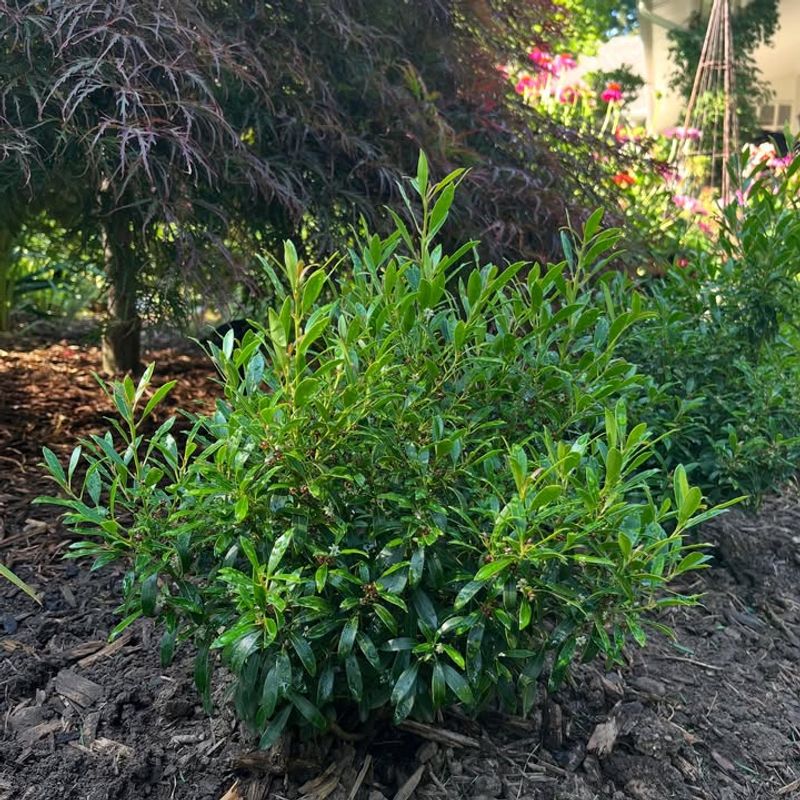
Not every privacy screen needs to reach twenty feet — sometimes a solid six-to-eight-foot wall of evergreen is exactly what the situation calls for.
Inkberry Holly fills that role well, growing into a dense, rounded form that stays green through Georgia’s winters without dropping a leaf.
It’s not flashy, but it’s reliable in a way that matters more than flashy.
Wet, boggy areas that would stress most shrubs are actually where Inkberry Holly performs best.
If you have a low spot in your Georgia yard that stays damp after rain, this plant is one of the few natives that won’t just tolerate those conditions — it’ll actually grow well in them.
Shade tolerance is solid too, so it works under tree canopies where sunlight is limited.
Small black berries ripen in late summer and persist well into winter, drawing in songbirds like robins, bluebirds, and cedar waxwings. Inkberry spreads gradually by root suckers, which means it naturally thickens over time without you doing much to encourage it.
That spreading habit is useful when you want to fill in gaps along a property line. Spacing plants four to five feet apart gets you a reasonably solid screen within three to four years.
Across the coastal plain and Piedmont regions of Georgia, Inkberry Holly holds up through heat and humidity better than many alternatives without requiring regular attention.
8. Possumhaw Viburnum Fills Out And Creates Seasonal Privacy
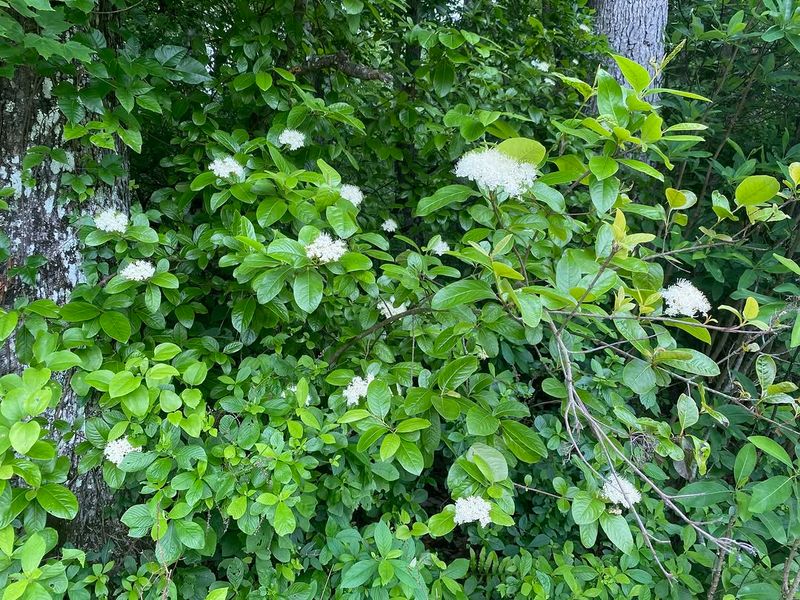
Possumhaw Viburnum is a plant that works hard for most of the year and earns a pass during winter when its leaves drop.
Spring brings clusters of creamy white flowers that cover the shrub before the leaves fully emerge — it’s a genuinely striking display that’s hard to miss.
By summer, the dense foliage fills back in and provides solid visual screening through the warmest months.
In Georgia, Possumhaw Viburnum typically reaches six to twelve feet tall depending on soil and light conditions. It tolerates partial shade well, which makes it useful along fence lines or woodland edges where full sun isn’t always available.
Clay soils and moderate moisture suits it fine, though it handles dry spells reasonably well after it’s had a season or two to settle in.
Red to orange berries develop in late summer and hold on the branches well into fall, attracting birds and adding seasonal color to the yard. The fall foliage shift — moving through burgundy and reddish tones — is worth appreciating before the leaves come down.
Planting five to seven feet apart in a line gives each shrub room to spread naturally without crowding.
Mixing Possumhaw Viburnum with evergreen natives like Inkberry Holly or Yaupon Holly in the same border is a practical way to maintain year-round coverage across your Georgia property line while keeping the planting visually interesting through every season.