Native North Carolina Ground Covers That Smother Weeds Better Than The Pine Straw You Rebuy Every Year
You buy the pine straw every fall, spread it thick, and by July it has faded and thinned while weeds poke through anyway. Then you buy it again. There is a smarter way, and it is already native to North Carolina. These low-growing ground covers spread on their own, choke out weeds, feed pollinators, and never show up on next year’s shopping list.
Here are nine of the best.
1. Green and Gold
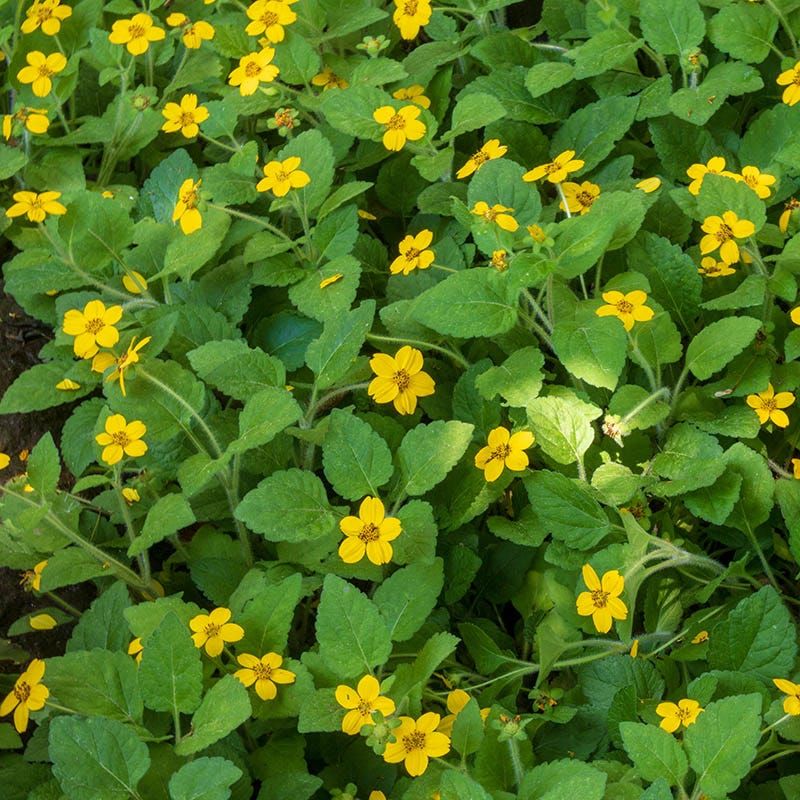
Picture a shady spot under your dogwood where nothing grows but crabgrass and disappointment. Green and gold (Chrysogonum virginianum) fills that gap with a low mat of soft green leaves and cheerful yellow flowers that show up in spring and often again in fall.
Here is what surprises people. This plant genuinely likes the part shade that defeats grass, spreading by runners into a dense carpet that leaves weeds no open dirt to grab. It tops out around 6 to 10 inches tall and creeps outward a foot or so each season.
Set plants about 12 inches apart in the Piedmont’s red clay, water them the first summer, and they knit together by year two. NC State Extension lists it as a reliable native for shade beds. Once established, it shrugs off the muggy heat and asks for almost nothing.
And there is the quiet payoff. Where you used to dump two bags of pine straw every October, you get golden blooms and a groundcover that pays its own rent.
2. Creeping Phlox
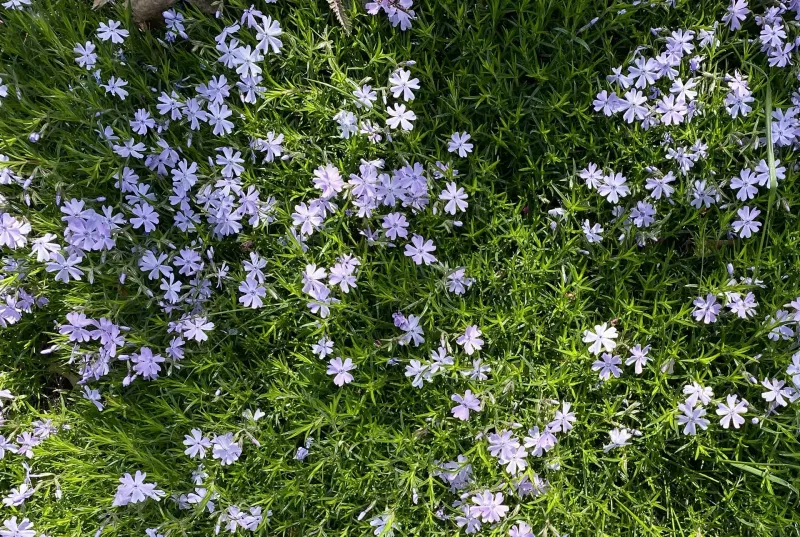
Drive through a Piedmont neighborhood in April and you will spot a hillside glowing pink or lavender like somebody spilled paint. That is creeping phlox (Phlox subulata), and it is doing something pine straw never could.
The trick is the tight, needle-like foliage that mats down over the soil and stays put all year. Weed seeds land on a closed door. It hugs slopes and edges, growing only 4 to 6 inches tall while spreading up to 2 feet wide.
Plant it in full sun with decent drainage, which suits both sandy Coastal Plain soil and amended clay. Space plants about 15 inches apart in early spring, and butterflies will find the flowers within weeks.
What you get in return is a wall of color for a couple of weeks, then a quiet evergreen mat the rest of the year. It holds a bank against those afternoon storms that turn bare dirt into a mudslide.
3. Wild Ginger
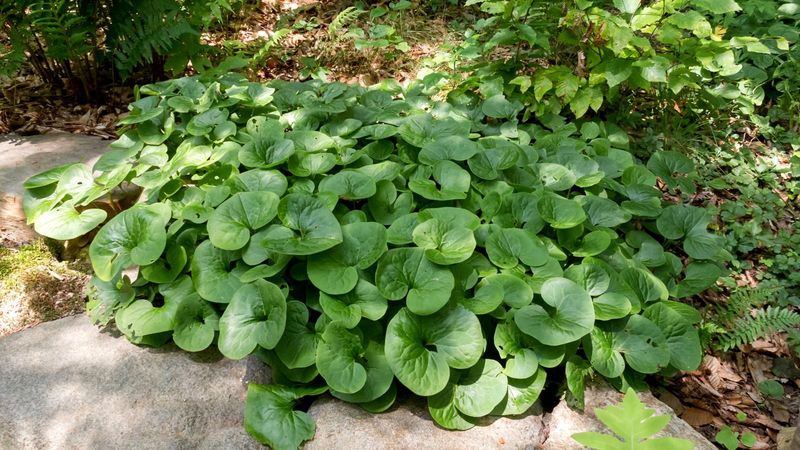
Some ground covers show off. Wild ginger (Asarum canadense) works in the shadows instead, and the deep shade under your porch eaves or north-facing wall is exactly where it thrives.
Its heart-shaped leaves overlap into a lush blanket about 6 inches tall, so thick that weed seedlings never see daylight. The maroon flowers hide down at soil level, quietly doing their thing near where ants carry the seeds around.
Set divisions roughly 12 inches apart in rich, moist ground and keep them watered through the first hot spell. In the North Carolina mountains and cooler Piedmont pockets, it slowly forms a colony that returns bigger every spring.
Your North Carolina Garden Changes Every Week. Your Plan Should Too.
Gardening in North Carolina changes quickly throughout the season. Every Friday you’ll receive a simple weekly plan showing exactly what to plant, prune, fertilize, harvest, and protect so you never miss the right timing.
Do not expect it to conquer a sun-baked slope, that is not its game. But for the damp, dim corner where you have given up and just dump mulch, this quiet hero finally gives you something better than bare pine straw.
4. Golden Ragwort
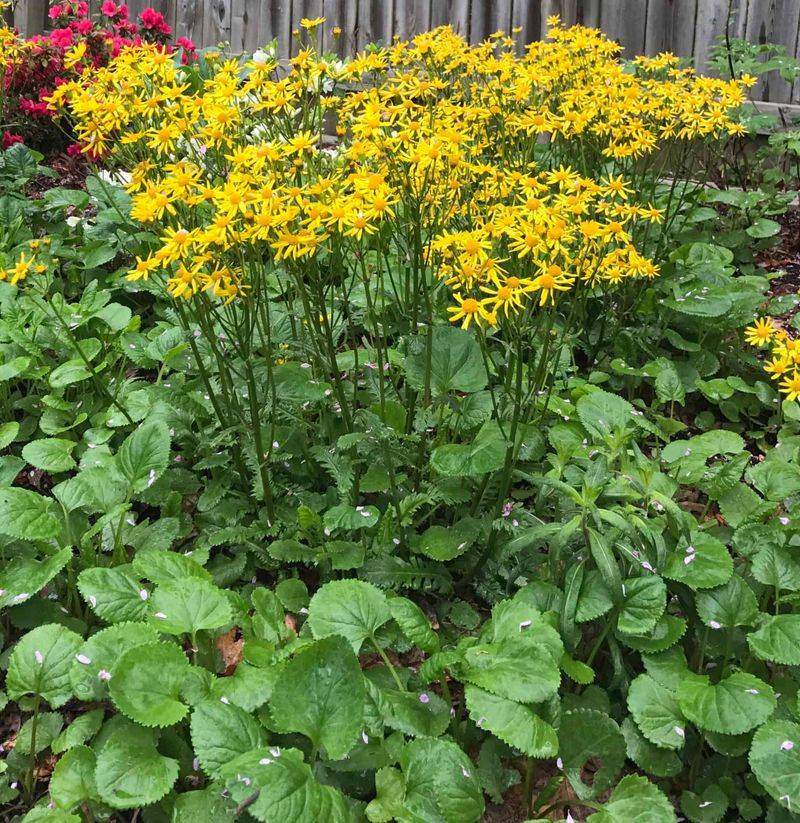
Most people meet golden ragwort (Packera aurea) by accident, spotting a patch of bright yellow daisies lighting up a wet ditch in spring. Then they realize it would solve that soggy corner of the yard nobody can mow.
The magic is the rosette of rounded leaves that stays green through winter, forming a solid evergreen mat that laughs at weeds. In April it throws up 1 to 2 foot flower stalks that bees swarm before most other blooms open.
Plant it in the damp spots the Coastal Plain hands you, spacing clumps about 18 inches apart. It self-sows and spreads by runners, filling ground faster than you expect, often doubling its footprint in a single season.
Here is the honest part. It spreads with real enthusiasm, so give it room to roam rather than a tidy little bed. In the right wet, weedy problem area, that vigor is exactly the gift you needed.
5. Foamflower
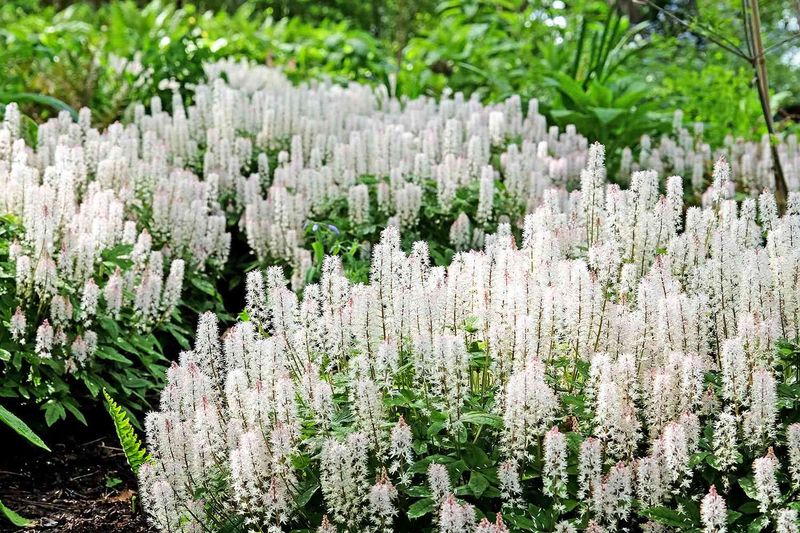
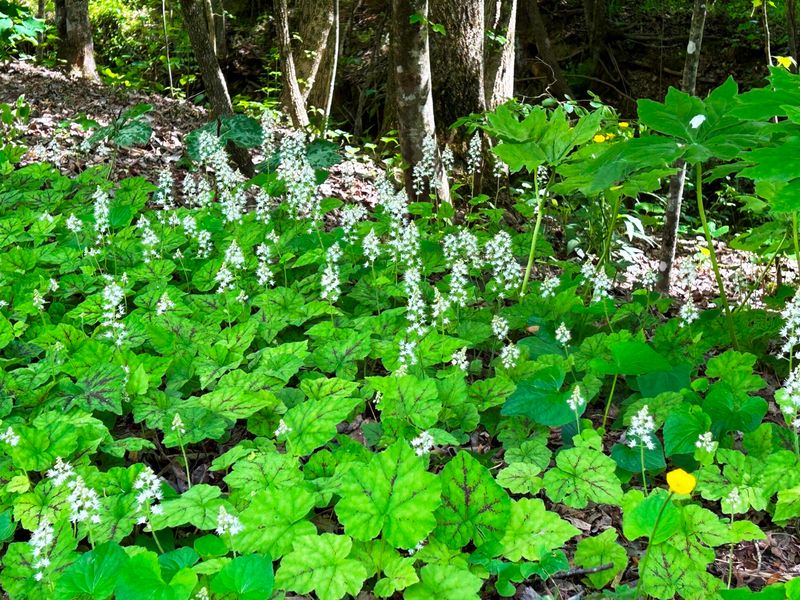
Walk a mountain trail in May and you will pass drifts of tiny white spires rising over maple-shaped leaves. Foamflower (Tiarella cordifolia) brings that woodland scene home, and it is one of the prettiest weed blockers North Carolina offers.
What makes it work is dense clumping foliage that spreads by short runners into an overlapping mat about 6 to 12 inches tall. Weeds simply cannot find a foothold once the leaves close ranks.
Give it the shade and rich soil it loves, spacing plants around 12 inches apart. It settles happily in mountain gardens and shaded Piedmont beds alike, and the frothy spring flowers pull in early native bees.
The evening payoff is real. Instead of raking faded pine straw off the porch steps, you get a soft green carpet and those little white candles glowing in the dusk.
6. Pennsylvania Sedge
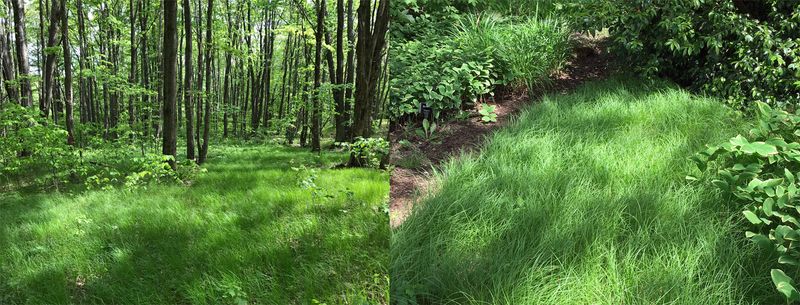
Everybody wants a no-mow lawn until they price the seed. Pennsylvania sedge (Carex pensylvanica) gets you close for free once it settles in, and it does it the native way.
The fine, arching blades flop into a soft green tuft about 8 inches tall that fills in shady ground where turfgrass sulks and dies. Grouped tight, the clumps merge into a meadowy mat that keeps weeds crowded out.
Plant plugs 8 to 10 inches apart under trees in the Piedmont, water through the first dry stretch, and let them spread by slow-creeping roots. It handles the dry shade beneath oaks and pines that frustrates almost everything else.
You can leave it shaggy for a wild look or shear it once in late spring for a tidier one. Either way, it is one less strip of ground you drag the mower across in the August heat, and one less bare patch begging for pine straw.
7. Woodland Stonecrop
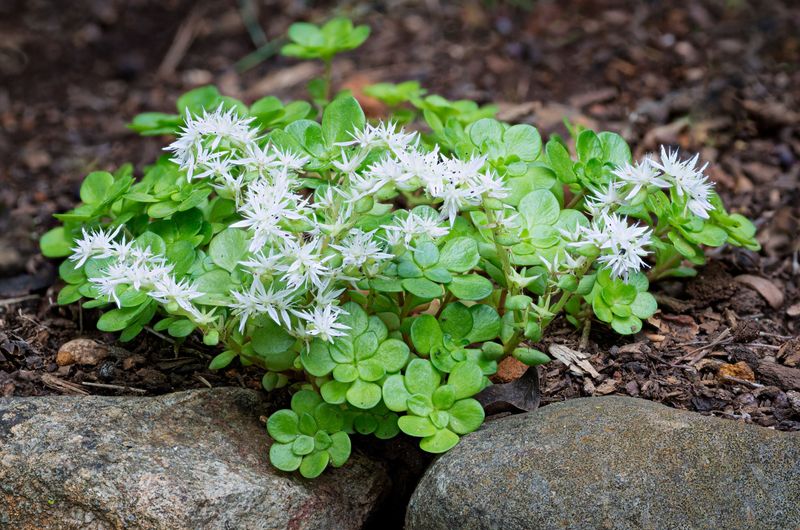
Flea beetles and dry spells wreck a lot of ground covers, but woodland stonecrop (Sedum ternatum) barely notices. This little native succulent thrives on the tough, rocky, root-filled ground where you have basically given up.
Fleshy green rosettes creep along the surface, rooting as they go and forming a low mat under 4 inches tall. White star flowers cover it in spring, and the leaves hold water so drought does not faze them.
Tuck it into the dry shade near tree trunks or over that thin soil along a foundation, spacing plants about 10 inches apart. It spreads politely, not aggressively, so it plays nice with ferns and other natives.
The quiet win here is durability. While your pine straw washes into the storm drain during a September downpour, this stonecrop stays rooted and green, asking nothing but a little shade.
8. Partridgeberry
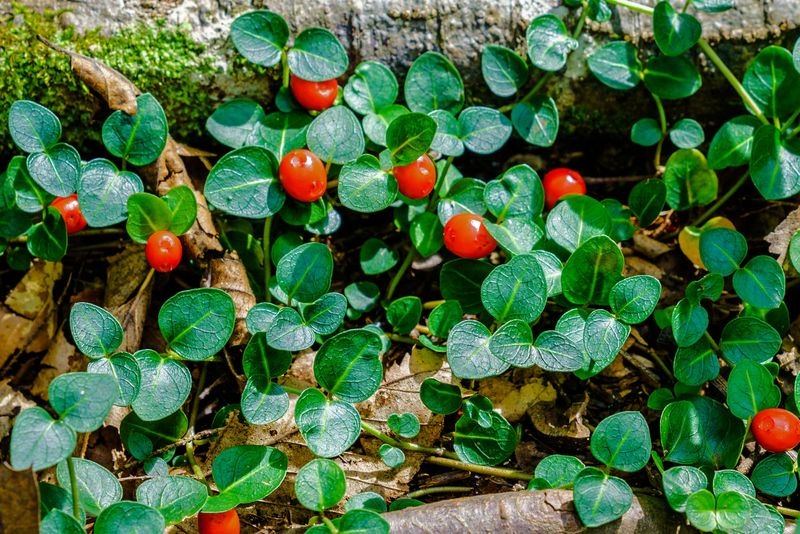
Look down at the forest floor on a winter hike and you might see tiny round leaves stitched to the ground with bright red berries. Partridgeberry (Mitchella repens) is that scene, and it stays green and berried straight through a Carolina cold snap.
The stems trail flat along the soil, rooting at each node into a fine evergreen mat barely 2 inches tall. It will not smother a big open field, so think of it as the finishing layer that fills gaps between larger plants.
Give it moist, humusy shade in the mountains or cooler Piedmont woods, spacing plants around 8 inches apart. Twin white flowers in early summer become the red berries birds nibble in winter.
What you gain is a living carpet that looks good in every season, even December. That is more than a bag of brown needles ever gave you.
9. Allegheny Spurge
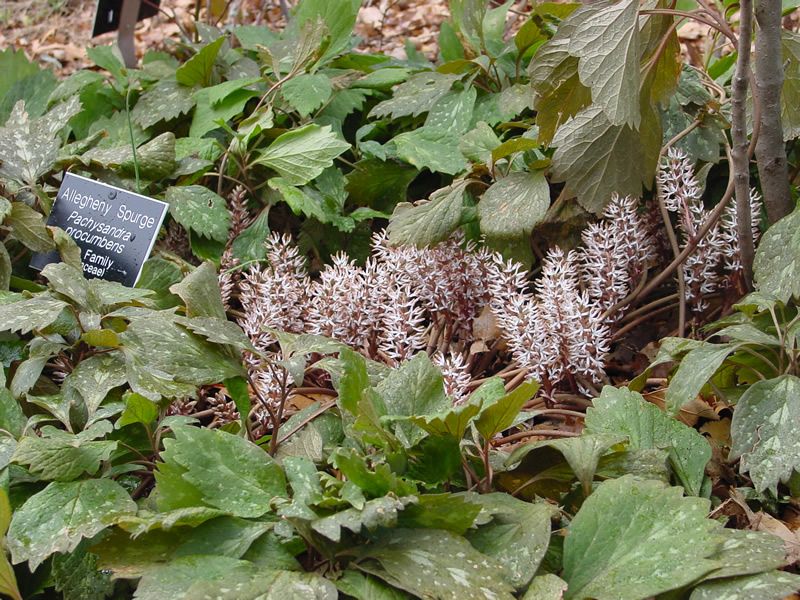
Gardeners reach for imported pachysandra to cover shade, then fight it forever when it escapes into the woods. Allegheny spurge (Pachysandra procumbens) is the native cousin that does the same job without the invasive baggage.
Its mottled, blue-green leaves form a substantial clumping mat about 8 to 10 inches tall, dense enough to block weeds cold. Fragrant, bottlebrush white flowers open low in early spring before the fresh leaves push up.
Set plants roughly 12 inches apart in the rich, shaded soil of a Piedmont or mountain bed and keep them moist while they root in. They spread slowly and steadily, filling a shady border over two or three seasons without staging a takeover.
Here is the calm ending your yard has been waiting for. Plant it once, let it settle, and that bare shady strip finally stays covered on its own. No annual mulch run, no faded pine straw, just a native carpet that shows up every year and does the work for you.