7 Native Texas Shrubs That Reduce Road Noise Better Than You’d Expect
Road noise is one of those things that slowly drives you crazy. At first you barely notice it, then one day you’re sitting in your backyard trying to relax and all you can hear is traffic, engines, and the constant hum of the road just beyond your fence.
It’s annoying, and it genuinely affects how much you actually enjoy your outdoor space. Fences and walls help, but they’re expensive and they don’t always do as much as you’d hope.
What actually makes a surprising difference is the right combination of dense, thick shrubs planted strategically between you and the noise.
And when those shrubs happen to be native to Texas, you’re getting sound buffering plus plants that are perfectly adapted to your climate, require minimal care, and come back strong every single year.
Some of these shrubs work so well at blocking noise that you’ll genuinely wonder why you didn’t plant them sooner.
1. Wax Myrtle
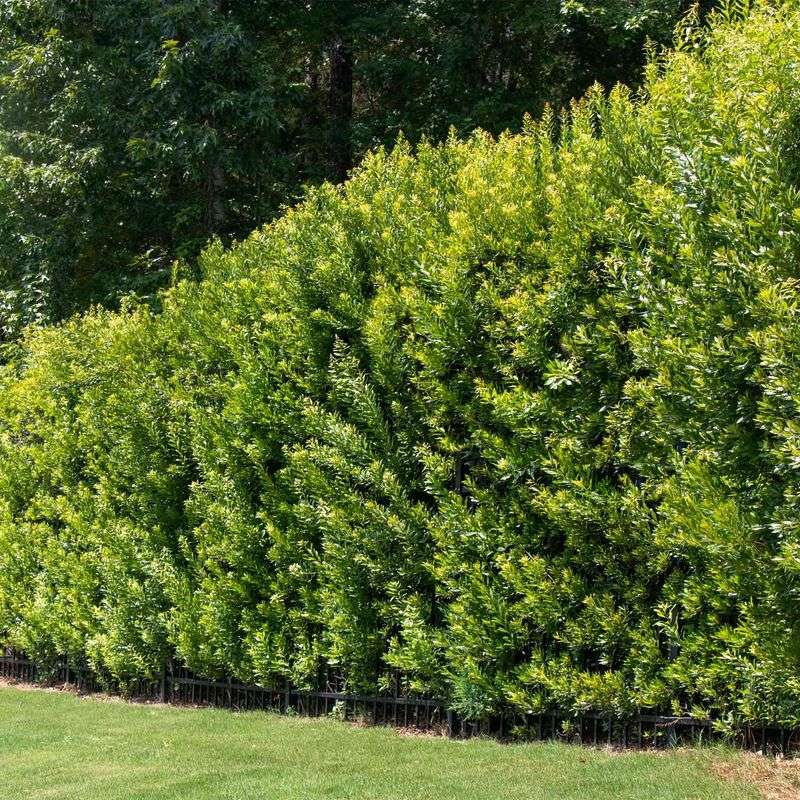
Few shrubs in Texas can match the speed and density of Wax Myrtle. If you want results fast, this is the plant to reach for.
It can grow several feet per year under good conditions, and it stays green all year long, which means it works as a sound barrier every single day, not just during the warm months.
The secret to its noise-blocking power is its sheer density. Wax Myrtle grows thick from the ground up, with layers of slim, aromatic leaves packed tightly along its branches.
Sound waves hit that wall of foliage and lose a lot of their energy before passing through. Plant a row of them close together, and you have a living fence that seriously cuts down on road noise.
In Texas, Wax Myrtle thrives in a wide range of conditions. It handles clay soils, sandy soils, wet spots near drainage areas, and dry upland sites.
It is also drought tolerant once established, which is a big deal in a state where summers can be brutal. It grows well along the Gulf Coast, in East Texas, and across Central Texas too.
Left to grow naturally, Wax Myrtle reaches 10 to 15 feet tall. You can also trim it into a more formal hedge shape if that suits your yard better.
Either way, it gives you a reliable, fast-growing green screen that does a real job blocking traffic noise while also looking great year-round.
2. Yaupon Holly
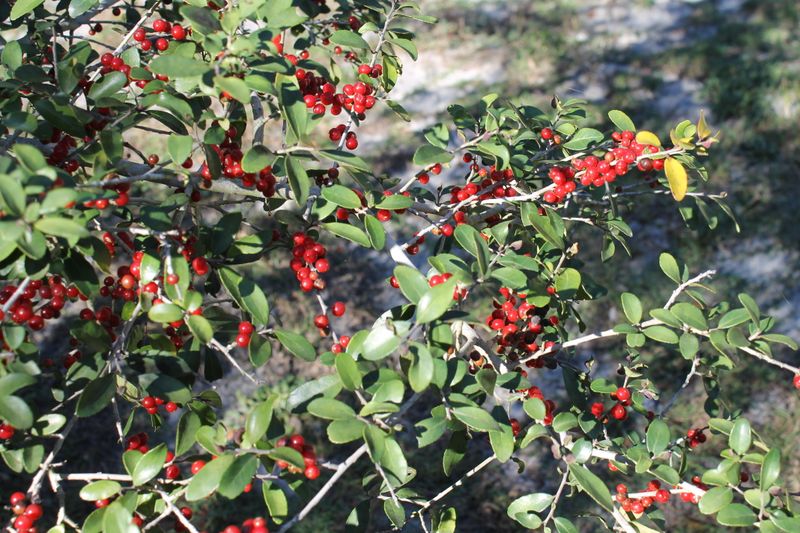
Yaupon Holly might just be the toughest shrub in all of Texas. It has been growing wild across the state for thousands of years, surviving drought, flooding, poor soils, and blazing summer heat without missing a beat.
That kind of toughness makes it a fantastic choice for planting along a noisy road where conditions can be harsh and unforgiving.
What makes Yaupon Holly so effective at reducing road noise is its naturally dense, bushy growth habit. It fills in from the bottom to the top with small, leathery evergreen leaves and a tangle of sturdy branches.
Your Texas Garden Changes Every Week. Your Plan Should Too.
Gardening in Texas changes quickly throughout the season. Every Friday you’ll receive a simple weekly plan showing exactly what to plant, prune, fertilize, harvest, and protect so you never miss the right timing.
That thick structure catches and scatters sound waves, helping to muffle the constant hum of traffic. Because it holds its leaves all year, it provides consistent noise buffering in every season.
Across Texas, Yaupon Holly is incredibly adaptable. It grows well in East Texas forests, along the Gulf Coast, and even in the drier parts of Central Texas.
It tolerates both full sun and partial shade, and it does not need much fertilizer or supplemental watering once it gets established. That low-maintenance personality is a huge plus for busy homeowners.
Female plants produce clusters of small, bright red berries in fall and winter that birds absolutely love. So while you are getting a noise barrier, you are also creating a wildlife habitat right in your own yard.
Few native shrubs offer that combination of practical function and ecological value. Yaupon Holly is genuinely hard to beat for Texas landscapes near busy roads.
3. Texas Mountain Laurel
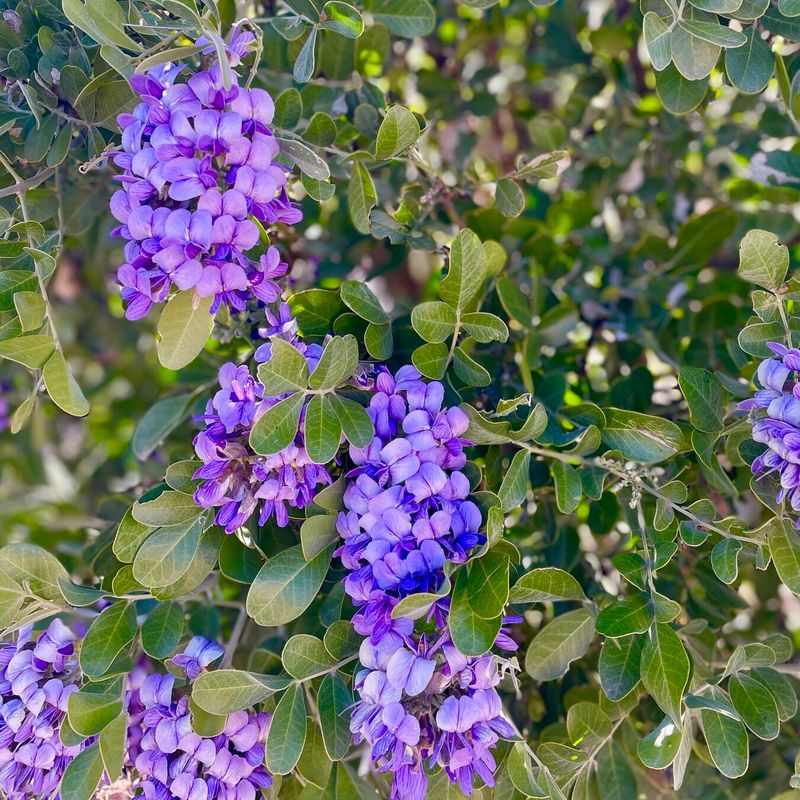
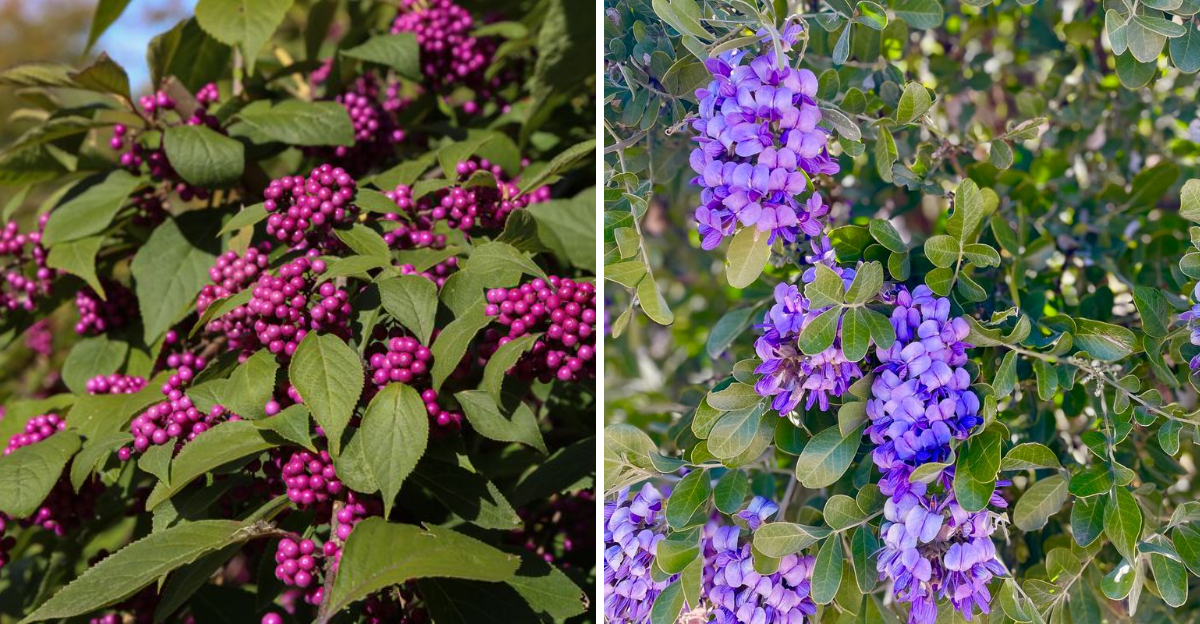
Every spring, Texas Mountain Laurel does something magical. It bursts into clusters of deep purple flowers that smell exactly like grape Kool-Aid, filling the air with a sweet, unmistakable fragrance.
But beyond the good looks and great scent, this shrub is a serious performer when it comes to blocking road noise in Texas landscapes.
Texas Mountain Laurel is a slow grower, so patience is required. Over several years, it builds into a dense, multi-stemmed evergreen wall with thick, glossy leaves and a woody structure that is excellent at absorbing and deflecting sound.
Once it reaches full size, it forms a solid, long-lasting barrier that does not need constant pruning or replacement. Think of it as a long-term investment in your yard’s peace and quiet.
This shrub is right at home in the Texas Hill Country and across the Edwards Plateau, where rocky, alkaline soils are the norm. It actually prefers those tough conditions and performs poorly in heavy clay or overly wet soils.
If you live in Central or West Texas, this plant was practically made for your yard. It handles drought with ease and needs very little supplemental water once established.
Because it stays green all year and grows quite dense over time, Texas Mountain Laurel provides year-round noise reduction. Plant several in a row along a fence line or property edge for the best effect.
You will end up with a beautiful, fragrant hedge that also does the practical work of quieting down your outdoor space significantly. It truly earns its place in any Texas landscape.
4. Possumhaw Holly
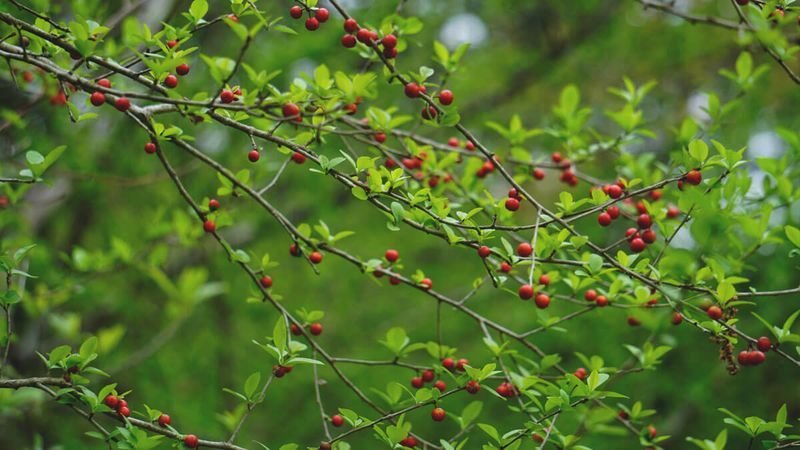
Possumhaw Holly is the kind of plant that surprises people. Most folks overlook it because it drops its leaves in winter, assuming that makes it useless as a noise barrier during the colder months.
But here is the thing: in Texas, road noise is a problem all year, and Possumhaw delivers solid buffering through spring, summer, and fall when its foliage is full and lush.
During the growing season, Possumhaw develops a thick, multi-stemmed form with dense branching and a full canopy of leaves. That layered structure is very effective at scattering sound waves before they reach your home or outdoor living space.
It typically grows 7 to 10 feet tall and spreads out generously, giving you good horizontal coverage along a property line or road edge.
One of Possumhaw’s best qualities is its ability to handle a wide range of Texas soils. It grows naturally in creek bottoms, woodland edges, and upland areas across much of the state.
It tolerates both wet and dry conditions, which is rare and valuable in a state with such unpredictable weather patterns. East Texas, North Texas, and Central Texas gardeners all report great results with this plant.
When winter does arrive and the leaves fall, something beautiful happens. The bare branches become covered in clusters of bright red and orange berries that attract mockingbirds, cedar waxwings, and other native birds.
So even in the off-season, Possumhaw is doing something worthwhile in your yard. It is a tough, rewarding native shrub that earns its space in any Texas landscape near a busy road.
5. Elbow Bush
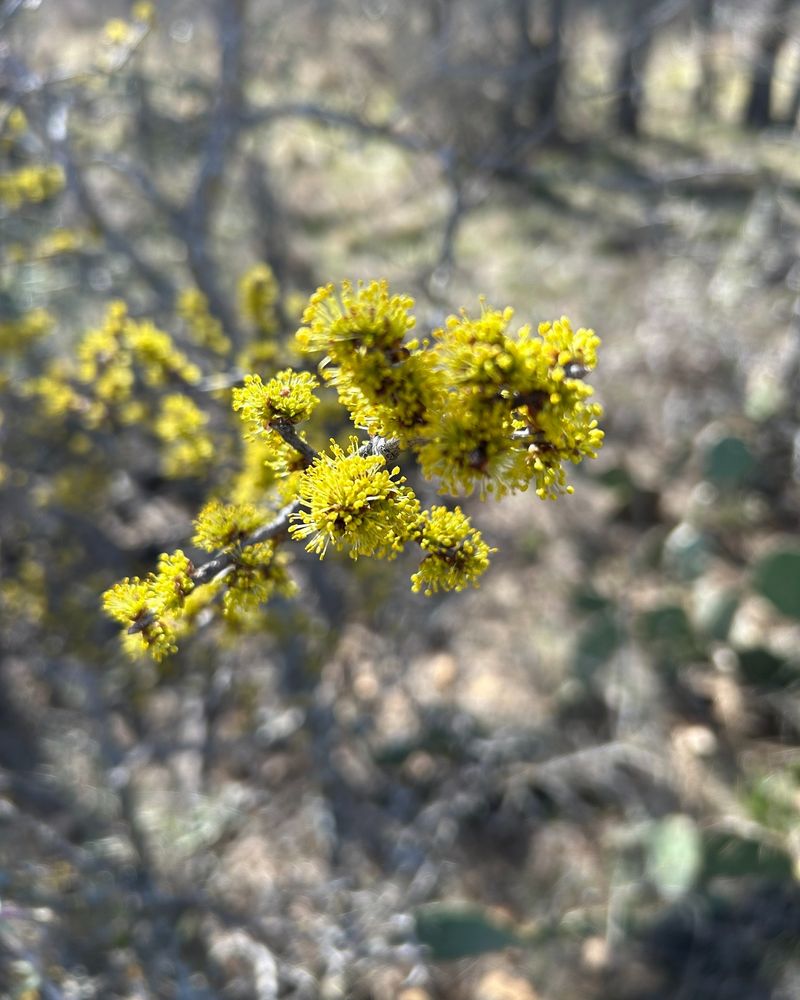
Not many people have heard of Elbow Bush, and that is a real shame. This underrated Texas native does not get the attention it deserves, but landscapers and wildlife gardeners who know it tend to become big fans quickly.
It grows into a dense, twiggy thicket that is surprisingly good at dampening road noise, especially when planted in a thick row or mass planting.
The noise-blocking power of Elbow Bush comes from its incredibly fine, tangled branching structure. Even without leaves, the dense web of thin stems creates friction that slows and scatters sound waves.
With leaves on in spring and summer, the effect is even stronger. The foliage is small but plentiful, filling in the shrub’s frame with a soft, layered texture that catches noise before it travels far.
Elbow Bush is native to Central and West Texas and is extremely drought tolerant once established. It thrives in rocky, well-drained soils and handles the heat of Texas summers without complaint.
It is one of the earliest shrubs to bloom in spring, producing tiny yellow flowers that are a critical early food source for native bees and other pollinators just waking up from winter.
It grows to about 6 to 10 feet tall and spreads outward over time, forming a natural hedge without much help from you. It needs almost no supplemental watering, no fertilizer, and very little pruning.
For Texas homeowners who want a low-effort, wildlife-friendly, noise-buffering shrub that truly belongs in the landscape, Elbow Bush is one of the best-kept secrets around. Give it a try and watch it work.
6. American Beautyberry
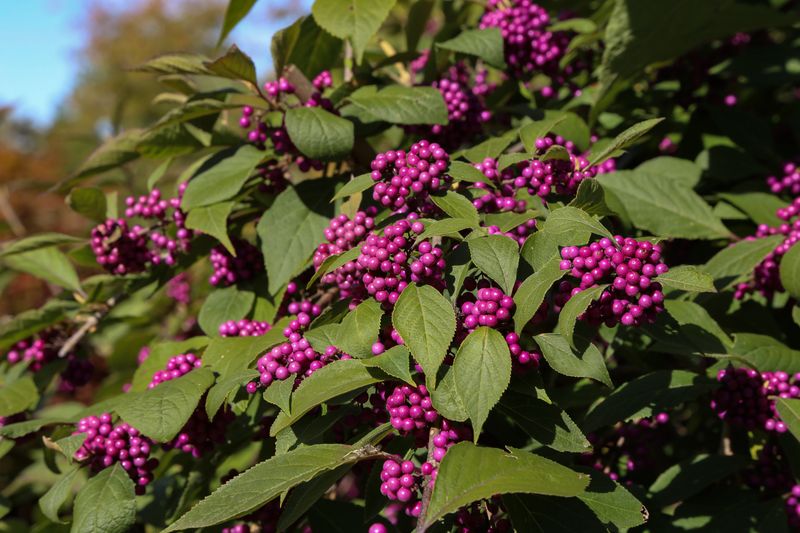
Walk past an American Beautyberry in October and you will stop in your tracks. The clusters of vivid, almost electric purple berries that line every stem are unlike anything else growing in a Texas yard.
But this showstopper is not just pretty, it is also a surprisingly capable noise buffer during the spring and summer months when its large, soft leaves are at their fullest.
American Beautyberry grows fast and fills in generously, producing wide, arching stems covered in big, fuzzy leaves that create a lush canopy.
That leafy mass does a solid job of absorbing sound during the warmer months when traffic noise tends to be at its worst because windows are open and people are spending time outside. It works best when planted in groups or as part of a layered shrub border.
Across Texas, this native shrub grows best in partial shade, making it a great choice for spots under tree canopies or along the shaded side of a fence. It is especially common in East Texas woodlands, but it adapts well to Central Texas conditions too.
It handles average soils and moderate drought, though it appreciates occasional watering during dry spells in summer.
After the berries fade in late fall, the plant dies back to the ground in colder areas, then re-sprouts vigorously in spring from the roots. This means it bounces back reliably every year without replanting.
Birds and deer also browse the berries, making this shrub a busy wildlife hub. American Beautyberry proves that a plant can be both strikingly beautiful and genuinely functional in a Texas landscape near a noisy road.
7. Texas Sage
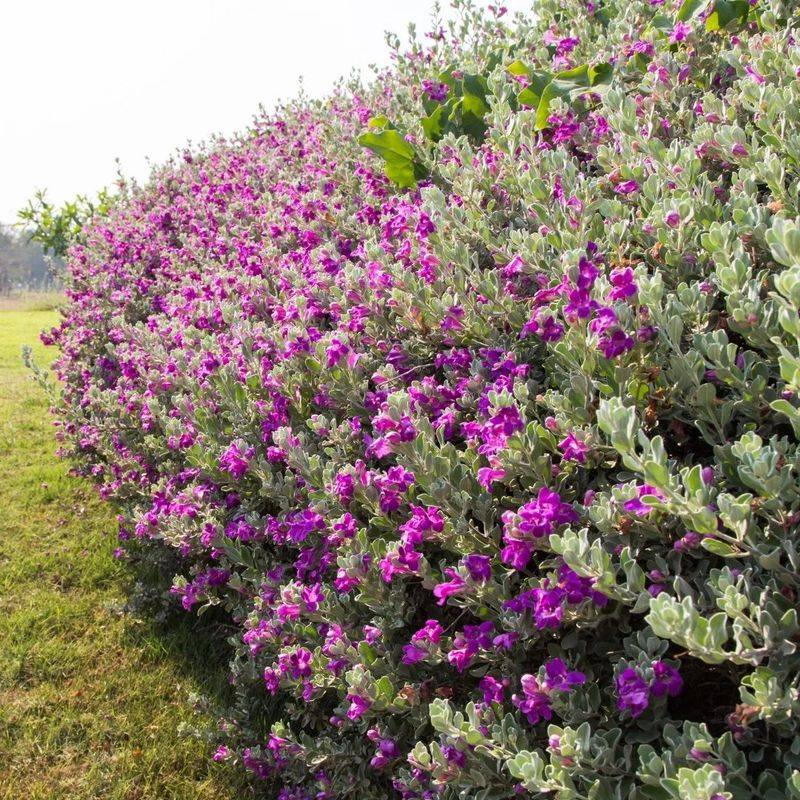
Ask any Texas gardener to name their favorite native shrub, and Texas Sage comes up time and again. Also called Cenizo, which means ash-colored in Spanish, this iconic plant has a silvery-green look that stands out beautifully in any landscape.
Beyond its good looks, it is also dense enough to provide real, meaningful noise reduction along busy Texas roads.
The rounded, compact form of Texas Sage is what makes it effective as a sound buffer. It grows to about 5 to 8 feet tall and equally as wide, with small, woolly leaves packed closely together on woody stems.
That dense, rounded shape intercepts sound waves and helps scatter them before they travel across your yard. A row of Texas Sage planted along a fence line creates a surprisingly effective noise screen.
Few shrubs are as perfectly suited to the Texas climate as this one. It is native to the Chihuahuan Desert region and thrives in dry, rocky, alkaline soils across West Texas, South Texas, and the Hill Country.
It is ultra drought tolerant and actually prefers poor soils with excellent drainage. Overwatering is about the only way to get into trouble with this plant.
One of its most magical qualities is the way it responds to humidity and rain. After a summer storm rolls through Texas, Cenizo bursts into a cloud of purple blooms almost overnight.
This earned it the nickname barometer bush among locals who use it to predict incoming rain. It is low-maintenance, long-lived, and deeply rooted in Texas culture and ecology.
For noise reduction with serious curb appeal, Texas Sage is a true icon of the Lone Star State.